Complete Plant Guide
Explore plants by difficulty, season and more. Find the perfect plant for you.
Difficulty
Categories
Plants by City
🗺️ Plants by City3779 plants found
Showing 2665-2700 of 3779
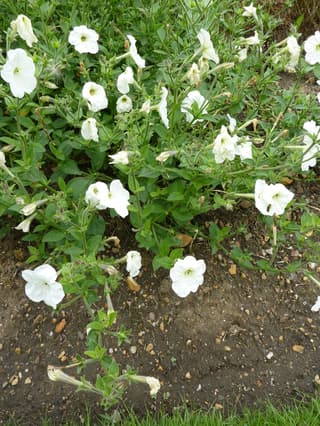
Large White Petunia
Petunia axillaris
Petunia axillaris, the large white petunia, is an erect annual to short-lived subshrub native to the temperate and subtropical grasslands of southern Brazil, Argentina, and Uruguay. It grows to about 60 cm tall, with sticky, glandular stems and opposite, elliptic to ovate leaves. Its trumpet-shaped white flowers, 3-7 cm long, are the only pure-white blooms in the genus Petunia and release a strong fragrance after dusk to attract nocturnal hawkmoths (Manduca sexta), their primary pollinator. Along with Petunia integrifolia, it is the wild ancestor of nearly all garden petunias grown today.
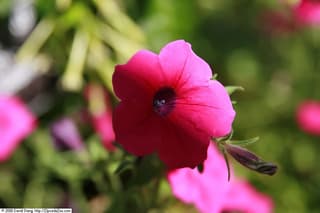
Wild Petunia
Petunia integrifolia
Petunia integrifolia, commonly known as Wild Petunia, is a species native to Argentina, Brazil, Paraguay, and Uruguay. Belonging to the Solanaceae family, it produces distinctive violet-purple flowers with entire petals, differentiating it from cultivated hybrids. It is a more compact and hardy plant than its hybrid relatives, well-adapted to the subtropical South American climate.
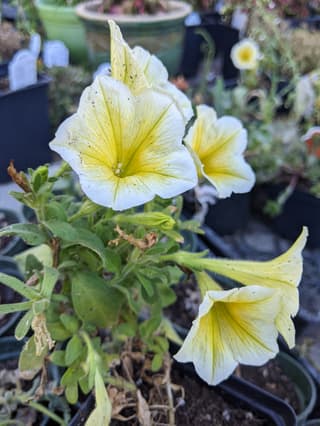
Garden Petunia
Petunia x hybrida
The garden petunia (Petunia x hybrida) is a herbaceous hybrid in the nightshade family (Solanaceae), bred from Petunia axillaris and Petunia integrifolia, both native to South America. Grown as an annual bedding plant nearly worldwide, it is one of the most popular flowers for beds, borders, hanging baskets, and containers thanks to its abundant, near-continuous bloom from spring until the first frost. Its trumpet-shaped flowers come in an enormous range of colors, from pure white to deep purple, plus pink, red, yellow, and bicolor combinations. Leaves are oval, green, slightly sticky, and softly fragrant due to fine glandular hairs. It is a fast-growing plant, ideal for gardeners who want quick, reliable color, but it demands full sun and regular watering to keep up its vigor and flower output.
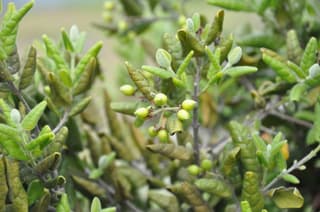
Boldo
Peumus boldus
Peumus boldus, commonly known as Boldo, is an evergreen tree native to the central regions of Chile. Its leaves are leathery, grayish-green, and possess a very strong characteristic aroma due to the presence of essential oils and the alkaloid boldine. It is a slow-growing plant that can reach large proportions in its natural habitat, but in domestic cultivation or pots, it remains a robust shrub.
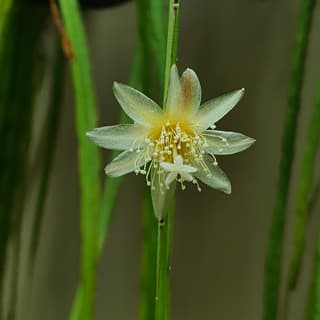
Bolivian Forest Cactus
Pfeiffera boliviana
Pfeiffera boliviana (synonym Lepismium bolivianum) is an epiphytic cactus native to the montane forests of Bolivia and northwestern Argentina, where it grows hanging from tree branches and other plants in a non-parasitic manner. The species features flat, ribbon-like green stems with wavy margins that can reach up to one meter in length, making it a highly valued indoor hanging plant. During spring and summer, small funnel- or rosette-shaped flowers develop in white or pale pink, often appearing individually at the stem areoles. Unlike desert cacti, this species is adapted to a more humid, shaded forest climate and thrives best in filtered light with consistent watering.
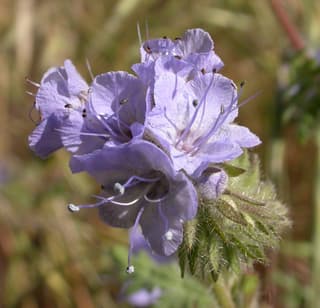
Lacy Phacelia
Phacelia tanacetifolia
Phacelia tanacetifolia, commonly known as Lacy Phacelia or Fiddleneck, is a fast-growing annual herb native to the southwestern United States. It produces masses of delicate, fern-like foliage and curling clusters of vibrant blue-purple flowers that are exceptionally attractive to bees, hoverflies, and other pollinators. Widely used as a cover crop and green manure in regenerative agriculture, it enriches soil, suppresses weeds, and supports beneficial insect populations.
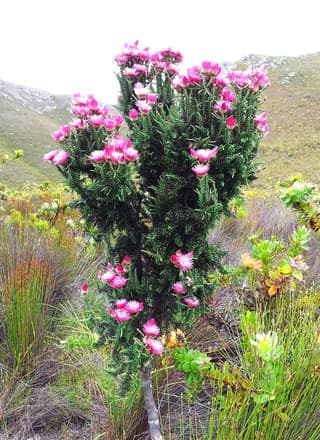
Cape Everlasting
Phaenocoma prolifera
Phaenocoma prolifera is an evergreen shrub in the Asteraceae family, native to the fynbos of the southern Western Cape province in South Africa. It often reaches a meter or more in height and naturally takes on a Christmas tree-like shape, with tiny rounded leaves that densely cover the stems. Its flower heads, borne at the tips of the branches, are surrounded by rigid, dry, papery bracts ranging from pink to purple that do not fade. Flowering peaks in spring, but the flowers remain decorative for most of the year. When cut and kept dry, they last for years, hence the name 'everlasting'. This hardy rockery plant thrives in full sun and sandy, poor, well-drained soils.
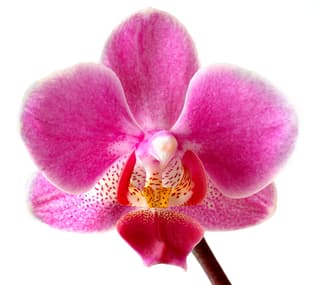
Moth Orchid
Phalaenopsis
The Phalaenopsis, commonly known as the moth orchid, is one of the most popular orchids in the world due to its elegance and ease of indoor cultivation. Its flowers, which can last up to three months, grow on graceful stems and come in a wide range of colors and patterns. Its leaves are broad, fleshy, and deep green, serving as water reservoirs for the plant.
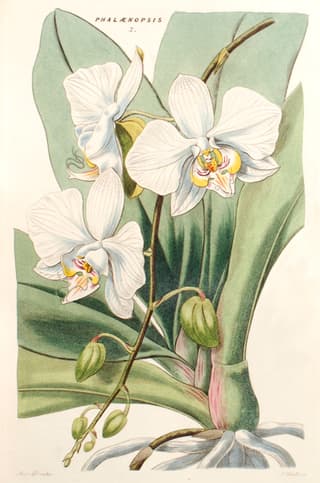
Moon Orchid
Phalaenopsis amabilis
Phalaenopsis amabilis is a stunning epiphytic orchid native to Southeast Asia, known for its large, pure white flowers that can bloom for several months. It is the national flower of Indonesia and one of the most popular orchids for indoor cultivation due to its elegant appearance and relatively easy care requirements.
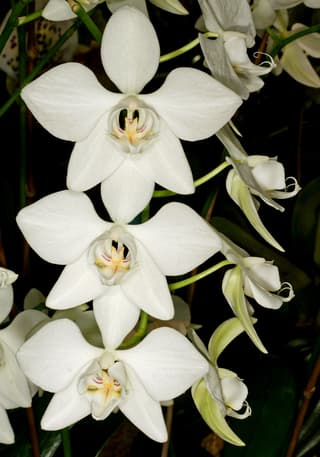
Moth Orchid
Phalaenopsis aphrodite
Phalaenopsis aphrodite, the Aphrodite moth orchid, is a species of epiphytic orchid native to the forests of the Philippines and southern Taiwan. It produces long, arching sprays of flat, pure-white flowers marked with a yellow-and-red throat, and its broad leaves persist year-round on a monopodial stem. It is the wild ancestor of countless modern Phalaenopsis hybrids sold as houseplants.
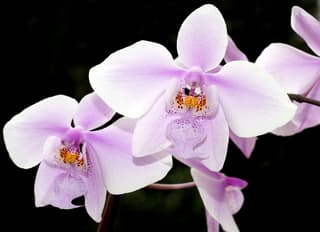
Schiller's Moth Orchid
Phalaenopsis schilleriana
Phalaenopsis schilleriana is an epiphytic moth orchid endemic to the Philippines, prized for its handsome foliage as much as its flowers. The leathery leaves are marked with alternating bars of silver-grey and dark green on top, with a purple flush underneath, remaining attractive year-round. In late winter to spring, arching, often branching sprays carry dozens of fragrant, rose-pink flowers with a spotted lip. Cooler autumn nights help trigger the bloom spike.
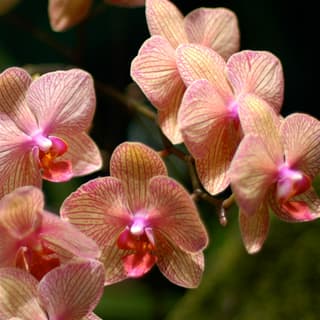
Phalaenopsis Hybrid Orchid
Phalaenopsis x hybridus
The Phalaenopsis Hybrid Orchid (Phalaenopsis x hybridus) is one of the world's most popular flowering houseplants, celebrated for its elegant arching flower spikes bearing large, flat blooms in a spectacular range of colors including white, pink, purple, yellow, and red. Native to the tropical forests of Southeast Asia, this epiphytic orchid thrives indoors with proper care, producing flowers that last months at a time. As a hybrid group derived from dozens of wild Phalaenopsis species, these orchids have been bred for extended bloom time, vibrant color, and adaptability to home environments.
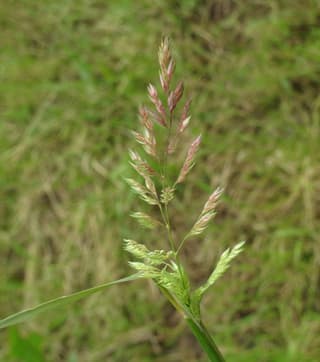
Canary Grass (genus)
Phalaris
Phalaris is a genus of grasses in the family Poaceae, comprising about 20 species of annual and perennial grasses. It includes the well-known canary grass (P. canariensis) and reed canary grass (P. arundinacea), widely grown as ornamentals and forage crops. These cool-season grasses thrive in temperate climates and are highly frost-tolerant.
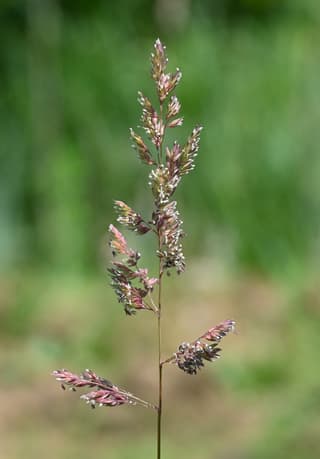
Ribbon Grass
Phalaris arundinacea
Ribbon grass (Phalaris arundinacea 'Picta') is a vigorous ornamental perennial grass prized for its striking green-and-white striped foliage. Native to Eurasia, it thrives in moist soils, water margins, and partly shaded borders. Its rapid-spreading rhizomes make it excellent for erosion control and mass plantings, though containment is recommended in garden settings to prevent invasive spread.
Common Stinkhorn
Phallus impudicus
The common stinkhorn is a striking and unusual fungus, best known for its pervasive, carrion-like odor. Its development begins with the 'witch's egg' stage, from which a porous, white stalk emerges remarkably fast, often within hours. The cap is covered in a dark green, slimy gleba containing the spores, which attracts flies to aid in dispersal.
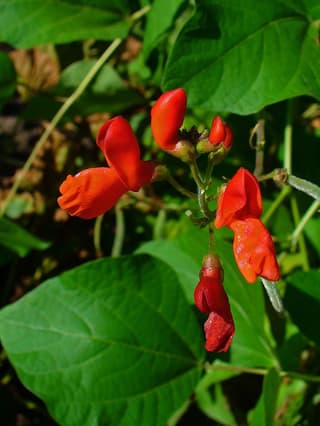
Scarlet Runner Bean
Phaseolus coccineus
The Scarlet Runner Bean (Phaseolus coccineus) is a vigorous annual climbing vine native to Central America, prized for its brilliant scarlet flowers and edible pods. It grows rapidly, reaching up to 12 feet tall, and produces vibrant blooms that attract hummingbirds and bees throughout summer and into fall.
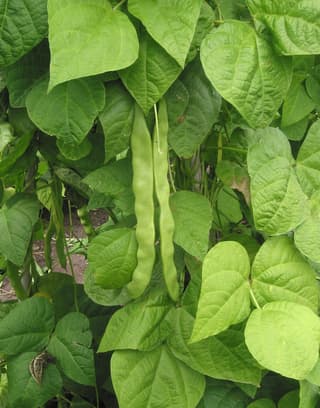
Common Bean
Phaseolus vulgaris
The common bean (Phaseolus vulgaris) is an annual plant in the Fabaceae family, native to Central and South America. It is one of the most widely cultivated and consumed legumes worldwide. The plant produces edible pods and seeds rich in protein, fiber, and essential minerals. It comes in two main growth habits: bush varieties and climbing varieties.
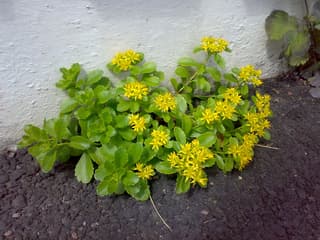
Siberian Stonecrop
Phedimus hybridus
Phedimus hybridus (formerly Sedum hybridum), commonly called Siberian stonecrop, is a low-growing succulent groundcover native to eastern and central Siberia and Central Asia, now widely naturalized across northern Europe. It forms dense mats via branching, woody rhizomes, with fleshy leaves and clusters of star-shaped yellow flowers appearing on short stems from late spring through summer. Extremely cold-hardy and drought-tolerant, it thrives in rocky, well-drained soils on sunny slopes and is a popular choice for rock gardens, green roofs, and ground cover plantings.
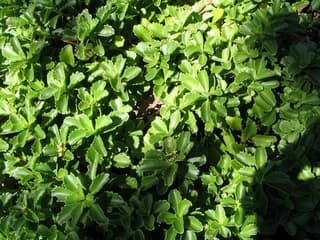
Kamchatka Stonecrop
Phedimus kamtschaticus
Phedimus kamtschaticus, commonly known as Kamchatka Stonecrop or Orange Stonecrop, is a low-growing succulent perennial in the Crassulaceae family. Native to rocky slopes of the Russian Far East, northern China, Japan, and Korea, this tough groundcover produces star-shaped golden-yellow flowers in summer over a mat of fleshy, bright green scalloped leaves that turn shades of orange and bronze in autumn. Its remarkable cold hardiness — surviving down to -34°C (-29°F) — combined with drought tolerance and fast spreading habit makes it one of the most versatile and low-maintenance groundcover plants available for temperate and cold climates.
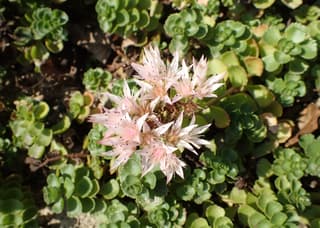
Two-row Stonecrop
Phedimus spurius
Phedimus spurius, commonly known as Two-row Stonecrop or Caucasian Stonecrop, is a hardy perennial succulent groundcover in the family Crassulaceae, native to the Caucasus region. Formerly classified as Sedum spurium, it is prized for its exceptional cold and drought tolerance, spreading mat-forming habit, and starry summer flowers in shades of pink, red, and white. It excels in rock gardens, slopes, borders, and as a lawn alternative.
Phellinidium ferrugineofuscum
Phellinidium ferrugineofuscum
Phellinidium ferrugineofuscum is a polypore fungus specialized in wood decomposition, found primarily in boreal and temperate forests. It is characterized by its resupinate (adhering to the surface) fruiting bodies, with a velvety texture and a deep rusty-brown coloration. It is a saprophytic species that plays a vital role in nutrient recycling in conifer ecosystems, growing almost exclusively on fallen spruce and pine logs.
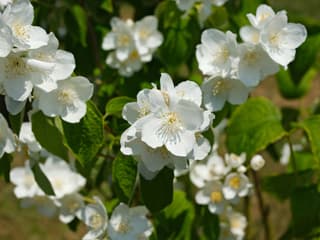
Scentless Mock Orange
Philadelphus inodorus
Philadelphus inodorus, commonly known as scentless mock orange, is a deciduous flowering shrub native to the southeastern United States and belonging to the hydrangea family (Hydrangeaceae). It forms a dense, upright, multi-stemmed shrub reaching 6 to 8 feet (1.8 to 2.4 m) tall and wide, with dark green, oval, finely toothed leaves and mature bark that peels in thin, orange-brown strips. In late spring, it produces abundant clusters of cup-shaped, four-petaled white flowers about 1 inch (2.5 cm) across. Unlike many of its relatives, the flowers of this species have little to no fragrance, which is reflected in its species name inodorus, meaning odorless. It is a tough, adaptable, fast-growing shrub well suited to informal hedges, shrub borders, and naturalized plantings.

Lewis' Mock Orange
Philadelphus lewisii
Philadelphus lewisii is a deciduous, multi-stemmed shrub native to the Pacific Northwest and Rocky Mountain regions of North America. It produces masses of fragrant, four-petaled white flowers with yellow centers in late spring to summer, held in clusters along arching branches. Known locally as 'Syringa,' it is the official state flower of Idaho and was first collected for science by explorer Meriwether Lewis in 1806.
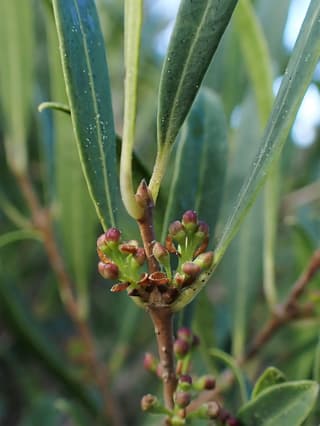
Narrow-leaved Phillyrea
Phillyrea angustifolia
Phillyrea angustifolia is an evergreen Mediterranean shrub in the olive family (Oleaceae), prized for its narrow, leathery dark-green leaves and small clusters of fragrant creamy-white flowers in late spring. Native to the Iberian Peninsula and wider Mediterranean basin, it forms part of the maquis scrubland and is valued in gardens for hedging, topiary, and coastal plantings thanks to its wind and drought tolerance.
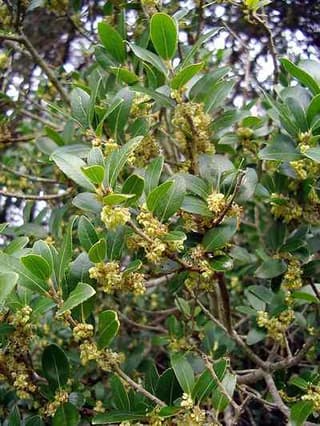
Green Olive Tree
Phillyrea latifolia
The Green Olive Tree (Phillyrea latifolia) is a slow-growing evergreen shrub or small tree native to the Mediterranean basin, where it forms part of the maquis and holm oak woodland understory. A member of the olive family (Oleaceae), it bears leathery, glossy dark-green leaves and produces small, fragrant, creamy-white flowers in axillary clusters during spring, followed by blue-black, olive-like drupes that ripen in autumn and are relished by birds. Highly drought-tolerant once established, it thrives on poor, rocky, or calcareous soils and withstands intense summer heat, making it a resilient choice for xeriscaping, hedging, and topiary in warm-temperate gardens.
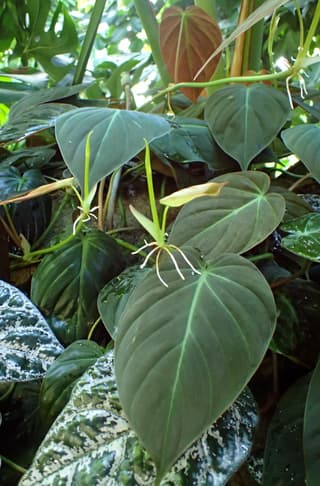
Philodendron
Philodendron
Philodendron is one of the largest and most diverse genera of tropical houseplants in the Araceae family, originating from Central and South America. With nearly 500 species, philodendrons range from compact trailing vines like P. hederaceum (heartleaf) to dramatic large-leaved climbers like P. erubescens and sculptural aroids like P. bipinnatifidum and P. xanadu. Their lush, glossy foliage and adaptability to indoor conditions have made them among the most beloved houseplants worldwide. All species contain calcium oxalate crystals and are mildly to moderately toxic to pets and humans.
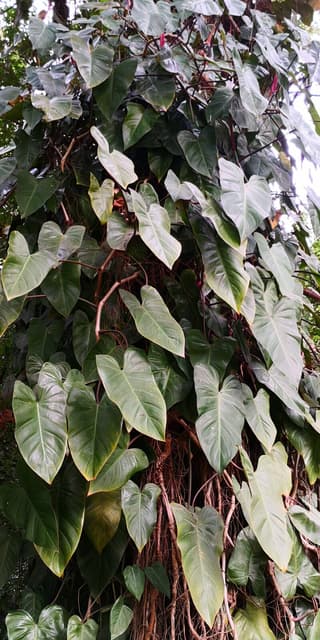
Imperial Green Philodendron
Philodendron 'Imperial Green'
Philodendron 'Imperial Green' is a self-heading hybrid cultivar within the Araceae family, prized for its large, glossy, deep green leaves and effortless temperament. Native to tropical regions of Central and South America, it develops as a leafy rosette with a broad mature spread and usually requires no pole support. Mature leaves can reach 40-50 cm in length, and the plant may eventually grow to approximately 1 m tall indoors. This is a low-maintenance houseplant that thrives in bright, indirect light and prefers well-draining, organic-rich soil.
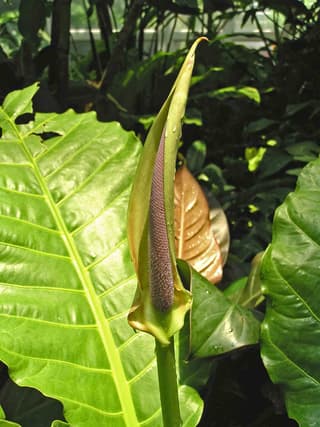
Imperial Red Philodendron
Philodendron 'Imperial Red'
Philodendron 'Imperial Red' (Philodendron erubescens 'Imperial Red') is a self-heading aroid hybrid from the Araceae family, grown for its dramatic foliage: new leaves unfurl a deep burgundy-red and gradually mature to a glossy dark green. Unlike vining philodendrons, it grows in a compact rosette, making it well suited to tabletops, desks, and shelves.
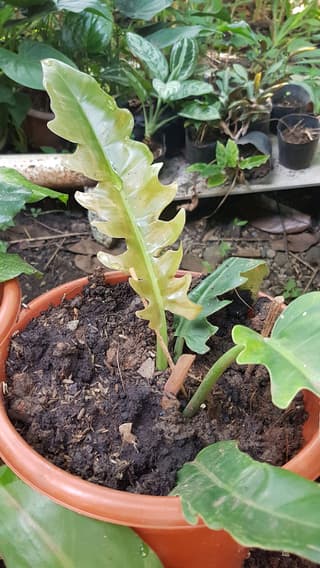
Philodendron Jungle Boogie
Philodendron 'Jungle Boogie'
A tropical hybrid philodendron cultivar (Philodendron × 'Henderson's Pride') prized for its distinctive long, narrow leaves with serrated edges resembling saw teeth. An epiphytic aroid with climbing growth habit, aerial roots, and fast growth. Member of the Araceae family, suited for bright indirect indoor light.
Pink Congo Philodendron
Philodendron 'Pink Congo'
The Pink Congo Philodendron is a Philodendron hybrid sold with bright pink leaves. Important: the pink color is artificially induced by chemical (ethylene) treatment and is temporary — new leaves revert to natural green within 6 to 12 months. Care is that of a typical hybrid Philodendron. It contains calcium oxalate and is toxic to cats, dogs and humans.

Pink Princess Philodendron
Philodendron 'Pink Princess'
Philodendron 'Pink Princess' is a striking cultivar of Philodendron erubescens, prized for its glossy, heart-shaped leaves splashed with vivid pink and creamy-white variegation against a deep green to near-black background. A climbing tropical aroid native to South America, it produces sturdy vining stems that benefit from a moss pole or trellis as the plant matures. The amount and pattern of pink variegation is unstable and driven by chimeric tissue, so leaf coloring can vary widely from leaf to leaf and plant to plant.
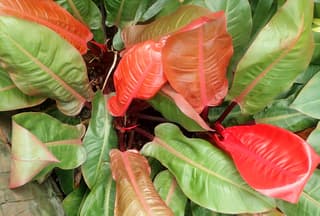
Prince of Orange Philodendron
Philodendron 'Prince of Orange'
Philodendron 'Prince of Orange' is a compact, self-heading hybrid aroid prized for the vivid copper-orange color of its emerging leaves, which mature through yellow-green to a glossy deep green. Unlike vining philodendrons, it grows upright in a neat rosette, making it a favorite tabletop and shelf plant. It is a fast grower under good light and stays relatively small, rarely exceeding about 60 cm (2 ft) in height and spread indoors.

Rojo Congo Philodendron
Philodendron 'Rojo Congo'
Philodendron 'Rojo Congo' is a bold, self-heading tropical hybrid prized for its large, glossy leaves that emerge coppery-red and mature to deep green on red-tinted stems. It forms a full, upright clump and stays compact for its size, making it a striking, low-fuss statement houseplant.
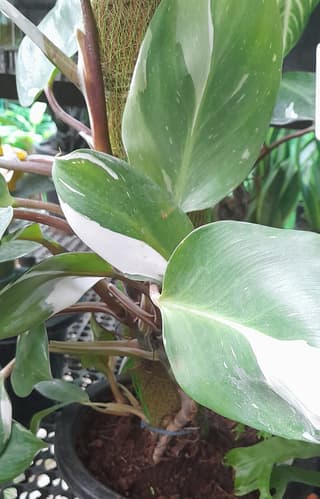
White Knight Philodendron
Philodendron 'White Knight'
Philodendron White Knight is a rare and highly prized variegated philodendron cultivar, known for its striking white, cream, and green marbled leaves paired with deep burgundy-purple stems and petioles. A vining aroid in the Araceae family, it climbs via aerial roots and is prized by collectors for its slow, compact growth and dramatic color contrast.
White Princess Philodendron
Philodendron 'White Princess'
Philodendron 'White Princess' is a striking variegated cultivar of Philodendron erubescens, prized by collectors for its dark green, burgundy-backed leaves splashed with cream-white and occasional pink sectors. Like all variegated aroids, its patterning is unstable and driven by chimeric tissue, so leaf variegation can vary from cutting to cutting and even leaf to leaf on the same plant. It is a climbing vine in the Araceae family that produces aerial roots and benefits from a moss pole or trellis for support as it matures.
White Wizard Philodendron
Philodendron 'White Wizard'
The White Wizard Philodendron is a striking variegated cultivar of Philodendron erubescens, prized for its heart-shaped leaves marbled in shades of deep green, creamy white, and occasional pink flecks. Native to the rainforests of Colombia, this climbing tropical aroid is a favorite among collectors due to the rarity and instability of its variegation, which can differ leaf to leaf on the same plant. Indoors it grows well trained onto a moss pole, producing lush, dramatic foliage when given the right light.
Find the Perfect Plant
Our plant guide helps you find ideal species for your experience level and time of year.
Browse by Difficulty, Season & More
Use the filters below to narrow this catalog by care difficulty, season, environment, or search directly by name. Each filter leads to a focused list tailored to your specific growing conditions.