Complete Plant Guide
Explore plants by difficulty, season and more. Find the perfect plant for you.
Difficulty
Categories
Plants by City
🗺️ Plants by City3779 plants found
Showing 2701-2736 of 3779

Fiddleleaf philodendron
Philodendron bipennifolium
Philodendron bipennifolium is a tropical climbing aroid from South America, grown as a houseplant for its large, lobed leaves shaped like a fiddle or a horse's head. It is vigorous, climbs a moss pole, and develops larger leaves as it matures.
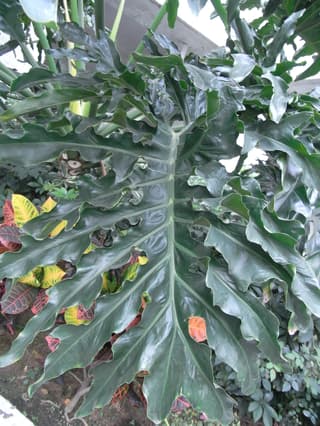
Tree Philodendron
Philodendron bipinnatifidum
Tree Philodendron is a scandent shrub native to Brazil's Atlantic Forest, highly valued as an ornamental plant for its large, glossy, deeply lobed leaves. Part of the Araceae family, it can reach up to 4.5 meters in height outdoors. It is a versatile plant that adapts well to both indoor and garden settings.
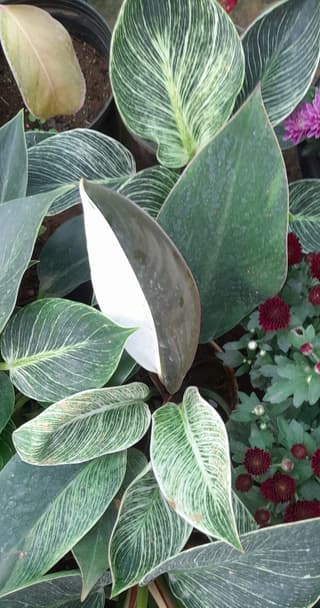
Birkin Philodendron
Philodendron birkin
The Birkin Philodendron is a tropical epiphytic plant in the Araceae family, distinguished by its dark green leaves adorned with distinctive white or cream-colored pinstripes that create a striking variegated pattern. A relatively modern hybrid cultivar resulting from a cross between the Philodendron Rojo Congo and other selected varieties, it has become increasingly popular in recent years. Widely cultivated as an ornamental houseplant, it is prized for its attractive foliage and compact growth habit. Beyond aesthetics, the Birkin actively purifies indoor air by removing volatile organic compounds including formaldehyde.
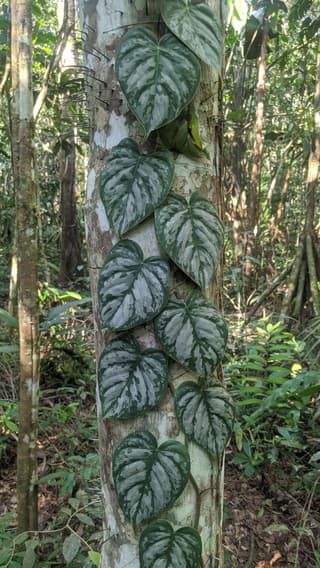
Silver Leaf Philodendron
Philodendron brandtianum
Philodendron brandtianum, known as the Silver Leaf Philodendron, is a climbing aroid native to the tropical rainforests of Brazil, Peru, Bolivia, Ecuador, and Colombia. Its heart-shaped, olive-green leaves are marked with striking silvery patches created by leaf structure rather than pigment. A fast-growing vine, it thrives climbing on moss poles or trailing from hanging baskets, and adapts well to indoor cultivation.
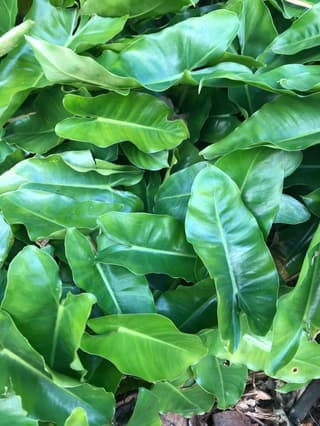
Burle Marx Philodendron
Philodendron burle-marxii
Philodendron burle-marxii is a fast-growing tropical aroid native to the rainforests of Brazil, Colombia, and Ecuador. Named in honor of Roberto Burle Marx, the legendary Brazilian landscape architect, it features glossy dark green lance-shaped leaves with a prominent central vein. This versatile plant thrives both as a climber with support or as a trailing plant in hanging baskets, making it one of the most sought-after aroids among houseplant collectors.
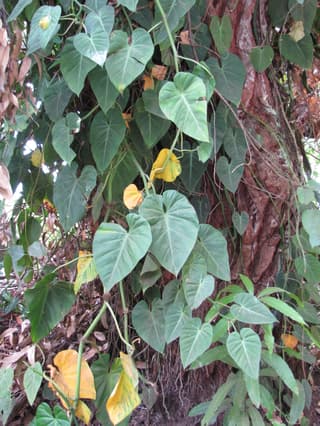
Heartleaf Philodendron
Philodendron cordatum
Philodendron cordatum is a fast-growing vining species native to the Atlantic Forest of Brazil. Distinguished from the commonly sold P. hederaceum (also marketed as heartleaf philodendron), the true P. cordatum features deep green, glossy, heart-shaped leaves and thrives indoors with minimal care. It is toxic to pets and humans due to insoluble calcium oxalate crystals.
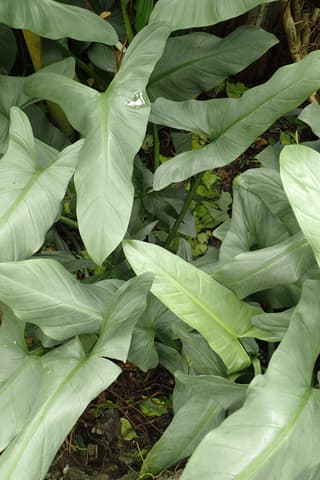
Spadeleaf Philodendron
Philodendron domesticum
Philodendron domesticum, known as the Spadeleaf Philodendron or Elephant Ear Philodendron, is a tropical plant from the Araceae family native to the Americas. Its spade-shaped leaves are large, glossy, and dark green, reaching up to 22 inches (56 cm) in length. It is a fast-growing climbing plant, highly valued as an indoor ornamental, where it purifies the air and provides a lush, tropical look.
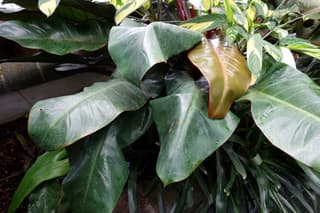
Blushing Philodendron
Philodendron erubescens
Philodendron erubescens is a climbing tropical plant native to the rainforests of Colombia. It stands out for its large heart-shaped leaves with green and reddish tones, and intensely red stems. It is a perennial plant ideal for indoors that can reach up to 90cm in height when grown at home.
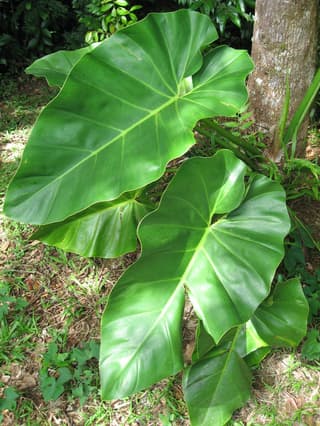
Giant Philodendron
Philodendron giganteum
Philodendron giganteum is a striking aroid native to the tropical forests of the Caribbean and South America, including Brazil's Para state. In the wild it grows as a hemiepiphyte, climbing tree trunks and producing leaves that can exceed 60 cm (2 ft) in length. Its bold, glossy foliage makes it a dramatic statement plant for spacious indoor or greenhouse settings.
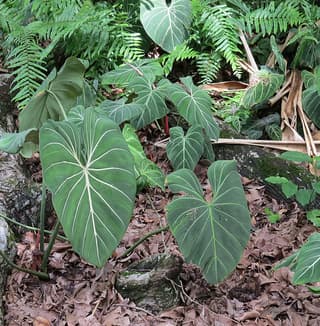
Philodendron Gloriosum
Philodendron gloriosum
Philodendron gloriosum is a terrestrial plant from the Araceae family, native to the tropical rainforests of Colombia and other regions of South America. It is distinguished by its massive, velvety dark green leaves adorned with prominent white, fishbone-patterned veins. Its crawling habit makes it unique among collector philodendrons, as the rhizome grows horizontally along the ground. It is considered one of the most coveted indoor plants by tropical plant collectors worldwide.
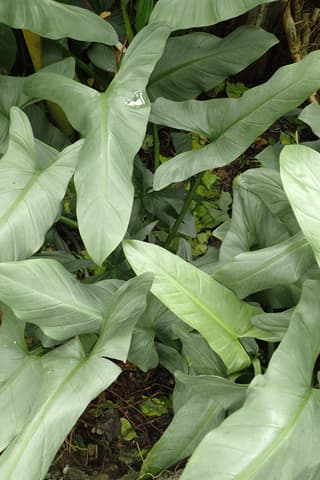
Silver Sword Philodendron
Philodendron hastatum
Philodendron hastatum, known as the silver sword philodendron, is an epiphytic climbing aroid native to the tropical rainforests of southeastern Brazil. Its young leaves are lance-shaped with a metallic silver sheen, maturing into longer, more elongated leaves with coppery undersides.
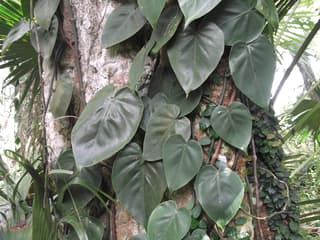
Heartleaf Philodendron
Philodendron hederaceum
Philodendron hederaceum is a climbing or trailing vine native to Central and South America. Its heart-shaped leaves and vigorous growth make it one of the most popular houseplants. It is resilient, adaptable, and an excellent air purifier.

Lemon Lime Philodendron
Philodendron hederaceum 'Lemon Lime'
Philodendron hederaceum 'Lemon Lime' is a chartreuse-leaved cultivar of the heartleaf philodendron, a fast-growing evergreen vine in the Araceae family native to Central America and the Caribbean. Its glossy, heart-shaped leaves emerge lime-yellow and hold their neon color best in bright, indirect light. In its natural habitat the species behaves as a semi-epiphyte, climbing tree trunks with aerial roots, but as a houseplant it is most often grown trailing from a hanging basket or shelf.
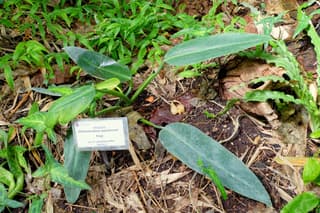
Flask Philodendron
Philodendron martianum
Philodendron martianum, commonly known as the Flask Philodendron or Fat Boy Philodendron, is a species native to the Brazilian Atlantic Forest. It is distinguished by its uniquely swollen, flask-shaped petioles that store water, and its large, glossy, solid dark-green leaves. A robust and ornamental houseplant, it thrives in bright indirect light and is well-suited for indoor cultivation.
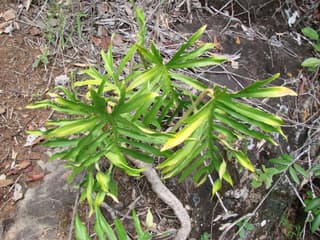
Mayo's Philodendron
Philodendron mayoi
Philodendron mayoi is a tropical climbing species native to Brazil's Atlantic Forest, prized for its deeply lobed, fern-like leaves. A medium-growing houseplant, it thrives in bright indirect light and high humidity, making it a striking addition to any indoor space.
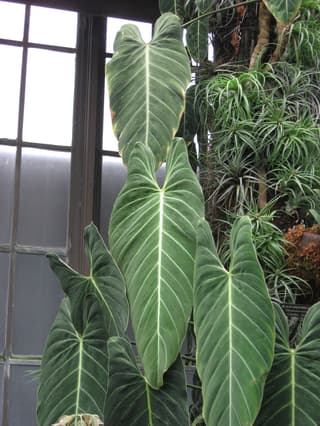
Black Gold Philodendron
Philodendron melanochrysum
Philodendron melanochrysum, commonly known as the Black Gold Philodendron, is a stunning tropical climbing plant native to the rainforests of Colombia. Its large, velvety, deep green leaves shimmer with golden iridescence when light catches them, earning it the evocative name "black gold." Mature leaves can reach up to 60 cm in length, displaying a breathtaking combination of dark, almost black-green color with prominent golden-yellow veins. This hemiepiphytic climber is one of the most sought-after collector plants in the aroid world.
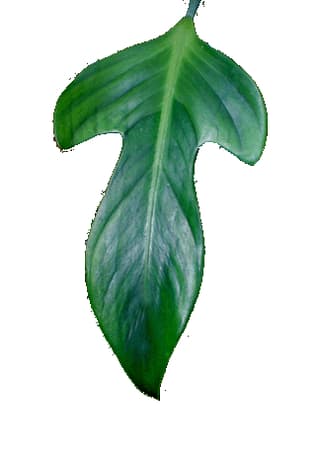
Horse Head Philodendron
Philodendron panduriforme
Philodendron panduriforme, commonly known as the Horsehead Philodendron, is a tropical climbing plant native to the rainforests of South America, including Brazil, Colombia, Peru, Ecuador, Venezuela, and Bolivia. Belonging to the Araceae family, it is famous for its unique fiddle-shaped or horsehead-shaped leaves, which change appearance as the plant matures. It is an excellent choice for indoor environments, providing an exotic and tropical look.
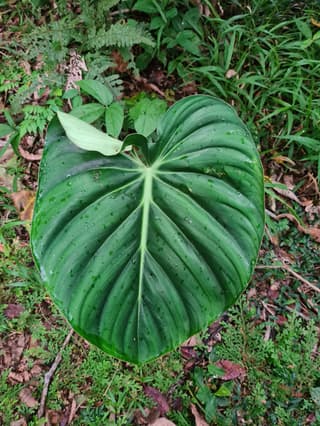
Philodendron Pastazanum
Philodendron pastazanum
Philodendron pastazanum is a terrestrial, creeping aroid native to the rainforest floor of Pastaza Province in eastern Ecuador, also found in Peru, typically growing between 300 and 1,000 m elevation. Unlike many climbing philodendrons, it spreads laterally along the ground rather than climbing trees. It produces large, cordate (heart-shaped) leaves with pronounced ribbed venation and a velvety texture in deep green, distinguishing it from similar species such as Philodendron mamei and Philodendron sodiroi. The species was described by botanist K. Krause around 1940 and takes its name from Ecuador's Pastaza Province.
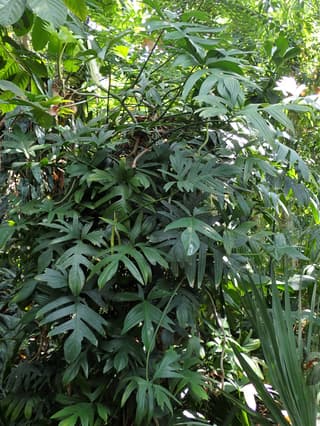
Oak Leaf Philodendron
Philodendron pedatum
Philodendron pedatum, commonly known as the Oak Leaf Philodendron, is a climbing aroid native to the tropical rainforests of South America. Its deeply lobed, oak-leaf-shaped foliage makes it one of the most striking members of the genus. As a natural climber, it grows vertically and can reach impressive heights when given a support structure indoors.
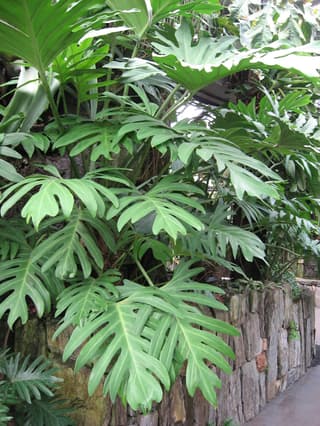
Comb-leaf Philodendron
Philodendron pinnatifidum
Philodendron pinnatifidum, the comb-leaf philodendron, is a climbing aroid native to Venezuela and northwestern Brazil, prized for its deeply lobed, glossy foliage. In the wild it grows as a hemiepiphyte, climbing tree trunks with aerial roots. It's a moderately easy, eye-catching houseplant suited to bright, humid indoor spots.
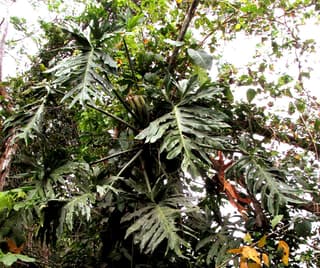
Split-leaf Philodendron
Philodendron radiatum
Philodendron radiatum is a robust, evergreen root-climbing aroid native to the rainforests of southern Mexico, Belize, Guatemala, Honduras, Nicaragua, Costa Rica and Panama. In the wild it lives as an epiphyte or hemiepiphyte, sending down long aerial roots that anchor onto tree trunks as the vine climbs toward the forest canopy, eventually reaching heights of 25 m (82 ft) or more. Its most striking feature is the mature foliage: large, triangular-ovate leaves up to 1 m long and 1 m wide at the base, so deeply lobed with radiating segments that they appear almost pinnate, which is the source of both its scientific epithet "radiatum" and its common name, Split-leaf Philodendron. Juvenile plants carry simpler, less-divided leaves that become progressively more dissected as the vine matures and climbs.
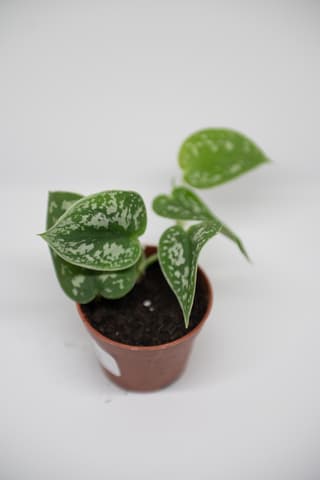
Heartleaf Philodendron
Philodendron scandens
The Heartleaf Philodendron (Philodendron scandens, syn. Philodendron hederaceum) is an evergreen tropical climbing plant from the Araceae family, native to Central and South America. Its glossy, dark green heart-shaped leaves can reach up to 30 cm in length under ideal conditions. It is one of the most popular houseplants in the world due to its ease of care and adaptability to various light conditions.
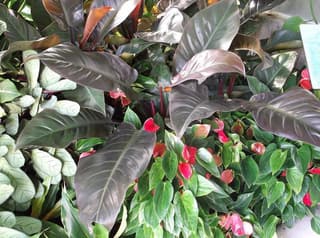
Congo Philodendron
Philodendron tatei
Philodendron tatei, commonly known as Congo Philodendron, is a tropical plant from the Araceae family, native to the wet tropical rainforests of northern Brazil, Guyana, Peru, and Venezuela. Admired for its large, glossy, deep-green leaves (reddish-bronze in cultivated varieties), this species is a popular indoor ornamental plant. Unlike many climbing philodendrons, it has a compact, self-heading growth habit, making it an excellent statement plant for interior spaces.

Fern-Leaf Philodendron
Philodendron tortum
The Fern-Leaf Philodendron (Philodendron tortum) is a climbing aroid native to South American rainforests, prized for its deeply dissected, fern-like leaves. In the wild it climbs tree trunks using aerial roots and can reach several meters in height. Indoors it is typically grown on a moss pole to support vertical growth, which encourages larger, more deeply lobed mature leaves.
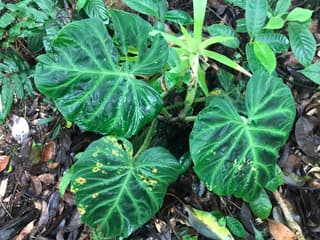
Ecuador Philodendron
Philodendron verrucosum
Philodendron verrucosum is a prized hemiepiphytic aroid native to the cloud forests of Ecuador and Colombia, celebrated for its heart-shaped, velvety leaves marked with iridescent silver-green veining. Its hairy, reddish-brown petioles covered in wart-like protrusions (verrucae) give the species its name and set it apart as one of the most sought-after collector philodendrons.
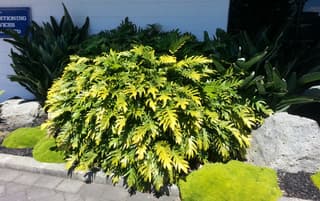
Xanadu Philodendron
Philodendron xanadu
The Xanadu Philodendron (Philodendron xanadu) is a tropical plant native to Brazil, prized for its deeply lobed, glossy dark-green leaves. Compact compared to other philodendrons, it grows in a dense, lush clump and is widely popular as both an indoor and outdoor tropical garden plant. It belongs to the Araceae family and is reclassified by modern botanists under the genus Thaumatophyllum.
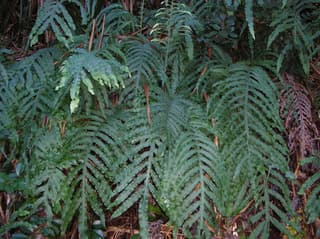
Blue Star Fern
Phlebodium aureum
A fascinating epiphytic fern, known for its deeply lobed, blue-green or glaucous fronds. Native to the tropical regions of the Americas, it grows from creeping rhizomes covered in dense, golden scales, which gives it the name 'aureum'. Unlike many ferns, it has a more robust and waxy texture to its leaves.
False Golden Polypody
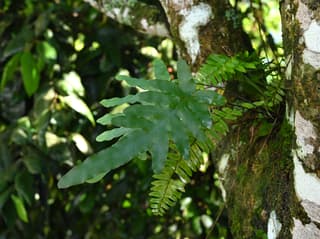
Phlebodium pseudoaureum
Phlebodium pseudoaureum is a striking epiphytic fern native to the tropical and subtropical Americas. It produces elegant, deeply lobed fronds in a distinctive bluish-green hue, crawling along trees and rocks via creeping red-hairy rhizomes. Unlike its cousin P. aureum (Golden Polypody), this species is distinguished by its more glaucous, muted blue-green coloration and smaller stature. It thrives from cloud forests to tropical lowlands, making it one of the most adaptable ferns in the Polypodiaceae family.
Timothy-grass
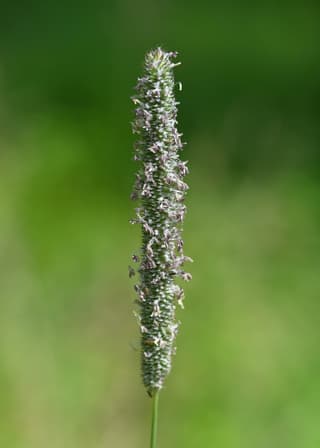
Phleum pratense
Phleum pratense, commonly known as Timothy-grass or Cat's Tail, is a perennial forage grass belonging to the Poaceae family, native to Europe and temperate Asia, and now naturalized in much of the temperate world. It forms erect clumps up to 100-115 cm tall, with linear leaves and a distinctive compact, cylindrical, greenish-purple inflorescence (a false spike). It is one of the most widely cultivated forage grasses in cool and mountainous regions for hay production and for grazing cattle, horses, sheep, and goats.
Jerusalem sage
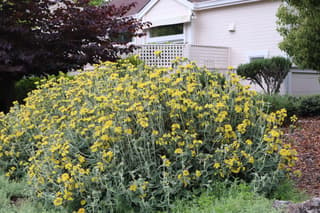
Phlomis
Phlomis is a genus of roughly 100 evergreen to deciduous subshrubs and perennials native to the Mediterranean and Southwest Asia, in the mint family (Lamiaceae). Plants form mounds of wrinkled, woolly gray-green leaves topped by tiered whorls of hooded yellow or pink flowers held on upright spikes from late spring through summer. Highly drought-tolerant once established, Phlomis is prized for xeriscaping, cottage gardens, and pollinator borders.
Annual Phlox
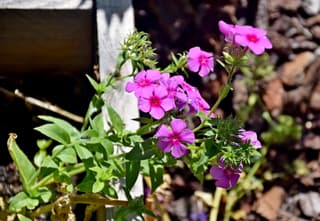
Phlox drummondii
Phlox drummondii, known as annual phlox or Drummond's phlox, is a fast-growing annual native to Texas, prized for dense clusters of star-shaped flowers in red, pink, white, lavender and purple. It thrives in full sun and is popular in beds, borders and containers.
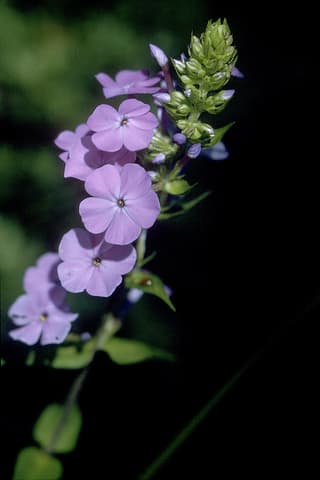
Wild Sweet William
Phlox maculata
Wild Sweet William (Phlox maculata) is a clump-forming herbaceous perennial native to the eastern United States, belonging to the family Polemoniaceae. Its distinctively spotted red-purple stems grow 60–90 cm (2–3 ft) tall and bear dense cylindrical clusters of fragrant flowers in shades of pink, lavender, purple, and white from early to midsummer. Significantly more resistant to powdery mildew than garden phlox (P. paniculata), this native wildflower thrives in moist meadows, woodland edges, and streambanks, attracting butterflies, hummingbirds, and sphinx moths.
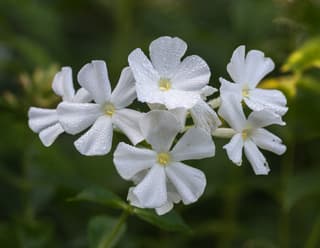
Garden Phlox
Phlox paniculata
Phlox paniculata, commonly known as Garden Phlox or Summer Phlox, is a fragrant, long-blooming herbaceous perennial native to eastern North America. It produces large, domed clusters of five-petaled flowers in shades of pink, purple, red, white, and lavender from mid-summer through fall, making it a staple of cottage and perennial gardens. The plant grows 2–4 feet tall and spreads 2–3 feet wide, returning reliably each year.
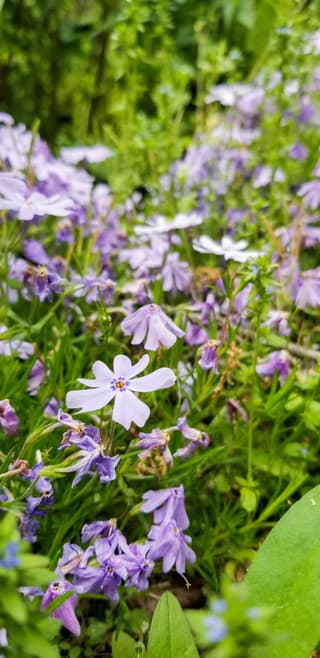
moss phlox
Phlox subulata
Phlox subulata, commonly known as moss phlox, is a vigorous, mat-forming evergreen perennial. It is celebrated for its needle-like foliage and its ability to produce a dense carpet of star-shaped flowers in early spring, often completely obscuring the leaves. It is native to the eastern and central United States and is a staple in rock gardens and as a flowering ground cover.
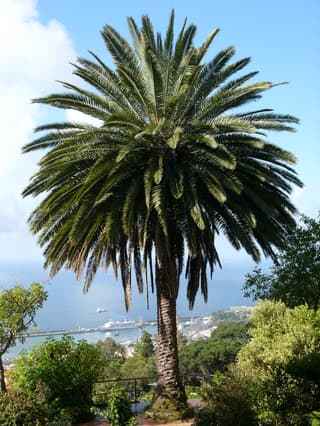
Canary Island Date Palm
Phoenix canariensis
Phoenix canariensis, commonly known as the Canary Island Date Palm or Pineapple Palm, is a majestic feather palm native to the Canary Islands, Spain. It is one of the most widely planted ornamental palms in the world, recognizable by its stout trunk adorned with distinctive diamond-shaped leaf scars, and its long arching pinnate fronds that can reach over 6 meters. Unlike Phoenix roebelenii (the pygmy date palm already in the database), this species is a large-scale outdoor tree that can grow up to 18 meters tall.

Date Palm
Phoenix dactylifera
Phoenix dactylifera, commonly known as the Date Palm, is a majestic palm tree native to the Middle East and North Africa. It can reach up to 30 meters in height and has been cultivated for over 5,000 years for its nutritious fruits — dates — and exceptional ornamental value.
Find the Perfect Plant
Our plant guide helps you find ideal species for your experience level and time of year.
Browse by Difficulty, Season & More
Use the filters below to narrow this catalog by care difficulty, season, environment, or search directly by name. Each filter leads to a focused list tailored to your specific growing conditions.