Asteraceae
Cape Everlasting: Full Sun Plant
Phaenocoma prolifera
Plant the Cape Everlasting in full sun in sandy, mineral-rich, and highly draining soil, preferably on a slope or in a rock garden. It is drought-adapted: water sparingly, especially once established, and avoid any excess water. Avoid rich fertilizers, which are poorly tolerated by fynbos plants. A mild climate with good air circulation suits it better than a humid climate. For dried flowers, cut the open flower heads and dry them in a dry place.
Every 14 days
Direct sun
5° - 35°C
30% - 60%
Categories
What is Cape Everlasting?
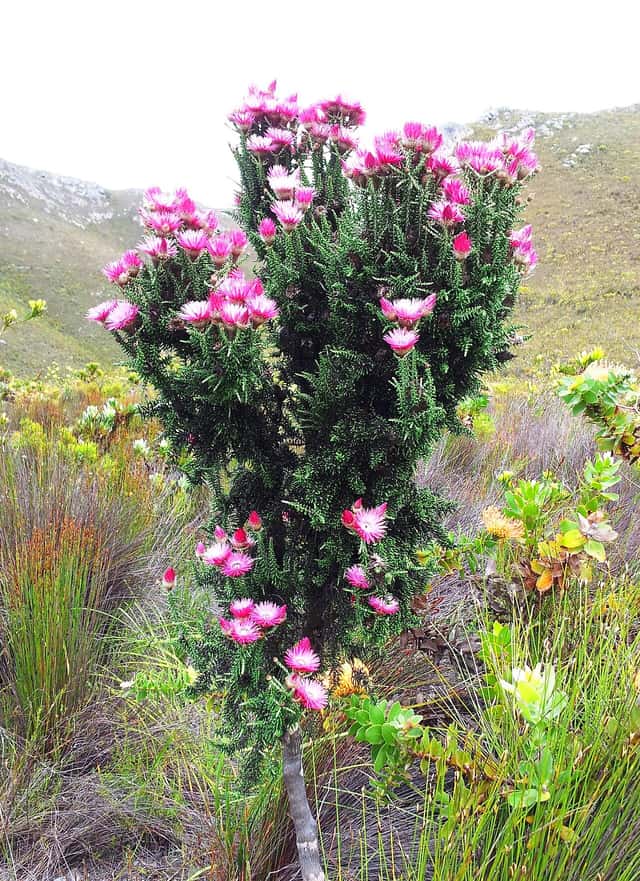
Cape Everlasting (Phaenocoma prolifera) is a medium-care plant from the Asteraceae family. Phaenocoma prolifera is an evergreen shrub in the Asteraceae family, native to the fynbos of the southern Western Cape province in South Africa. It often reaches a meter or more in height and naturally takes on a Christmas tree-like shape, with tiny rounded leaves that densely cover the stems. Its f...
Cape Everlasting grows up to 1.0m, watering every 14 days, 5°C – 35°C, 30–60% humidity. It is not suitable for indoor environments and safe for pets.
Unlike many popular species, Cape Everlasting is safe to keep around pets.
How to Care for Cape Everlasting?
TLDR: Cape Everlasting needs Direct sun, watering every 14 days, and temperatures between 5-35°C with 30-60% humidity.
How Often Should You Water Cape Everlasting?
Water rarely and deeply, allowing the soil to dry out completely between waterings; stagnant water is its primary enemy.
How Much Light Does Cape Everlasting Need?
Full sun all day long, in an open and airy location.
What Is the Best Soil for Cape Everlasting?
Sandy, mineral, and very well-drained soil, low in organic matter; slopes and rock gardens are ideal.
What Pot Should You Use for Cape Everlasting?
Primarily grown in the ground; if potted, choose a large, perforated terracotta container filled with a highly draining sandy mix.
What Is Cape Everlasting and Where Does It Come From?
Phaenocoma prolifera is an evergreen shrub in the Asteraceae family, native to the fynbos of the southern Western Cape province in South Africa. It often reaches a meter or more in height and naturally takes on a Christmas tree-like shape, with tiny rounded leaves that densely cover the stems. Its flower heads, borne at the tips of the branches, are surrounded by rigid, dry, papery bracts ranging from pink to purple that do not fade. Flowering peaks in spring, but the flowers remain decorative for most of the year. When cut and kept dry, they last for years, hence the name 'everlasting'. This hardy rockery plant thrives in full sun and sandy, poor, well-drained soils.
How to Propagate Cape Everlasting?
Sowing
Avoid excess moisture, which causes damping-off in seedlings.
- 1 Sow in a sandy and highly draining mixture.
- 2 Cover the seeds with a very thin layer of sand.
- 3 Place the seed tray in a bright, cool spot and keep the substrate barely moist.
- 4 Prick out the young plants into individual pots once they are large enough.
Materials needed:
How Big Does Cape Everlasting Grow?
TLDR: Cape Everlasting can reach up to 1.0m tall with Medium growth rate.
Max height
1.0m
Growth rate
Medium
Foliage
Evergreen
Plant Uses
Ornamental
Great for decoration
Is your plant showing symptoms?
Click on the symptom to discover possible causes:
What Diseases Commonly Affect Cape Everlasting?
TLDR: Cape Everlasting is susceptible to 4 known diseases. Monitor regularly for early detection.
Root Rot
Root rot is a serious fungal disease that affects the root system of plants, causing them to decay and die. It is primarily caused by overwatering, poor drainage, or soil-borne fungi such as Pythium, Phytophthora, Rhizoctonia, and Fusarium. The disease thrives in waterlogged conditions where roots are deprived of oxygen, making them susceptible to fungal infection.
Grey Mould
Overwatering
Overwatering occurs when plants receive too much water, depriving roots of oxygen and causing root rot. This environmental stress is one of the most common causes of houseplant death, as waterlogged soil prevents roots from breathing and functioning properly.
Aphids
Aphids are small, soft-bodied, pear-shaped insects (1/16 to 1/8 inch long) that feed by sucking nutrient-rich sap from plants. They reproduce rapidly and can quickly weaken plants, causing distorted growth and transmitting plant viruses. Aphids come in various colors including green, black, red, yellow, brown, and gray. They secrete honeydew, a sticky substance that attracts ants and encourages sooty mold growth.
Compare with similar plants
| Attribute | Difficulty | Light | Watering | Pet Safe |
|---|---|---|---|---|
| Dark Fieldcap | Medium | Low light | 2d | ⚠️ |
| Azalea | Medium | Partial shade | 3d | ⚠️ |
| Muriel's Bamboo | Medium | Partial shade | 3d | ✓ |
| Bougainvillea | Medium | Direct sun | 7d | ⚠️ |




