Complete Plant Guide
Explore plants by difficulty, season and more. Find the perfect plant for you.
Difficulty
Categories
Plants by City
🗺️ Plants by City3796 plants found
Showing 2341-2376 of 3796
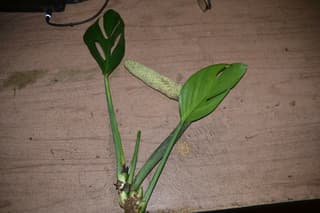
Monstera Peru
Monstera karstenianum
Monstera Peru, scientifically known as Monstera karstenianum, is a unique climbing plant prized for its unusually thick and leathery leaves. Unlike other Monstera species, it typically does not develop holes or fenestrations, but instead stands out for its rugose surface and a metallic dark green sheen that gives it a prehistoric and elegant appearance.
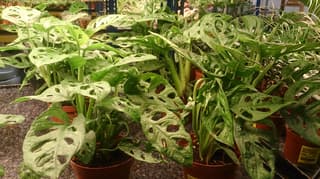
Swiss Cheese Vine
Monstera obliqua
Monstera obliqua is one of the rarest and most extraordinary plants in the Monstera genus, native to the rainforests of Central and South America. Its leaves are famous for being almost entirely holes — up to 90% fenestration — making them appear nearly transparent, with just thin strips of leaf tissue connecting the margins. This radical fenestration makes true M. obliqua unlike any other houseplant. It is extremely rare in cultivation; the vast majority of plants sold under this name are actually Monstera adansonii, a much more robust species. True M. obliqua is a collector's plant, demanding high humidity, warm temperatures, and expert-level care.
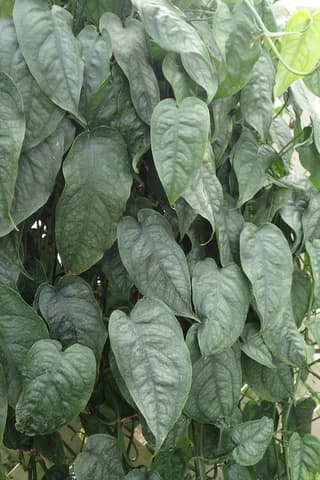
Silver Monstera
Monstera siltepecana
Monstera siltepecana, commonly called Silver Monstera, is a fast-growing climbing vine native to southern Mexico and Central America. Its juvenile leaves are small, lanceolate, and distinctively patterned with silvery-grey markings between dark green veins — a trait that earns it its popular name. As the plant matures on a support structure, adult leaves enlarge and develop characteristic Monstera fenestrations, losing the silver sheen. It belongs to the family Araceae and thrives as a low-maintenance, decorative foliage houseplant equally suited to hanging baskets (juvenile phase) or climbing a moss pole (adult phase).
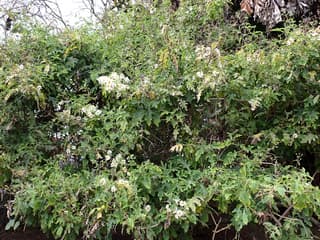
Mexican Daisy Bush
Montanoa bipinnatifida
Montanoa bipinnatifida, commonly known as the Mexican Daisy Bush or Tree Chrysanthemum, is a fast-growing shrub or small tree in the Asteraceae family, native to Mexico and Central America. It can reach up to 5 meters in height, featuring deeply lobed leaves and clusters of white or yellowish daisy-like flowers with a delightful sweet fragrance reminiscent of chocolate or freshly baked cookies. It blooms in fall and winter, making it a standout specimen in the garden during the cooler months.
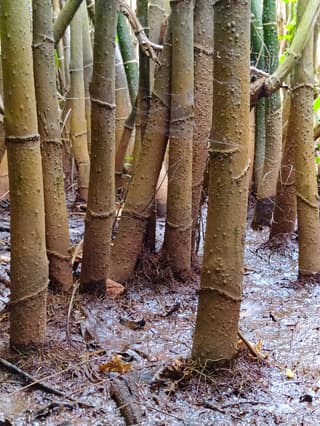
Moccmocc
Montrichardia arborescens
The moccmocc (Montrichardia arborescens) is a perennial aquatic shrub in the Araceae family, native to mangroves, flooded forests (igapós), and the banks of rivers and streams across tropical America, the Caribbean, and Mesoamerica to the Brazilian Amazon. It forms vigorous clumps with erect stems up to 3 m (occasionally 7 m), supported by prop roots and featuring spines on the internodes, along with large arrow-shaped leaves. Its spadix inflorescences, with a spathe that is light green on the outside and white on the inside, give rise to edible infrutescences, and the plant is traditionally used by riverside communities for medicinal and nutritional purposes.
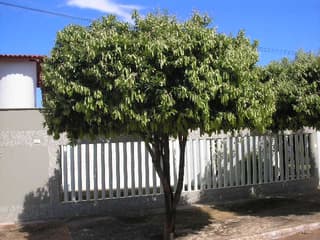
Oiti
Moquilea tomentosa
Moquilea tomentosa, popularly known as Oiti, is a tree native to the Atlantic Forest and Brazilian flora. It is widely used in urban landscaping for streets, parks, and squares due to its dense, rounded canopy that provides excellent shade. It can reach heights of 30 to 50 feet. Its leaves are simple, dark green, and have a velvety texture. It blooms in winter with small white or cream flowers of low ornamental value, and bears fruit between November and January, producing oval, yellow-orange drupes with fibrous, aromatic pulp that is edible for both humans and local wildlife.
Landscaping Black Morel
Morchella importuna
Morchella importuna is an edible mushroom species from the Morchellaceae family, known as the garden morel. It often appears in landscaped areas with bark mulch, gardens, and recently disturbed urban areas. It has a distinctive cap with deep pits and parallel vertical ridges, ranging from grayish-brown to black when mature. It is a saprophytic species, but its fruiting behavior is often unpredictable.
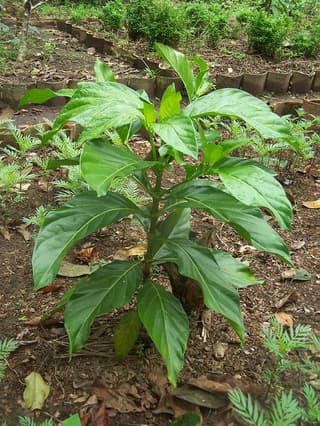
Noni
Morinda citrifolia
Morinda citrifolia, commonly known as Noni or Indian Mulberry, is a tropical evergreen tree native to Southeast Asia, Australasia, and the Pacific Islands. Growing up to 9 metres tall, it produces distinctive white flowers year-round and lumpy, pungent fruits that are central to traditional Polynesian and Ayurvedic medicine. The plant thrives in warm, humid coastal environments, tolerating poor soils, drought, and even salinity.
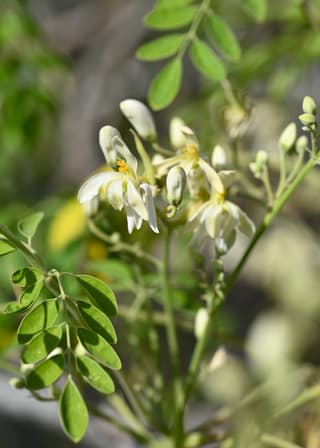
Moringa
Moringa oleifera
Moringa oleifera, commonly known as the drumstick tree, horseradish tree, or ben oil tree, is a fast-growing, drought-resistant tree native to the foothills of the Himalayas. It is widely cultivated in tropical and subtropical areas for its highly nutritious leaves, pods, seeds, and flowers. The tree has a slender trunk, a spreading crown, and compound leaves that are feathery in appearance. It produces clusters of fragrant, white to cream-colored flowers and long, slender, triangular pods.
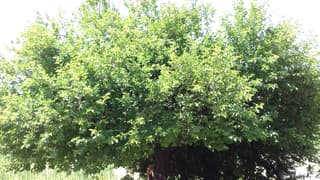
White mulberry
Morus alba
Morus alba, known as white mulberry, is a fast-growing, small to medium-sized tree that typically reaches 10 to 20 meters in height. Native to northern China, it is historically significant as the primary food source for silkworms. The tree features highly variable leaf shapes, often exhibiting deep lobes on younger branches. The fruit is a collective drupe that transitions from white or green to pink or dark purple when fully ripe, offering a sweet flavor profile.
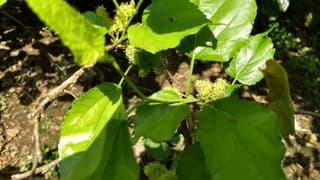
Indian Mulberry
Morus indica
Morus indica is a shrub or small tree in the Moraceae family, native to the temperate and sub-tropical Himalayas and Indochina and cultivated in India, China, Japan and East Africa. Its leaves feed silkworms and its berries are edible.
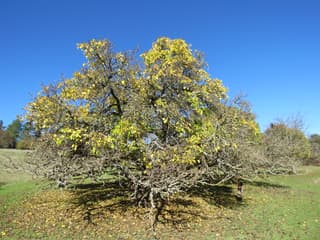
Black Mulberry
Morus nigra
Morus nigra, commonly known as the Black Mulberry, is a deciduous fruit tree native to Southwest Asia, prized for its dark, juicy berries and ornamental value. It can grow up to 12 meters tall with a wide spreading canopy, making it an excellent choice for large gardens and orchards.

Red Mulberry
Morus rubra
Morus rubra, the red mulberry, is a deciduous tree native to eastern North America, prized for its heart-shaped leaves and sweet, blackberry-like fruit that ripens from red to deep purple in summer.
Porcelain Fungus
Mucidula mucida
Mucidula mucida, commonly known as the Porcelain Fungus, is a striking white mushroom found primarily on dead beech wood. It is characterized by its translucent, slimy (mucilaginous) cap that glows when backlit. While technically edible after washing off the slime, it is mostly valued for its ethereal beauty and its role in forest decomposition.
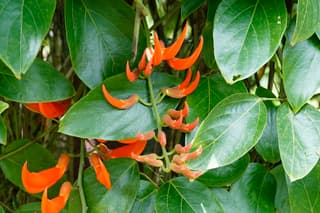
New Guinea Creeper
Mucuna bennettii
The New Guinea Creeper (Mucuna bennettii) is one of the most spectacular tropical vines in the world. Native to Papua New Guinea and surrounding islands, this vigorous liana of the Fabaceae family produces long pendulous clusters of claw-shaped, fiery scarlet flowers. A fast-growing climber capable of reaching 20 feet in length, it creates a stunning focal point on pergolas, fences, and large trees in tropical gardens.
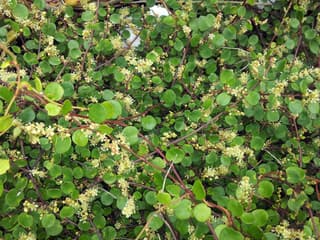
Wire Vine
Muehlenbeckia
Muehlenbeckia is a genus of fast-growing creeping and climbing plants from the Polygonaceae family, native to New Zealand and South America. Recognised by their wiry dark stems, tiny rounded leaves, and intricate lace-like texture, these plants are widely used as ground covers, in hanging baskets, and as trailing accents in containers. They are highly adaptable and easy to care for.
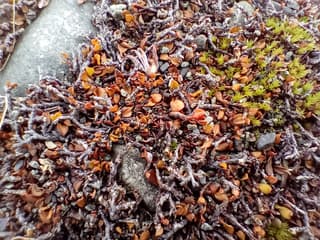
Creeping Wire Vine
Muehlenbeckia axillaris
Muehlenbeckia axillaris, known as creeping wire vine, is a low, mat-forming evergreen-to-semi-evergreen shrub native to New Zealand and parts of southeastern Australia (Tasmania, New South Wales, Victoria). Its wiry, red-brown stems spread along the ground, studded with tiny, glossy, rounded leaves less than 1 cm across. Small yellowish-white flowers appear in the leaf axils in summer, followed by small black, shiny fruits in late summer to fall. Valued as a tough, drought-tolerant ground cover for rockeries, pathways, and container topiary, it forms dense mats up to 1 metre wide while staying only around 10-30 cm tall.
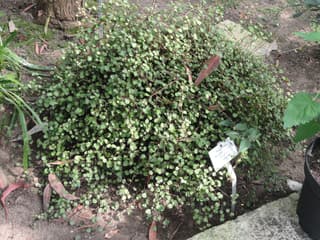
Maidenhair Vine
Muehlenbeckia complexa
Muehlenbeckia complexa, commonly known as Maidenhair Vine or Angel Vine, is a fast-growing deciduous climber native to New Zealand. It features delicate, wiry interlacing stems adorned with small, round to heart-shaped leaves that create an intricate lacy texture. Versatile and resilient, it thrives both indoors and outdoors, making it popular for hanging baskets, ground cover, topiary frames, and trellises.
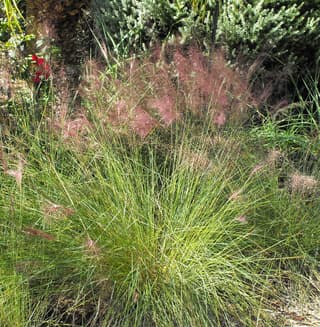
Pink Muhly Grass
Muhlenbergia capillaris
Pink muhly grass (Muhlenbergia capillaris) is a stunning warm-season perennial bunchgrass native to the eastern United States. It forms dense, fine-textured clumps of narrow, arching green blades that reach 60–90 cm tall. In late summer and fall, it erupts into a breathtaking cloud of airy, pink-to-purple panicles that can double its height, creating a spectacular misty effect in the landscape. Hardy from USDA zones 5 to 9b, it thrives in full sun with dry to well-drained soils and is highly drought tolerant once established. Its low-maintenance nature and striking fall display make it one of the most popular ornamental grasses for mass plantings, borders, meadows, and xeriscaping.
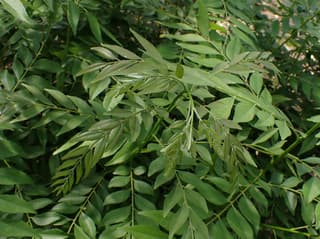
Curry tree
Murraya koenigii
Murraya koenigii, commonly known as the curry tree, is an evergreen shrub or small tree in the citrus family (Rutaceae), native to the forests of South Asia—specifically India and Sri Lanka. Its fragrant, compound, pinnate leaves are indispensable spices in South Indian and Sri Lankan cuisine: when fried fresh or dried in hot oil, they release a characteristic aroma into dishes. The plant produces small, white, fragrant flowers in spring and summer, which develop into shiny black berries—though the seeds are poisonous, only the pulp is edible. It is well-suited for container gardening, although it can grow up to 4 meters tall in open ground.
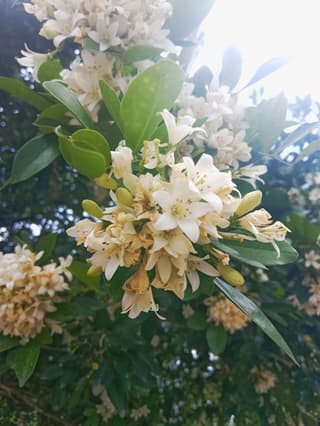
Orange Jasmine
Murraya paniculata
Murraya paniculata is an evergreen shrub or small tree native to South and Southeast Asia. It is widely cultivated for its dense, glossy dark green foliage and intensely fragrant white flowers that resemble the scent of orange blossoms. It is a popular choice for hedges and bonsai.
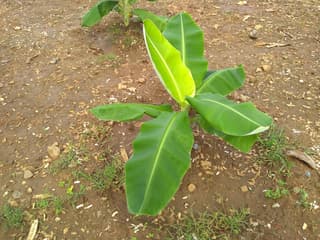
Banana
Musa
Banana (Musa spp.) is a large tropical plant belonging to the family Musaceae. This is a genus-level entry with care data representative of commonly grown ornamental and edible bananas, particularly Musa acuminata-type cultivars such as Dwarf Cavendish. Native to tropical Asia, the banana plant is one of the most recognizable plants in the world, celebrated for its broad, glossy green leaves and iconic fruit. Cultivated for over 8,000 years, it is a symbol of abundance and fertility across many cultures. As a houseplant, it is a fast-growing specimen that can reach 1.5 to 5 metres depending on the cultivar, creating a dramatic tropical focal point.
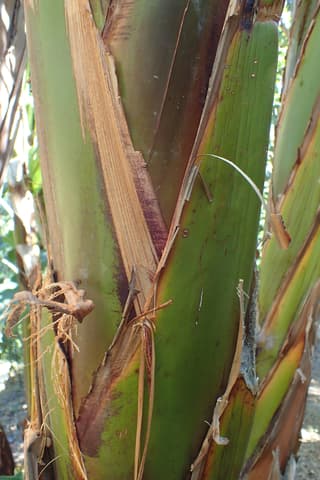
Banana
Musa × paradisiaca
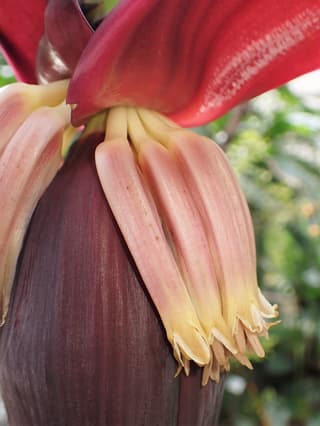
Musa × paradisiaca is the cultivated banana and plantain, a hybrid of Musa acuminata and Musa balbisiana. It is a giant herbaceous plant with a trunk-like pseudostem of leaf sheaths reaching 3-7 m, huge paddle leaves, a pendent purple flower bract, and hands of seedless edible fruit.
Wild Banana
Musa acuminata
Musa acuminata is the wild ancestor of most edible banana cultivars. Native to Southeast Asia, it is a fast-growing, herbaceous perennial that can reach 3–5 m tall. Its large paddle-shaped leaves and arching flower stalks make it a dramatic tropical statement plant. Unlike commercial bananas, wild specimens produce fruits filled with hard seeds.

Wild Banana
Musa balbisiana
Musa balbisiana is a large, fast-growing herbaceous perennial native to eastern South Asia, northern Southeast Asia, and southern China. Reaching up to 5.5 m tall with broad, paddle-shaped leaves, it produces cream-to-white flowers wrapped in reddish-purple bracts, followed by thick-skinned, seed-filled fruit. Along with Musa acuminata, it is one of the two wild ancestors of nearly all cultivated bananas, contributing the resilient 'B genome' that gives many banana hybrids their hardiness.
Japanese Banana
Musa basjoo
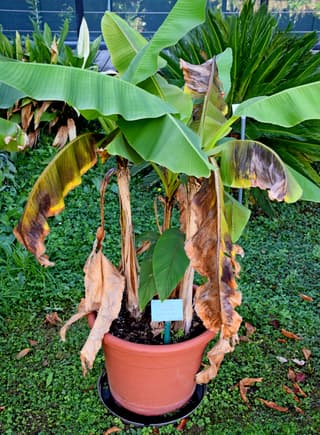
Musa basjoo, known as the Japanese Banana or Hardy Banana, is a fast-growing herbaceous perennial in the family Musaceae. Native to the Ryukyu Islands of Japan and originally from Sichuan, China, it produces enormous paddle-shaped leaves up to 6 feet long, creating a lush tropical effect in temperate gardens. Unlike most bananas, its underground rhizomes can survive temperatures as low as -10°F with mulch, making it the hardiest banana available for cold-climate gardening.
Scarlet Banana
Musa coccinea
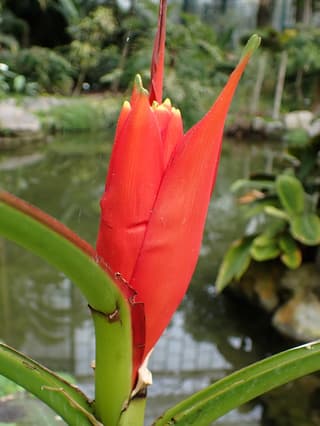
The Scarlet Banana (Musa coccinea) is a striking tropical plant native to Southeast Asia, particularly Vietnam and southern China. Unlike fruiting bananas, it is grown primarily as an ornamental for its dramatic upright inflorescences featuring vivid scarlet bracts surrounding small yellow flowers. A fast-growing clumping plant, it produces offshoots (pups) readily and creates lush tropical displays in gardens, containers, or as indoor specimens in bright spaces.
Flowering Banana
Musa ornata
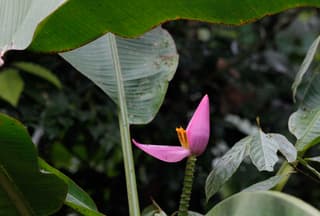
Musa ornata, commonly known as the Flowering Banana or Ornamental Banana, is a small tropical banana plant native to South Asia (Bangladesh, India, Myanmar). It is prized not for its fruit but for its stunning inflorescence of pink to lavender bracts with yellow-orange tubular flowers. Unlike edible banana varieties, its small fruits are inedible, but the plant makes a spectacular ornamental specimen in tropical gardens and large containers.
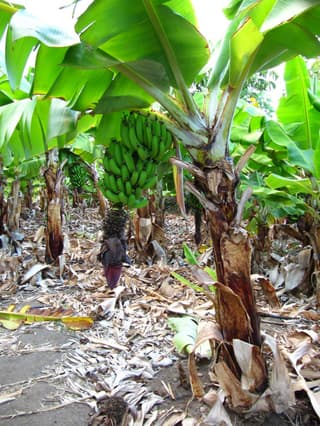
Banana Plant
Musa sp
The Banana Plant (Musa sp) is a tropical herbaceous perennial native to Southeast Asia, widely cultivated both for its edible fruit and ornamental value. Its enormous paddle-shaped leaves can reach up to 2 meters long, creating a lush tropical display. Technically not a tree — the pseudostem is formed by overlapping leaf sheaths. The plant grows rapidly and produces yellow or colorful flowers followed by fruit clusters.
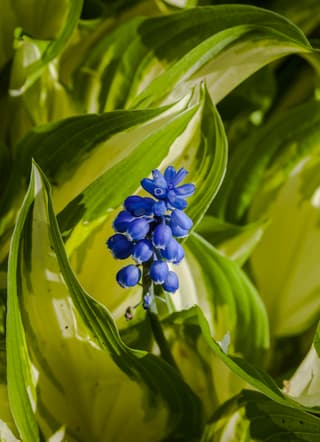
Grape Hyacinth (genus)
Muscari
Muscari is a genus of approximately 30 species of small bulbous spring-flowering perennials in the family Asparagaceae, native to the Mediterranean basin and southwestern Asia. They are beloved for their dense racemes of tiny urn-shaped blue or white flowers that resemble clusters of grapes.
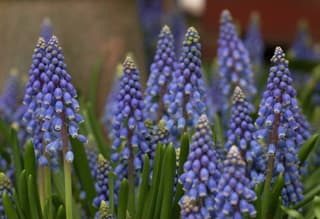
Grape Hyacinth
Muscari armeniacum
Muscari armeniacum, commonly known as Grape Hyacinth, is a bulbous perennial native to Turkey and the Caucasus region. It belongs to the family Asparagaceae and produces small clusters of deep blue-violet, urn-shaped flowers in early spring that resemble bunches of grapes. Hardy, low-maintenance, and highly rewarding, it naturalizes readily in gardens and containers.
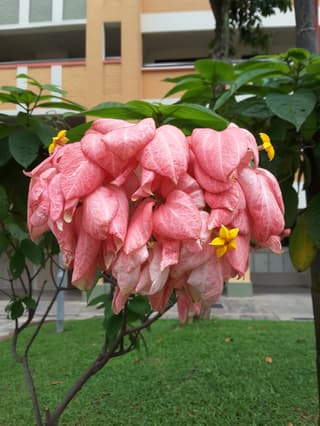
Dona Alicia Mussaenda
Mussaenda alicia
Mussaenda alicia, commonly known as Doña Alicia, is a stunning tropical flowering shrub native to the Philippines and Tropical Asia. It belongs to the family Rubiaceae and is celebrated for its showy pink bracts that surround small yellow tubular flowers. Named in honor of Alicia Santos-Garchitorena, this cultivar is one of the most beloved ornamental plants in Philippine gardens and is grown throughout tropical regions worldwide. The plant produces cascading branches adorned with large, soft, velvety pink sepals, creating a spectacular display from spring through fall.
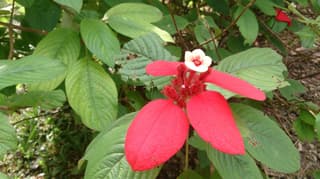
Ashanti Blood
Mussaenda erythrophylla
Mussaenda erythrophylla, commonly known as Ashanti Blood or Red Flag Bush, is a tropical shrub native to West Africa. It is celebrated for its striking deep red modified leaves (bracts) that surround tiny yellow flowers, creating a dramatic and exotic appearance. This fast-growing ornamental shrub thrives in humid, tropical conditions and is a popular choice for tropical garden borders, hedges, and specimen planting.
Bonnet mushroom
Mycena galericulata
Mycena galericulata, commonly known as the bonnet mushroom, is a common gilled mushroom belonging to the Mycenaceae family. It is characterized by a conical to bell-shaped cap with radial grooves and a typically stiff, hollow stipe. It usually grows in clusters on decaying hardwood, especially oak and beech. Its color varies from grayish-brown to whitish depending on humidity.
Garlic Parachute
Mycetinis
Fungi belonging to the genus Mycetinis are known for their characteristic odor reminiscent of garlic. These small mushrooms often live on decaying wood or leaf litter in forests. Their caps are thin, and their stems are tough and dark-colored. The most well-known species is the Garlic Marasmius, which is a valuable culinary mushroom used as a spice.
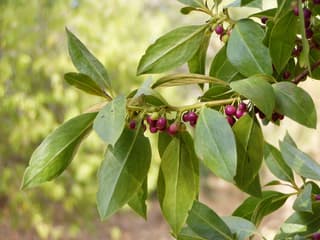
Ngaio
Myoporum laetum
Myoporum laetum, commonly known as ngaio or mousehole tree, is a fast-growing shrub or small tree endemic to New Zealand and the Chatham Islands. It reaches up to 10 meters in height, featuring bright green leaves dotted with translucent oil glands visible when held up to the light. In spring and summer, it produces clusters of small white flowers speckled with purple, followed by reddish fruits. It is extremely salt and wind tolerant, making it widely used as a windbreak and coastal screen. All parts of the plant contain ngaione, a potent liver toxin: it is highly toxic to livestock, dogs, cats, and humans if ingested.
Find the Perfect Plant
Our plant guide helps you find ideal species for your experience level and time of year.
Browse by Difficulty, Season & More
Use the filters below to narrow this catalog by care difficulty, season, environment, or search directly by name. Each filter leads to a focused list tailored to your specific growing conditions.