Complete Plant Guide
Explore plants by difficulty, season and more. Find the perfect plant for you.
Difficulty
Categories
Plants by City
🗺️ Plants by City3781 plants found
Showing 1189-1224 of 3781

Mandevilla
Dipladenia sanderi
Mandevilla (Dipladenia sanderi, synonym Mandevilla sanderi) is an ornamental climbing vine from the Apocynaceae family, native to Brazil. It is widely cultivated in pots, trellises, and planters for its showy trumpet-shaped flowers, which bloom abundantly from spring to fall in shades of pink, red, white, or yellow. Its leaves are dark green, glossy, and slightly leathery in texture. It is a vigorous, fast-growing plant when well-cared for, frequently used to cover fences, pergolas, and trellises in warm climates.
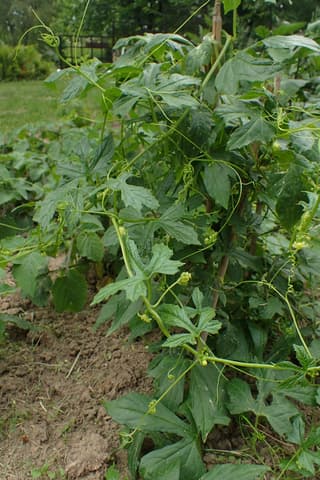
Native Bryony
Diplocyclos palmatus
Diplocyclos palmatus, commonly known as the Lollipop Climber or Native Bryony, is a perennial climbing vine in the Cucurbitaceae family. It is most famous for its highly decorative, marble-sized fruits that transition from green with white stripes to a vibrant red with white stripes as they mature. The leaves are palmately lobed and provide a dense green screen when grown on trellises. While visually striking, the plant is toxic if ingested.
Hyacinth Orchid
Dipodium squamatum
Dipodium squamatum is a rare, leafless, mycoheterotrophic terrestrial orchid of the family Orchidaceae. Native to eastern Australia (Queensland, New South Wales, Victoria, and South Australia), New Caledonia, and Vanuatu, this species is one of the most challenging orchids to study and conserve. Completely lacking photosynthetic leaves, it depends entirely on fungal symbiosis for its nutrients. The erect, reddish-brown flowering stem reaches up to 100 cm tall, bearing 9 to 60 pink to purple flowers, each approximately 2.5 cm across. Blooms occur in summer and fall across its Southern Hemisphere range. In its native habitat, it inhabits open forests, woodlands, drier ridges, and coastal areas at elevations from 10 to 1100 meters in well-drained soils.

Wild Teasel
Dipsacus fullonum
Wild Teasel is a biennial herbaceous plant from the honeysuckle family (Caprifoliaceae). In its first year, it forms a basal rosette of prickly leaves; in the second year, it sends up an upright, thorny stem reaching up to 250 cm, topped with striking cylindrical flower heads. Small lavender-purple to pink flowers bloom sequentially from the center of the inflorescence toward the edges from July to September, frequently visited by bumblebees, bees, and butterflies. The dry seeds are a favorite winter food source for goldfinches and other songbirds. After flowering and seed maturation, the parent plant dies, but it maintains its presence easily through prolific self-seeding. Dried flower heads are traditionally used in floral arrangements and decorations, and historically served for carding (combing) wool cloth—hence the Latin species name "fullonum" (fuller).
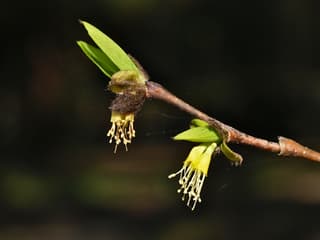
Eastern Leatherwood
Dirca palustris
Dirca palustris, commonly known as Eastern Leatherwood, is a slow-growing native deciduous shrub of eastern North America. It reaches about 6 feet tall and wide, producing delicate pale yellow bell-shaped flowers in early spring before leaf emergence. Its bark is extraordinarily pliable and strong, historically used by Native Americans for rope, baskets, and bowstrings.
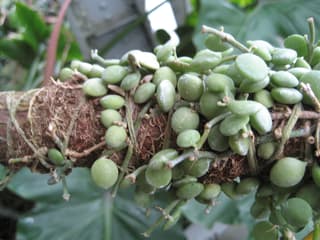
String of Nickels
Dischidia nummularia
Dischidia nummularia, commonly known as String of Nickels, is a tropical epiphytic plant in the Apocynaceae family, native to Australia and Southeast Asia. Its small, round, succulent-like leaves resemble coins strung along slender trailing stems, making it a popular choice for hanging baskets, terrariums, and shelf displays. A slow-growing but resilient houseplant, it thrives with bright indirect light, well-draining substrate, and moderate to high humidity.
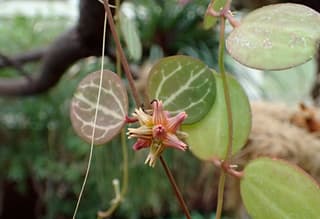
Watermelon Dischidia
Dischidia ovata
Dischidia ovata is a charming epiphytic vine native to New Guinea and Queensland, Australia, known for its small fleshy leaves patterned like watermelon rind. It thrives in bright indirect light with excellent drainage.
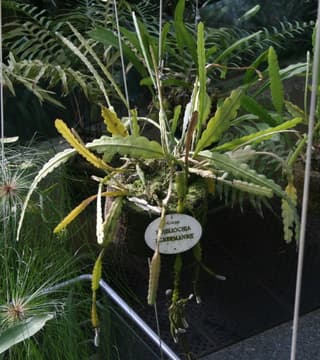
Orchid Cactus
Disocactus
Disocactus is a genus of epiphytic cacti native to the tropical forests of Mexico and Central America, prized for their flattened, leaf-like stems and spectacular funnel-shaped flowers in shades of red, pink, and white. Unlike desert cacti, Disocactus species grow on trees in humid, shaded environments, making them a striking choice for hanging baskets indoors.
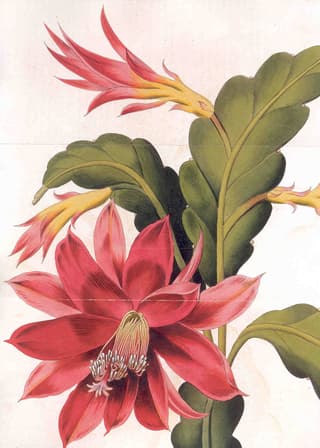
Red Orchid Cactus
Disocactus ackermannii
Disocactus ackermannii is an epiphytic orchid cactus with flattened, arching green stems and spectacular, large scarlet-red flowers with yellow stamens. Native to Mexican rainforests, it grows on trees rather than in soil and is a favorite for hanging baskets.
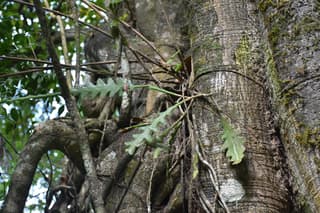
Fishbone Cactus
Disocactus anguliger
Disocactus anguliger is an epiphytic cactus native to the mountain forests of Guerrero, Mexico, prized for its flat, deeply lobed stem segments that zigzag like a fishbone. Unlike desert cacti, it grows in the dappled shade of tree canopies and produces large, fragrant, night-blooming flowers in creamy white to pale pink in autumn.
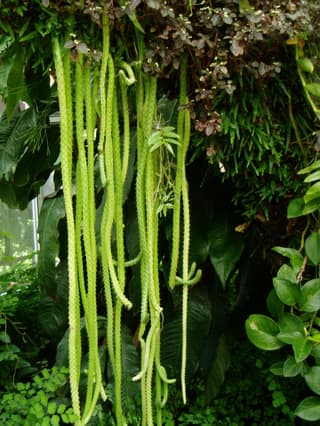
Rat Tail Cactus
Disocactus flagelliformis
Disocactus flagelliformis, commonly known as the Rat Tail Cactus, is an epiphytic cactus native to Mexico. Its long, trailing cylindrical stems can reach up to 2 meters in length and are covered in fine spines. It is prized for its spectacular magenta to bright red flowers that bloom in spring, making it a popular choice for hanging baskets.
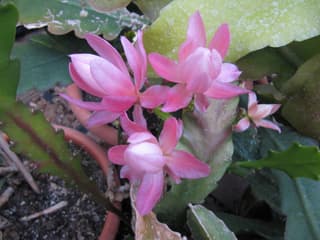
German Empress
Disocactus phyllanthoides
Disocactus phyllanthoides, commonly called the German Empress, is an epiphytic cactus native to the cloud forests of Puebla and Veracruz, Mexico. It has flattened, leaf-like stems and produces funnel-shaped rose-pink flowers in late winter to spring. Unlike desert cacti, it thrives in filtered shade and moderate humidity, often growing on trees or rocks in its native habitat.
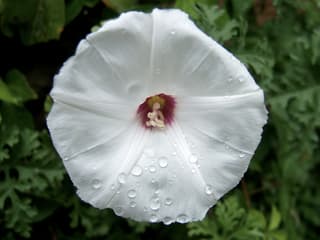
Alamo vine
Distimake dissectus
Distimake dissectus, commonly known as the Alamo vine or Noyau vine, is a vigorous perennial climbing vine in the morning glory family. It is easily recognized by its deeply lobed, palmate leaves that resemble a hand and its striking funnel-shaped white flowers with a deep magenta or purple throat. It is a fast grower that can quickly cover fences, trellises, or arbors.
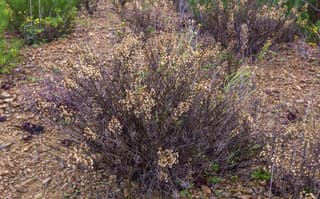
False Yellowhead
Dittrichia viscosa
Dittrichia viscosa (syn. Inula viscosa), commonly known as false yellowhead or sticky fleabane, is a perennial evergreen shrub in the Asteraceae family, widespread throughout the Mediterranean basin. It typically grows along roadsides, wasteland, riverbeds, and degraded areas up to 1500 m in altitude, colonizing even the poorest and stoniest soils. It has a bushy habit with erect and highly branched stems, woody at the base, which can reach 50-150 cm in height. The leaves are elongated, pointed, with serrated margins and covered with glandular hairs that release a sticky resin with a resinous and balsamic scent, from which the name 'viscosa' derives. In autumn, it produces numerous yellow flower heads that provide an important source of pollen and nectar for bees and pollinating insects when most other blooms have ended.
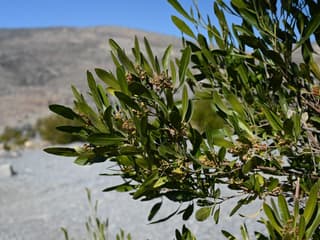
Hop bush
Dodonaea viscosa
Dodonaea viscosa (hop bush) is an evergreen shrub or small tree in the soapberry family (Sapindaceae), native to dry, sunny habitats in tropical and subtropical regions worldwide—such as sandy coastal dunes and rocky slopes. Its narrow, glossy, resin-coated leaves have a characteristic 'varnished' sheen that protects the plant from dehydration. Small, yellowish-green flowers bloom in spring and fall, followed by distinctive, papery, rosy-red, winged fruits that gave the species the name 'hop bush,' as they were once used as a substitute for hops in beer brewing. It is extremely drought- and salt-tolerant, making it a popular choice for windbreak hedges or coastal protection.
Cat's Claw Vine
Dolichandra unguis-cati
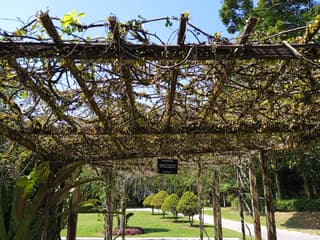
Dolichandra unguis-cati, popularly known as Cat's Claw Vine, is an extremely vigorous woody climber native to the Americas. It is famous for its three-pronged tendrils that resemble cat claws, allowing the plant to easily scale walls, trees, and rocks. During spring, it produces a spectacular display of yellow trumpet-shaped flowers.

Doritaenopsis
Doritaenopsis
Doritaenopsis is a cultivated orchid nothogenus (× Doritaenopsis) created by crossing Doritis with Phalaenopsis; most such plants are now treated within the genus Phalaenopsis. They are epiphytic orchids with broad, fleshy leaves and are among the most popular flowering houseplants. Their flower spikes, often more upright than those of ordinary moth orchids, carry numerous long-lasting blooms in vivid pink, magenta, white and purple.
Livingstone daisy
Dorotheanthus bellidiformis
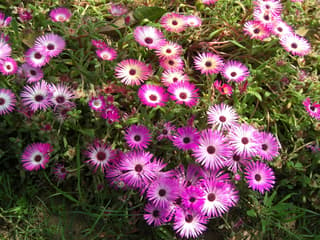
The Livingstone daisy (Dorotheanthus bellidiformis, syn. Cleretum bellidiforme) is a low-growing succulent annual native to the Cape region of South Africa. It reaches about 25 cm tall and forms a dense mat of fleshy leaves covered in tiny glistening papillae. The solitary, many-petalled flowers resemble daisies, up to 30 mm across, and come in white, cream, yellow, orange, pink and crimson. They open only in bright sunshine and close in dull weather. In the wild it grows on loose sands, clay slopes and rocky outcrops in fynbos and succulent karoo. In temperate climates it is grown as a half-hardy annual for borders, rockeries, window boxes, troughs and pots.
Shield Flower
Dorstenia
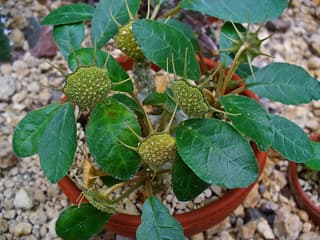
Dorstenia is a captivating genus of caudiciform succulents in the Moraceae family — the same family as figs and breadfruit. Native to arid regions of East Africa and the Arabian Peninsula, including Ethiopia, Somalia, Kenya, Tanzania, Saudi Arabia, Yemen, and Oman, it is prized by collectors for its swollen water-storing caudex and uniquely bizarre hypanthodium inflorescences — flat, disc- or shield-shaped structures that serve as composite flower heads. Despite its exotic appearance, Dorstenia is relatively easy to grow indoors when given bright light and well-draining soil.
Dracaena
Dracaena
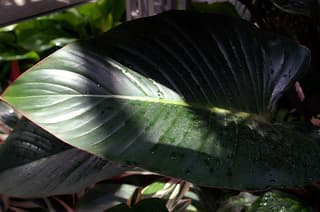
Dracaena is a large genus of approximately 120 species of trees and succulent shrubs in the family Asparagaceae, native to Africa, southern Asia, Madagascar, and Australia. Most species are grown as popular indoor houseplants prized for their dramatic, architectural foliage and exceptional tolerance of low-light and neglect. Common houseplant species include Dracaena fragrans (corn plant), Dracaena marginata (dragon tree), and Dracaena trifasciata (snake plant, formerly Sansevieria). They are widely recognized for their air-purifying properties.
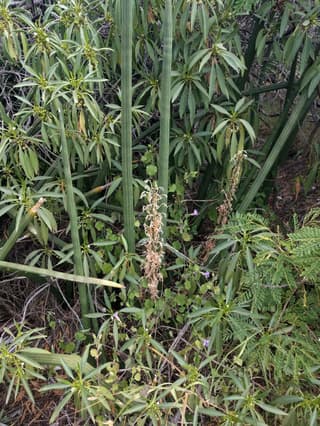
African Spear
Dracaena angolensis
Dracaena angolensis, commonly known as the African Spear or Cylindrical Snake Plant, is a succulent native to Angola and southern Africa. Taxonomic note: Dracaena angolensis (Welw. ex Carrière) Byng & Christenh. is an accepted synonym of Sansevieria cylindrica Bojer ex Hook. — the older name — and both names refer to exactly the same species. Its upright, subcylindrical dark-green leaves with grayish banding make it a striking ornamental choice. Exceptionally drought-tolerant, it thrives on neglect and adapts to a wide range of light conditions, making it one of the most beginner-friendly houseplants available.
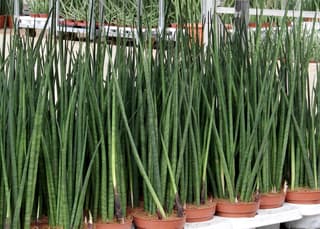
Bamboo Dracaena
Dracaena bacularis
Dracaena bacularis, commonly known as Bamboo Dracaena or Skinny Snake Plant, is a slender succulent native to the arid regions of Central Africa, particularly Angola. Its thin, cylindrical stems resemble bamboo canes, giving rise to its popular nickname. This plant is exceptionally resilient and beginner-friendly, tolerating low light, infrequent watering, and dry indoor air with ease.
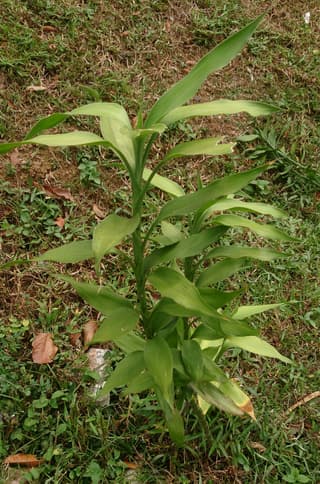
Lucky Bamboo
Dracaena braunii
Dracaena braunii, commonly known as Lucky Bamboo, is a slender, cane-stemmed perennial native to the rainforests of Cameroon in West Africa. Despite its common name and bamboo-like appearance, it is not a true bamboo but a member of the Asparagaceae family. Taxonomic note: Dracaena braunii Engl. (1892) is widely treated as a synonym of Dracaena sanderiana Sander ex Mast. (1892) — both names refer to the same plant. Our database maintains them as separate entries for reference; see also Dracaena sanderiana (ID: f49aa6d9-2af5-4da3-97d6-b03edc18fd95). Lucky Bamboo is one of the most popular indoor plants worldwide, deeply associated with Feng Shui and Asian cultural traditions. It tolerates low light and can be grown in water or well-draining soil, making it exceptionally versatile and beginner-friendly.
Janet Craig Dracaena
Dracaena deremensis
Dracaena deremensis, commonly known as Janet Craig Dracaena, is a striking tropical houseplant native to the rainforests of East Africa. It features long, arching deep-green leaves that emerge from a central cane, creating an elegant, architectural silhouette. One of the most low-maintenance indoor plants available, it thrives in low-light conditions and tolerates infrequent watering, making it a top choice for offices, living rooms, and beginners alike. It is also recognized as an effective air purifier.

Dragon Blood Tree
Dracaena draco
The Dragon Blood Tree (Dracaena draco) is an iconic, slow-growing tree native to the Canary Islands and Madeira, renowned for its dramatic umbrella-shaped canopy and the legendary red resin known as "dragon's blood." It can live for hundreds to over a thousand years, making it one of the world's most extraordinary long-lived plants.
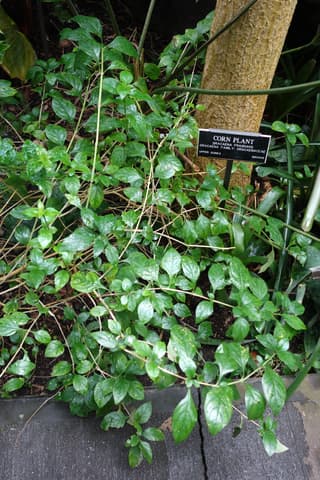
Corn Plant
Dracaena fragrans
The Corn Plant (Dracaena fragrans) is a popular tropical houseplant native to Africa, known for its striking sword-shaped leaves that emerge from a woody cane-like stem. This elegant plant can grow up to 6 feet tall indoors and is prized for its air-purifying qualities and low-maintenance nature. The glossy green leaves often feature yellow or cream stripes, and mature plants may produce fragrant white flowers.
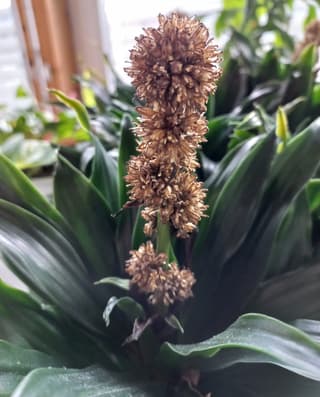
Compact Corn Plant
Dracaena fragrans 'Compacta'
The Compact Corn Plant (Dracaena fragrans 'Compacta') is a dwarf cultivar of the classic corn plant, prized for its dense rosette of glossy, dark green leaves that rarely need pruning to keep a tidy shape. Native to tropical regions of Africa, this compact form typically stays under 1.2 m tall when grown in containers, making it a popular choice for offices, low-light rooms, and small apartments. It is one of the most forgiving and low-maintenance houseplants available, tolerating low light and occasional neglect.
Lemon Lime Corn Plant
Dracaena fragrans 'Lemon Lime'
Tropical houseplant with distinctive lime-yellow and green striped foliage. Slow-growing, upright shrub with glossy lance-shaped leaves and fragrant seasonal flowers. Popular ornamental valued for low-maintenance care and air-purifying properties.

Walking Sansevieria
Dracaena francisii
The Walking Sansevieria (Dracaena francisii, formerly Sansevieria francisii) is a compact succulent native to eastern Kenya along the Tana River. It forms tight rosettes of cylindrical, pointed leaves with grey-green banding, and is notable for producing above-ground stolons that root on contact with soil, creating new plantlets around the mother plant. Accepted name per POWO/IPNI: Dracaena francisii (Chahin.) Byng & Christenh.
Guiana Dracaena
Dracaena guianensis
Dracaena guianensis is a slow-growing evergreen foliage plant from the tropical understory of northern South America, with glossy, strap-shaped deep green leaves on slender upright stems. Grown as an easy indoor plant, it brings a lush, architectural look and helps freshen indoor air.
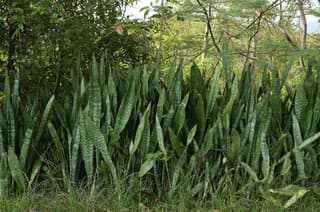
African Wild Dracaena
Dracaena hyacinthoides
Dracaena hyacinthoides, formerly known as Sansevieria hyacinthoides, is a hardy succulent native to South Africa. Reclassified from the genus Sansevieria to Dracaena in 2017, this xerophyte forms rosettes of stiff, dark green lance-shaped leaves with pale green mottling. Exceptionally drought-tolerant, it thrives with minimal care and is prized for its air-purifying properties.
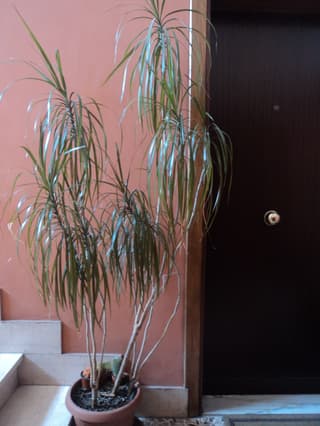
Dragon Tree
Dracaena marginata
Dracaena marginata, commonly known as the Dragon Tree, is an elegant houseplant featuring long, slender leaves in shades of green with distinctive red or purple margins. Native to Madagascar, it is prized for its sculptural form and low maintenance requirements. With proper care, it can live over 15-20 years indoors and is excellent for purifying indoor air.
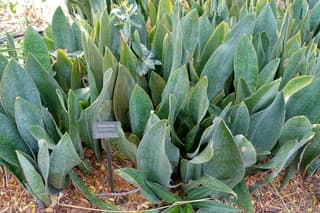
Whale Fin Snake Plant
Dracaena masoniana
Dracaena masoniana (synonym Sansevieria masoniana), family Asparagaceae, is a succulent-like foliage plant native to Africa, originally collected in the Democratic Republic of the Congo. It is grown for its striking, broad, stiff whale-fin-shaped leaf, often a single large leaf per pot.
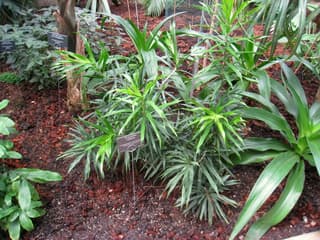
Song of India
Dracaena reflexa
Dracaena reflexa, commonly known as Song of India, is a slow-growing evergreen shrub native to Madagascar and the Indian Ocean islands. Prized for its elegant spiraling rosettes of glossy, lance-shaped leaves, it makes an excellent indoor plant that also purifies the air by removing formaldehyde and other volatile organic compounds.
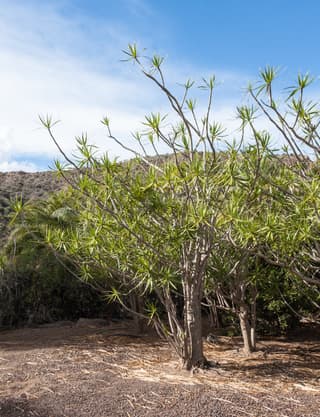
Narrow-leaf Song of India
Dracaena reflexa var. angustifolia
Dracaena reflexa var. angustifolia is a narrow-leaved variety of the Song of India, a tropical evergreen shrub native to Madagascar and nearby Indian Ocean islands. It features slender, sword-shaped leaves with a glossy dark-green color, arranged in dense spirals along upright, cane-like stems. Grown both as a striking houseplant and as an outdoor landscape shrub in warm climates, it is prized for its architectural form, low maintenance, and air-purifying qualities.
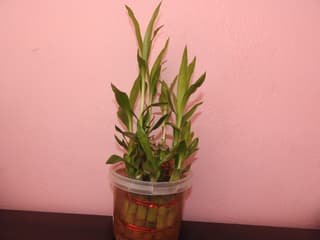
Lucky Bamboo
Dracaena sanderiana
Lucky Bamboo (Dracaena sanderiana) is a popular indoor plant native to Central Africa, despite its association with Asian culture and Feng Shui. It is not actually a bamboo but belongs to the Asparagaceae family. Known for its resilience and elegant twisted stems, it can grow in both water and soil. The plant is prized for its air-purifying properties, removing benzene and other toxins from indoor air.
Find the Perfect Plant
Our plant guide helps you find ideal species for your experience level and time of year.
Browse by Difficulty, Season & More
Use the filters below to narrow this catalog by care difficulty, season, environment, or search directly by name. Each filter leads to a focused list tailored to your specific growing conditions.