Asparagaceae
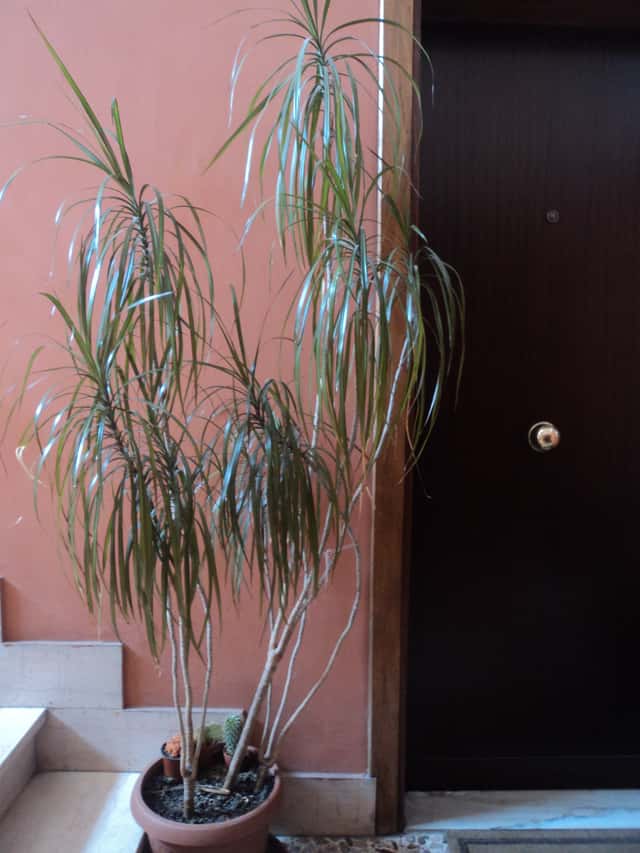
Dragon Tree: Perfect Indoor Houseplant
Dracaena marginata
Easy-care plant that tolerates low light and irregular watering. Perfect for beginners. Keep in bright indirect light and water only when soil dries out. Avoid temperatures below 59°F (15°C).
Every 10 days
Partial shade
15° - 27°C
50% - 70%
Categories
What is Dragon Tree?
Dragon Tree (Dracaena marginata) is a easy-care plant from the Asparagaceae family. Dracaena marginata, commonly known as the Dragon Tree, is an elegant houseplant featuring long, slender leaves in shades of green with distinctive red or purple margins. Native to Madagascar, it is prized for its sculptural form and low maintenance requirements. With proper care, it can live over 15...
Dragon Tree grows up to 2.0m, spread of 60cm, watering every 10 days, 15°C – 27°C, 50–70% humidity. It is suitable for indoor environments and not safe for pets.
Unlike many tropical plants, Dragon Tree tolerates watering mistakes. Best for beginners. Without precautions, ingestion can cause irritation in pets. Keep out of reach of cats and dogs. Without adequate drainage, root rot can develop within 20 days.
How to Care for Dragon Tree?
TLDR: Dragon Tree needs Partial shade, watering every 10 days, and temperatures between 15-27°C with 50-70% humidity.
How Often Should You Water Dragon Tree?
Water every 7-14 days in spring/summer, allowing soil to dry between waterings. In winter, reduce to every 2-4 weeks. Use filtered or distilled water as the plant is sensitive to chlorine and fluoride.
How Much Light Does Dragon Tree Need?
Prefers bright indirect light (2000-6000 lux). Avoid direct sunlight which can scorch leaves. Tolerates low-light conditions but growth will be slower and colors less vibrant.
What Is the Best Soil for Dragon Tree?
Use well-draining potting mix: universal soil with 20-30% perlite or pumice. Ideal pH between 5.5-6.8. Add a layer of clay pebbles at the pot bottom for drainage.
What Pot Should You Use for Dragon Tree?
Ceramic or terracotta pot with drainage holes. Porous materials help prevent root rot from excess moisture.
Care Schedule
Fertilize
Every 30 days
Repot
Every 1095 days
What Is Dragon Tree and Where Does It Come From?
Dracaena marginata, commonly known as the Dragon Tree, is an elegant houseplant featuring long, slender leaves in shades of green with distinctive red or purple margins. Native to Madagascar, it is prized for its sculptural form and low maintenance requirements. With proper care, it can live over 15-20 years indoors and is excellent for purifying indoor air.
How to Propagate Dragon Tree?
Stem cuttings
Best time: spring/summer. Use rooting hormone to speed up the process.
- 1 Cut a 4-6 inch stem segment
- 2 Let the cut end dry for 1-2 days
- 3 Plant in moist, well-draining potting mix
- 4 Keep in warm location (70-75°F) with indirect light
- 5 Roots appear in 4-6 weeks
Materials needed:
How Big Does Dragon Tree Grow?
TLDR: Dragon Tree can reach up to 2.0m tall with Slow growth rate.
Max height
2.0m
Spread
60cm
Growth rate
Slow
Foliage
Evergreen
Warning: Toxic Plant
This plant can be toxic if ingested. Keep out of reach of:
Plant Uses
Ornamental
Great for decoration
Air Purifying
Improves air quality
Is your plant showing symptoms?
Click on the symptom to discover possible causes:
What Diseases Commonly Affect Dragon Tree?
TLDR: Dragon Tree is susceptible to 18 known diseases. Monitor regularly for early detection.
Powdery Mildew
Powdery mildew is a common fungal disease caused by various fungi species including Erysiphe, Podosphaera, Oïdium, and Leveillula. It affects over 10,000 plant species worldwide. The disease thrives in warm, dry climates with high humidity and appears as a distinctive white powdery coating on plant surfaces.
Root Rot
Root rot is a serious fungal disease that affects the root system of plants, causing them to decay and die. It is primarily caused by overwatering, poor drainage, or soil-borne fungi such as Pythium, Phytophthora, Rhizoctonia, and Fusarium. The disease thrives in waterlogged conditions where roots are deprived of oxygen, making them susceptible to fungal infection.
Gray Mold (Botrytis Blight)
Gray mold, caused by the fungus Botrytis cinerea, is one of the most common fungal diseases in plants. It affects over 200 plant species, including ornamentals, vegetables, fruits, and houseplants. The disease thrives in cool, humid conditions with poor air circulation, causing grayish spots and soft rot on infected tissues.
Fusarium Wilt
Fusarium wilt is a serious fungal disease caused by the soil-borne fungus Fusarium oxysporum. The fungus invades roots and blocks the water-conducting vessels (xylem) of the plant, causing progressive wilting and eventual death. Host-specific forms of the pathogen exist that attack different plant species.
Meaning & Symbolism
Symbolizes resilience, longevity, and purification. In feng shui, it is considered a lucky plant that attracts positive energy and prosperity.
Compare with similar plants
| Attribute | Difficulty | Light | Watering | Pet Safe |
|---|---|---|---|---|
| Field Maple | Easy | Bright indirect | 14d | ✓ |
| Silver Birch | Easy | Direct sun | 14d | ✓ |
| Common Blanketflower | Easy | Direct sun | 10d | ✓ |
| Cushion Bush | Easy | Direct sun | 14d | ✓ |





