Complete Plant Guide
Explore plants by difficulty, season and more. Find the perfect plant for you.
Difficulty
Categories
Plants by City
🗺️ Plants by City3766 plants found
Showing 865-900 of 3766
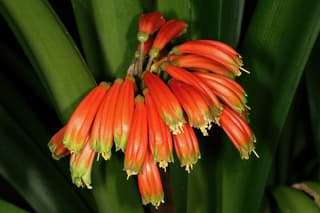
Green-tip Forest Lily
Clivia gardenii
Clivia gardenii is a clump-forming evergreen perennial native to the shaded forests of KwaZulu-Natal and the Eastern Cape in South Africa. A close, more delicate relative of the popular Clivia miniata, it produces slender, tubular, drooping orange flowers with distinctive green tips in autumn and winter, followed by bright red berries. Its strappy, dark green leaves grow from a thick rhizome and thrive in the dappled shade of forest understories. Slow-growing but long-lived, it is prized by collectors for its subtle beauty and shade tolerance.
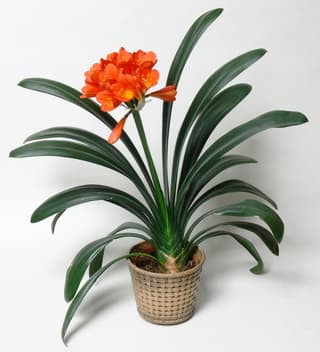
Bush Lily
Clivia miniata
Clivia miniata is an elegant evergreen perennial native to the shaded forests of South Africa's KwaZulu-Natal region. Known for its stunning clusters of trumpet-shaped orange flowers that bloom in late winter to early spring, it has become one of the most popular indoor flowering plants worldwide. Its dark green, strap-shaped leaves form a graceful fan shape, providing year-round ornamental value even when not in bloom.
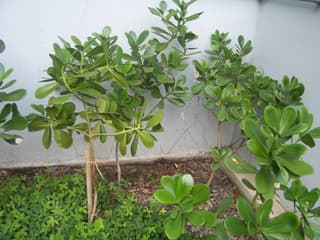
Autograph Tree
Clusia fluminensis
Clusia fluminensis is a native tree of the Brazilian Atlantic Forest, prized for its thick, leathery leaves on which names and messages can be scratched and remain visible as the leaf dries — hence the common name "autograph tree." It produces fragrant white flowers and ornamental fruits that split open to reveal orange-red seeds. The species is salt-tolerant and thrives in coastal environments.
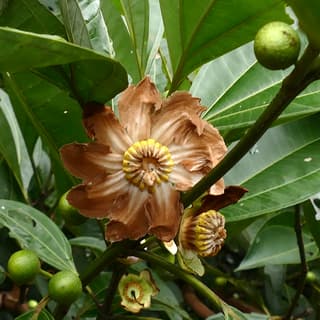
Large-flowered Clusia
Clusia grandiflora
Clusia grandiflora is a hemiepiphytic climber native to the Amazon rainforest and the Guiana region, found across Brazil, Peru, Colombia, Venezuela, Suriname and French Guiana. It begins life as an epiphyte in the canopy of a host tree, later sending roots down to the forest floor and becoming a self-supporting tree up to 10 m tall with distinctive stilt roots. Its thick, leathery leaves are typical of the genus Clusia, and its large white flowers tinged with rose, up to 20 cm across, rank among the showiest in the Clusiaceae family.
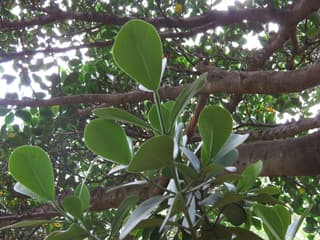
Autograph Tree
Clusia rosea
Clusia rosea is a perennial tropical plant known for its leathery, stiff, and glossy deep green leaves. It is popularly called the 'autograph tree' because names can be carved into its leaves, remaining visible for a long time. In the wild, it can grow as an epiphyte, but in cultivation, it is valued as a medium-sized ornamental shrub or tree, producing showy flowers ranging from white to pink.
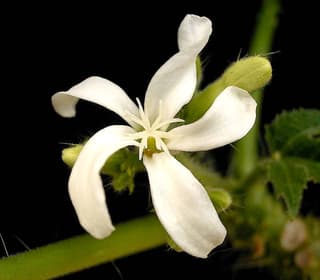
Bull Nettle
Cnidoscolus
Cnidoscolus is a tropical and subtropical genus in the family Euphorbiaceae, native to the Americas and comprising approximately 100 species of shrubs and small trees. The genus is best known for its stinging urticating hairs (trichomes) that cover stems, leaves, and petioles in most wild species, causing intense burning and welts on contact. The milky latex sap also causes contact dermatitis. Cnidoscolus aconitifolius (Chaya or Tree Spinach) is a notable exception in cultivated forms — spineless varieties are grown across Central America as a highly nutritious leafy vegetable, with leaves containing 2-3x more protein, calcium, and iron than spinach. Leaves must be cooked for 15-20 minutes to neutralize naturally occurring cyanogenic glycosides. Other species such as C. texanus (Bull Nettle) are considered aggressive weeds in the southern United States.
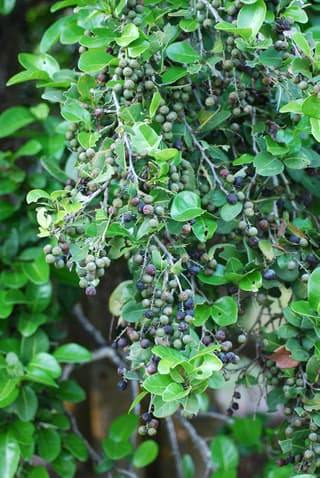
Pigeon Plum
Coccoloba diversifolia
Pigeon Plum (Coccoloba diversifolia) is a fast-growing, evergreen tropical tree native to the Caribbean, Florida, and Central America. Prized for its leathery dark-green foliage, creamy-white flower spikes, and small reddish-purple fruits loved by birds, it thrives in sandy coastal soils with outstanding drought and salt tolerance.
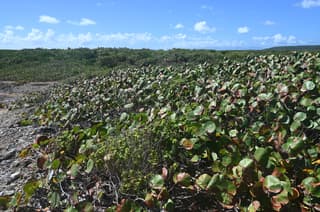
Sea Grape
Coccoloba uvifera
Coccoloba uvifera, commonly known as Sea Grape, is a coastal tree or large shrub native to the tropical Americas, including the Caribbean, southern Florida, Mexico, and Central and South America. It features large, round, leathery leaves up to 25 cm in diameter with distinctive reddish veins. Female trees produce hanging clusters of purple, grape-like fruits that are edible and widely used in Caribbean cuisine. The plant is highly tolerant of salt spray, wind, and sandy soils, making it a cornerstone of tropical coastal landscapes.
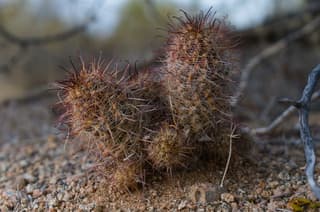
Thornber's Nipple Cactus
Cochemiea thornberi
Cochemiea thornberi, commonly known as Thornber's Nipple Cactus or Thornber's Fishhook Cactus, is a small clustering cactus native to the Sonoran Desert of Arizona and Sonora, Mexico. It forms dense clumps of cylindrical stems adorned with hooked central spines and produces delicate white to pink flowers with lavender midstripes, making it a prized gem among cactus collectors.
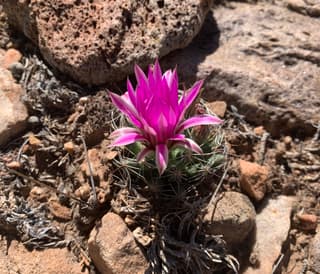
Wright's Fishhook Cactus
Cochemiea wrightii
Cochemiea wrightii, formerly classified as Mammillaria wrightii, is a small solitary cactus native to the high-elevation grasslands and rocky hills of Arizona, New Mexico, Sonora, and Chihuahua. It grows as a flattened to briefly cylindrical stem reaching just 3 to 8 cm in diameter, armed with dark, hooked central spines and whitish marginal spines. In spring and summer it produces striking magenta to bright purple flowers up to 2.5 cm wide. Thanks to its origin at elevations up to 2,200 m, it tolerates far colder winters than most Mammillaria-type cacti.

Coconut Palm
Cocos nucifera
The coconut palm (Cocos nucifera) is a majestic tropical palm, iconic along coastlines worldwide. It can reach up to 30 meters in height and produces fruit year-round in ideal climates. One of the most versatile plants in the world, with uses ranging from food to construction materials.
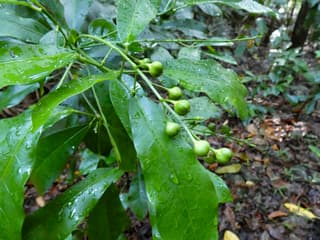
Croton (genus)
Codiaeum
Codiaeum is a genus of tropical ornamental plants in the Euphorbiaceae family, celebrated for their strikingly colorful foliage in shades of yellow, red, orange, and green. Most cultivated plants are varieties of Codiaeum variegatum.
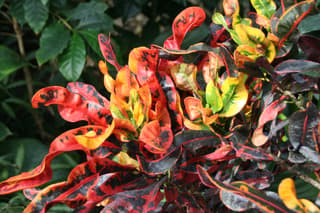
Garden Croton
Codiaeum variegatum
Codiaeum variegatum, commonly known as Garden Croton, is one of the most strikingly colorful houseplants in the world. Native to Southeast Asia and the Pacific Islands, this evergreen shrub produces spectacular leaves in virtually every color — red, orange, yellow, green, purple, and white — often on the same plant. Popular cultivars include Petra, Mammy, Gold Dust, and Zanzibar.
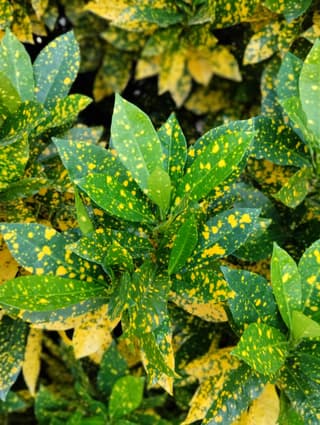
Gold Dust Croton
Codiaeum variegatum 'Gold Dust'
Gold Dust croton is a compact cultivar of Codiaeum variegatum prized for its glossy, leathery green leaves flecked with bright yellow-gold speckles, as if dusted with paint. Native to Indonesia and the Pacific Islands, it grows as a rounded shrub outdoors in frost-free climates and as a colorful houseplant elsewhere, typically reaching around 60-90 cm indoors. Like all crotons, it belongs to the spurge family (Euphorbiaceae) and exudes a milky, irritating sap when cut or damaged.
Croton Mammy
Codiaeum variegatum 'Mammy'
Croton Mammy is a compact cultivar of Codiaeum variegatum, prized for its narrow, curled leaves splashed with red, orange, yellow, and green. Native to Southeast Asia and the Pacific Islands, this tropical evergreen shrub brings bold, ever-changing color to bright indoor spaces, with leaf hues shifting as they mature and intensifying under strong light.
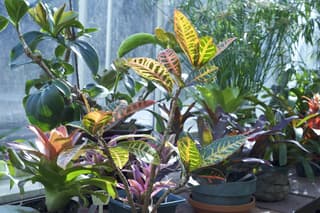
Croton 'Petra'
Codiaeum variegatum 'Petra'
Croton 'Petra' (Codiaeum variegatum 'Petra') is a popular croton cultivar prized for its large, glossy, leathery leaves splashed with vivid green, yellow, orange and red along the veins. Native to the Pacific Islands and Southeast Asia, this tropical evergreen shrub is grown mainly as a striking indoor ornamental, requiring abundant light to keep its colors intense.
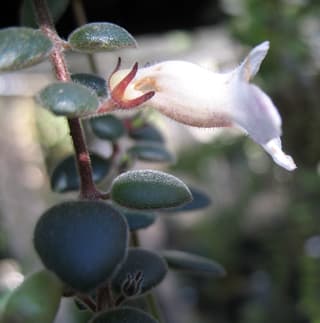
Codonanthe
Codonanthe devosiana
Codonanthe (Codonanthe devosiana) is an epiphytic subshrub from the Gesneriaceae family, related to the African violet. It is native to the Atlantic Forest of southeastern and southern Brazil, where it grows hanging from trunks and branches, rarely rooting in solid ground. Its thin, trailing stems bear small, fleshy, almost round leaves that are dark green on the upper side and reddish or maroon on the underside. Between spring and autumn, it produces white or pale pink tubular flowers, sometimes with a yellow or maroon throat, followed by small, bright orange berries. Due to its trailing habit and prolonged flowering, it is highly valued in hanging baskets and as a houseplant.

Trailing Codonanthe
Codonanthe gracilis
Codonanthe gracilis is a trailing epiphytic subshrub in the African violet family (Gesneriaceae), native to Brazil's Atlantic Forest, where it grows perched on tree trunks and branches in humid, shaded understories. Its slender, cascading stems can reach over a meter in length and readily root along their nodes, making it an excellent choice for hanging baskets. Small, fleshy, glossy leaves line the stems, punctuated by delicate white to pale pink tubular flowers with maroon throat markings that give way to bright orange berries.
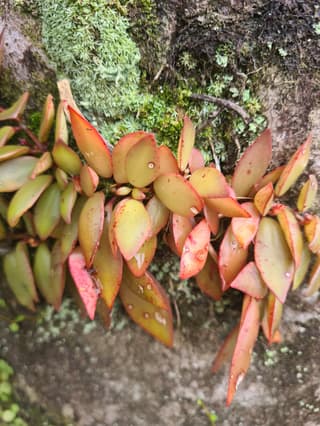
Codonanthe
Codonanthopsis crassifolia
Codonanthopsis crassifolia (still widely sold under its older name, Codonanthe crassifolia) is a small trailing epiphyte in the African violet family, Gesneriaceae. Native to the humid rainforest understory of Brazil, it grows on tree bark, its slender cascading stems studded with thick, glossy, moisture-retaining leaves that form dense mats over time. It produces small tubular flowers in shades of creamy white to pale pink, about 1.5-2.5 cm long, followed by yellow-to-orange berries. In the wild it shares a remarkable partnership with arboreal ants: it offers extrafloral nectar and ant-fodder berries, and in return its seeds and roots are carried into the ants' carton nests, a classic myrmecophyte relationship. In cultivation it makes an easy-going hanging or mounted specimen for warm, humid rooms.
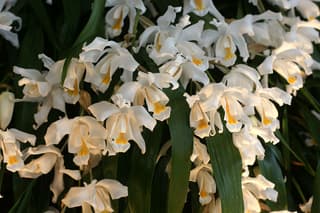
Snow Queen Orchid
Coelogyne cristata
Coelogyne cristata is a stunning epiphytic orchid native to the cool, moist Himalayan foothills. It produces cascading sprays of pristine white flowers with golden-yellow markings on the lip, blooming in late winter to early spring. Its evergreen strap-like leaves emerge from oval pseudobulbs. This orchid is treasured by collectors for its spectacular winter blooms and intoxicating fragrance.
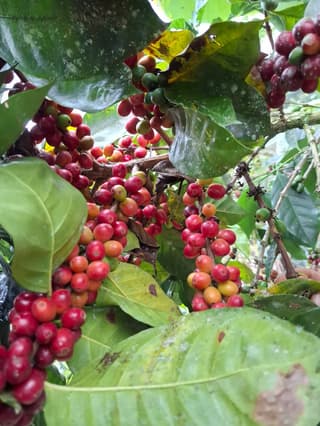
Coffee Plant
Coffea arabica
Coffea arabica, commonly known as the coffee plant, is an evergreen shrub with dark green, glossy, and waxy foliage. Native to the highlands of Ethiopia, it is the species responsible for most of the world's gourmet coffee production. When grown indoors, it stands out for its ornamental beauty and occasionally for its fragrant white flowers that give rise to the red fruits known as 'coffee cherries'.
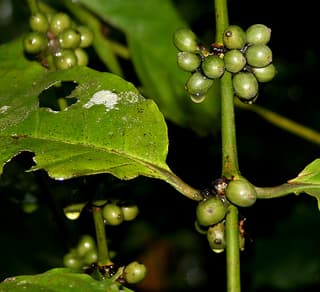
Robusta Coffee
Coffea canephora
Coffea canephora, commonly known as Robusta coffee, is an evergreen shrub or small tree native to Western and Central Africa (Congo basin). It is the second most widely grown coffee species in the world, accounting for 40–45% of global coffee production. Robusta is prized for its higher caffeine content (2.7%), superior disease resistance, and drought tolerance compared to Arabica. It produces a full-bodied, strong-flavored coffee widely used in espresso blends and instant coffee. Vietnam and Brazil are the world's largest Robusta producers.

Kola nut
Cola acuminata
The kola nut (Cola acuminata) is an evergreen tree belonging to the mallow family (Malvaceae), originating from the lower canopy of the rainforests of West and Central Africa. It can grow up to 20 meters tall with a similar crown diameter in its natural habitat, featuring glossy, leathery, oblong-ovate leaves. Its small, petal-less flowers are creamy yellow with purple striations and bloom in clusters on woodier shoots. The fruit, contained in a woody pod, holds seeds rich in caffeine and theobromine—the famous kola nuts—which have been chewed for centuries in West Africa for their stimulating effects and were the original namesake and ingredient for cola-flavored soft drinks, including Coca-Cola.
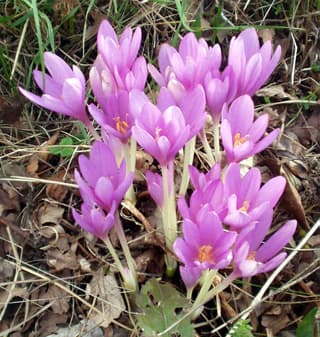
Autumn crocus
Colchicum autumnale
The autumn crocus (Colchicum autumnale) is a perennial cormous (bulb-like) plant from the Colchicaceae family, native to the meadows and pastures of central and southern Europe. It is unusual because it blooms in late summer and autumn without any leaves present – the pinkish-purple to white flowers emerge directly from the ground. The dark green leaves appear the following spring along with the seed capsule and die back by early summer. All parts of the plant, especially the corms and seeds, contain the alkaloid colchicine and are highly toxic to both humans and pets.
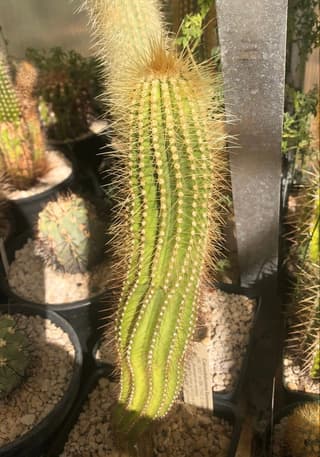
Fluminense Column Cactus
Coleocephalocereus fluminensis
Coleocephalocereus fluminensis is a columnar cactus endemic to the rocky inselbergs (isolated rocky hills) of southeastern Brazil, particularly in Rio de Janeiro and Espírito Santo states. It grows on exposed crystalline rock outcrops, forming dense clusters of erect ribbed stems covered in sharp spines. Adult plants develop a distinctive white woolly cephalium at the apex from which white to yellowish nocturnal flowers emerge.
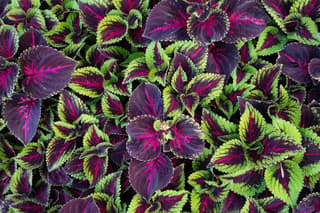
Coleus / Painted Nettle (genus)
Coleus
Coleus is a genus of ornamental plants in the family Lamiaceae, prized for their strikingly colorful foliage in shades of green, purple, red, and yellow. It serves as an umbrella genus for numerous popular species and cultivars grown in gardens and containers worldwide.
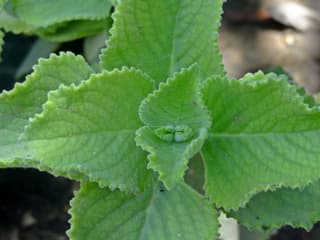
Mexican Mint
Coleus amboinicus
A succulent and highly aromatic perennial plant, Coleus amboinicus is famous for its thick, velvety, and brittle leaves. Native to Africa and widely naturalized in the tropics, it exudes a strong scent reminiscent of a blend of oregano and mint.
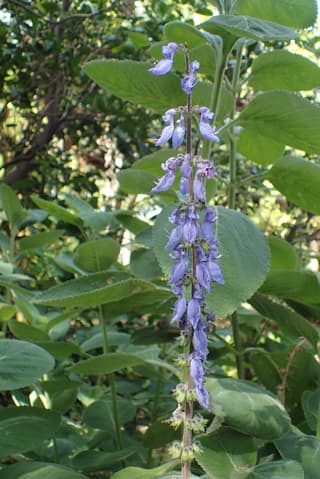
Indian Coleus
Coleus barbatus
Indian Coleus (Coleus barbatus, syn. Plectranthus barbatus) is an aromatic medicinal herb in the Lamiaceae family, native to Eastern Africa and widely naturalized in Brazil and tropical regions. It features large, velvety, fragrant leaves and produces dense spikes of blue-purple flowers. Widely cultivated for its digestive and liver-supportive properties, as well as its ornamental value.
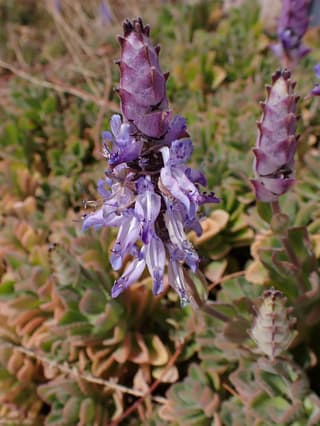
Scaredy Cat Plant
Coleus caninus
Coleus caninus (syn. Plectranthus caninus) is an aromatic tender perennial in the mint family (Lamiaceae), native to southern and eastern Africa. Its grey-green, scallop-edged leaves release a strong, skunk-like odor when brushed or bruised, a trait that has earned it the nicknames "scaredy cat plant" and "piss-off plant" for its reputed (though scientifically unproven) ability to deter cats, dogs and other animals from garden beds. Small spikes of pale blue-violet flowers appear from summer into fall.
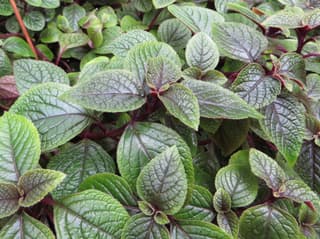
Prostrate Coleus
Coleus forsteri
Prostrate Coleus (Coleus forsteri, syn. Plectranthus forsteri) is a tender evergreen perennial in the mint family (Lamiaceae), native to the Southwest Pacific islands, including Fiji and New Caledonia. It has a low, spreading habit with rounded, scalloped, lightly succulent leaves that release a mild citrus scent when bruised. It is popular as a houseplant, groundcover, or trailing plant in hanging baskets thanks to its vigorous growth and easy care.
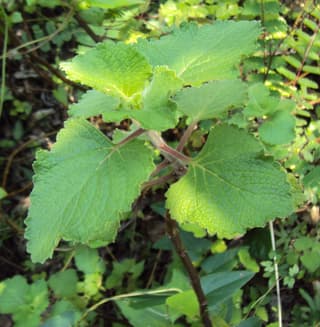
Hairy Coleus
Coleus hadiensis
Coleus hadiensis, formerly known as Plectranthus hadiensis, is a fast-growing, semi-succulent shrub native to South Africa's Eastern Cape and KwaZulu-Natal provinces, extending through eastern tropical Africa to the southern Arabian Peninsula. It forms an erect to decumbent shrub up to 1.5 m tall and 1 m wide, with soft, felted, aromatic leaves and terminal clusters of mauve to purple (occasionally white) tubular flowers that bloom from autumn into winter.
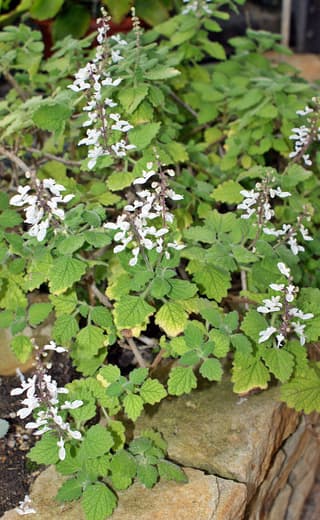
Madagascar Coleus
Coleus madagascariensis
Coleus madagascariensis, commonly known as Madagascar Coleus or Thicket Coleus, is a fast-growing aromatic perennial herb in the family Lamiaceae, native to southern and southeastern Africa. Its fleshy, variegated leaves release a refreshing mentholated fragrance when touched, earning it the nickname "Vicks Plant." This versatile species thrives both indoors and outdoors, valued for its ornamental foliage, pleasant scent, and traditional medicinal applications. In autumn it produces slender spikes of small white to mauve flowers that attract bees, butterflies, and birds.
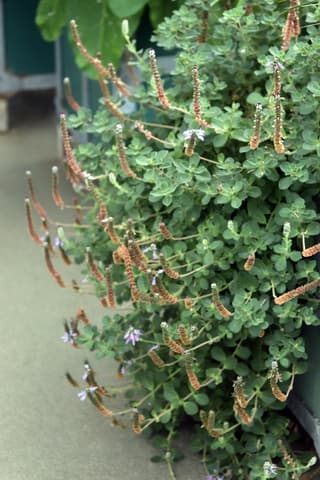
Blue Coleus
Coleus neochilus
Coleus neochilus, commonly known as Blue Coleus or Lobster Bush, is a fast-growing aromatic perennial herb in the Lamiaceae family, native to southern Africa (South Africa, Zimbabwe, and Mozambique). It forms dense, spreading mounds of succulent, grey-green scalloped leaves that emit a pungent, camphor-like scent naturally repelling flies and mosquitoes. Upright spikes of small purple-blue flowers bloom twice yearly, in late summer and winter. In Brazil it is widely grown as a medicinal herb under the folk name "boldo-rasteiro" and valued for digestive complaints.
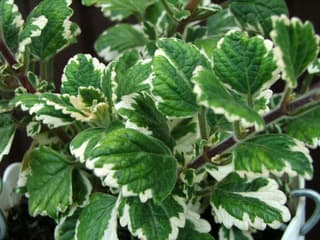
Candle Plant
Coleus paniculatus
Coleus paniculatus (Candle Plant) is an accepted species in the family Lamiaceae, native to the wet tropical biomes of southern India to southern Indo-China, including India, Thailand, and Vietnam. It was historically treated as a synonym of Plectranthus coleoides and related Plectranthus species, but Coleus paniculatus Benth. is now confirmed as the accepted name by Kew Plants of the World Online (POWO). This fast-growing evergreen shrub is prized for its highly ornamental, richly coloured foliage and is used both as an indoor houseplant and as a tropical garden specimen. It can reach up to 90 cm (3 ft) in height under optimal conditions.
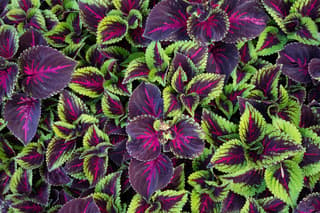
Coleus
Coleus scutellarioides
Coleus, popularly known as Painted Nettle, is a tropical herbaceous plant famous for its incredibly colorful and patterned foliage. Its velvety leaves feature vibrant combinations of red, pink, yellow, green, and purple. It is one of the most versatile ornamental plants, growing rapidly in both garden beds and indoor pots.
Cooke's Toughshank
Collybia cookei
Collybia cookei, also known as the yellow sclerotium collybia, is a small fungal species recognizable by its characteristic yellowish sclerotium (a persistent resting body). Its cap is whitish or cream-colored, and its gills are crowded. It often appears on the remains of other fungi or heavily decayed wood in humus-rich forest soils.
Find the Perfect Plant
Our plant guide helps you find ideal species for your experience level and time of year.
Browse by Difficulty, Season & More
Use the filters below to narrow this catalog by care difficulty, season, environment, or search directly by name. Each filter leads to a focused list tailored to your specific growing conditions.