Lamiaceae
Mexican Mint: Aromatic Plant
Coleus amboinicus
A very low-maintenance plant that loves heat and light. It requires well-drained soil and regular watering, avoiding waterlogging.
Every 7 days
Bright indirect
10° - 32°C
40% - 70%
Categories
What is Mexican Mint?
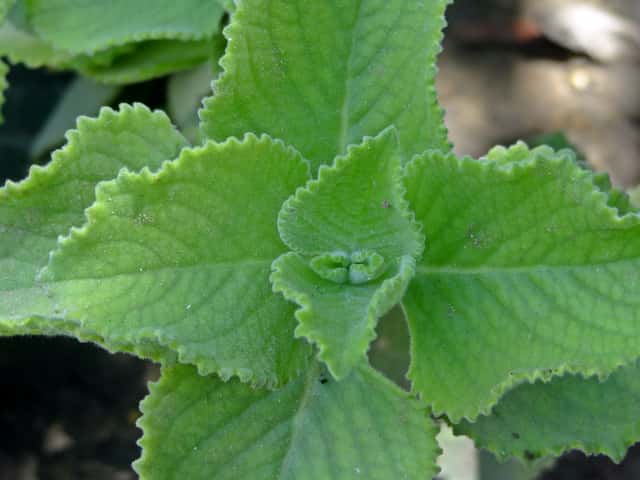
Mexican Mint (Coleus amboinicus) is a easy-care plant from the Lamiaceae family. A succulent and highly aromatic perennial plant, Coleus amboinicus is famous for its thick, velvety, and brittle leaves. Native to Africa and widely naturalized in the tropics, it exudes a strong scent reminiscent of a blend of oregano and mint.
Mexican Mint grows up to 1.0m, spread of 60cm, watering every 7 days, 10°C – 32°C, 40–70% humidity. It is suitable for indoor environments and not safe for pets.
Unlike many tropical plants, Mexican Mint tolerates watering mistakes. Best for beginners. Without precautions, ingestion can cause irritation in pets. Keep out of reach of cats and dogs. Without adequate drainage, root rot can develop within 14 days.
How to Care for Mexican Mint?
TLDR: Mexican Mint needs Bright indirect, watering every 7 days, and temperatures between 10-32°C with 40-70% humidity.
How Often Should You Water Mexican Mint?
Water whenever the top layer of soil feels dry. Reduce watering during winter or rainy periods.
How Much Light Does Mexican Mint Need?
Prefers direct sunlight or very bright partial shade. If grown indoors, place it in the sunniest window.
What Is the Best Soil for Mexican Mint?
Use a substrate rich in organic matter but with excellent drainage, mixing in sand or perlite if necessary.
What Pot Should You Use for Mexican Mint?
Clay or terracotta pots with drainage holes are ideal to prevent root rot.
Care Schedule
Fertilize
Every 30 days
Repot
Every 365 days
What Is Mexican Mint and Where Does It Come From?
A succulent and highly aromatic perennial plant, Coleus amboinicus is famous for its thick, velvety, and brittle leaves. Native to Africa and widely naturalized in the tropics, it exudes a strong scent reminiscent of a blend of oregano and mint.
How to Propagate Mexican Mint?
Stem cutting
- Keep the soil moist but not waterlogged during rooting
- Avoid strong direct sunlight for the first few days after cutting
- 1 Cutting the Branch
Cut a healthy branch about 10 to 15 cm long, preferably just below a node.
- 2 Preparation
Remove the leaves from the bottom half of the cutting to expose the nodes where roots will grow.
- 3 Planting
Insert the cutting directly into moist soil or a glass of water until roots appear.
Materials needed:
How Big Does Mexican Mint Grow?
TLDR: Mexican Mint can reach up to 1.0m tall with Fast growth rate.
Max height
1.0m
Spread
60cm
Growth rate
Fast
Foliage
Evergreen
Warning: Toxic Plant
This plant can be toxic if ingested. Keep out of reach of:
Plant Uses
Edible
Can be consumed
Aromatic
Pleasant fragrance
Medicinal
Medicinal properties
Ornamental
Great for decoration
Medicinal Uses
- Relief of coughs and bronchitis
- Treatment of sore throats
- Carminative and digestive properties
- Local anti-inflammatory action
Culinary Uses
- Seasoning for strong meats and fish
- Flavoring for soups and beans
- Preparation of digestive teas
- Substitute for oregano in pizzas and sauces
Is your plant showing symptoms?
Click on the symptom to discover possible causes:
What Diseases Commonly Affect Mexican Mint?
TLDR: Mexican Mint is susceptible to 8 known diseases. Monitor regularly for early detection.
Root Rot
Root rot is a serious fungal disease that affects the root system of plants, causing them to decay and die. It is primarily caused by overwatering, poor drainage, or soil-borne fungi such as Pythium, Phytophthora, Rhizoctonia, and Fusarium. The disease thrives in waterlogged conditions where roots are deprived of oxygen, making them susceptible to fungal infection.
Downy Mildew
Downy mildew is a fungal-like disease caused by oomycetes (water molds) that thrives in cool, wet conditions. It affects a wide range of plants, causing yellowing leaves with fuzzy white-gray growth underneath, leading to defoliation and reduced yields if left untreated.
Powdery Mildew
Powdery mildew is a common fungal disease caused by various fungi species including Erysiphe, Podosphaera, Oïdium, and Leveillula. It affects over 10,000 plant species worldwide. The disease thrives in warm, dry climates with high humidity and appears as a distinctive white powdery coating on plant surfaces.
Spider Mites
Spider mites are tiny arachnids (less than 1/20 inch long) related to spiders and ticks that feed on plant sap. They thrive in hot, dry conditions and can cause significant damage to ornamental and vegetable plants. During severe infestations, crop losses can reach 14% or higher as these pests disrupt vital plant processes including photosynthesis, carbon dioxide absorption, and transpiration.
Meaning & Symbolism
Often associated with healing, domestic protection, and hospitality.
Compare with similar plants
| Attribute | Difficulty | Light | Watering | Pet Safe |
|---|---|---|---|---|
| Field Maple | Easy | Bright indirect | 14d | ✓ |
| Silver Birch | Easy | Direct sun | 14d | ✓ |
| Common Blanketflower | Easy | Direct sun | 10d | ✓ |
| Cushion Bush | Easy | Direct sun | 14d | ✓ |





