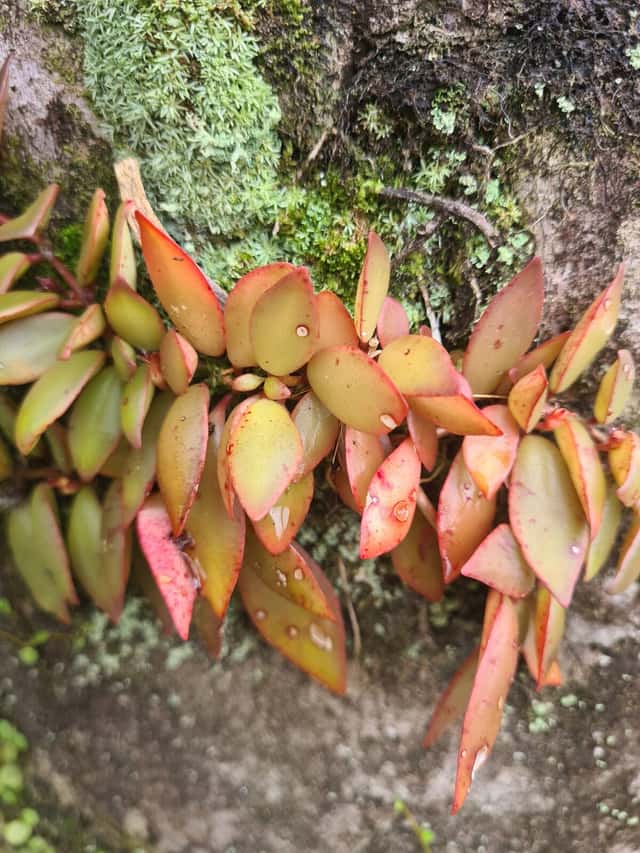
Gesneriaceae
Codonanthe: Perfect Indoor Houseplant
Codonanthopsis crassifolia
Give Codonanthopsis crassifolia bright, indirect light, water once the top few centimetres of its chunky epiphyte mix have dried, and keep humidity around 50-70%. It rewards steady warmth (18-24C by day, no colder than 12C at night) with near-constant trailing growth and intermittent creamy-white to pink blooms.
Every 7 days
Partial shade
12° - 24°C
50% - 70%
Categories
What is Codonanthe?
Codonanthe (Codonanthopsis crassifolia) is a medium-care plant from the Gesneriaceae family. Codonanthopsis crassifolia (still widely sold under its older name, Codonanthe crassifolia) is a small trailing epiphyte in the African violet family, Gesneriaceae. Native to the humid rainforest understory of Brazil, it grows on tree bark, its slender cascading stems studded with thick, glossy, moi...
Codonanthe grows up to spread of 30cm, watering every 7 days, 12°C – 24°C, 50–70% humidity. It is suitable for indoor environments and safe for pets.
Unlike many popular species, Codonanthe is safe to keep around pets. Without adequate drainage, root rot can develop within 14 days.
How to Care for Codonanthe?
TLDR: Codonanthe needs Partial shade, watering every 7 days, and temperatures between 12-24°C with 50-70% humidity.
How Often Should You Water Codonanthe?
Let the top 5-7 cm (2-3 in) of the mix dry before watering again, then soak thoroughly and let it drain fully - this epiphyte's roots need air and rot quickly if left sitting in soggy mix.
How Much Light Does Codonanthe Need?
Place in bright, indirect light such as an east- or north-facing window; a little filtered morning sun is fine, but shield it from strong direct sun, which scorches the thick leaves.
What Is the Best Soil for Codonanthe?
Pot in a chunky, well-draining epiphyte mix of orchid bark, coco coir or perlite plus a little worm castings or sphagnum moss - regular potting soil holds too much water around the roots.
What Pot Should You Use for Codonanthe?
A shallow, well-ventilated hanging basket or a slotted orchid pot suits its epiphytic roots best; unglazed terracotta or a moss-lined basket also works well since both let the chunky mix dry out evenly between waterings.
Care Schedule
Fertilize
Every 21 days
Misting
Every 3 days
Rotate
Every 14 days
Repot
Every 730 days
What Is Codonanthe and Where Does It Come From?
Codonanthopsis crassifolia (still widely sold under its older name, Codonanthe crassifolia) is a small trailing epiphyte in the African violet family, Gesneriaceae. Native to the humid rainforest understory of Brazil, it grows on tree bark, its slender cascading stems studded with thick, glossy, moisture-retaining leaves that form dense mats over time. It produces small tubular flowers in shades of creamy white to pale pink, about 1.5-2.5 cm long, followed by yellow-to-orange berries. In the wild it shares a remarkable partnership with arboreal ants: it offers extrafloral nectar and ant-fodder berries, and in return its seeds and roots are carried into the ants' carton nests, a classic myrmecophyte relationship. In cultivation it makes an easy-going hanging or mounted specimen for warm, humid rooms.
How to Propagate Codonanthe?
How Big Does Codonanthe Grow?
TLDR: Codonanthe can reach up to ?cm tall with Medium growth rate.
Spread
30cm
Growth rate
Medium
Foliage
Evergreen
Plant Uses
Ornamental
Great for decoration
Is your plant showing symptoms?
Click on the symptom to discover possible causes:
What Diseases Commonly Affect Codonanthe?
TLDR: Codonanthe is susceptible to 5 known diseases. Monitor regularly for early detection.
Root Rot
Root rot is a serious fungal disease that affects the root system of plants, causing them to decay and die. It is primarily caused by overwatering, poor drainage, or soil-borne fungi such as Pythium, Phytophthora, Rhizoctonia, and Fusarium. The disease thrives in waterlogged conditions where roots are deprived of oxygen, making them susceptible to fungal infection.
Mealybugs
Mealybugs are small, soft-bodied insects covered with a white, waxy, cottony material. They are common pests of houseplants and outdoor plants in mild climates. These sap-sucking insects feed on plant tissue, causing damage, stunted growth, and can lead to plant death if left untreated. They produce sticky honeydew which attracts sooty mold.
Aphids
Aphids are small, soft-bodied, pear-shaped insects (1/16 to 1/8 inch long) that feed by sucking nutrient-rich sap from plants. They reproduce rapidly and can quickly weaken plants, causing distorted growth and transmitting plant viruses. Aphids come in various colors including green, black, red, yellow, brown, and gray. They secrete honeydew, a sticky substance that attracts ants and encourages sooty mold growth.
Spider Mites
Spider mites are tiny arachnids (less than 1/20 inch long) related to spiders and ticks that feed on plant sap. They thrive in hot, dry conditions and can cause significant damage to ornamental and vegetable plants. During severe infestations, crop losses can reach 14% or higher as these pests disrupt vital plant processes including photosynthesis, carbon dioxide absorption, and transpiration.
Meaning & Symbolism
In the wild, Codonanthopsis crassifolia lives in partnership with tree-dwelling ants, feeding them nectar and berries while they carry its seeds into their nests to germinate - a quiet emblem of mutual aid and thriving through cooperation rather than competition.
Compare with similar plants
| Attribute | Difficulty | Light | Watering | Pet Safe |
|---|---|---|---|---|
| Dark Fieldcap | Medium | Low light | 2d | ⚠️ |
| Azalea | Medium | Partial shade | 3d | ⚠️ |
| Muriel's Bamboo | Medium | Partial shade | 3d | ✓ |
| Bougainvillea | Medium | Direct sun | 7d | ⚠️ |




