Complete Plant Guide
Explore plants by difficulty, season and more. Find the perfect plant for you.
Difficulty
Categories
Plants by City
🗺️ Plants by City4422 plants found
Showing 3889-3924 of 4422
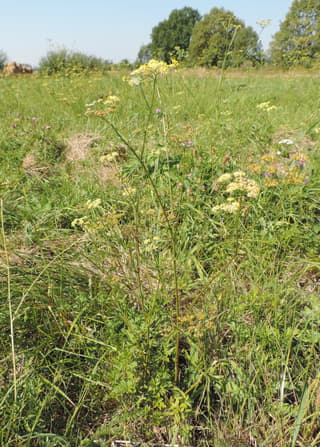
Silaum silaus
Silaum silaus
Pepper-saxifrage (Silaum silaus) is a perennial plant from the Apiaceae family, the only species of the genus Silaum. It is widespread throughout Europe to western Siberia and also grows in Croatia, in moist, unmanaged meadows and pastures on clayey, neutral to slightly alkaline soils. Its stem grows up to 100 cm, and small yellowish flowers are gathered in umbellate inflorescences that bloom from June to August. Crushed parts of the plant emit an unpleasant hydrogen sulfide odor. It is considered an indicator species of old, traditionally maintained meadows.
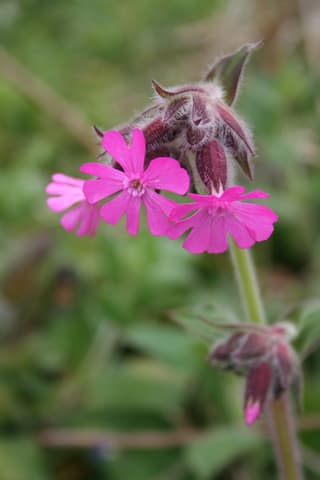
Campion
Silene
Silene is the largest genus in the Caryophyllaceae family, encompassing approximately 500–900 species of annual, biennial, and perennial flowering plants known as campions and catchflies. Native to temperate regions of the Northern Hemisphere, they are celebrated for their delicate tubular flowers in shades of pink, red, white, and purple, often with notched petals and an inflated calyx. Many species attract butterflies, hummingbirds, and other pollinators, making them valuable additions to wildflower gardens, meadows, and rock gardens.
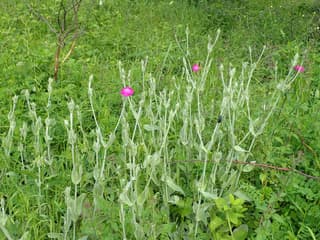
Rose Campion
Silene coronaria
Rose Campion (Silene coronaria, syn. Lychnis coronaria) is a low-maintenance, short-lived perennial or biennial from the carnation family (Caryophyllaceae), native to the Mediterranean region and Southwest Asia. The plant is renowned for the striking contrast between its silvery-grey, felted leaves and vibrant magenta, pink, red, or white flowers, approximately 2–3 cm in diameter. In its first year, it forms a basal rosette of velvety leaves; in the second year, upright, branched stems emerge, reaching a height of 60–90 cm. Thanks to its ability to self-seed, it reliably maintains its presence in the garden for many years.
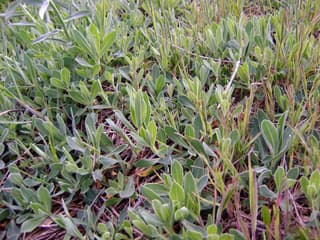
Bladder Campion
Silene vulgaris
Silene vulgaris is a herbaceous perennial in the family Caryophyllaceae, native to Europe, temperate Asia and North Africa and naturalised across much of North America. It forms clumps 50 cm to 1 m tall with grey-green leaves and a slightly woody base. From spring to late summer it opens white flowers with deeply notched petals, each sitting on an inflated, veined calyx that looks like a small bladder. In the wild it grows on roadsides, dry meadows and stony slopes.
Silphium
Silphium
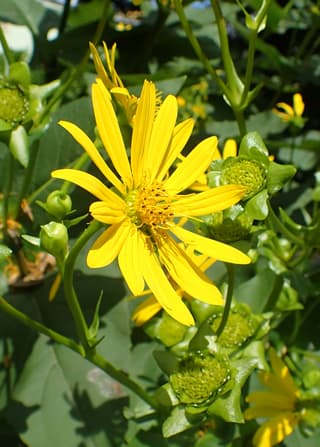
Silphium is a genus of robust, perennial prairie plants from North America, belonging to the sunflower family (Asteraceae). The genus comprises approximately 17–18 species, including the well-known Cup Plant (Silphium perfoliatum), Compass Plant (Silphium laciniatum), and Wholeleaf Rosinweed (Silphium integrifolium). These impressive perennials can reach up to 3 meters in height and bear bright yellow, sunflower-like flower heads in summer and autumn. The leaves of the Compass Plant orient themselves north-south to minimize water loss in the intense midday sun, while the Cup Plant's perfoliate leaves form natural "cups" that collect rainwater for birds and insects. Silphium species are essential for prairie biodiversity and attract a wide variety of pollinators, birds, and insects.
Milk thistle
Silybum marianum
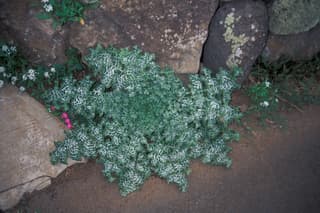
Milk thistle is an annual or biennial herb from the Asteraceae family, native to the Mediterranean region and extending to Central Asia. In its first year, it forms a basal rosette of large, glossy leaves characterized by white veins and spiny margins. It then sends up a stem 1 to 2 meters tall topped with purple flower heads that bloom in summer and are surrounded by hard spines. The seeds, equipped with white downy tufts, are dispersed by the wind, allowing the plant to self-seed easily and often behave as a weed outside its native range.
Paradise Tree
Simarouba amara
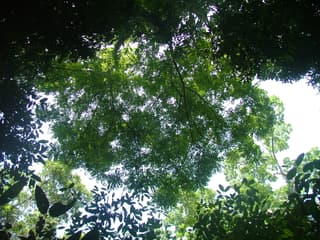
Simarouba amara, commonly known as the Paradise Tree or Bitterwood, is a majestic tropical evergreen tree native to the rainforests of Central and South America. It is distinguished by its glossy, dark green pinnate leaves and a straight trunk with smooth, greyish bark. The tree produces small, inconspicuous yellowish flowers that develop into oval drupes, which turn from red to blackish-purple when ripe. It is highly valued in its native range for its medicinal properties, particularly the bark, which contains bitter quassinoids used to treat various ailments.
Bitterwood
Simarouba glauca
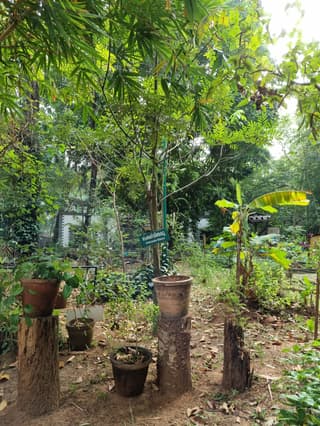
Bitterwood (Simarouba glauca) is a fast-growing evergreen tree native to Central America, the Caribbean, and southern Florida, belonging to the Simaroubaceae family. It features glossy, pinnately compound leaves that emerge reddish-orange before maturing to deep green, and clusters of small yellow-to-creamy-white flowers that bloom from late winter into spring, followed by dark purple, olive-shaped drupes. Highly adaptable, it tolerates a wide range of soils, drought, salt spray, and poor conditions once established, making it a popular shade and street tree in warm climates. Its bark and leaves have a long history of traditional medicinal use, particularly for fevers and dysentery.
Jojoba
Simmondsia chinensis
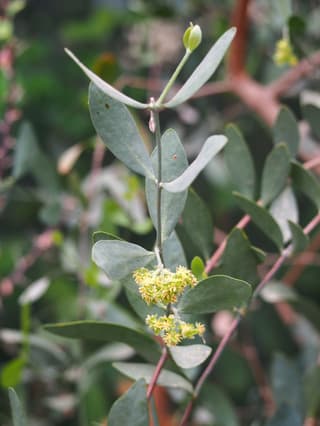
Jojoba (Simmondsia chinensis) is a perennial evergreen shrub native to the desert regions of the Southwestern United States and Northwestern Mexico (Sonoran Desert). As the sole member of the Simmondsiaceae family, it forms a dense, rounded bush that can reach 6 to 8 feet in height, featuring thick, leathery, gray-green leaves designed to minimize water loss. It is a dioecious plant (separate male and female plants) whose seeds produce a unique liquid wax very similar to human sebum, widely used in cosmetics as jojoba oil. Extremely drought-tolerant once established, it can survive on only 10 to 30 inches of annual rainfall and tolerate poor, saline soils.
Mustard (genus)
Sinapis
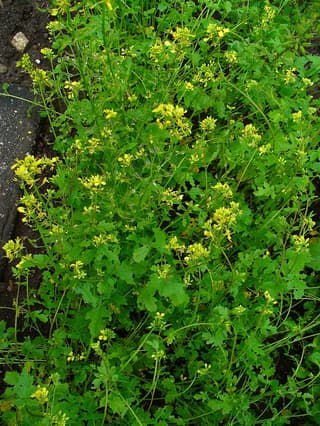
Sinapis is a small genus of annual herbs in the cabbage family (Brassicaceae), native to the Mediterranean, Europe and western Asia. The best-known species is white or yellow mustard (Sinapis alba), whose ground seeds make yellow table mustard; charlock or wild mustard (S. arvensis), a common weed of arable fields, is also often placed in the genus. They are upright plants 50 cm to 1 m tall, with rough, lobed leaves and clusters of four-petalled yellow flowers in spring and summer, followed by slender seed pods. They grow very fast, flowering 4-6 weeks after sowing. Besides the condiment, young leaves are eaten cooked, and in Europe white mustard is widely sown as a green manure and cover crop.
Charlock
Sinapis arvensis
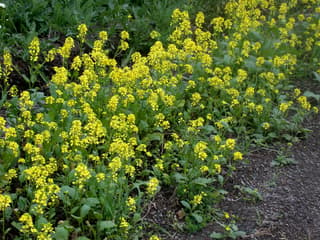
Charlock (Sinapis arvensis) is an annual herb in the cabbage family (Brassicaceae), native to the Mediterranean basin, Europe, North Africa and parts of Asia, and now naturalised in the Americas, Australia and South Africa. It usually grows 20 cm to 1 m tall and bears clusters of four-petalled yellow flowers from spring to late summer. It grows mainly in arable fields, roadsides and waste ground, preferring sunny, chalky soils, and is a common weed of crops. Young leaves are edible when cooked and the ground seeds make a mustard-like condiment.
Sinningia
Sinningia
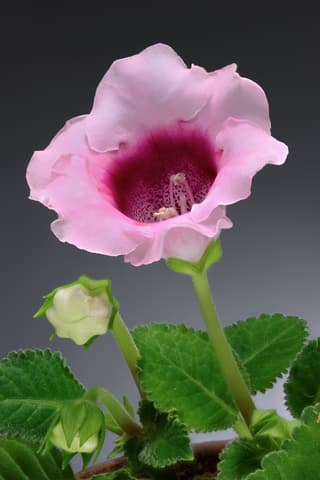
Sinningia is a genus of tuberous flowering plants native to Brazil, belonging to the family Gesneriaceae. Known for their stunning bell-shaped flowers in shades of purple, pink, red, and white, they are prized as ornamental houseplants worldwide. The most famous species, S. speciosa, is commonly called Florist's Gloxinia. Plants are deciduous, entering dormancy in winter and re-emerging each spring from their tubers.
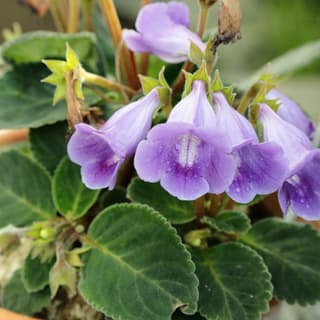
Florist's Gloxinia
Sinningia speciosa
Sinningia speciosa, commonly known as Florist's Gloxinia or Brazilian Gloxinia, is a tuberous perennial native to the rocky slopes and forests of Brazil, in the family Gesneriaceae. It is celebrated for its large, velvety, trumpet-shaped flowers in shades of purple, violet, red, white, and pink. It blooms in spring and summer, then enters a dormancy period before returning the following season.
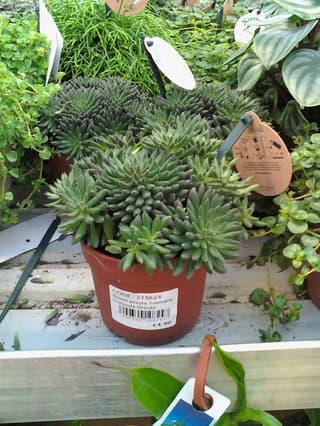
Chinese jade
Sinocrassula yunnanensis
Sinocrassula yunnanensis, or Chinese jade, is a small rosette-forming succulent native to the mountainous Yunnan province of China. Its spindle-shaped leaves are densely covered in fine soft hairs and shift from dark green in summer to deep chocolate-brown or red tones in cooler months. Plants multiply readily by offsets, eventually forming dense clumps, and produce cream-to-white flowers on tall stalks; the flowering rosette itself dies back afterward.
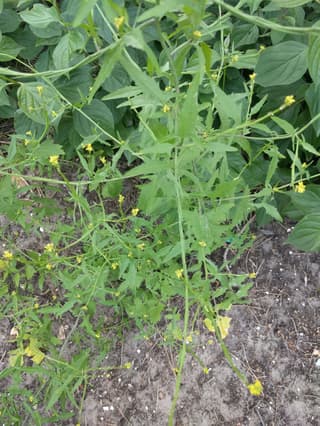
Hedge mustard
Sisymbrium
Sisymbrium is a genus of around 40 species of annual and biennial herbs in the mustard family (Brassicaceae), commonly known as hedge mustards. The most widespread species, Sisymbrium officinale, is a weedy plant of disturbed ground, roadsides and hedgerows across Europe and naturalized worldwide, bearing small yellow four-petaled flowers and slender seed pods. Historically nicknamed "the singer's plant", it was used by opera singers and orators to soothe hoarseness and protect the voice.
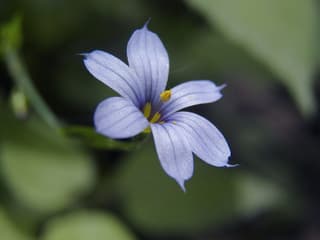
Narrow-leaf blue-eyed grass
Sisyrinchium angustifolium
Sisyrinchium angustifolium (commonly known as narrow-leaf blue-eyed grass) is a perennial native to eastern North America that grows in dense, grass-like clumps from short rhizomes. Although it resembles a grass, it actually belongs to the Iris family (Iridaceae). Its narrow, sword-shaped leaves are 2–6 mm wide and arranged in fan-like clusters, while its stems are flat and winged, reaching 15–50 cm in height. From late spring to early summer, it produces small, approximately 1–1.5 cm wide, six-petaled bluish-purple flowers with a distinct yellow 'eye' in the center. The flowers open in the morning and close in the afternoon or evening. Its natural habitats include meadows, open woodlands, and damp grasslands. It attracts bees, hoverflies, and butterflies, and self-seeds easily.
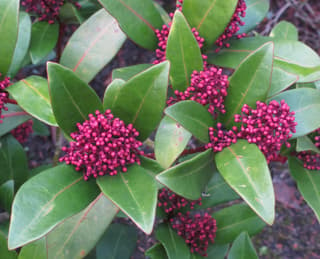
Japanese Skimmia
Skimmia japonica
Japanese Skimmia (Skimmia japonica) is a compact, slow-growing evergreen shrub from the Rutaceae family. It is an ornamental shrub native to Japan, notable for its fragrant, creamy-white to pink flowers in spring, followed by bright red berries that persist throughout fall and winter. The foliage releases an aromatic scent when crushed.

Yacon
Smallanthus sonchifolius
Yacon (Smallanthus sonchifolius) is a perennial herbaceous plant in the Asteraceae family, native to the Andean region. It reaches between 1.5 and 2 m in height and produces small, yellow, and discreet flowers at the end of the growing season. It forms two types of roots: propagation roots, similar to Jerusalem artichokes, and large, edible storage roots that can weigh up to 1 kg. These roots have a sweet flavor and a crunchy texture, containing inulin and fructooligosaccharides.

Sarsaparilla
Smilax aspera
Smilax aspera, commonly known as sarsaparilla or rough bindweed, is an evergreen, thorny climbing vine native to the Mediterranean Basin, southern Europe and North Africa. Using tendrils, it scrambles over shrubs, walls and trellises, reaching 1 to 4 metres in length. Its wiry, zigzagging stems and leathery, heart-shaped leaves are armed with small spines, and from September to November it produces clusters of tiny, strongly fragrant greenish-white flowers followed by red berries that ripen to black.
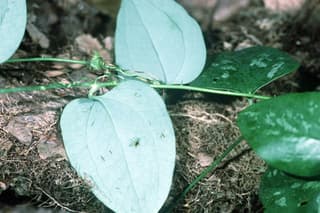
Cat Greenbrier
Smilax glauca
Smilax glauca, commonly known as Cat Greenbrier or Sawbrier, is a thorny deciduous climbing vine native to the woodlands and thickets of Eastern North America. It is recognized by its ovate to cordate leaves with a distinctive bluish-white waxy bloom on the undersides, giving the species its name "glauca". The stems are armed with sharp prickles. It produces small greenish-yellow flowers in spring to early summer, followed by clusters of dark blue-black berries that are an important wildlife food source.
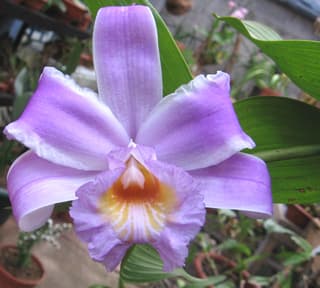
Beautiful Sobralia
Sobralia decora
Sobralia decora is a medium-sized terrestrial or epiphytic orchid with bamboo-like reed-stem canes reaching up to 75 cm tall. Native to parts of Central America (Belize, Guatemala, Honduras, Nicaragua) and Mexico (Nayarit, Oaxaca, Veracruz), it grows on damp hillsides and shaded ravines in lower-elevation rainforests, between 50 and 1700 meters. It produces large, fragrant flowers ranging from pink to lavender, often with a white-tipped lip and a yellow-to-brown throat. Each flower lasts only a single day, but the plant blooms in succession for weeks.
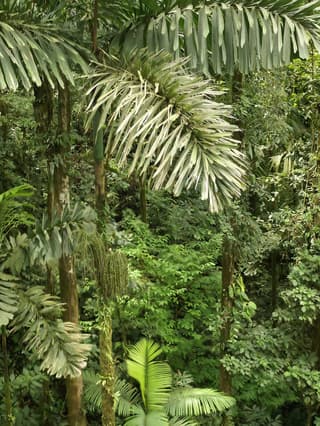
Walking Palm
Socratea exorrhiza
The walking palm (Socratea exorrhiza) is a palm tree native to the rainforests of Central and northern South America. In Brazil, it occurs in the Amazon basin (Acre, Amapá, Pará, Mato Grosso, Maranhão), in floodplains, creek banks, and white-sand forests, often in waterlogged or sandy soil. It has a single, straight, slender trunk, 10 to 20 cm in diameter, reaching 20–25 m in height, supported by a cone of aerial stilt roots up to 2 m high, covered in small spines. This gives rise to the name 'walking palm': it is said to "walk" toward the light, though field studies with marked palms have not confirmed such movement. The flowers are creamy-yellow and pollinated by beetles; the ripe fruits, eaten by birds and peccaries, are edible. Indigenous peoples use the hard, split, or hollow trunk to build houses, floors, and spears.
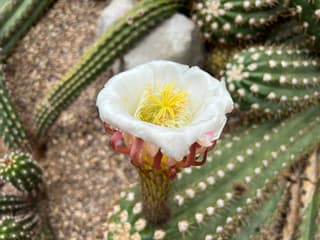
Argentine White Torch Cactus
Soehrensia candicans
The Argentine White Torch Cactus (Soehrensia candicans) is a columnar cactus native to northern Argentina, renowned for its spectacular large white fragrant flowers that bloom at night. It forms sprawling clumps up to 3 m (10 ft) wide, with individual stems reaching 60 cm (24 in) tall. Hardy, drought-tolerant, and cold-resistant to -6°C (21°F), it thrives in xeriscapes and rock gardens.
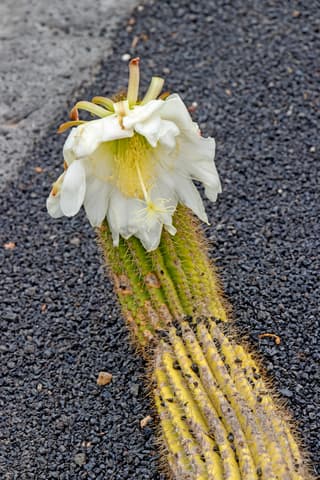
Golden Torch Cactus
Soehrensia spachiana
Soehrensia spachiana, formerly known as Echinopsis spachiana, is a columnar cactus that branches from the base and can reach up to 2 meters in height. It is famous for its spectacular, large white flowers that bloom at night. Its stems are lime green with well-defined ribs and golden-yellow spines that turn gray with age. It is a highly valued species in xeriscaping due to its hardiness and shrubby growth habit.
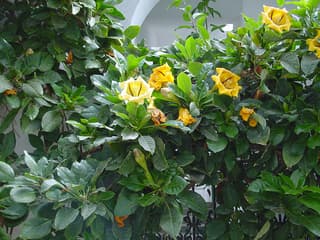
Cup of Gold Vine
Solandra maxima
The Cup of Gold Vine (Solandra maxima) is a woody, evergreen climber from the Solanaceae family, native to Mexico and Central America. It is a fast grower, typically reaching about 40 feet (12 m) and in exceptional cases much more. Its leaves are leathery, dark green, and glossy, ranging from 2 to 7 inches (5 to 18 cm). The solitary, cup-shaped flowers measure 6 to 10 inches (15 to 24 cm) long; they open creamy white or pale yellow and darken toward gold and ochre, with purple or brown stripes on the interior. They open at dusk and are especially fragrant at night. All parts of the plant are poisonous.
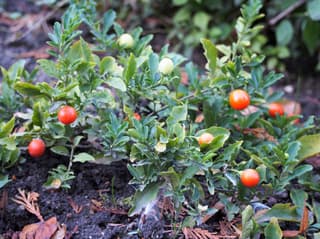
Nightshades
Solanum
Solanum is one of the largest and most diverse plant genera on Earth, comprising 1,500–2,000 species of herbs, shrubs, vines, and small trees in the family Solanaceae. It includes three of humanity's most economically important crops — potato (S. tuberosum), tomato (S. lycopersicum), and eggplant (S. melongena) — alongside hundreds of ornamental and wild species. Most green parts contain toxic alkaloids such as solanine, making this a genus of remarkable duality: life-sustaining food and potential danger, often in the same plant.
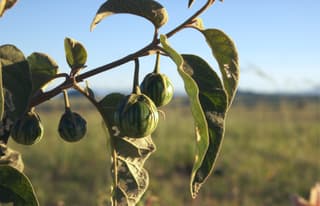
Ethiopian Eggplant
Solanum aethiopicum
Solanum aethiopicum, commonly known as Ethiopian eggplant or scarlet eggplant, is a fruiting shrub in the Solanaceae family native to tropical Africa. It grows up to 2.5 m tall with lobed leaves, produces star-shaped white to violet flowers, and bears small egg-shaped berries that ripen from green to vivid orange-red. It is one of the five most economically important vegetables in sub-Saharan Africa, valued for both its edible fruits and nutritious leaves.
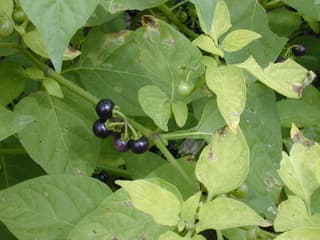
American Black Nightshade
Solanum americanum
American black nightshade (Solanum americanum) is an annual or short-lived perennial herbaceous plant in the Solanaceae family, widely distributed across tropical and subtropical regions worldwide. Native to the Americas, it has become a cosmopolitan weed found in disturbed soils, roadsides, gardens, and waste ground. It produces small white star-shaped flowers and round berries (5–10 mm) that ripen from green to glossy black. All parts are considered severely toxic — particularly the green parts and unripe berries, which contain solanine, chaconine, and solamargine — though the plant has traditional medicinal uses across Africa, Asia, and the Americas.
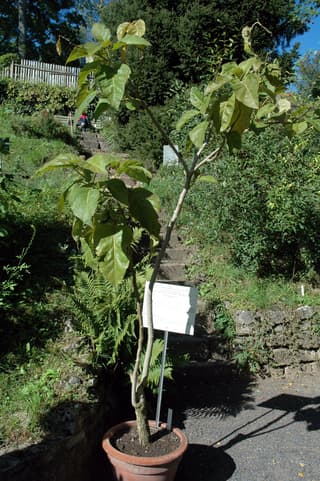
Tamarillo
Solanum betaceum
The tamarillo (Solanum betaceum) is a small tree or shrub native to the Andes of South America. It produces egg-shaped fruits ranging from orange to red or deep purple, with a tangy, bittersweet flavor. Highly valued both for its ornamental appeal and its edible fruits, which are rich in vitamins A, C, and E.
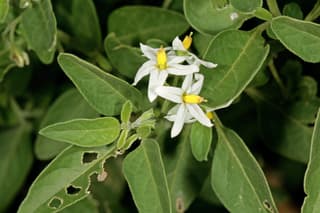
Tall nightshade
Solanum chenopodioides
Tall nightshade (Solanum chenopodioides) is a weedy, sprawling perennial subshrub in the nightshade family, native to South America and now naturalized in disturbed ground, coastal scrub, and gardens across mild-climate regions worldwide. It bears small star-shaped white flowers followed by round berries that ripen from green to dark purple-black. As with other Solanum species, its leaves and unripe berries contain solanine and related glycoalkaloids, making the whole plant toxic if eaten.
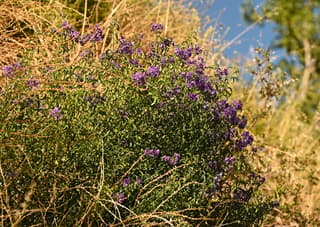
Chilean potato vine
Solanum crispum
Solanum crispum is a semi-climbing shrub in the nightshade family (Solanaceae), native to Chile, Peru and western Argentina, where it is a common shrub of the central Chilean scrubland and is known as natre. Its scrambling woody stems reach 6 to 8 m against a support, and it keeps its leaves in mild climates but drops them where winters are cold. The leaves are oval to lance-shaped, 7 to 13 cm long. From late spring to autumn it carries clusters of fragrant, star-shaped blue to violet flowers, 1.5 to 3 cm across, with a yellow cone of anthers in the centre, much like potato flowers. The small berries that follow are poisonous. A white-flowered form, 'Album', and the free-flowering 'Glasnevin' are popular in gardens.
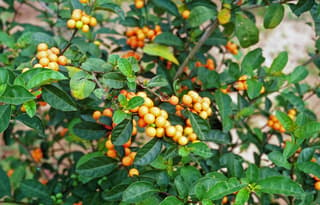
Two-leaf nightshade
Solanum diphyllum
Two-leaf nightshade (Solanum diphyllum) is an evergreen shrub in the nightshade family (Solanaceae), the same family as tomatoes and eggplants, native to the dry lowlands from Mexico to Costa Rica. It grows 1–2 m tall with smooth stems and smooth, glossy leaves; on flowering shoots the leaves come in pairs of very different sizes at the same node, hence the name. From late spring to early autumn it bears clusters of tiny white to pale lavender flowers, followed by round berries that turn from green to bright orange. It was grown as an ornamental and has escaped from gardens in the tropics and subtropics; in Florida it is listed as an invasive plant.
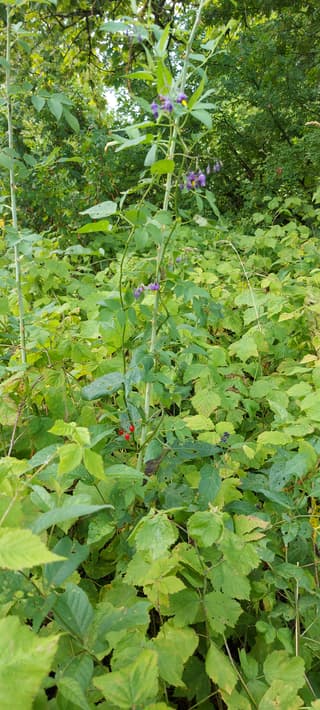
Bittersweet Nightshade
Solanum dulcamara
Bittersweet nightshade (Solanum dulcamara) is a semi-woody perennial climbing vine native to Europe, northern Africa, and Asia, belonging to the Solanaceae family. It produces charming star-shaped purple flowers with yellow stamens, followed by clusters of berries that ripen from green to orange to bright red. WARNING: All parts are SEVERELY TOXIC — containing solanine and other alkaloids that can cause serious poisoning in humans, cats, and dogs.
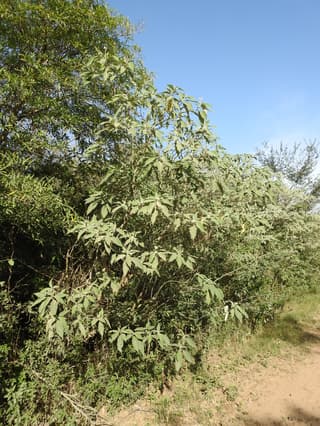
Granular Nightshade
Solanum granulosoleprosum
Solanum granulosoleprosum is a fast-growing shrub or small tree native to southern Brazil, Paraguay, Uruguay, and northern Argentina. A member of the Solanaceae family, it is a pioneer species that thrives in disturbed soils, forest edges, and arid terrain. Its cylindrical, granular stems are covered with dense hairs, and it produces white to pale purple flowers in terminal clusters, followed by globose yellow berries at maturity.
Hairy Wild Tomato
Solanum habrochaites
Solanum habrochaites is a wild relative of the cultivated tomato, native to the western, arid slopes of the Peruvian and Ecuadorian Andes, where it grows at elevations up to 3,300 m. Unlike the smooth-leaved garden tomato, its entire stem and foliage are covered in dense, soft glandular trichomes (hairs) that give the species its name — "habrochaites" roughly means "soft bristles." These trichomes exude strong-smelling terpenes, such as zingiberene, that repel insects and deter pathogens, making the species a prized source of pest and disease resistance genes for tomato breeding programs worldwide. It produces small, star-shaped yellow flowers and small green, fuzzy fruit that typically stays green and is not eaten. As with all Solanum species, the foliage, stems and unripe fruit contain glycoalkaloids and are toxic if ingested.
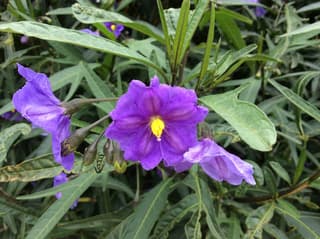
Kangaroo apple
Solanum laciniatum
Solanum laciniatum is an evergreen shrub in the nightshade family (Solanaceae, like tomato and potato), native to south-eastern Australia, Tasmania and New Zealand, where it grows in open scrub and forest margins, usually near the coast. It reaches 1-3 m tall and wide, with purplish stems and long, narrow dark green leaves, 15-30 cm, often cut into irregular lobes. In spring and summer it opens large blue-purple flowers (rarely white), followed by oval berries about 3 cm long that turn from green to orange when ripe and draw birds. It grows fast but is short-lived. Caution: the green parts and unripe fruit are poisonous.
Find the Perfect Plant
Our plant guide helps you find ideal species for your experience level and time of year.
Browse by Difficulty, Season & More
Use the filters below to narrow this catalog by care difficulty, season, environment, or search directly by name. Each filter leads to a focused list tailored to your specific growing conditions.