1148 Medium Plants | 2026 Guide - Page 29
Discover 1148 medium plants for your garden. Complete care guide.
1148 Medium Plants
Showing 1009-1044 of 1148
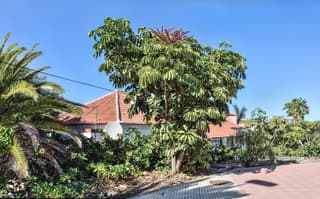
Queensland Umbrella Tree
Schefflera actinophylla
Schefflera actinophylla, commonly known as the Queensland Umbrella Tree or Australian Umbrella Tree, is a fast-growing tropical tree native to the rainforests of northern Queensland, Australia, New Guinea, and Java. Its large, glossy palmate leaves radiate from a central point like an umbrella, making it one of the most popular ornamental plants for both indoor and outdoor tropical landscapes.
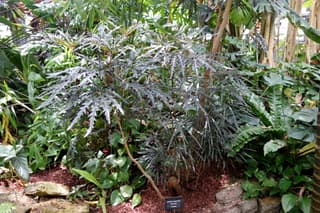
False Aralia
Schefflera elegantissima
False aralia (Schefflera elegantissima, syn. Dizygotheca elegantissima and Plerandra elegantissima) is a striking evergreen shrub from the Araliaceae family, native to New Caledonia in the South Pacific. It is prized as a houseplant for its dramatic, deeply serrated, coppery-bronze juvenile leaves that mature to a dark, glossy green with a leathery texture. Young plants have narrow, almost lacy leaflets arranged in a whorled, umbrella-like pattern, while mature specimens develop thicker leaflets and a woody, tree-like trunk that can reach 1.8-2.5 m indoors. False aralia has a reputation for being a bit temperamental compared to other Schefflera relatives, reacting quickly to drafts, sudden temperature swings, and inconsistent watering with leaf drop, so it rewards a stable spot and a steady care routine.
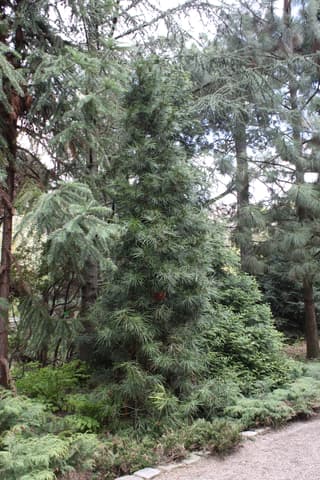
Japanese umbrella pine
Sciadopitys verticillata
The Japanese umbrella pine (Sciadopitys verticillata) is the only living species in the Sciadopityaceae family—a true "living fossil," as its closest relatives are known only from fossil records. Endemic to Japan, it is native to the mountain forests of Shikoku, Kyushu, and the Kii Peninsula, typically growing at altitudes of 700–1400 meters on rocky slopes and in river gorges. Its most distinctive feature is the umbrella-like whorls of flattened, 4–14 cm long needle-like structures (cladodes) at the tips of the shoots, from which its common name is derived. It is an extremely slow-growing evergreen tree: in its homeland, centuries-old specimens can reach 30–40 meters in height, while in garden cultivation, it may only reach a few meters even after several decades.

Sterling Silver Scindapsus
Scindapsus treubii
Scindapsus treubii, commonly known as Sterling Silver Scindapsus or Moonlight Scindapsus, is a stunning tropical aroid native to the rainforests of Southeast Asia. It is celebrated for its thick, waxy leaves adorned with a distinctive silvery-green sheen that shimmers under light. Two main cultivars are popular among collectors: 'Moonlight', which boasts brighter silver variegation, and 'Dark Form', with deeper, darker foliage. As a slow-growing climber, it rewards patient gardeners with breathtaking leaves that become more striking as the plant matures.
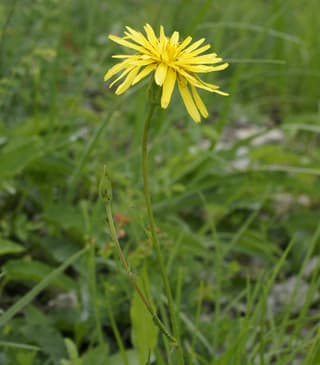
Black Salsify
Scorzonera
Scorzonera is a perennial root vegetable in the Asteraceae family, native to southern Europe and Central Asia. It produces long taproots with distinctive black skin and white flesh, prized for their delicate oyster-like flavor. In the second year, plants bear bright yellow dandelion-like flowers that are also edible.
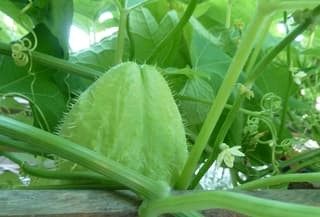
Chayote
Sechium edule
The chayote (Sechium edule) is a vigorous herbaceous climbing vine in the Cucurbitaceae family, native to Central America, whose vines can exceed 32 to 49 feet (10 to 15 meters) in length when well-supported by trellises, fences, or arbors. It produces light green fruits with smooth or prickly skin, heart-shaped leaves, and small greenish-white flowers. It is a fast-growing, highly productive plant that blooms between summer and fall and bears fruit just a few months after planting. All parts of the plant are edible—fruit, shoots, leaves, seeds, and even the tuberous root—making it both a versatile vegetable and an ornamental plant for pergolas and walls.
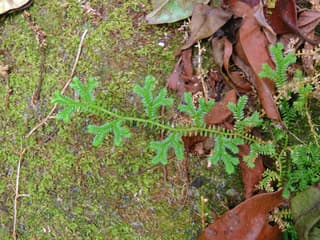
Spikemoss
Selaginella
Selaginella is a diverse genus of over 700 species of primitive vascular plants in the family Selaginellaceae, commonly known as spikemosses or little club mosses. Though not true mosses, they resemble them with their delicate, scale-like foliage and low, spreading growth habit. Found worldwide — predominantly in humid tropical and subtropical environments — they are prized as ornamental plants for terrariums, shaded gardens, and ground covers. Certain species, notably Selaginella lepidophylla (the resurrection plant), can survive near-complete desiccation and rehydrate fully when watered.

Krauss's Spikemoss
Selaginella kraussiana
Selaginella kraussiana, commonly known as Krauss's Spikemoss or African Clubmoss, is a primitive vascular plant that resembles a delicate moss. Native to Africa, it forms a dense, creeping mat of vibrant green, branching foliage. It is a popular choice for terrariums, indoor gardens, and as a groundcover in shady, damp areas where other plants might struggle to thrive.
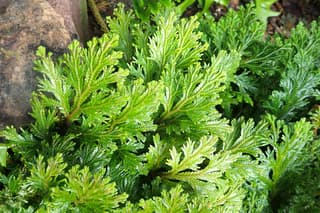
Martens' Spikemoss
Selaginella martensii
Selaginella martensii, known as Martens' Spikemoss, is a stunning lycophyte native to Mexico and Central America. Despite its fern-like appearance, it belongs to an ancient lineage of vascular plants — neither a true moss nor a fern, but a fern-ally or lycophyte. Its feathery, overlapping scale-like leaves create a lush, emerald carpet, with some varieties displaying striking white-tipped variegation. It thrives in high-humidity environments, making it a favorite for terrariums, paludariums, and moisture-rich indoor spaces.
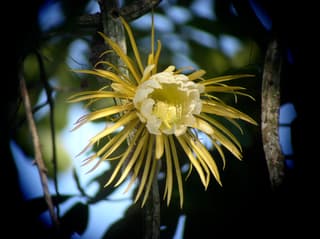
Night-Blooming Cereus
Selenicereus grandiflorus
Selenicereus grandiflorus is a climbing, epiphytic cactus native to Mexico, Central America, and the Caribbean, prized for its enormous, intensely fragrant white flowers that bloom for only one night each year. Its long, sprawling, ribbed stems climb trees and rocks using aerial roots, and by dusk on a single summer evening the plant unfurls a spectacular blossom up to 30 cm wide before it withers by morning.
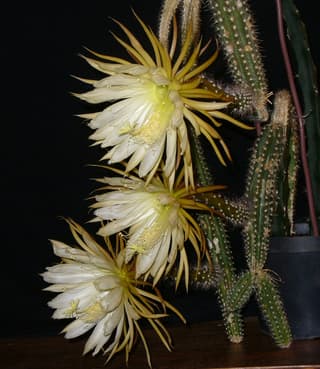
Moonlight Cactus
Selenicereus validus
The Moonlight Cactus (Selenicereus validus) is an epiphytic cactus native to Mexico and Central America, celebrated for its long, pendant cylindrical stems and spectacular nocturnal white and yellow flowers. It belongs to the family Cactaceae and thrives in tropical and subtropical forests, climbing trees and rocky outcrops.
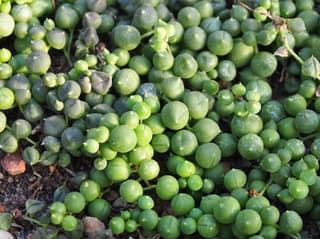
String of Pearls
Senecio rowleyanus
String of Pearls is a unique trailing succulent native to South Africa, featuring long, slender stems adorned with small, spherical bead-like leaves that resemble a string of green pearls. These modified leaves have evolved to store water, allowing the plant to thrive in arid conditions. It belongs to the Asteraceae family and is popular as a hanging houseplant.
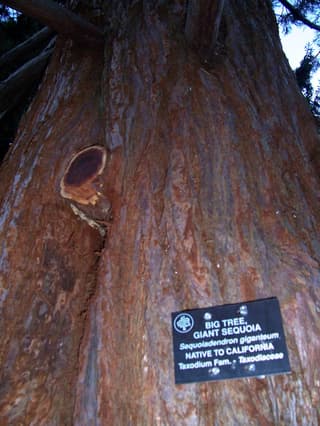
Giant Sequoia
Sequoiadendron giganteum
The Giant Sequoia (Sequoiadendron giganteum) is an evergreen conifer native to the western slopes of the Sierra Nevada in California. It is renowned as one of the largest and longest-lived trees on Earth, with bluish-green scale-like foliage and thick, fire-resistant reddish bark.
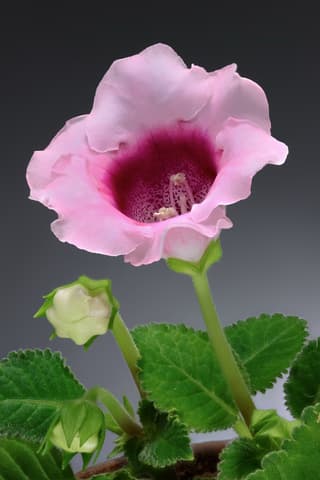
Sinningia
Sinningia
Sinningia is a genus of tuberous flowering plants native to Brazil, belonging to the family Gesneriaceae. Known for their stunning bell-shaped flowers in shades of purple, pink, red, and white, they are prized as ornamental houseplants worldwide. The most famous species, S. speciosa, is commonly called Florist's Gloxinia. Plants are deciduous, entering dormancy in winter and re-emerging each spring from their tubers.
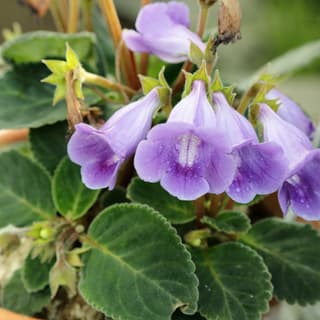
Florist's Gloxinia
Sinningia speciosa
Sinningia speciosa, commonly known as Florist's Gloxinia or Brazilian Gloxinia, is a tuberous perennial native to the rocky slopes and forests of Brazil, in the family Gesneriaceae. It is celebrated for its large, velvety, trumpet-shaped flowers in shades of purple, violet, red, white, and pink. It blooms in spring and summer, then enters a dormancy period before returning the following season.
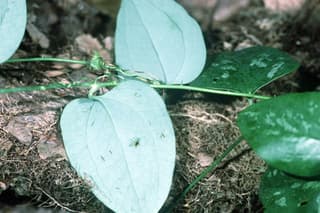
Cat Greenbrier
Smilax glauca
Smilax glauca, commonly known as Cat Greenbrier or Sawbrier, is a thorny deciduous climbing vine native to the woodlands and thickets of Eastern North America. It is recognized by its ovate to cordate leaves with a distinctive bluish-white waxy bloom on the undersides, giving the species its name "glauca". The stems are armed with sharp prickles. It produces small greenish-yellow flowers in spring to early summer, followed by clusters of dark blue-black berries that are an important wildlife food source.
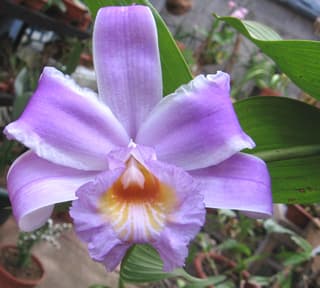
Beautiful Sobralia
Sobralia decora
Sobralia decora is a medium-sized terrestrial or epiphytic orchid with bamboo-like reed-stem canes reaching up to 75 cm tall. Native to parts of Central America (Belize, Guatemala, Honduras, Nicaragua) and Mexico (Nayarit, Oaxaca, Veracruz), it grows on damp hillsides and shaded ravines in lower-elevation rainforests, between 50 and 1700 meters. It produces large, fragrant flowers ranging from pink to lavender, often with a white-tipped lip and a yellow-to-brown throat. Each flower lasts only a single day, but the plant blooms in succession for weeks.
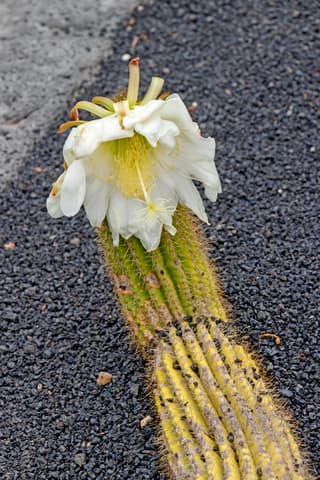
Golden Torch Cactus
Soehrensia spachiana
Soehrensia spachiana, formerly known as Echinopsis spachiana, is a columnar cactus that branches from the base and can reach up to 2 meters in height. It is famous for its spectacular, large white flowers that bloom at night. Its stems are lime green with well-defined ribs and golden-yellow spines that turn gray with age. It is a highly valued species in xeriscaping due to its hardiness and shrubby growth habit.
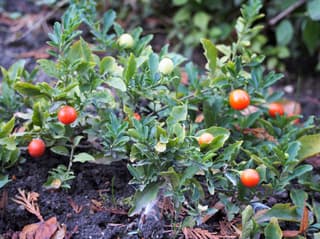
Nightshades
Solanum
Solanum is one of the largest and most diverse plant genera on Earth, comprising 1,500–2,000 species of herbs, shrubs, vines, and small trees in the family Solanaceae. It includes three of humanity's most economically important crops — potato (S. tuberosum), tomato (S. lycopersicum), and eggplant (S. melongena) — alongside hundreds of ornamental and wild species. Most green parts contain toxic alkaloids such as solanine, making this a genus of remarkable duality: life-sustaining food and potential danger, often in the same plant.
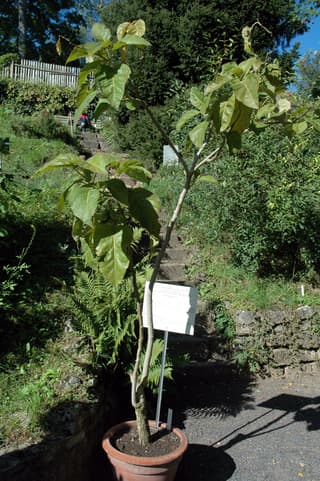
Tamarillo
Solanum betaceum
The tamarillo (Solanum betaceum) is a small tree or shrub native to the Andes of South America. It produces egg-shaped fruits ranging from orange to red or deep purple, with a tangy, bittersweet flavor. Highly valued both for its ornamental appeal and its edible fruits, which are rich in vitamins A, C, and E.
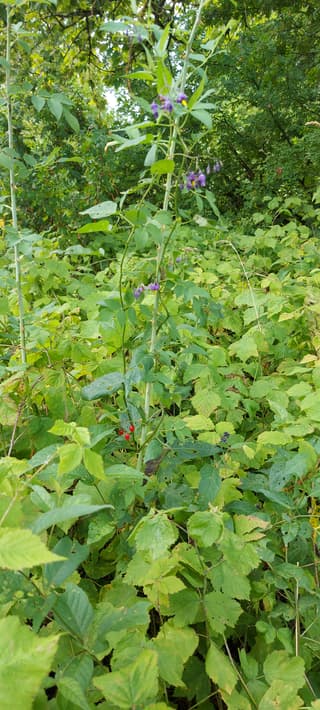
Bittersweet Nightshade
Solanum dulcamara
Bittersweet nightshade (Solanum dulcamara) is a semi-woody perennial climbing vine native to Europe, northern Africa, and Asia, belonging to the Solanaceae family. It produces charming star-shaped purple flowers with yellow stamens, followed by clusters of berries that ripen from green to orange to bright red. WARNING: All parts are SEVERELY TOXIC — containing solanine and other alkaloids that can cause serious poisoning in humans, cats, and dogs.
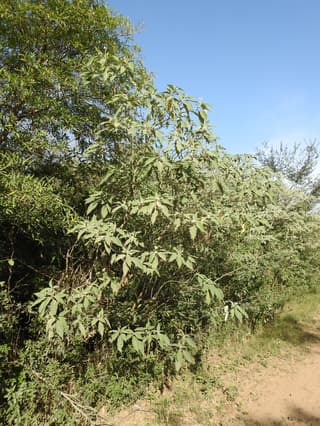
Granular Nightshade
Solanum granulosoleprosum
Solanum granulosoleprosum is a fast-growing shrub or small tree native to southern Brazil, Paraguay, Uruguay, and northern Argentina. A member of the Solanaceae family, it is a pioneer species that thrives in disturbed soils, forest edges, and arid terrain. Its cylindrical, granular stems are covered with dense hairs, and it produces white to pale purple flowers in terminal clusters, followed by globose yellow berries at maturity.
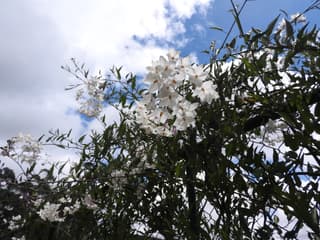
Potato Vine
Solanum laxum
Solanum laxum, commonly called potato vine or jasmine nightshade, is a fast-growing semi-evergreen climber native to southeastern Brazil, Paraguay, Argentina and Uruguay. Its twining, semi-woody stems can reach 6-9 m, quickly covering fences, trellises and arbors. From summer into fall it produces clusters of fragrant, star-shaped white flowers with yellow stamens, followed by small blue-black berries. All parts of the plant - leaves, stems, flowers and especially the unripe berries - contain solanine and other glycoalkaloids and are toxic if ingested by humans and pets; the sap can also irritate skin, so gloves are recommended when pruning.

Tomato
Solanum lycopersicum
Solanum lycopersicum, commonly known as the tomato plant, is a species in the Solanaceae family native to South America. It is widely cultivated worldwide for its edible fruits, which vary in size, color, and shape. Although it is a perennial plant in tropical climates, it is generally grown as an annual in home and commercial gardens due to its sensitivity to cold and its production cycle.

Cherry Tomato
Solanum lycopersicum var. cerasiforme
Cherry tomato (Solanum lycopersicum var. cerasiforme) is a small-fruited tomato variety native to the Andean region of Peru and Ecuador, believed to be the closest wild relative of cultivated tomatoes. It produces clusters of round, bite-sized fruits ranging from red to yellow, orange, and even black, on sprawling indeterminate vines (or compact determinate bushes in dwarf cultivars). Fast-growing and highly productive, it thrives in warm, sunny conditions and is one of the most popular vegetables for home gardens and containers.
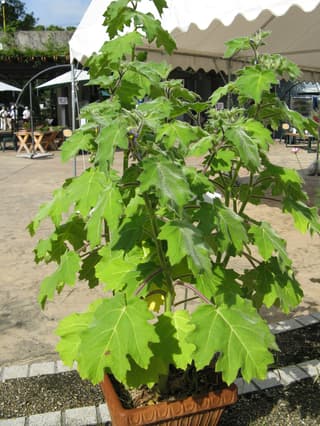
Nipplefruit
Solanum mammosum
Solanum mammosum, commonly known as Nipplefruit or Cow's Udder Plant, is a tropical shrub native to South and Central America. It is widely grown as an ornamental plant for its strikingly shaped fruits, which resemble animal udders or nipples. Belonging to the Solanaceae family, it grows up to 1.5 meters tall, with dense green foliage and white to purple flowers. Despite its ornamental appeal, all parts of the plant are toxic and should be kept away from children and pets.
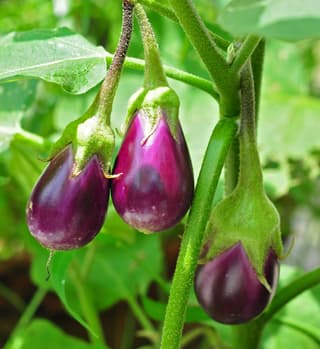
Eggplant
Solanum melongena
Eggplant (Solanum melongena) is a tropical and subtropical vegetable crop in the Solanaceae family, prized for its large, glossy, purple fruit. Native to India and Southeast Asia, it is now cultivated worldwide in warm climates. A bushy perennial grown as an annual, it reaches up to 1.8 m tall with star-shaped lavender flowers and fleshy fruit ranging from deep purple to white.
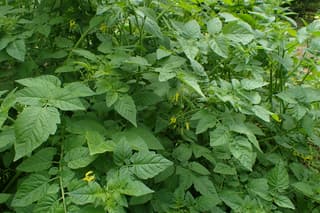
Currant Tomato
Solanum pimpinellifolium
Solanum pimpinellifolium, commonly known as the Currant Tomato or Wild Tomato, is the wild ancestor of all cultivated tomatoes. Native to Peru and Ecuador, it produces tiny, intensely sweet berries the size of currants. All green parts of the plant contain solanine and are toxic; only ripe fruits are edible.
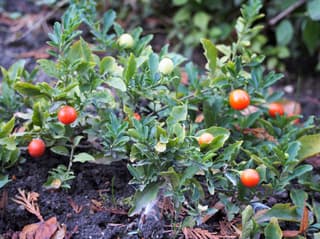
Jerusalem Cherry
Solanum pseudocapsicum
Solanum pseudocapsicum, commonly known as Jerusalem Cherry or Winter Cherry, is an evergreen ornamental shrub native to South America (Peru and Ecuador). It is widely grown for its decorative berries that transition through green, yellow, orange, and red, persisting for months. CRITICAL WARNING: all berries and leaves are severely toxic to humans, cats, and dogs due to solanocapsine and solanine alkaloids.
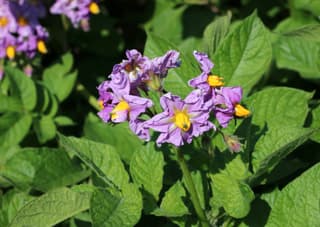
Potato
Solanum tuberosum
The potato (Solanum tuberosum) is a starchy tuberous crop from the Andes of South America, cultivated for over 7,000 years. A member of the Solanaceae (nightshade) family, it is now one of the world's most important food crops. The plant produces attractive white, pink, or purple flowers and nutritious underground tubers. CAUTION: All green parts of the plant contain solanine, a toxic alkaloid — only the healthy tubers are edible.

Japanese Pagoda Tree
Sophora japonica
The Japanese Pagoda Tree (Sophora japonica, syn. Styphnolobium japonicum) is a deciduous tree in the Fabaceae family, native to China and Korea, which has long been cultivated around temples and imperial gardens in Japan. It grows to a height of 15–25 m, featuring a broad, spreading crown and pinnate leaves composed of 7 to 17 leaflets. In summer (July–August), it blooms with creamy-white, lightly fragrant flowers in long panicles that are highly attractive to bees. Due to its resistance to drought, urban pollution, and frost (zones 4a–8b), it is frequently planted as a street and park tree. Because of its slow, resilient growth, thick bark, and ability to form aged, sculptural trunks, it is a popular species for bonsai.

Kōwhai
Sophora microphylla
The kōwhai (Sophora microphylla) is an evergreen tree endemic to New Zealand, where it grows from coastal areas to low montane environments. It reaches between 13 and 26 feet in height in cultivation (up to 82 feet in the wild), featuring pinnate leaves with small leaflets and weeping branches. In spring, it produces clusters of striking, pendulous yellow flowers, considered the country's unofficial national flower. All parts, especially the seeds, are toxic as they contain the alkaloid cytisine.
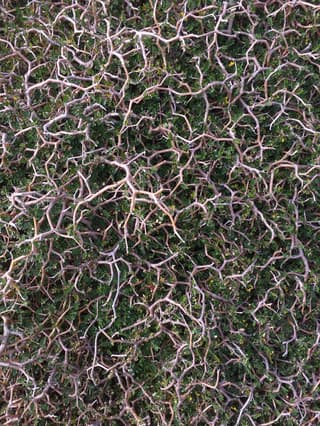
Dwarf Kowhai
Sophora prostrata
Sophora prostrata is a small, slow-growing evergreen shrub native to the dry hill country of New Zealand's South Island, prized for its dense tangle of wiry, zigzagging branches and tiny compound leaflets. In late winter to spring it produces clusters of tubular, pea-like yellow flowers that give the wider kowhai genus its Maori name, meaning "yellow". The rigid, interlocking branch pattern (divarication) is thought to be an evolutionary defence against browsing by the now-extinct moa. Popular as a specimen shrub, low hedge, or bonsai subject, it tolerates coastal exposure and poor soils once established but needs full sun and sharp drainage to thrive.
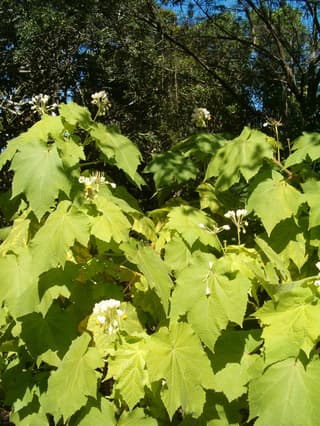
African Hemp
Sparrmannia africana
The African Hemp (Sparrmannia africana) is a fast-growing evergreen shrub from the mallow family (Malvaceae), native to the open woodlands of South Africa near the Cape of Good Hope. In the wild, it grows to 4–8 m, though it remains significantly smaller as a houseplant. It has heart-shaped, finely lobed leaves covered in short hairs, which can cause mild irritation to sensitive skin. From late winter to summer, it produces white flowers with striking yellow and red stamens that react with movement when touched by insects.
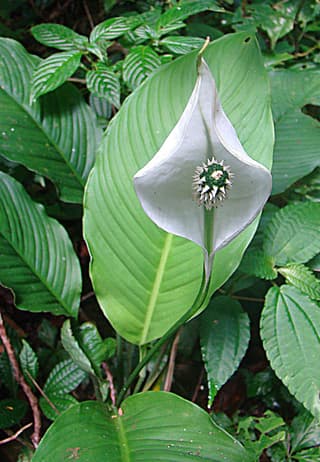
Peace Lily
Spathiphyllum wendlandii
Spathiphyllum wendlandii, commonly known as the Peace Lily, is a tropical evergreen perennial native to Central America — Costa Rica, Honduras, and Panama. With its lush dark-green leaves and graceful white spathe flowers, it is one of the most beloved indoor plants worldwide. It is also NASA-certified as an effective air purifier, removing benzene, formaldehyde, and trichloroethylene from indoor environments.
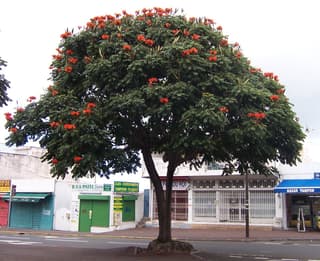
African Tulip Tree
Spathodea campanulata
Spathodea campanulata, commonly known as the African Tulip Tree, is a fast-growing evergreen tree native to the tropical rainforests of West and Central Africa. It is celebrated for its spectacular clusters of large, cup-shaped scarlet to orange flowers that blaze against its dense, dark green canopy. Growing up to 25 meters tall in ideal conditions, this majestic tree has been planted across tropical regions worldwide as an ornamental shade tree. Despite its beauty, it is considered invasive in several regions outside its native range.
What are Medium Plants?
Medium Plants require a bit more attention and basic gardening knowledge. These plants thrive with regular care and some cultivation experience. Ideal for those who already master the basics.
Tips for Growing Medium Plants
medium plants need a balance between attention and freedom. Keep a regular care routine, watch leaves to identify problems early, and adjust watering by season.