1159 Medium Plants | 2026 Guide - Page 24
Discover 1159 medium plants for your garden. Complete care guide.
1159 Medium Plants
Showing 829-864 of 1159
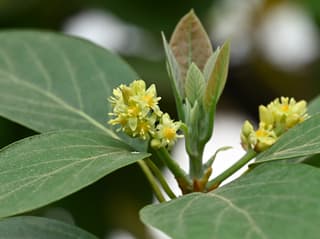
Avocado Tree
Persea
Persea is a genus of approximately 200 evergreen trees in the family Lauraceae, native to tropical and subtropical Americas, eastern Asia, and Macaronesia. The most famous species is the avocado (P. americana), cultivated worldwide for its nutritious fruit. The genus also includes the redbay (P. borbonia) of the southeastern United States and other ornamental species prized for their glossy, aromatic foliage.
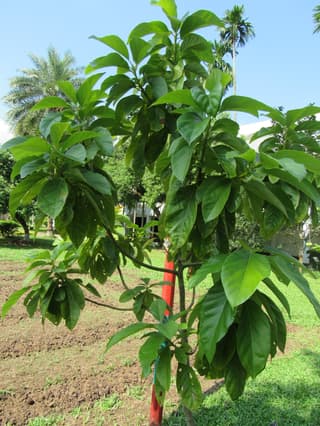
Avocado
Persea americana
Persea americana, commonly known as the avocado, is an evergreen fruit tree native to south-central Mexico and Central America, belonging to the family Lauraceae. It is one of the most economically important and widely cultivated fruit trees in the world, celebrated for its creamy, nutrient-dense fruit rich in healthy monounsaturated fats, vitamins, and minerals. The tree can reach up to 18 meters in height in its natural habitat, bearing large, glossy, dark green leaves.
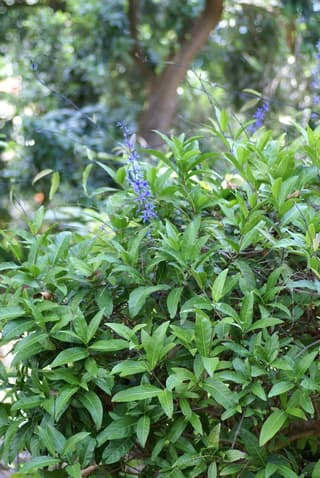
Sandpaper Vine
Petrea volubilis
The Sandpaper Vine (Petrea volubilis) is a vigorous woody climber native to Brazil and other tropical regions of the Americas, belonging to the Verbenaceae family. It can reach up to 5 meters in length when supported by structures such as pergolas, arbors, and fences. Its leaves are leathery, rough to the touch, and have serrated margins, and may partially drop during colder periods. Flowering occurs mainly in winter and spring, forming clusters (panicles) of small star-shaped flowers in shades of lilac to bluish-purple, with a white variety (Alba) also available. It is widely used in landscaping for its exuberant ornamental effect over trellises and pergolas.
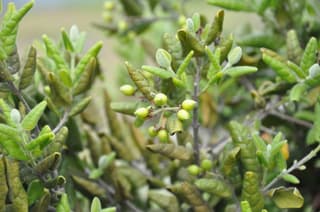
Boldo
Peumus boldus
Peumus boldus, commonly known as Boldo, is an evergreen tree native to the central regions of Chile. Its leaves are leathery, grayish-green, and possess a very strong characteristic aroma due to the presence of essential oils and the alkaloid boldine. It is a slow-growing plant that can reach large proportions in its natural habitat, but in domestic cultivation or pots, it remains a robust shrub.
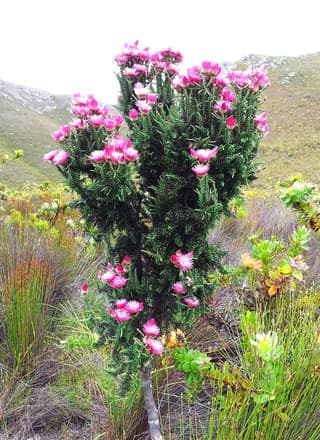
Cape Everlasting
Phaenocoma prolifera
Phaenocoma prolifera is an evergreen shrub in the Asteraceae family, native to the fynbos of the southern Western Cape province in South Africa. It often reaches a meter or more in height and naturally takes on a Christmas tree-like shape, with tiny rounded leaves that densely cover the stems. Its flower heads, borne at the tips of the branches, are surrounded by rigid, dry, papery bracts ranging from pink to purple that do not fade. Flowering peaks in spring, but the flowers remain decorative for most of the year. When cut and kept dry, they last for years, hence the name 'everlasting'. This hardy rockery plant thrives in full sun and sandy, poor, well-drained soils.
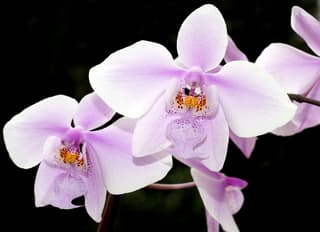
Schiller's Moth Orchid
Phalaenopsis schilleriana
Phalaenopsis schilleriana is an epiphytic moth orchid endemic to the Philippines, prized for its handsome foliage as much as its flowers. The leathery leaves are marked with alternating bars of silver-grey and dark green on top, with a purple flush underneath, remaining attractive year-round. In late winter to spring, arching, often branching sprays carry dozens of fragrant, rose-pink flowers with a spotted lip. Cooler autumn nights help trigger the bloom spike.
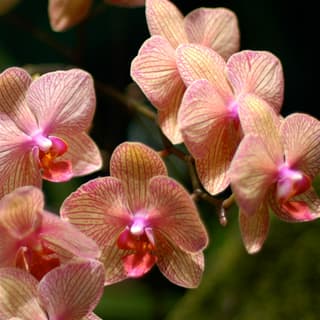
Phalaenopsis Hybrid Orchid
Phalaenopsis x hybridus
The Phalaenopsis Hybrid Orchid (Phalaenopsis x hybridus) is one of the world's most popular flowering houseplants, celebrated for its elegant arching flower spikes bearing large, flat blooms in a spectacular range of colors including white, pink, purple, yellow, and red. Native to the tropical forests of Southeast Asia, this epiphytic orchid thrives indoors with proper care, producing flowers that last months at a time. As a hybrid group derived from dozens of wild Phalaenopsis species, these orchids have been bred for extended bloom time, vibrant color, and adaptability to home environments.
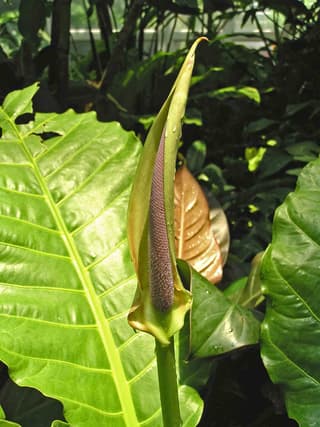
Imperial Red Philodendron
Philodendron 'Imperial Red'
Philodendron 'Imperial Red' (Philodendron erubescens 'Imperial Red') is a self-heading aroid hybrid from the Araceae family, grown for its dramatic foliage: new leaves unfurl a deep burgundy-red and gradually mature to a glossy dark green. Unlike vining philodendrons, it grows in a compact rosette, making it well suited to tabletops, desks, and shelves.
White Knight Philodendron
Philodendron 'White Knight'
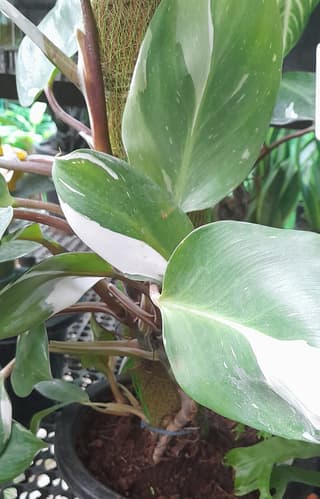
Philodendron White Knight is a rare and highly prized variegated philodendron cultivar, known for its striking white, cream, and green marbled leaves paired with deep burgundy-purple stems and petioles. A vining aroid in the Araceae family, it climbs via aerial roots and is prized by collectors for its slow, compact growth and dramatic color contrast.
White Princess Philodendron
Philodendron 'White Princess'
Philodendron 'White Princess' is a striking variegated cultivar of Philodendron erubescens, prized by collectors for its dark green, burgundy-backed leaves splashed with cream-white and occasional pink sectors. Like all variegated aroids, its patterning is unstable and driven by chimeric tissue, so leaf variegation can vary from cutting to cutting and even leaf to leaf on the same plant. It is a climbing vine in the Araceae family that produces aerial roots and benefits from a moss pole or trellis for support as it matures.
White Wizard Philodendron
Philodendron 'White Wizard'
The White Wizard Philodendron is a striking variegated cultivar of Philodendron erubescens, prized for its heart-shaped leaves marbled in shades of deep green, creamy white, and occasional pink flecks. Native to the rainforests of Colombia, this climbing tropical aroid is a favorite among collectors due to the rarity and instability of its variegation, which can differ leaf to leaf on the same plant. Indoors it grows well trained onto a moss pole, producing lush, dramatic foliage when given the right light.
Burle Marx Philodendron
Philodendron burle-marxii
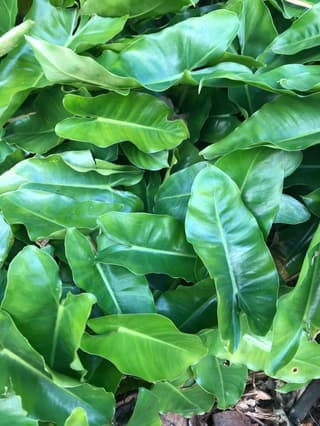
Philodendron burle-marxii is a fast-growing tropical aroid native to the rainforests of Brazil, Colombia, and Ecuador. Named in honor of Roberto Burle Marx, the legendary Brazilian landscape architect, it features glossy dark green lance-shaped leaves with a prominent central vein. This versatile plant thrives both as a climber with support or as a trailing plant in hanging baskets, making it one of the most sought-after aroids among houseplant collectors.
Blushing Philodendron
Philodendron erubescens
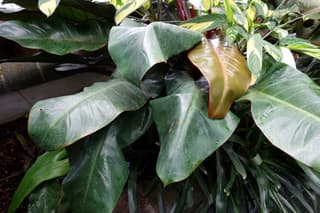
Philodendron erubescens is a climbing tropical plant native to the rainforests of Colombia. It stands out for its large heart-shaped leaves with green and reddish tones, and intensely red stems. It is a perennial plant ideal for indoors that can reach up to 90cm in height when grown at home.
Giant Philodendron
Philodendron giganteum
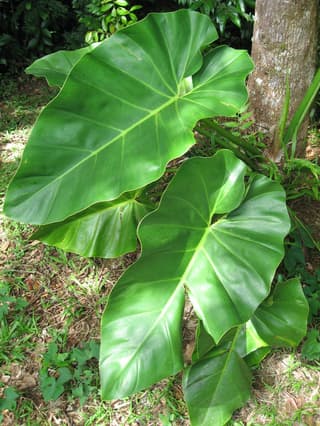
Philodendron giganteum is a striking aroid native to the tropical forests of the Caribbean and South America, including Brazil's Para state. In the wild it grows as a hemiepiphyte, climbing tree trunks and producing leaves that can exceed 60 cm (2 ft) in length. Its bold, glossy foliage makes it a dramatic statement plant for spacious indoor or greenhouse settings.
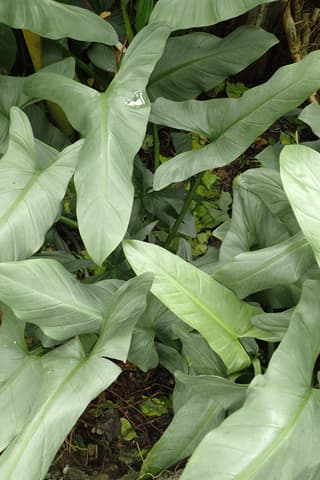
Silver Sword Philodendron
Philodendron hastatum
Philodendron hastatum, known as the silver sword philodendron, is an epiphytic climbing aroid native to the tropical rainforests of southeastern Brazil. Its young leaves are lance-shaped with a metallic silver sheen, maturing into longer, more elongated leaves with coppery undersides.
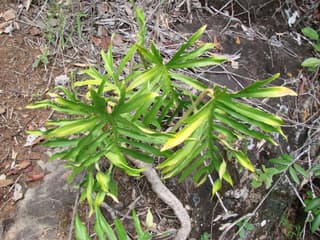
Mayo's Philodendron
Philodendron mayoi
Philodendron mayoi is a tropical climbing species native to Brazil's Atlantic Forest, prized for its deeply lobed, fern-like leaves. A medium-growing houseplant, it thrives in bright indirect light and high humidity, making it a striking addition to any indoor space.
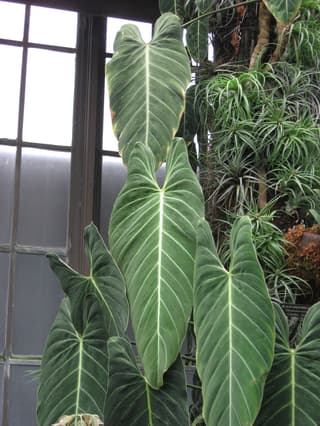
Black Gold Philodendron
Philodendron melanochrysum
Philodendron melanochrysum, commonly known as the Black Gold Philodendron, is a stunning tropical climbing plant native to the rainforests of Colombia. Its large, velvety, deep green leaves shimmer with golden iridescence when light catches them, earning it the evocative name "black gold." Mature leaves can reach up to 60 cm in length, displaying a breathtaking combination of dark, almost black-green color with prominent golden-yellow veins. This hemiepiphytic climber is one of the most sought-after collector plants in the aroid world.
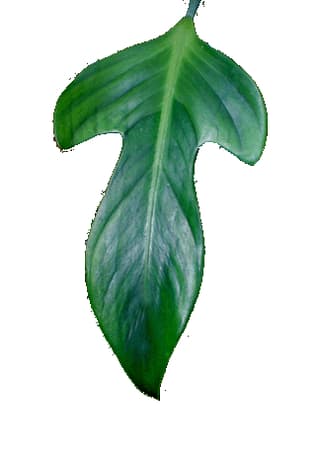
Horse Head Philodendron
Philodendron panduriforme
Philodendron panduriforme, commonly known as the Horsehead Philodendron, is a tropical climbing plant native to the rainforests of South America, including Brazil, Colombia, Peru, Ecuador, Venezuela, and Bolivia. Belonging to the Araceae family, it is famous for its unique fiddle-shaped or horsehead-shaped leaves, which change appearance as the plant matures. It is an excellent choice for indoor environments, providing an exotic and tropical look.
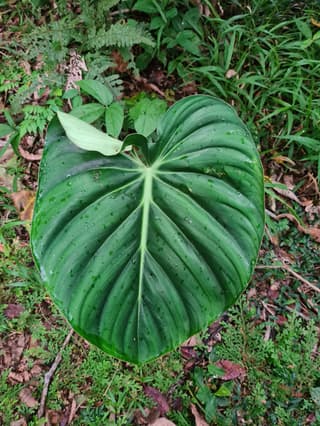
Philodendron Pastazanum
Philodendron pastazanum
Philodendron pastazanum is a terrestrial, creeping aroid native to the rainforest floor of Pastaza Province in eastern Ecuador, also found in Peru, typically growing between 300 and 1,000 m elevation. Unlike many climbing philodendrons, it spreads laterally along the ground rather than climbing trees. It produces large, cordate (heart-shaped) leaves with pronounced ribbed venation and a velvety texture in deep green, distinguishing it from similar species such as Philodendron mamei and Philodendron sodiroi. The species was described by botanist K. Krause around 1940 and takes its name from Ecuador's Pastaza Province.
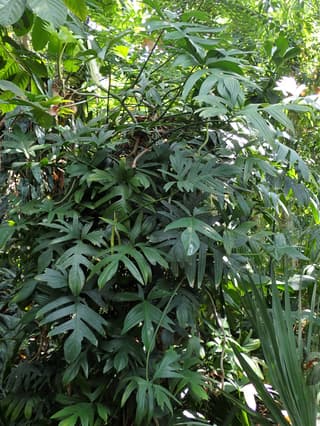
Oak Leaf Philodendron
Philodendron pedatum
Philodendron pedatum, commonly known as the Oak Leaf Philodendron, is a climbing aroid native to the tropical rainforests of South America. Its deeply lobed, oak-leaf-shaped foliage makes it one of the most striking members of the genus. As a natural climber, it grows vertically and can reach impressive heights when given a support structure indoors.
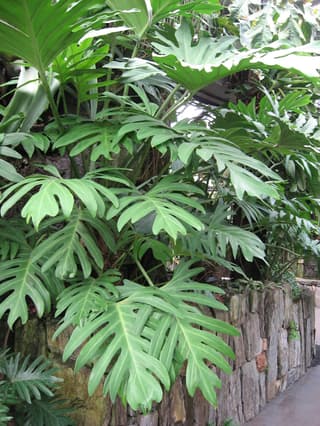
Comb-leaf Philodendron
Philodendron pinnatifidum
Philodendron pinnatifidum, the comb-leaf philodendron, is a climbing aroid native to Venezuela and northwestern Brazil, prized for its deeply lobed, glossy foliage. In the wild it grows as a hemiepiphyte, climbing tree trunks with aerial roots. It's a moderately easy, eye-catching houseplant suited to bright, humid indoor spots.
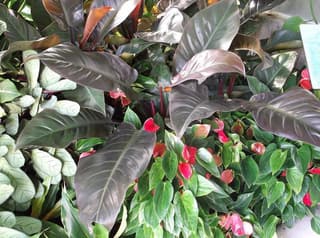
Congo Philodendron
Philodendron tatei
Philodendron tatei, commonly known as Congo Philodendron, is a tropical plant from the Araceae family, native to the wet tropical rainforests of northern Brazil, Guyana, Peru, and Venezuela. Admired for its large, glossy, deep-green leaves (reddish-bronze in cultivated varieties), this species is a popular indoor ornamental plant. Unlike many climbing philodendrons, it has a compact, self-heading growth habit, making it an excellent statement plant for interior spaces.

Fern-Leaf Philodendron
Philodendron tortum
The Fern-Leaf Philodendron (Philodendron tortum) is a climbing aroid native to South American rainforests, prized for its deeply dissected, fern-like leaves. In the wild it climbs tree trunks using aerial roots and can reach several meters in height. Indoors it is typically grown on a moss pole to support vertical growth, which encourages larger, more deeply lobed mature leaves.
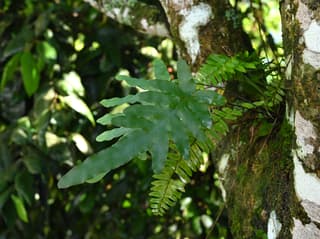
False Golden Polypody
Phlebodium pseudoaureum
Phlebodium pseudoaureum is a striking epiphytic fern native to the tropical and subtropical Americas. It produces elegant, deeply lobed fronds in a distinctive bluish-green hue, crawling along trees and rocks via creeping red-hairy rhizomes. Unlike its cousin P. aureum (Golden Polypody), this species is distinguished by its more glaucous, muted blue-green coloration and smaller stature. It thrives from cloud forests to tropical lowlands, making it one of the most adaptable ferns in the Polypodiaceae family.
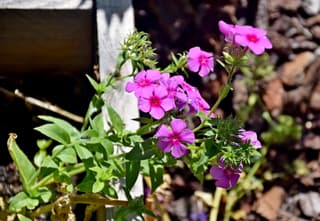
Annual Phlox
Phlox drummondii
Phlox drummondii, known as annual phlox or Drummond's phlox, is a fast-growing annual native to Texas, prized for dense clusters of star-shaped flowers in red, pink, white, lavender and purple. It thrives in full sun and is popular in beds, borders and containers.
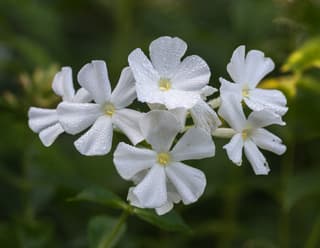
Garden Phlox
Phlox paniculata
Phlox paniculata, commonly known as Garden Phlox or Summer Phlox, is a fragrant, long-blooming herbaceous perennial native to eastern North America. It produces large, domed clusters of five-petaled flowers in shades of pink, purple, red, white, and lavender from mid-summer through fall, making it a staple of cottage and perennial gardens. The plant grows 2–4 feet tall and spreads 2–3 feet wide, returning reliably each year.
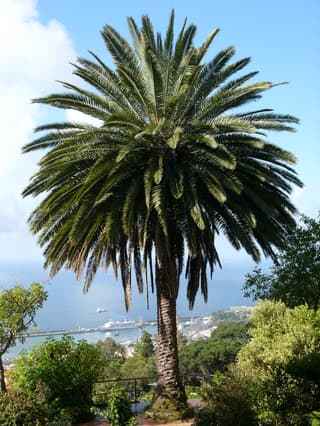
Canary Island Date Palm
Phoenix canariensis
Phoenix canariensis, commonly known as the Canary Island Date Palm or Pineapple Palm, is a majestic feather palm native to the Canary Islands, Spain. It is one of the most widely planted ornamental palms in the world, recognizable by its stout trunk adorned with distinctive diamond-shaped leaf scars, and its long arching pinnate fronds that can reach over 6 meters. Unlike Phoenix roebelenii (the pygmy date palm already in the database), this species is a large-scale outdoor tree that can grow up to 18 meters tall.
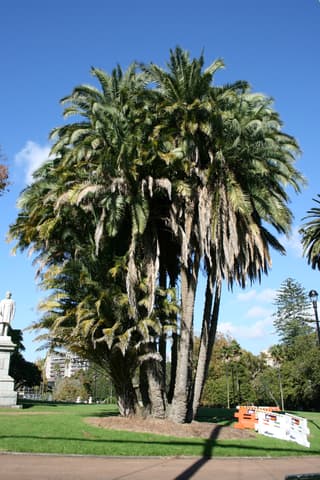
Senegal Date Palm
Phoenix reclinata
The Senegal date palm is a multi-stemmed palm native to tropical Africa, known for its arching, feathery fronds and spiny trunks. It is widely used in landscaping as an ornamental focal point in gardens and parks.
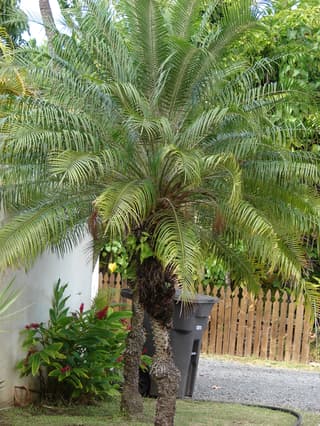
Pygmy Date Palm
Phoenix roebelenii
Phoenix roebelenii, commonly known as the Pygmy Date Palm, is a graceful miniature palm native to the tropical forests of Southeast Asia, particularly Laos and Vietnam. It is one of the most popular indoor palms worldwide due to its compact size, elegant arching fronds, and easy-going nature. Growing slowly to about 2 meters tall, this palm adds a tropical touch to any interior space or warm outdoor garden.
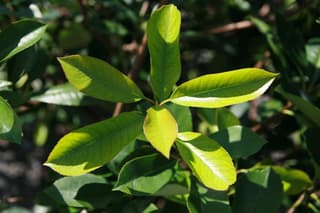
Red Robin Photinia
Photinia x fraseri
Photinia x fraseri, commonly known as Red Robin Photinia or Red Tip Photinia, is a vigorous evergreen shrub prized for its brilliant crimson-red new growth that matures to glossy dark green. A hybrid of Photinia glabra and Photinia serratifolia bred in the mid-20th century, it is one of the most widely planted hedging and screening shrubs in temperate gardens. In mid-spring it produces small clusters of white, faintly unpleasant-scented flowers, followed by red berry-like fruit that birds enjoy. Left untrimmed it can reach small tree proportions, but regular pruning keeps it as a dense, colorful hedge, with striking new foliage flushes appearing several times a year after each trim.
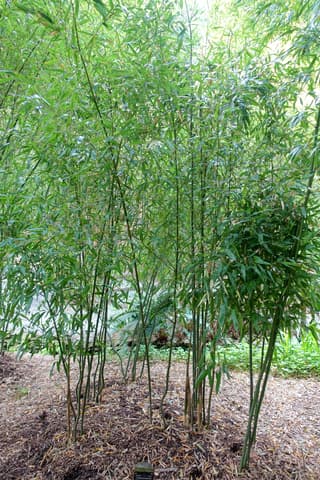
Yellow Groove Bamboo
Phyllostachys aureosulcata
Yellow Groove Bamboo (Phyllostachys aureosulcata) is a striking running bamboo native to the Zhejiang Province of China. It is named for the distinctive yellow groove that runs along each dark green culm, creating an eye-catching two-tone effect. One of the hardiest bamboos available, it tolerates temperatures down to -20°C (-4°F), making it suitable for temperate gardens in USDA zones 4–9. Its fast, vigorous growth makes it popular as a privacy screen, windbreak, and ornamental specimen. The young shoots are edible and notably free of the bitter flavor common to many bamboo species.
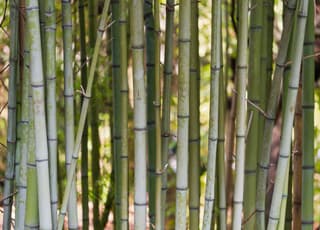
Moso Bamboo
Phyllostachys edulis
Moso Bamboo (Phyllostachys edulis) is the world's largest temperate bamboo, native to the mountain forests of central China. Its culms can reach up to 28 meters tall and 15 cm in diameter. Widely cultivated for edible shoots, construction timber, and ornamental beauty, it is also one of the fastest-growing plants on Earth.
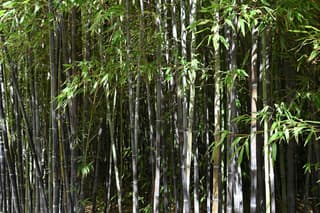
Black bamboo
Phyllostachys nigra
Phyllostachys nigra, or black bamboo, is a fast-growing, evergreen running bamboo prized for its glossy green canes that mature to a striking jet-black over two to three years. Native to China, it forms tall, dense clumps of arching foliage and is widely used as an ornamental screen or privacy hedge. As a running bamboo it spreads via underground rhizomes and can become invasive if left uncontained, so planting in a large container or behind a rhizome barrier is recommended.
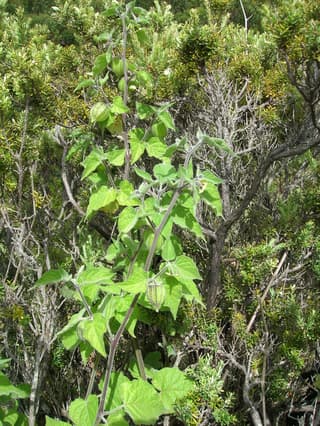
Cape Gooseberry
Physalis peruviana
Physalis peruviana, commonly known as cape gooseberry or goldenberry, is a sprawling perennial subshrub in the nightshade family (Solanaceae), native to the Andean highlands of Peru, Ecuador, Colombia, and Bolivia. It produces small, round, golden-orange berries wrapped in a papery husk (calyx) that resembles a Chinese lantern. Only the fully ripe fruit is edible; the unripe fruit and all vegetative parts (leaves, stems, and the papery husk) contain solanine and other toxic alkaloids and should never be eaten.
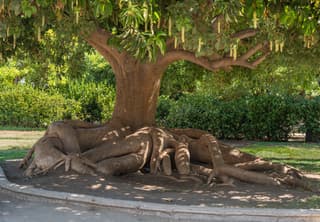
Ombú
Phytolacca dioica
Ombú (Phytolacca dioica) is a majestic South American tree from the family Phytolaccaceae, native to the pampas of Argentina and Uruguay. Despite resembling a true tree, its trunk is composed primarily of water and soft tissue rather than wood, making it unusually light. It is a fast-growing, dioecious species — male and female flowers appear on separate plants. The ombú can reach 15+ meters in height with a broad, dense canopy that provides generous shade, and is celebrated as a cultural icon of the gaucho identity.
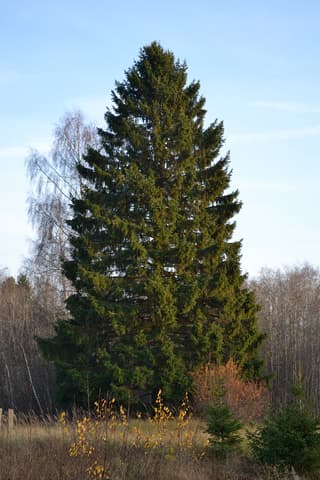
Norway Spruce
Picea abies
Norway Spruce (Picea abies) is a fast-growing evergreen conifer native to northern and central Europe, widely planted as a Christmas tree and ornamental landscape tree. It has a conical crown, dark green needles, and distinctive pendulous cones.
What are Medium Plants?
Medium Plants require a bit more attention and basic gardening knowledge. These plants thrive with regular care and some cultivation experience. Ideal for those who already master the basics.
Tips for Growing Medium Plants
medium plants need a balance between attention and freedom. Keep a regular care routine, watch leaves to identify problems early, and adjust watering by season.