Urticaceae
Trailing Watermelon Begonia: Ground Cover Plant
Pellionia repens
Trailing Watermelon Begonia requires bright indirect light, consistently moist but not waterlogged soil, high humidity between 50% and 70%, and temperatures between 65°F and 85°F (18-30°C). It does not tolerate cold drafts or the root ball drying out completely. During the growing season from spring to summer, fertilize approximately every four weeks with a balanced fertilizer diluted to half strength; reduce fertilization in winter. It propagates easily via stem cuttings. It is occasionally attacked by spider mites, aphids, or mealybugs, and is prone to rot if overwatered.
Every 7 days
Partial shade
18° - 30°C
50% - 70%
Categories
What is Trailing Watermelon Begonia?
Trailing Watermelon Begonia (Pellionia repens) is a medium-care plant from the Urticaceae family. Trailing Watermelon Begonia (Pellionia repens, synonym Elatostema repens) is a small perennial indoor plant from the Urticaceae family, native to Southeast Asia, including Vietnam and Malaysia. It reaches a height of only about 6 inches, but its prostrate to trailing stems can spread up to 24 inches...
Trailing Watermelon Begonia grows up to 15cm, spread of 60cm, watering every 7 days, 18°C – 30°C, 50–70% humidity. It is suitable for indoor environments and safe for pets.
Unlike many popular species, Trailing Watermelon Begonia is safe to keep around pets. Without adequate drainage, root rot can develop within 14 days.
How to Care for Trailing Watermelon Begonia?
TLDR: Trailing Watermelon Begonia needs Partial shade, watering every 7 days, and temperatures between 18-30°C with 50-70% humidity.
How Often Should You Water Trailing Watermelon Begonia?
Water when the top inch of the substrate is dry, approximately once a week. The soil must not dry out completely, but the plant should not sit in water either, otherwise there is a risk of root rot. Reduce watering in winter.
How Much Light Does Trailing Watermelon Begonia Need?
It thrives best in a bright spot without direct sun, ideally receiving at least six hours of indirect light daily. Direct sun burns the leaves, while a lack of light causes the plant to become sparse and leggy.
What Is the Best Soil for Trailing Watermelon Begonia?
Use a loose, well-draining, and humus-rich indoor potting mix that retains moderate moisture but drains excess water quickly. The pot must have drainage holes.
What Pot Should You Use for Trailing Watermelon Begonia?
A shallow hanging basket or a bowl with drainage holes, as the plant has shallow roots and trailing stems.
Care Schedule
Fertilize
Every 28 days
What Is Trailing Watermelon Begonia and Where Does It Come From?
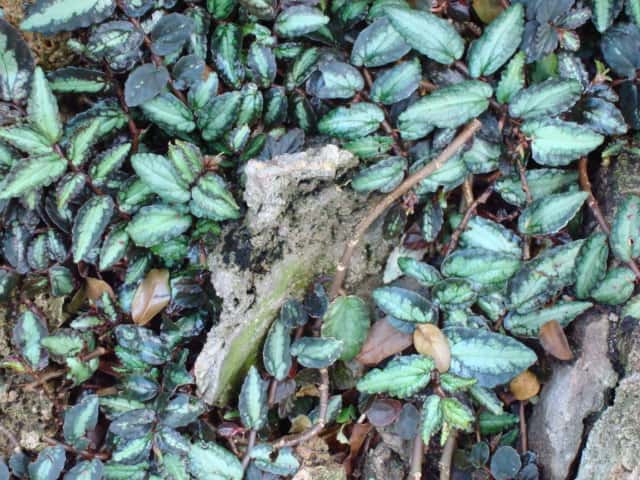
Trailing Watermelon Begonia (Pellionia repens, synonym Elatostema repens) is a small perennial indoor plant from the Urticaceae family, native to Southeast Asia, including Vietnam and Malaysia. It reaches a height of only about 6 inches, but its prostrate to trailing stems can spread up to 24 inches wide. The oval leaves are olive green with darker, purplish or brown markings that resemble the rind of a watermelon, which is why it is commonly called the Watermelon Begonia. The tiny greenish-white flowers are inconspicuous and hold little ornamental value. It is well-suited for hanging baskets, terrariums, and as a groundcover in warm, humid environments. It is considered non-toxic to cats, dogs, and humans.
How Big Does Trailing Watermelon Begonia Grow?
TLDR: Trailing Watermelon Begonia can reach up to 15cm tall with Medium growth rate.
Max height
15cm
Spread
60cm
Foliage
Evergreen
Plant Uses
Ornamental
Great for decoration
Ground Cover
Soil coverage
Is your plant showing symptoms?
Click on the symptom to discover possible causes:
What Diseases Commonly Affect Trailing Watermelon Begonia?
TLDR: Trailing Watermelon Begonia is susceptible to 6 known diseases. Monitor regularly for early detection.
Root Rot
Root rot is a serious fungal disease that affects the root system of plants, causing them to decay and die. It is primarily caused by overwatering, poor drainage, or soil-borne fungi such as Pythium, Phytophthora, Rhizoctonia, and Fusarium. The disease thrives in waterlogged conditions where roots are deprived of oxygen, making them susceptible to fungal infection.
Spider Mites
Spider mites are tiny arachnids (less than 1/20 inch long) related to spiders and ticks that feed on plant sap. They thrive in hot, dry conditions and can cause significant damage to ornamental and vegetable plants. During severe infestations, crop losses can reach 14% or higher as these pests disrupt vital plant processes including photosynthesis, carbon dioxide absorption, and transpiration.
Mealybugs
Mealybugs are small, soft-bodied insects covered with a white, waxy, cottony material. They are common pests of houseplants and outdoor plants in mild climates. These sap-sucking insects feed on plant tissue, causing damage, stunted growth, and can lead to plant death if left untreated. They produce sticky honeydew which attracts sooty mold.
Aphids
Aphids are small, soft-bodied, pear-shaped insects (1/16 to 1/8 inch long) that feed by sucking nutrient-rich sap from plants. They reproduce rapidly and can quickly weaken plants, causing distorted growth and transmitting plant viruses. Aphids come in various colors including green, black, red, yellow, brown, and gray. They secrete honeydew, a sticky substance that attracts ants and encourages sooty mold growth.
Meaning & Symbolism
In the world of houseplants, it symbolizes resilience, freshness, and patient growth; its decorative leaves are reminiscent of watermelon rinds.
Compare with similar plants
| Attribute | Difficulty | Light | Watering | Pet Safe |
|---|---|---|---|---|
| Dark Fieldcap | Medium | Low light | 2d | ⚠️ |
| Azalea | Medium | Partial shade | 3d | ⚠️ |
| Muriel's Bamboo | Medium | Partial shade | 3d | ✓ |
| Bougainvillea | Medium | Direct sun | 7d | ⚠️ |




