634 Medium Pet Safe | 2026 Guide - Page 5
Find 634 medium pet safe. Complete guide for your garden.
634 Pet Safe with medium level
Showing 145-180 of 634
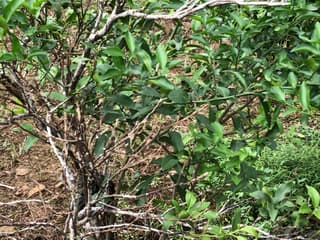
Kumquat
Citrus japonica
The kumquat (Citrus japonica) is a small evergreen citrus shrub or tree native to China, prized for its bite-sized orange fruit that is eaten whole, peel and all, offering a sweet rind and tart flesh. Compact and slow-growing, it is popular as a container and ornamental garden plant, and is one of the few citrus resistant to citrus canker.
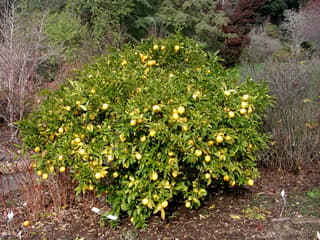
Lemon
Citrus limon
The lemon (Citrus limon) is a small evergreen tree in the Rutaceae family, native to the subtropical regions of South Asia. Recognized for its aromatic yellow oval fruits, pinkish-white flowers, and bright green foliage, it is one of the most widely cultivated citrus fruits in the world. It produces fruit with high vitamin C and citric acid content, being extensively used in cooking, folk medicine, and perfumery.
Reindeer lichen
Cladonia rangiferina
Cladonia rangiferina, known as reindeer lichen, is a light grey, shrub-like species of lichen that grows in cold regions and tundras. Although it looks like a plant, it is actually a symbiotic community of fungus and algae. It is extremely resistant to low temperatures and serves as a primary food source for reindeer during winter.
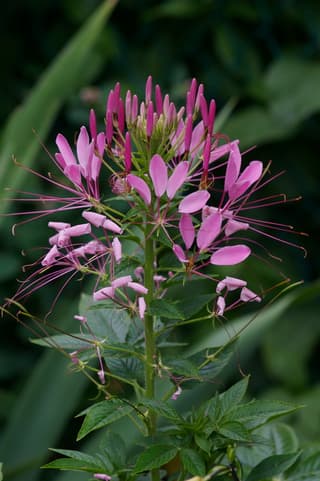
Spider Flower
Cleome hassleriana
Cleome hassleriana, commonly known as Spider Flower, is a fast-growing annual plant native to South America — particularly Brazil, Paraguay, and Argentina. It produces delicate flowers in shades of pink, purple, and white with long protruding stamens resembling spider legs, attracting butterflies, hummingbirds, and other pollinators. It is an easy-to-grow plant ideal for borders, background plantings, and cottage gardens.
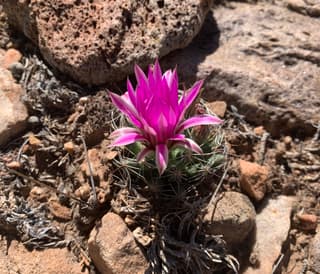
Wright's Fishhook Cactus
Cochemiea wrightii
Cochemiea wrightii, formerly classified as Mammillaria wrightii, is a small solitary cactus native to the high-elevation grasslands and rocky hills of Arizona, New Mexico, Sonora, and Chihuahua. It grows as a flattened to briefly cylindrical stem reaching just 3 to 8 cm in diameter, armed with dark, hooked central spines and whitish marginal spines. In spring and summer it produces striking magenta to bright purple flowers up to 2.5 cm wide. Thanks to its origin at elevations up to 2,200 m, it tolerates far colder winters than most Mammillaria-type cacti.
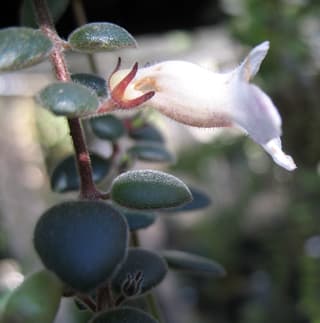
Codonanthe
Codonanthe devosiana
Codonanthe (Codonanthe devosiana) is an epiphytic subshrub from the Gesneriaceae family, related to the African violet. It is native to the Atlantic Forest of southeastern and southern Brazil, where it grows hanging from trunks and branches, rarely rooting in solid ground. Its thin, trailing stems bear small, fleshy, almost round leaves that are dark green on the upper side and reddish or maroon on the underside. Between spring and autumn, it produces white or pale pink tubular flowers, sometimes with a yellow or maroon throat, followed by small, bright orange berries. Due to its trailing habit and prolonged flowering, it is highly valued in hanging baskets and as a houseplant.

Trailing Codonanthe
Codonanthe gracilis
Codonanthe gracilis is a trailing epiphytic subshrub in the African violet family (Gesneriaceae), native to Brazil's Atlantic Forest, where it grows perched on tree trunks and branches in humid, shaded understories. Its slender, cascading stems can reach over a meter in length and readily root along their nodes, making it an excellent choice for hanging baskets. Small, fleshy, glossy leaves line the stems, punctuated by delicate white to pale pink tubular flowers with maroon throat markings that give way to bright orange berries.
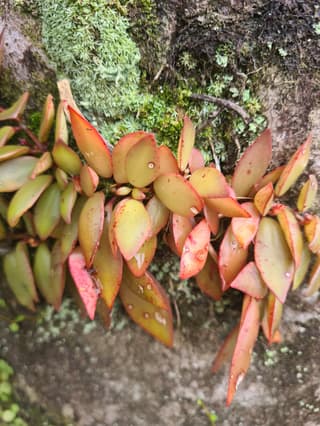
Codonanthe
Codonanthopsis crassifolia
Codonanthopsis crassifolia (still widely sold under its older name, Codonanthe crassifolia) is a small trailing epiphyte in the African violet family, Gesneriaceae. Native to the humid rainforest understory of Brazil, it grows on tree bark, its slender cascading stems studded with thick, glossy, moisture-retaining leaves that form dense mats over time. It produces small tubular flowers in shades of creamy white to pale pink, about 1.5-2.5 cm long, followed by yellow-to-orange berries. In the wild it shares a remarkable partnership with arboreal ants: it offers extrafloral nectar and ant-fodder berries, and in return its seeds and roots are carried into the ants' carton nests, a classic myrmecophyte relationship. In cultivation it makes an easy-going hanging or mounted specimen for warm, humid rooms.
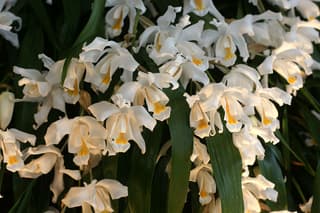
Snow Queen Orchid
Coelogyne cristata
Coelogyne cristata is a stunning epiphytic orchid native to the cool, moist Himalayan foothills. It produces cascading sprays of pristine white flowers with golden-yellow markings on the lip, blooming in late winter to early spring. Its evergreen strap-like leaves emerge from oval pseudobulbs. This orchid is treasured by collectors for its spectacular winter blooms and intoxicating fragrance.
Cooke's Toughshank
Collybia cookei
Collybia cookei, also known as the yellow sclerotium collybia, is a small fungal species recognizable by its characteristic yellowish sclerotium (a persistent resting body). Its cap is whitish or cream-colored, and its gills are crowded. It often appears on the remains of other fungi or heavily decayed wood in humus-rich forest soils.
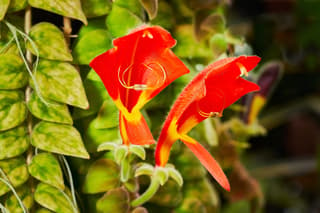
Goldfish Plant
Columnea gloriosa
Columnea gloriosa, commonly called the goldfish plant, is a trailing epiphyte native to the tropical rainforests of Costa Rica and Central America. It belongs to the Gesneriaceae family and is prized for its thick, waxy, dark-green leaves and tubular orange-to-red flowers that resemble small leaping goldfish. It blooms mainly in spring and summer along cascading stems that can reach up to 90 cm in length.
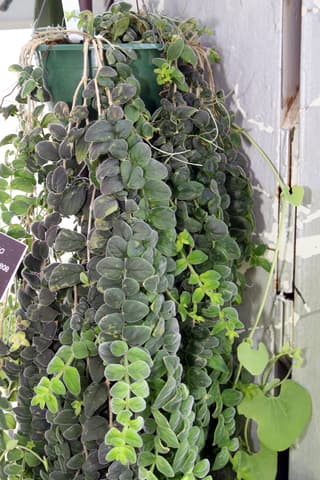
Goldfish plant
Columnea microcalyx
Columnea microcalyx is a tropical epiphytic plant native to Central America, belonging to the Gesneriaceae family. It features trailing stems that can reach up to 90 cm in length, adorned with small, glossy dark green leaves. Its tubular orange to bright red flowers resemble tiny goldfish, giving the plant its common name. It is an ideal houseplant for hanging baskets where it can display its elegant pendulous habit.

Carnauba Palm
Copernicia prunifera
Copernicia prunifera, the carnauba palm, is a fan palm endemic to the semi-arid Caatinga of northeastern Brazil (Ceara, Piaui, Maranhao, Rio Grande do Norte and Bahia), where it grows along rivers and in seasonally flooded ground that receives only about 800mm of poorly distributed rainfall a year. Mature specimens reach up to 20m tall on a slim, ringed trunk topped by a dense crown of stiff, blue-green fan leaves, and can live for two centuries. It is nicknamed "arvore da vida" (tree of life) in Brazil because almost every part is used, most famously the fine wax coating its fronds, harvested and refined into carnauba wax -- the hardest natural wax in commercial use, prized for polishes, cosmetics and coatings.

Spanish Elm
Cordia alliodora
The Spanish Elm (Cordia alliodora) is a tree in the Boraginaceae family, native to the tropical forests of the Americas, ranging from Mexico to Argentina. It can reach up to 30 meters in height, featuring a cylindrical, fluted trunk and branches with hollow nodes that often serve as nesting sites for ants and stingless bees. Its name 'alliodora' refers to the characteristic garlic-like scent emitted by its wood. It is a fast-growing deciduous tree, highly valued as a timber species, for shade in coffee and cocoa agroforestry systems, and as an ornamental for its abundant, fragrant white flowers that primarily bloom during the dry season.
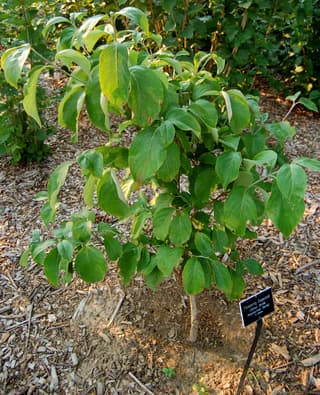
Flowering Dogwood
Cornus florida
Cornus florida, commonly known as the Flowering Dogwood, is a stunning small deciduous tree native to eastern North America. Beloved for its spectacular spring display of white or pink bracts that surround tiny true flowers, it also features brilliant red berries in fall and vibrant scarlet foliage. It is the state tree of Virginia and Missouri, and the state flower of North Carolina.
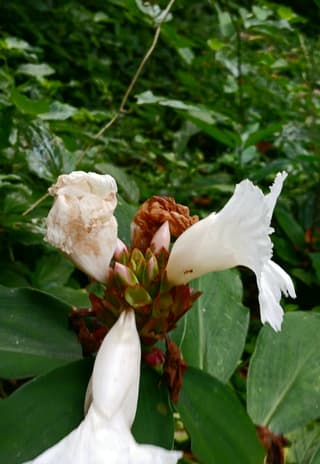
spiral ginger
Costus
Costus is a genus of tropical plants in the family Costaceae, commonly known as spiral ginger. Named for the characteristic spiral arrangement of their stems and leaves, these striking plants produce showy flower spikes in shades of red, orange, yellow, white, and pink. Native to tropical regions of the Americas, Africa, and Asia, the genus encompasses over 150 species thriving in warm, humid environments. Spiral gingers are prized ornamentals in tropical and subtropical gardens and make excellent indoor specimens in bright, humid spaces. Beyond their ornamental value, several Costus species have a long history of use in traditional medicine across their native ranges.
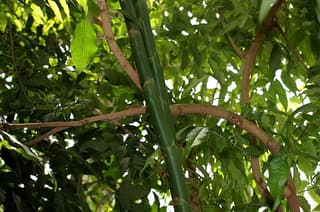
Arabian Spiral Ginger
Costus arabicus
Costus arabicus, commonly known as Arabian Spiral Ginger, is a tropical evergreen perennial in the family Costaceae. Native to South and Central America, it is prized for its spiraling stems, lush foliage, and attractive white to pink flowers. It thrives in warm, humid environments and is widely grown as an ornamental plant in tropical and subtropical gardens as well as indoors.
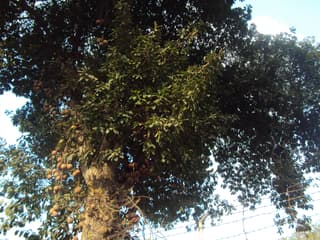
Cannonball Tree
Couroupita guianensis
The Cannonball Tree (Couroupita guianensis) is a majestic tropical tree native to South America, belonging to the family Lecythidaceae. It is renowned worldwide for its spectacular cauliflorous blooms — rose-pink to red fragrant flowers that grow directly from the trunk — and for its large, spherical, cannonball-like fruits weighing up to 7 kg. It can reach up to 30 metres in height in its natural habitat and is widely cultivated as an ornamental tree in botanical gardens and parks.
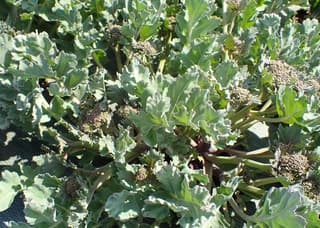
Sea Kale
Crambe
Crambe is a genus of flowering plants in the family Brassicaceae, native to coastal cliffs, stony shores, and Mediterranean regions. The best-known species, Crambe maritima (sea kale), is prized for both ornamental and culinary purposes.

Rock samphire
Crithmum maritimum
Rock samphire (Crithmum maritimum) is a succulent perennial plant in the Apiaceae family, widespread along the rocky and sandy coasts of the Mediterranean, the Atlantic, and the Black Sea. It grows wild on cliffs and rocks battered by salty winds, forming compact, branched bushes with fleshy, glaucous, and aromatic leaves that have an intensely savory flavor. In summer, it produces umbels of small yellowish-white flowers, followed in autumn by aromatic seeds. Extremely resistant to drought and salt spray, it is one of the few truly halophytic horticultural plants.
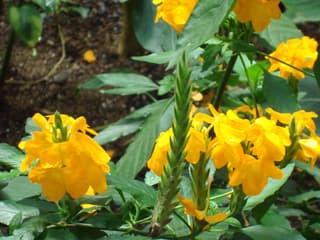
Firecracker Flower
Crossandra infundibuliformis
Crossandra infundibuliformis, commonly known as the Firecracker Flower, is a tropical evergreen shrub native to India and Sri Lanka. It belongs to the Acanthaceae family and is prized for its vibrant fan-shaped flowers that bloom nearly year-round in warm conditions. The glossy, dark green foliage with wavy margins provides an attractive backdrop to the spectacular orange, salmon, yellow, and pink blooms. Its seed pods famously "explode" when wet, which inspired its common name.
common bird's nest fungus
Crucibulum laeve
Crucibulum laeve, commonly known as the common bird's nest fungus, is a saprobic species of fungus that grows on decaying wood, mulch, and plant debris. It is characterized by its small, cup-shaped fruiting bodies that resemble tiny bird nests containing 'eggs' (peridioles). These peridioles contain the spores and are splashed out of the cup by raindrops. The exterior of the cup is typically yellowish to tan and covered in fine hairs when young, while the interior is smooth and greyish-white.
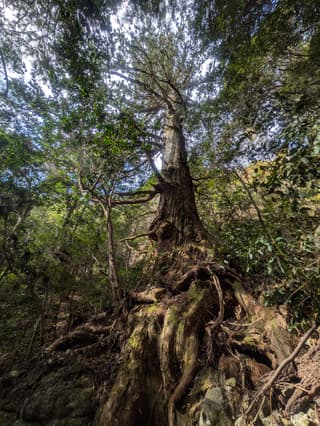
Japanese Cedar
Cryptomeria japonica
Cryptomeria japonica, known as Japanese cedar or sugi, is an evergreen conifer native to Japan, where it is the national tree. It can reach great heights in the wild and is widely cultivated as an ornamental garden tree, hedge, or bonsai specimen.
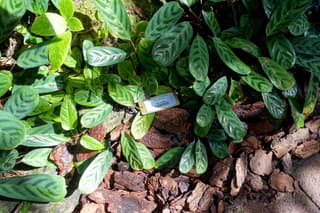
Never Never Plant
Ctenanthe
Ctenanthe is a genus of around 15 evergreen perennial species in the prayer-plant family (Marantaceae), grown for their richly patterned, two-toned foliage that folds upward at night in a rhythmic motion called nyctinasty. Native to the tropical rainforests of Central and South America, these bushy, clumping plants stay compact but can spread wide, making them a striking foliage feature for shaded, humid corners of the home.
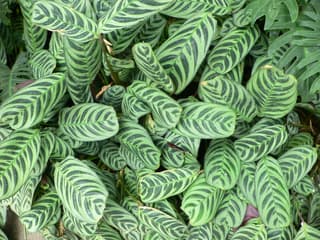
Fishbone Prayer Plant
Ctenanthe burle-marxii
Ctenanthe burle-marxii, commonly known as the Fishbone Prayer Plant, is a stunning tropical perennial native to the humid rainforests of Brazil. A member of the Marantaceae family, it is celebrated for its distinctive oval leaves featuring a silvery-green base adorned with dark green fishbone markings on top, and a rich burgundy-purple underside. Like its prayer plant relatives, it exhibits nyctinasty — the fascinating behavior of folding its leaves upward at dusk as if in prayer, and reopening them at dawn. Compact and elegant, it reaches around 40 cm in height and is perfectly suited for indoor cultivation, particularly in humid environments. It is completely non-toxic to humans and pets, making it a safe and beautiful choice for any household.
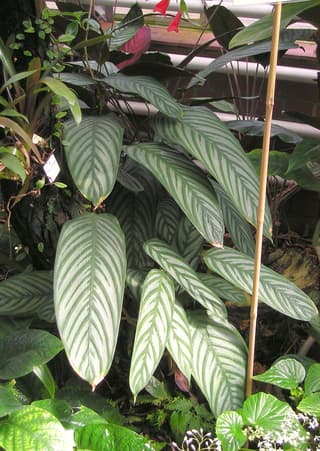
Grey Star
Ctenanthe setosa
Ctenanthe setosa, commonly known as the Grey Star or Never Never Plant, is a tropical plant native to Brazil in the Marantaceae family. It is prized for its stunning elongated leaves featuring silvery-grey and dark green striped patterns with deep purple undersides. Like other prayer plants, it exhibits nyctinasty — its leaves gently fold upward at night and open again in the morning, as if in prayer.
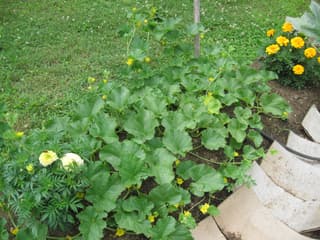
Melon
Cucumis melo
Cucumis melo, commonly known as Melon or Cantaloupe, is an annual climbing and sprawling vine in the Cucurbitaceae family, native to Africa and southwest Asia. It is one of the world's most beloved edible fruits, cultivated for thousands of years since ancient Egypt. The plant produces large, aromatic fruits with sweet, juicy flesh in colors ranging from orange to green and white. Yellow star-shaped flowers appear in summer, attracting pollinators. Numerous cultivar groups exist, including cantaloupe, honeydew, muskmelon, and casaba.
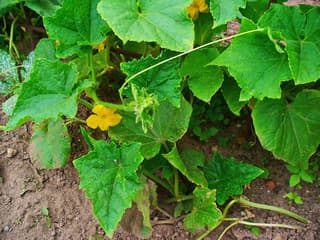
Cucumber
Cucumis sativus
Cucumber (Cucumis sativus) is a widely cultivated creeping vine vegetable originating from South Asia (India). It produces elongated, green-skinned fruits with crisp, watery flesh beloved worldwide in salads, pickling, and fresh eating.

Squash
Cucurbita
Cucurbita is a genus of herbaceous vines and bushy plants in the family Cucurbitaceae, native to the Americas. It encompasses a remarkable diversity of edible crops including summer squash, winter squash, pumpkins, zucchini, and decorative gourds. The genus features large, bright yellow or orange flowers and fruits that vary enormously in shape, size, and color. Cultivated for over 10,000 years, Cucurbita species are among the most important food crops in the world, valued for their nutritious flesh, edible seeds, and versatile culinary applications.
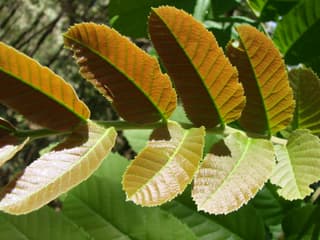
Camboata Tree
Cupania
Cupania is a genus of neotropical trees in the family Sapindaceae, comprising about 58 species distributed from Mexico and southern Florida through Central America, the Caribbean, and South America to northern Argentina. The best-known species, Cupania vernalis (camboata), is a semi-deciduous tree reaching 10 to 22 meters tall with a dense, elongated crown. Its small, whitish-yellow to pale pink flowers bloom between summer and autumn and attract many pollinators. The fruits are capsules that turn from green to reddish, exposing black seeds wrapped in an orange aril that is highly attractive to birds. It is a pioneer species widely used in the restoration of degraded land and in urban tree planting.
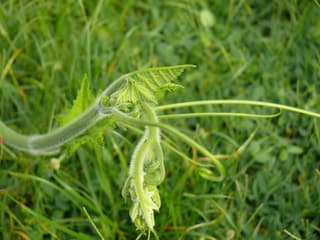
Pumpkin
Curburbita pepo
Pumpkin (Cucurbita pepo) is an annual vine from the Cucurbitaceae family, native to North and Central America. It produces creeping or climbing stems, large, rough leaves, and showy yellow-orange flowers. Its fruits vary enormously in shape, size, and color, including zucchini, ornamental gourds, and winter squash. It has been cultivated for millennia by indigenous American peoples and is now one of the most popular vegetables in the world.
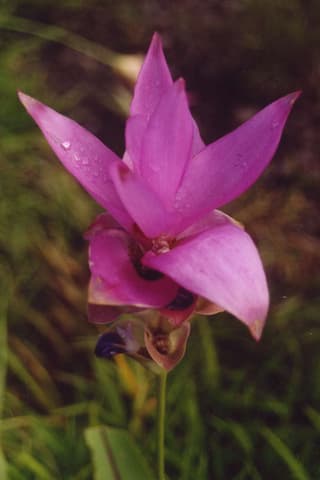
Turmeric
Curcuma
Turmeric is a genus of over one hundred species of rhizomatous herbs in the Zingiberaceae family (the same as ginger), native to South and Southeast Asia. Some species, such as Curcuma longa (the turmeric used in cooking and traditional medicine), are cultivated for their rhizomes; others, such as Curcuma alismatifolia (Siam tulip), are prized for their colorful, cone-shaped inflorescences. All share large, lanceolate foliage and a seasonal growth habit marked by a period of dormancy.
Turmeric
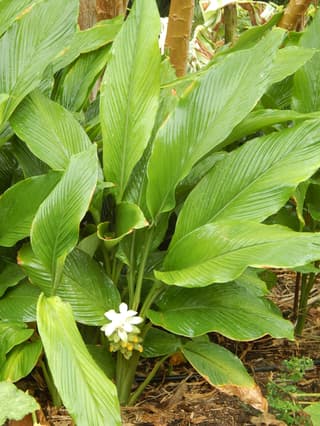
Curcuma longa
Turmeric (Curcuma longa) is a herbaceous perennial in the ginger family (Zingiberaceae), native to India and Southeast Asia. It grows from fleshy, bright orange rhizomes and produces large, lance-shaped leaves resembling those of a banana plant. It is cultivated both as an ornamental and for its rhizome, which has been used as a spice, dye, and medicine for thousands of years.
Zedoary
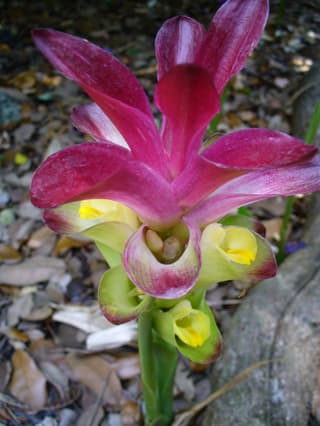
Curcuma zedoaria
Curcuma zedoaria, commonly known as Zedoary or White Turmeric, is a tropical rhizomatous perennial herb from Southeast Asia. A member of the ginger family (Zingiberaceae), it produces elegant pale yellow to white flowers with purple bracts in spring and summer. Its aromatic rhizomes have been used for millennia in Ayurvedic and Traditional Chinese Medicine, as well as in cooking. It goes dormant in winter, dying back to its underground rhizomes, and re-emerges vigorously each spring.
Tree Fern
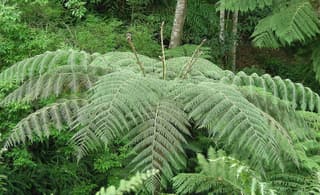
Cyathea delgadii
Cyathea delgadii, popularly known as the tree fern or lacy tree fern, is an arborescent fern native to the tropical and subtropical forests of Central and South America, including Brazil (Rio Grande do Sul and Santa Catarina). It forms an erect stipe (trunk) up to 4.5 m tall, covered with scars left by fallen old fronds, and supports a crown of arching bipinnate fronds that can reach 1.5 to 3 m in length. It is found in the understory of humid forests at altitudes between 100 and 2,700 m, always in shaded locations with constant high humidity. Like other species in the genus, it produces extraordinary amounts of spores per frond, one of the highest recorded spore production rates among vascular plants.
Fluted bird's nest
Cyathus striatus
Cyathus striatus, commonly known as the fluted bird's nest, is a saprobic fungus characterized by its splash-cup shape. The inner surface of the cup is distinctly fluted or grooved, and it contains small, egg-like structures called peridioles which house the spores. These fungi are typically found growing in clusters on decomposing wood, mulch, or woody debris in shaded, moist environments.
Medium Care Pet Safe
Our selection of 634 medium pet safe combines the characteristics of this category with moderate care needs. Ideal for those with basic experience.
Why Choose Medium Pet Safe?
Combining the beauty of pet safe with medium difficulty level lets you enjoy this category with a balanced care commitment. Each plant was selected to offer the best characteristics of the category at the care level you are looking for.