Cleomaceae
Spider Flower (Cleome hassleriana): Complete Care Guide
Cleome hassleriana
Spider Flower thrives in full sun with well-drained soil. Once established, it is drought-tolerant but benefits from regular watering for more abundant blooms. Minimal annual fertilization with compost is sufficient. Deadhead spent flowers to encourage new blooms.
Every 7 days
Direct sun
10° - 38°C
40% - 70%
Categories
What is Spider Flower?
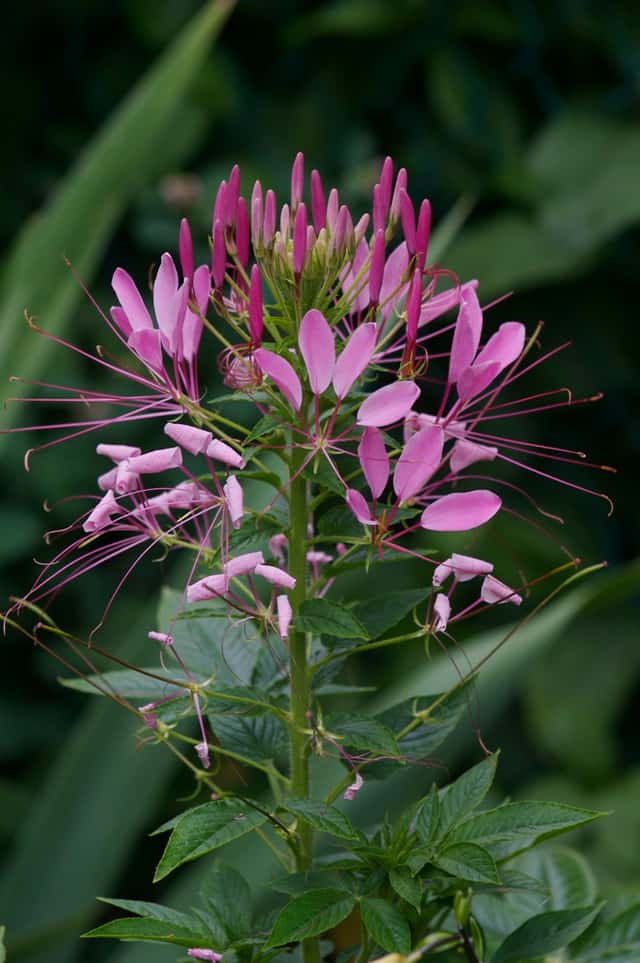
Spider Flower (Cleome hassleriana) is a medium-care plant from the Cleomaceae family. Cleome hassleriana, commonly known as Spider Flower, is a fast-growing annual plant native to South America — particularly Brazil, Paraguay, and Argentina. It produces delicate flowers in shades of pink, purple, and white with long protruding stamens resembling spider legs, attracting butterflies, h...
Spider Flower grows up to 1.8m, spread of 60cm, watering every 7 days, 10°C – 38°C, 40–70% humidity. It is not suitable for indoor environments and safe for pets.
Unlike many popular species, Spider Flower is safe to keep around pets.
How to Care for Spider Flower?
TLDR: Spider Flower needs Direct sun, watering every 7 days, and temperatures between 10-38°C with 40-70% humidity.
How Often Should You Water Spider Flower?
Water Spider Flower when the top of the soil is dry, approximately every 7 days. During prolonged dry spells, provide occasional deep watering. Avoid waterlogging as roots are sensitive to overwatering.
How Much Light Does Spider Flower Need?
Grow in full sun — at least 6 hours of direct sunlight per day. It tolerates light shade in very hot regions, but flowering will be less prolific.
What Is the Best Soil for Spider Flower?
Prefers well-drained soils, slightly sandy or loamy. Tolerates poor soils but grows best with pH between 6.0 and 7.0. Enrich with organic compost at planting.
What Pot Should You Use for Spider Flower?
Large terracotta or plastic pots with drainage holes (minimum 12 inches diameter) if grown in containers. Best suited for garden beds.
What Is Spider Flower and Where Does It Come From?
Cleome hassleriana, commonly known as Spider Flower, is a fast-growing annual plant native to South America — particularly Brazil, Paraguay, and Argentina. It produces delicate flowers in shades of pink, purple, and white with long protruding stamens resembling spider legs, attracting butterflies, hummingbirds, and other pollinators. It is an easy-to-grow plant ideal for borders, background plantings, and cottage gardens.
How to Propagate Spider Flower?
Direct sowing
Seeds germinate best when soil temperatures are 70-75°F (21-24°C). Spider Flower readily self-seeds under favorable conditions, reappearing spontaneously in subsequent years.
- 1 Sow seeds directly in the garden after the last frost date
- 2 Lightly press seeds into soil or cover with a thin layer of soil
- 3 Keep soil moist until germination occurs
- 4 Thin seedlings to 12-18 inches apart when established
Materials needed:
How Big Does Spider Flower Grow?
TLDR: Spider Flower can reach up to 1.8m tall with Fast growth rate.
Max height
1.8m
Spread
60cm
Growth rate
Fast
Foliage
Deciduous
Plant Uses
Ornamental
Great for decoration
Is your plant showing symptoms?
Click on the symptom to discover possible causes:
What Diseases Commonly Affect Spider Flower?
TLDR: Spider Flower is susceptible to 7 known diseases. Monitor regularly for early detection.
Powdery Mildew
Powdery mildew is a common fungal disease caused by various fungi species including Erysiphe, Podosphaera, Oïdium, and Leveillula. It affects over 10,000 plant species worldwide. The disease thrives in warm, dry climates with high humidity and appears as a distinctive white powdery coating on plant surfaces.
Rust
Rust is a common fungal disease caused by fungi in the order Pucciniales that affects a wide variety of plants. The disease gets its name from the characteristic orange, yellow, or reddish-brown pustules that appear on leaves, resembling metal rust. This obligate fungal parasite requires living plants to survive and can cause significant economic losses in agricultural crops.
Aphids
Aphids are small, soft-bodied, pear-shaped insects (1/16 to 1/8 inch long) that feed by sucking nutrient-rich sap from plants. They reproduce rapidly and can quickly weaken plants, causing distorted growth and transmitting plant viruses. Aphids come in various colors including green, black, red, yellow, brown, and gray. They secrete honeydew, a sticky substance that attracts ants and encourages sooty mold growth.
Spider Mites
Spider mites are tiny arachnids (less than 1/20 inch long) related to spiders and ticks that feed on plant sap. They thrive in hot, dry conditions and can cause significant damage to ornamental and vegetable plants. During severe infestations, crop losses can reach 14% or higher as these pests disrupt vital plant processes including photosynthesis, carbon dioxide absorption, and transpiration.
Meaning & Symbolism
Symbolizes resilience and adaptability, thriving across the diverse climates of South America. Associated with attracting pollinators and abundance in cottage and wildlife gardens.
Fun Facts
Spider Flower can grow up to 6 feet (1.8 m) tall in a single growing season as an annual
The long stamens protruding beyond the petals inspired the common name Spider Flower
It is a magnet for hummingbirds, butterflies, and bees, making it a top plant for pollinator gardens
Native to Brazil, Paraguay, and Argentina, it is well adapted to tropical and subtropical climates
Frequently asked questions
How often should I water Spider Flower?
Does Spider Flower need full sun?
How do I propagate Spider Flower?
Is Spider Flower toxic to pets?
How do I keep Spider Flower blooming longer?
Compare with similar plants
| Attribute | Difficulty | Light | Watering | Pet Safe |
|---|---|---|---|---|
| Dark Fieldcap | Medium | Low light | 2d | ⚠️ |
| Azalea | Medium | Partial shade | 3d | ⚠️ |
| Muriel's Bamboo | Medium | Partial shade | 3d | ✓ |
| Bougainvillea | Medium | Direct sun | 7d | ⚠️ |




