159 Easy Air Purifying | 2026 Guide - Page 4
Find 159 easy air purifying. Complete guide for your garden.
159 Air Purifying with easy level
Showing 109-144 of 159
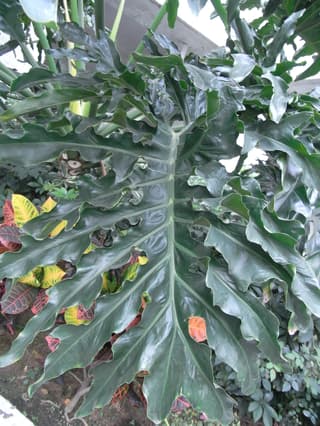
Tree Philodendron
Philodendron bipinnatifidum
Tree Philodendron is a scandent shrub native to Brazil's Atlantic Forest, highly valued as an ornamental plant for its large, glossy, deeply lobed leaves. Part of the Araceae family, it can reach up to 4.5 meters in height outdoors. It is a versatile plant that adapts well to both indoor and garden settings.
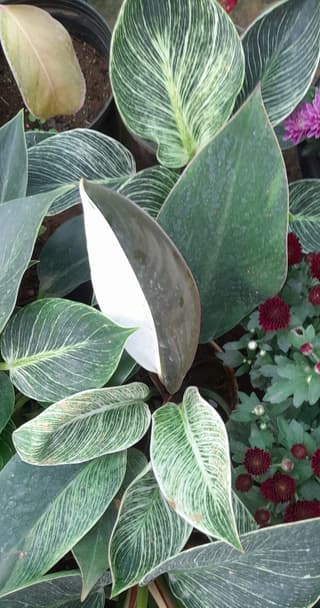
Birkin Philodendron
Philodendron birkin
The Birkin Philodendron is a tropical epiphytic plant in the Araceae family, distinguished by its dark green leaves adorned with distinctive white or cream-colored pinstripes that create a striking variegated pattern. A relatively modern hybrid cultivar resulting from a cross between the Philodendron Rojo Congo and other selected varieties, it has become increasingly popular in recent years. Widely cultivated as an ornamental houseplant, it is prized for its attractive foliage and compact growth habit. Beyond aesthetics, the Birkin actively purifies indoor air by removing volatile organic compounds including formaldehyde.
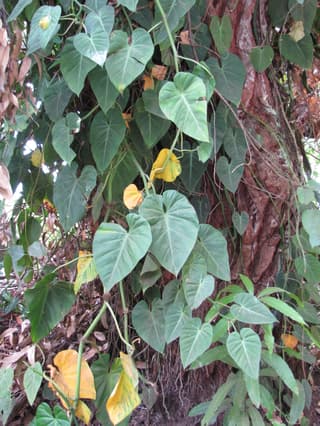
Heartleaf Philodendron
Philodendron cordatum
Philodendron cordatum is a fast-growing vining species native to the Atlantic Forest of Brazil. Distinguished from the commonly sold P. hederaceum (also marketed as heartleaf philodendron), the true P. cordatum features deep green, glossy, heart-shaped leaves and thrives indoors with minimal care. It is toxic to pets and humans due to insoluble calcium oxalate crystals.
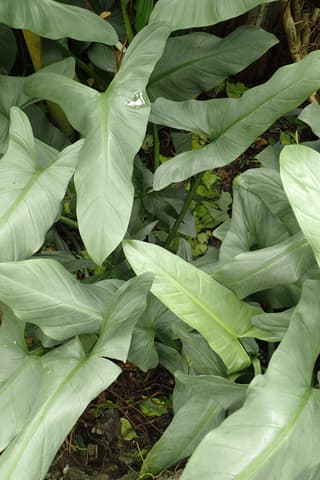
Spadeleaf Philodendron
Philodendron domesticum
Philodendron domesticum, known as the Spadeleaf Philodendron or Elephant Ear Philodendron, is a tropical plant from the Araceae family native to the Americas. Its spade-shaped leaves are large, glossy, and dark green, reaching up to 22 inches (56 cm) in length. It is a fast-growing climbing plant, highly valued as an indoor ornamental, where it purifies the air and provides a lush, tropical look.
Heartleaf Philodendron
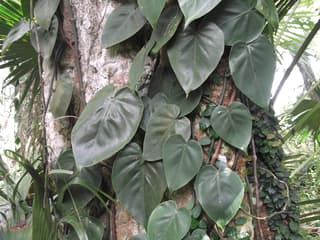
Philodendron hederaceum
Philodendron hederaceum is a climbing or trailing vine native to Central and South America. Its heart-shaped leaves and vigorous growth make it one of the most popular houseplants. It is resilient, adaptable, and an excellent air purifier.

Lemon Lime Philodendron
Philodendron hederaceum 'Lemon Lime'
Philodendron hederaceum 'Lemon Lime' is a chartreuse-leaved cultivar of the heartleaf philodendron, a fast-growing evergreen vine in the Araceae family native to Central America and the Caribbean. Its glossy, heart-shaped leaves emerge lime-yellow and hold their neon color best in bright, indirect light. In its natural habitat the species behaves as a semi-epiphyte, climbing tree trunks with aerial roots, but as a houseplant it is most often grown trailing from a hanging basket or shelf.
Heartleaf Philodendron
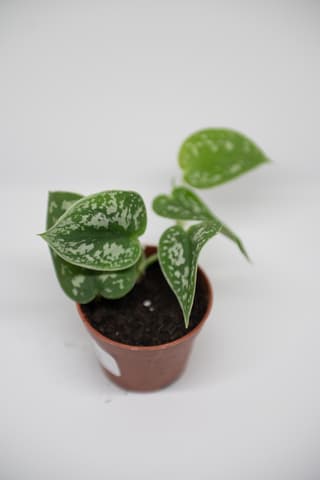
Philodendron scandens
The Heartleaf Philodendron (Philodendron scandens, syn. Philodendron hederaceum) is an evergreen tropical climbing plant from the Araceae family, native to Central and South America. Its glossy, dark green heart-shaped leaves can reach up to 30 cm in length under ideal conditions. It is one of the most popular houseplants in the world due to its ease of care and adaptability to various light conditions.
Xanadu Philodendron
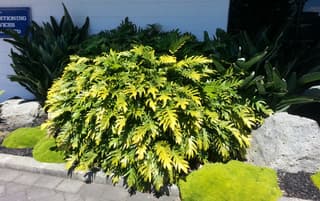
Philodendron xanadu
The Xanadu Philodendron (Philodendron xanadu) is a tropical plant native to Brazil, prized for its deeply lobed, glossy dark-green leaves. Compact compared to other philodendrons, it grows in a dense, lush clump and is widely popular as both an indoor and outdoor tropical garden plant. It belongs to the Araceae family and is reclassified by modern botanists under the genus Thaumatophyllum.
Smooth-bark Mexican Pine
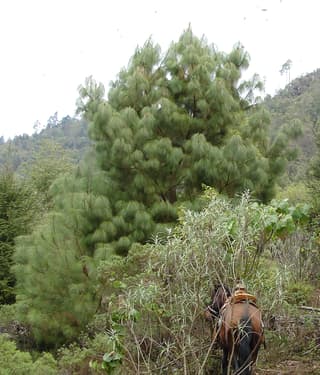
Pinus pseudostrobus
The Smooth-bark Mexican Pine (Pinus pseudostrobus) is a large conifer native to the highlands of Mexico and Central America, where it grows in pine-oak forests between 850 and 3,250 meters in altitude. It is distinguished by its smooth, grayish bark in young specimens, which becomes rougher and cracked with age, and by its long, drooping needles grouped in fascicles of five. In its natural habitat, it can exceed 30 meters in height, with a dense, rounded crown. It is a fast-growing species, drought-tolerant once established, and valued both for its timber and its ornamental use in temperate to warm climates.

London Plane Tree
Platanus x hispanica
The London Plane Tree (Platanus x hispanica) is a magnificent hybrid deciduous tree believed to be a cross between the Oriental Plane (Platanus orientalis) and the American Sycamore (Platanus occidentalis). Originating in Europe, it has become one of the most widely planted urban trees in the world, celebrated for its extraordinary tolerance of pollution, compacted soils, and drought. Its striking exfoliating bark—revealing creamy, olive, and tan patches—makes it a year-round ornamental standout. It can grow up to 30 meters tall with a wide canopy reaching 24 meters across, providing abundant shade in parks, avenues, and urban squares.

Poplar
Populus
Populus is a large genus of about 25–57 deciduous trees in the family Salicaceae, commonly known as poplars, aspens, and cottonwoods. Native to the Northern Hemisphere across North America, Europe, and Asia, these fast-growing trees can reach heights of 15–50 m and are recognized by their trembling leaves, wind-pollinated catkins in early spring, and cottony seed dispersal. They thrive in full sun and moist, well-drained soils and are valued for timber, phytoremediation, windbreaks, and ornamental planting.
European aspen
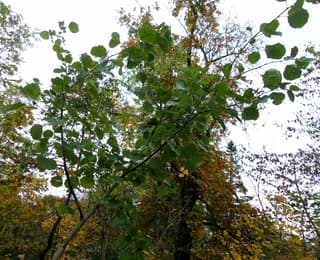
Populus tremula
The European aspen (Populus tremula) is a fast-growing deciduous tree native to Europe and parts of Asia, known for its rounded, silvery-green leaves that tremble and whisper in the slightest breeze thanks to their flattened petioles. It can reach up to 25 meters in height, with smooth grey-green bark that darkens and cracks with age. In spring, before the leaves emerge, long greyish catkins appear, and in autumn the foliage turns golden. It spreads easily via root suckers, often forming dense clonal groves, and serves as an important habitat for insects, birds, and lichens.
Pothos
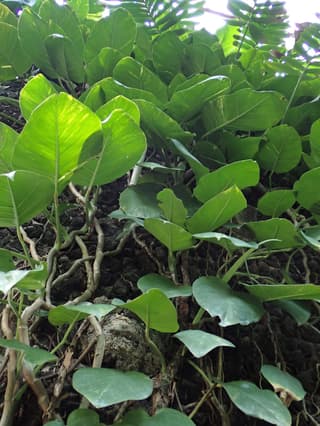
Pothos
Pothos is one of the most popular and forgiving houseplants in the world, prized for its trailing vines and heart-shaped, often variegated leaves. In everyday use the name "pothos" almost always refers to Epipremnum aureum (golden pothos), a fast-growing tropical vine native to the Solomon Islands. The name stuck from an old classification: the plant was first described in 1880 as Pothos aureus, and even after botanists moved it into the genus Epipremnum in 1964, the common name never went away. It tolerates low light, irregular watering, and general neglect better than almost any other houseplant, making it a favorite for beginners and offices alike.

Brake Fern
Pteris
Pteris is a genus of roughly 300 fern species in the family Pteridaceae, native to tropical and subtropical regions worldwide. Commonly known as brake ferns or table ferns, they are prized for their graceful, arching fronds — often variegated with white or silver stripes. These ferns thrive in shaded, humid conditions and are among the most popular indoor ferns. They reproduce via spores borne openly along frond margins and produce no flowers. Pteris ferns are considered non-toxic to cats, dogs, and humans, making them a pet-safe choice for home and office.

Lady Palm
Rhapis excelsa
Rhapis excelsa, commonly known as the Lady Palm or Broadleaf Lady Palm, is an elegant fan palm native to southern China. With its slow growth and lush fan-shaped foliage, it is one of the best indoor palms for beginners. Its multiple slender stems covered in brown fibers give it a bamboo-like appearance, making it an excellent decorative choice for indoor spaces. NASA studies have recognized it as one of the top air-purifying plants.
Rain Tree
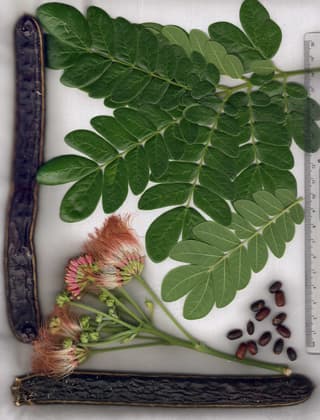
Samanea saman
Samanea saman, commonly known as the Rain Tree or Monkeypod, is a monumental tropical tree native to Central and South America, now naturalized in tropical regions worldwide. It reaches heights of 15 to 30 m and develops an umbrella-shaped canopy that can exceed 30-40 m in diameter, providing exceptional shade. It is famous for folding its leaflets at night or before rain, allowing water to reach the ground. Its flowers are tassel-like heads, pink with white stamens, highly attractive to pollinators, and its pods contain a sweet edible pulp.
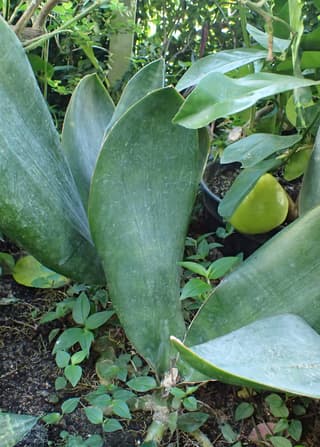
African Spear
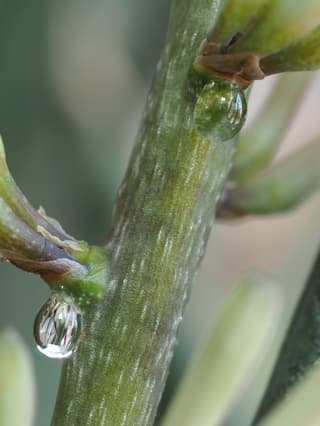
Sansevieria cylindrica
Sansevieria cylindrica, now scientifically known as Dracaena angolensis, is a succulent native to Angola in Southern Africa. It features cylindrical green fleshy leaves with white veins that grow in a fan shape from a basal rosette. Each leaf can reach up to 1 meter in length and 3 cm in diameter. It is known for its air-purifying capabilities, designated by NASA as one of the most efficient plants for this purpose.
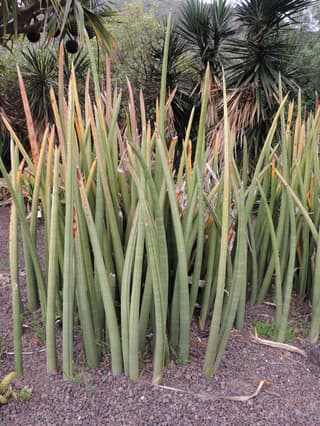
African Bowstring Hemp
Sansevieria guineensis
Sansevieria guineensis, commonly called the African bowstring hemp, is a tough, rhizomatous succulent native to West Africa. It forms dense clumps of stiff, lance-shaped, evergreen leaves rising directly from a spreading underground rootstock. Like other snake plant relatives, it stores water in thick fibrous leaves, letting it shrug off drought, neglect, and low light. In its native range it grows in dry, semi-shaded woodland, and for generations its leaves have been stripped for a strong, silky fiber once used for bowstrings, cords, and mats, which is the source of the common name.
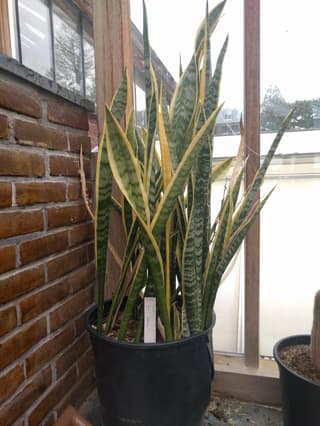
Elephant Tusk
Sansevieria stuckyi
Sansevieria stuckyi, often called the Elephant Tusk plant, is a striking succulent from East and Southern Africa prized for its rigid, cylindrical leaves that grow upright like tusks, reaching up to 2.75 m tall. Unlike its low, fan-shaped relatives, this species forms a dramatic architectural silhouette, making it a standout sculptural houseplant. It is extremely drought-tolerant, low-maintenance, and thrives on neglect, making it ideal for busy plant owners.
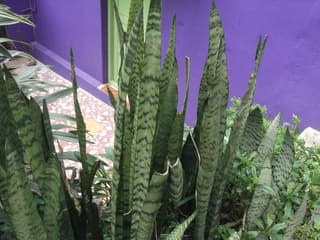
Snake Plant
Sansevieria trifasciata
The Snake Plant is a striking, architectural houseplant native to West Africa. Known for its tall, sword-shaped leaves with distinctive gray-green horizontal stripes, it is one of the most resilient and low-maintenance indoor plants. NASA research identified it as an excellent air purifier, capable of removing formaldehyde, xylene, and other toxins. It is one of few plants that converts CO2 to oxygen at night, making it ideal for bedrooms.
Ceylon Bowstring Hemp
Sansevieria zeylanica
Sansevieria zeylanica, also accepted as Dracaena zeylanica, is a slow-growing evergreen succulent native to the drier regions of Sri Lanka. Its stiff, sword-shaped leaves display irregular bands of dark and pale green, forming dense upright rosettes. Historically prized for its strong leaf fibers used to make bowstrings, rope, and cloth, it is now a popular low-maintenance houseplant. Often confused with S. trifasciata, the true species produces 10–16 leaves per rosette and lacks a visible petiole.
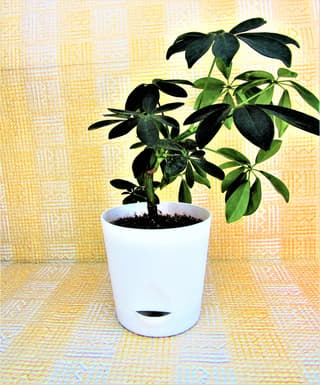
Umbrella Plant
Schefflera
Schefflera is a genus of about 600 evergreen shrubs, trees, and vines in the Araliaceae family, prized worldwide as a resilient houseplant. The most widely cultivated member, Schefflera arboricola (dwarf umbrella tree), produces glossy, palmately compound leaves arranged like the spokes of an umbrella, giving the plant its common name. Native to Taiwan and Hainan, it has become one of the most popular low-maintenance indoor foliage plants thanks to its tolerance of a wide range of light and humidity conditions.
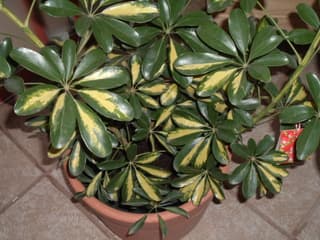
Dwarf Umbrella Tree
Schefflera arboricola
The Dwarf Umbrella Tree (Schefflera arboricola) is a versatile, attractive evergreen shrub native to Taiwan and Hainan, China. Known for its glossy, palmately compound leaves with 7-9 leaflets arranged like an umbrella, this resilient plant has become one of the most popular houseplants worldwide. It can grow as a small tree or shrub indoors and is valued for its tolerance of varying light conditions and ease of care.
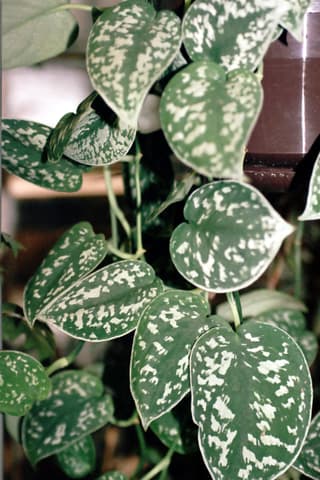
Satin Pothos
Scindapsus pictus
Scindapsus pictus, commonly known as Satin Pothos, is a stunning tropical vine native to Southeast Asia. It features heart-shaped matte green leaves adorned with silvery-gray spots and splashes that give it a satin-like appearance. This elegant trailing plant is beloved for its easy-care nature and ability to thrive in various indoor conditions, making it perfect for hanging baskets or climbing on supports.
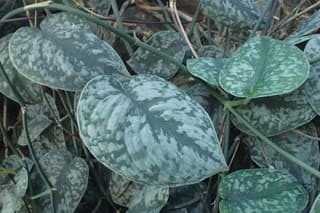
Silver Satin Pothos 'Exotica'
Scindapsus pictus 'Exotica'
Scindapsus pictus 'Exotica' is a cultivated variety of satin pothos native to the tropical rainforests of Southeast Asia. Its heart-shaped, dark green leaves are covered in irregular, shimmering silver patches that are more concentrated than on the standard species. A trailing or climbing vine, it is ideal for hanging baskets or moss poles and is one of the hardiest, easiest aroids to grow indoors.
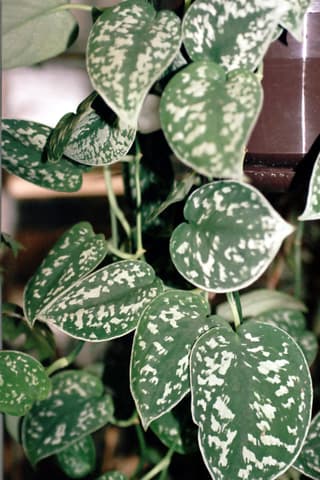
Satin Pothos
Scindapsus pictus argyraeus
Scindapsus pictus 'Argyraeus', commonly known as Satin Pothos or Silver Pothos, is a stunning trailing vine native to Southeast Asia. It features heart-shaped, dark green leaves adorned with silver-white satin markings that shimmer in the light. Despite the name "pothos," it belongs to the genus Scindapsus and the Araceae family. It is highly popular as an indoor plant due to its low maintenance requirements and its ability to thrive in moderate to low light conditions.
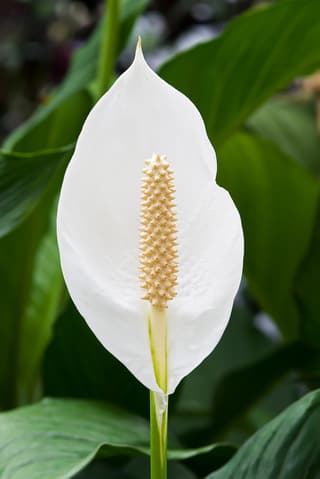
Peace Lily
Spathiphyllum
The Peace Lily (Spathiphyllum) is one of the world's most beloved houseplants, prized for its elegant white spathe flowers and remarkable air-purifying abilities. Native to the tropical rainforests of Central and South America, it thrives indoors even in low-light conditions, making it a perfect choice for homes and offices. Its deep green, glossy leaves provide a lush backdrop to the striking white blooms that appear mainly in spring and summer.
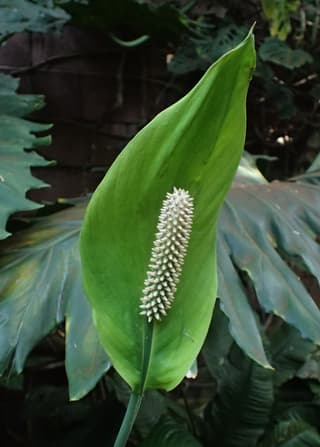
Peace Lily
Spathiphyllum blandum
Spathiphyllum blandum is a perennial evergreen herbaceous plant native to the humid tropical forests of Venezuela and Guyana. Its deep green, glossy leaves beautifully contrast with elegant white spathe flowers, making it one of the most popular and graceful indoor plants worldwide.
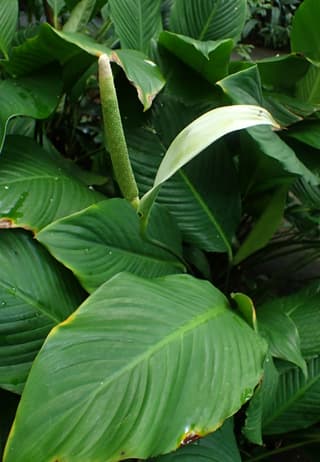
Giant Peace Lily
Spathiphyllum cannifolium
Spathiphyllum cannifolium, commonly known as the Giant Peace Lily, is a tropical plant native to South America. It belongs to the Araceae family and is distinguished by its glossy dark-green leaves and elegant white flowers consisting of a spathe and spadix. It is one of the most widely cultivated indoor plants in the world, valued both for its ornamental beauty and its air-purifying capabilities.
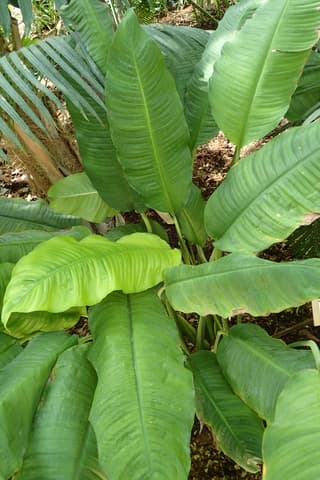
Cupped Peace Lily
Spathiphyllum cochlearispathum
Spathiphyllum cochlearispathum, commonly known as the Cupped Peace Lily, is one of the largest species in the genus, native to Mexico and Central America. It features broad, glossy dark-green leaves and elegant white spathes. CAUTION: Contains calcium oxalate and is toxic to cats, dogs, and humans.
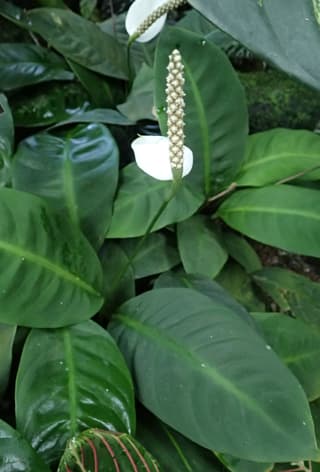
Snowflower
Spathiphyllum floribundum
Spathiphyllum floribundum, commonly known as Snowflower or Dwarf Peace Lily, is a compact tropical species native to Colombia and Ecuador. It produces elegant white-to-greenish-white spathes and is prized for its air-purifying qualities and tolerance of low light conditions. Warning: contains calcium oxalate crystals — toxic to pets and humans if ingested.

Peace Lily
Spathiphyllum kochii
Spathiphyllum kochii, commonly known as the peace lily, is a compact evergreen perennial in the Araceae family, native to Colombia. Growing 30-40 cm tall, it forms dense clumps of dark green, wavy, lance-shaped leaves with prominent veins. Its signature white spathe curls elegantly around a creamy cylindrical spadix, typically blooming in spring and summer. It is one of the world's most popular houseplants, prized for its shade tolerance and air-purifying qualities.
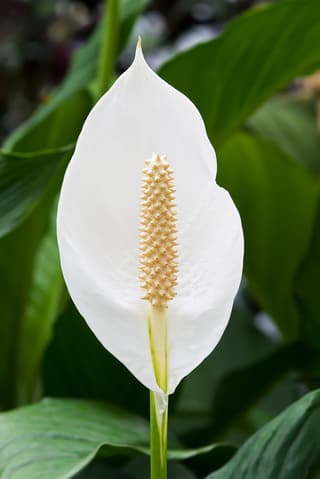
Peace Lily
Spathiphyllum wallisii
Spathiphyllum wallisii is an elegant houseplant native to the tropical rainforests of Colombia. It features elongated glossy dark green leaves and distinctive white spathe-shaped flowers. Famous for its air-purifying abilities, it removes toxins like benzene, formaldehyde, and xylene from indoor environments.
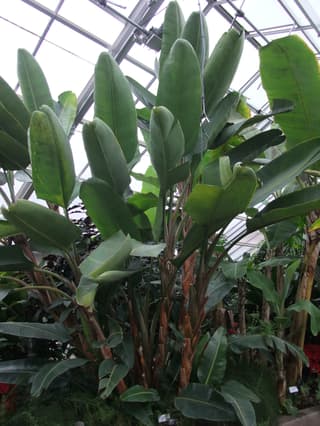
Giant White Bird of Paradise
Strelitzia nicolai
Strelitzia nicolai is a striking evergreen plant native to South Africa, known for its large banana-like leaves and dramatic white and blue flowers. It can grow up to 9 meters tall outdoors but remains more manageable indoors, making it a popular choice for creating tropical ambiance in homes and offices.
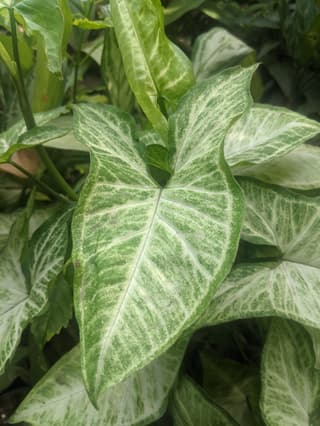
Arrowhead Vines
Syngonium
Syngonium is a genus of tropical climbing and trailing plants in the family Araceae, native to the rainforests of Central and South America. Its young leaves display a distinctive arrowhead shape that gradually transforms into multi-lobed forms as the plant matures. Widely grown as a houseplant for its lush ornamental foliage, Syngonium comes in dozens of cultivars with green, variegated, pink, and silvery leaves. Important: the plant is toxic to cats, dogs, and humans due to calcium oxalate crystals present throughout its tissues.
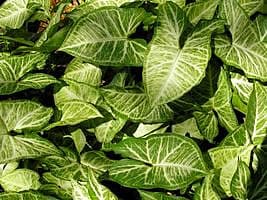
Five Fingers
Syngonium angustatum
Syngonium angustatum, commonly known as Five Fingers or Climbing Arrowhead Vine, is a tropical climbing plant native to Mexico and Central America. It belongs to the Araceae family and is prized for its distinctive foliage that transforms dramatically as the plant matures — juvenile leaves are simple arrowhead-shaped, while adult leaves develop deep lobes resembling spread fingers, hence the name Five Fingers. It is a versatile houseplant that thrives as a trailing vine or trained climber.
Easy Care Air Purifying
Our selection of 159 easy air purifying combines the characteristics of this category with reduced care needs. Perfect for beginners who love this category.
Why Choose Easy Air Purifying?
Combining the beauty of air purifying with easy difficulty level lets you enjoy this category without excessive maintenance worries. Each plant was selected to offer the best characteristics of the category at the care level you are looking for.