160 Easy Air Purifying | 2026 Guide - Page 3
Find 160 easy air purifying. Complete guide for your garden.
160 Air Purifying with easy level
Showing 73-108 of 160
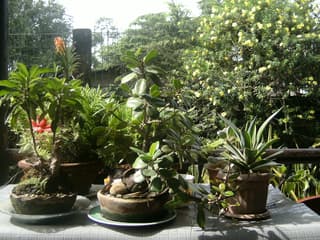
Rubber Plant
Ficus elastica
A hardy tropical plant native to Southeast Asia, known for its large, glossy, dark green leaves. One of the most popular houseplants due to its striking appearance and easy care. Can grow up to 6-10 feet indoors and is an excellent air purifier.
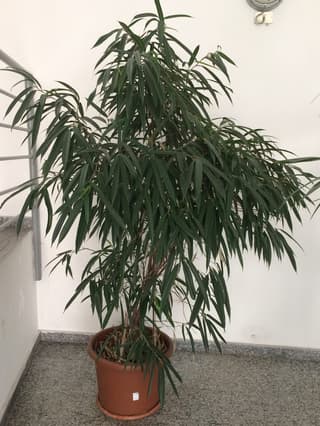
Narrow-Leaf Fig
Ficus longifolia
Ficus longifolia, widely sold in the houseplant trade as the narrow-leaf fig (also known as Ficus Alii), is a tropical evergreen fig in the Moraceae family. Native to tropical regions of Africa and Asia, it is grown almost exclusively as an ornamental indoor tree, prized for its slender, glossy, lance-shaped leaves that give it a graceful, weeping silhouette distinct from broader-leaved ficus relatives. Like other figs, it produces its tiny flowers hidden inside an enclosed syconium (fig), so showy blooms are not part of its appeal - the foliage is the star. Indoors it can be trained into a small tree or braided-trunk form, reaching up to about 3 m (10 ft) in a container over many years.
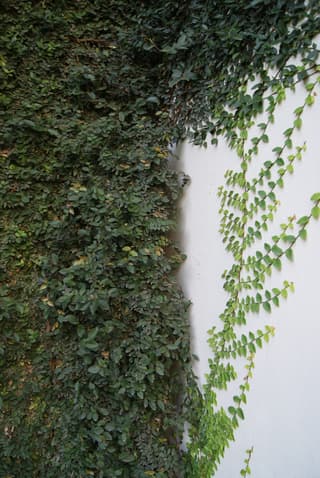
Creeping Fig
Ficus pumila
Ficus pumila is a vigorous, fast-growing evergreen vine native to East Asia. Known for its ability to cling to walls and surfaces with aerial rootlets, this versatile plant produces small, heart-shaped leaves that create a lush green carpet. Indoors it makes an elegant trailing or climbing houseplant, while outdoors it serves as an excellent ground cover or wall climber in temperate and tropical climates.
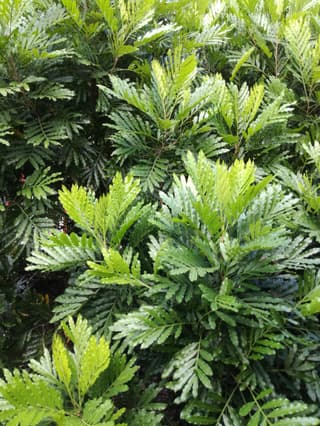
Fern Tree
Filicium decipiens
Filicium decipiens, commonly known as the Fern Tree, is a small to medium-sized tree native to East Africa and South Asia. It is widely appreciated in landscaping for its dense and elegant foliage, with pinnate leaves that resemble fern fronds. It features a rounded, symmetrical canopy with glossy green leaves and a distinctive winged rachis. It is an excellent choice for tropical gardens or as a statement plant in large pots for well-lit interiors.
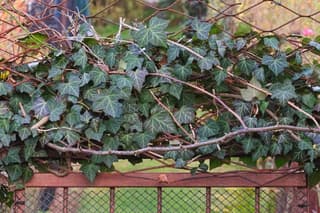
Ivy
Hedera
Hedera is a genus of about 15 species of evergreen climbing or ground-creeping woody plants in the family Araliaceae, native to western, central, and southern Europe, Macaronesia, northwestern Africa, and across central-southern Asia to Japan and Taiwan. The most widely cultivated species is Hedera helix (English Ivy), a popular trailing and climbing houseplant prized for its glossy, lobed leaves and vigorous growth. Ivy is frequently used in hanging baskets, as a trailing accent in containers, or trained on trellises and topiary frames. Important warning: all parts of Hedera are toxic to cats, dogs, and humans if ingested, containing triterpenoid saponins that cause gastrointestinal distress, skin irritation, and in severe cases respiratory difficulty.

North African Ivy
Hedera algeriensis
North African Ivy (Hedera algeriensis), also sold as Algerian Ivy, is a vigorous evergreen climber native to the coastal mountains of North Africa and the Canary Islands. Its large, glossy, leathery leaves and fast, self-clinging growth make it a striking backdrop for walls, trellises, and hanging baskets, or a lush trailing groundcover outdoors. A close relative of English ivy, it tolerates a wide range of light levels and rewards minimal care with dense, tropical-looking foliage year-round.
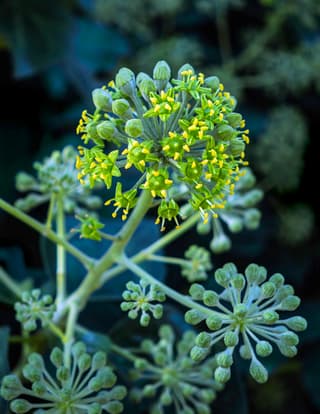
English Ivy
Hedera helix
English Ivy is a versatile and hardy evergreen climbing vine native to Europe, western Asia, and northern Africa. Known for its distinctive lobed leaves, it can grow as a ground cover or climb up to 30 meters using aerial rootlets. This fast-growing plant is excellent for hanging baskets, topiaries, or as a trailing houseplant.
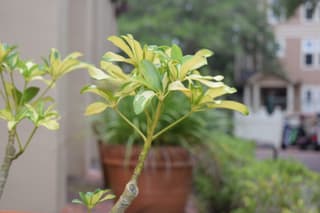
Umbrella Tree
Heptapleurum
Heptapleurum is a genus of over 300 species of evergreen tropical and subtropical trees and shrubs in the family Araliaceae, native to tropical and subtropical Asia. Formerly classified under the genus Schefflera, these plants are beloved for their distinctive palmate compound leaves arranged in an umbrella-like pattern. They are among the most popular indoor plants worldwide, prized for their adaptability, air-purifying qualities, and tropical aesthetic.
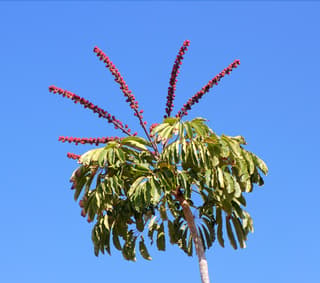
Umbrella Tree
Heptapleurum actinophyllum
The Umbrella Tree (Heptapleurum actinophyllum), also widely known by its synonym Schefflera actinophylla, is a dramatic tropical tree native to Australia and New Guinea. Its large, glossy, palmate leaves radiate from central stems like the spokes of an umbrella, making it one of the most recognizable indoor and outdoor trees in the world. Outdoors it can reach 40 feet; indoors it stays a manageable 6–10 feet. The plant produces striking red-pink flower spikes in summer and autumn when mature.
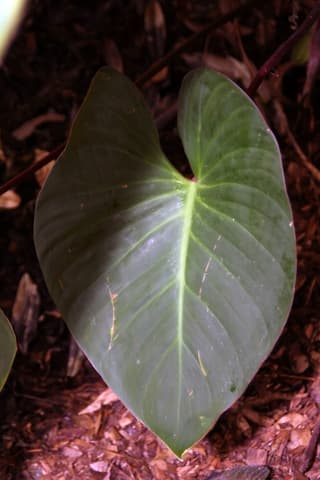
Homalomena
Homalomena
Homalomena is a genus of roughly 150 tropical aroid species native to Southeast Asia and parts of tropical South America, prized as houseplants for their glossy, heart- or shield-shaped foliage. This is a genus-level profile covering common cultivated species such as Homalomena rubescens and its cultivars ("Emerald Gem", "Selby"); individual species vary somewhat in mature size and leaf color.

Kentia Palm
Howea forsteriana
The Kentia Palm (Howea forsteriana) is an elegant, slow-growing palm native to Lord Howe Island, Australia. Renowned for its graceful, arching fronds and tolerance of indoor conditions, it became the quintessential Victorian parlour palm in the 1870s. Queen Victoria herself kept these palms in all her homes. With its single trunk and dark green, pinnate fronds reaching up to 3 meters long, it adds a sophisticated tropical touch to any space while being remarkably low-maintenance.
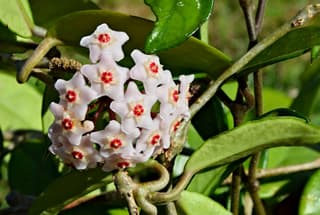
Wax Plant
Hoya carnosa
Hoya carnosa is a beloved tropical vine native to East Asia and Australia, prized for its waxy, succulent-like leaves and stunning clusters of star-shaped, fragrant flowers. This long-lived houseplant can thrive for decades with minimal care, making it perfect for beginners. The plant produces unique umbrella-shaped flower clusters that are pink or white with red centers and emit a sweet fragrance, especially in the evening. It has received the Royal Horticultural Society Award of Garden Merit.
Krimson Queen Wax Plant
Hoya carnosa 'Krimson Queen'
Hoya carnosa 'Krimson Queen' is a variegated cultivar of the classic wax plant, an epiphytic vining member of the Apocynaceae family native to East and Southeast Asia. Its thick, heart-shaped leaves carry a broad creamy-white margin that blushes pink under strong light, framing a deep green center. A slow but rewarding grower, mature plants produce ball-shaped clusters of small, star-shaped, waxy, fragrant pink-and-white flowers.
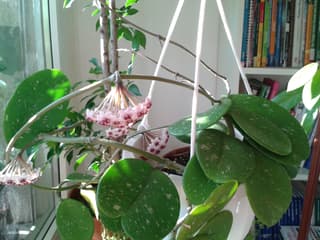
Obovata Wax Plant
Hoya obovata
Hoya obovata is a tropical epiphytic climber native to the rainforests of India, Indonesia, and Fiji. It is prized for its thick, waxy, round-to-oval dark green leaves often adorned with silver splash markings. It produces sweetly fragrant, star-shaped pink flowers arranged in globe-like umbels with a reddish central corona.
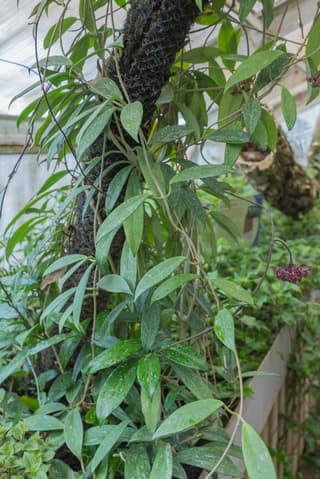
Wax Flower Vine
Hoya pubicalyx
Hoya pubicalyx is a vigorous tropical vining plant native to the Philippines, prized for its glossy, lance-shaped leaves and spectacular dark-pink to deep-crimson star-shaped flowers arranged in rounded umbels. The blooms have a sweet, pleasant fragrance and appear repeatedly from the same spurs, making it a long-lived flowering houseplant. It is one of the most popular hoyas in cultivation due to its reliable blooming and ease of care.

Cypress-leaved plait-moss
Hypnum cupressiforme
Cypress-leaved plait-moss (Hypnum cupressiforme) is one of the most widespread creeping mosses of the temperate zone. It forms dense, soft carpets with creeping, regularly branched stems resembling tiny cypress branches—hence its specific name. It grows on soil, tree bark, stones, walls, and decaying wood, in both shade and sunnier spots, easily adapting to a wide range of conditions. Due to its low maintenance and attractive appearance, it is popular as an ornamental and groundcover element in gardens, terrariums, and vivariums.
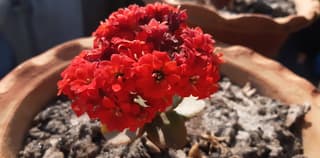
Flaming Katy
Kalanchoe blossfeldiana
Kalanchoe blossfeldiana is a flowering succulent native to Madagascar, known for its vibrant, long-lasting blooms that appear in fall and winter. It is an easy-care plant, perfect for beginners.

Amazon frogbit
Limnobium laevigatum
Limnobium laevigatum, commonly known as South American or Amazon frogbit, is a fast-growing floating aquatic plant native to Central and South America. Its round, glossy, slightly fleshy leaves float in rosettes on the water's surface, while long, feathery roots hang below, providing shelter for fish fry and purifying the water by absorbing excess nutrients.
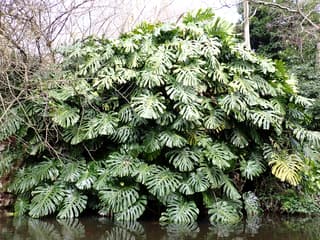
Swiss Cheese Plant
Monstera
Monstera is a genus of approximately 50 species of tropical plants in the family Araceae, native to Mexico and Central America. Famous for their large, glossy leaves with distinctive natural holes and splits (fenestrations), Monsteras are among the most popular houseplants worldwide. The most iconic species is Monstera deliciosa, followed by M. adansonii and M. obliqua.
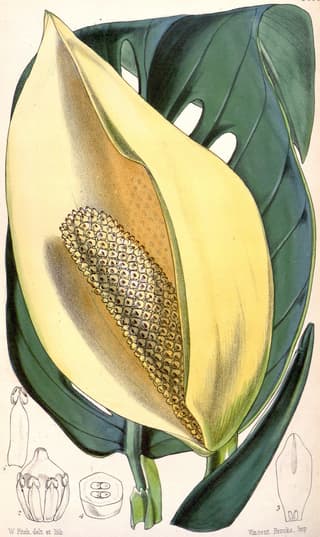
Swiss Cheese Vine
Monstera adansonii
Monstera adansonii is a charming tropical climber known for its heart-shaped leaves with characteristic natural perforations. Native to Central and South America, this epiphytic plant naturally grows climbing trees in the tropical rainforest. It is a fast-growing and easy-to-care plant, ideal for beginners.
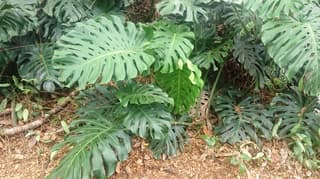
Swiss Cheese Plant
Monstera deliciosa
Tropical plant native to Mexico and Central America, known for its large, perforated leaves. It is one of the most popular houseplants in the world due to its exotic appearance and ease of care.
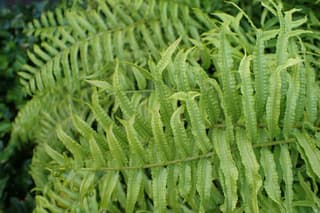
Giant Sword Fern
Nephrolepis biserrata
Nephrolepis biserrata, commonly known as Giant Sword Fern or Macho Fern, is a large tropical fern native to pantropical regions across Asia, Africa, and the Americas. Its lush, arching fronds can exceed 2 meters in length, making it one of the most striking ferns in cultivation. It thrives in warm, humid environments and is widely used in tropical gardens, hanging baskets, and as an air-purifying houseplant.
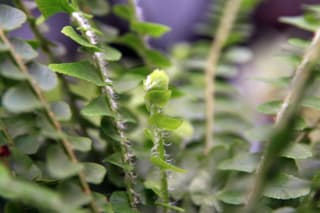
Narrow Sword Fern
Nephrolepis cordifolia
Nephrolepis cordifolia, commonly known as the Narrow Sword Fern or Tuberous Sword Fern, is a robust pantropical fern distinguished by its upright, narrow fronds and distinctive underground tubers. Native to tropical and subtropical regions worldwide, it has naturalized across many continents due to its exceptional adaptability. The plant forms lush arching clumps of bright green pinnate fronds, making it an elegant choice for both indoor and outdoor settings.
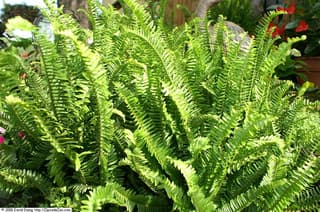
Kimberley Queen Fern
Nephrolepis obliterata
Nephrolepis obliterata, commonly known as the Kimberley Queen Fern or Australian Sword Fern, is a robust fern native to northern Australia and the Pacific Islands. Unlike most ferns, it produces stiff, upright fronds that form a compact, elegant clump. It is notably more tolerant of low humidity than the Boston Fern, making it an excellent choice for indoor environments.
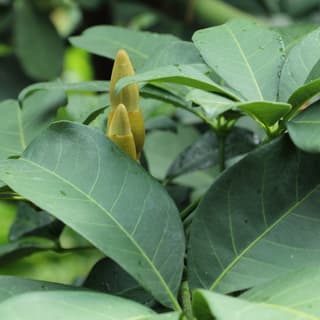
Money Tree
Pachira aquatica
Pachira aquatica is a tropical plant native to Central America, known for its distinctive braided trunk and umbrella-shaped leaves. Popular in feng shui as a symbol of prosperity and good luck.
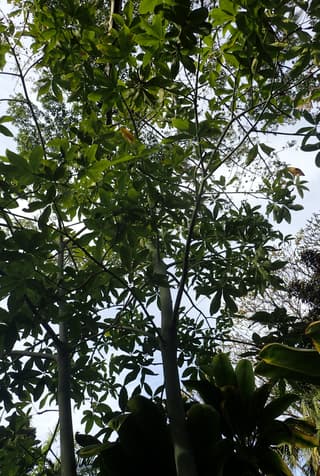
Saba Nut
Pachira glabra
Pachira glabra, commonly known as Saba Nut or Money Tree, is a tropical tree native to eastern Brazil's Atlantic Forest. It is the species most commonly sold as the braided 'money tree' in plant shops — distinct from Pachira aquatica, which is larger and truly aquatic. P. glabra has more flexible young stems, making it ideal for braiding, and features deep-green palmate leaves and creamy-white flowers. It is non-toxic, easy to care for, and widely used in Feng Shui as a symbol of prosperity.
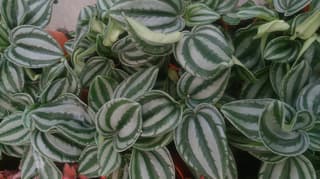
Watermelon Peperomia
Peperomia argyreia
The Watermelon Peperomia is a compact ornamental plant native to Brazil, known for its rounded leaves with silver stripes that resemble watermelon rinds. It belongs to the Piperaceae family and is highly valued as an indoor plant for its beauty and easy care.
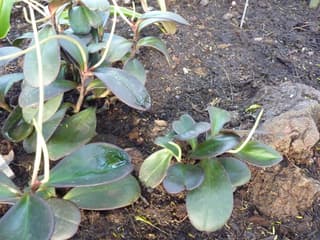
Red-Edge Peperomia
Peperomia clusiifolia
Peperomia clusiifolia, commonly known as Red-Edge Peperomia or Ginny Peperomia, is a tropical succulent-like houseplant from the family Piperaceae. Native to the tropical rainforests of Central America and the West Indies, it features thick, fleshy leaves with a striking tricolor pattern: deep green centers, cream margins, and vivid pink-to-red leaf edges. This compact, slow-growing plant is beloved for its ornamental foliage, easy care requirements, and complete non-toxicity to pets and humans.

Ivy Peperomia
Peperomia griseoargentea
Peperomia griseoargentea, known as ivy peperomia, is a compact evergreen perennial from Brazil grown for its heart-shaped, silvery-gray leaves marked with deep, corrugated veining. It forms neat rosettes on reddish, wiry stems and rarely exceeds 25-30 cm in height, making it a popular choice for desks, shelves, and terrariums.
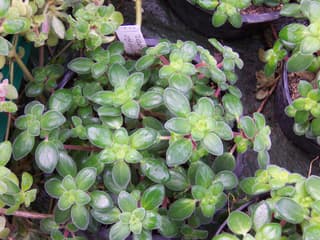
Baby Rubber Plant
Peperomia obtusifolia
Tropical evergreen perennial native to Mexico, Florida, and the Caribbean. Notable for its glossy, fleshy, rounded dark green leaves. A compact, bushy plant ideal for indoors due to its low maintenance and resilience. Can reach up to 60 cm in height and produces cream-colored flower spikes during spring and summer.
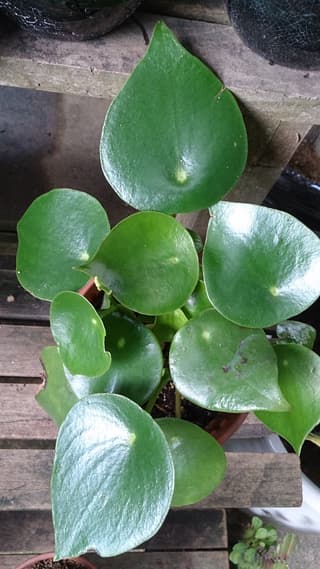
Raindrop Peperomia
Peperomia polybotrya
Peperomia polybotrya, commonly known as the Raindrop Peperomia or Coin Leaf Peperomia, is a compact succulent-like houseplant from the Piperaceae family, native to the tropical regions of South America (Colombia and Peru). It is prized for its glossy, teardrop-shaped leaves that resemble large raindrops or coins. One of the easiest houseplants to grow, it thrives in indirect light, tolerates drought, and is completely non-toxic to pets and humans.
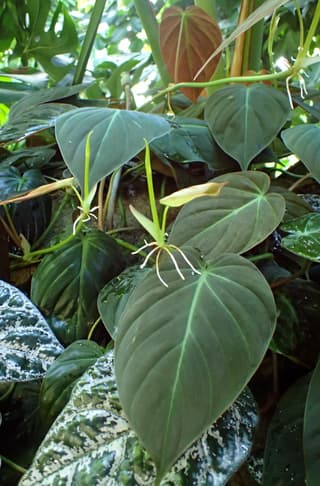
Philodendron
Philodendron
Philodendron is one of the largest and most diverse genera of tropical houseplants in the Araceae family, originating from Central and South America. With nearly 500 species, philodendrons range from compact trailing vines like P. hederaceum (heartleaf) to dramatic large-leaved climbers like P. erubescens and sculptural aroids like P. bipinnatifidum and P. xanadu. Their lush, glossy foliage and adaptability to indoor conditions have made them among the most beloved houseplants worldwide. All species contain calcium oxalate crystals and are mildly to moderately toxic to pets and humans.
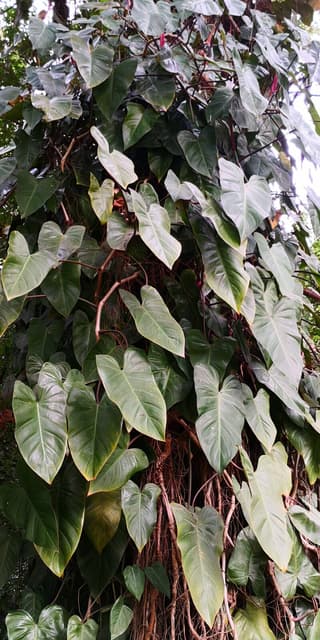
Imperial Green Philodendron
Philodendron 'Imperial Green'
Philodendron 'Imperial Green' is a self-heading hybrid cultivar within the Araceae family, prized for its large, glossy, deep green leaves and effortless temperament. Native to tropical regions of Central and South America, it develops as a leafy rosette with a broad mature spread and usually requires no pole support. Mature leaves can reach 40-50 cm in length, and the plant may eventually grow to approximately 1 m tall indoors. This is a low-maintenance houseplant that thrives in bright, indirect light and prefers well-draining, organic-rich soil.
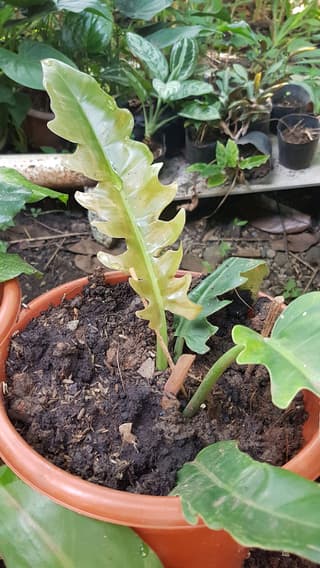
Philodendron Jungle Boogie
Philodendron 'Jungle Boogie'
A tropical hybrid philodendron cultivar (Philodendron × 'Henderson's Pride') prized for its distinctive long, narrow leaves with serrated edges resembling saw teeth. An epiphytic aroid with climbing growth habit, aerial roots, and fast growth. Member of the Araceae family, suited for bright indirect indoor light.
Pink Congo Philodendron
Philodendron 'Pink Congo'
The Pink Congo Philodendron is a Philodendron hybrid sold with bright pink leaves. Important: the pink color is artificially induced by chemical (ethylene) treatment and is temporary — new leaves revert to natural green within 6 to 12 months. Care is that of a typical hybrid Philodendron. It contains calcium oxalate and is toxic to cats, dogs and humans.

Rojo Congo Philodendron
Philodendron 'Rojo Congo'
Philodendron 'Rojo Congo' is a bold, self-heading tropical hybrid prized for its large, glossy leaves that emerge coppery-red and mature to deep green on red-tinted stems. It forms a full, upright clump and stays compact for its size, making it a striking, low-fuss statement houseplant.
Easy Care Air Purifying
Our selection of 160 easy air purifying combines the characteristics of this category with reduced care needs. Perfect for beginners who love this category.
Why Choose Easy Air Purifying?
Combining the beauty of air purifying with easy difficulty level lets you enjoy this category without excessive maintenance worries. Each plant was selected to offer the best characteristics of the category at the care level you are looking for.