159 Easy Air Purifying | 2026 Guide - Page 2
Find 159 easy air purifying. Complete guide for your garden.
159 Air Purifying with easy level
Showing 37-72 of 159
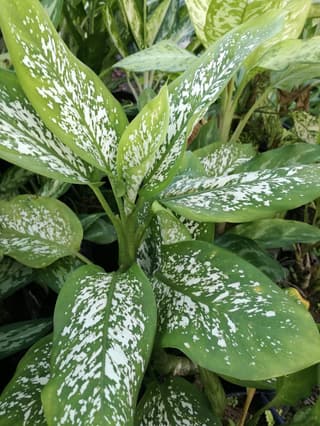
Spotted Dumb Cane
Dieffenbachia picta
Dieffenbachia picta, widely sold simply as "dumb cane" or "spotted dieffenbachia," is a striking tropical foliage houseplant in the arum family (Araceae), native to the humid forests of the Caribbean and Central and South America. Its broad, glossy leaves are marbled with irregular cream, white, or pale-green blotches over a dark green background, making it a long-standing favorite for adding jungle texture to shaded interiors. Botanically, "picta" is most often treated today as a synonym or a spotted cultivar group within Dieffenbachia seguine (=D. maculata), and nursery tags reading "D. picta" typically refer to this same variegated horticultural type. All parts of the plant are HIGHLY TOXIC: the sap contains needle-shaped calcium oxalate crystals (raphides) that, when chewed or bitten, pierce the soft tissue of the mouth and throat, causing intense burning pain, excessive drooling, and swelling severe enough to temporarily impair speech — the origin of the common name "dumb cane."

Dumb Cane
Dieffenbachia seguine
Dieffenbachia seguine is a tropical plant from the Araceae family, native to the Caribbean and Central America. It is known for its large decorative dark green leaves with white or cream spots. It can reach up to 3 meters in height under optimal conditions. It is extremely toxic due to calcium oxalate crystals in its sap, which can cause severe irritation and throat swelling if ingested.
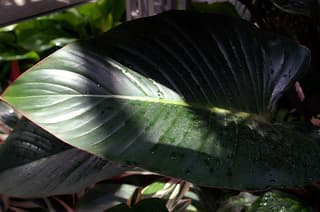
Dracaena
Dracaena
Dracaena is a large genus of approximately 120 species of trees and succulent shrubs in the family Asparagaceae, native to Africa, southern Asia, Madagascar, and Australia. Most species are grown as popular indoor houseplants prized for their dramatic, architectural foliage and exceptional tolerance of low-light and neglect. Common houseplant species include Dracaena fragrans (corn plant), Dracaena marginata (dragon tree), and Dracaena trifasciata (snake plant, formerly Sansevieria). They are widely recognized for their air-purifying properties.
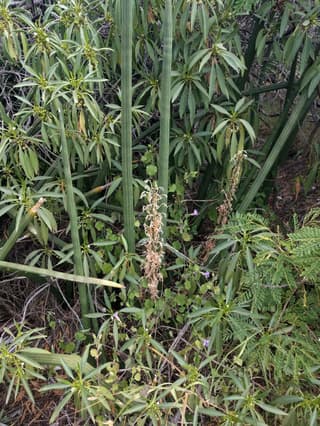
African Spear
Dracaena angolensis
Dracaena angolensis, commonly known as the African Spear or Cylindrical Snake Plant, is a succulent native to Angola and southern Africa. Taxonomic note: Dracaena angolensis (Welw. ex Carrière) Byng & Christenh. is an accepted synonym of Sansevieria cylindrica Bojer ex Hook. — the older name — and both names refer to exactly the same species. Its upright, subcylindrical dark-green leaves with grayish banding make it a striking ornamental choice. Exceptionally drought-tolerant, it thrives on neglect and adapts to a wide range of light conditions, making it one of the most beginner-friendly houseplants available.
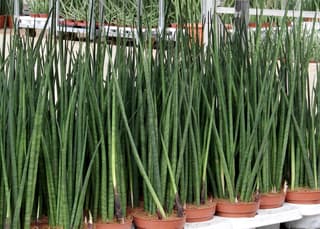
Bamboo Dracaena
Dracaena bacularis
Dracaena bacularis, commonly known as Bamboo Dracaena or Skinny Snake Plant, is a slender succulent native to the arid regions of Central Africa, particularly Angola. Its thin, cylindrical stems resemble bamboo canes, giving rise to its popular nickname. This plant is exceptionally resilient and beginner-friendly, tolerating low light, infrequent watering, and dry indoor air with ease.
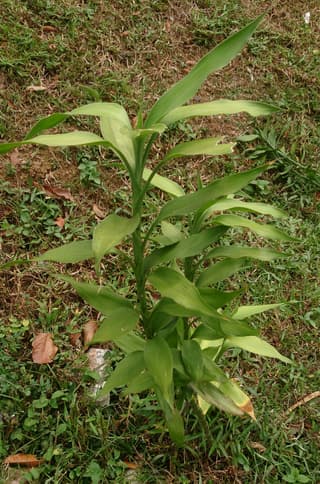
Lucky Bamboo
Dracaena braunii
Dracaena braunii, commonly known as Lucky Bamboo, is a slender, cane-stemmed perennial native to the rainforests of Cameroon in West Africa. Despite its common name and bamboo-like appearance, it is not a true bamboo but a member of the Asparagaceae family. Taxonomic note: Dracaena braunii Engl. (1892) is widely treated as a synonym of Dracaena sanderiana Sander ex Mast. (1892) — both names refer to the same plant. Our database maintains them as separate entries for reference; see also Dracaena sanderiana (ID: f49aa6d9-2af5-4da3-97d6-b03edc18fd95). Lucky Bamboo is one of the most popular indoor plants worldwide, deeply associated with Feng Shui and Asian cultural traditions. It tolerates low light and can be grown in water or well-draining soil, making it exceptionally versatile and beginner-friendly.
Janet Craig Dracaena
Dracaena deremensis
Dracaena deremensis, commonly known as Janet Craig Dracaena, is a striking tropical houseplant native to the rainforests of East Africa. It features long, arching deep-green leaves that emerge from a central cane, creating an elegant, architectural silhouette. One of the most low-maintenance indoor plants available, it thrives in low-light conditions and tolerates infrequent watering, making it a top choice for offices, living rooms, and beginners alike. It is also recognized as an effective air purifier.

Dragon Blood Tree
Dracaena draco
The Dragon Blood Tree (Dracaena draco) is an iconic, slow-growing tree native to the Canary Islands and Madeira, renowned for its dramatic umbrella-shaped canopy and the legendary red resin known as "dragon's blood." It can live for hundreds to over a thousand years, making it one of the world's most extraordinary long-lived plants.
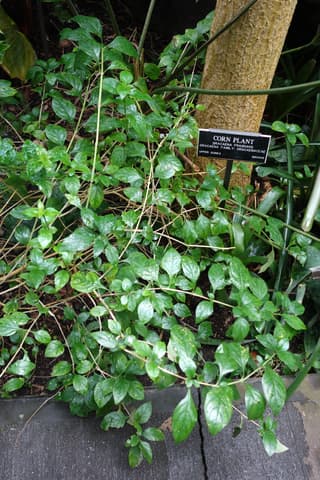
Corn Plant
Dracaena fragrans
The Corn Plant (Dracaena fragrans) is a popular tropical houseplant native to Africa, known for its striking sword-shaped leaves that emerge from a woody cane-like stem. This elegant plant can grow up to 6 feet tall indoors and is prized for its air-purifying qualities and low-maintenance nature. The glossy green leaves often feature yellow or cream stripes, and mature plants may produce fragrant white flowers.
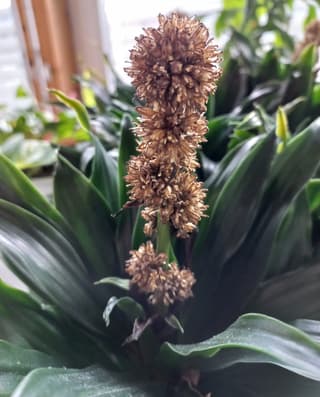
Compact Corn Plant
Dracaena fragrans 'Compacta'
The Compact Corn Plant (Dracaena fragrans 'Compacta') is a dwarf cultivar of the classic corn plant, prized for its dense rosette of glossy, dark green leaves that rarely need pruning to keep a tidy shape. Native to tropical regions of Africa, this compact form typically stays under 1.2 m tall when grown in containers, making it a popular choice for offices, low-light rooms, and small apartments. It is one of the most forgiving and low-maintenance houseplants available, tolerating low light and occasional neglect.

Walking Sansevieria
Dracaena francisii
The Walking Sansevieria (Dracaena francisii, formerly Sansevieria francisii) is a compact succulent native to eastern Kenya along the Tana River. It forms tight rosettes of cylindrical, pointed leaves with grey-green banding, and is notable for producing above-ground stolons that root on contact with soil, creating new plantlets around the mother plant. Accepted name per POWO/IPNI: Dracaena francisii (Chahin.) Byng & Christenh.
Guiana Dracaena
Dracaena guianensis
Dracaena guianensis is a slow-growing evergreen foliage plant from the tropical understory of northern South America, with glossy, strap-shaped deep green leaves on slender upright stems. Grown as an easy indoor plant, it brings a lush, architectural look and helps freshen indoor air.
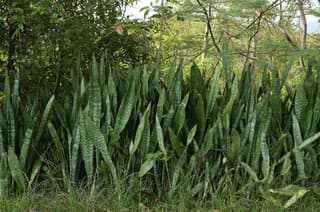
African Wild Dracaena
Dracaena hyacinthoides
Dracaena hyacinthoides, formerly known as Sansevieria hyacinthoides, is a hardy succulent native to South Africa. Reclassified from the genus Sansevieria to Dracaena in 2017, this xerophyte forms rosettes of stiff, dark green lance-shaped leaves with pale green mottling. Exceptionally drought-tolerant, it thrives with minimal care and is prized for its air-purifying properties.
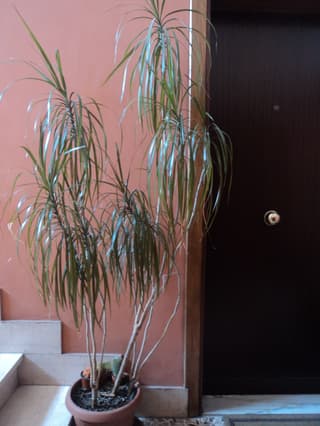
Dragon Tree
Dracaena marginata
Dracaena marginata, commonly known as the Dragon Tree, is an elegant houseplant featuring long, slender leaves in shades of green with distinctive red or purple margins. Native to Madagascar, it is prized for its sculptural form and low maintenance requirements. With proper care, it can live over 15-20 years indoors and is excellent for purifying indoor air.
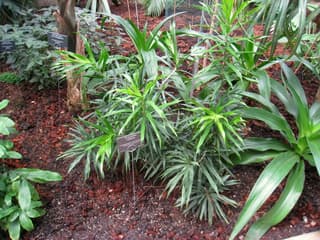
Song of India
Dracaena reflexa
Dracaena reflexa, commonly known as Song of India, is a slow-growing evergreen shrub native to Madagascar and the Indian Ocean islands. Prized for its elegant spiraling rosettes of glossy, lance-shaped leaves, it makes an excellent indoor plant that also purifies the air by removing formaldehyde and other volatile organic compounds.
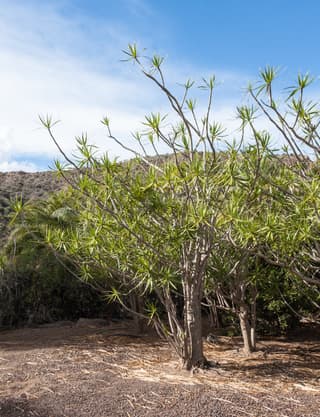
Narrow-leaf Song of India
Dracaena reflexa var. angustifolia
Dracaena reflexa var. angustifolia is a narrow-leaved variety of the Song of India, a tropical evergreen shrub native to Madagascar and nearby Indian Ocean islands. It features slender, sword-shaped leaves with a glossy dark-green color, arranged in dense spirals along upright, cane-like stems. Grown both as a striking houseplant and as an outdoor landscape shrub in warm climates, it is prized for its architectural form, low maintenance, and air-purifying qualities.
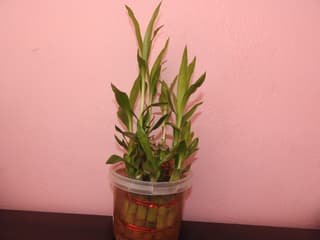
Lucky Bamboo
Dracaena sanderiana
Lucky Bamboo (Dracaena sanderiana) is a popular indoor plant native to Central Africa, despite its association with Asian culture and Feng Shui. It is not actually a bamboo but belongs to the Asparagaceae family. Known for its resilience and elegant twisted stems, it can grow in both water and soil. The plant is prized for its air-purifying properties, removing benzene and other toxins from indoor air.
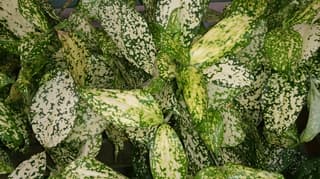
Florida Beauty
Dracaena surculosa 'Florida Beauty'
Dracaena surculosa 'Florida Beauty' is a compact cultivar of the West African Gold Dust Dracaena, prized for its dark green leaves generously speckled with cream and golden-yellow spots. A slow-growing, low-maintenance houseplant that thrives in bright indirect light.
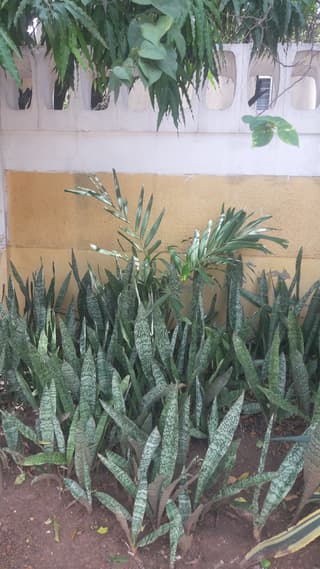
Snake Plant
Dracaena trifasciata
Dracaena trifasciata, commonly known as the Snake Plant or Mother-in-Law's Tongue, is an evergreen succulent perennial native to tropical West Africa, from Nigeria eastward to the Congo. Formerly classified as Sansevieria trifasciata and reclassified to the genus Dracaena in 2017 following molecular analysis, it is celebrated worldwide for its architectural upright leaves with distinctive gray-green cross-banding and bright yellow margins in variegated cultivars like 'Laurentii'. One of the most resilient houseplants in existence, it thrives under neglect and makes an ideal choice for beginners, offices, and low-light spaces.
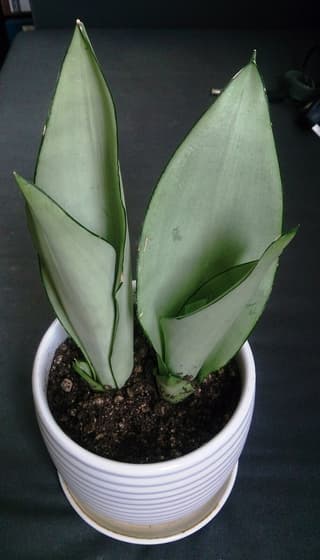
Moonshine Snake Plant
Dracaena trifasciata 'Moonshine'
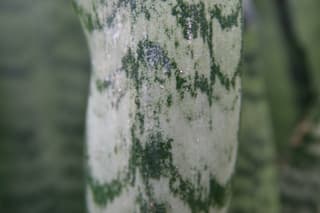
A perennial succulent in the Asparagaceae family with broad, upright leaves displaying pale silver to mint-green coloration with minimal banding. Distinguished by its luminous, silvery tone and fine darker edge line, making it more striking than standard Dracaena trifasciata varieties. Previously classified as Sansevieria trifasciata 'Moonshine' before genus reclassification.
Ceylon Bowstring Hemp
Dracaena zeylanica
Dracaena zeylanica, commonly known as Ceylon Bowstring Hemp, is a succulent native to Sri Lanka and India. Previously classified as Sansevieria zeylanica, it features long, upright, slightly arching leaves with a distinctive wavy banding pattern of light and dark green. Often confused with the common snake plant (Sansevieria trifasciata), it differs by its narrower, more undulated leaves. Historically, its fibrous leaves were used to make bowstrings and rope. It is toxic to cats and dogs due to saponins.
Water Hyacinth
Eichhornia crassipes
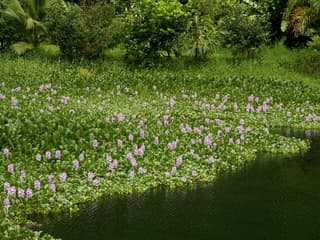
Water hyacinth (Eichhornia crassipes) is a free-floating aquatic plant native to the Amazon basin in South America. Celebrated for its glossy, heart-shaped leaves and delicate lavender-purple orchid-like flowers, it is one of the fastest-growing plants on Earth. While visually stunning as an ornamental pond plant, it can become highly invasive in natural waterways.

Elephant Ear Tree
Enterolobium contortisiliquum
The Elephant Ear Tree is a native tree of the Brazilian Atlantic Forest and Cerrado, belonging to the Fabaceae family. It can reach heights of 20 to 35 meters with a trunk diameter of up to 1.6 meters. It is famous for its wide, umbrella-shaped canopy and its woody, curved, hollow fruits that resemble a human or monkey ear (and a small drum, which is the origin of the Portuguese name 'tamboril'). A fast-growing deciduous pioneer species, it produces small white globular flowers between winter and summer and is widely used in reforestation, urban forestry, and large-scale landscaping.
Pothos / Devil's Ivy (genus)
Epipremnum
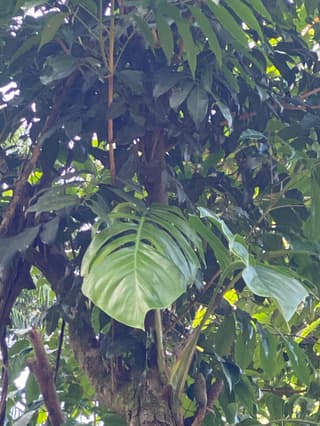
Epipremnum is a genus of tropical climbing aroids in the family Araceae, native to Southeast Asia and the Pacific. It encompasses popular houseplant species like E. pinnatum and E. aureum, prized for their lush foliage, vigorous growth, and exceptional tolerance to indoor conditions including low light.
Golden Pothos
Epipremnum aureum
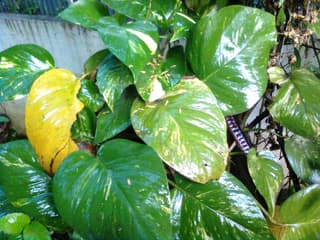
Epipremnum aureum, commonly known as Golden Pothos or Devil's Ivy, is one of the most popular and resilient houseplants. Native to French Polynesia, this evergreen vine features heart-shaped leaves with stunning golden-yellow variegation. Known for its air-purifying qualities, it thrives in various light conditions and is an excellent choice for beginners.
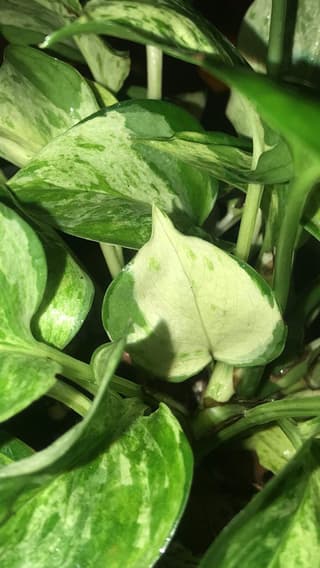
Manjula Pothos
Epipremnum aureum 'Manjula'
Manjula Pothos (Epipremnum aureum 'Manjula') is a patented pothos cultivar known for heart-shaped leaves splashed with cream, silver-green and white marbling and gently wavy edges. A fast-growing, easy-care vine, it trails beautifully from hanging baskets or climbs a moss pole, making it one of the most popular variegated houseplants.
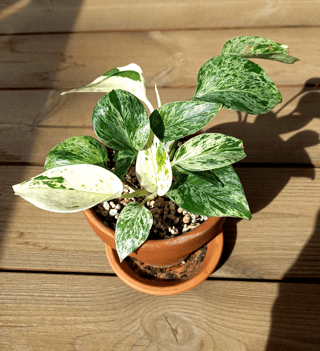
Marble Queen Pothos
Epipremnum aureum 'Marble Queen'
Marble Queen Pothos (Epipremnum aureum 'Marble Queen') is a popular variegated cultivar prized for its cream-and-white marbled heart-shaped leaves. A trailing vine native to tropical regions, it is widely grown indoors in hanging baskets or trained up moss poles, valued for its low-maintenance nature and striking foliage pattern.
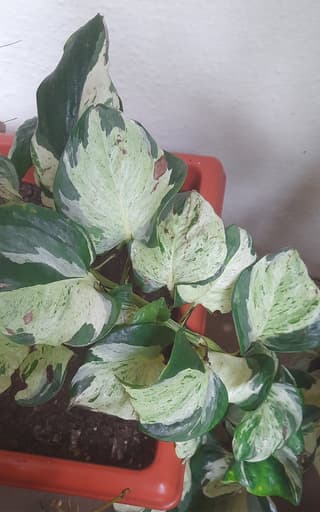
N'Joy Pothos
Epipremnum aureum 'N'Joy'
The N'Joy Pothos (Epipremnum aureum 'N'Joy') is a compact cultivar of the classic pothos, prized for its smaller, rounded leaves marked with crisp white-and-green variegation. Unlike some variegated pothos varieties, N'Joy holds its pattern fairly reliably even in average light, though brighter indirect light produces the whitest leaves. It's a slow-to-moderate grower, well suited to hanging baskets, shelves, or as a compact tabletop trailer.
Neon pothos
Epipremnum aureum 'Neon'
Epipremnum aureum 'Neon' is a vibrant cultivar of golden pothos prized for its bright, solid chartreuse-yellow foliage, which darkens slightly with age or in lower light. A fast-growing, low-maintenance trailing vine, it looks stunning cascading from a hanging basket or climbing a moss pole.
Pearls and Jade Pothos
Epipremnum aureum 'Pearls and Jade'
A compact variegated cultivar of golden pothos, prized for its small heart-shaped leaves marbled in white, gray-green, and jade-green, often with a pink blush on new growth. Its slower, more compact trailing habit makes it a favorite for shelves and hanging baskets.
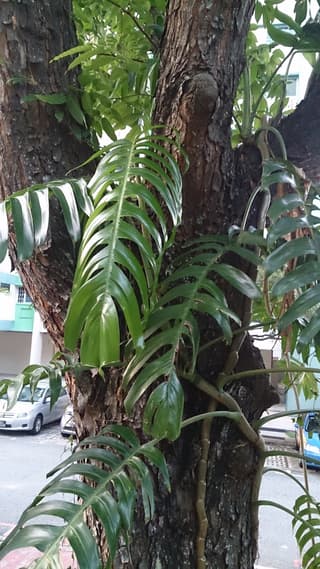
Dragon Tail Plant
Epipremnum pinnatum
Epipremnum pinnatum is a vigorous climbing aroid native to Southeast Asia and the Pacific Islands. It is celebrated for its dramatic leaf dimorphism: juvenile leaves are small and entire, while mature leaves become large, glossy, and deeply pinnately split. Related to but distinct from E. aureum (golden pothos), it is a fast-growing, adaptable houseplant and robust outdoor vine in tropical climates.
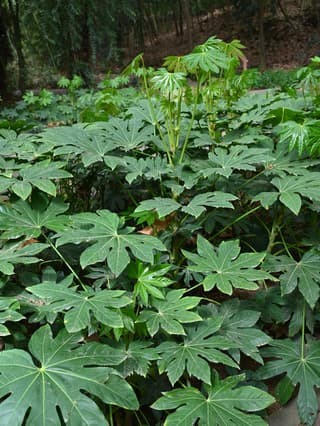
Japanese Aralia
Fatsia japonica
Fatsia japonica is an evergreen shrub native to Japan with dramatic, glossy, hand-shaped leaves that can have 7-11 lobes and grow up to 40 cm wide. Highly valued as an ornamental plant for both indoor spaces and shaded gardens, it is one of the few tropical-looking foliage plants that thrives in deep shade.
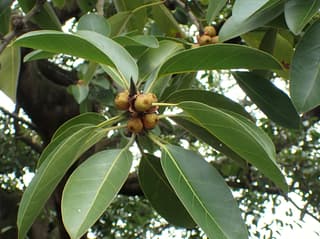
Council Tree
Ficus altissima
The Council Tree (Ficus altissima) is a large tropical fig native to Southeast Asia, widely grown as an indoor ornamental for its big, glossy, leathery leaves. In the wild it behaves as a "false banyan," sending down aerial roots over host trees. Its common name comes from the historic practice of village communities gathering for meetings and deliberations in the shade of its broad canopy.
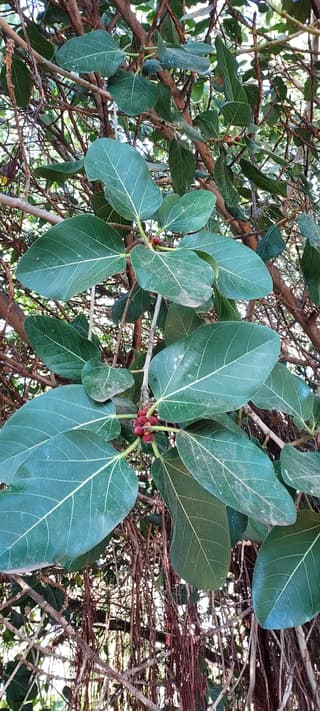
Indian Banyan
Ficus benghalensis
The Indian Banyan (Ficus benghalensis) is one of the world's most remarkable trees, native to the Indian subcontinent. Famous for its aerial roots that descend to the ground and become secondary trunks, it can spread across entire acres in the wild. As a houseplant, it is grown in the compact "Audrey" form, beloved for its large velvety deep-green leaves and for being far more forgiving than the fiddle leaf fig.
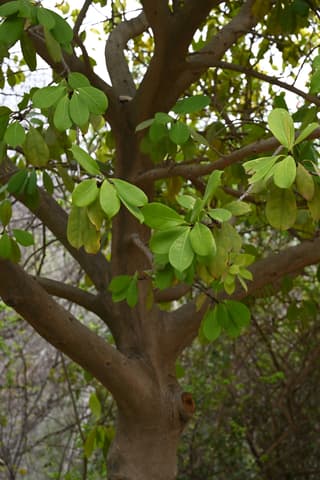
African Fig
Ficus cyathistipula
Ficus cyathistipula, commonly known as the African Fig, is a robust evergreen tree native to the tropical forests of Central and Western Africa. It features large, leathery, deep glossy green leaves with a characteristic obovate shape. It is one of the most resilient Ficus species for indoor cultivation, being more tolerant of humidity and light variations than Ficus benjamina. Its persistent cup-shaped stipules at the base of the leaves give rise to its scientific name.

Rubber Plant
Ficus elastica
A hardy tropical plant native to Southeast Asia, known for its large, glossy, dark green leaves. One of the most popular houseplants due to its striking appearance and easy care. Can grow up to 6-10 feet indoors and is an excellent air purifier.
Easy Care Air Purifying
Our selection of 159 easy air purifying combines the characteristics of this category with reduced care needs. Perfect for beginners who love this category.
Why Choose Easy Air Purifying?
Combining the beauty of air purifying with easy difficulty level lets you enjoy this category without excessive maintenance worries. Each plant was selected to offer the best characteristics of the category at the care level you are looking for.