2343 Easy Easy Care | 2026 Guide - Page 30
Find 2343 easy easy care. Complete guide for your garden.
2343 Easy Care with easy level
Showing 1045-1080 of 2343
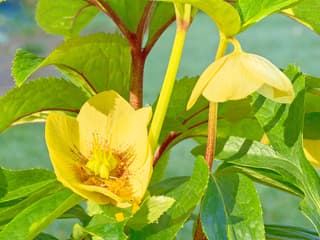
Lenten Rose
Helleborus × hybridus
Helleborus × hybridus is an evergreen perennial prized for blooming in late winter and early spring, when few other plants are in flower. It forms neat clumps of dark, lobed leaves topped with nodding flowers in white, pink, purple, yellow, and green, often speckled or picotee-edged.
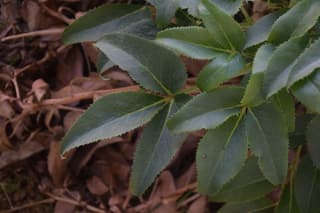
Corsican hellebore
Helleborus argutifolius
The Corsican hellebore (Helleborus argutifolius) is a robust evergreen perennial in the buttercup family (Ranunculaceae), native to Corsica and Sardinia. It forms a bold clump 90-120 cm tall of leathery, spiny-toothed, holly-like grey-green leaves and bears large clusters of cup-shaped, pale apple-green flowers from late winter into spring, when little else is in bloom. It is one of the most architectural and drought-tolerant of the hellebores.
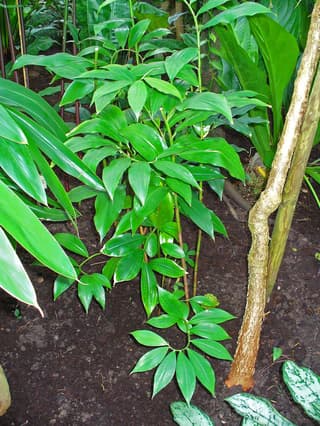
Crepe Ginger
Hellenia speciosa
Crepe ginger (Hellenia speciosa, formerly Costus speciosus) is a striking tropical perennial herb in the Costaceae family, native to South and Southeast Asia. It grows from thick underground rhizomes into an upright, spiraling clump up to 2 m tall, with glossy spiral-arranged leaves and dense terminal spikes of crepe-paper-like white flowers emerging from showy red bracts after the onset of the rainy season.
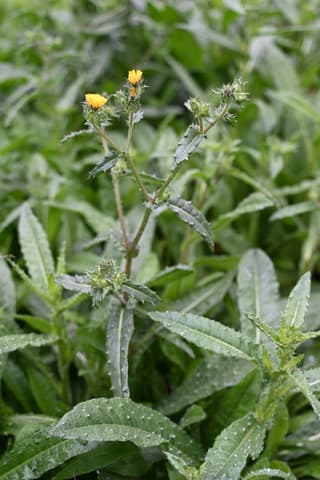
Bristly oxtongue
Helminthotheca echioides
Bristly oxtongue (Helminthotheca echioides, syn. Picris echioides) is an annual or biennial herbaceous plant in the Asteraceae family, native to the Mediterranean region and now widespread as a ruderal plant throughout much of Europe and the world. It is easily recognized by its erect or prostrate, striated, and reddish stem, covered in stiff, hooked hairs that give it a bristly feel, and by its lanceolate leaves dotted with small pearly white spots at the base of the bristles. It produces yellow flower heads similar to small dandelions, which bloom from May to October. It grows spontaneously on uncultivated land, roadsides, field margins, and disturbed soils, where it is considered a fast-growing weed.
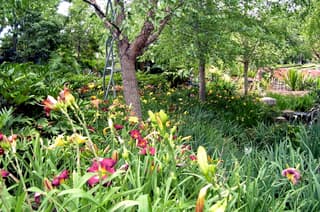
Daylily
Hemerocallis
Daylily (Hemerocallis) is a herbaceous perennial native to Asia, celebrated for its vibrant, trumpet-shaped flowers — each lasting just one day. With over 80,000 registered cultivars spanning yellow, orange, red, pink, purple, and white, daylilies bloom from late spring through fall and are among the most resilient and versatile garden perennials worldwide.
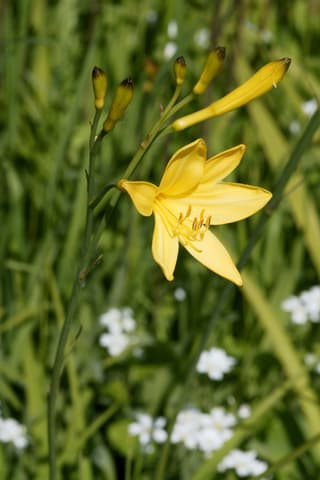
Orange daylily
Hemerocallis fulva
Hemerocallis fulva, commonly known as the orange daylily, is a vigorous and hardy perennial. It is characterized by its arching, sword-shaped green leaves and large, trumpet-shaped orange flowers that typically bloom for only one day. Despite the short life of individual flowers, the plant produces numerous buds on tall stalks, ensuring a long flowering period throughout the summer. It spreads effectively via underground rhizomes, making it an excellent choice for erosion control and ground cover.
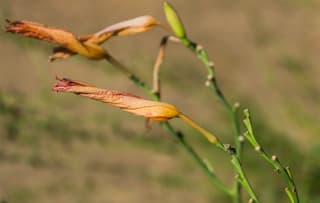
Lemon Daylily
Hemerocallis lilioasphodelus
The Lemon Daylily (Hemerocallis lilioasphodelus) is a hardy herbaceous perennial native to southeastern Europe and eastern Asia. It produces fragrant, trumpet-shaped yellow flowers that last only a single day — hence the name "daylily." Exceptionally tough and adaptable, it thrives in a wide range of soils and climates, making it a popular choice for borders and garden beds.
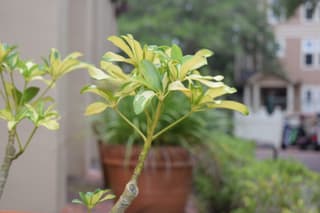
Umbrella Tree
Heptapleurum
Heptapleurum is a genus of over 300 species of evergreen tropical and subtropical trees and shrubs in the family Araliaceae, native to tropical and subtropical Asia. Formerly classified under the genus Schefflera, these plants are beloved for their distinctive palmate compound leaves arranged in an umbrella-like pattern. They are among the most popular indoor plants worldwide, prized for their adaptability, air-purifying qualities, and tropical aesthetic.
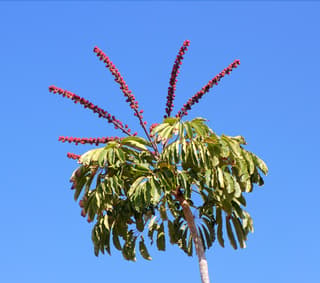
Umbrella Tree
Heptapleurum actinophyllum
The Umbrella Tree (Heptapleurum actinophyllum), also widely known by its synonym Schefflera actinophylla, is a dramatic tropical tree native to Australia and New Guinea. Its large, glossy, palmate leaves radiate from central stems like the spokes of an umbrella, making it one of the most recognizable indoor and outdoor trees in the world. Outdoors it can reach 40 feet; indoors it stays a manageable 6–10 feet. The plant produces striking red-pink flower spikes in summer and autumn when mature.
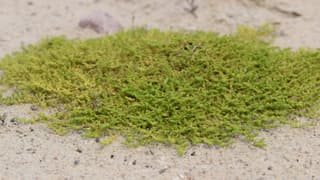
Smooth Rupturewort
Herniaria glabra
Herniaria glabra, commonly known as Smooth Rupturewort or Green Carpet, is a low-growing perennial herb in the Caryophyllaceae family, native to Europe and Western Asia. It forms a dense mat just 1-3 cm tall with tiny oval leaves and inconspicuous green flowers in summer. The foliage may turn bronze or red in winter, adding seasonal interest.
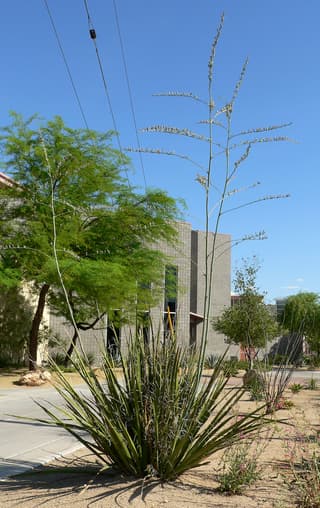
Giant Hesperaloe
Hesperaloe funifera
Hesperaloe funifera, commonly known as Giant Hesperaloe, is a striking succulent native to the Chihuahuan Desert of northern Mexico and southern Texas. It forms a dramatic rosette of long, narrow leaves up to 6 ft tall, sending up spectacular flower stalks reaching 10-15 ft with creamy white blooms in spring and summer.
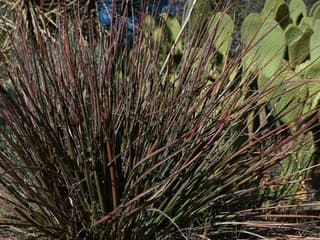
Red yucca
Hesperaloe parviflora
Hesperaloe parviflora, commonly known as Red Yucca, is not a true yucca but a member of the century plant family. It features arching, leathery, blue-green leaves that form a dense clump. In late spring and summer, it produces spectacular tall spikes of tubular, nectar-rich flowers that are highly attractive to hummingbirds. It is exceptionally hardy, heat-tolerant, and requires very little maintenance once established.
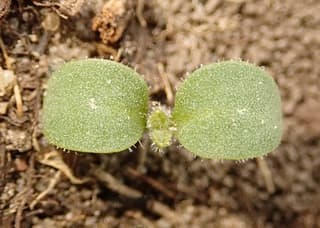
dame's rocket
Hesperis matronalis
Hesperis matronalis, known as Dame's Rocket, is a fragrant biennial or short-lived perennial in the Brassicaceae family. It features clusters of four-petaled flowers in white, pink, or purple. While prized for its sweet evening scent, it is considered invasive in some regions of North America due to its prolific self-seeding.
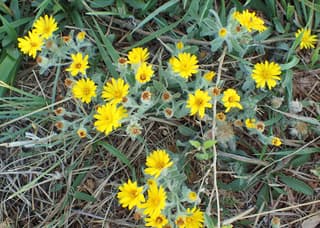
Golden aster
Heterotheca
Heterotheca is a genus of about 25 to 30 species of perennial herbs and subshrubs, native to North America, from Canada to Mexico, belonging to the aster family (Asteraceae). It is commonly known as "golden aster" or "camphorweed" due to the camphor-like aroma released by some species when their leaves are crushed. It produces bright yellow daisy-like flowers throughout much of the year and lanceolate leaves covered in rough hairs. It is a pioneer plant, extremely drought-tolerant, and typical of poor, sandy, or rocky soils.
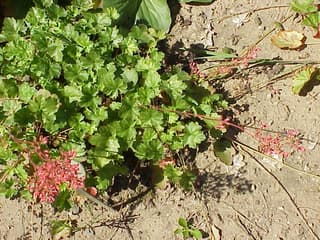
Coral Bells
Heuchera
Heuchera, commonly known as coral bells or alumroot, is a genus of ornamental perennial plants native to North America. Celebrated for their extraordinary diversity of foliage colours — ranging from deep burgundy and bronze to lime green and silver — they produce delicate, airy wands of tiny bell-shaped flowers in spring and summer. Highly adaptable, Heuchera thrives in woodland gardens, borders, and containers, making it one of the most versatile shade perennials available to gardeners.
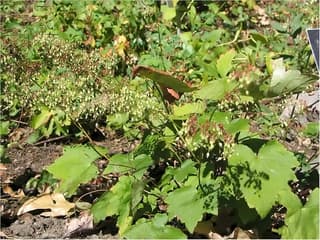
Hairy Alumroot
Heuchera villosa
Heuchera villosa, commonly called hairy alumroot, is a clump-forming woodland perennial native to the Appalachian region of the eastern United States, from New York south to Georgia and west to Missouri. It forms low mounds of softly hairy, maple-like leaves and sends up airy spikes of tiny white to pink bell-shaped flowers from midsummer into fall. Prized for its outstanding heat and humidity tolerance compared to other coral bells, it thrives in shaded rock gardens, woodland borders, and containers.
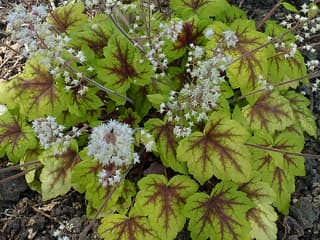
Foamy Bells
Heucherella
Heucherella is an intergeneric hybrid between Heuchera (Coral Bells) and Tiarella (Foamflower), commonly known as 'Foamy Bells'. The plant forms compact leaf rosettes with colorful, decorative foliage in shades of green, gold, orange, red, and bronze—depending on the variety. It is particularly popular in shade gardens where it produces airy, cloud-like flower spikes in white and pink from late spring to midsummer. The foliage is semi-evergreen and provides winter structure in mild climates.
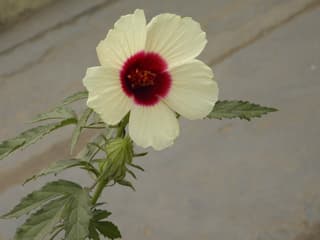
Kenaf
Hibiscus cannabinus
Kenaf is a fast-growing, upright hibiscus relative in the mallow family, cultivated worldwide since prehistoric times for its strong bast fiber. It produces tall, cane-like stems topped with pale yellow, hibiscus-like flowers with dark purple centers, maturing from seed to full height in just three to four months.
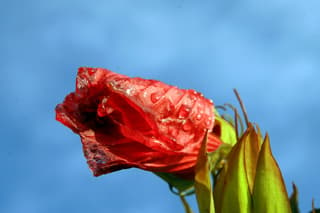
Scarlet Rosemallow
Hibiscus coccineus
Hibiscus coccineus, commonly called scarlet rosemallow or Texas Star hibiscus, is a tall, deciduous perennial in the mallow family native to marshes and swamps of the southeastern United States. It produces striking star-shaped scarlet-red flowers up to 6 inches wide atop maple-like foliage from late summer into early fall, reaching 6-8 feet in height. It thrives in consistently moist to wet soil and full sun, making it a favorite for pond edges, rain gardens, and pollinator plantings.
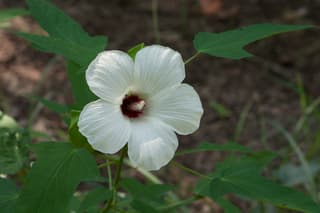
Halberdleaf Rosemallow
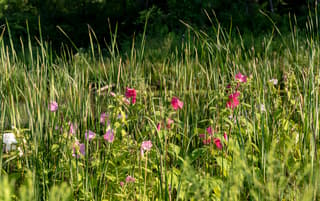
Hibiscus laevis
Hibiscus laevis is a stout, upright herbaceous perennial native to North American wetland margins, named for its distinctive three-lobed, halberd-shaped leaves. From summer into fall it bears large, hollyhock-like flowers in white to pink with a deep maroon throat that open by day and close at night.
Swamp Rose-mallow
Hibiscus moscheutos
Hibiscus moscheutos, commonly known as Swamp Rose-mallow or Crimson-eyed Rosemallow, is a hardy perennial native to eastern North America. It produces enormous dinner-plate blooms — up to 12 inches across — in shades of white, pink, red, and burgundy, often with a striking crimson eye. Despite its tropical appearance, it is fully cold-hardy to USDA Zone 4, dying back to the ground each winter and re-emerging in spring.
Confederate Rose
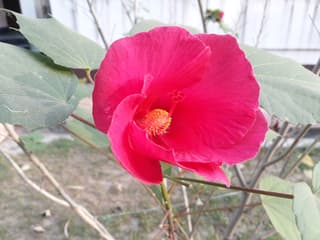
Hibiscus mutabilis
Confederate Rose (Hibiscus mutabilis) is a fast-growing deciduous shrub or small tree native to southern China. It is celebrated for its spectacular flowers that open white or pale pink in the morning and deepen to rich crimson red by evening — all within a single day. Plants can reach 15 feet tall and produce abundant blooms from late summer through fall.
Roselle
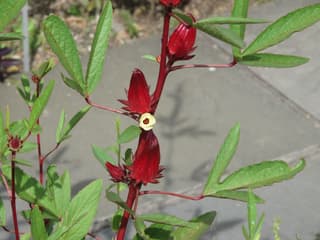
Hibiscus sabdariffa
Hibiscus sabdariffa, commonly known as Roselle, is a fast-growing annual or short-lived perennial shrub native to West Africa. It is celebrated worldwide for its vibrant red calyces used to make hibiscus tea, jams, and medicinal preparations. The plant produces striking pale yellow flowers with a deep red center and grows up to 3 meters tall in warm climates. Its calyces, leaves, seeds, and roots are all edible and valued both ornamentally and medicinally.
Rose of Sharon
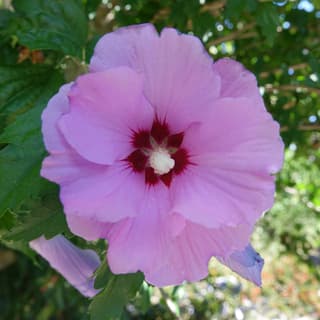
Hibiscus syriacus
Rose of Sharon (Hibiscus syriacus) is a deciduous flowering shrub native to East Asia, widely grown for its showy blooms in shades of white, pink, purple, red, and lavender. It blooms from midsummer through fall, bridging a gap when few other shrubs are in flower. It is the national flower of South Korea, known as Mugunghwa, symbolizing perseverance and eternal love.
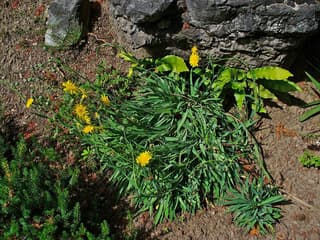
Hawkweed
Hieracium
Hieracium is a large, taxonomically complex genus of flowering plants in the daisy family (Asteraceae), commonly known as hawkweed. The genus name comes from the ancient Greek 'hierax' (hawk), tied to an old legend that hawks used the plant's milky sap to sharpen their eyesight. Hawkweeds are herbaceous perennials that form basal rosettes of hairy, often bristly leaves and send up erect flowering stems topped with clusters of small, dandelion-like yellow or orange flower heads. Reproduction is unusual: most species reproduce apomictically, producing genetically identical seeds without fertilization, which has led botanists to describe anywhere from a few hundred to several thousand microspecies. While some Hieracium species are valued as low-maintenance wildflowers for naturalized gardens and pollinator plantings, many others (such as orange hawkweed and meadow hawkweed) are aggressive colonizers classified as noxious, invasive weeds in North America, New Zealand, and parts of Australia, where they outcompete native vegetation and forage grasses.
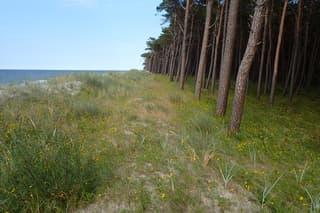
Narrowleaf Hawkweed
Hieracium umbellatum
Narrowleaf hawkweed is a perennial herb in the Asteraceae family, native to temperate regions across the Northern Hemisphere (Europe, Asia, and North America). It forms a basal rosette with narrow, toothed leaves and produces umbrella-shaped clusters of dandelion-like yellow flowerheads from mid-summer to fall. It is a hardy, adaptable plant commonly found along roadsides, in open woodlands, and on sandy or disturbed ground.
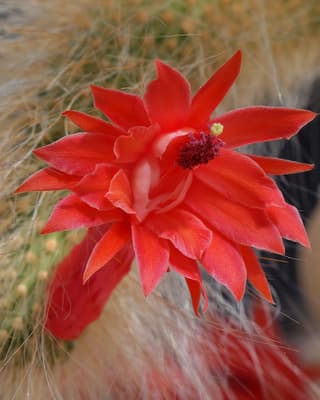
Monkey's Tail Cactus
Hildewintera colademononis
Hildewintera colademononis, also classified as Cleistocactus colademononis, is an epiphytic and pendulous cactus native to the moist rocky slopes of Florida province in the Santa Cruz department of Bolivia, where it grows hanging from cliffs at altitudes of up to 1,500 meters. Its cylindrical stems, 3 to 7 cm in diameter, can reach up to 2.5 meters in length and are covered by dozens of white, thin, and hair-like soft spines that resemble a monkey's furry tail—the origin of its popular nickname. Between spring and summer, it produces vibrant red flowers up to 8 cm long that bloom almost horizontally along the stems. It is a relatively fast-growing species, ideal for hanging baskets, and has received the prestigious Award of Garden Merit from the Royal Horticultural Society.
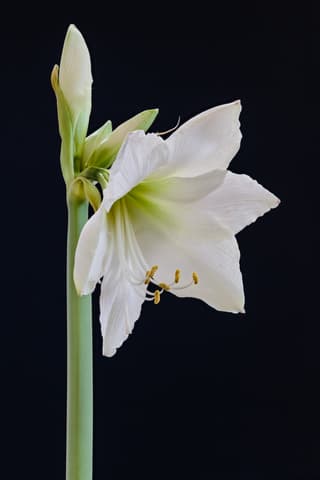
Amaryllis / Hippeastrum (genus)
Hippeastrum
Hippeastrum is a genus of large, bulbous perennial plants in the family Amaryllidaceae, native to tropical and subtropical regions of South America. Commonly — though inaccurately — known as Amaryllis, these plants produce spectacular trumpet-shaped flowers in shades of red, pink, white, orange, and salmon, typically blooming in winter and spring. The genus comprises over 116 species and hundreds of hybrid cultivars. All parts, especially the bulb, contain lycorine alkaloids making them toxic to pets and humans.

Striped Barbados Lily
Hippeastrum striatum
The Striped Barbados Lily (Hippeastrum striatum) is a bulbous flowering perennial native to eastern and southern Brazil, belonging to the Amaryllidaceae family. It produces sturdy flower stalks bearing 2 to 4 trumpet-shaped blooms, bright red with a distinctive green keel running halfway up each petal. It is a popular ornamental bulb prized for its striking late-winter to early-spring flowering display.
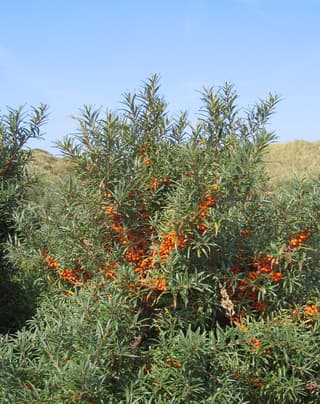
Sea buckthorn
Hippophae rhamnoides
Sea buckthorn (Hippophae rhamnoides) is a thorny deciduous shrub from the Elaeagnaceae family, native to the cold and temperate regions of Eurasia—ranging from the coasts of the Baltic and North Seas to the Himalayan foothills. It is characterized by silvery-gray narrow leaves and bright orange berries that densely cover the branches from late summer to autumn, which are highly valued for their vitamin C content and other antioxidants. It is a dioecious plant (separate male and female individuals), extremely resistant to frost, drought, wind, and salty coastal air.
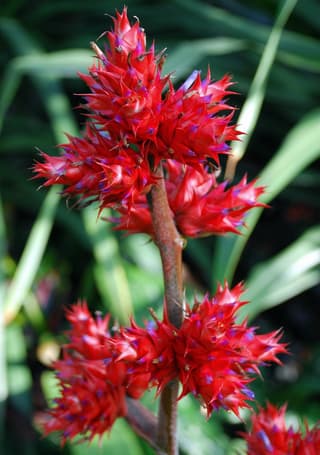
Hohenbergia
Hohenbergia
Hohenbergia is a genus of bromeliads in the family Bromeliaceae, comprising roughly 53 species native to the West Indies, the Yucatan Peninsula, and northern South America (Colombia, Venezuela, Brazil). Plants form rosettes of broad, stiff, often spine-edged strap-like leaves that converge at the base into a central "tank" that holds water and organic debris. A single tall, showy flower spike is produced from the rosette center, lasting for months, with bracts and flowers in shades of red, salmon, pink, white, or purple — the feature that most distinguishes the genus from its close relative Aechmea.
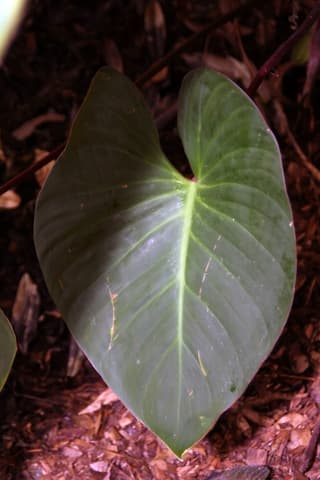
Homalomena
Homalomena
Homalomena is a genus of roughly 150 tropical aroid species native to Southeast Asia and parts of tropical South America, prized as houseplants for their glossy, heart- or shield-shaped foliage. This is a genus-level profile covering common cultivated species such as Homalomena rubescens and its cultivars ("Emerald Gem", "Selby"); individual species vary somewhat in mature size and leaf color.
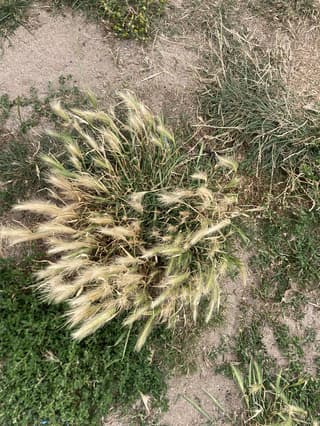
Wall barley
Hordeum murinum
Wall barley is a low, tufted annual grass in the barley genus, native to the Mediterranean, Central Europe, Western Asia, and North Africa, and now widely naturalized across temperate regions worldwide. It grows 30-50 cm tall, forming unbranched spikes up to 10 cm long that ripen from green to straw-yellow. A classic plant of disturbed, nitrogen-rich ground, it thrives in pavement cracks, walls, roadsides, and waste areas, flowering from May through July. Though a difficult weed in cereal fields and pastures, it also serves as forage for grazing livestock in dry regions.
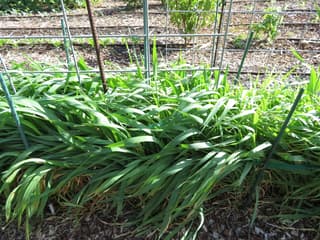
Barley
Hordeum vulgare
Barley (Hordeum vulgare) is one of the oldest domesticated cereal grains, originating in the Fertile Crescent of the Middle East roughly 10,000 years ago. It is a hardy annual grass widely grown for malting, brewing, animal feed, and human food, and remains one of the world's major cereal crops.
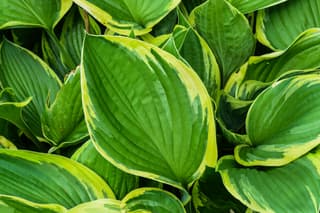
Hosta
Hosta
Hostas are a genus of plants commonly known as plantain lilies. They are widely cultivated as shade-tolerant foliage plants. Their leaves come in a wide range of shapes, sizes, and colors, including shades of green, blue, and gold, often with variegated patterns. While grown primarily for their foliage, they produce elegant spikes of bell-shaped flowers in the summer.
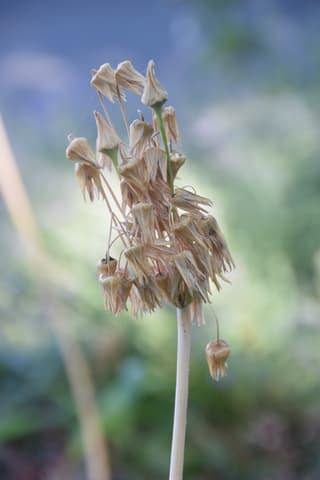
Fire and Ice Hosta
Hosta 'Fire and Ice'
Hosta 'Fire and Ice' is a compact, variegated perennial prized for its heart-shaped leaves with bright white centers edged in dark green. A reverse sport of the popular 'Patriot' hosta, it forms a tidy, upright mound of foliage and sends up lavender, bell-shaped flowers on tall scapes in mid to late summer. Because so much of its leaf tissue lacks chlorophyll, it grows slowly but rewards patient shade gardeners with dramatic, eye-catching contrast.
Easy Care Easy Care
Our selection of 2343 easy easy care combines the characteristics of this category with reduced care needs. Perfect for beginners who love this category.
Why Choose Easy Easy Care?
Combining the beauty of easy care with easy difficulty level lets you enjoy this category without excessive maintenance worries. Each plant was selected to offer the best characteristics of the category at the care level you are looking for.