Elaeagnaceae
Sea buckthorn: Edible Plant
Hippophae rhamnoides
Sea buckthorn is an undemanding and hardy shrub that primarily requires full sun and well-drained, sandy soil. Once established, it tolerates long periods of drought and requires almost no fertilization or protection against diseases. Regular pruning in autumn or early spring helps maintain its shape and promotes a bountiful berry harvest.
Every 21 days
Direct sun
-40° - 40°C
% - %
Categories
What is Sea buckthorn?
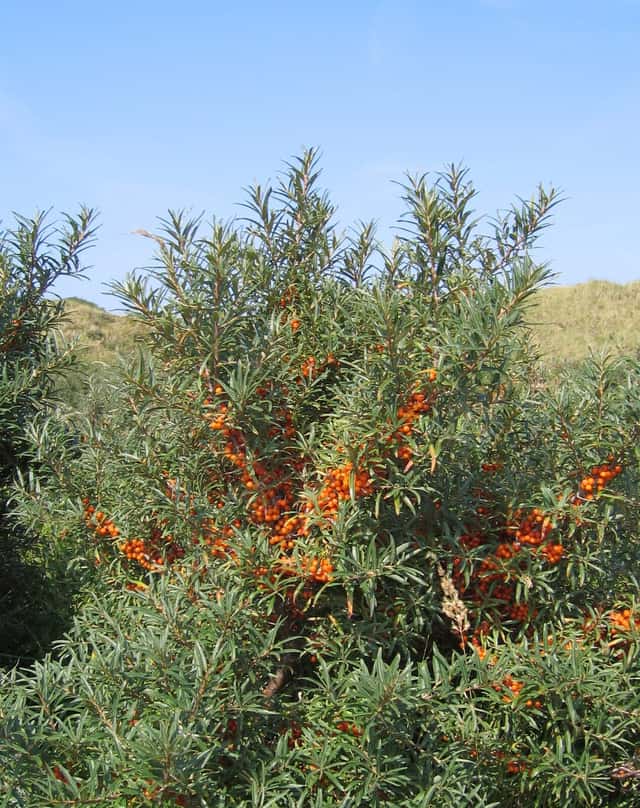
Sea buckthorn (Hippophae rhamnoides) is a easy-care plant from the Elaeagnaceae family. Sea buckthorn (Hippophae rhamnoides) is a thorny deciduous shrub from the Elaeagnaceae family, native to the cold and temperate regions of Eurasia—ranging from the coasts of the Baltic and North Seas to the Himalayan foothills. It is characterized by silvery-gray narrow leaves and bright orange berr...
Sea buckthorn grows up to 5.0m, spread of 400cm, watering every 21 days, -40°C – 40°C. It is not suitable for indoor environments and safe for pets.
Unlike many tropical plants, Sea buckthorn tolerates watering mistakes. Best for beginners. Unlike many popular species, Sea buckthorn is safe to keep around pets.
How to Care for Sea buckthorn?
TLDR: Sea buckthorn needs Direct sun, watering every 21 days, and temperatures between -40-40°C with 40-70% humidity.
How Often Should You Water Sea buckthorn?
Water young seedlings regularly during their first year until they are established. Mature plants are highly drought-tolerant and only need watering during prolonged heatwaves without rain—excessive watering in heavy soil can cause root rot.
How Much Light Does Sea buckthorn Need?
Requires full sun all day long—flowering and berry yields decrease significantly in partial shade.
What Is the Best Soil for Sea buckthorn?
Prefers light, sandy to sandy-loam, well-drained soil with a pH of approximately 5.5–7.5. Avoid heavy, clayey, and waterlogged soils where there is a risk of root rot.
What Pot Should You Use for Sea buckthorn?
Sea buckthorn thrives best when planted directly into garden soil; container cultivation is not recommended due to its deep and spreading root system. If container growing is necessary, choose a large, stable outdoor container (min. 40–50 liters) with excellent drainage holes and sandy substrate.
Care Schedule
Fertilize
Every 365 days
What Is Sea buckthorn and Where Does It Come From?
Sea buckthorn (Hippophae rhamnoides) is a thorny deciduous shrub from the Elaeagnaceae family, native to the cold and temperate regions of Eurasia—ranging from the coasts of the Baltic and North Seas to the Himalayan foothills. It is characterized by silvery-gray narrow leaves and bright orange berries that densely cover the branches from late summer to autumn, which are highly valued for their vitamin C content and other antioxidants. It is a dioecious plant (separate male and female individuals), extremely resistant to frost, drought, wind, and salty coastal air.
How to Propagate Sea buckthorn?
Hardwood cuttings
- Take cuttings separately from male and female plants to ensure pollination
- Sea buckthorn is dioecious—the sex of the plant is not guaranteed from seeds, so cuttings are preferred
- 1 Take 15-20 cm long mature woody cuttings from one-year-old shoots during winter dormancy
- 2 Dip the bottom end into rooting hormone
- 3 Plant in a sandy substrate so that 2/3 of the cutting is in the soil
- 4 Keep the substrate slightly moist until roots form
Materials needed:
Root suckers
- Suckers maintain the sex of the parent plant
- 1 Locate a root sucker growing from the parent plant at a sufficient distance
- 2 Carefully dig up and separate a part of the root with the sucker using a sharp shovel
- 3 Transplant to a new location and water until established
Materials needed:
How Big Does Sea buckthorn Grow?
TLDR: Sea buckthorn can reach up to 5.0m tall with Medium growth rate.
Max height
5.0m
Spread
4.0m
Growth rate
Medium
Foliage
Deciduous
Plant Uses
Edible
Can be consumed
Medicinal
Medicinal properties
Ornamental
Great for decoration
Medicinal Uses
- immune system support (high vitamin C content)
- berry and seed oil for skin and mucous membrane care
- traditional use in healing wounds and burns
- antioxidant and anti-inflammatory effects
Culinary Uses
- juice and syrups
- jams and marmalades
- dried berries and teas
- cold-pressed oil as a dietary supplement
Is your plant showing symptoms?
Click on the symptom to discover possible causes:
What Diseases Commonly Affect Sea buckthorn?
TLDR: Sea buckthorn is susceptible to 8 known diseases. Monitor regularly for early detection.
Verticillium Wilt
Verticillium wilt is a soil-borne fungal disease caused primarily by the fungi Verticillium dahliae and V. albo-atrum. These pathogens infect plant roots and grow within the vascular tissues, blocking water and nutrient transport, resulting in wilting and eventual plant death. The disease affects over 350 plant species including vegetables, fruits, ornamental flowers, and trees. The fungi can survive in soil for more than 10 years as resistant structures called microsclerotia.
Fusarium Wilt
Fusarium wilt is a serious fungal disease caused by the soil-borne fungus Fusarium oxysporum. The fungus invades roots and blocks the water-conducting vessels (xylem) of the plant, causing progressive wilting and eventual death. Host-specific forms of the pathogen exist that attack different plant species.
Rust
Rust is a common fungal disease caused by fungi in the order Pucciniales that affects a wide variety of plants. The disease gets its name from the characteristic orange, yellow, or reddish-brown pustules that appear on leaves, resembling metal rust. This obligate fungal parasite requires living plants to survive and can cause significant economic losses in agricultural crops.
Aphids
Aphids are small, soft-bodied, pear-shaped insects (1/16 to 1/8 inch long) that feed by sucking nutrient-rich sap from plants. They reproduce rapidly and can quickly weaken plants, causing distorted growth and transmitting plant viruses. Aphids come in various colors including green, black, red, yellow, brown, and gray. They secrete honeydew, a sticky substance that attracts ants and encourages sooty mold growth.
Meaning & Symbolism
In Nordic and Slavic cultures, sea buckthorn is associated with health, vitality, and survival in harsh conditions—its thorny yet resilient branches symbolize endurance, and its vitamin-rich fruits represent the renewal of strength during winter.
Compare with similar plants
| Attribute | Difficulty | Light | Watering | Pet Safe |
|---|---|---|---|---|
| Field Maple | Easy | Bright indirect | 14d | ✓ |
| Silver Birch | Easy | Direct sun | 14d | ✓ |
| Common Blanketflower | Easy | Direct sun | 10d | ✓ |
| Cushion Bush | Easy | Direct sun | 14d | ✓ |
Choose & Compare
Sources & References
- Sea Buckthorn - Hippophae rhamnoides: All You Need To Know
- Hippophae rhamnoides - Wikipedia
- Rakytník pestovanie | rastlinky.sk
- Rakytník rešetliakový - Hippophae: Tajomstvo bohatej úrody
- Sea buckthorn treatments, pest and disease control | Armuro
- Hippophae rhamnoides (HIORH) Pests | EPPO Global Database





