Complete Plant Guide
Explore plants by difficulty, season and more. Find the perfect plant for you.
Difficulty
Categories
Plants by City
🗺️ Plants by City3781 plants found
Showing 2557-2592 of 3781
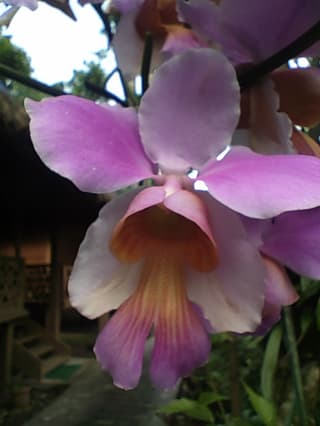
Terete Vanda
Papilionanthe teres
Terete Vanda (Papilionanthe teres) is a giant epiphytic orchid native to the eastern Himalayas, India, Myanmar, Thailand, Laos and Vietnam. It has a branching monopodial stem with long cylindrical (terete) leaves, the feature that gives the plant its common name. Large, fragrant magenta-pink flowers with a white-and-yellow lip appear mostly in late spring and early summer.
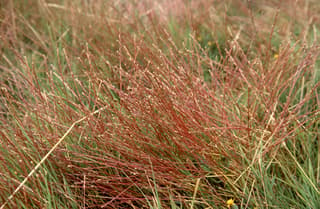
Sea Hard-grass
Parapholis strigosa
Parapholis strigosa (Sea Hard-grass) is an annual grass in the Poaceae family, native to the Atlantic and Mediterranean coasts of Europe and Libya. It is a salt-tolerant (halophytic) plant that grows in coastal salt marshes, tidal soils, and disturbed, open ground. It is a low-growing, typically 10-30 cm tall, tufted grass that blooms in summer with small, inconspicuous green inflorescences. Outside of Europe, it has appeared as an introduced species in California, British Columbia, Chile, Australia, and New Zealand.
Pleated Inkcap
Parasola
Parasola is a genus of small saprobic fungi, commonly known as pleated inkcaps. They are extremely delicate, with nearly transparent caps featuring deep radial grooves, resembling a paper parasol. They appear quickly after rain on lawns or organic debris and usually wither within a few hours under strong sunlight.
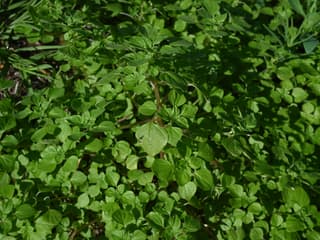
Florida Pellitory
Parietaria floridana
Parietaria floridana, commonly known as Florida pellitory, is an annual or short-lived herbaceous plant belonging to the Urticaceae family (nettles), although it lacks stinging hairs. Native to the southeastern United States, the Antilles, and much of Latin America, it grows in a branched and sometimes prostrate manner, reaching up to 40 cm in height. Its leaves are small, thin, heart-shaped or rhomboid, pale green, and have a fragile, translucent texture. It produces tiny, inconspicuous greenish flowers clustered in the leaf axils, blooming from spring until autumn (until the first frosts). It is common in sandy coasts, calcareous soils, and disturbed areas such as gardens or around greenhouses. Its pollen is a known respiratory allergen, so it is recommended to remove it before flowering for individuals sensitive to seasonal allergies.
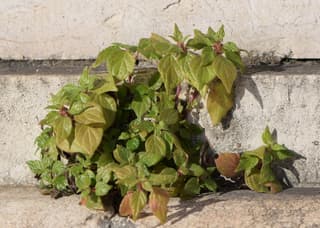
Pellitory-of-the-wall
Parietaria judaica
Parietaria judaica is a branched perennial herb in the nettle family (Urticaceae), native to the Mediterranean, western and central Asia and North Africa. It grows 30–100 cm tall with reddish, hairy, slightly sticky stems and oval, untoothed leaves. Tiny greenish flowers, sometimes tinged white or pink, sit in clusters in the leaf axils and bloom from spring to autumn. It colonizes cracks in walls, old masonry, pavement edges and rocky ground, and has become a widespread weed in the Americas and Australia.

Stink bean
Parkia speciosa
Parkia speciosa, commonly known as the stink bean, is a large tropical tree in the Fabaceae family, native to the low-altitude rainforests of Southeast Asia. It can reach up to 40 meters in height at maturity and produces long pods containing green seeds that are highly prized in Malaysian, Indonesian, and Thai cuisines, despite their characteristic sulfurous odor.
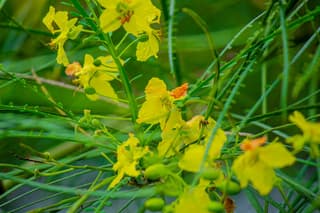
Jerusalem thorn
Parkinsonia aculeata
Parkinsonia aculeata is a small thorny tree or shrub in the Fabaceae family, native to a vast area ranging from the southwestern United States and northern Mexico to northern Argentina. It is recognized by its photosynthetic green branches, bipinnate leaves composed of tiny leaflets that drop during dry periods, and its fragrant yellow-orange flowers gathered in pendulous racemes. Fast-growing, it is widely used as an ornamental and shade tree in arid and urban regions with warm climates.
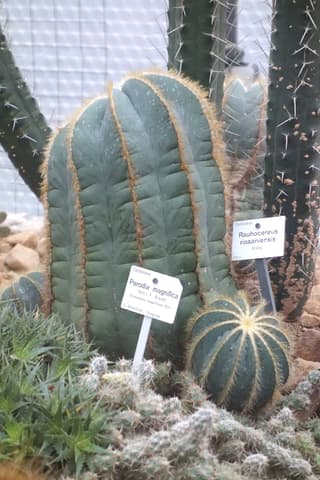
Parodia / Ball Cactus (genus)
Parodia
Parodia is a genus of globular and columnar cacti native to South America, particularly Argentina, Bolivia, Brazil, and Uruguay. These compact plants are highly prized in cactus collections for their ease of care and vibrant flowers in shades of yellow, orange, and red that emerge from the crown.
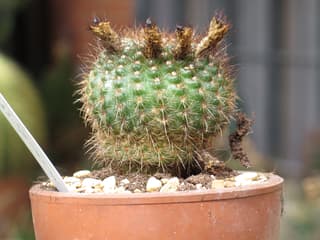
Hybrid Ball Cactus
Parodia × erubescens
Parodia × erubescens is a hybrid cactus from the Cactaceae family, native to South America. It features a compact globular form with golden spines and brilliant yellow flowers that bloom in spring and summer. Extremely drought-tolerant and low-maintenance, it is ideal for cactus collectors and succulent beginners alike.
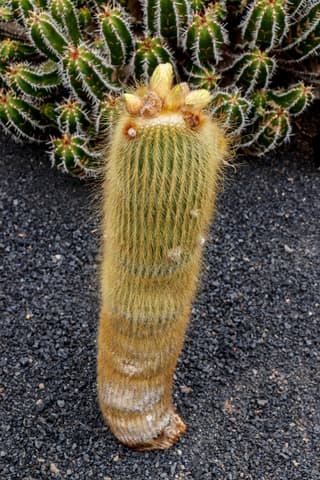
Golden Ball Cactus
Parodia leninghausii
Parodia leninghausii, commonly known as the golden ball cactus or lemon ball cactus, is a columnar cactus native to Rio Grande do Sul in southern Brazil, where it grows on rocky outcrops and cliff faces. Young plants are spherical, gradually becoming columnar with age and reaching up to 1 meter tall. The plant is covered in fine, soft golden spines that give it its characteristic shining appearance. Mature specimens produce bright yellow flowers at the crown during the growing season.

Balloon Cactus
Parodia magnifica
Parodia magnifica, commonly known as the Balloon Cactus, is a small globular cactus native to the grasslands and rocky slopes of southern Brazil and Uruguay. Its blue-green, ribbed body is covered in fine golden spines and often forms dense clusters over time. In summer, it crowns itself with vivid yellow flowers that open only in bright sunlight, making it a rewarding and low-maintenance addition to any sunny windowsill or succulent garden.
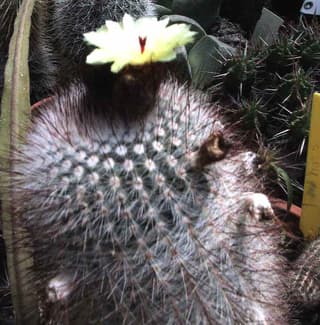
Silver Ball Cactus
Parodia scopa
Parodia scopa, commonly known as the silver ball cactus, is a globular to cylindrical cactus native to the uplands of southern Brazil and Uruguay. Its spherical body is densely covered in fine white to silvery spines that give it a shimmering, satin-like appearance. In late spring and summer, it produces bright pale-yellow flowers at the crown.
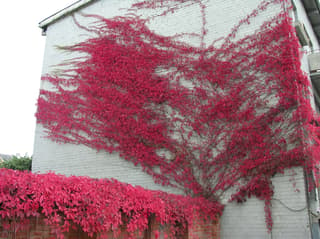
Woodbine
Parthenocissus
Parthenocissus is a genus of vigorous, deciduous climbing vines in the family Vitaceae, best known for Virginia Creeper (P. quinquefolia) and Boston Ivy (P. tricuspidata). These fast-growing vines are celebrated for their spectacular autumn foliage that transforms from deep green to brilliant shades of red, crimson, and burgundy. They are widely planted to cover walls, fences, and structures, and are among the most effective ornamental climbers for large-scale coverage.
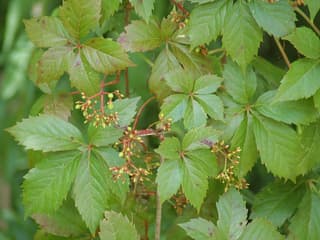
Virginia Creeper
Parthenocissus quinquefolia
Virginia Creeper (Parthenocissus quinquefolia) is a vigorous deciduous climbing vine native to Eastern North America. Belonging to the grape family Vitaceae, it is celebrated for its stunning five-lobed leaves that transform from lush green in summer to a brilliant crimson in autumn. A fast-growing vine, it can reach up to 30 meters in the wild and clings to walls and trellises using adhesive-tipped tendrils. Its small dark blue-black berries attract birds, making it a valuable wildlife plant.
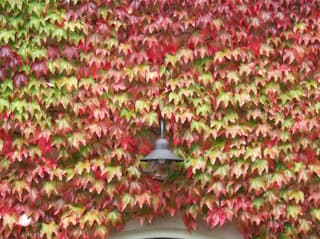
Boston Ivy
Parthenocissus tricuspidata
Boston Ivy (Parthenocissus tricuspidata) is a vigorous, deciduous climbing vine from the Vitaceae family, native to China, Japan, and Korea. Celebrated for its three-lobed dark green leaves that turn brilliant scarlet-red in autumn, it is one of the most popular plants for covering walls, facades, and trellises. It clings to surfaces via adhesive disc-tipped tendrils, requiring no additional support.
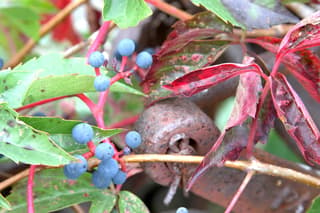
Woodbine
Parthenocissus vitacea
Aggressive deciduous woody vine native to North America, reaching lengths up to 20 meters. Climbs using branched tendrils with twining tips that grip support structures. Features palmately compound leaves with five leaflets having coarsely toothed margins. Produces small greenish flowers in late-spring panicles followed by small blue-black berries up to 1.5 cm in diameter. Displays brilliant red fall foliage.
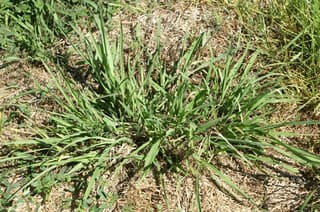
Dallisgrass
Paspalum dilatatum
Dallisgrass (Paspalum dilatatum) is a robust, clump-forming perennial grass native to southern Brazil, Argentina, Uruguay, and Paraguay. It forms dense tufts with short rhizomes and deep fibrous roots, and is widely grown as a warm-season pasture forage grass, though it is also considered a weed in lawns and disturbed ground. Its inflorescences bear pale green to purplish spikelets, which often develop a sticky black exudate when infected by ergot fungus.
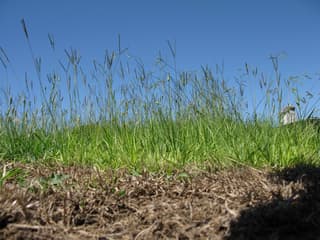
Bahiagrass
Paspalum notatum
Bahiagrass (Paspalum notatum) is a warm-season perennial grass native to South America, widely used for lawns, pastures, roadsides, and erosion control. Known for its exceptional drought tolerance, deep root system, and low maintenance requirements, it thrives in full sun and adapts to poor, sandy soils.
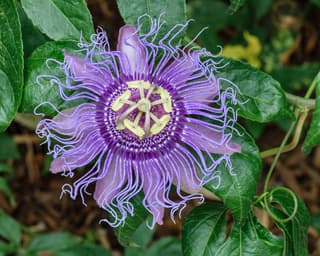
Passion Flower / Passion Vine (genus)
Passiflora
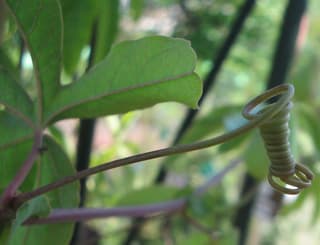
Passiflora is a genus of over 500 species of tropical and subtropical climbing vines, native primarily to South and Central America. The genus spans edible species like P. edulis (passion fruit) and ornamental species like P. caerulea (blue passion flower) and P. incarnata (maypop), all prized for their spectacular, intricate blooms.
Blue Passion Flower
Passiflora caerulea
Passiflora caerulea is a vigorous and hardy climbing vine native to South America. Famous for its exotic flowers with striking blue and white filaments, it is one of the most widely cultivated passion flower species in the world. A fast grower reaching up to 10 meters tall, it is perfect for covering pergolas, walls, and trellises. It produces decorative orange fruits in autumn.
Purple Passion Fruit
Passiflora edulis
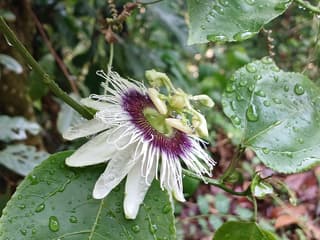
Passiflora edulis, commonly known as Purple Passion Fruit, is a vigorous climbing vine native to subtropical regions of Brazil, Paraguay, and Argentina. It produces aromatic fruits with a purple or yellow rind, widely used in culinary and medicinal applications. Its striking white and purple ornamental flowers bloom for a single day.
Maypop
Passiflora incarnata
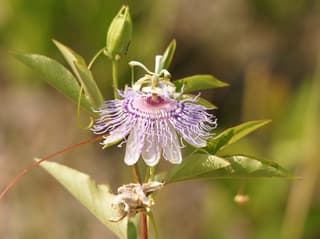
Passiflora incarnata, commonly known as maypop or purple passionflower, is a fast-growing, herbaceous perennial vine native to the southeastern United States. Its intricate, fringed purple-and-white flowers bloom from early summer through fall, followed by egg-shaped, edible yellow-green fruits that turn yellow when ripe. The vine dies back to its rootstock each winter and re-sprouts vigorously in spring, often naturalizing along fences, trellises, and woodland edges.
Sweet Granadilla
Passiflora ligularis
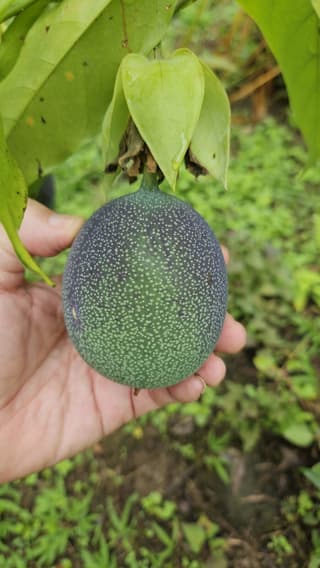
Evergreen climbing vine native to the Andes of South America, with stems up to 5 m long that cling by coiling tendrils. It bears white flowers, sometimes tinged with pink or violet, and orange-yellow fruits with a sweet, perfumed, translucent pulp. It flowers year-round and does best in warm, humid, mountain climates.
Corkystem Passion Vine
Passiflora pallida
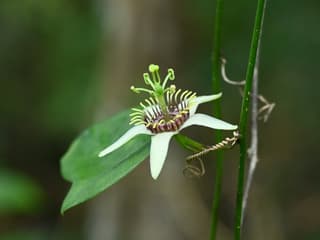
Passiflora pallida, commonly known as the Corkystem Passion Vine, is a fast-growing perennial vine native to Florida, the Caribbean, and southern USA. It is named for the distinctive cork-like texture its stems develop with age. It produces delicate white flowers nearly year-round in tropical climates and is highly valued as a host plant for Gulf Fritillary, Zebra Longwing, and Julia butterflies.
Passion Flower
Passiflora sp
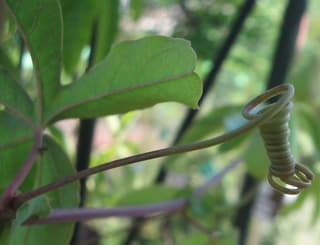
Passiflora sp (Passion Flower) is a vigorous tropical vine native to Brazil and South America, belonging to the Passifloraceae family. Famous for its stunning and intricate flowers featuring colorful filaments in purple, white and blue, it is one of the most exotic and captivating plants in the tropical flora. Many species also produce delicious edible fruits and have recognized medicinal properties.
Banana Poka
Passiflora tarminiana
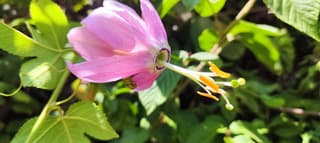
Passiflora tarminiana, commonly known as Banana Poka or banana passionfruit, is a vigorous climbing vine native to the Andes of Colombia, Ecuador, and Venezuela. It produces striking pink tubular flowers and elongated, aromatic fruits widely used in juices and desserts. Due to its rapid growth, it has become an invasive species in Hawaii and other tropical regions.
Parsnip
Pastinaca sativa
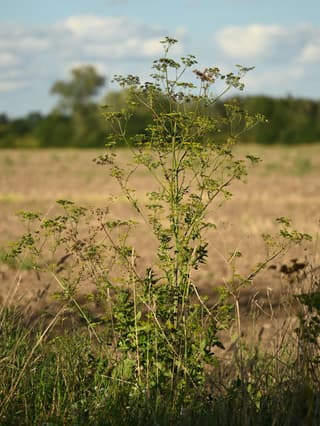
Parsnip (Pastinaca sativa) is a biennial root vegetable from the Apiaceae family, native to Eurasia. Resembling a carrot in shape but with a creamy-white colour, it produces a sweet and nutritious taproot in its first growing season. It is primarily cultivated for its edible root, which becomes noticeably sweeter after exposure to frost. Parsnip has been a staple of European cuisine for centuries and is highly valued for both culinary and historical significance.
Brazilwood
Paubrasilia echinata
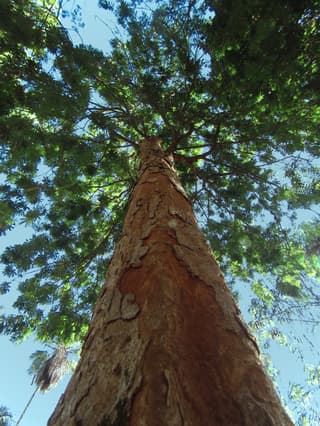
Brazilwood (Paubrasilia echinata) is a medium to large-sized tree, native to the Brazilian Atlantic Forest, belonging to the Fabaceae family and the monotypic genus Paubrasilia. It can reach between 10 and 20 meters in height, with a straight trunk covered in prickles and grayish bark that peels off in plates, revealing the reddish heartwood that gave rise to the country's name. Its leaves are bipinnate, and its broad, semi-deciduous canopy produces very fragrant yellow flowers with a central red petal, blooming between spring and summer. It is the national tree of Brazil, officially declared in 1978, and is currently critically endangered due to the historical exploitation of its wood.

Guarana
Paullinia
Paullinia is a genus of woody climbing vines (lianas) in the Sapindaceae family, native to the tropical rainforests of South America, especially the Amazon. The most well-known species of the genus is guarana (Paullinia cupana), cultivated for centuries by indigenous peoples, particularly the Sateré-Mawé, for its caffeine-rich seeds. Plants in this genus feature glossy compound leaves, tendrils that assist in climbing supports and trees, and small whitish flowers clustered in inflorescences. The fruits are capsules that, when ripe, split open to expose dark seeds surrounded by a white aril—features that resemble an eye, which is the origin of the indigenous legend regarding the creation of guarana.
Empress Tree / Princess Tree (genus)
Paulownia
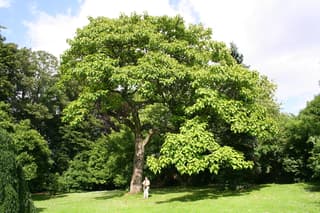
Paulownia is a genus of fast-growing deciduous trees native to China and East Asia. Famous for their stunning lavender-purple flower clusters that appear before the leaves in spring, they are widely planted as ornamentals but considered invasive in many regions outside their native range.
Empress Tree
Paulownia tomentosa
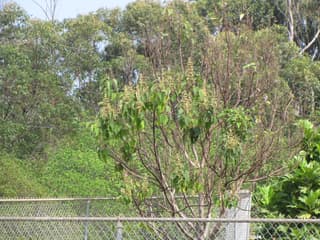
Paulownia tomentosa, known as the Empress Tree or Princess Tree, is an extraordinarily fast-growing deciduous tree native to central and eastern China. It produces stunning clusters of fragrant lavender-purple foxglove-like flowers in early spring before the leaves emerge, making it one of the most visually dramatic ornamental trees in the world.
Texas swampmallow
Pavonia lasiopetala
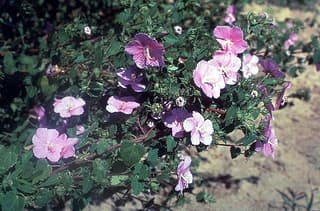
Pavonia lasiopetala, commonly known as Texas Rock Rose, is a small, woody perennial shrub native to the dry, rocky regions of Texas and Northern Mexico. It is highly valued for its resilience and prolific blooming cycle. The plant produces charming, deep pink, five-petaled flowers that resemble miniature hibiscus, set against fuzzy, heart-shaped, dark green leaves. It is a staple in xeriscaping and pollinator gardens, as it is exceptionally heat-tolerant and attracts hummingbirds and butterflies throughout the warmer months.
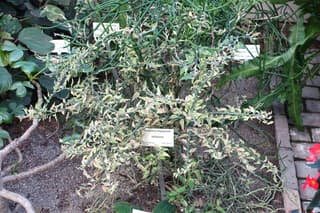
Devil's Backbone
Pedilanthus tithymaloides
Pedilanthus tithymaloides, commonly known as Devil's Backbone, is a striking succulent-like shrub from tropical America. Its most distinctive feature is the zigzag stem pattern that gives it several of its common names. The plant produces small, bird-shaped red or pink flowers and features fleshy, often variegated leaves.
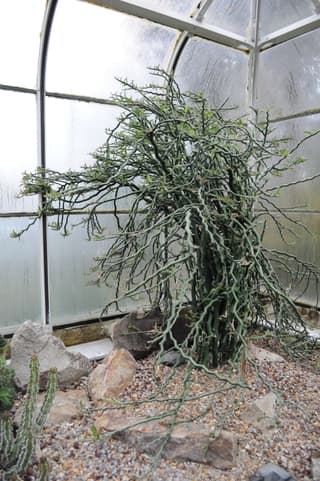
Devil's Backbone
Pedilanthus tithymaloides 'Variegatus'
A fascinating shrubby succulent plant, known for its stems that grow in a distinct zig-zag pattern. The 'Variegatus' variety features oval leaves with white or cream margins that can take on pinkish tones when exposed to intense light or cooler temperatures. Its flowers have a peculiar shape resembling a small slipper, which gave rise to many of its common names.
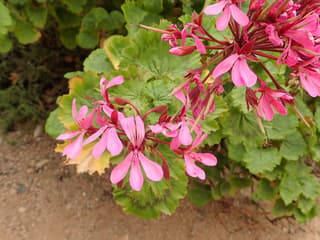
Geranium
Pelargonium
Pelargonium, commonly known as Geranium or Storksbill, is a genus of over 280 species of flowering plants native to South Africa. Celebrated for their vibrant blooms in shades of red, pink, white, purple, and orange, they are among the most popular garden and container plants worldwide. The genus includes ornamental, aromatic, and medicinal varieties, many of which are used in perfumery and herbal remedies.
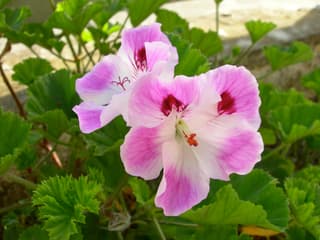
Regal Geranium
Pelargonium × domesticum
Pelargonium × domesticum, commonly known as the regal or Martha Washington geranium, is a hybrid pelargonium prized for its large, ruffled, azalea-like blooms in shades of white, pink, red, purple and burgundy, often with dark blotches. Unlike its zonal cousins, it needs cool nights to set flower buds and struggles in prolonged heat and humidity, making it a classic cool-season patio and greenhouse plant.
Find the Perfect Plant
Our plant guide helps you find ideal species for your experience level and time of year.
Browse by Difficulty, Season & More
Use the filters below to narrow this catalog by care difficulty, season, environment, or search directly by name. Each filter leads to a focused list tailored to your specific growing conditions.