Urticaceae
Pellitory-of-the-wall (Parietaria judaica)
Parietaria judaica
A tough, self-sufficient plant that thrives in wall crevices and poor, well-drained soil in sun or light shade. It rarely needs care; the main concern is its highly allergenic pollen and irritating hairs, so most gardeners control it rather than cultivate it.
Every 7 days
Partial shade
° - °C
% - %
Categories
What is Pellitory-of-the-wall?
Pellitory-of-the-wall (Parietaria judaica) is a easy-care plant from the Urticaceae family. Parietaria judaica is a branched perennial herb in the nettle family (Urticaceae), native to the Mediterranean, western and central Asia and North Africa. It grows 30–100 cm tall with reddish, hairy, slightly sticky stems and oval, untoothed leaves. Tiny greenish flowers, sometimes tinged white or p...
Pellitory-of-the-wall grows up to 1.0m, spread of 60cm, watering every 7 days. It is not suitable for indoor environments and safe for pets.
Unlike many tropical plants, Pellitory-of-the-wall tolerates watering mistakes. Best for beginners. Unlike many popular species, Pellitory-of-the-wall is safe to keep around pets.
How to Care for Pellitory-of-the-wall?
TLDR: Pellitory-of-the-wall needs Partial shade, watering every 7 days, and temperatures between 15-30°C with 40-70% humidity.
How Often Should You Water Pellitory-of-the-wall?
Established plants survive on rainfall. In pots, water about once a week when the top few centimetres of soil are dry; avoid waterlogging.
How Much Light Does Pellitory-of-the-wall Need?
Full sun to light shade. It grows best at the damp, partly shaded base of walls.
What Is the Best Soil for Pellitory-of-the-wall?
Any well-drained soil works, from sandy to clay; it prefers fertile, slightly alkaline ground and lime mortar.
What Pot Should You Use for Pellitory-of-the-wall?
Small terracotta pot with drainage holes; it is more often found growing in walls than in containers.
What Is Pellitory-of-the-wall and Where Does It Come From?
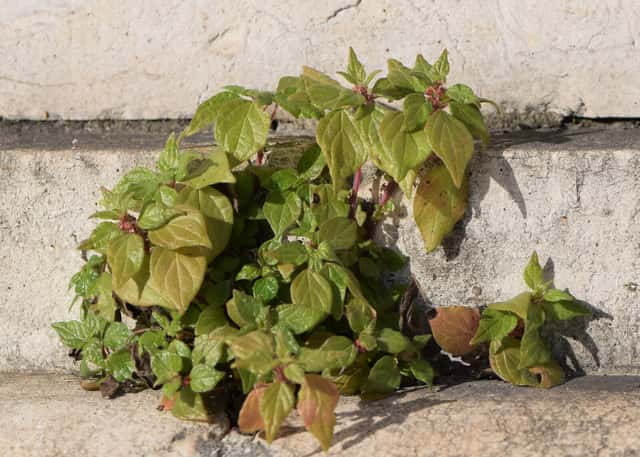
Parietaria judaica is a branched perennial herb in the nettle family (Urticaceae), native to the Mediterranean, western and central Asia and North Africa. It grows 30–100 cm tall with reddish, hairy, slightly sticky stems and oval, untoothed leaves. Tiny greenish flowers, sometimes tinged white or pink, sit in clusters in the leaf axils and bloom from spring to autumn. It colonizes cracks in walls, old masonry, pavement edges and rocky ground, and has become a widespread weed in the Americas and Australia.
How to Propagate Pellitory-of-the-wall?
Seed
It self-seeds very readily; seed can mature within 2-3 weeks of flowering, so remove flowering stems if you want to stop it spreading.
- 1 Sow seeds on the surface of moist, well-drained soil in spring or autumn
- 2 Keep the soil lightly moist
- 3 Thin or transplant seedlings once they have a few true leaves
Materials needed:
Division
Wear gloves and long sleeves: the sticky hairs can irritate skin.
- 1 Lift an established clump in spring
- 2 Split it into sections, each with roots and shoots
- 3 Replant at once and water in
Materials needed:
How Big Does Pellitory-of-the-wall Grow?
TLDR: Pellitory-of-the-wall can reach up to 1.0m tall with Fast growth rate.
Max height
1.0m
Spread
60cm
Growth rate
Fast
Foliage
Semi-evergreen
Warning: Toxic Plant
This plant can be toxic if ingested. Keep out of reach of:
Plant Uses
Medicinal
Medicinal properties
Edible
Can be consumed
Medicinal Uses
- Traditionally used as a diuretic for kidney and bladder stones and urinary complaints
- Applied externally as a soothing poultice on minor wounds and burns
Culinary Uses
- Young leaves and shoots eaten raw in salads or cooked like spinach
Is your plant showing symptoms?
Click on the symptom to discover possible causes:
What Diseases Commonly Affect Pellitory-of-the-wall?
TLDR: Pellitory-of-the-wall is susceptible to 3 known diseases. Monitor regularly for early detection.
Aphids
Aphids are small, soft-bodied, pear-shaped insects (1/16 to 1/8 inch long) that feed by sucking nutrient-rich sap from plants. They reproduce rapidly and can quickly weaken plants, causing distorted growth and transmitting plant viruses. Aphids come in various colors including green, black, red, yellow, brown, and gray. They secrete honeydew, a sticky substance that attracts ants and encourages sooty mold growth.
Powdery Mildew
Powdery mildew is a common fungal disease caused by various fungi species including Erysiphe, Podosphaera, Oïdium, and Leveillula. It affects over 10,000 plant species worldwide. The disease thrives in warm, dry climates with high humidity and appears as a distinctive white powdery coating on plant surfaces.
Ramularia Leaf Spot
Ramularia is a fungal disease (leaf spot) that affects foliage. It begins as small, sharply defined spots, often light green or yellow, which turn brown or gray and may develop a pale border. A fine, grayish-white powdery layer of spores can be seen on the underside of the leaves. Leaves yellow and wither more rapidly during severe infestations. The disease thrives in cool, damp weather and spreads via water splashes, dense plant growth, and infected cuttings or seeds. In home gardens, it is particularly common on geraniums (Pelargonium) and beets/chard; in agriculture, it is well-known for affecting barley.
Fun Facts
Its genus name comes from the Latin paries, meaning wall
Its pollen is one of the leading causes of respiratory allergy in the Mediterranean region
The sticky hairs make stems cling to clothes and animal fur, which helps spread the seeds
Frequently asked questions
Is pellitory-of-the-wall poisonous?
Why is it called asthma weed?
How do I get rid of pellitory-of-the-wall?
Where does pellitory-of-the-wall grow?
Compare with similar plants
| Attribute | Difficulty | Light | Watering | Pet Safe |
|---|---|---|---|---|
| Field Maple | Easy | Bright indirect | 14d | ✓ |
| Iberian Houseleek | Easy | Direct sun | 14d | ✓ |
| Silver Birch | Easy | Direct sun | 14d | ✓ |
| Common Blanketflower | Easy | Direct sun | 10d | ✓ |