Complete Plant Guide
Explore plants by difficulty, season and more. Find the perfect plant for you.
Difficulty
Categories
Plants by City
🗺️ Plants by City3815 plants found
Showing 2089-2124 of 3815
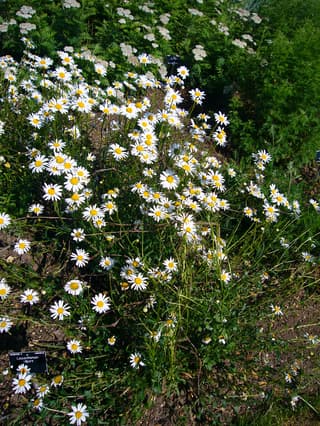
Oxeye Daisy
Leucanthemum vulgare
Leucanthemum vulgare, commonly known as the Oxeye Daisy, is a hardy perennial wildflower native to Europe, belonging to the Asteraceae family. It produces cheerful white ray flowers with a flattened yellow center disk, growing 30–90 cm tall. Blooming from spring through summer, it is a magnet for pollinators including bees, butterflies, and hoverflies. Though graceful in wildflower meadows and cottage gardens, it can spread vigorously and is considered invasive in parts of North America and Australia.
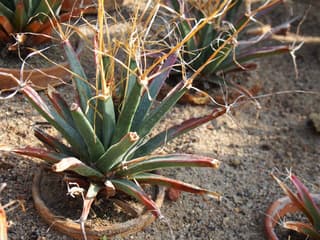
Agave Cactus
Leuchtenbergia principis
Leuchtenbergia principis, commonly known as the Agave Cactus, is a unique cactus native to central and northern Mexico. It is the only species in its genus and stands out for its long, bluish-green triangular tubercles, which give it an agave-like appearance, topped with papery and harmless spines. It develops a thick taproot and, in summer, produces large, fragrant yellow flowers.
reddening lepiota
Leucoagaricus americanus
Leucoagaricus americanus, commonly known as the reddening lepiota, is a saprobic mushroom characterized by its white cap with reddish-brown scales that stains yellow then deep red when bruised or aged. It typically grows in clusters on wood chips, mulch, or near stumps. While striking in appearance, it is not recommended for consumption due to potential gastrointestinal distress and its similarity to toxic species.
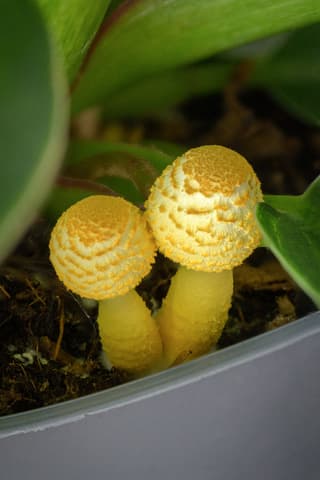
Flowerpot Parasol
Leucocoprinus birnbaumii
Leucocoprinus birnbaumii is a saprophytic fungus commonly found in indoor plant pots and greenhouses. It is characterized by its vibrant yellow color and bell-shaped cap when young, which opens into a flat cap over time. While it does not harm plants (as it feeds only on dead organic matter in the soil), its presence indicates rich and moist soil.
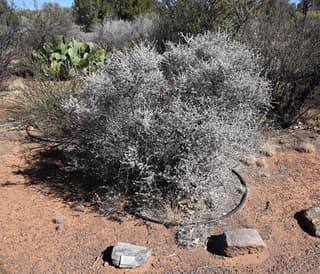
Thunder Cloud Sage
Leucophyllum candidum
Leucophyllum candidum is a compact, silvery-leaved evergreen shrub native to the arid limestone hills of the Chihuahuan Desert in Texas and northern Mexico. Prized for its dense, felted foliage and lavender-purple blooms that appear after rains, it is a hardy, low-maintenance choice for xeriscapes and desert gardens.
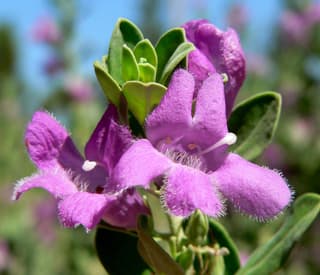
Texas Sage
Leucophyllum frutescens
Texas Sage (Leucophyllum frutescens) is a stunning evergreen shrub native to the arid regions of Texas and northern Mexico. Celebrated for its extraordinary drought tolerance and silvery-gray foliage, this low-maintenance plant bursts into bloom with vibrant purple, violet, or lavender flowers during summer and fall. Commonly known as the "barometer bush," it flowers in response to high humidity and falling atmospheric pressure — often right before or after rain. A beloved staple of xeriscape gardens and water-wise landscaping.

Cushion Bush
Leucophyta brownii
The Cushion Bush (Leucophyta brownii) is a compact, dense evergreen shrub native to the coastal regions of southern Australia. It is popular for its striking silver-blue color, provided by its finely hairy, scale-like stems and leaves. The plant forms round, hemispherical cushions typically reaching a height and width of 60–100 cm. In summer, it produces small, round flower heads in a yellow-cream color that are attractive to pollinators. The Cushion Bush is ideal for coastal gardens, rockeries, and xeriscapes with low water requirements. It is resistant to wind, sea salt, frost, and drought.
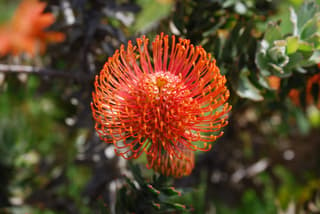
Pincushion Protea
Leucospermum cordifolium
A low, rounded evergreen shrub from the Western Cape of South Africa, endemic to the fynbos biome. It grows 1.5–2 m tall and 1.5–2.5 m wide. The leaves are heart-shaped to oblong, leathery, and glossy. Striking spherical inflorescences, 10–12 cm in diameter, with protruding styles resemble a pincushion; they bloom in orange, red, or yellow.

Chilean Cactus
Leucostele chiloensis
The Chilean cactus (Leucostele chiloensis, formerly Echinopsis chiloensis) is a tree-like columnar cactus endemic to central Chile, growing up to 8 m tall with multiple ribbed branches arising from the base. It produces large white, funnel-shaped flowers that open during the day from November to January, followed by round, edible green fruit. It is extremely drought-tolerant and adapted to sunny, rocky slopes of Chile's coastal cordillera.
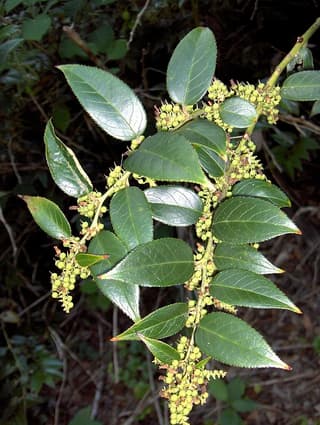
Fetterbush
Leucothoe fontanesiana
Fetterbush is a graceful, arching evergreen shrub native to the Appalachian Mountains of the southeastern United States. Its glossy, lance-shaped dark green leaves take on bronze and burgundy tints through winter, while in spring dangling clusters of small white, bell-shaped flowers line the drooping branches, echoing its cousins the andromedas and pieris. Long a staple of woodland and shade gardens, it forms dense thickets so tangling that Appalachian hunters nicknamed it "dog-hobble" for how it snagged their hounds. Today it is prized as a shade-loving specimen, hedge, or groundcover alongside rhododendrons and azaleas, sharing their taste for moist, acidic soil.
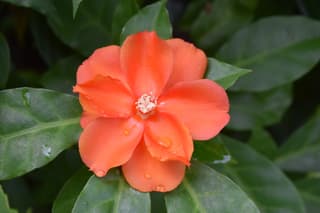
Leaf Cactus
Leuenbergeria
Leuenbergeria is a small genus of leafy, tree-like cacti native to the Caribbean basin, Central America and northern South America. Unlike most cacti, Leuenbergeria species keep true leaves and develop woody, bark-covered stems while young, so at first glance they look more like a spiny shrub than a classic cactus. The genus was split from the broader Pereskia group in 2012 and now forms its own subfamily, Leuenbergerioideae, considered the most primitive lineage within Cactaceae. The best documented species, Leuenbergeria bleo (Rose Cactus), grows as a spiny shrub or small tree up to 8 meters tall along riverbanks and in secondary forest, producing showy orange to pink rose-like flowers followed by edible yellow fruit. Leaves, fruit and bark have a long history of traditional medicinal use across Central America and Southeast Asia.
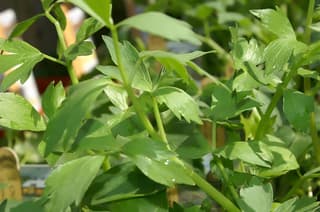
Lovage
Levisticum officinale
Levisticum officinale is a robust, perennial herb in the Apiaceae family, native to the Mediterranean region. The plant reaches a height of up to 180 cm and forms a dense clump of finely branched, glossy green leaves containing celery-scented essential oils. In summer, numerous yellow flowers appear in umbels, followed by aromatic seeds. The entire plant—leaves, stems, roots, and seeds—is edible and possesses strong medicinal and culinary properties.
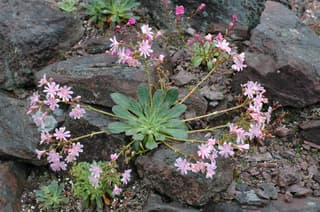
Siskiyou Lewisia
Lewisia cotyledon
Lewisia cotyledon, commonly known as Siskiyou Lewisia or Cliff Maids, is an evergreen succulent perennial native to the rocky subalpine mountains of southern Oregon and northern California. It forms compact basal rosettes of thick, fleshy leaves and produces stunning multi-petaled flowers in shades of pink, orange, white, yellow, and red from spring into early summer. A tough yet delicate-looking alpine gem, it thrives in rocky, well-drained soils and is highly prized in rock gardens and alpine containers.
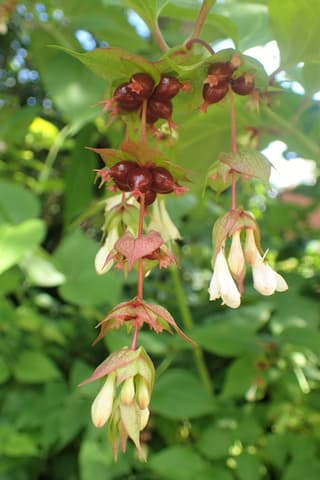
Himalayan honeysuckle
Leycesteria formosa
Leycesteria formosa, commonly known as Himalayan honeysuckle or pheasant berry, is a fast-growing deciduous shrub native to forests and scrub in the Himalayas, southwestern China, and Myanmar. It produces hollow, cane-like stems and pendulous racemes of small white to pale-pink flowers wrapped in showy wine-purple bracts, followed by soft, deep-purple berries that ripen from late summer into autumn. The berries taste mildly of caramel once fully ripe and are a favourite food of pheasants and other birds, giving the plant its common name. When old stems die back, wind whistling through their hollow interiors produces an eerie sound, inspiring the plant's Chinese name, "ghost flute".
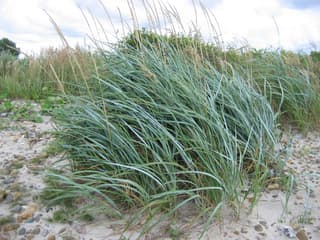
Sea Lyme Grass
Leymus arenarius
Sea lyme grass (Leymus arenarius) is a robust, perennial grass from the Poaceae family, native to the coasts of Northern and Western Europe. Its striking blue-gray to steel-blue leaves make it a popular ornamental grass in gardens and landscapes. The plant grows up to 150 cm tall and forms extensive mats through underground runners (rhizomes), which contribute significantly to sand stabilization and dune development.
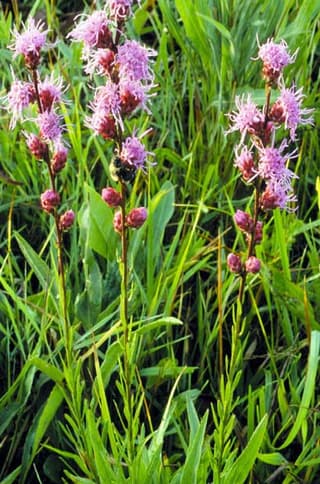
Rough Blazing Star
Liatris aspera
Liatris aspera is a native North American prairie perennial in the daisy family, prized for its dense spikes of rosy-purple, button-like flowers that open from the top down along an unbranched stem. Rising 2 to 4 feet tall from a woody corm, it thrives in full sun and lean, well-drained soil, making it a staple of prairie restorations and pollinator gardens. Its blooms are a magnet for bees, butterflies, and skippers from midsummer into fall.
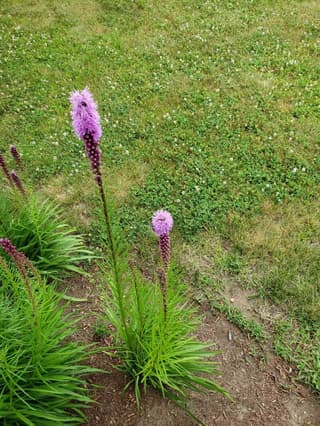
Prairie Blazing Star
Liatris pycnostachya
Prairie Blazing Star is a tall, herbaceous perennial native to the tallgrass prairies of the central and southeastern United States. It produces dense, bottlebrush-like spikes of rose-purple to lavender flowers that open from the top of the spike downward, a trait that distinguishes it from most other flowering plants. Rising from a corm-like base, the narrow, grass-like leaves form a tidy clump beneath tall, unbranched flower stalks that can reach up to 1.5 m in height. It thrives in full sun and moist, well-drained soil, making it a favorite of pollinator and rain gardens.
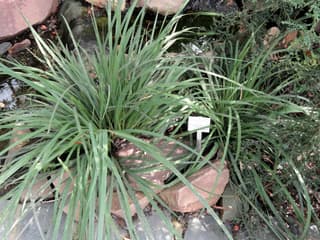
Chilean iris
Libertia chilensis
Libertia chilensis, known in Chile as calle-calle, is a clump-forming evergreen perennial in the iris family (Iridaceae), native to central and southern Chile, the Juan Fernández Islands, and southern Argentina. It forms dense clumps from rhizomes, featuring stiff, leathery, sword-shaped leaves ranging from 15 to 45 cm, which are slightly bluish-green and arranged in fans. In late spring and early summer, it produces sturdy stems bearing clusters of 3 to 8 white flowers about 3 cm wide, with three broad petals and three small greenish-brown sepals. It reaches 50 cm to 1 m in height and a similar spread. In the wild, it grows near watercourses; tradition holds that the Calle-Calle River in the Los Ríos Region takes its Mapuche name from this plant. Long known in horticulture as Libertia formosa, it holds the Royal Horticultural Society's Award of Garden Merit.
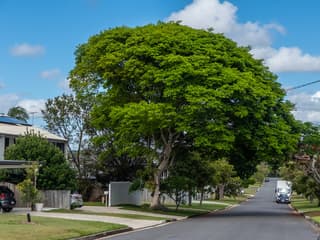
Brazilian Ironwood
Libidibia ferrea
The Brazilian Ironwood (Libidibia ferrea), also known as Jucá, is a tree native to the Brazilian Atlantic Forest, occurring from the southeast to the northeast of the country and considered a symbol of the Caatinga biome. Recently reclassified from the former genus Caesalpinia, it is famous for its smooth, marbled trunk that peels in light and dark patches, and for its extremely dense and resistant wood, one of the heaviest in the Americas. With a rounded crown and bipinnate leaves, it produces small fragrant yellow flowers between spring and summer, followed by dark pods widely used in folk medicine. It can live for over 100 years and is extensively planted in Brazilian urban landscaping.
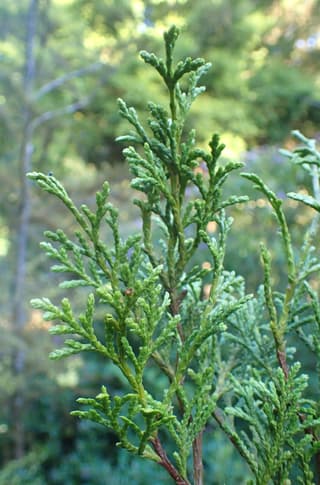
New Zealand Cedar
Libocedrus bidwillii
Libocedrus bidwillii, known as pahautea or kaikawaka in Māori, is an evergreen conifer endemic to New Zealand. This imposing conifer can reach 25 meters in height in its natural habitat, although in cultivation it usually stays between 8 and 15 meters with a narrow pyramidal crown 3 to 5 meters wide. Its leaves are small, scale-like, and glossy dark green, arranged in four rows on flattened branchlets. Adapted to the montane and subalpine forests of New Zealand's North and South Islands, at altitudes between 250 and 1,850 meters, it thrives in cool climates with high rainfall and frequent fog. It is one of New Zealand's slowest-growing conifers and can live between 800 and 1,000 years. Its wood, light reddish with a slightly purple hue when cut, was prized by the Māori for its lightness and rot resistance.
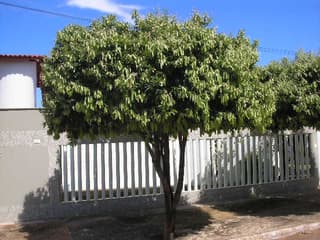
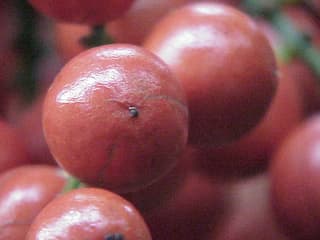
Oiti Tree
Licania tomentosa
Licania tomentosa, commonly known as Oiti, is a native Brazilian evergreen tree belonging to the family Chrysobalanaceae. It can reach up to 20 meters in height and is widely used in urban landscaping for its dense, broad crown that provides generous shade. The tree produces edible stone fruits and is highly valued for its resistance to drought and urban pollution.
Ruffled Fan Palm
Licuala grandis
Licuala grandis, commonly known as the Ruffled Fan Palm, is a striking tropical palm native to Vanuatu in the Pacific Islands. Its distinctive circular, pleated leaves are among the most unique in the plant kingdom, growing up to 60 cm in diameter. This slow-growing palm is highly prized as an ornamental specimen for both indoor settings and tropical outdoor gardens.
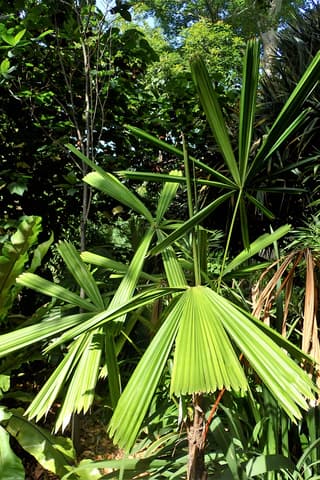
Mangrove Fan Palm
Licuala spinosa
The Mangrove Fan Palm (Licuala spinosa) is a tropical clumping palm native to Southeast Asia, recognized by its deeply divided fan-shaped leaves and spiny leaf stems. It thrives in coastal swamps, riverbanks, and mangrove edges, making it a striking ornamental specimen for tropical and subtropical gardens.
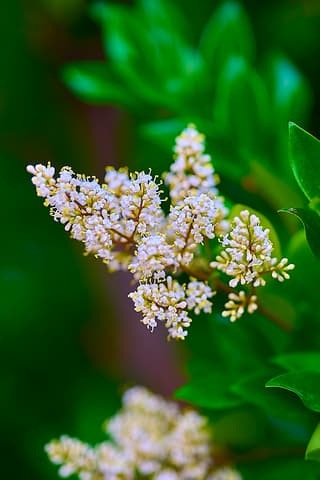
Privet
Ligustrum
Privet (Ligustrum) is a genus of over 50 species of evergreen, semi-evergreen, and deciduous shrubs and small trees in the family Oleaceae. Originating primarily in Asia and Europe, privets are among the most widely used landscape shrubs worldwide, prized for their fast growth, tolerance of frequent pruning, and adaptability to varied soil types. The most commonly cultivated species include L. japonicum, L. lucidum, L. sinense, L. vulgare, and L. ovalifolium. Leaves are oval to elliptic, typically dark glossy green. Small, fragrant white flowers appear in summer, followed by small black berries that are toxic if ingested. Several species have become invasive outside their native range, particularly in the Americas and Australia.
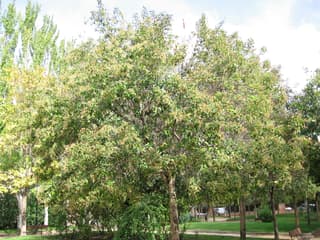
Japanese Privet
Ligustrum japonicum
Japanese privet (Ligustrum japonicum) is a dense, fast-growing evergreen shrub native to Japan, Korea, and China. It is one of the most popular hedging and screening plants in temperate and subtropical landscapes worldwide. Its leaves are thick, leathery, and glossy dark green — hence the common alias "wax-leaf privet." In late spring and summer it produces showy panicles of small white flowers with a sweet fragrance, followed by clusters of blue-black berries that persist into winter. It is prized for its tolerance of heat, drought, urban pollution, and aggressive pruning.
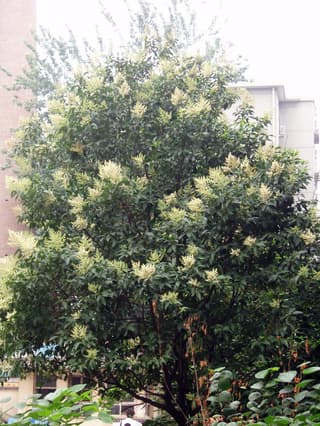
Glossy Privet
Ligustrum lucidum
Glossy Privet (Ligustrum lucidum) is a fast-growing evergreen tree native to China, Korea, and Japan. Widely planted as an urban street tree and ornamental, it is recognized for its glossy dark green leaves and clusters of small, fragrant white flowers in summer. It is considered invasive in many regions worldwide. Its dark blue-black berries are TOXIC to pets (dogs and cats) due to oleuropein and syringin compounds, and potentially harmful to humans, especially children.
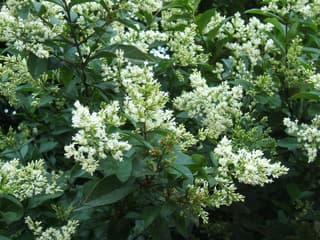
California Privet
Ligustrum ovalifolium
California privet (Ligustrum ovalifolium) is a fast-growing semi-evergreen shrub in the olive family (Oleaceae), native to Japan and widely planted elsewhere as a hedging plant. It has glossy oval leaves and produces dense clusters of small, fragrant white flowers in early summer, followed by black berries in autumn. Extremely tolerant of pruning, it is one of the most popular hedge shrubs in temperate climates, though all parts of the plant are toxic if ingested.
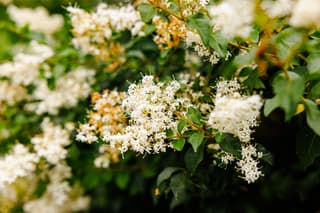
Chinese privet
Ligustrum sinense
Ligustrum sinense, commonly known as Chinese privet, is a vigorous semi-evergreen shrub or small tree. It is characterized by its dense, branching habit and small, oval, glossy green leaves. In late spring and early summer, it produces clusters of small, white, and highly fragrant flowers, which are followed by dark purple-black berries. While it is a popular choice for bonsai due to its small foliage and tolerance for heavy pruning, it is considered an invasive species in many regions because of its rapid growth and ability to spread via seeds and root suckers.
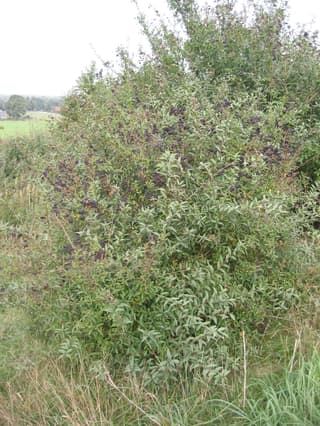
Common Privet
Ligustrum vulgare
Common privet (Ligustrum vulgare) is a semi-evergreen to deciduous shrub native to Europe, North Africa, and parts of western Asia. Long prized as a hedging plant, it produces small, dense, dark-green leaves and clusters of small white flowers in late spring to summer, followed by black berries in autumn. It tolerates heavy pruning, a wide range of soils, and both sun and partial shade, making it a resilient choice for garden borders and privacy screens. Note that all parts, especially the berries, are toxic if ingested.
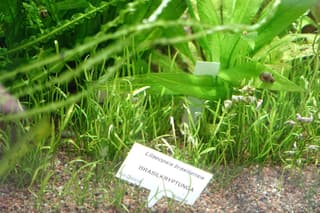
Micro Sword
Lilaeopsis brasiliensis
Lilaeopsis brasiliensis is a popular aquatic groundcover plant from the Apiaceae family, native to South American waters. It forms dense, low carpets with fine, grass-like leaves and reaches a maximum height of about 7 cm. The plant spreads via runners (stolons) and is excellent for foreground planting. It is fully aquatic and is cultivated permanently submerged.
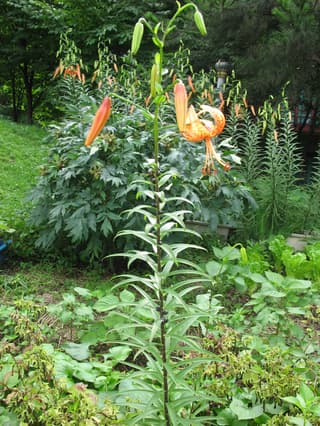
Lily (genus)
Lilium
Lilium is a genus of bulbous flowering plants in the family Liliaceae, comprising over 100 species native to the temperate regions of the Northern Hemisphere. It includes Asiatic, Oriental, and trumpet lilies — among the most popular garden ornamentals worldwide. Lilium species are herbaceous perennials that die back in winter and re-emerge from their bulbs each spring.
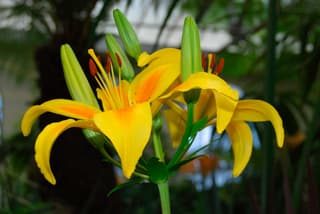
Asiatic Lily
Lilium asiaticum
The Asiatic lily (Lilium asiaticum) is a group of hardy hybrid bulbs in the family Liliaceae, bred from crosses of Asian Lilium species. Unlike many other lilies, they carry little to no noticeable fragrance, but make up for it with the widest color range of any lily group and are usually the first lilies to bloom each year, from late spring into summer. Their upward- or outward-facing flowers span 10-15 cm across, making the plant a favorite for both garden beds and cut-flower arrangements. Asiatic lilies are easy to grow and highly cold-hardy, tolerating temperatures down to about -34°C (-30°F) while dormant (USDA hardiness zones 3-9).
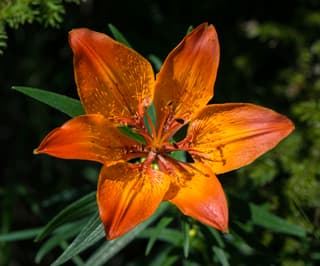
Orange Lily
Lilium bulbiferum
Lilium bulbiferum, commonly known as the Orange Lily or Fire Lily, is a hardy bulbous perennial native to south-central Europe. It produces large, upward-facing, vibrant orange flowers with dark spots, blooming from late spring to early summer. Known for its resilience in cold climates, it is a popular ornamental choice for borders, cottage gardens, and cutting gardens.
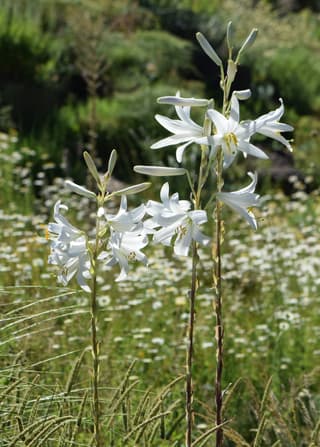
Madonna lily
Lilium candidum
Lilium candidum, the Madonna lily, is a bulbous perennial plant known for its striking, pure white trumpet-shaped flowers and heavy, sweet fragrance. Unlike most lilies that are planted deep, the Madonna lily is planted shallowly and produces a basal rosette of leaves in the autumn that remains through the winter. It has been cultivated for over 3,000 years and is one of the oldest known garden plants.
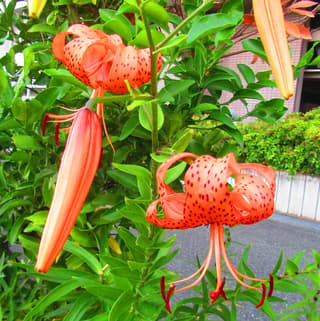
Tiger Lily
Lilium lancifolium
The Tiger Lily (Lilium lancifolium) is a bulbous perennial native to East Asia (Japan, China, Korea), prized for its striking orange flowers with dark spots and recurved petals. It blooms in mid-to-late summer and returns reliably each year. WARNING: Severely toxic to cats — all plant parts can cause fatal kidney failure even in small amounts.
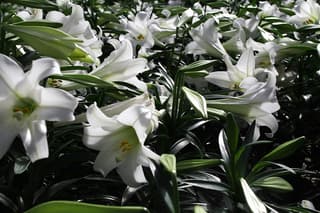
Easter Lily
Lilium longiflorum
Lilium longiflorum, popularly known as the Easter Lily, is a perennial bulbous plant native to the Ryukyu Islands of Japan. It is widely admired for its large, white, trumpet-shaped flowers that emit a sweet and intense fragrance. Its stems are erect and covered with glossy green, lanceolate leaves. While it is a garden plant in temperate climates, it is frequently grown in pots for seasonal decorations.
Find the Perfect Plant
Our plant guide helps you find ideal species for your experience level and time of year.
Browse by Difficulty, Season & More
Use the filters below to narrow this catalog by care difficulty, season, environment, or search directly by name. Each filter leads to a focused list tailored to your specific growing conditions.