Proteaceae
Pincushion Protea: Full Sun Plant
Leucospermum cordifolium
A shrub requiring full sun, good air circulation, and dry, poor, acidic, sandy soil with excellent drainage. Once established, it is very drought-tolerant. Water regularly from spring to autumn, limited in winter.
Every 7 days
Direct sun
-6.6° - 40°C
% - %
Categories
What is Pincushion Protea?
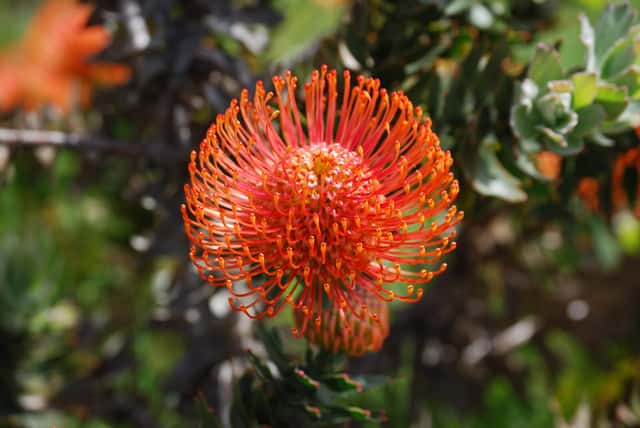
Pincushion Protea (Leucospermum cordifolium) is a medium-care plant from the Proteaceae family. A low, rounded evergreen shrub from the Western Cape of South Africa, endemic to the fynbos biome. It grows 1.5–2 m tall and 1.5–2.5 m wide. The leaves are heart-shaped to oblong, leathery, and glossy. Striking spherical inflorescences, 10–12 cm in diameter, with protruding styles resemble a pincush...
Pincushion Protea grows up to 2.0m, spread of 250cm, watering every 7 days, -6.6°C – 40°C. It is suitable for indoor environments and safe for pets.
Unlike many popular species, Pincushion Protea is safe to keep around pets. Without adequate drainage, root rot can develop within 14 days.
How to Care for Pincushion Protea?
TLDR: Pincushion Protea needs Direct sun, watering every 7 days, and temperatures between -6.6-40°C with 40-70% humidity.
How Often Should You Water Pincushion Protea?
Water at the base of the plant and avoid wetting the leaves. Allow the soil to dry out slightly between waterings; overwatering is the biggest enemy.
How Much Light Does Pincushion Protea Need?
Requires direct sun all day (at least 6–8 hours). Indoors, only in a very bright window.
What Is the Best Soil for Pincushion Protea?
Very acidic, sandy, light soil with minimal organic matter (pH 5.5–6.5). Proteaceae are sensitive to phosphorus – do not use common fertilizers high in phosphorus.
What Pot Should You Use for Pincushion Protea?
Terracotta or plastic pots with adequate drainage, 15–20 liters for young plants.
Care Schedule
Fertilize
Every 150 days
What Is Pincushion Protea and Where Does It Come From?
A low, rounded evergreen shrub from the Western Cape of South Africa, endemic to the fynbos biome. It grows 1.5–2 m tall and 1.5–2.5 m wide. The leaves are heart-shaped to oblong, leathery, and glossy. Striking spherical inflorescences, 10–12 cm in diameter, with protruding styles resemble a pincushion; they bloom in orange, red, or yellow.
How to Propagate Pincushion Protea?
Semi-hardwood cuttings
Avoid phosphorus fertilizers; maintain good drainage.
- 1 Cut 8-10 cm long cuttings from young wood
- 2 Dip the cut end in rooting hormone
- 3 Plant in a light acidic mix (sand, perlite, peat)
- 4 Maintain humidity without overwatering
Materials needed:
Seeds
Smoke treatment (fynbos) promotes germination.
- 1 Treat seeds with smoke or temperature fluctuations
- 2 Sow in sandy, well-draining soil
- 3 Maintain moderate moisture
Materials needed:
How Big Does Pincushion Protea Grow?
TLDR: Pincushion Protea can reach up to 2.0m tall with Medium growth rate.
Max height
2.0m
Spread
2.5m
Growth rate
Medium
Foliage
Evergreen
Plant Uses
Ornamental
Great for decoration
Is your plant showing symptoms?
Click on the symptom to discover possible causes:
What Diseases Commonly Affect Pincushion Protea?
TLDR: Pincushion Protea is susceptible to 7 known diseases. Monitor regularly for early detection.
Phytophthora Root Rot
Disease caused by fungus-like organisms (oomycetes) that live in soil and can survive for years. It affects roots, stem, and crown of plants, being especially severe in waterlogged or poorly drained soils. It is the second most common cause of root rot in trees and shrubs.
Root Rot
Root rot is a serious fungal disease that affects the root system of plants, causing them to decay and die. It is primarily caused by overwatering, poor drainage, or soil-borne fungi such as Pythium, Phytophthora, Rhizoctonia, and Fusarium. The disease thrives in waterlogged conditions where roots are deprived of oxygen, making them susceptible to fungal infection.
Leaf Spot
Leaf spot is a common fungal disease caused by various pathogens including Alternaria, Ascochyta, Colletotrichum, Septoria, and Venturia. It primarily affects leaves, causing discolored spots that can lead to premature leaf drop if left untreated.
Anthracnose
Anthracnose is a fungal disease caused by fungi in the genus Colletotrichum that affects many plants, including vegetables, fruits, and trees. The disease thrives in cool, wet conditions, causing dark, sunken lesions on leaves, stems, flowers, and fruits.
Meaning & Symbolism
A symbol of resilience and elegance of the South African flora; attractive to pollinators.
Compare with similar plants
| Attribute | Difficulty | Light | Watering | Pet Safe |
|---|---|---|---|---|
| Dark Fieldcap | Medium | Low light | 2d | ⚠️ |
| Azalea | Medium | Partial shade | 3d | ⚠️ |
| Muriel's Bamboo | Medium | Partial shade | 3d | ✓ |
| Bougainvillea | Medium | Direct sun | 7d | ⚠️ |




