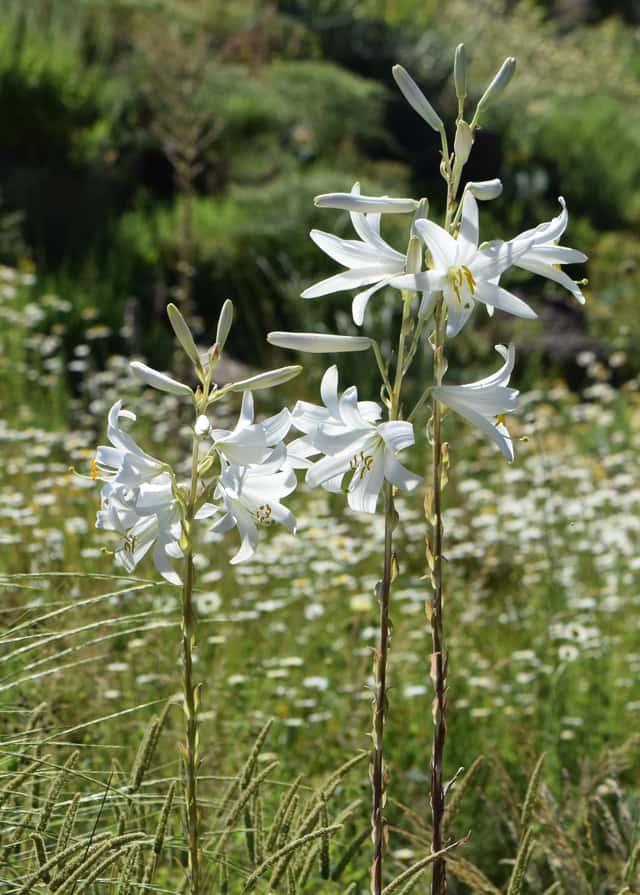
Liliaceae
Madonna lily: Aromatic Plant
Lilium candidum
Plant bulbs shallowly in well-drained, slightly alkaline soil in a sunny location. Ensure the soil remains moist during the growing season but avoid waterlogging to prevent bulb rot.
Every 7 days
Direct sun
5° - 25°C
40% - 70%
Categories
What is Madonna lily?
Madonna lily (Lilium candidum) is a medium-care plant from the Liliaceae family. Lilium candidum, the Madonna lily, is a bulbous perennial plant known for its striking, pure white trumpet-shaped flowers and heavy, sweet fragrance. Unlike most lilies that are planted deep, the Madonna lily is planted shallowly and produces a basal rosette of leaves in the autumn that remains thro...
Madonna lily grows up to 1.5m, spread of 45cm, watering every 7 days, 5°C – 25°C, 40–70% humidity. It is not suitable for indoor environments and not safe for pets.
Without precautions, ingestion can cause irritation in pets. Keep out of reach of cats and dogs.
How to Care for Madonna lily?
TLDR: Madonna lily needs Direct sun, watering every 7 days, and temperatures between 5-25°C with 40-70% humidity.
How Often Should You Water Madonna lily?
Water at the base of the plant to keep the foliage dry, as this species is highly susceptible to Botrytis fungal infections.
How Much Light Does Madonna lily Need?
Requires full sun to thrive, though it can tolerate light afternoon shade in very hot climates.
What Is the Best Soil for Madonna lily?
Prefers a slightly alkaline soil (pH 6.5-7.5) and thrives in chalky or loamy soils that drain very quickly.
What Pot Should You Use for Madonna lily?
Large, deep terracotta pots with excellent drainage holes to accommodate the root system and prevent moisture buildup.
Care Schedule
Fertilize
Every 21 days
What Is Madonna lily and Where Does It Come From?
Lilium candidum, the Madonna lily, is a bulbous perennial plant known for its striking, pure white trumpet-shaped flowers and heavy, sweet fragrance. Unlike most lilies that are planted deep, the Madonna lily is planted shallowly and produces a basal rosette of leaves in the autumn that remains through the winter. It has been cultivated for over 3,000 years and is one of the oldest known garden plants.
How to Propagate Madonna lily?
Bulb Offset Division
- Do not let the bulbs dry out while they are out of the ground.
- Space offsets at least 15cm apart.
- 1 Lift the Bulbs
Carefully dig up the bulb clump after the flowering stems have died back in late summer.
- 2 Separate Offsets
Gently pull the small baby bulbs (offsets) away from the main mother bulb.
- 3 Replant Immediately
Plant the offsets in prepared soil, ensuring they are only covered by about 1 inch of soil.
Materials needed:
Scaling
- Dust scales with fungicide to prevent rot.
- Keep the vermiculite moist but not wet.
- 1 Remove Scales
Snap off several outer scales from a healthy bulb, ensuring each scale has a piece of the basal plate.
- 2 Incubate
Place scales in a plastic bag with damp vermiculite and keep in a warm, dark place.
- 3 Potting Bulblets
Once small bulblets form at the base of the scales, pot them up individually.
Materials needed:
How Big Does Madonna lily Grow?
TLDR: Madonna lily can reach up to 1.5m tall with Medium growth rate.
Max height
1.5m
Spread
45cm
Growth rate
Medium
Foliage
Deciduous
Warning: Toxic Plant
This plant can be toxic if ingested. Keep out of reach of:
Plant Uses
Ornamental
Great for decoration
Aromatic
Pleasant fragrance
Medicinal Uses
- Topical treatment for burns
- Anti-inflammatory poultices
- Historical use in tinctures for skin ailments
Is your plant showing symptoms?
Click on the symptom to discover possible causes:
What Diseases Commonly Affect Madonna lily?
TLDR: Madonna lily is susceptible to 11 known diseases. Monitor regularly for early detection.
Gray Mold (Botrytis Blight)
Gray mold, caused by the fungus Botrytis cinerea, is one of the most common fungal diseases in plants. It affects over 200 plant species, including ornamentals, vegetables, fruits, and houseplants. The disease thrives in cool, humid conditions with poor air circulation, causing grayish spots and soft rot on infected tissues.
Mosaic Virus
Mosaic virus is a group of plant viruses that cause mottled, patchy patterns on leaves and can affect a wide variety of plants. The virus creates characteristic yellow, white, and green mosaic patterns, often accompanied by stunted growth and deformed plant parts. This highly contagious disease spreads rapidly through insect vectors and contaminated tools.
Aphids
Aphids are small, soft-bodied, pear-shaped insects (1/16 to 1/8 inch long) that feed by sucking nutrient-rich sap from plants. They reproduce rapidly and can quickly weaken plants, causing distorted growth and transmitting plant viruses. Aphids come in various colors including green, black, red, yellow, brown, and gray. They secrete honeydew, a sticky substance that attracts ants and encourages sooty mold growth.
Thrips
Thrips are tiny cigar-shaped insects (1/25-inch long) that damage plants by sucking plant juices and scraping at fruits, flowers, and leaves. With over 6,000 species and rapid reproduction (lifecycle as short as 14 days), they can quickly infest plants and transmit viruses like tomato spotted wilt virus.
Meaning & Symbolism
Associated with purity, virtue, and the Virgin Mary in Christian iconography.
Compare with similar plants
| Attribute | Difficulty | Light | Watering | Pet Safe |
|---|---|---|---|---|
| Dark Fieldcap | Medium | Low light | 2d | ⚠️ |
| Azalea | Medium | Partial shade | 3d | ⚠️ |
| Muriel's Bamboo | Medium | Partial shade | 3d | ✓ |
| Bougainvillea | Medium | Direct sun | 7d | ⚠️ |




