Poaceae
Japanese blood grass: Ground Cover Plant
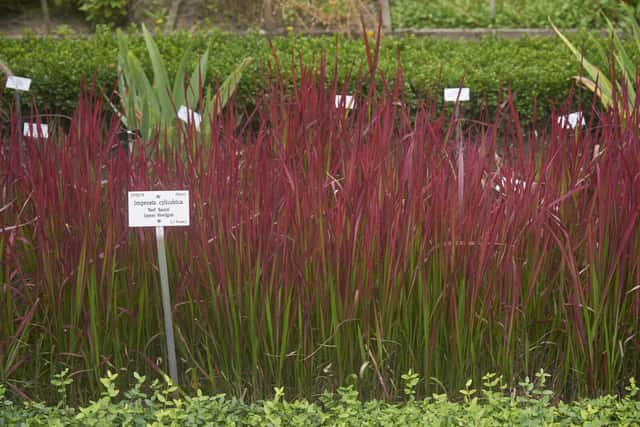
Imperata cylindrica 'Red Baron'
Plant 'Red Baron' in full sun for the most vibrant red color and in well-drained soil. It is drought-tolerant once established and requires minimal maintenance—cut back withered leaves and old flower stalks in the spring. Avoid waterlogged soil to prevent root rot.
Every 10 days
Bright indirect
-26° - 38°C
30% - 70%
Categories
What is Japanese blood grass?
Japanese blood grass (Imperata cylindrica 'Red Baron') is a easy-care plant from the Poaceae family. Japanese blood grass 'Red Baron' is a decorative ornamental grass cultivar of Imperata cylindrica, known for its slender blades that transition from green at the base to an intense blood-red toward the tips, especially in full sun. This sterile cultivar forms dense, upright clumps 12-18 inches (30-4...
Japanese blood grass grows up to 45cm, spread of 90cm, watering every 10 days, -26°C – 38°C, 30–70% humidity. It is not suitable for indoor environments and safe for pets.
Unlike many tropical plants, Japanese blood grass tolerates watering mistakes. Best for beginners. Unlike many popular species, Japanese blood grass is safe to keep around pets.
How to Care for Japanese blood grass?
TLDR: Japanese blood grass needs Bright indirect, watering every 10 days, and temperatures between -26-38°C with 30-70% humidity.
How Often Should You Water Japanese blood grass?
Water deeply during the first growing season to establish the root system, then reduce to watering only during prolonged dry spells. Avoid letting the soil become saturated, as this can lead to root rot.
How Much Light Does Japanese blood grass Need?
Provide the plant with at least 6 hours of direct sun daily for the most intense red foliage color. In very hot climates, light afternoon shade can prevent scorching, but too much shade significantly weakens the red coloration.
What Is the Best Soil for Japanese blood grass?
Thrives in almost any well-drained soil with a pH between 6 and 7.5. Avoid heavy, water-retentive soil, and consider applying a layer of mulch in winter in cold regions to protect the roots.
What Pot Should You Use for Japanese blood grass?
Choose a wide pot with good drainage holes, as the plant is primarily grown outdoors as a groundcover; add extra drainage material at the bottom to avoid waterlogged roots.
Care Schedule
Fertilize
Every 60 days
Repot
Every 1095 days
What Is Japanese blood grass and Where Does It Come From?
Japanese blood grass 'Red Baron' is a decorative ornamental grass cultivar of Imperata cylindrica, known for its slender blades that transition from green at the base to an intense blood-red toward the tips, especially in full sun. This sterile cultivar forms dense, upright clumps 12-18 inches (30-45 cm) in height with a spread of up to 3 feet (90 cm) and is often used as a groundcover or edging plant. While 'Red Baron' itself is not considered invasive, the species Imperata cylindrica is listed as one of the world's most problematic weeds, so gardeners should remove any solid green shoots that the cultivar may occasionally revert to.
How to Propagate Japanese blood grass?
Rhizome division
Division every 3-4 years rejuvenates dense clumps and is the most reliable propagation method, as 'Red Baron' rarely produces viable seeds.
- 1 Dig up a mature clump in early spring before new growth begins
- 2 Divide the clump into smaller sections using a sharp spade, ensuring each has roots and shoots
- 3 Remove any solid green (non-red) shoots, as they may represent the invasive wild type
- 4 Replant the sections in well-drained soil at the same depth as before
- 5 Water thoroughly after planting and keep the soil moist until the plant is established
Materials needed:
How Big Does Japanese blood grass Grow?
TLDR: Japanese blood grass can reach up to 45cm tall with Fast growth rate.
Max height
45cm
Spread
90cm
Growth rate
Fast
Foliage
Deciduous
Plant Uses
Ornamental
Great for decoration
Ground Cover
Soil coverage
Is your plant showing symptoms?
Click on the symptom to discover possible causes:
What Diseases Commonly Affect Japanese blood grass?
TLDR: Japanese blood grass is susceptible to 5 known diseases. Monitor regularly for early detection.
Rust
Rust is a common fungal disease caused by fungi in the order Pucciniales that affects a wide variety of plants. The disease gets its name from the characteristic orange, yellow, or reddish-brown pustules that appear on leaves, resembling metal rust. This obligate fungal parasite requires living plants to survive and can cause significant economic losses in agricultural crops.
Aphids
Aphids are small, soft-bodied, pear-shaped insects (1/16 to 1/8 inch long) that feed by sucking nutrient-rich sap from plants. They reproduce rapidly and can quickly weaken plants, causing distorted growth and transmitting plant viruses. Aphids come in various colors including green, black, red, yellow, brown, and gray. They secrete honeydew, a sticky substance that attracts ants and encourages sooty mold growth.
Root Rot
Root rot is a serious fungal disease that affects the root system of plants, causing them to decay and die. It is primarily caused by overwatering, poor drainage, or soil-borne fungi such as Pythium, Phytophthora, Rhizoctonia, and Fusarium. The disease thrives in waterlogged conditions where roots are deprived of oxygen, making them susceptible to fungal infection.
Slugs and Snails
Slugs and snails are mollusks that feed on plant tissue, causing irregular holes in leaves and damage to young seedlings. They are most active at night and in moist conditions, leaving characteristic silvery slime trails. These pests can quickly devastate gardens, especially during wet seasons.
Meaning & Symbolism
With its flaming red leaves resembling blood, Japanese blood grass symbolizes vitality, intensity, and the raw beauty of nature. Its ability to survive in harsh conditions makes it a symbol of resilience and renewal.
Compare with similar plants
| Attribute | Difficulty | Light | Watering | Pet Safe |
|---|---|---|---|---|
| Field Maple | Easy | Bright indirect | 14d | ✓ |
| Muriel's Bamboo | Medium | Partial shade | 3d | ✓ |
| Silver Birch | Easy | Direct sun | 14d | ✓ |
| Common Blanketflower | Easy | Direct sun | 10d | ✓ |





