Complete Plant Guide
Explore plants by difficulty, season and more. Find the perfect plant for you.
Difficulty
Categories
Plants by City
🗺️ Plants by City3783 plants found
Showing 1405-1440 of 3783
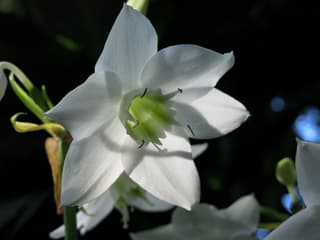
Amazon Lily
Eucharis grandiflora
The Amazon Lily (Eucharis grandiflora) is a tropical bulbous perennial native to the rainforests of Colombia and Peru, belonging to the Amaryllidaceae family. It is celebrated for its stunning pure-white, fragrant flowers resembling daffodils, which appear in elegant clusters on tall sturdy stems. Widely cultivated as a houseplant and in tropical gardens, it blooms 2-3 times a year under ideal conditions.
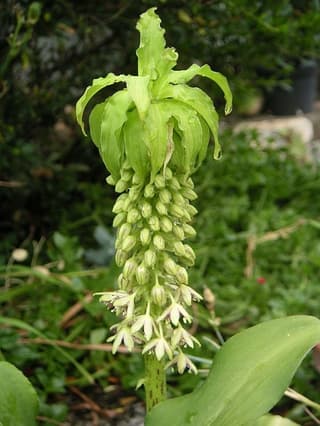
Pineapple lily
Eucomis bicolor
The Pineapple lily (Eucomis bicolor) is a bulbous plant in the asparagus family (Asparagaceae) native to South Africa. It forms a rosette of broad, strap-shaped leaves, and in summer, it sends up a dense inflorescence of star-shaped, pale green flowers edged in purple, crowned by a tuft of green bracts resembling a pineapple. The species grows 12–24 inches (30–60 cm) tall and blooms from July to September. It is not winter-hardy in colder climates, and the bulbs must be overwintered in a dry, frost-free environment.
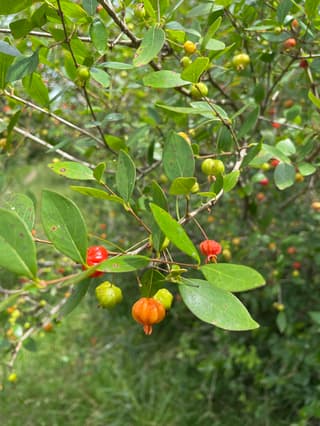
Eugenia
Eugenia
Eugenia is one of the largest genera in the Myrtaceae family, comprising hundreds of tropical and subtropical trees and shrubs native to the Americas. It features glossy evergreen foliage, small white flowers with showy stamens, and prized edible fruit, such as pitanga (Eugenia uniflora) and grumixama (Eugenia brasiliensis). Species in this genus are grown both as backyard fruit trees and as ornamentals, and are especially popular for hedging and topiary thanks to their tolerance of frequent pruning.
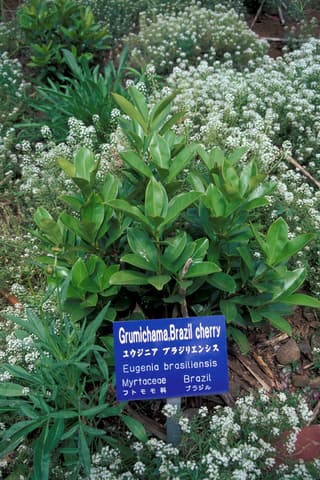
Grumichama
Eugenia brasiliensis
Grumichama (Eugenia brasiliensis) is a native fruit tree of Brazil's Atlantic Forest, belonging to the Myrtaceae family. It produces small, round berries with juicy pulp and a sweet-tart flavor, available in black, red, and yellow varieties. Highly valued both for its edible fruit and ornamental beauty, it is an important species for Atlantic Forest restoration.
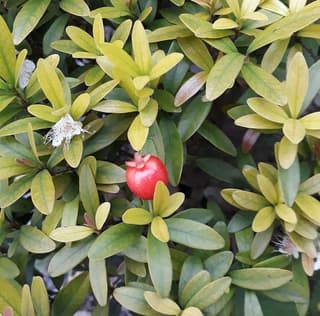
Dwarf Eugenia
Eugenia mattosii
Eugenia mattosii, popularly known as the Dwarf Eugenia, is an evergreen shrub native to Brazil, belonging to the Myrtaceae family. It features dense, compact foliage with small, oval, glossy leaves that display reddish tones when young, turning dark green at maturity. During spring and summer, it produces delicate white flowers that give rise to small, globose, deep red fruits. These fruits are edible, with a slightly acidic flavor, and are highly attractive to birds. Due to its controlled growth and small leaves, it is one of the most valued species for the art of bonsai and for landscaping in small spaces.
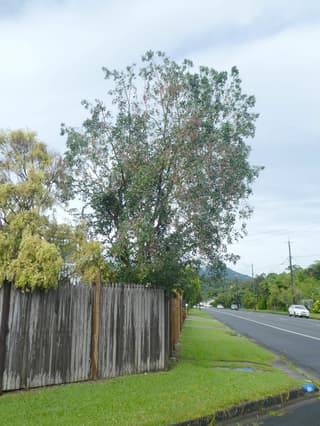
Brush Cherry
Eugenia myrtifolia
Evergreen shrub with bronze, green and red foliage producing delicate white flowers in spring and summer followed by edible magenta-red fruits. Height 4-6 meters in cultivation. Native to humid areas of eastern Australia. Highly valued as ornamental tree, hedging plant and for topiary. Non-toxic to pets and humans.
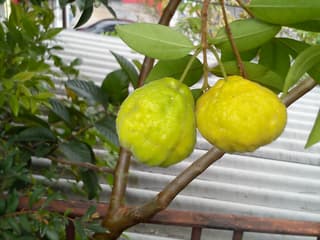
Uvaia
Eugenia pyriformis
Uvaia (Eugenia pyriformis) is a fruit-bearing tree native to the Brazilian Atlantic Forest, belonging to the Myrtaceae family. It produces aromatic yellow-orange fruits rich in vitamin C and bioactive compounds. This species holds great ecological and gastronomic value, widely used in forest restoration projects and sustainable landscaping.
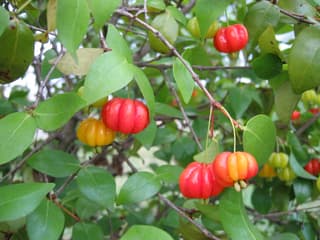
Surinam Cherry
Eugenia uniflora
Surinam Cherry (Eugenia uniflora) is an evergreen fruiting tree native to the Atlantic Forest of South America, spanning Brazil, Argentina, Uruguay and Paraguay. It is celebrated for its distinctive small fruits — deeply ribbed, turning from green through orange to deep red or nearly black when fully ripe — with a sweet-tart, resinous flavour. The tree produces clusters of fragrant white flowers in spring and fall, and its glossy leaves release a spicy-resinous scent when crushed. Both fruits and leaves have significant medicinal value recognised by traditional and modern science.
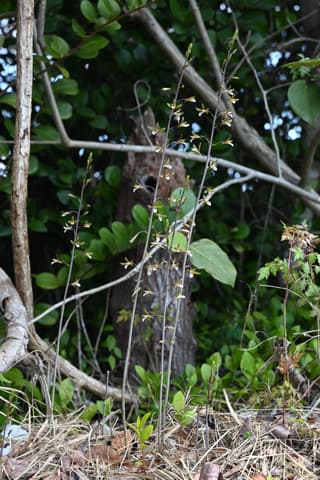
Chinese Crown Orchid
Eulophia graminea
Eulophia graminea, commonly known as Chinese Crown Orchid or Grass-leaf Eulophia, is a terrestrial orchid native to South and Southeast Asia. It produces grass-like leaves from pseudobulbs and sends up tall flower spikes bearing small green and brownish-purple blooms in spring. Though elegant in its native habitat, this species has become invasive in Florida, spreading rapidly through diverse ecosystems via dust-like seeds and wood chip mulch.
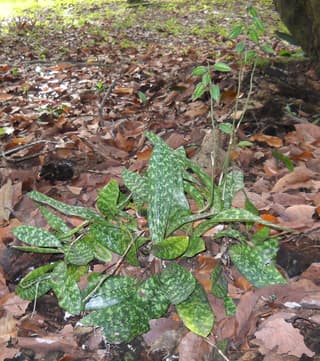
Spotted Eulophia
Eulophia maculata
Eulophia maculata, widely known by its synonym Oeceoclades maculata, is a terrestrial orchid native to tropical Africa, including Madagascar and Mauritius. Commonly called the Spotted Eulophia or Monk Orchid, it is one of the most successfully naturalized orchids in the world, now found throughout the Neotropics, Caribbean, and Florida. It grows in leaf litter and rocky scrub slopes up to 1200m elevation, producing mottled evergreen leaves and delicate white to pink flowers in late summer and fall.

Chilean Corkscrew Cactus
Eulychnia castanea
Native to the arid coastline of northern and central Chile, between Los Molles and the Talinay mountains, Eulychnia castanea is a slow-growing columnar cactus that forms creeping clumps several meters in diameter in its coastal desert habitat, surviving on sea fog (camanchaca) in one of the driest regions on the planet. The grayish-green stems, featuring 6 to 8 ribs and spines ranging from brown to yellowish, produce fragrant white flowers in summer and greenish-yellow fruits with mucilaginous pulp and a slightly acidic flavor. The 'Varispiralis' cultivar, with spiraled or crested stems, is highly sought after by collectors.
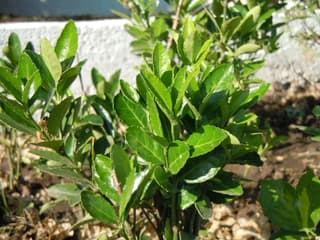
Spindletree
Euonymus
Euonymus is a diverse genus of over 130 species of shrubs, small trees, and climbers in the family Celastraceae, native to temperate regions of Asia, Europe, and North America. These hardy ornamentals are prized for their year-round interest: evergreen species like Euonymus japonicus provide dense hedging and bright variegated foliage, groundcover forms like Euonymus fortunei spread readily across slopes and borders, while the deciduous Euonymus alatus (burning bush) delivers spectacular crimson autumn color. Caution: all parts are moderately toxic if ingested.
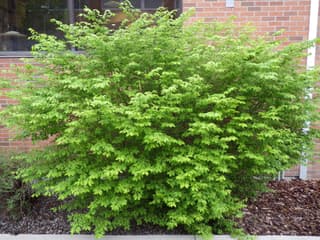
Burning Bush
Euonymus alatus
Burning bush (Euonymus alatus) is a deciduous shrub native to Siberia, China, Japan and Korea, prized for the corky "wings" that run along its stems and for foliage that turns a brilliant scarlet-red every autumn. It grows into a rounded, medium-textured mound 4.5-6 m tall and wide at maturity, with inconspicuous greenish-yellow flowers in late spring followed by small red-orange seed capsules that split open in fall. It is tough, adaptable to many soils, and tolerates urban conditions well, which has made it a landscape staple - though it is now considered invasive in parts of the eastern and central United States, so gardeners in those regions should check local guidance before planting.
Wintercreeper
Euonymus fortunei
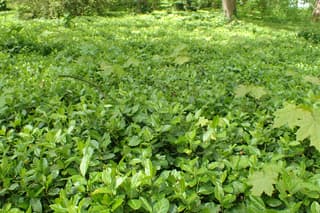
Euonymus fortunei, commonly known as Wintercreeper or Fortune's Spindle, is an evergreen woody vine and groundcover native to East Asia (China, Korea, and Japan). Highly adaptable, it can climb walls and trees up to 10 meters tall or spread as a dense, low groundcover. Its leathery, glossy leaves remain green year-round, with many popular variegated cultivars available. WARNING: All parts of this plant are toxic to humans, cats, and dogs — ingestion can cause cardiac and gastrointestinal problems.
Japanese Spindle Tree
Euonymus japonicus
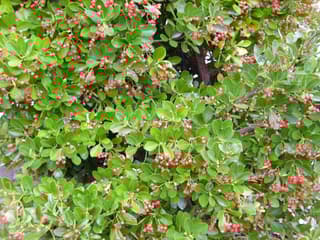
Euonymus japonicus, commonly known as the Japanese Spindle Tree, is an evergreen shrub native to Japan, Korea, and China. It is widely cultivated as an ornamental plant and hedging shrub throughout temperate regions worldwide. Growing at a medium rate, it can reach over 4.5 meters tall and is prized for its glossy, dark-green foliage that remains attractive year-round. It adapts well to various soil types and tolerates drought, wind, salt spray, and urban pollution, making it a popular choice for formal gardens, coastal landscapes, and topiary.
Boneset
Eupatorium
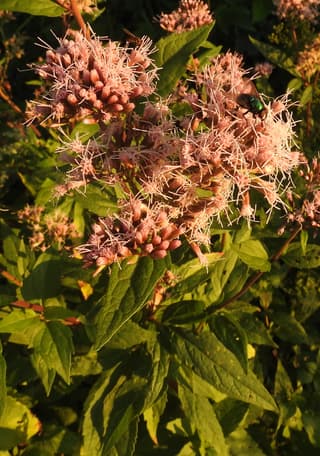
Eupatorium is a diverse genus of flowering perennial herbs in the family Asteraceae, encompassing well-known species such as Eupatorium cannabinum (hemp-agrimony), native to Europe and Asia, and Eupatorium perfoliatum (boneset), native to North America. These robust plants produce dense, flat-topped clusters of small fluffy flowers in white, pink, and mauve, highly attractive to butterflies, bees, and pollinators. Typically growing 1–1.5 metres tall, Eupatorium thrives in moist, humus-rich soils and tolerates wet ground, making it ideal for rain gardens, pond margins, and naturalistic borders. The genus has a rich ethnobotanical history: boneset was extensively used by Native Americans and colonial physicians to treat fevers and influenza, while hemp-agrimony has featured in European herbal medicine for centuries.
Spurge
Euphorbia
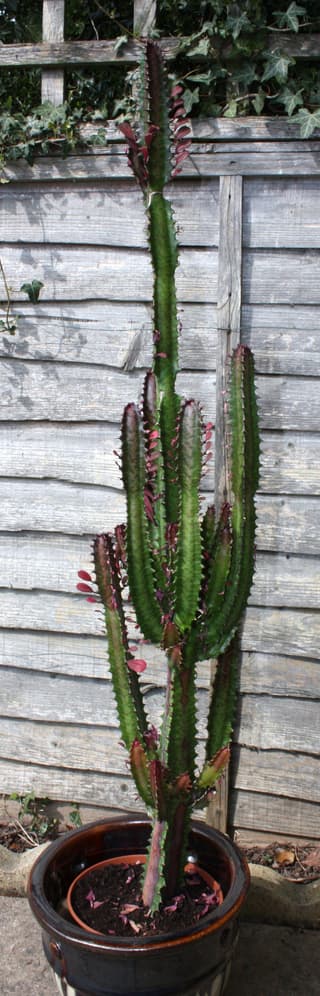
Euphorbia is one of the largest and most diverse plant genera on Earth, comprising over 2,000 species distributed across every continent except Antarctica. The genus spans an extraordinary range of forms — from spiny, cactus-like succulents such as Euphorbia trigona (African milk tree) and Euphorbia milii (crown of thorns), to the iconic holiday plant Euphorbia pulcherrima (poinsettia), and even large shrubs and trees. Despite their wildly different appearances, all Euphorbias share one defining trait: a milky white latex sap that is toxic to humans, cats, and dogs, causing skin and mucous membrane irritation on contact. Native to Africa, the Americas, and Eurasia, Euphorbias have adapted to deserts, tropical forests, and temperate meadows alike, making them among the most ecologically versatile plants known.
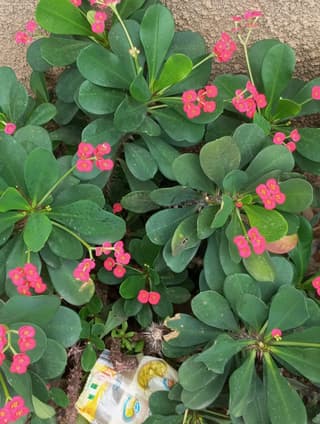
Giant crown of thorns
Euphorbia × lomii
Euphorbia × lomii is a hybrid crown of thorns, a cross between Euphorbia milii and Euphorbia lophogona, prized for its thick spiny stems, large leaves, and oversized colorful bracts. It grows as a sculptural, drought-tolerant succulent shrub that thrives in bright, sunny spots and rewards good light with near year-round blooms.
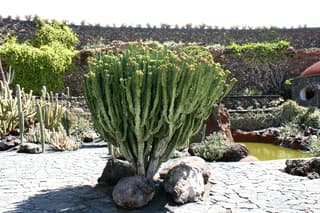
Desert Candle
Euphorbia abyssinica
Euphorbia abyssinica, commonly known as the Desert Candle, is a striking columnar succulent tree native to the dry highlands of Ethiopia and Eritrea, at elevations of 840–2,400 meters. It can reach up to 9 meters tall and is frequently mistaken for a cactus. The plant produces a highly toxic white latex sap that causes severe skin irritation and potential blindness on eye contact. Ideal for xeriscaping and dry gardens.
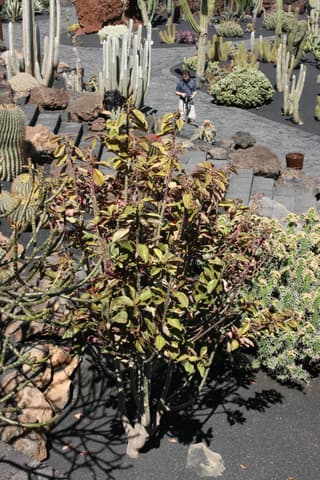
Green African Milk Bush
Euphorbia bicompacta
Euphorbia bicompacta, commonly known as the Green African Milk Bush, is a succulent shrub native to East Africa, with natural occurrences in Tanzania, Rwanda, and Kenya. Belonging to the Euphorbiaceae family, this species can reach up to 7 meters tall in its natural habitat, though in cultivation it rarely exceeds 1–2 meters. Its erect, fleshy bright-green stems give it a clean geometric appearance. The popular variety rubra (Euphorbia bicompacta var. rubra) features reddish stems and leaves, making it even more sought-after as an ornamental houseplant across Europe and the United States. The milky latex exuded by the plant is toxic and caustic — always wear gloves when handling. In its native range, the latex has traditional medicinal use for tick control in cattle.
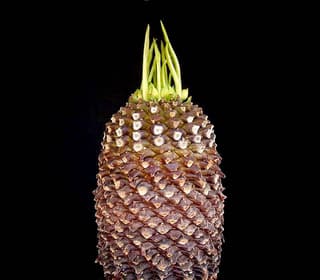
Pine Cone Plant
Euphorbia bupleurifolia
Euphorbia bupleurifolia, commonly known as the Pine Cone Plant, is a rare caudiciform succulent native to the Eastern Cape of South Africa. Its swollen, tuberous stem covered in spiral leaf-scar patterns resembles a pine cone, making it a prized collector's specimen. It grows slowly and produces small yellow-green flowers in spring.
Canary Island Spurge
Euphorbia canariensis
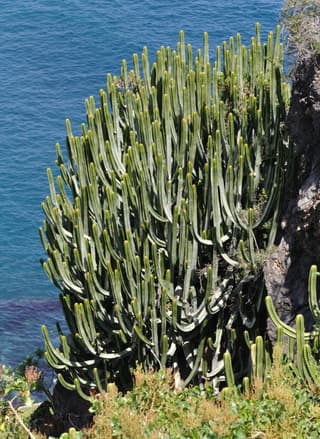
Euphorbia canariensis, commonly known as Canary Island Spurge or Cardón, is a columnar succulent endemic to the Canary Islands (Spain). It is one of the most iconic plants of the Macaronesian region, forming dense stands called cardonal in arid lowlands. The plant grows up to 4 meters tall with a distinctive candelabra-like branching structure. Its thick green stems have four prominent ribs lined with pairs of reddish spines. In spring, it produces small reddish-green cyathia (flower-like structures). All parts of the plant contain a highly toxic milky white latex that causes severe skin irritation and can cause blindness on eye contact.
Medusa's Head
Euphorbia caput-medusae
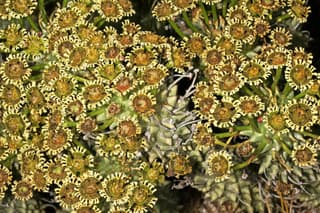
Medusa's Head (Euphorbia caput-medusae) is a striking succulent native to the Western Cape of South Africa. It features a short, stout central stem from which numerous snake-like branches radiate outward, closely resembling the serpentine locks of the mythological Medusa. A member of the Euphorbiaceae family, it is prized as a unique ornamental plant in rock gardens, containers, and succulent collections worldwide.
Mediterranean Spurge
Euphorbia characias
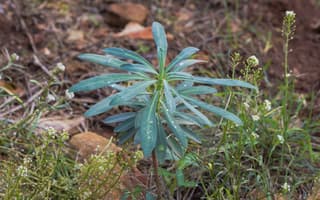
Euphorbia characias, the Mediterranean spurge, is a robust evergreen sub-shrub native to rocky, sun-baked slopes across the Mediterranean basin. It forms dense clumps of upright stems lined with narrow, blue-green leaves, topped in late winter and early spring by dramatic chartreuse flower heads. Every part of the plant exudes a milky latex when cut, which is a skin and eye irritant, so it should be handled with gloves. Prized by gardeners for its drought tolerance and architectural presence, it thrives on neglect once established.
Dogwood Poinsettia
Euphorbia cornastra
Euphorbia cornastra is a shrubby member of the spurge family (Euphorbiaceae), native to the seasonally dry tropical forests of Guerrero, Mexico. Discovered in 1973, it resembles its famous relative Euphorbia pulcherrima (the Christmas poinsettia) but carries gray-green foliage and blooms in summer with pure-white, dogwood-like bracts. It is widely used by breeders to create compact, brightly bracted poinsettia hybrids such as the Princettia series. Like all euphorbias, it exudes a milky latex sap that is toxic and irritating to skin and eyes.
Caribbean Copper Plant
Euphorbia cotinifolia
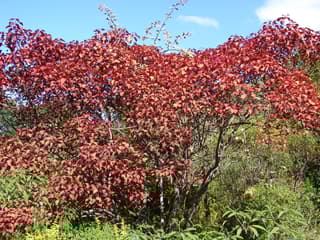
Euphorbia cotinifolia, commonly known as the Caribbean Copper Plant or Tropical Smokebush, is a striking ornamental shrub native to Mexico and Central/South America. Prized for its deep burgundy-red foliage, it belongs to the Euphorbiaceae family and can reach up to 15 feet as a shrub or 30 feet as a tree in ideal conditions. The milky white sap is highly toxic and requires protective gloves when handling. It is widely grown in tropical and subtropical gardens for its bold visual impact.

Fire on the Mountain
Euphorbia cyathophora
Euphorbia cyathophora, commonly called fire on the mountain or dwarf poinsettia, is an herbaceous plant in the Euphorbiaceae family, a close relative of the classic Christmas poinsettia. Its upper leaves develop vivid red patches at the base that mimic colorful bracts, while the true flowers are tiny green structures called cyathia. Native to the Americas, it is a hardy, fast-growing plant well suited to sunny gardens and borders. All parts of the plant release a milky latex sap when cut, which is toxic and can irritate skin and eyes.
David's Spurge
Euphorbia davidii
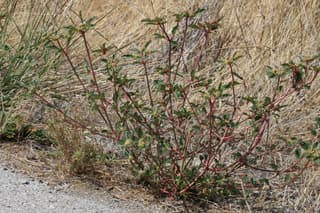
David's Spurge (Euphorbia davidii) is an annual herb in the Euphorbiaceae family, native to south-central United States and Mexico, now naturalized across Europe, South America, and Australia. It grows up to 61 cm tall in full sun and well-drained soil. Like all euphorbias, it produces a milky white latex that is severely toxic and a strong irritant to skin, eyes, and mucous membranes of humans, cats, and dogs.
Decary's Euphorbia
Euphorbia decaryi
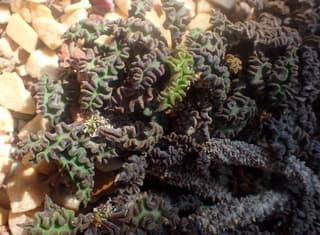
Euphorbia decaryi is a rare, compact caudiform succulent endemic to Madagascar. It belongs to the Euphorbiaceae family and develops a thickened base (caudex) that stores water, with wavy stems and textured gray-green leaves. An extremely slow grower, it is highly prized by succulent and Madagascar plant collectors worldwide.
Toothed spurge
Euphorbia dentata
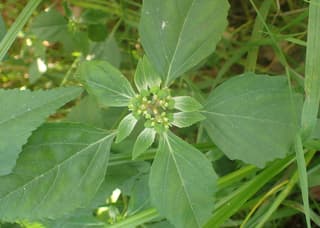
Euphorbia dentata, commonly called toothed spurge or green poinsettia, is a hairy summer annual herb in the spurge family (Euphorbiaceae), native to the central and east-central United States south to northeastern Mexico. It grows in disturbed open ground such as prairies, roadsides, pastures, and waste areas, and is recognized by its toothed, lance-shaped leaves and the milky latex sap that oozes from broken stems. Sap contact can irritate skin and eyes, so gloves are recommended when handling the plant.
Octopus Plant
Euphorbia flanaganii
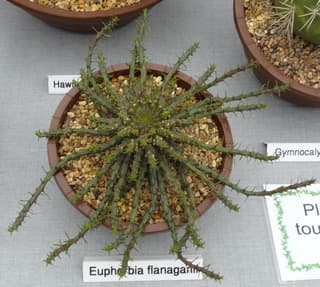
Euphorbia flanaganii, commonly known as Medusa's Head, is a South African succulent in the Euphorbiaceae family. It forms a low rosette of snake-like, grayish-green stems ("tentacles") radiating from a thick central trunk, resembling the serpent hair of the mythological Medusa. It is a slow-growing succulent, popular as a container ornamental, producing tiny yellow flowers (cyathia) from late winter into spring. The entire plant exudes a toxic, irritant milky latex that requires careful handling.
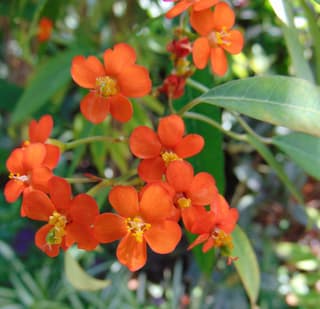
Scarlet Plume
Euphorbia fulgens
Scarlet Plume (Euphorbia fulgens) is a deciduous shrub native to Mexico, renowned for its gracefully arching branches adorned with small scarlet to orange flowers during winter. Belonging to the Euphorbiaceae family, it produces a milky white latex sap that is irritating to skin and eyes. It is widely cultivated as an ornamental plant and used as a cut flower.

Thornless Crown of Thorns
Euphorbia geroldii
Euphorbia geroldii, commonly known as the Thornless Crown of Thorns or Gerold's Spurge, is a succulent shrub in the spurge family (Euphorbiaceae), endemic to the dry coastal forests of northeastern Madagascar. Unlike its thorny relative Euphorbia milii, E. geroldii produces smooth, unarmed woody stems clothed in glossy, dark green, lance-shaped leaves edged in red. Clusters of small, saucer-shaped bracts in vivid red with yellow centers appear almost continuously throughout the year, making this a popular, low-maintenance flowering succulent for bright indoor spaces and warm-climate gardens. In the wild it is classified as Critically Endangered due to habitat loss, so cultivated specimens play a small role in ex-situ conservation.
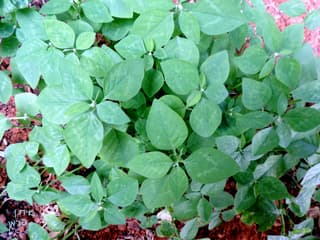
Grassleaf Spurge
Euphorbia graminea
Euphorbia graminea, commonly known as grassleaf spurge, is a herbaceous to subshrubby plant in the Euphorbiaceae family, native to Mexico, Central America, and parts of South America and the Caribbean. It grows 10 to 50 cm tall, occasionally reaching up to 1 meter. Thin, branching stems bear opposite leaves up to 4 cm long, and tiny flower clusters (cyathia) are surrounded by white bract-like appendages that create a cloud-like, baby's-breath effect. It is the wild species behind the popular ornamental cultivar Diamond Frost, prized for its near-continuous white blooms. Like all spurges, it produces a milky latex sap that can irritate skin and eyes and is toxic if ingested.
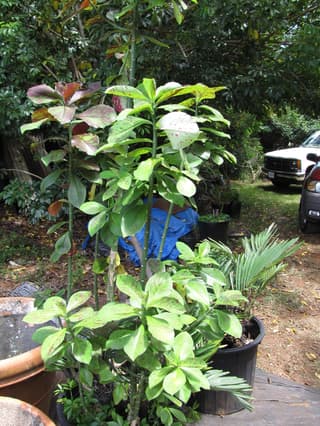
African Milk Bush
Euphorbia grantii
The African milk bush (Euphorbia grantii, synonym Synadenium grantii) is a succulent evergreen shrub in the Euphorbiaceae family, native to tropical East Africa (Tanzania, Uganda, Rwanda, Burundi and the Democratic Republic of Congo). It is a fast-growing, low-maintenance plant popular as an ornamental hedge or container specimen for its fleshy, paddle-shaped leaves that range from green to reddish-purple. Every part of the plant exudes a thick, milky white latex when cut, a sap that is toxic and strongly irritating to skin, eyes and mucous membranes, and is toxic if ingested by people or pets.
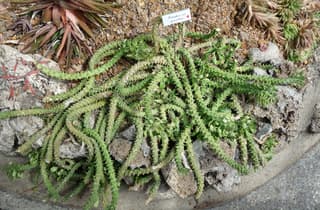
Sausage Spurge
Euphorbia guentheri
Euphorbia guentheri, commonly known as sausage spurge, is a succulent subshrub native to southeast Kenya. It produces numerous unbranched, fleshy, cylindrical stems covered in spine-tipped tubercles, reaching up to 90 cm (3 ft) long. Small obovate leaves emerge along the stems and drop during winter dormancy. In spring, it produces tiny red cyathia surrounded by greenish-white bracts. Like all euphorbias, it exudes a toxic milky latex when cut or damaged.
Find the Perfect Plant
Our plant guide helps you find ideal species for your experience level and time of year.
Browse by Difficulty, Season & More
Use the filters below to narrow this catalog by care difficulty, season, environment, or search directly by name. Each filter leads to a focused list tailored to your specific growing conditions.