Complete Plant Guide
Explore plants by difficulty, season and more. Find the perfect plant for you.
Difficulty
Categories
Plants by City
🗺️ Plants by City3781 plants found
Showing 1261-1296 of 3781
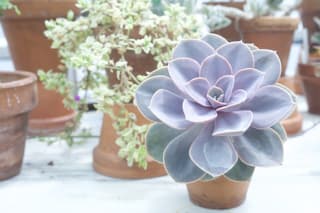
Pearl of Nuremberg
Echeveria 'Perle von Nurnberg'
Echeveria 'Perle von Nurnberg' is a compact rosette succulent hybrid bred in 1930s Germany by crossing Echeveria gibbiflora 'Metallica' with Echeveria elegans. Its spoon-shaped leaves are dusted with a pale, powdery bloom over lavender-grey and rosy-pink tones, deepening to purple under bright light. A slow grower that rarely needs repotting, it forms a single dense rosette prized as one of the most photogenic succulents in cultivation.

Black Echeveria
Echeveria affinis
Black Echeveria (Echeveria affinis) is a small rosette succulent from Mexico, famous for leaves so deep green they look nearly black in strong light. Compact rosettes reach about 15 cm across and, in autumn and winter, send up short stalks of vivid red bell-shaped flowers. Bright light is the key to keeping its dark, dramatic colour.
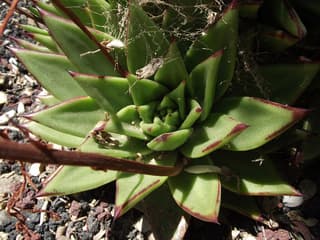
Lipstick Echeveria
Echeveria agavoides
Echeveria agavoides, commonly known as the Lipstick Echeveria or Wax Agave, is a compact rosette succulent native to rocky hillsides in Mexico. It belongs to the Crassulaceae family and is prized for its emerald-green triangular leaves tipped with deep red-pink edges, resembling a wax agave. Rosettes grow up to 20 cm tall and 36 cm wide, producing coral-pink and yellow flowers on tall stems in spring and summer.
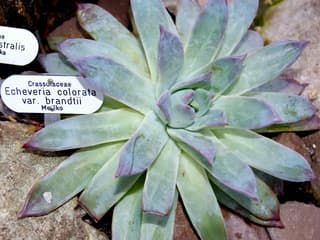
Mexican Hens and Chicks
Echeveria colorata
Echeveria colorata is a stunning rosette-forming succulent native to the mountains of Mexico (Jalisco). Its pale lavender-grey leaves are tipped with vibrant pink to red margins, creating a jewel-like appearance. In spring and summer it sends up tall arching stems bearing coral-pink to orange bell-shaped flowers beloved by hummingbirds. Like most Echeverias, it produces offsets around the base, forming a charming colony — the origin of its common name "Hens and Chicks".
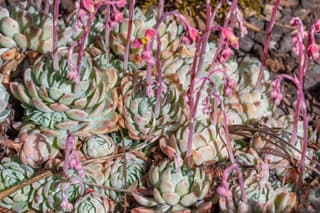
Mexican Gem
Echeveria elegans
Echeveria elegans is a rosette-forming succulent belonging to the Crassulaceae family, native to central Mexico (states of Hidalgo, Puebla, Guanajuato, and Querétaro). Its fleshy, rounded leaves display a blue-green coloration with pink edges when exposed to sunlight, covered by a fine layer of whitish pruina that gives it a soft and delicate appearance. The rosettes reach up to 10 cm (4 inches) in diameter. It is currently listed as an endangered species due to indiscriminate collection from its natural habitat.
Carnival Echeveria
Echeveria gibbiflora
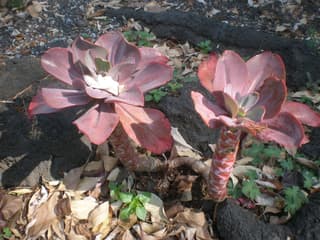
Echeveria gibbiflora is a large, showy succulent native to Mexico, prized for its spectacular rosettes that can reach up to 40 cm (16 inches) in diameter. Its thick, fleshy leaves display stunning hues ranging from blue-green to reddish-purple, often with wavy margins and a distinctive metallic sheen. In summer and fall, it produces tall flower stalks bearing bell-shaped blooms in shades of pink, red, and yellow.
Plush Plant
Echeveria harmsii
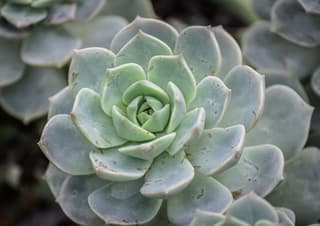
Echeveria harmsii is a small, shrubby succulent from Mexico with soft, fuzzy, silvery-green leaves tipped in red. It forms loose rosettes on short branching stems and produces bright orange-red bell-shaped flowers in summer. It is slow growing, non-toxic and well suited to pots and sunny rock gardens.
Blue Rose Echeveria
Echeveria imbricata
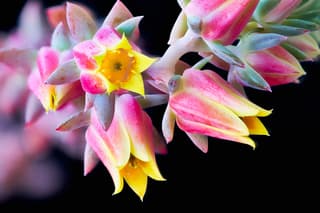
Echeveria imbricata, the Blue Rose Echeveria, is a rosette-forming succulent with fleshy, rounded blue-green leaves that resemble rose petals. A hybrid of Mexican Echeverias, it grows rosettes of roughly 10 to 20 cm and produces offsets at the base. In spring and early summer it sends up stalks of small orange-red flowers. It is one of the hardier Echeverias in cold weather and is non-toxic to cats and dogs.
Lau's Echeveria
Echeveria laui
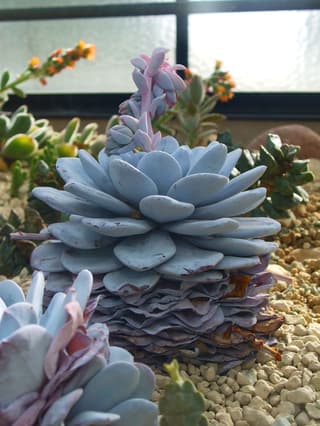
Echeveria laui is a slow-growing succulent native to Oaxaca, Mexico, prized for its compact rosettes covered in a thick, powdery blue-white farina that gives the leaves a frosted, icing-sugar appearance. The plump, spoon-shaped leaves form a tight rosette rarely taller than a few centimeters, and mature plants produce coral-pink, bell-shaped flowers on tall stalks in summer.
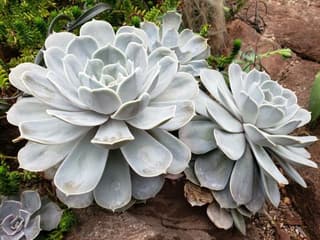
Ghost Echeveria
Echeveria lilacina
Echeveria lilacina, commonly known as the Ghost Echeveria, is a slow-growing succulent native to the rocky cliffs of Nuevo León, Mexico. It forms elegant rosettes of silvery-gray leaves with lilac and pink undertones, covered by a protective powdery coating called farina that gives the plant its characteristic ghostly appearance. It is highly prized by succulent collectors and interior designers worldwide.
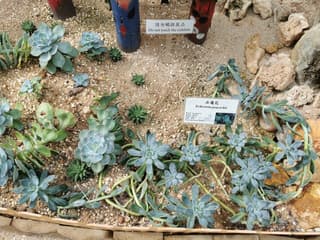
Peacock Echeveria
Echeveria peacockii
Echeveria peacockii is a compact, clump-forming succulent native to Mexico, prized for its powdery, silvery-blue rosettes edged in soft pink. Each rosette slowly offsets into a tidy cluster, and in summer it sends up wiry stems topped with coral-orange, lantern-shaped flowers that hummingbirds love.
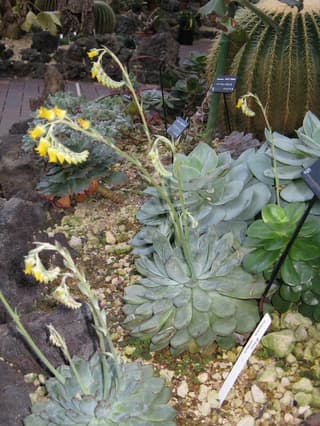
Pulido's Echeveria
Echeveria pulidonis
Echeveria pulidonis, commonly called Pulido's Echeveria, is a compact rosette-forming succulent in the Crassulaceae family, native to Mexico. Its powdery blue-green leaves develop striking red margins under strong sunlight. It is one of the slowest-growing Echeveria species and produces arching stems of golden-yellow flowers in spring.

Chenille Plant
Echeveria pulvinata
Echeveria pulvinata, commonly known as the Chenille Plant or Plush Plant, is a Mexican succulent that forms compact rosettes of thick, fuzzy leaves covered in fine white hairs that feel like plush fabric. Under strong sunlight, the leaf margins turn vivid red and orange, creating a striking contrast with the green centers. It is a hardy, moderately fast-growing succulent widely used in rock gardens, containers, and succulent arrangements for its unique texture and easy care.
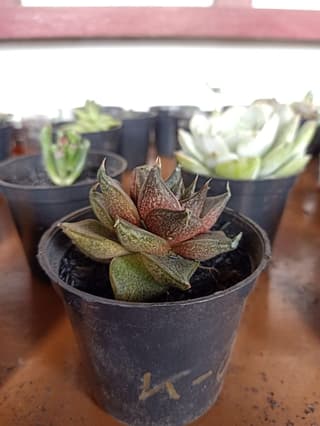
Purpus's Echeveria
Echeveria purpusorum
Echeveria purpusorum, commonly known as Purpus's Echeveria, is a slow-growing succulent native to Mexico. It forms compact rosettes with thick, dark green leaves adorned with distinctive reddish-brown mottled patterns. Highly sought after by collectors for its unique appearance and easy care requirements.
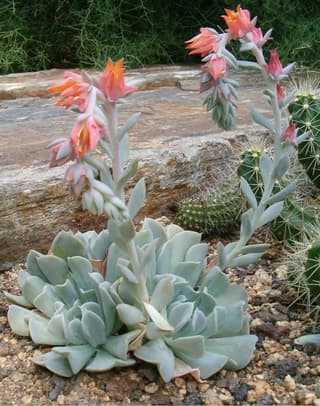
Topsy Turvy Echeveria
Echeveria runyonii
Echeveria runyonii 'Topsy Turvy' is a rosette-forming succulent native to Mexico, prized for its powdery, grayish-green leaves that curl inward like spoons, creating a distinctive whirled shape. It is a slow-growing, hardy, and low-maintenance plant, well suited to indoor pots or outdoor rock gardens in warm climates.
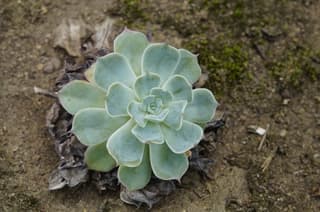
Blue Echeveria
Echeveria secunda
Echeveria secunda, commonly known as Blue Echeveria or Hen and Chicks, is a rosette-forming succulent native to the highlands of Mexico, belonging to the family Crassulaceae. Its fleshy, blue-green leaves arrange into a compact, symmetrical rosette up to 6 inches (15 cm) in diameter. In spring and summer, it produces tall slender stems bearing lantern-shaped flowers in yellow and red, making it one of the most popular ornamental succulents for both indoor and outdoor use.
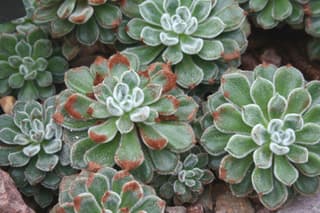
Mexican Firecracker
Echeveria setosa
Echeveria setosa, commonly called Mexican Firecracker, is a rosette-forming succulent native to Mexico, covered in fine white hairs that give it a velvety appearance. In summer, it sends up tall stalks bearing urn-shaped red flowers with yellow tips that attract hummingbirds.
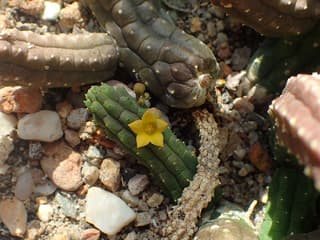
Echidnopsis
Echidnopsis cereiformis
Echidnopsis cereiformis is a leafless succulent from the Apocynaceae family, native to Northeast Africa (Eritrea and Abyssinia) and southern Arabia. It forms clumps of thin, branched cylindrical stems with 6 to 10 ribs covered in hexagonal tubercles. In autumn, it produces small brownish-yellow to brownish-purple flowers with yellow coronal lobes along the stems. It is easy to grow and highly drought-tolerant.
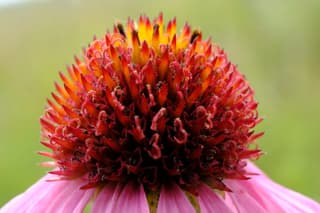
Narrow-leaf Coneflower
Echinacea angustifolia
Echinacea angustifolia, the narrow-leaf coneflower, is a taprooted perennial native to the dry prairies of the central United States and Canada, from Texas and Oklahoma north through the Dakotas into Saskatchewan. It forms a low clump of lance-shaped, hairy, gray-green leaves topped from midsummer through fall by daisy-like flowers with drooping pale-pink to purple ray petals surrounding a spiny, coppery-orange central cone. Reaching only 30-80 cm tall, it is more compact and drought-tolerant than its better-known relative Echinacea purpurea, and it is the species most historically associated with Native American herbal medicine.
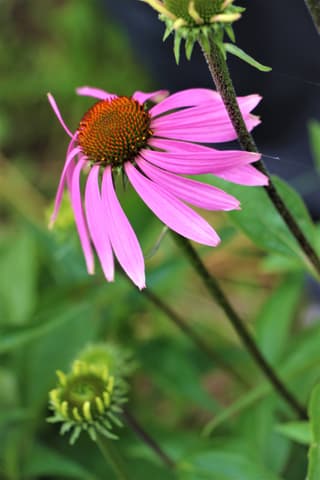
Purple Coneflower
Echinacea purpurea
Echinacea purpurea, commonly known as Purple Coneflower, is a striking native North American perennial that blooms prolifically from summer through fall. Its bold purple-pink daisy-like flowers with distinctive orange-brown spiny cones attract pollinators including bees, butterflies, and hummingbirds. A resilient, low-maintenance plant, it thrives in full sun and well-drained soil, and is highly drought-tolerant once established. Widely valued both as an ornamental garden plant and as a traditional medicinal herb, Purple Coneflower has been used by Native American tribes for centuries.
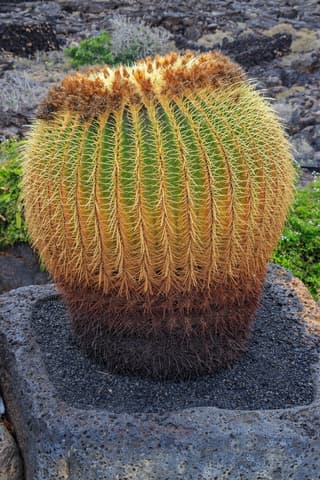
Golden Barrel Cactus
Echinocactus grusonii
Echinocactus grusonii is a spherical cactus native to central Mexico, renowned for its impressive globular shape and radiant golden spines. This majestic cactus can reach up to 1 meter in both diameter and height over many years. It is an endangered species in its natural habitat due to illegal collection and habitat loss.
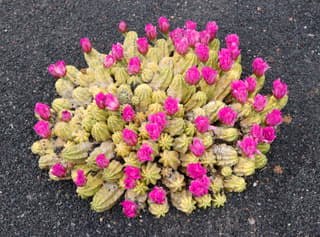
Hedgehog Cactus
Echinocereus
Echinocereus is a genus of about 70 cactus species native to the southwestern United States and Mexico. These cylindrical to columnar cacti are prized for their spectacular spring flowers — some of the largest and most colorful in the cactus world — and edible fruits in many species. Highly drought-tolerant and adapted to arid environments, they range from sea level to high mountain elevations.
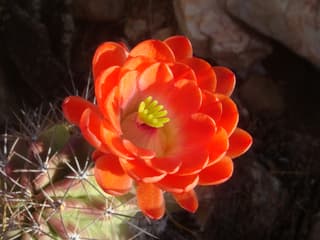
Scarlet Hedgehog Cactus
Echinocereus coccineus
Echinocereus coccineus, commonly known as the Scarlet Hedgehog Cactus, is a striking columnar cactus native to the deserts of the southwestern United States and northern Mexico. It forms dense clumps of ribbed, spine-covered stems and produces stunning scarlet to orange-red funnel-shaped flowers in spring that attract hummingbirds and pollinators. A beloved desert plant celebrated for its resilience, drought tolerance, and vibrant blooms.
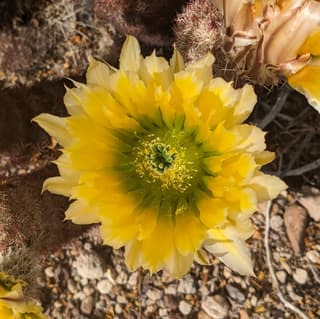
Texas Rainbow Cactus
Echinocereus dasyacanthus
Echinocereus dasyacanthus, commonly known as the Texas rainbow cactus, is native to the southwestern United States (Texas, New Mexico) and northern Mexico (Chihuahua, Coahuila, Sonora). It forms ribbed, cylindrical stems, typically solitary or loosely clustering, covered in dense spines ranging from tan and gold to pink. In spring and early summer, it produces large, funnel-shaped flowers ranging from canary yellow to deep rose-pink, which attract native desert pollinators.
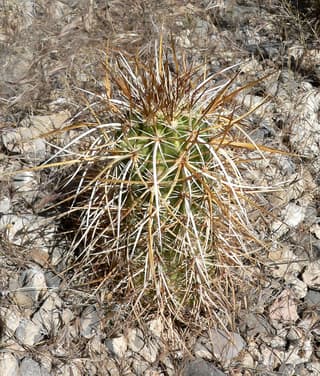
Engelmann's Hedgehog Cactus
Echinocereus engelmannii
Echinocereus engelmannii is a clustering cylindrical cactus native to the deserts of the southwestern United States and northern Mexico, prized for its dense, colorful spines and vivid magenta-to-pink funnel-shaped flowers that bloom in spring.
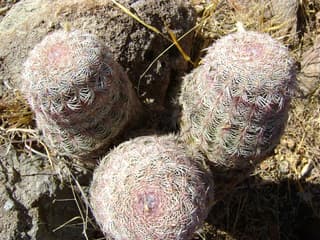
Rainbow Hedgehog Cactus
Echinocereus pectinatus
Echinocereus pectinatus is a small, solitary, cylindrical cactus native to the Chihuahuan Desert of northern Mexico and the Trans-Pecos region of Texas. Its ribs are lined with dense, comb-like spines banded in white and pink, giving rise to its common name. In late spring, it produces large, funnel-shaped magenta flowers that open in daylight and last several days.
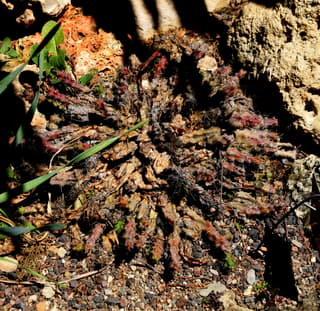
Ladyfinger Cactus
Echinocereus pentalophus
Echinocereus pentalophus, known as the ladyfinger cactus, is a low-growing, clustering cactus native to southern Texas and northeastern Mexico. Its slender, finger-like stems trail and branch to form dense mats up to a meter wide, and in late spring the plant produces large, funnel-shaped flowers in vivid pink to magenta with a pale throat that can nearly cover the entire clump for a brief but spectacular bloom.
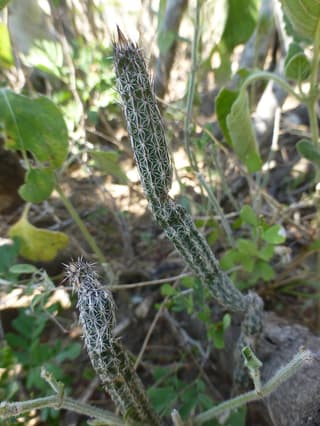
Dahlia Hedgehog Cactus
Echinocereus poselgeri
Echinocereus poselgeri, the dahlia hedgehog cactus, is a slender, sparsely branched cactus native to southern Texas and northeastern Mexico (Coahuila, Nuevo León, Tamaulipas and San Luis Potosí). In the wild it grows in dry scrub on sandy or alluvial soil up to about 1,150 m, leaning and climbing through shrubs for support. Its dark green stems are only 1-2 cm thick but can reach 60-120 cm long, with 8-10 low ribs covered in small, flattened whitish spines. Below ground it forms a cluster of up to eight brown tubers, 6-10 cm long, that look like dahlia roots, which is where the common name comes from. In late spring and early summer it produces striking pink to magenta flowers 5-7 cm across with a darker throat near the stem tips; they open around midday and close at night. It was long known as Wilcoxia poselgeri.

Claret Cup Cactus
Echinocereus triglochidiatus
The claret cup cactus is a low-growing, clumping cactus native to the deserts and rocky slopes of the southwestern United States and northern Mexico. Over time it forms dense mounds of cylindrical, spiny stems that can spread more than a meter wide. In late spring, the plant produces a spectacular show of funnel-shaped, scarlet-red flowers that attract hummingbirds and bees.
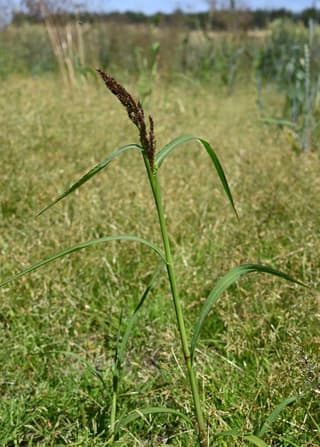
Barnyardgrass
Echinochloa crus-galli
Barnyardgrass (Echinochloa crus-galli) is a fast-growing annual grass native to tropical Asia. Now found worldwide, it is considered one of the most problematic agricultural weeds, particularly in rice and maize fields. Plants grow up to 150 cm tall with long, flat leaves that are often purplish at the base. Dense seed heads produce up to 40,000 seeds per plant, ensuring rapid spread. Despite its weed status, the seeds are edible and the plant has traditional medicinal uses.
Freckled Dapperling
Echinoderma asperum
Echinoderma asperum, commonly known as the Freckled Dapperling, is a distinctive agaric fungus characterized by its sharp, pointed brown scales on a pale cap and its crowded, free white gills. It typically emerges in woodland litter or mulched garden beds. While visually striking, it is a toxic mushroom that should never be consumed.
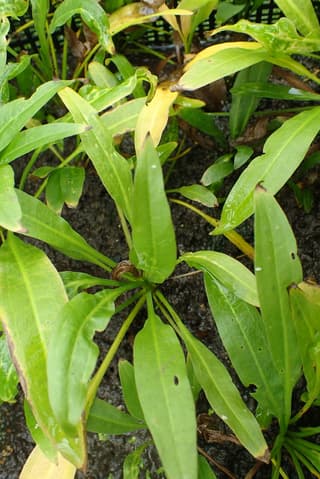
Amazon Sword
Echinodorus grisebachii
The Amazon sword (Echinodorus grisebachii) is an aquatic plant from the Alismataceae family, native to the river basins of South America, where it grows along banks and in shallow margins, often submerged for much of the year. It is one of the most popular and easy-to-grow aquarium plants, prized for its bright green lanceolate leaves that can reach up to 24 inches (60 cm) when submerged. It grows in a rosette pattern from a central rhizome (the crown) and reproduces via long inflorescences that bear adventitious plantlets. It is perfect as a focal point in medium to large-sized aquariums.

Brain Cactus
Echinofossulocactus multicostatus
The Brain Cactus (Stenocactus multicostatus, synonym of Echinofossulocactus multicostatus) is a globular cactus native to the deserts of Mexico, famous for its dozens of thin, wavy ribs that wrap around the body like cerebral convolutions. It is a slow-growing species, usually solitary, which rarely exceeds 5 inches (12-13 cm) in height, and produces delicate flowers in shades of white to pinkish-lilac with a darker central vein during spring and summer.
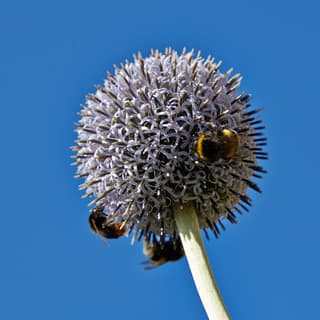
Blue globe thistle
Echinops bannaticus
Blue globe thistle (Echinops bannaticus) is a tall, architectural perennial in the Asteraceae family, originally from southeastern Europe, including the Banat region of Romania. It forms upright stems with prickly, grayish-green lobed foliage and ends in perfectly round, steel-blue flower heads that attract bees, bumblebees, and butterflies during July–August. The plant grows about 120–150 cm tall with a deep taproot system that makes it very drought-tolerant.
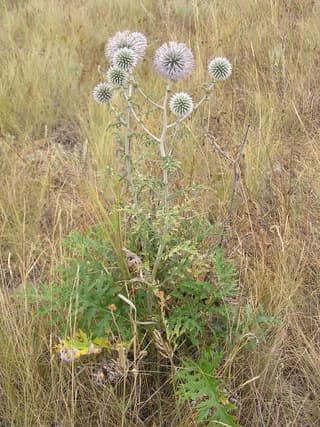
Globe thistle
Echinops sphaerocephalus
Globe thistle is a large, robust perennial in the Asteraceae family that can reach up to 2 meters in height. It bears spherical, silvery-blue to whitish flower heads on stiff stems and blooms in July–August. The leaves are deeply lobed and prickly with a grayish-green upper side and a felted, lighter underside. The species is very drought-tolerant, thrives in poor, well-drained soil, and is highly favored by bees, bumblebees, and butterflies.
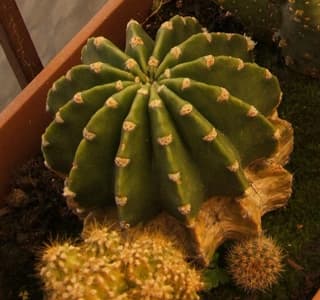
Hedgehog Cactus
Echinopsis
Echinopsis is a large genus of cacti native to South America, spanning the Andean regions of Argentina, Bolivia, Peru and Chile, with around 128 species ranging from small globular forms to tall columnar and tree-like specimens. It is prized for its enormous, fragrant, short-lived flowers, usually white, pink or red, that open at night or dawn and last only a day or two, earning several species the nickname Easter Lily Cactus.
Find the Perfect Plant
Our plant guide helps you find ideal species for your experience level and time of year.
Browse by Difficulty, Season & More
Use the filters below to narrow this catalog by care difficulty, season, environment, or search directly by name. Each filter leads to a focused list tailored to your specific growing conditions.