Cactaceae
Dahlia Hedgehog Cactus (Echinocereus poselgeri)
Echinocereus poselgeri
A low-maintenance cactus for a sunny spot. Give it full sun or bright, lightly filtered light and a very free-draining, gritty mix. Water thoroughly in spring and summer only when the soil has dried out, and keep it dry and cool (about 5-10 C) in winter, which encourages flowering. It tolerates around -5 C if kept dry. Its thin stems sprawl, so give them a support or let them lean on a shrub, and trim it each year to keep more flowering tips.
Every 14 days
Bright indirect
-5° - °C
% - %
Categories
What is Dahlia Hedgehog Cactus?
Dahlia Hedgehog Cactus (Echinocereus poselgeri) is a medium-care plant from the Cactaceae family. Echinocereus poselgeri, the dahlia hedgehog cactus, is a slender, sparsely branched cactus native to southern Texas and northeastern Mexico (Coahuila, Nuevo León, Tamaulipas and San Luis Potosí). In the wild it grows in dry scrub on sandy or alluvial soil up to about 1,150 m, leaning and climbing th...
Dahlia Hedgehog Cactus grows up to 1.2m, watering every 14 days. It is suitable for indoor environments and safe for pets.
Unlike many popular species, Dahlia Hedgehog Cactus is safe to keep around pets. Without adequate drainage, root rot can develop within 28 days.
How to Care for Dahlia Hedgehog Cactus?
TLDR: Dahlia Hedgehog Cactus needs Bright indirect, watering every 14 days, and temperatures between -5-30°C with 40-70% humidity.
How Often Should You Water Dahlia Hedgehog Cactus?
From spring to late summer, water deeply about every two weeks, letting the mix dry out completely in between. The tubers store water and rot easily, so never leave the pot standing in water. In autumn reduce watering and in winter keep it almost completely dry.
How Much Light Does Dahlia Hedgehog Cactus Need?
Full sun or bright, lightly filtered light. Outdoors it does well with some shade from nearby shrubs, as in its habitat. Indoors it needs the sunniest window you have; with too little light the stems stretch and it flowers poorly.
What Is the Best Soil for Dahlia Hedgehog Cactus?
Use a gritty, mineral cactus mix: cactus compost with plenty of coarse sand, pumice or perlite. Good drainage matters more than anything else, because the tuberous roots rot in heavy, wet soil.
What Pot Should You Use for Dahlia Hedgehog Cactus?
Use a deep pot with large drainage holes so the tubers have room; terracotta helps the mix dry out faster. Add a small stake or let the stems lean on a support, since they sprawl as they lengthen.
What Is Dahlia Hedgehog Cactus and Where Does It Come From?
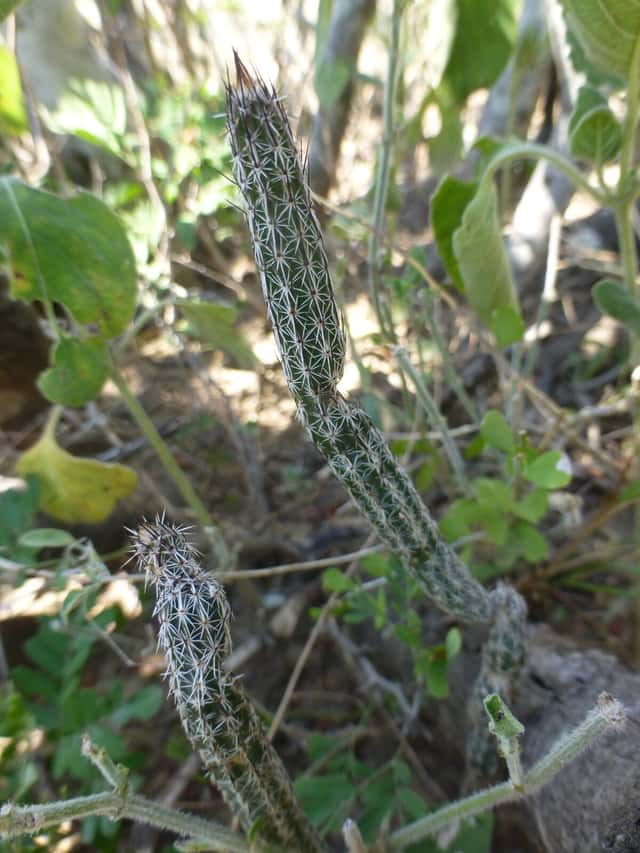
Echinocereus poselgeri, the dahlia hedgehog cactus, is a slender, sparsely branched cactus native to southern Texas and northeastern Mexico (Coahuila, Nuevo León, Tamaulipas and San Luis Potosí). In the wild it grows in dry scrub on sandy or alluvial soil up to about 1,150 m, leaning and climbing through shrubs for support. Its dark green stems are only 1-2 cm thick but can reach 60-120 cm long, with 8-10 low ribs covered in small, flattened whitish spines. Below ground it forms a cluster of up to eight brown tubers, 6-10 cm long, that look like dahlia roots, which is where the common name comes from. In late spring and early summer it produces striking pink to magenta flowers 5-7 cm across with a darker throat near the stem tips; they open around midday and close at night. It was long known as Wilcoxia poselgeri.
How to Propagate Dahlia Hedgehog Cactus?
Stem cuttings
Wear gloves or use tongs because of the spines. The root tubers cannot grow new shoots, so dividing them does not work.
- 1 Cut a healthy stem section 8-15 cm long with clean tools
- 2 Let the cut end dry in the shade for a week until it calluses
- 3 Insert the base 2-3 cm deep into dry, gritty cactus mix
- 4 Water lightly only after 2-3 weeks, once roots begin to form
Materials needed:
Seed
Seedlings grow slowly at first. Keep them out of direct midday sun during their first months.
- 1 Clean the small black seeds from a ripe fruit
- 2 Sow them on the surface of a fine, moist, sandy mix
- 3 Cover the pot to keep humidity high and keep it warm in bright, indirect light
- 4 Gradually remove the cover once seedlings appear and water sparingly
Materials needed:
How Big Does Dahlia Hedgehog Cactus Grow?
TLDR: Dahlia Hedgehog Cactus can reach up to 1.2m tall with Medium growth rate.
Max height
1.2m
Plant Uses
Ornamental
Great for decoration
Medicinal
Medicinal properties
Medicinal Uses
- The root is used locally in Mexico as a folk veterinary remedy for broken bones and as an anti-inflammatory
Is your plant showing symptoms?
Click on the symptom to discover possible causes:
What Diseases Commonly Affect Dahlia Hedgehog Cactus?
TLDR: Dahlia Hedgehog Cactus is susceptible to 4 known diseases. Monitor regularly for early detection.
Root Rot
Root rot is a serious fungal disease that affects the root system of plants, causing them to decay and die. It is primarily caused by overwatering, poor drainage, or soil-borne fungi such as Pythium, Phytophthora, Rhizoctonia, and Fusarium. The disease thrives in waterlogged conditions where roots are deprived of oxygen, making them susceptible to fungal infection.
Mealybugs
Mealybugs are small, soft-bodied insects covered with a white, waxy, cottony material. They are common pests of houseplants and outdoor plants in mild climates. These sap-sucking insects feed on plant tissue, causing damage, stunted growth, and can lead to plant death if left untreated. They produce sticky honeydew which attracts sooty mold.
Spider Mites
Spider mites are tiny arachnids (less than 1/20 inch long) related to spiders and ticks that feed on plant sap. They thrive in hot, dry conditions and can cause significant damage to ornamental and vegetable plants. During severe infestations, crop losses can reach 14% or higher as these pests disrupt vital plant processes including photosynthesis, carbon dioxide absorption, and transpiration.
Scale Insects
Scale insects are small sap-sucking pests that appear as brown, shell-like bumps on plant stems and leaves. There are over 25 species, divided into armored (hard) and unarmored (soft) scales. They feed by piercing plant tissue and extracting sap, which weakens the plant and can lead to yellowing, stunted growth, and even death if left untreated. They also excrete honeydew, which attracts ants and promotes sooty mold growth.
Fun Facts
Its stems are only 1-2 cm thick but can grow over a metre long, climbing through shrubs.
The flowers open around midday and close again at night.
It was long classified in a separate genus, Wilcoxia, as Wilcoxia poselgeri.
Its name honours Heinrich Poselger, a German doctor and botanist who collected cacti in North America from 1849 to 1851.
Frequently asked questions
Why is it called the dahlia cactus?
How often should I water a dahlia hedgehog cactus?
How cold can it tolerate?
How do I get more flowers?
Can I grow it indoors?
Compare with similar plants
| Attribute | Difficulty | Light | Watering | Pet Safe |
|---|---|---|---|---|
| Dark Fieldcap | Medium | Low light | 2d | ⚠️ |
| Azalea | Medium | Partial shade | 3d | ⚠️ |
| Muriel's Bamboo | Medium | Partial shade | 3d | ✓ |
| Bougainvillea | Medium | Direct sun | 7d | ⚠️ |
Choose & Compare
Sources & References
- Echinocereus poselgeri - Wikipedia
- Cereus poselgeri (Echinocereus poselgeri) - LLIFLE Encyclopedia of Cacti
- Echinocereus poselgeri - Desert Tropicals
- Echinocereus poselgeri - British Cactus and Succulent Society
- Echinocereus poselgeri (Dahlia Cactus) - World of Succulents
- Insect pests of cacti and succulents - Missouri Botanical Garden




