621 Medium Pet Safe | 2026 Guide - Page 9
Find 621 medium pet safe. Complete guide for your garden.
621 Pet Safe with medium level
Showing 289-324 of 621
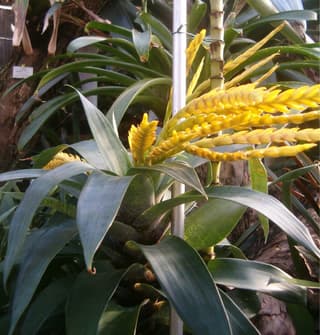
Goudaea (genus)
Goudaea
Goudaea is a genus of epiphytic bromeliads in the family Bromeliaceae, split from Vriesea in 2009 based on molecular phylogenetic studies. Native to Andean forests of Colombia, it includes species such as G. ospinae and G. chrysostachys, prized for their showy inflorescences and elegant rosette foliage.
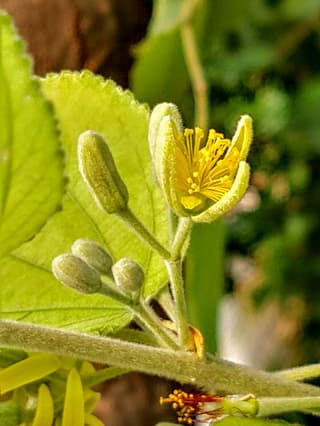
Phalsa
Grewia asiatica
The phalsa (Grewia asiatica) is a deciduous shrub or small tree belonging to the mallow family (Malvaceae), native to South Asia, primarily India and Pakistan. Following its small yellow flowers, it produces purple-red, tart berries that are consumed fresh or processed into refreshing summer drinks and syrups. The plant is fast-growing and highly tolerant of heat and drought, making it a popular fruit shrub during the hot summers of South Asia.
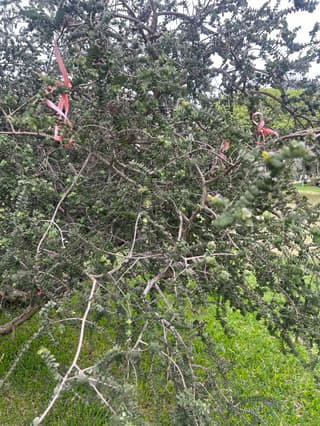
Coulter's Lignum Vitae
Guaiacum coulteri
Coulter's Lignum Vitae (Guaiacum coulteri) is a slow-growing evergreen tree native to western Mexico and Guatemala. Renowned for producing the world's densest and hardest wood, it bears stunning violet-blue flowers in spring and summer. Highly drought-tolerant once established, it thrives in full sun and well-drained soils, making it ideal for xeriscape and low-maintenance gardens in warm climates.
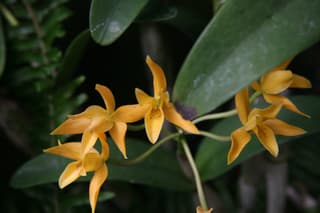
Orange Cattleya
Guarianthe aurantiaca
Guarianthe aurantiaca, commonly known as the Orange Cattleya, is a compact epiphytic orchid native to the tropical and montane forests of Mexico, Guatemala, Honduras, El Salvador, Nicaragua, and Costa Rica. It forms clumps of slender cane-like pseudobulbs topped with a pair of leathery, evergreen leaves, and produces clusters of two to eleven small, vividly orange (occasionally yellow) flowers from late winter through spring. Once classified as a Cattleya, this species is now placed in the genus Guarianthe alongside close relatives such as G. skinneri and G. bowringiana.
Velvetseed
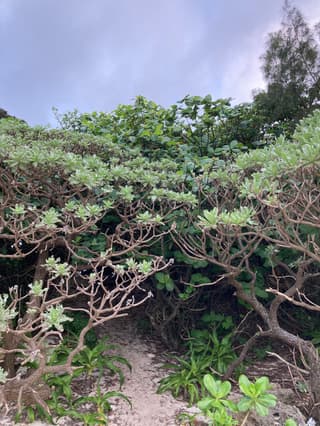
Guettarda
Guettarda is a genus of tropical and subtropical evergreen shrubs and small trees in the family Rubiaceae, comprising over 150 species. Commonly known as velvetseed, these plants are native to the Neotropics, Pacific Islands, and coastal regions of Africa and Australia. They are characterized by opposite, often velvety leaves, fragrant tubular white or pink flowers, and small fleshy multi-seeded fruits. Species such as G. speciosa thrive on sandy beaches and coastal margins, while G. scabra favors dry Caribbean woodlands.
Giant Rhubarb
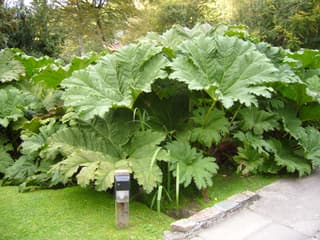
Gunnera manicata
Gunnera manicata is a monumental clump-forming herbaceous perennial native to the Serra do Mar coastal mountains of southern Brazil. Commonly known as Giant Rhubarb or Dinosaur Food, it is celebrated for its colossal leaves that can exceed 2 meters in diameter. Despite its common name, it is not related to culinary rhubarb. It belongs to the family Gunneraceae and has a fascinating symbiotic relationship with nitrogen-fixing cyanobacteria.
Guzmania
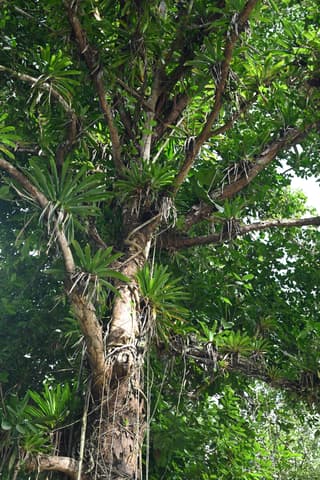
Guzmania
Guzmania is a genus of epiphytic bromeliads native to the rainforests of Central and South America, prized for its strap-shaped leaf rosettes and long-lasting, brightly colored bracts that resemble flowers.
Mexican Logwood
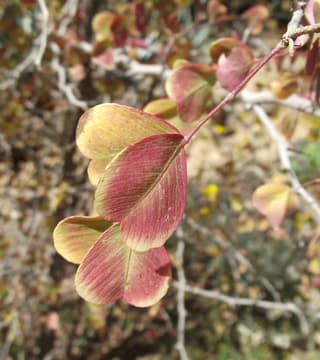
Haematoxylum brasiletto
The Mexican Logwood (Haematoxylum brasiletto) is a small tree or thorny shrub native to Mexico, Central America, and northern Colombia, belonging to the Fabaceae family. It grows between 2 and 15 meters tall, featuring a twisted, fluted trunk and an intense red heartwood, historically used for extracting textile dye (hematoxylin). Its leaves are pinnate with heart-shaped leaflets, and the branches bear rigid thorns up to 2 cm long. It produces small clusters of fragrant yellow flowers, followed by copper-colored seed pods. It is extremely drought and heat resistant, thriving in rocky, alkaline soils of tropical deciduous forests and thorn scrubs.
Japanese forest grass
Hakonechloa macra
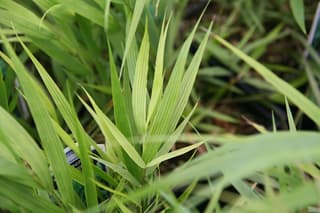
Hakonechloa macra is the only species in the genus Hakonechloa, a perennial clumping grass native to the mountainous regions of the Japanese island of Honshu, where it grows on moist rocks and stabilized scree in wooded mountain gorges between 500 and 1500 m above sea level. It forms dense clumps with short creeping rhizomes and thin, arching stems over 50 cm long. Narrow lanceolate leaves grow to about 25 cm in length and are complemented by inconspicuous greenish-yellow panicle inflorescences from summer to autumn. Thanks to its elegant, waterfall-like growth habit, it is one of the most popular ornamental grasses for shady gardens.
Trumpet Tree
Handroanthus
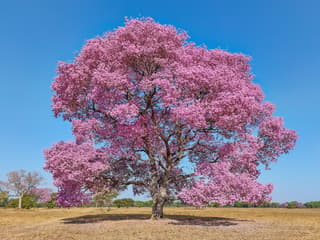
Handroanthus is a genus of Neotropical flowering trees in the family Bignoniaceae, native to Brazil and other tropical and subtropical regions of the Americas. This genus-level profile covers the group as a whole, including iconic species such as the yellow-flowered Golden Trumpet Tree (Handroanthus albus and H. chrysotrichus) and the purple-flowered Pink/Purple Trumpet Tree (H. impetiginosus). Known in Brazil as "Ipê," these deciduous trees produce one of the most spectacular displays in the plant world: a canopy of flowers covering completely leafless branches, typically between late winter and spring.
Pink Trumpet Tree
Handroanthus heptaphyllus
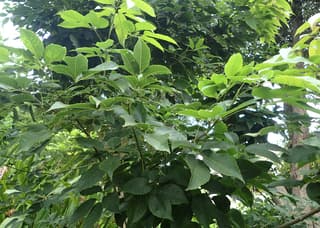
Handroanthus heptaphyllus, commonly known as the Pink Trumpet Tree or Purple Ipê, is a stunning South American native celebrated for its spectacular lavender-pink trumpet-shaped flowers that emerge on bare branches from July to September. It can reach up to 20 meters in height and is widely planted as a street and ornamental tree throughout Brazil and beyond.
Pink trumpet tree
Handroanthus impetiginosus
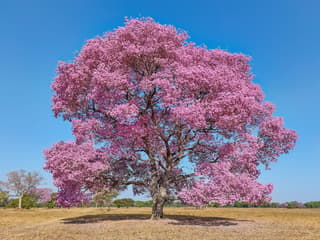
The pink trumpet tree (Handroanthus impetiginosus) is a deciduous tree native to South America, prized for its striking pink-to-magenta trumpet-shaped flowers that bloom on bare branches in late winter to spring. It can grow up to 20 m tall and is widely planted as an ornamental street and garden tree. Its inner bark, known as pau d'arco, is traditionally brewed as a medicinal tea.
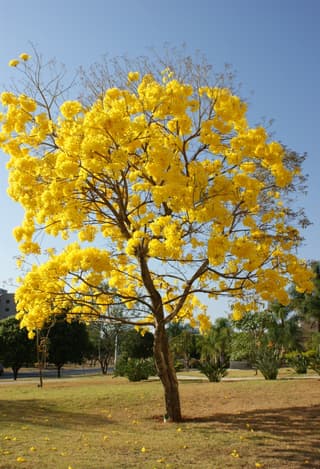
Yellow ipê
Handroanthus serratifolius
Handroanthus serratifolius, the yellow ipê, is a deciduous tree native to the forests and savannas of South America, especially Brazil. In spring it drops its leaves and covers itself entirely in golden-yellow flowers, one of the most striking displays of Brazilian flora.
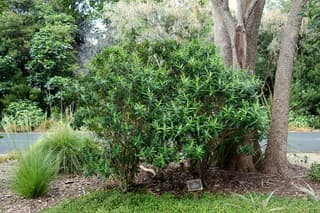
Hebe 'Magic Color'
Hebe 'Magic Color'
Hebe 'Magic Color' is an evergreen ornamental shrub from the plantain family (Plantaginaceae), belonging to the genus Hebe (formerly classified under Veronica), which is native to New Zealand. This cultivar is prized for its variegated foliage, where small opposite leaves display alternating shades of green, cream, and pinkish-purple. In late summer and autumn, the shrub is adorned with small clusters of purple to white flowers. It is a compact, densely branched shrub suitable for garden beds, containers, and low hedges.
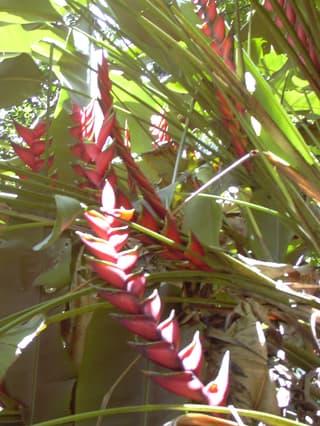
Lobster Claw
Heliconia bihai
Heliconia bihai, commonly known as Lobster Claw or Heliconia, is a spectacular tropical plant native to the Caribbean and South America. Its dramatic inflorescences in shades of red, orange, and yellow emerge among broad, glossy leaves, resembling lobster claws. It is highly valued in tropical floral arrangements and as an ornamental garden plant.
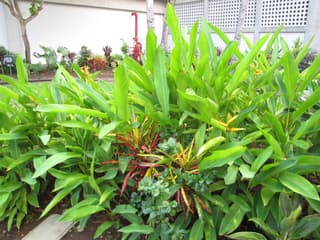
Parrot Heliconia
Heliconia psittacorum
Heliconia psittacorum, commonly known as Parrot Heliconia or Parrot's Beak, is a tropical flowering plant native to Brazil and the Caribbean. It is prized for its vibrant bracts in shades of red, orange, and yellow that resemble a parrot's plumage. A member of the Heliconiaceae family, it blooms nearly year-round in warm climates and is widely used as an ornamental garden plant and cut flower.
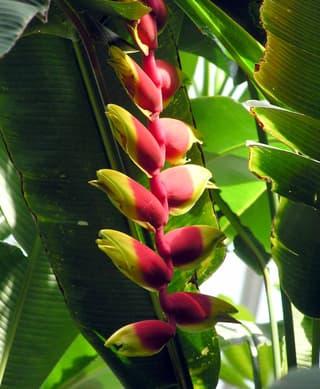
Hanging Lobster Claw
Heliconia rostrata
Heliconia rostrata, commonly known as the Hanging Lobster Claw, is a tropical perennial herbaceous plant native to Peru, Bolivia, and Colombia. It is celebrated for its dramatic pendant inflorescences composed of bright red bracts tipped with yellow and green, attracting hummingbirds and lasting for weeks. Its large, dark-green banana-like leaves can reach up to 120 cm in length, creating a stunning tropical statement in any warm garden.
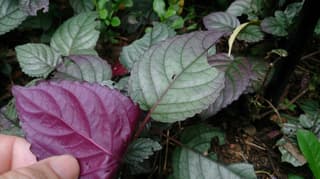
Purple Waffle Plant
Hemigraphis alternata
Hemigraphis alternata is a striking tropical ground cover from Southeast Asia, prized for its uniquely textured, waffle-like leaves that display metallic silvery-green tops and vivid purple undersides. A member of the Acanthaceae family, it is one of NASA's top-rated air-purifying plants, effectively filtering volatile organic compounds like benzene and toluene from indoor air. While it produces tiny white bell-shaped flowers, it is grown primarily for its dramatic foliage.
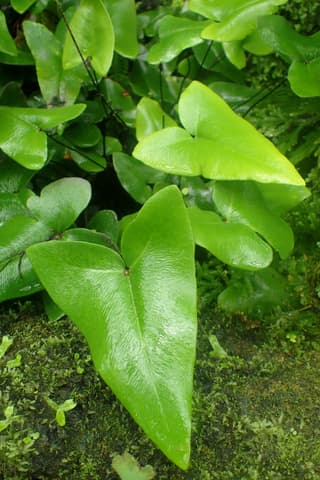
Heart Fern
Hemionitis arifolia
Hemionitis arifolia, commonly known as the Heart Fern, is a small fern from the Pteridaceae family, native to the moist forests of South and Southeast Asia (ranging from India to China, Cambodia, and Taiwan). The plant reaches only 6-10 inches in height and produces two types of fronds set on dark, almost black petioles: shorter, leathery heart-shaped sterile fronds and longer, arrow-shaped fertile fronds that rise above the clump. It is a slow grower and thrives best in conditions similar to a terrarium.
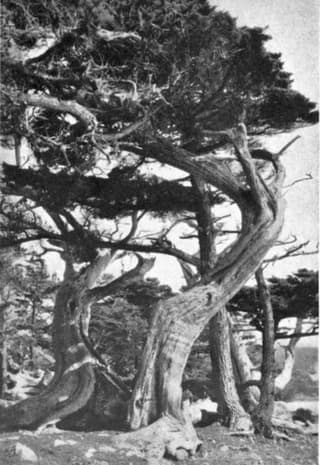
Monterey Cypress
Hesperocyparis macrocarpa
Hesperocyparis macrocarpa, commonly known as Monterey Cypress, is a fast-growing evergreen conifer native to the central California coast. Known for its dramatic windswept silhouette in the wild, the cultivar 'Goldcrest' is widely used as a fragrant, lemon-scented indoor or patio plant. Its bright golden-green foliage and compact columnar form make it a striking ornamental choice.
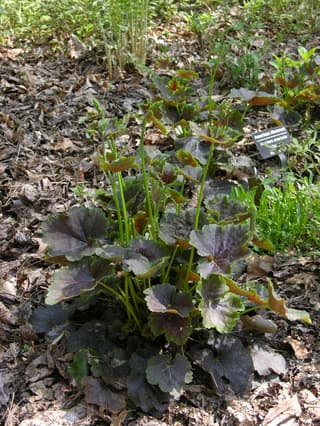
American Alumroot
Heuchera americana
Heuchera americana, commonly known as American Alumroot, is a native perennial of Eastern North America prized for its ornamental, deeply lobed foliage with silver-grey marbling. It produces delicate bell-shaped flowers on wiry stalks in late spring and thrives in shaded garden settings.
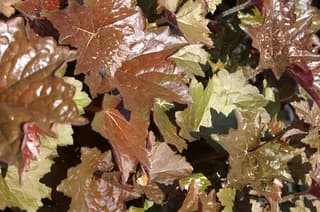
Crevice Alumroot
Heuchera micrantha
Heuchera micrantha, commonly known as crevice alumroot or small-flowered alumroot, is a herbaceous perennial in the family Saxifragaceae native to the rocky cliffs, talus slopes, and crevices of western North America, from British Columbia south to California. It forms low, mounding rosettes of deeply lobed, maple-like leaves in shades of green to bronzy-red, providing year-round ornamental interest. In late spring to early summer, slender wiry stems rise above the foliage bearing loose, airy panicles of tiny white to cream flowers that attract native bees and flies. It thrives in partial shade and well-drained, rocky soils, making it an excellent choice for rock gardens, shaded borders, and naturalistic plantings.
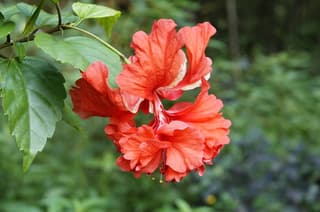
Chinese Hibiscus
Hibiscus rosa-sinensis
Hibiscus rosa-sinensis, commonly known as Chinese Hibiscus or Tropical Hibiscus, is a flowering evergreen shrub in the family Malvaceae, native to tropical Asia. It produces large, showy flowers in a wide range of colors throughout the year and is widely cultivated as an ornamental plant in gardens and containers worldwide.
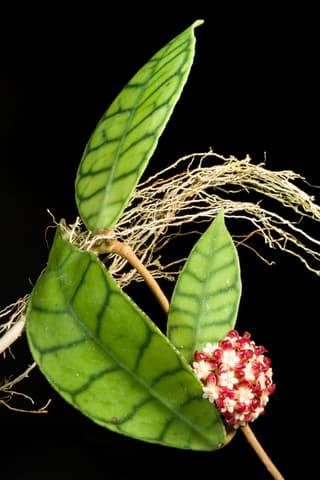
Hoya Callistophylla
Hoya callistophylla
Hoya callistophylla is an epiphytic climbing plant native to the rainforests of Borneo (Sabah, Malaysia), primarily cultivated for its strikingly veined foliage. The thick, leathery leaves feature a silvery-light network of veins against a dark green background, appearing almost hand-painted. In spring and summer, it produces fragrant, star-shaped flower umbels consisting of 20 to 40 individual creamy-white to pale yellow blossoms with reddish tips. As a vining plant, it is perfectly suited for hanging baskets or trellises.
Hoya crassipetiolata
Hoya crassipetiolata
Hoya crassipetiolata is an epiphytic climbing plant from the Apocynaceae family, native to the tropical forests of Southeast Asia (Indonesia, Thailand, Malaysia). It is known for its thick, waxy, deep green leaves with prominent light-colored veining, and for the unusually thick petiole that gives it its name. In spring and summer, it blooms with clusters of creamy-white, fragrant, star-shaped flowers typical of the Hoya genus. It is a popular indoor plant due to its relatively easy maintenance and slow growth, suitable for hanging baskets or training on a support.

Mountain fern moss
Hylocomium splendens
Mountain fern moss (Hylocomium splendens) is a prominent moss in the Hylocomiaceae family, forming dense, shimmering, olive- or yellow-green mats with a characteristic tiered (stair-step) structure—each annual growth segment emerges from the center of the previous year's shoot, creating distinct steps. The stems, reddish at the base, reach 10-20 cm in length and are bipinnately branched. This moss lacks true roots; it attaches to the substrate via rhizoids and absorbs water and nutrients through its entire surface. It is a common species in boreal coniferous and mixed forests of the Northern Hemisphere. It prefers nutrient-poor, acidic forest soils, growing on earth, humus, and decaying wood in shaded areas.
Rooting Shank
Hymenopellis radicata
Hymenopellis radicata, also known as the Rooting Shank, is an edible mushroom characterized by its long, spindle-shaped stem that extends deep into the ground to decaying roots of deciduous trees. When wet, the cap is distinctly slimy, wrinkled, and colored in brownish to olive tones. It is a fascinating species that indicates the presence of old beech wood beneath the forest floor.
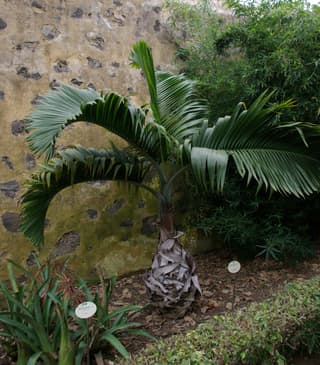
Bottle palm
Hyophorbe lagenicaulis
The bottle palm (Hyophorbe lagenicaulis) is a solitary palm from the Arecaceae family, endemic to Round Island in the Mascarene Islands (Mauritius). It is famous for its smooth, grayish trunk, which is swollen in a bottle shape at the base and tapers toward the crown, supporting a small canopy of 4 to 8 deep green pinnate leaves (young plants often show reddish or orange tones). A slow-growing species, fewer than 10 adult specimens remain in the wild, making it critically endangered, although its ornamental cultivation is widespread in tropical and subtropical climates worldwide.
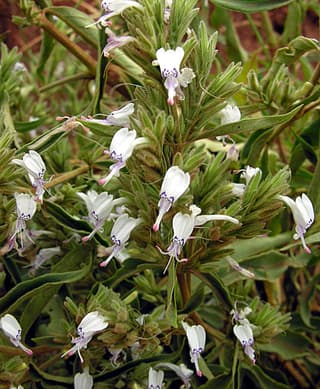
White Ribbon Bush
Hypoestes forskaolii
Hypoestes forskaolii, commonly known as White Ribbon Bush, is a perennial or annual herb native to tropical Africa and the Arabian Peninsula. It belongs to the family Acanthaceae and is prized both as an ornamental plant and for its remarkable medicinal properties. The plant produces smooth, oval leaves forming dense, vivid green foliage, with delicate small flowers that range from white to pale pink. In its natural habitat, it grows under shrubs and trees, thriving in filtered shade and well-drained tropical soils. Of particular scientific interest are its diterpene compounds, which have demonstrated antimicrobial, anticancer, and antioxidant properties in laboratory studies.
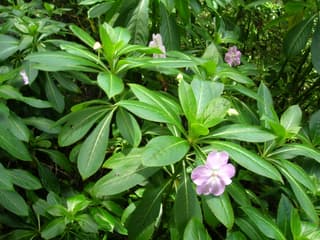
Poor Man's Rhododendron
Impatiens sodenii
Impatiens sodenii, commonly known as Poor Man's Rhododendron, is a perennial subshrub native to Kenya and Tanzania. It grows up to 2.5 meters tall with whorled leaves and produces pink or white flowers year-round. It has received the Royal Horticultural Society's Award of Garden Merit and is widely cultivated as an ornamental plant in tropical and subtropical gardens.
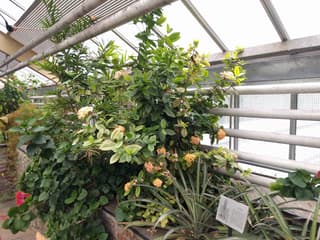
Chinese Ixora
Ixora chinensis
Ixora chinensis, commonly known as Chinese Ixora or Dwarf Ixora, is a tropical evergreen shrub in the Rubiaceae family, native to China and Southeast Asia. It produces dense clusters of small, vibrant flowers in shades of red, orange, pink, yellow, and white, blooming almost year-round in tropical climates. It is widely used in gardens, hedges, and ornamental beds, prized for its long flowering period and compact, dense growth habit.
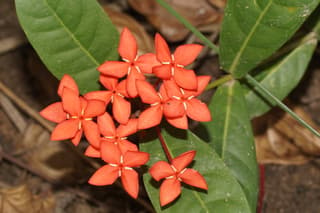
Jungle Geranium
Ixora coccinea
Ixora coccinea, commonly known as jungle geranium or flame of the woods, is a dense, multi-branched evergreen shrub in the family Rubiaceae. Native to Southern India, Bangladesh, and Sri Lanka, it has been widely cultivated across tropical and subtropical regions worldwide for centuries. The plant typically reaches 1.2–1.8 m (4–6 ft) in height under garden conditions, though it can grow to 3.7 m (12 ft) or more in ideal settings. Its glossy, leathery oblong leaves emerge bronzy before maturing to deep dark green, providing an attractive backdrop for its showy flowers. The plant produces spectacular rounded clusters (corymbs) of small, tubular, four-petaled flowers measuring 2–5 inches across. While the classic form bears brilliant scarlet-red blooms, cultivars exist in orange, yellow, pink, and white. In frost-free tropical climates, flowering is nearly continuous year-round, making it one of the most reliable and long-blooming tropical shrubs available. The flowers are mildly fragrant and attract butterflies, hummingbirds, and other pollinators, followed by small dark purple-black berry-like fruits. Ixora coccinea thrives in full sun with consistently moist, well-draining, acidic soil (pH 5.0–5.5) — it is notably sensitive to alkaline conditions, quickly developing iron and manganese chlorosis if soil pH rises above 6.0. It is frost-tender, suited only to USDA zones 10–11 outdoors, but can be grown as a container plant brought indoors in cooler climates. Beyond its ornamental value, Ixora holds significant cultural and medicinal importance — it is sacred in Hindu practice as an offering to Shiva, is the national flower of Suriname, and has a long history of use in Ayurvedic medicine.
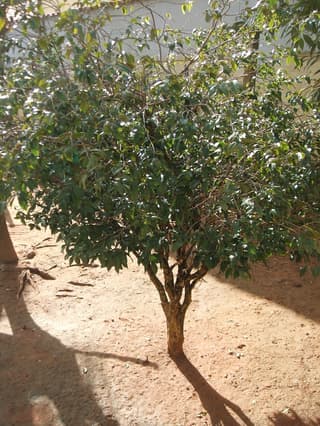
Jabuticaba
Jaboticaba
The jabuticabeira is a slow-growing, evergreen Brazilian fruit tree known for its cauliflory: white flowers and fruits emerge directly from the trunk and thick branches rather than just at the tips of the limbs. Native to the Atlantic Forest (primarily Minas Gerais, São Paulo, and Rio de Janeiro), it can take 8 to 10 years to bear fruit when grown from seed, but grafted seedlings or those obtained through air layering fruit much earlier, between 3 and 5 years. It is widely used as both a fruit-bearing and ornamental tree, including in pots and as bonsai.
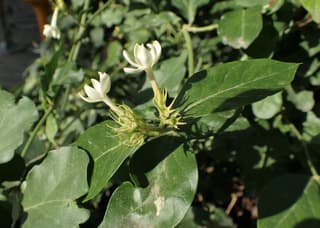
Jasmine
Jasminum
Jasminum is a genus of about 200 species of shrubs and vines in the olive family (Oleaceae), native to tropical and warm temperate regions of Asia, Africa, Australasia and Oceania. Grown for their intensely fragrant, star-shaped flowers, usually white or yellow, jasmines range from compact evergreen shrubs to vigorous climbing vines that can reach several meters with support. Popular garden and houseplant species include Jasminum officinale (common jasmine), Jasminum sambac (Arabian jasmine, used to scent jasmine tea) and Jasminum polyanthum (a fast-growing winter-flowering climber). Most jasmines bloom heaviest in spring and summer, filling gardens and homes with perfume especially in the evening. Because this entry covers the genus as a whole, care guidance below reflects typical requirements shared across common cultivated species; individual species can vary in hardiness, mature size and growth habit.
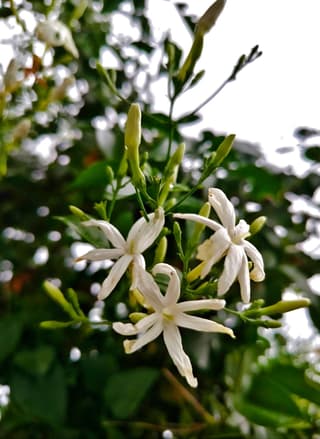
Azores Jasmine
Jasminum azoricum
Azores jasmine (Jasminum azoricum) is an evergreen climbing shrub in the olive family (Oleaceae), prized for its fragrant white flowers with a subtle citrus scent that bloom from spring through fall. With woody stems at the base and trailing, semi-woody growth above, it can reach 2.5 to 6 meters in height when given support to climb. Its glossy, dark green trifoliate leaves keep the plant attractive year-round.
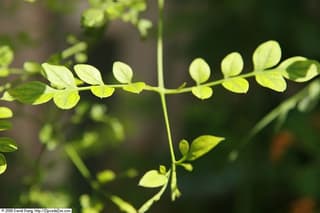
Common Jasmine
Jasminum officinale
Jasminum officinale, known as Common Jasmine or True Jasmine, is a vigorous semi-evergreen climbing vine native to Persia and the Himalayas. Celebrated worldwide for its intensely sweet, iconic fragrance, it produces clusters of delicate white flowers tinged pink in bud from late spring through autumn. A single plant can perfume an entire garden.
Medium Care Pet Safe
Our selection of 621 medium pet safe combines the characteristics of this category with moderate care needs. Ideal for those with basic experience.
Why Choose Medium Pet Safe?
Combining the beauty of pet safe with medium difficulty level lets you enjoy this category with a balanced care commitment. Each plant was selected to offer the best characteristics of the category at the care level you are looking for.