634 Medium Pet Safe | 2026 Guide - Page 7
Find 634 medium pet safe. Complete guide for your garden.
634 Pet Safe with medium level
Showing 217-252 of 634
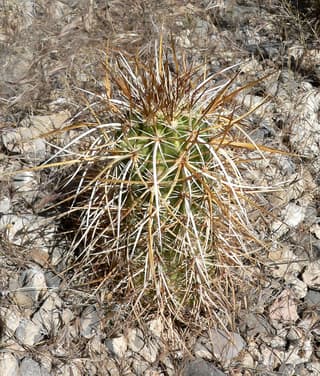
Engelmann's Hedgehog Cactus
Echinocereus engelmannii
Echinocereus engelmannii is a clustering cylindrical cactus native to the deserts of the southwestern United States and northern Mexico, prized for its dense, colorful spines and vivid magenta-to-pink funnel-shaped flowers that bloom in spring.
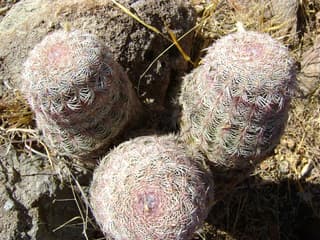
Rainbow Hedgehog Cactus
Echinocereus pectinatus
Echinocereus pectinatus is a small, solitary, cylindrical cactus native to the Chihuahuan Desert of northern Mexico and the Trans-Pecos region of Texas. Its ribs are lined with dense, comb-like spines banded in white and pink, giving rise to its common name. In late spring, it produces large, funnel-shaped magenta flowers that open in daylight and last several days.
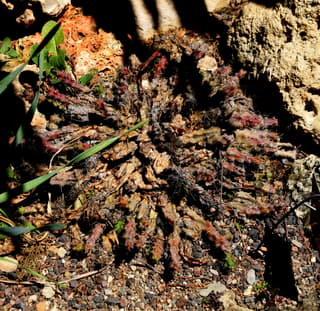
Ladyfinger Cactus
Echinocereus pentalophus
Echinocereus pentalophus, known as the ladyfinger cactus, is a low-growing, clustering cactus native to southern Texas and northeastern Mexico. Its slender, finger-like stems trail and branch to form dense mats up to a meter wide, and in late spring the plant produces large, funnel-shaped flowers in vivid pink to magenta with a pale throat that can nearly cover the entire clump for a brief but spectacular bloom.
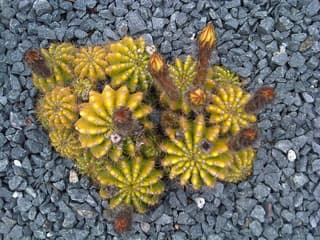
Green Ball Cactus
Echinopsis calochlora
The Green Ball Cactus (Echinopsis calochlora) is a small globose clustering cactus native to Brazil and Paraguay. Over time it forms dense clumps of bright green spheres adorned with spines, and produces large, fragrant white flowers that open at night during spring and summer.
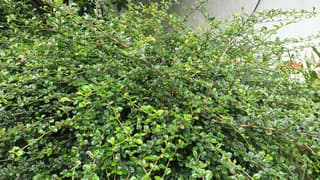
Fukien tea tree
Ehretia microphylla
The Fukien tea tree (Ehretia microphylla, synonym Carmona retusa) is an evergreen shrub in the borage family (Boraginaceae), native to South and Southeast Asia, ranging from India through China and Japan to northern Australia. Its small, shiny, dark green, and rough-textured leaves are 1.5–4 cm long; it produces tiny, star-shaped white flowers year-round, followed by reddish-orange, pea-sized berries. In nature, it can grow up to 4 meters tall, but due to its branching habit and trunk that thickens over time, it has become one of the most popular indoor bonsai species in Western bonsai culture—its name refers to the Fujian (formerly Fukien) province of China, from where it entered the bonsai trade. In the Philippines, a decoction made from its leaves was traditionally used to treat coughs, diarrhea, and stomach complaints.
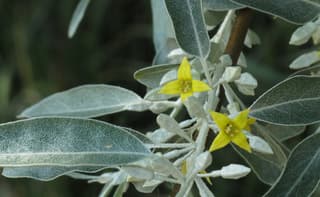
Russian Olive
Elaeagnus angustifolia
Elaeagnus angustifolia, commonly known as Russian Olive or Oleaster, is a deciduous tree or large shrub native to Western Asia and Southeast Europe. It is prized for its striking silvery-gray foliage, fragrant creamy-yellow flowers and small edible olive-like fruits. Exceptionally hardy, it tolerates extreme cold, drought, poor soils, and saline conditions. It is widely used in windbreaks, shelterbelts, and ornamental landscaping. Note: it is considered invasive in many regions, particularly across the western United States.

Fragrant Encyclia
Encyclia fragrans
The Fragrant Encyclia (Encyclia fragrans, syn. Prosthechea fragrans) is a sympodial epiphytic orchid native to tropical forests and cloud forests of Mexico, Central America, the Caribbean (Jamaica, Puerto Rico), and northern South America (Brazil, Ecuador, Costa Rica). It forms compact oval pseudobulbs, each with a single leathery, upright leaf, and produces stems with fragrant greenish-white to cream flowers, featuring a white lip streaked with purple stripes. The flowers exude a sweet aroma reminiscent of honey and vanilla, which is most intense at night.
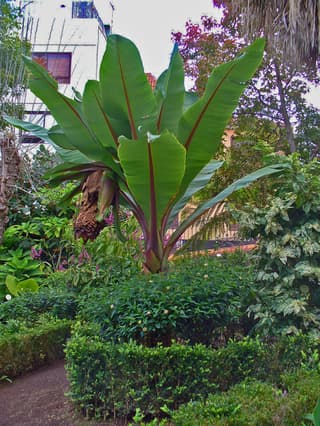
Abyssinian Banana
Ensete ventricosum
Ensete ventricosum, commonly known as the Abyssinian Banana or False Banana, is a dramatic tropical plant in the Musaceae family, native to the highlands of East Africa and Ethiopia. It produces enormous paddle-like leaves up to 6 metres long with a distinctive reddish midrib, making it one of the most striking specimen plants for large gardens and conservatories. Unlike true bananas, its fruits are inedible; instead, the pseudostem, corm, and inflorescence provide a fermented starch staple called kocho, feeding approximately 20 million Ethiopians for over 10,000 years.
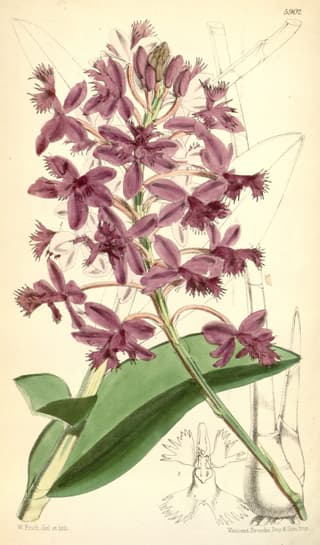
Jamieson's Epidendrum
Epidendrum jamiesonis
Epidendrum jamiesonis is a large, reed-stemmed terrestrial-to-epiphytic orchid native to the cool cloud forests of Colombia and Ecuador, found on trees and slopes between 1,700 and 3,500 meters elevation. Its sturdy cane-like stems carry evergreen leaves and terminate in showy inflorescences packed with numerous small, star-shaped flowers roughly 2.5 cm across. Unlike many orchids tied to a single bloom season, it can flower at almost any time of year given consistent moisture and bright light. First described by Reichenbach in 1856 and named for the Scottish botanist William Jamieson, who collected extensively in Ecuador, the species is now considered vulnerable in the wild due to habitat loss, making cultivated specimens valuable for ex-situ conservation.
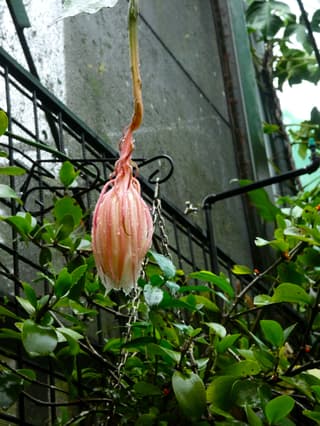
Orchid Cactus
Epiphyllum
Epiphyllum is a genus of epiphytic cacti native to the tropical forests of Central and South America. Unlike desert cacti, they grow perched on tree branches in dappled light, producing long, flat, trailing stems. They are celebrated for their spectacular flowers — enormous, often fragrant, and sometimes night-blooming — that last only one or two days, making each bloom a fleeting but unforgettable event.
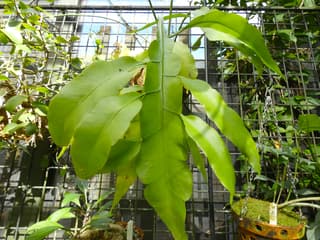
Queen of the Night
Epiphyllum oxypetalum
Epiphyllum oxypetalum is a spectacular epiphytic cactus native to Central America, famous for its stunning white nocturnal flowers that can reach up to 30 cm in diameter. The flowers open only for one night, releasing a sweet and intense fragrance, and wilt by dawn. It is a fast-growing plant that can reach up to 3 meters in height, with flattened stems that function as leaves (phylloclades) with wavy edges. Unlike other cacti, it has no spines.
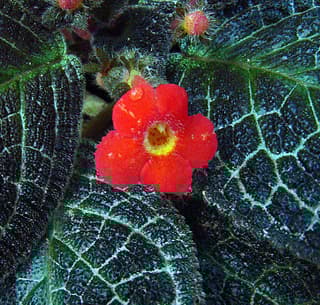
Flame Violet
Episcia cupreata
Episcia cupreata is a tropical creeping plant native to Colombia, belonging to the Gesneriaceae family. It features velvety leaves with stunning metallic patterns in shades of copper, silver, and green, along with tubular red or orange flowers that bloom throughout the year. Highly valued as a houseplant for its decorative foliage and trailing stoloniferous growth habit.
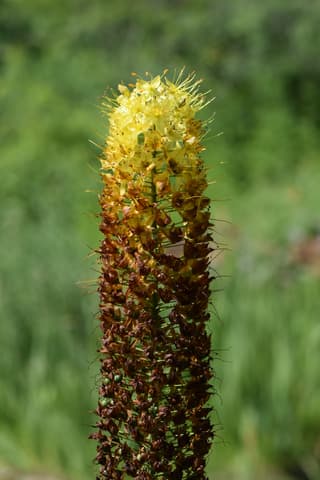
Foxtail Lily
Eremurus stenophyllus
Eremurus stenophyllus, commonly known as the Foxtail Lily or Desert Candle, is a tuberous-rooted perennial native to the steppes and semi-desert regions of Central Asia. It forms a rosette of narrow, strap-like leaves from which a tall, erect flower spike emerges in summer, reaching heights of 4 to 5 feet. This spike is densely packed with small, star-shaped yellow flowers that turn brownish at the base as they age. A recipient of the RHS Award of Garden Merit, it is highly prized for its spectacular architectural presence in the garden.
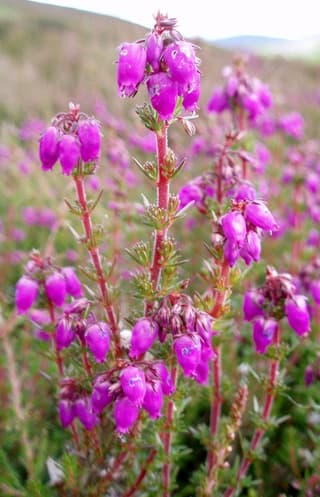
Bell heather
Erica cinerea
Bell heather (Erica cinerea) is a low, evergreen shrub in the Ericaceae family, native to the heathlands and coastal moors of Western Europe, including Britain, Ireland, France, and northern Spain. It forms compact mounds of fine, needle-like foliage and produces bell-shaped flowers in shades of purple, pink, or white from early summer to early autumn. Hardy and drought-tolerant once established, it thrives in acidic, well-drained soil and is a favorite for naturalistic gardens, borders, and ground cover.
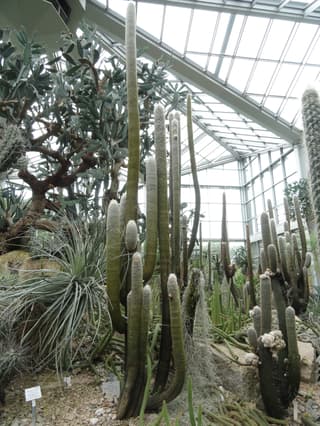
Old Man Cactus
Espostoa lanata
Espostoa lanata, commonly known as the Old Man Cactus, is a columnar cactus native to the Andean slopes from southern Ecuador to northern Peru. Its stem is densely covered in woolly white hairs that hide sharp spines, giving it a fuzzy and ornamental appearance. In its natural habitat, it can exceed 7 meters in height, but when grown in pots, it grows much more compactly and slowly.

White Head Cactus
Espostoopsis dybowskii
Espostoopsis dybowskii is a rare, columnar cactus species native exclusively to the eastern and northern parts of Bahia state in Brazil, within the caatinga habitat at altitudes of 300–750 meters. The plant grows on granite and gneiss rocks, as well as quartzitic outcrops, where it occasionally forms dense, single-species stands. Its erect, unbranched, cylindrical stems can reach heights of 2–4 meters with a diameter of approximately 8 cm and 20–28 low ribs. The stems are covered in dense, white hair that almost completely hides the surface, giving rise to the Portuguese folk names "cabeça-branca" (white head) and "homem-velho" (old man). The spines consist of 2–3 yellowish or brownish, needle-like central spines 2–3 cm long, while the radial spines are fine and short, hidden within the wool. Its nocturnal, approximately 4 cm long, white, bell-shaped flowers emerge from a lateral cephalium (a white woolly flowering area), typically in summer. The species is endemic to Brazil and is the only known species in the monotypic genus Espostoopsis within the Cactaceae family.
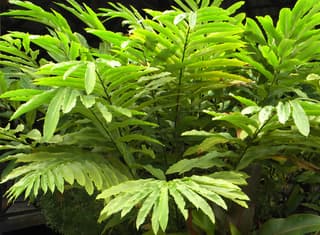
Torch Ginger
Etlingera elatior
Torch Ginger (Etlingera elatior) is a majestic tropical plant in the Zingiberaceae family, native to Southeast Asia, particularly Indonesia and Malaysia. Renowned for its spectacular torch-shaped inflorescences in shades of red, pink, and white, it can reach up to 20 feet (6 m) in height. It is highly valued as an ornamental plant, in traditional Southeast Asian cuisines, and in folk medicine.
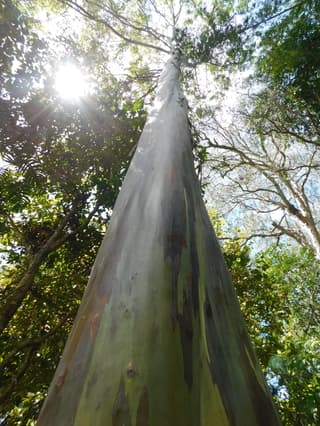
Rainbow Eucalyptus
Eucalyptus deglupta
Eucalyptus deglupta, commonly known as the Rainbow Eucalyptus, is a magnificent fast-growing tree native to the Philippines, Indonesia, and Papua New Guinea. It is the only eucalyptus species indigenous to the Northern Hemisphere. Famous for its stunning multicolored bark that peels away to reveal bright green, blue, purple, orange, and maroon layers underneath, it is one of the most visually spectacular trees in the world.
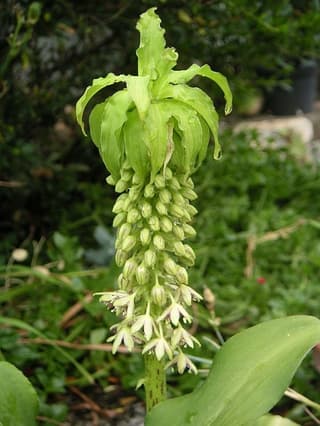
Pineapple lily
Eucomis bicolor
The Pineapple lily (Eucomis bicolor) is a bulbous plant in the asparagus family (Asparagaceae) native to South Africa. It forms a rosette of broad, strap-shaped leaves, and in summer, it sends up a dense inflorescence of star-shaped, pale green flowers edged in purple, crowned by a tuft of green bracts resembling a pineapple. The species grows 12–24 inches (30–60 cm) tall and blooms from July to September. It is not winter-hardy in colder climates, and the bulbs must be overwintered in a dry, frost-free environment.
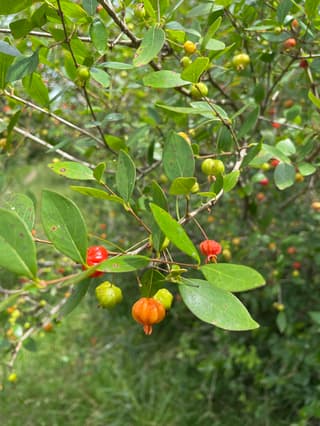
Eugenia
Eugenia
Eugenia is one of the largest genera in the Myrtaceae family, comprising hundreds of tropical and subtropical trees and shrubs native to the Americas. It features glossy evergreen foliage, small white flowers with showy stamens, and prized edible fruit, such as pitanga (Eugenia uniflora) and grumixama (Eugenia brasiliensis). Species in this genus are grown both as backyard fruit trees and as ornamentals, and are especially popular for hedging and topiary thanks to their tolerance of frequent pruning.
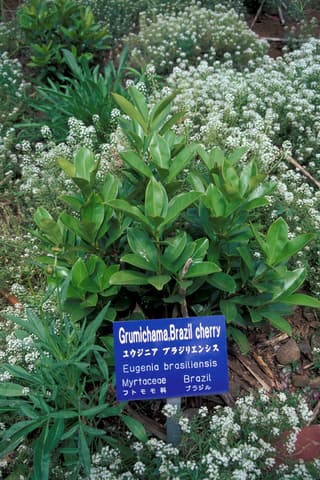
Grumichama
Eugenia brasiliensis
Grumichama (Eugenia brasiliensis) is a native fruit tree of Brazil's Atlantic Forest, belonging to the Myrtaceae family. It produces small, round berries with juicy pulp and a sweet-tart flavor, available in black, red, and yellow varieties. Highly valued both for its edible fruit and ornamental beauty, it is an important species for Atlantic Forest restoration.
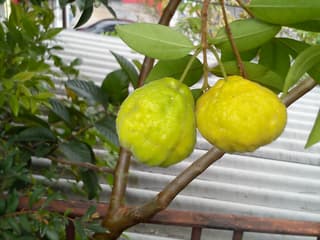
Uvaia
Eugenia pyriformis
Uvaia (Eugenia pyriformis) is a fruit-bearing tree native to the Brazilian Atlantic Forest, belonging to the Myrtaceae family. It produces aromatic yellow-orange fruits rich in vitamin C and bioactive compounds. This species holds great ecological and gastronomic value, widely used in forest restoration projects and sustainable landscaping.
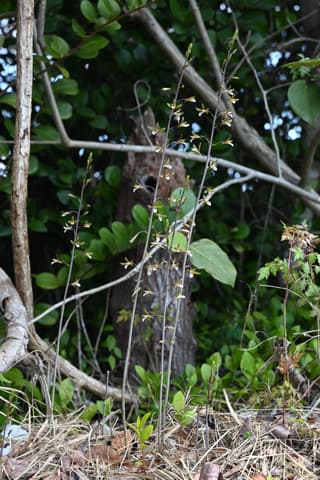
Chinese Crown Orchid
Eulophia graminea
Eulophia graminea, commonly known as Chinese Crown Orchid or Grass-leaf Eulophia, is a terrestrial orchid native to South and Southeast Asia. It produces grass-like leaves from pseudobulbs and sends up tall flower spikes bearing small green and brownish-purple blooms in spring. Though elegant in its native habitat, this species has become invasive in Florida, spreading rapidly through diverse ecosystems via dust-like seeds and wood chip mulch.
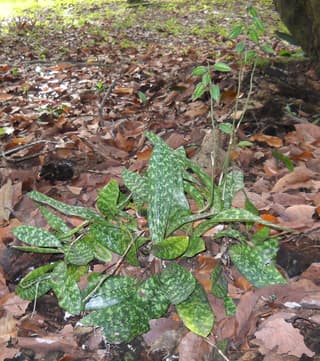
Spotted Eulophia
Eulophia maculata
Eulophia maculata, widely known by its synonym Oeceoclades maculata, is a terrestrial orchid native to tropical Africa, including Madagascar and Mauritius. Commonly called the Spotted Eulophia or Monk Orchid, it is one of the most successfully naturalized orchids in the world, now found throughout the Neotropics, Caribbean, and Florida. It grows in leaf litter and rocky scrub slopes up to 1200m elevation, producing mottled evergreen leaves and delicate white to pink flowers in late summer and fall.
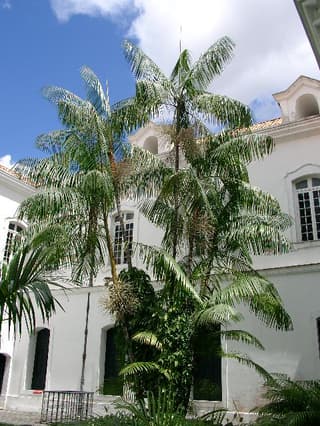
Açaí Palm
Euterpe oleracea
The açaí palm is a clustering, multi-stemmed palm native to the seasonally flooded várzea floodplains of the Amazon basin. Its slender, elegant stems can reach 15 to 25 meters tall and are topped with arching, pinnate fronds about a meter long. Clusters of hundreds of small, globose fruits ripen from green to deep purple-black, yielding the antioxidant-rich açaí pulp that has become famous worldwide.
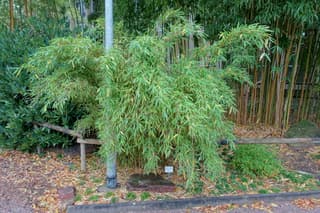
Muriel's Bamboo
Fargesia murielae
Fargesia murielae, also known as Muriel's Bamboo or Umbrella Bamboo, is a clump-forming bamboo native to the Chinese mountain forests. It does not spread via runners and therefore is not invasive. It is characterized by dense, elegantly arching culms and fine, bright green foliage that remains evergreen throughout the year. As one of the hardiest bamboo species, it can permanently withstand temperatures down to approximately -20 °C and even significantly colder for short periods. It flowers only every few decades in a rare, synchronized event (most recently in 1999) and is primarily cultivated for its foliage, not its blooms. Thanks to its dense, non-invasive growth habit, it is very popular as a privacy hedge, a container plant, or a solitary specimen by a garden pond.
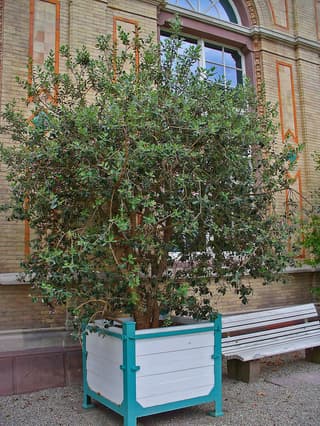
Pineapple Guava
Feijoa sellowiana
The feijoa (Feijoa sellowiana, accepted synonym Acca sellowiana) is an evergreen shrub or small tree in the Myrtaceae family, native to the subtropical highlands of southern Brazil, Uruguay, Paraguay, and Argentina. The leaves are leathery, dark green and glossy on the upper surface, and silvery and tomentose on the lower surface, giving the canopy a characteristic bicolor effect. In late spring to early summer, it produces showy flowers with purple-tinged white petals and long red stamens with yellow pollen: both the petals and the fruits are edible. The fruit, an oval green berry with aromatic pulp, resembles a cross between pineapple and strawberry in flavor. It is a hardy plant, drought-tolerant once established, resistant to salt spray and brief frosts, and widely used as an ornamental hedge and fruit tree in Mediterranean climates.
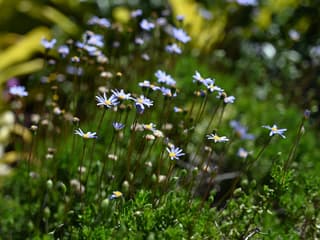
Blue Marguerite
Felicia amelloides
Felicia amelloides is an evergreen perennial (sometimes biennial) plant belonging to the Asteraceae family, native to the southern coast of South Africa, where it grows on sandy dunes and rocky slopes. It forms a small, bushy shrub 50-100 cm tall, with opposite, oval leaves that are rough to the touch due to their covering of fine hairs. From late spring until autumn, it produces numerous daisy-like flower heads, about 3 cm wide, with sky-blue ray florets and a bright yellow center.

Nerve Plant
Fittonia albivenis
Fittonia albivenis is a tropical plant native to the rainforests of Peru. It is characterized by its stunning deep green leaves with white or red veins that give it a mosaic appearance. The name "nerve plant" comes from the network of veins that resembles a nervous system. It belongs to the Acanthaceae family and was named after Elizabeth and Sarah Mary Fitton, two Irish botanist sisters from the 19th century.
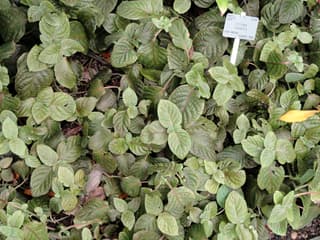
Giant Nerve Plant
Fittonia gigantea
The Giant Nerve Plant (Fittonia gigantea) is a mat-forming evergreen perennial native to the tropical rainforests of Ecuador and Peru, in the Acanthaceae family. Its oval leaves, up to 16 cm long, display deep green tones traced by striking dark red veins that resemble a network of nerves - the source of its common name. It spreads as a low, creeping groundcover, making it a favorite for terrariums, greenhouse cabinets, and high-humidity indoor spaces.
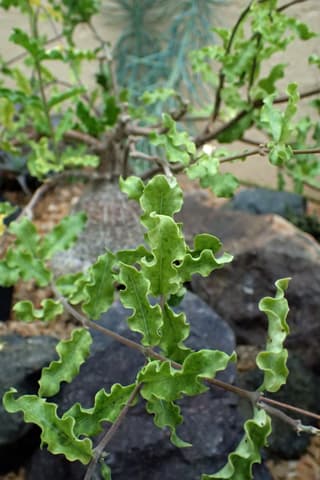
Hottentot Bread
Fockea edulis
Fockea edulis is a caudiciform succulent vine native to the arid savannahs of South Africa and Namibia. Above ground it produces thin, twining stems with small, leathery leaves that scramble over rocks and shrubs; below (or partly above) the soil sits a large, gray, warty tuber (caudex) that can grow to 60 cm or more across over many decades. The tuber gives the plant its common name, "Hottentot bread," referencing the traditional use of the starchy root as an emergency food source by the Khoikhoi people of southern Africa, after careful preparation to remove bitter compounds. Slow-growing and long-lived, it is prized by collectors as a caudiciform specimen and container plant.
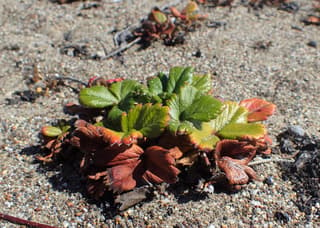
Beach Strawberry
Fragaria chiloensis
Fragaria chiloensis, commonly known as Beach Strawberry or Coastal Strawberry, is a low-growing perennial native to the Pacific coastlines of the Americas, from Alaska to Chile and Argentina. It is one of the two parent species of the modern cultivated strawberry (Fragaria × ananassa). The plant produces white to pale red, highly aromatic fruits and forms dense ground-covering mats via stolons. Its dark green, glossy trifoliate leaves may turn reddish in autumn, adding ornamental value.
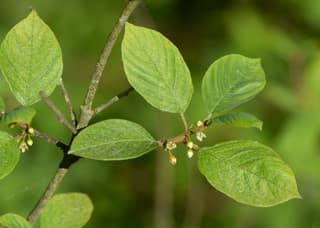
Buckthorn
Frangula
Frangula is a genus of approximately 56 species of deciduous or evergreen shrubs and small trees in the family Rhamnaceae, commonly known as buckthorns. They have a near-cosmopolitan distribution across Europe, the Americas, and large parts of Asia. Frangula species are characterized by alternate simple leaves, spineless branches, buds without scales, small five-petaled flowers, and two- to four-seeded berry-like fruits dispersed by birds. The bark and berries have a long history of medicinal use as natural laxatives. Several species, notably Frangula alnus, are considered invasive in parts of North America.
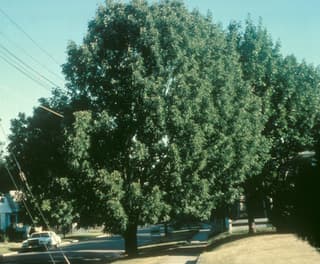
White ash
Fraxinus americana
White ash (Fraxinus americana) is a large, fast-growing deciduous shade tree native to eastern and central North America. Part of the olive family (Oleaceae), it features odd-pinnate compound leaves with 5-9 leaflets that turn yellow to purple in fall, and can reach 60-80 feet tall in the landscape.
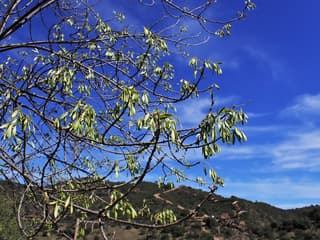
Narrow-leaved Ash
Fraxinus angustifolia
Fraxinus angustifolia, commonly known as narrow-leaved ash, is a medium to large deciduous tree native to Southern Europe, Northwest Africa, and Southwest Asia. It belongs to the family Oleaceae and can reach heights of 20 to 30 meters. Its pinnate leaves with slender, characteristic leaflets turn yellow and reddish in autumn. It flowers in spring before leaf emergence, producing small purplish-green flowers pollinated by wind.
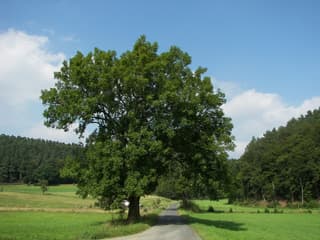
European Ash
Fraxinus excelsior
European ash (Fraxinus excelsior) is a large deciduous tree native to Europe, belonging to the Oleaceae family. It can grow 18-24 meters tall, with a rounded crown and pinnately compound leaves. Its small, petal-less flowers appear before the leaves in spring. A moderately fast-growing species, it has long been valued as an ornamental and shade tree, but is now severely threatened by ash dieback disease (caused by the fungus Hymenoscyphus fraxineus) and the emerald ash borer.
Medium Care Pet Safe
Our selection of 634 medium pet safe combines the characteristics of this category with moderate care needs. Ideal for those with basic experience.
Why Choose Medium Pet Safe?
Combining the beauty of pet safe with medium difficulty level lets you enjoy this category with a balanced care commitment. Each plant was selected to offer the best characteristics of the category at the care level you are looking for.