Ericaceae
Bell Heather (Erica cinerea)
Erica cinerea
Grow in full sun (6-8 hours daily) in acidic, well-drained, nutrient-poor soil. Water moderately, allowing the soil to dry slightly between waterings, and avoid waterlogging to prevent root rot. It is slow-growing and largely pest-free under proper conditions.
Every 4 days
Direct sun
10° - 18°C
% - %
Categories
What is Bell heather?
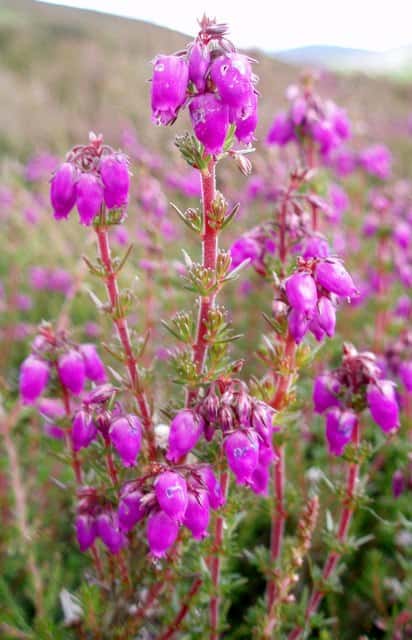
Bell heather (Erica cinerea) is a medium-care plant from the Ericaceae family. Bell heather (Erica cinerea) is a low, evergreen shrub in the Ericaceae family, native to the heathlands and coastal moors of Western Europe, including Britain, Ireland, France, and northern Spain. It forms compact mounds of fine, needle-like foliage and produces bell-shaped flowers in shades of pur...
Bell heather grows up to 60cm, spread of 60cm, watering every 4 days, 10°C – 18°C. It is not suitable for indoor environments and safe for pets.
Unlike many popular species, Bell heather is safe to keep around pets.
How to Care for Bell heather?
TLDR: Bell heather needs Direct sun, watering every 4 days, and temperatures between 10-18°C with 40-70% humidity.
How Often Should You Water Bell heather?
Water roughly every 4 days, keeping the soil lightly moist but never soggy; once planted in well-drained garden soil, rainfall is usually sufficient for most of the year.
How Much Light Does Bell heather Need?
Plant in full sun; at least 6 hours of direct light daily ensures abundant blooms and compact growth.
What Is the Best Soil for Bell heather?
Use acidic soil (pH 4.5-6.5) that is sandy or peaty and well-drained; avoid chalky or alkaline soils, which severely hinder growth.
What Pot Should You Use for Bell heather?
Terracotta or clay pots with good drainage holes suited to acidic potting mix; efficient drainage is essential to avoid waterlogging.
What Is Bell heather and Where Does It Come From?
Bell heather (Erica cinerea) is a low, evergreen shrub in the Ericaceae family, native to the heathlands and coastal moors of Western Europe, including Britain, Ireland, France, and northern Spain. It forms compact mounds of fine, needle-like foliage and produces bell-shaped flowers in shades of purple, pink, or white from early summer to early autumn. Hardy and drought-tolerant once established, it thrives in acidic, well-drained soil and is a favorite for naturalistic gardens, borders, and ground cover.
How to Propagate Bell heather?
Semi-hardwood stem cuttings
Always use an acidic, well-drained mix; success rates are higher in a cold frame or mini-tunnel with high humidity.
- 1 Take 5-8 cm semi-hardwood cuttings in mid- to late summer
- 2 Strip the leaves from the lower half of the cutting
- 3 Dip the cut end in rooting hormone
- 4 Insert into a sandy, acidic propagation mix and keep it moist
- 5 Keep in a shaded, sheltered spot until roots form
Materials needed:
How Big Does Bell heather Grow?
TLDR: Bell heather can reach up to 60cm tall with Slow growth rate.
Max height
60cm
Spread
60cm
Growth rate
Slow
Foliage
Evergreen
Plant Uses
Ornamental
Great for decoration
Ground Cover
Soil coverage
Is your plant showing symptoms?
Click on the symptom to discover possible causes:
What Diseases Commonly Affect Bell heather?
TLDR: Bell heather is susceptible to 7 known diseases. Monitor regularly for early detection.
Root Rot
Root rot is a serious fungal disease that affects the root system of plants, causing them to decay and die. It is primarily caused by overwatering, poor drainage, or soil-borne fungi such as Pythium, Phytophthora, Rhizoctonia, and Fusarium. The disease thrives in waterlogged conditions where roots are deprived of oxygen, making them susceptible to fungal infection.
Phytophthora Root Rot
Disease caused by fungus-like organisms (oomycetes) that live in soil and can survive for years. It affects roots, stem, and crown of plants, being especially severe in waterlogged or poorly drained soils. It is the second most common cause of root rot in trees and shrubs.
Mealybugs
Mealybugs are small, soft-bodied insects covered with a white, waxy, cottony material. They are common pests of houseplants and outdoor plants in mild climates. These sap-sucking insects feed on plant tissue, causing damage, stunted growth, and can lead to plant death if left untreated. They produce sticky honeydew which attracts sooty mold.
Spider Mites
Spider mites are tiny arachnids (less than 1/20 inch long) related to spiders and ticks that feed on plant sap. They thrive in hot, dry conditions and can cause significant damage to ornamental and vegetable plants. During severe infestations, crop losses can reach 14% or higher as these pests disrupt vital plant processes including photosynthesis, carbon dioxide absorption, and transpiration.
Meaning & Symbolism
Heather is traditionally associated with protection, luck, and admiration; the purple variety in particular symbolizes admiration and solitude, a meaning rooted in Celtic and Scottish tradition.
Fun Facts
The name "cinerea" comes from Latin for "ash-colored," referring to the fine grayish down on its young stems.
It is one of the top nectar-producing plants in Northern Europe and a key source for heather honey.
It forms sweeping purple carpets across the coastal heaths of Western Europe in summer, an iconic feature of the British and Irish landscape.
Frequently asked questions
Is bell heather toxic to cats and dogs?
What kind of soil does bell heather need?
How often should I water bell heather?
When does bell heather bloom?
Compare with similar plants
| Attribute | Difficulty | Light | Watering | Pet Safe |
|---|---|---|---|---|
| Dark Fieldcap | Medium | Low light | 2d | ⚠️ |
| Azalea | Medium | Partial shade | 3d | ⚠️ |
| Muriel's Bamboo | Medium | Partial shade | 3d | ✓ |
| Bougainvillea | Medium | Direct sun | 7d | ⚠️ |




