622 Medium Pet Safe | 2026 Guide - Page 13
Find 622 medium pet safe. Complete guide for your garden.
622 Pet Safe with medium level
Showing 433-468 of 622
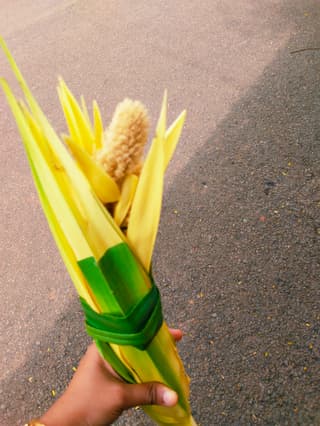
Fragrant Screwpine
Pandanus odorifer
Pandanus odorifer, commonly known as Fragrant Screwpine or Kewra, is a tropical evergreen plant of the family Pandanaceae, native to South Asia. Its intensely fragrant male flowers are distilled to produce kewra essence and kewra water — key ingredients in Indian cuisine, confectionery and traditional perfumery. With its long spiraling leaves and striking silhouette, it is valued as an ornamental plant and for its wide range of culinary, medicinal and aromatic uses.
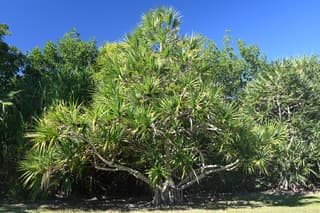
Screw Pine
Pandanus utilis
Pandanus utilis is a sculptural tropical tree, famous for its aerial (prop) roots that support the trunk and its long, leathery, spirally arranged leaves. Native to Madagascar, it is widely used in tropical landscaping due to its exotic and architectural appearance. Its leaves have small spines along the edges, requiring careful handling.
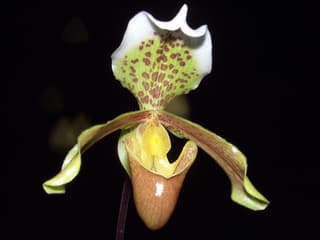
Lady Slipper Orchid
Paphiopedilum insigne
Paphiopedilum insigne is a stunning terrestrial orchid native to the misty forests of Southeast Asia and the Himalayas. Known for its distinctive pouch-shaped lip that resembles a delicate slipper, this cool-growing orchid produces elegant flowers in shades of green, yellow, and brown with characteristic spotted patterns. It is the type species of the Paphiopedilum genus and has been cultivated since the 19th century, prized for its long-lasting blooms that can persist for 6-8 weeks.
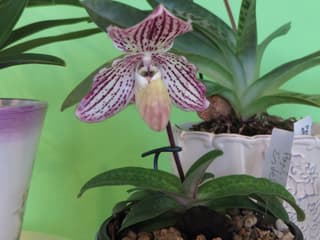
Lady Slipper Orchid
Paphiopedilum sp
Paphiopedilum, commonly known as the Lady Slipper Orchid, is a genus of terrestrial orchids native to the humid forests of Southeast Asia. Distinguished by their unique pouch-shaped lip (the "slipper"), these orchids produce long-lasting, exotic blooms in a wide range of colors. Unlike most orchids, they are true ground-dwellers, growing in leaf litter and mossy forest floors.
Pleated Inkcap
Parasola
Parasola is a genus of small saprobic fungi, commonly known as pleated inkcaps. They are extremely delicate, with nearly transparent caps featuring deep radial grooves, resembling a paper parasol. They appear quickly after rain on lawns or organic debris and usually wither within a few hours under strong sunlight.
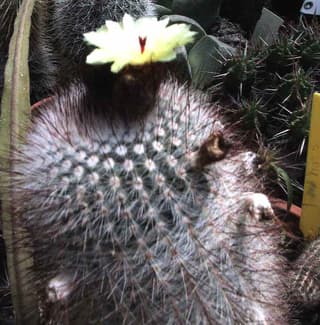
Silver Ball Cactus
Parodia scopa
Parodia scopa, commonly known as the silver ball cactus, is a globular to cylindrical cactus native to the uplands of southern Brazil and Uruguay. Its spherical body is densely covered in fine white to silvery spines that give it a shimmering, satin-like appearance. In late spring and summer, it produces bright pale-yellow flowers at the crown.
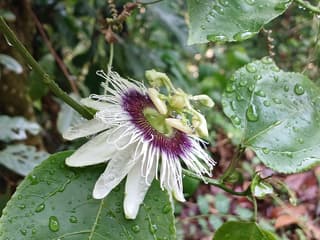
Purple Passion Fruit
Passiflora edulis
Passiflora edulis, commonly known as Purple Passion Fruit, is a vigorous climbing vine native to subtropical regions of Brazil, Paraguay, and Argentina. It produces aromatic fruits with a purple or yellow rind, widely used in culinary and medicinal applications. Its striking white and purple ornamental flowers bloom for a single day.
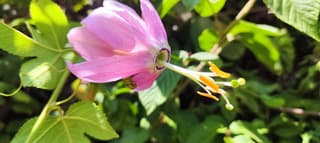
Banana Poka
Passiflora tarminiana
Passiflora tarminiana, commonly known as Banana Poka or banana passionfruit, is a vigorous climbing vine native to the Andes of Colombia, Ecuador, and Venezuela. It produces striking pink tubular flowers and elongated, aromatic fruits widely used in juices and desserts. Due to its rapid growth, it has become an invasive species in Hawaii and other tropical regions.
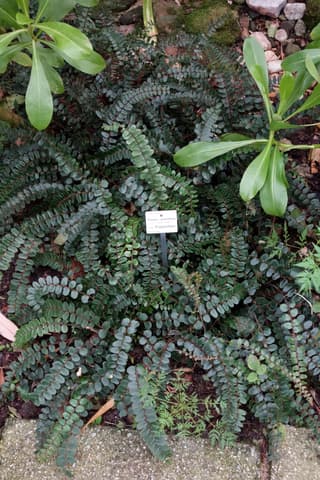
Button Fern
Pellaea rotundifolia
Pellaea rotundifolia is a compact, evergreen fern native to New Zealand and Australia, prized for its distinctive round, button-like leaflets arranged along dark, wiry stems. Unlike many ferns, it tolerates lower humidity and is remarkably drought-resistant, making it an excellent low-maintenance houseplant. It received the Royal Horticultural Society Award of Garden Merit.
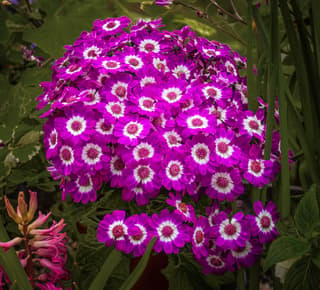
Florist's Cineraria
Pericallis × hybrida
Florist's Cineraria (Pericallis × hybrida) is a popular cool-season annual celebrated for its spectacular daisy-like flowers in vivid shades of blue, purple, pink, red, and white, often with striking bicolor patterns. Native to the Canary Islands, it is widely grown as a potted plant and bedding annual during winter and early spring. It belongs to the Asteraceae family and is a hybrid of several Pericallis species, formerly classified as Senecio cruentus or Cineraria.
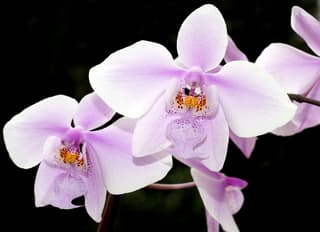
Schiller's Moth Orchid
Phalaenopsis schilleriana
Phalaenopsis schilleriana is an epiphytic moth orchid endemic to the Philippines, prized for its handsome foliage as much as its flowers. The leathery leaves are marked with alternating bars of silver-grey and dark green on top, with a purple flush underneath, remaining attractive year-round. In late winter to spring, arching, often branching sprays carry dozens of fragrant, rose-pink flowers with a spotted lip. Cooler autumn nights help trigger the bloom spike.
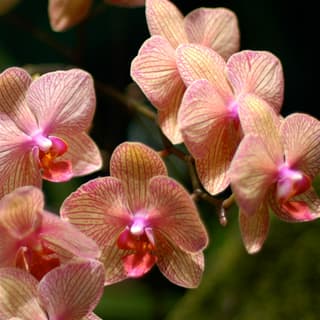
Phalaenopsis Hybrid Orchid
Phalaenopsis x hybridus
The Phalaenopsis Hybrid Orchid (Phalaenopsis x hybridus) is one of the world's most popular flowering houseplants, celebrated for its elegant arching flower spikes bearing large, flat blooms in a spectacular range of colors including white, pink, purple, yellow, and red. Native to the tropical forests of Southeast Asia, this epiphytic orchid thrives indoors with proper care, producing flowers that last months at a time. As a hybrid group derived from dozens of wild Phalaenopsis species, these orchids have been bred for extended bloom time, vibrant color, and adaptability to home environments.
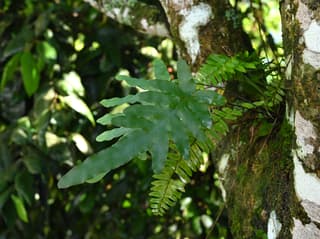
False Golden Polypody
Phlebodium pseudoaureum
Phlebodium pseudoaureum is a striking epiphytic fern native to the tropical and subtropical Americas. It produces elegant, deeply lobed fronds in a distinctive bluish-green hue, crawling along trees and rocks via creeping red-hairy rhizomes. Unlike its cousin P. aureum (Golden Polypody), this species is distinguished by its more glaucous, muted blue-green coloration and smaller stature. It thrives from cloud forests to tropical lowlands, making it one of the most adaptable ferns in the Polypodiaceae family.
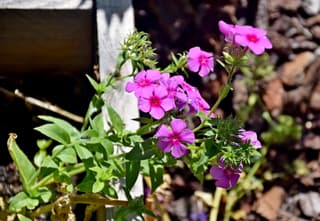
Annual Phlox
Phlox drummondii
Phlox drummondii, known as annual phlox or Drummond's phlox, is a fast-growing annual native to Texas, prized for dense clusters of star-shaped flowers in red, pink, white, lavender and purple. It thrives in full sun and is popular in beds, borders and containers.
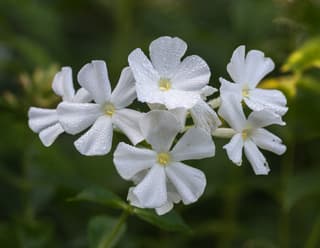
Garden Phlox
Phlox paniculata
Phlox paniculata, commonly known as Garden Phlox or Summer Phlox, is a fragrant, long-blooming herbaceous perennial native to eastern North America. It produces large, domed clusters of five-petaled flowers in shades of pink, purple, red, white, and lavender from mid-summer through fall, making it a staple of cottage and perennial gardens. The plant grows 2–4 feet tall and spreads 2–3 feet wide, returning reliably each year.
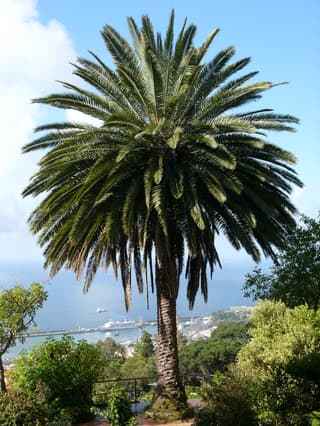
Canary Island Date Palm
Phoenix canariensis
Phoenix canariensis, commonly known as the Canary Island Date Palm or Pineapple Palm, is a majestic feather palm native to the Canary Islands, Spain. It is one of the most widely planted ornamental palms in the world, recognizable by its stout trunk adorned with distinctive diamond-shaped leaf scars, and its long arching pinnate fronds that can reach over 6 meters. Unlike Phoenix roebelenii (the pygmy date palm already in the database), this species is a large-scale outdoor tree that can grow up to 18 meters tall.
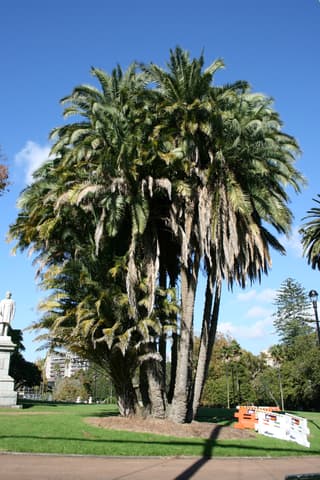
Senegal Date Palm
Phoenix reclinata
The Senegal date palm is a multi-stemmed palm native to tropical Africa, known for its arching, feathery fronds and spiny trunks. It is widely used in landscaping as an ornamental focal point in gardens and parks.
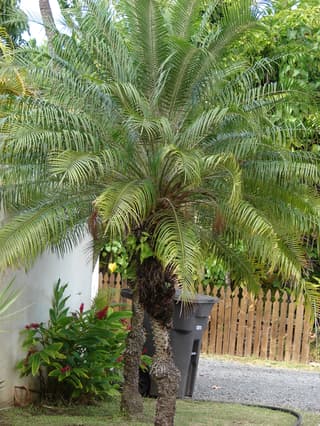
Pygmy Date Palm
Phoenix roebelenii
Phoenix roebelenii, commonly known as the Pygmy Date Palm, is a graceful miniature palm native to the tropical forests of Southeast Asia, particularly Laos and Vietnam. It is one of the most popular indoor palms worldwide due to its compact size, elegant arching fronds, and easy-going nature. Growing slowly to about 2 meters tall, this palm adds a tropical touch to any interior space or warm outdoor garden.
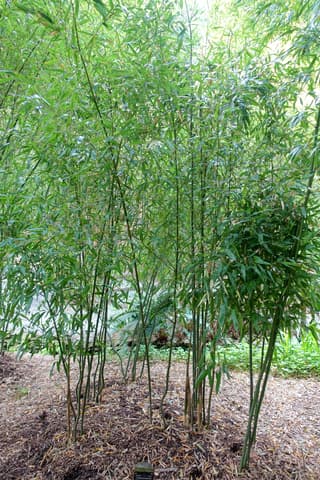
Yellow Groove Bamboo
Phyllostachys aureosulcata
Yellow Groove Bamboo (Phyllostachys aureosulcata) is a striking running bamboo native to the Zhejiang Province of China. It is named for the distinctive yellow groove that runs along each dark green culm, creating an eye-catching two-tone effect. One of the hardiest bamboos available, it tolerates temperatures down to -20°C (-4°F), making it suitable for temperate gardens in USDA zones 4–9. Its fast, vigorous growth makes it popular as a privacy screen, windbreak, and ornamental specimen. The young shoots are edible and notably free of the bitter flavor common to many bamboo species.
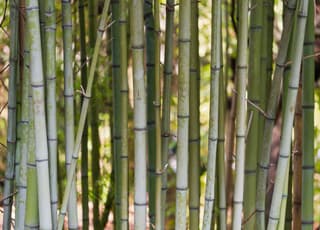
Moso Bamboo
Phyllostachys edulis
Moso Bamboo (Phyllostachys edulis) is the world's largest temperate bamboo, native to the mountain forests of central China. Its culms can reach up to 28 meters tall and 15 cm in diameter. Widely cultivated for edible shoots, construction timber, and ornamental beauty, it is also one of the fastest-growing plants on Earth.
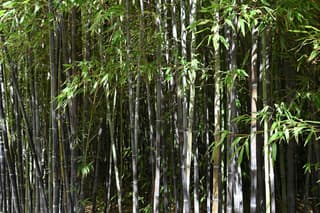
Black bamboo
Phyllostachys nigra
Phyllostachys nigra, or black bamboo, is a fast-growing, evergreen running bamboo prized for its glossy green canes that mature to a striking jet-black over two to three years. Native to China, it forms tall, dense clumps of arching foliage and is widely used as an ornamental screen or privacy hedge. As a running bamboo it spreads via underground rhizomes and can become invasive if left uncontained, so planting in a large container or behind a rhizome barrier is recommended.
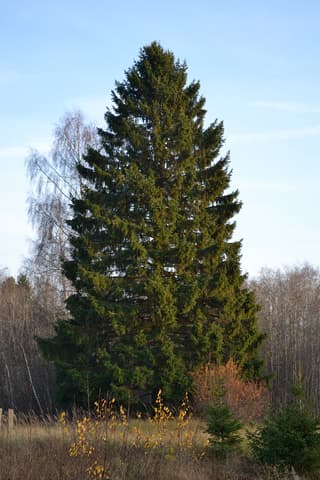
Norway Spruce
Picea abies
Norway Spruce (Picea abies) is a fast-growing evergreen conifer native to northern and central Europe, widely planted as a Christmas tree and ornamental landscape tree. It has a conical crown, dark green needles, and distinctive pendulous cones.
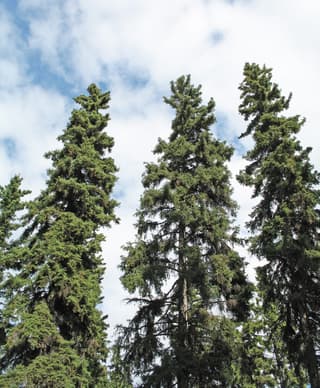
White Spruce
Picea glauca
White spruce (Picea glauca) is a cold-hardy evergreen conifer native to Canada and the northern United States, prized for its dense pyramidal habit and soft, bluish-green needles. While the wild species can reach 18-24 m in forests, its compact cultivar 'Conica' (Dwarf Alberta Spruce) grows only a few centimeters a year, making it one of the most popular conifers for containers, bonsai and indoor/patio growing.
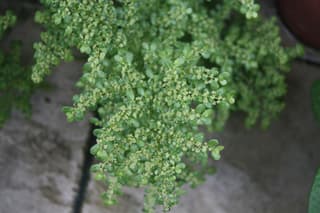
Red Brilliantine Pilea
Pilea serpyllacea
Red Brilliantine (Pilea serpyllacea) is a tiny creeping plant native to the Andes of Bolivia and Peru. It is prized for its small, glossy leaves with reddish tones, often confused with Pilea glauca. It thrives in terrariums, hanging pots, and as ground cover in humid indoor settings.
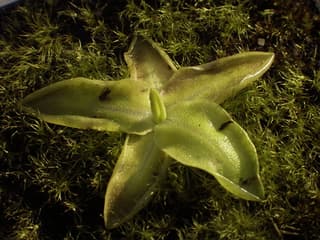
Butterwort
Pinguicula
Pinguicula, commonly known as butterwort, is a genus of over 100 species of carnivorous plants in the Lentibulariaceae family, native to temperate and tropical regions of America, Europe, and Asia. Their leaves form rosettes with a greasy, shiny surface (hence the common name) covered in mucilaginous glands that trap, digest, and absorb nutrients from small insects, supplementing the scarce nutrients of the peaty soil where they grow. Some Mexican species maintain succulent leaves year-round; others from temperate climates form a winter bud (hibernaculum) during dormancy.
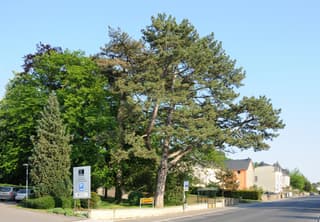
Austrian Pine
Pinus nigra
The Austrian pine (Pinus nigra) is a robust, fast-growing evergreen conifer native to the mountains of Central and Southern Europe, from Austria down through the Balkans and into parts of Turkey and North Africa. It forms a dense, broadly pyramidal crown with stiff, dark green needles borne in pairs and grey-brown, deeply fissured bark. Prized for its toughness, it tolerates poor, alkaline, and compacted soils, urban pollution, coastal salt spray, and strong winds, making it a favorite for windbreaks, reforestation, and street planting throughout temperate climates.
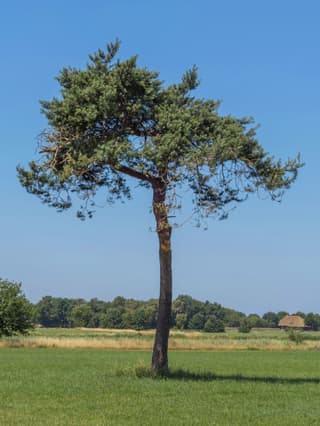
Scots Pine
Pinus sylvestris
Pinus sylvestris, known as the Scots Pine, is a majestic conifer native to Eurasia. It is easily recognizable by its bark, which becomes orange and flaky on the upper part of the trunk, and its blue-green needles arranged in pairs. It is one of the hardiest trees in the world, capable of thriving in Arctic climates and poor, sandy soils.
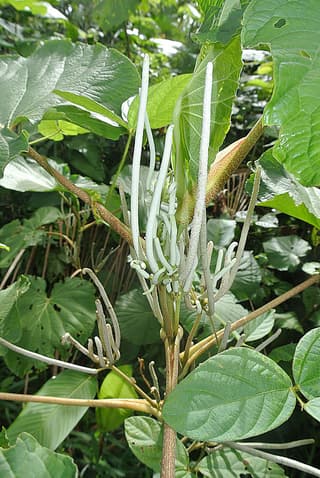
Cowfoot
Piper umbellatum
The Cowfoot (Piper umbellatum) is a perennial subshrub in the Piperaceae family, native to the tropical regions of the Americas, including nearly all of Brazil. It can reach 3 to 13 feet in height in its natural habitat, though it remains more compact when grown in pots. Its leaves are large, rounded to cordate (heart-shaped), with prominent palmate venation and long petioles that optimize light capture in shaded environments. The inflorescences appear as erect axillary spikes, yellowish-white in color, followed by brownish pyramidal fruits. It grows naturally at the edges of primary forests, secondary forests, riparian forests, and shaded riverside areas.

Pull-and-hold
Pisonia aculeata
Pisonia aculeata, known as pull-and-hold or devil's claws, is a tropical thorny climber in the Nyctaginaceae family. Native to the tropical regions of the Americas and the Caribbean, this vigorous plant develops long branches armed with recurved thorns—like hooks—that cling to other plants and surfaces to climb. Its small, inconspicuous flowers appear in clusters during spring and summer, followed by sticky seeds that can trap small insects and birds. It is occasionally cultivated as an ornamental plant in tropical gardens and natural hedges.
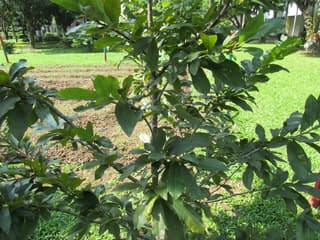
Pistachio
Pistacia
Pistacia is a genus of trees and shrubs in the family Anacardiaceae, native to Mediterranean regions, the Middle East, Central Asia, and parts of the Americas. The genus includes iconic species such as the edible pistachio (P. vera), the mastic tree (P. lentiscus), the terebinth (P. terebinthus), and the ornamental Chinese pistache (P. chinensis). Adapted to arid and semi-arid climates, Pistacia plants are celebrated for their exceptional drought tolerance, longevity, and versatile uses spanning food, medicine, and ornamentation.
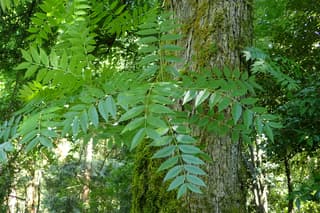
Chinese Pistache
Pistacia chinensis
Pistacia chinensis, commonly known as Chinese pistache, is a medium to large deciduous tree native to China and Taiwan. Renowned for its spectacular fiery fall foliage — turning vivid orange, red, and scarlet — it is one of the most reliable and showy ornamental trees for temperate climates. It grows 30–40 feet tall with a broad, rounded canopy, exfoliating bark that reveals salmon-colored inner layers, and small, inconspicuous spring flowers. Once established, it is exceptionally drought-tolerant, pollution-resistant, and largely pest-free, making it a low-maintenance landscape favorite.

London plane
Platanus × hispanica
The London plane (Platanus × hispanica) is a large deciduous hybrid tree, a cross between the Oriental plane (P. orientalis) and the American sycamore (P. occidentalis). It is instantly recognizable by its distinctive bark that peels away in patches to reveal cream, olive, and grey mottled patterns beneath, and by its large maple-like leaves. One of the most widely planted urban trees in the world, it is prized for its exceptional tolerance of air pollution, compacted soils, and drought once established.
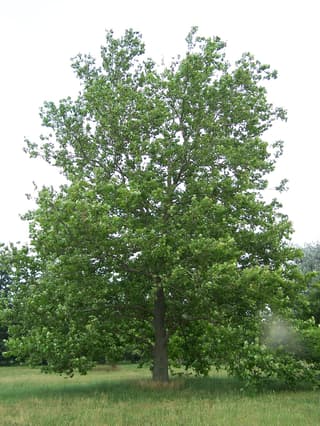
American Sycamore
Platanus occidentalis
The American sycamore is one of the largest native hardwood trees in eastern North America, commonly reaching 75-100 ft (23-30 m) tall with a broad, spreading crown. It is best known for its distinctive exfoliating bark, which sheds in irregular gray-brown plates to reveal smooth, creamy-white inner bark. Native to riverbanks, floodplains and bottomlands, it tolerates wet soils as well as periods of drought once established. Small monoecious flowers appear in early spring (green male clusters, burgundy-red female clusters), followed by distinctive ball-shaped seed heads that persist through winter.
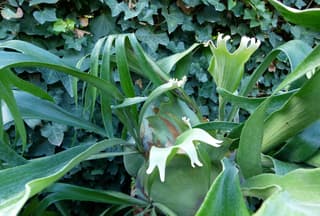
Elkhorn Fern
Platycerium alcicorne
Platycerium alcicorne, commonly known as the Elkhorn Fern, is an epiphytic fern native to Madagascar and East Africa (including Kenya, Mozambique, Tanzania, Zimbabwe, and neighboring islands such as the Comoros, Mauritius, Reunion, and Seychelles). Like other staghorn ferns, it produces two distinct types of fronds: rounded, shield-shaped sterile fronds that clasp its mounting surface and protect the root ball, and antler-like fertile fronds that arch outward and carry spore patches on their undersides. In the wild it grows attached to tree trunks and branches, absorbing moisture and nutrients from the air, rainfall, and decaying organic debris trapped behind its shield fronds. It never produces flowers or seeds, reproducing instead through spores and by forming offsets (pups) that can be divided from the parent plant.
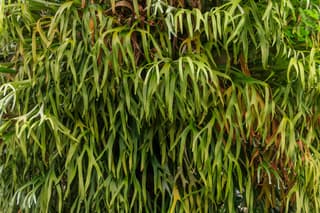
Staghorn Fern
Platycerium bifurcatum
Platycerium bifurcatum is a striking epiphytic fern native to the rainforests of Australia, Java, and New Guinea. Known for its unique antler-shaped fronds, this plant naturally grows on trees and rocks, absorbing nutrients and moisture from the air. It produces two types of fronds: sterile shield fronds that anchor the plant and fertile fronds that resemble deer antlers. With proper care, staghorn ferns can live for over 50 years and become impressive living sculptures.
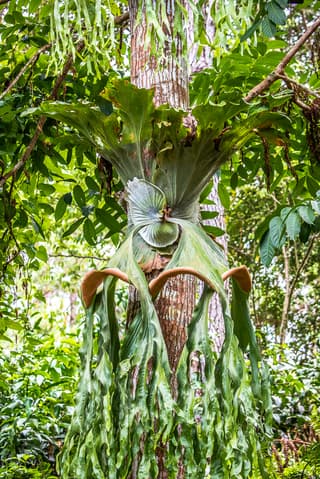
Philippine Staghorn Fern
Platycerium grande
Platycerium grande is a magnificent epiphytic fern native to the Philippines, renowned for its enormous bifurcated fronds resembling elk antlers. One of the largest species in the Platycerium genus, it can reach up to 4 feet in height. In nature, it grows on tree trunks and rocks, absorbing nutrients and moisture through its basal shield fronds.
Medium Care Pet Safe
Our selection of 622 medium pet safe combines the characteristics of this category with moderate care needs. Ideal for those with basic experience.
Why Choose Medium Pet Safe?
Combining the beauty of pet safe with medium difficulty level lets you enjoy this category with a balanced care commitment. Each plant was selected to offer the best characteristics of the category at the care level you are looking for.