2332 Easy Easy Care | 2026 Guide - Page 19
Find 2332 easy easy care. Complete guide for your garden.
2332 Easy Care with easy level
Showing 649-684 of 2332
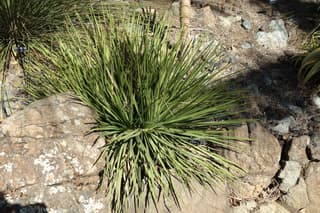
Mexican Grass Tree
Dasylirion longissimum
Dasylirion longissimum, commonly known as the Mexican Grass Tree or Toothless Desert Spoon, is a xerophytic perennial plant in the Asparagaceae family, native to the Chihuahuan Desert and arid regions of northeastern Mexico (Tamaulipas, San Luis Potosí, and Nuevo León). It forms a dense, symmetrical rosette of cylindrical, thin, flexible, blue-green leaves over a meter long, emerging from a thick, woody trunk. It is very slow-growing—taking over a decade to develop a visible trunk—and is extremely tolerant of drought and moderate frosts (down to about -9 °C / 15 °F). In summer, it produces long flower spikes with small cream or white flowers, which later form attractive clusters of reddish seeds. It is primarily cultivated as an architectural ornamental plant in xeriscapes, rock gardens, and low-maintenance landscapes.
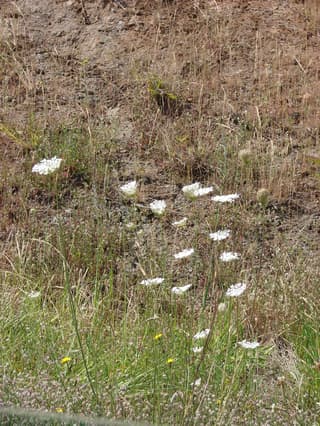
Wild Carrot
Daucus
Daucus is a genus of flowering plants in the family Apiaceae, best known for Daucus carota (wild carrot), the ancestor of the cultivated carrot. Native to temperate regions of Europe, northern Africa, and Asia, wild carrot produces delicate, lacy white umbels of flowers and a slender, pale taproot. It thrives in meadows, roadsides, and disturbed ground, and has naturalized across much of North America and Australia.
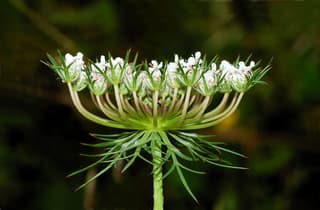
Carrot
Daucus carota
Daucus carota, commonly known as the carrot, is a biennial herbaceous plant. While the wild form is often called Queen Anne's Lace, the domesticated subspecies is one of the world's most important root vegetables. It features finely divided, fern-like foliage and produces a large, fleshy taproot that is typically orange, though purple, yellow, and white varieties exist. In its second year, it produces an umbrella-shaped cluster of small white flowers.
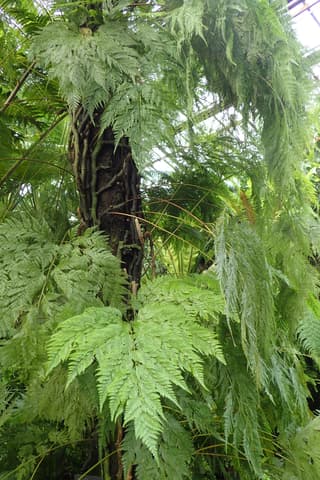
Rabbit's Foot Fern
Davallia fejeensis
An enchanting epiphytic fern from Fiji, the Rabbit's Foot Fern is beloved for its delicate, lace-like fronds and distinctive furry rhizomes that creep over the edges of pots. These soft, brown-scaled rhizomes resemble a rabbit's foot, giving the plant its charming common name. It thrives in bright indirect light and appreciates consistent humidity, making it an excellent choice for hanging baskets or elevated planters where its creeping rhizomes can cascade gracefully.
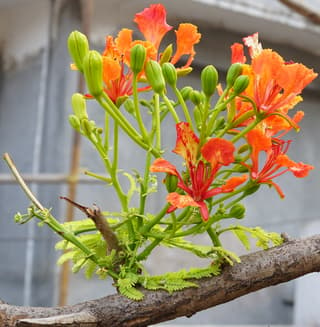
Royal Poinciana
Delonix regia
The Royal Poinciana is considered one of the most beautiful trees in the world. Native to Madagascar, it stands out for its massive umbrella-shaped canopy and its exuberant flowering in shades of red and orange. Its leaves are finely pinnate, giving the tree a light texture even when not in bloom.
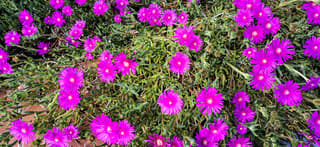
Ice Plant
Delosperma
Delosperma, commonly called ice plant, is a genus of low-growing, mat-forming succulents from South Africa prized for their dazzling daisy-like flowers and glistening, ice-crystal-like leaf surfaces. Hardy species such as D. cooperi and D. nubigenum form dense evergreen carpets that thrive in full sun and lean, well-drained soil, making them a favorite for rock gardens, slopes, and xeriscapes.
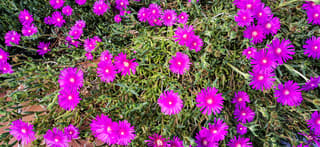
Hardy Ice Plant
Delosperma cooperi
Delosperma cooperi, the hardy ice plant, is a low, mat-forming succulent native to the arid grasslands of South Africa. Its fleshy, cylindrical leaves are dusted with tiny glistening papillae that resemble ice crystals, and from early summer through fall the foliage all but disappears beneath a blanket of vivid magenta-pink, daisy-like flowers. Remarkably drought-tolerant and cold-hardy down to USDA zone 6a, it is a favorite groundcover for rock gardens, slopes, and xeriscapes.
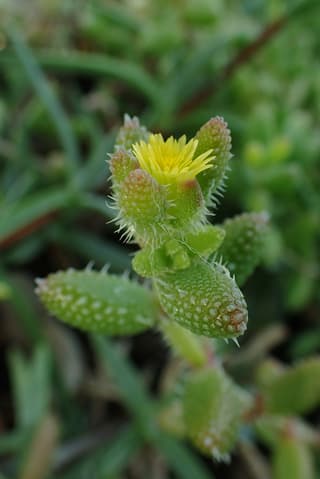
Hedgehog Sheepfig
Delosperma echinatum
Delosperma echinatum, commonly known as the Pickle Plant, is a unique succulent shrublet native to South Africa. It is characterized by its small, barrel-shaped green leaves covered in soft, white, hair-like bristles that resemble a hedgehog or a pickle. It produces delicate, daisy-like flowers in shades of yellow or white during the warmer months.

Garden Mum
Dendranthema grandiflorum
The garden mum (Dendranthema grandiflorum, synonym Chrysanthemum morifolium) is a herbaceous perennial in the Asteraceae family, native to China where it has been cultivated for over two thousand years. It is one of the world's most popular ornamental flowers, prized for its dense, colorful blooms that appear in fall. In East Asia it symbolizes longevity and nobility, while in many Western countries it is closely tied to remembrance and cemetery flowers.

tufted hairgrass
Deschampsia cespitosa
Tufted hairgrass (Deschampsia cespitosa) is a perennial, clump-forming grass from the Poaceae family, naturally growing in moist meadows, wetlands, and forest clearings across Europe and the Northern Hemisphere. It forms dense, sturdy clumps of dark green, finely rough leaves that emerge early in spring. From June to August, airy, delicately trembling flower panicles of a golden to greenish color rise above the foliage, gradually turning golden and remaining ornamental until winter. It is an undemanding, frost-hardy, and long-lived grass suitable for almost any garden location.
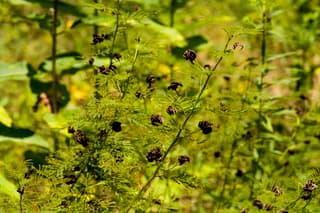
Illinois bundleflower
Desmanthus illinoensis
Desmanthus illinoensis, commonly known as Illinois bundleflower, is a perennial herbaceous legume native to the prairies of central and southern North America. Belonging to the Fabaceae family, it is characterized by bipinnate, fern-like leaves that fold at night and during the hottest hours of the day. It produces small, white, spherical star-shaped inflorescences composed of 25-50 florets that bloom from late spring through summer. As a nitrogen-fixing legume, it naturally enriches the soil and is extremely drought-resistant once established.
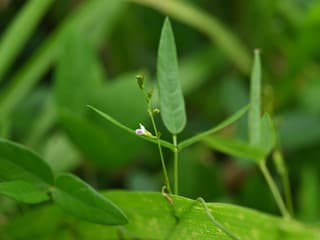
Panicledleaf ticktrefoil
Desmodium paniculatum
Panicledleaf ticktrefoil is an erect, spreading perennial herb in the pea family (Fabaceae), native to eastern North America from Quebec to Florida and west to Texas, Nebraska, and Ontario. Its alternate, trifoliate leaves have lance-to-oblong leaflets, and loose panicles of light pink to lavender flowers appear from June through September. These give way, from August to October, to distinctive segmented seed pods called loments that are covered in tiny hooked hairs and cling readily to clothing and animal fur for seed dispersal. As a legume, it fixes nitrogen in the soil and typically colonizes sunny disturbed ground such as roadsides, meadow edges, and abandoned fields.
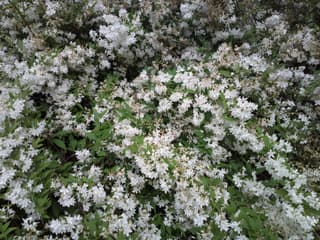
Slender Deutzia
Deutzia gracilis
The Slender Deutzia (Deutzia gracilis) is a deciduous, low-growing ornamental shrub native to Japan and a member of the hydrangea family (Hydrangeaceae). It typically grows 100-150 cm tall and spreads about 120 cm wide, featuring elliptical, light green leaves that turn a yellowish hue in autumn. Between late April and early June, it produces lush clusters of tiny, star-shaped, snow-white flowers that are lightly fragrant and attract bees and other pollinators. It is an easy-to-grow, hardy species that tolerates both sunny and semi-shaded locations, making it a popular choice for front gardens, hedges, or mixed shrub borders.
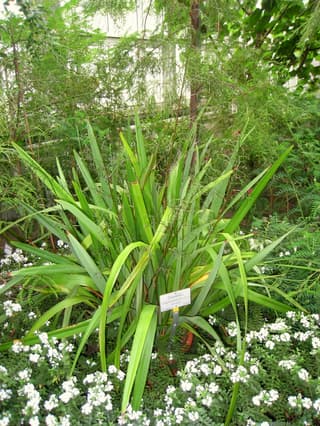
Tasman Flax Lily
Dianella tasmanica
Dianella tasmanica, commonly known as the Tasman Flax Lily, is an evergreen perennial native to Australia. It features long, strap-like glossy green leaves and produces delicate star-shaped blue-purple flowers in spring, followed by striking violet-blue berries. Hardy and low-maintenance, it thrives in garden borders, containers, and as ground cover.
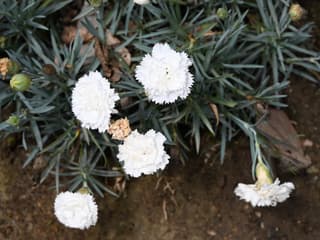
Pink / Carnation (genus)
Dianthus
Dianthus is one of the most beloved flowering genera in horticulture, comprising over 300 species including carnations (D. caryophyllus), sweet williams (D. barbatus), and cottage pinks (D. plumarius). Known for their spicy-clove fragrance and fringed petals, they are easy to grow, long-blooming, and perfect for borders, containers, and cutting gardens.
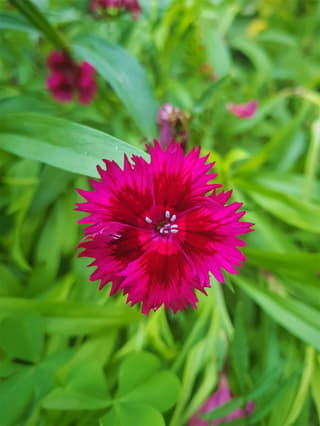
Sweet William
Dianthus barbatus
Sweet William (Dianthus barbatus) is a charming biennial or short-lived perennial native to southern Europe. It produces dense, flat-topped clusters of small fragrant flowers in vivid shades of pink, red, white, and bicolor patterns. The blooms have a delightful clove-like scent and appear in late spring to early summer, making it a cottage garden favorite.
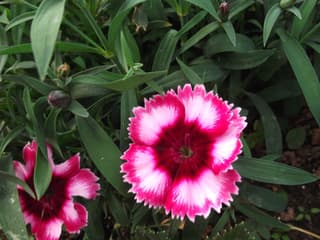
China Pink
Dianthus chinensis
Dianthus chinensis, commonly known as China Pink, is a charming flowering annual or short-lived perennial native to China. It produces vibrant, fringed flowers in shades of pink, red, white, and bicolor patterns. A classic cottage garden plant, it thrives in borders, containers, and rock gardens, blooming from spring through fall with minimal care.
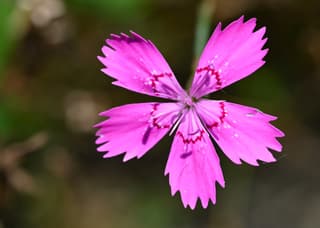
Maiden Pink
Dianthus deltoides
Dianthus deltoides, known as Maiden Pink, is a low-growing, mat-forming perennial in the carnation family (Caryophyllaceae). Native to Europe and western Asia, it forms dense evergreen-to-semi-evergreen cushions of narrow, gray-green foliage topped with small, fragrant, deep-pink to magenta flowers marked with a darker central ring. It blooms prolifically from late spring through summer and is prized as a groundcover, rock garden plant, and edging border because of its drought tolerance and rapid spread.
Cheddar Pink
Dianthus gratianopolitanus
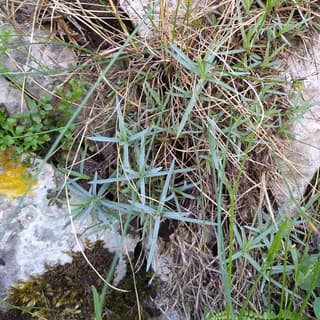
Dianthus gratianopolitanus is a low, mat-forming evergreen perennial in the carnation family, native to limestone cliffs and grasslands of western Europe (including the Cheddar Gorge in England, which gives it its common name). It forms dense cushions of narrow, blue-grey foliage topped in late spring and early summer by fragrant, clove-scented pink flowers with fringed petals.
Cottage Pink
Dianthus plumarius
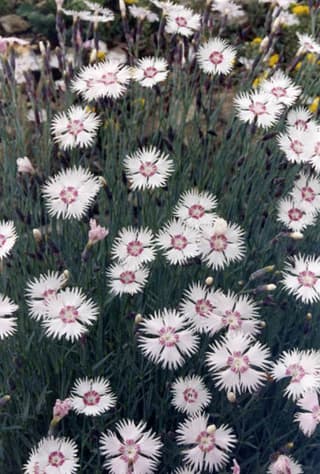
Dianthus plumarius, commonly called cottage pink or garden pink, is a low-growing evergreen perennial in the carnation family (Caryophyllaceae), native to the mountains of Central and Southern Europe from the Eastern Alps to the Balkans. It forms dense, grass-like mats of blue-gray foliage topped from late spring through summer with fragrant, clove-scented single or double flowers in shades of pink, red, and white, often with fringed (feathered) petal edges and a contrasting eye. A classic cottage-garden plant since Elizabethan times, it is prized for borders, rock gardens, and edging.
Twinspur
Diascia spp
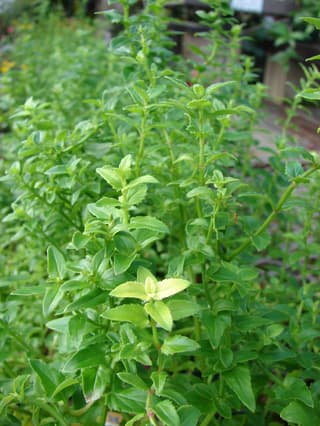
Diascia, commonly known as Twinspur, is a genus of around 70 species of herbaceous annual and perennial flowering plants native to South Africa, belonging to the family Scrophulariaceae. These charming low-growing plants are celebrated for their dainty, spurred flowers in shades of pink, red, orange, and white, blooming prolifically from spring through autumn. They thrive in well-draining soil with full sun and are popular in garden borders, hanging baskets, and containers.
Silver Falls
Dichondra argentea
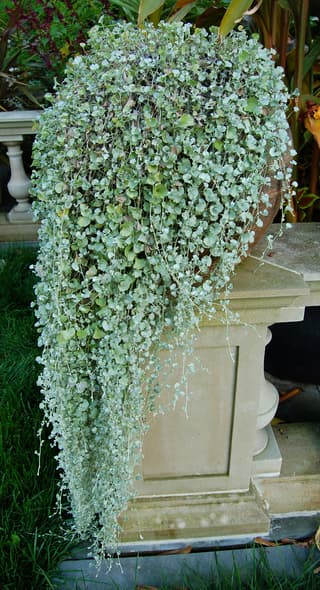
Dichondra argentea, commonly known as Silver Falls or Silver Ponysfoot, is a trailing and cascading ornamental plant in the Convolvulaceae family, native to the southwestern United States and northern Mexico. Its small, fan-shaped leaves coated in fine silver hairs create stunning metallic cascades up to 120 cm long, making it a favourite for hanging baskets, window boxes, and container gardens. The evergreen silvery foliage remains attractive throughout the growing season.
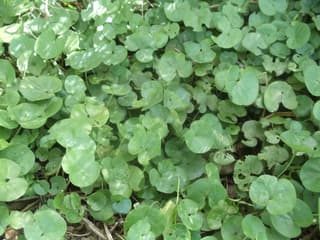
Asian Ponysfoot
Dichondra micrantha
Dichondra micrantha, commonly known as Asian Ponysfoot or Kidney Weed, is a low-growing creeping groundcover native to East Asia (Japan, China, Korea). It features small, kidney-shaped leaves on slender stems that hug the ground, forming a dense, lush carpet. It is widely used as a lawn alternative, between stepping stones, or as a trailing plant in hanging baskets.
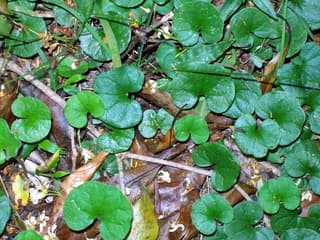
Kidney weed
Dichondra repens
Low-growing perennial groundcover with small, kidney-shaped leaves. Native to tropical and cool temperate regions. Forms dense mats with vigorous spreading habit, rooting at leaf nodes.
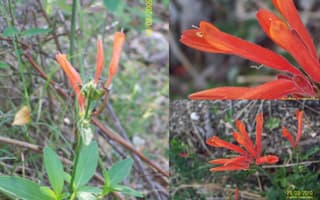
Hummingbird plant
Dicliptera squarrosa
Dicliptera squarrosa is a perennial subshrub in the Acanthaceae family, native to central South America—occurring in Peru, Bolivia, Paraguay, northern Argentina, Uruguay, and the south, southeast, and midwest of Brazil, including Cerrado areas. Also known as the hummingbird plant and firecracker plant, it owes its nicknames to its tubular orange-red flowers, which are highly sought after by hummingbirds and butterflies. It is a low to medium-sized subshrub with an upright to trailing habit and thin stems, reaching about 24 inches (60 cm) in height by 18 inches (45 cm) in width (potentially reaching 3 feet in more vigorous cultivation). The leaves are opposite, ovate, soft, and velvety, covered by a fine grayish down that gives them a characteristic gray-green tone. The flowers, 0.8 to 1.5 inches (2 to 4 cm) long, appear in axillary and terminal clusters and bloom from spring to fall, peaking between summer and early autumn.
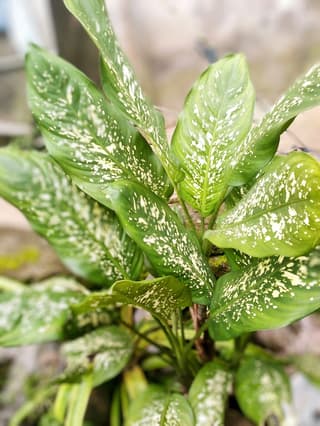
Dumb Cane
Dieffenbachia
Dieffenbachia is a genus of tropical foliage plants in the Araceae family, native to the tropical Americas. Widely grown as indoor ornamentals for their large, variegated leaves in shades of green, cream, and white. Data represents the genus as a whole (D. seguine, D. amoena, D. picta). All parts are toxic due to calcium oxalate crystals.
Giant Dumb Cane
Dieffenbachia amoena
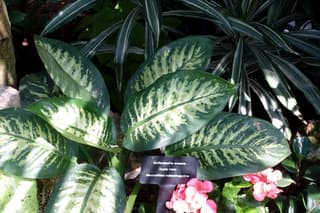
Dieffenbachia amoena, commonly known as Giant Dumb Cane, is a tropical houseplant native to the tropical Americas. It is prized for its large, bold leaves featuring deep green coloration with creamy white variegation. WARNING: this plant is severely toxic to humans, cats, and dogs due to calcium oxalate raphides present in all plant tissues.
Spotted Dumb Cane
Dieffenbachia picta
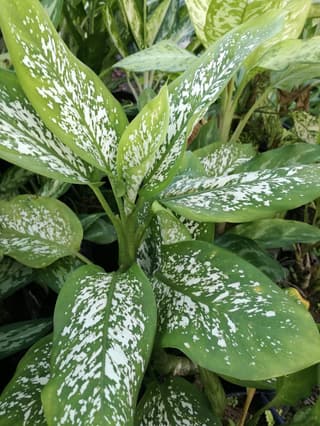
Dieffenbachia picta, widely sold simply as "dumb cane" or "spotted dieffenbachia," is a striking tropical foliage houseplant in the arum family (Araceae), native to the humid forests of the Caribbean and Central and South America. Its broad, glossy leaves are marbled with irregular cream, white, or pale-green blotches over a dark green background, making it a long-standing favorite for adding jungle texture to shaded interiors. Botanically, "picta" is most often treated today as a synonym or a spotted cultivar group within Dieffenbachia seguine (=D. maculata), and nursery tags reading "D. picta" typically refer to this same variegated horticultural type. All parts of the plant are HIGHLY TOXIC: the sap contains needle-shaped calcium oxalate crystals (raphides) that, when chewed or bitten, pierce the soft tissue of the mouth and throat, causing intense burning pain, excessive drooling, and swelling severe enough to temporarily impair speech — the origin of the common name "dumb cane."

Dumb Cane
Dieffenbachia seguine
Dieffenbachia seguine is a tropical plant from the Araceae family, native to the Caribbean and Central America. It is known for its large decorative dark green leaves with white or cream spots. It can reach up to 3 meters in height under optimal conditions. It is extremely toxic due to calcium oxalate crystals in its sap, which can cause severe irritation and throat swelling if ingested.
Yellow Wild Iris
Dietes bicolor
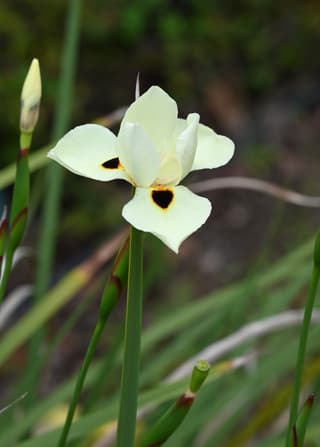
Dietes bicolor, commonly known as the Yellow Wild Iris or Butterfly Iris, is a striking evergreen perennial native to the Eastern Cape of South Africa. It forms graceful clumps of long, sword-like pale-green leaves from which elegant pale yellow flowers emerge in spring and summer. Each bloom features distinctive brown and violet markings at the base of the outer petals, giving the flower a butterfly-like appearance. It is prized in landscaping for its toughness, drought tolerance once established, and its ability to thrive in a wide range of conditions.
Fairy Iris
Dietes grandiflora
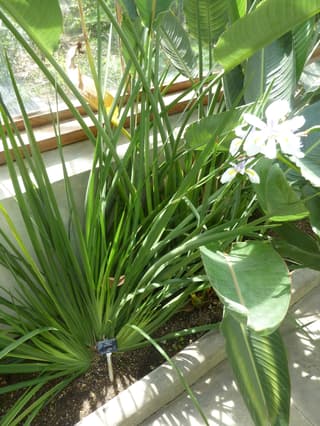
Dietes grandiflora, commonly known as Fairy Iris or Large Wild Iris, is an evergreen perennial native to South Africa. It produces beautiful white flowers with yellow and brown markings resembling orchids, blooming continuously throughout summer in two-week cycles. Highly drought-tolerant once established, it is an excellent low-maintenance plant for gardens, borders, and mass plantings.
African Iris
Dietes iridioides
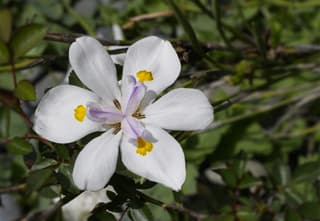
Dietes iridioides, commonly known as African Iris or Fortnight Lily, is a tough, evergreen perennial native to South Africa. It produces elegant white flowers adorned with violet and yellow markings that bloom in two-week intervals during spring and summer. Its sword-shaped leaves form attractive, low-maintenance clumps.

Crabgrass
Digitaria
Digitaria is a large genus of annual and perennial grasses in the family Poaceae, comprising roughly 300 species found across tropical, subtropical, and warm temperate regions worldwide. The genus name comes from the Latin "digitus" (finger), referring to the finger-like arrangement of the flowering spikes that radiate from a central point atop each stem. Most species are low-growing and sprawling, rooting readily at the nodes where stems touch the soil, which gives them a crab-like spreading habit and the common name "crabgrass." While several species, such as Digitaria sanguinalis (large crabgrass) and Digitaria ischaemum (smooth crabgrass), are considered aggressive lawn and garden weeds valued for their toughness and drought tolerance, others are cultivated purposefully: Digitaria exilis (white fonio) and Digitaria iburua (black fonio) are ancient West African cereal crops, among the oldest cultivated grains in the world, prized for their fast maturation and ability to thrive in poor, dry soils.
hairy crabgrass
Digitaria sanguinalis
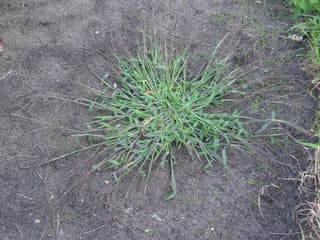
Digitaria sanguinalis is a summer-annual weedy grass native to Eurasia, now naturalized worldwide, belonging to family Poaceae. It develops several branching, hairy stems from the base that sprawl horizontally and root at nodes, bearing linear leaves 3–6 inches long with hairy sheaths. The inflorescence consists of up to nine long, radiating finger-like raceme spikes bearing tiny spikelets that may appear reddish or purplish at maturity.
Cape Marguerite
Dimorphotheca ecklonis
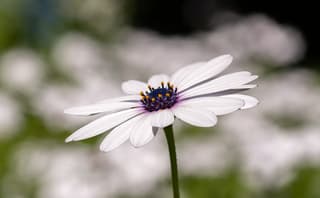
The African Daisy (Dimorphotheca ecklonis) is a perennial shrub native to South Africa, famous for its daisy-like flowers with white, pink, or purple petals and an intense dark blue center. Widely cultivated in gardens and pots, it blooms abundantly from spring to fall and is highly appreciated by bees and pollinators.
Trailing African Daisy
Dimorphotheca fruticosa
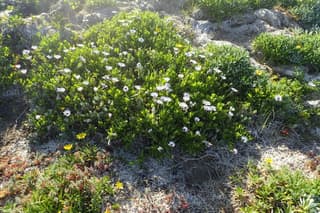
Trailing African Daisy (Dimorphotheca fruticosa, syn. Osteospermum fruticosum) is a fast-growing, evergreen perennial native to South Africa. It forms a dense, spreading mat of semi-succulent, mid-green leaves and produces abundant daisy-like flowers with white or pale lilac petals surrounding a deep purple center. Widely planted as a groundcover on slopes, embankments and along roadsides, it is prized for its drought tolerance, salt tolerance and long bloom period from spring through fall.
Easy Care Easy Care
Our selection of 2332 easy easy care combines the characteristics of this category with reduced care needs. Perfect for beginners who love this category.
Why Choose Easy Easy Care?
Combining the beauty of easy care with easy difficulty level lets you enjoy this category without excessive maintenance worries. Each plant was selected to offer the best characteristics of the category at the care level you are looking for.