Poaceae
tufted hairgrass: Ground Cover Plant
Deschampsia cespitosa
Tufted hairgrass is one of the most undemanding ornamental grasses – it tolerates sun and partial shade, withstands frost and short-term drought, but grows best in moderately moist, fertile soil. In spring, simply cut the clump back to about 10 cm above the ground; otherwise, it requires minimal care.
Every 7 days
Partial shade
-18° - °C
% - %
Categories
What is tufted hairgrass?
tufted hairgrass (Deschampsia cespitosa) is a easy-care plant from the Poaceae family. Tufted hairgrass (Deschampsia cespitosa) is a perennial, clump-forming grass from the Poaceae family, naturally growing in moist meadows, wetlands, and forest clearings across Europe and the Northern Hemisphere. It forms dense, sturdy clumps of dark green, finely rough leaves that emerge early in sp...
tufted hairgrass grows up to 1.2m, spread of 60cm, watering every 7 days. It is not suitable for indoor environments and safe for pets.
Unlike many tropical plants, tufted hairgrass tolerates watering mistakes. Best for beginners. Unlike many popular species, tufted hairgrass is safe to keep around pets.
How to Care for tufted hairgrass?
TLDR: tufted hairgrass needs Partial shade, watering every 7 days, and temperatures between -18-30°C with 40-70% humidity.
How Often Should You Water tufted hairgrass?
Keep the soil evenly moist, especially in the first year after planting. The grass can tolerate short-term drought, but prolonged waterlogging of the roots is harmful – plant in a well-drained location.
How Much Light Does tufted hairgrass Need?
It flowers best in full sun, but it is one of the few grasses that also tolerates partial shade to light shade under tree canopies.
What Is the Best Soil for tufted hairgrass?
It thrives in common to heavier garden soil, fertile and slightly acidic, with good drainage. It does not tolerate permanently waterlogged, heavy clay soils without water runoff.
What Pot Should You Use for tufted hairgrass?
It can also be grown in a container – choose a wider and deeper pot with a drainage hole, preferably made of frost-resistant material (frost-resistant ceramic or plastic), as the clump in a container is more susceptible to freezing of the root ball.
Care Schedule
Fertilize
Every 365 days
What Is tufted hairgrass and Where Does It Come From?
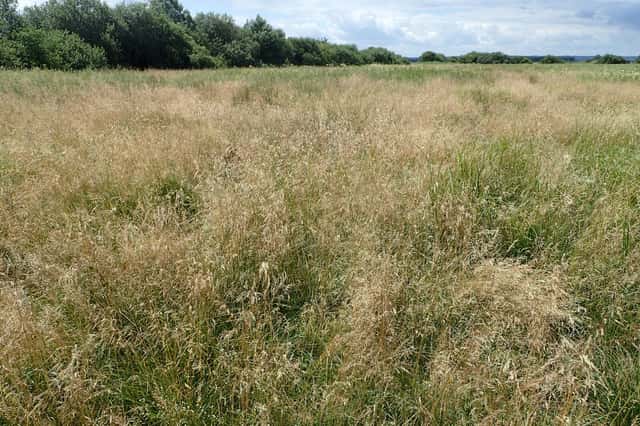
Tufted hairgrass (Deschampsia cespitosa) is a perennial, clump-forming grass from the Poaceae family, naturally growing in moist meadows, wetlands, and forest clearings across Europe and the Northern Hemisphere. It forms dense, sturdy clumps of dark green, finely rough leaves that emerge early in spring. From June to August, airy, delicately trembling flower panicles of a golden to greenish color rise above the foliage, gradually turning golden and remaining ornamental until winter. It is an undemanding, frost-hardy, and long-lived grass suitable for almost any garden location.
How to Propagate tufted hairgrass?
How Big Does tufted hairgrass Grow?
TLDR: tufted hairgrass can reach up to 1.2m tall with Fast growth rate.
Max height
1.2m
Spread
60cm
Growth rate
Fast
Foliage
Semi-evergreen
Plant Uses
Ornamental
Great for decoration
Ground Cover
Soil coverage
Is your plant showing symptoms?
Click on the symptom to discover possible causes:
What Diseases Commonly Affect tufted hairgrass?
TLDR: tufted hairgrass is susceptible to 3 known diseases. Monitor regularly for early detection.
Rust
Rust is a common fungal disease caused by fungi in the order Pucciniales that affects a wide variety of plants. The disease gets its name from the characteristic orange, yellow, or reddish-brown pustules that appear on leaves, resembling metal rust. This obligate fungal parasite requires living plants to survive and can cause significant economic losses in agricultural crops.
Leaf Spot
Leaf spot is a common fungal disease caused by various pathogens including Alternaria, Ascochyta, Colletotrichum, Septoria, and Venturia. It primarily affects leaves, causing discolored spots that can lead to premature leaf drop if left untreated.
Root Rot
Root rot is a serious fungal disease that affects the root system of plants, causing them to decay and die. It is primarily caused by overwatering, poor drainage, or soil-borne fungi such as Pythium, Phytophthora, Rhizoctonia, and Fusarium. The disease thrives in waterlogged conditions where roots are deprived of oxygen, making them susceptible to fungal infection.
Meaning & Symbolism
In garden symbolism, tufted hairgrass represents resilience and the natural beauty of wild landscapes – its airy golden panicles evoke wild meadows and are associated with tranquility, lightness, and the flow of time.
Compare with similar plants
| Attribute | Difficulty | Light | Watering | Pet Safe |
|---|---|---|---|---|
| Field Maple | Easy | Bright indirect | 14d | ✓ |
| Muriel's Bamboo | Medium | Partial shade | 3d | ✓ |
| Silver Birch | Easy | Direct sun | 14d | ✓ |
| Common Blanketflower | Easy | Direct sun | 10d | ✓ |





