Succulent with Yellow Leaves: Normal, Overwatering, or Too Much Sun?
Bottom leaves drying out one by one is normal. Soft, yellow leaves mean overwatered roots, wrinkled and firm leaves mean thirst, and firm yellow or orange on the window side means strong light. See the touch test and how to save it.
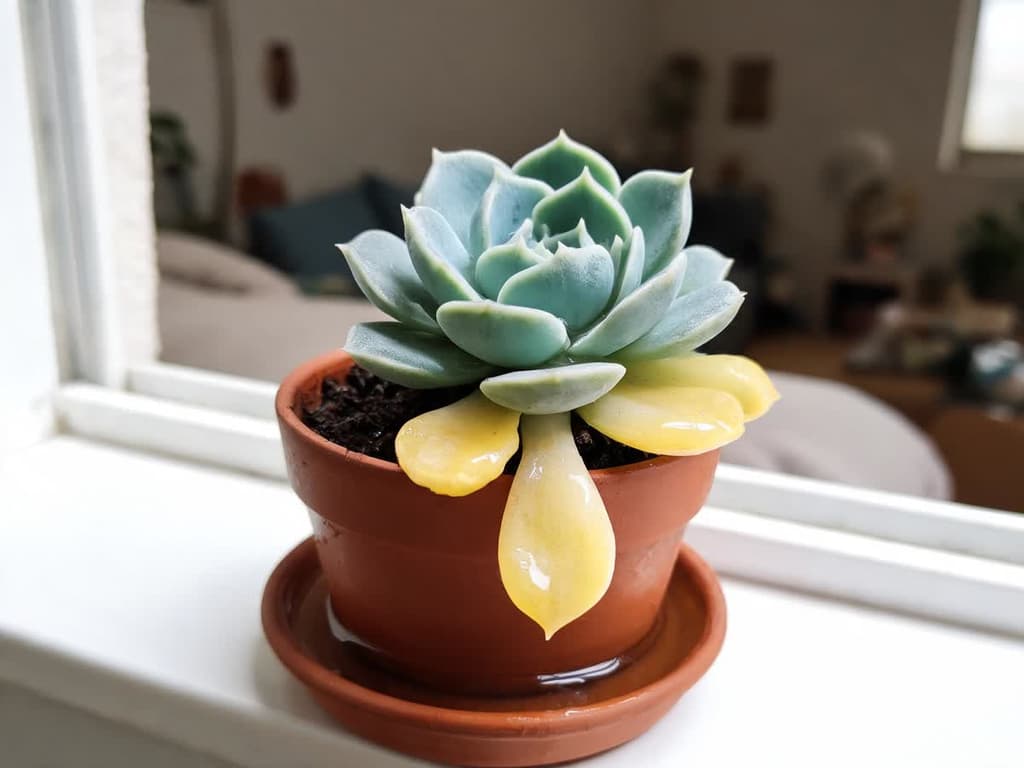
A succulent with yellow leaves is not always sick. If only 1 or 2 bottom leaves turn yellow and dry up while the center of the plant keeps growing, that is normal leaf shedding. The warning sign is a leaf that is yellow, soft, and almost translucent. It indicates too much water at the roots, which is the most common cause, and watering again makes the situation worse.
To find out what is happening in your case, squeeze a yellow leaf between two fingers and then gently squeeze the base of the stem right at soil level. The texture of the leaf and the firmness of the stem separate the causes, and the plant can still be saved as long as firm stem tissue remains.
Quick summary:
Bottom leaf turns yellow, then dries up and becomes papery, one at a time: normal shedding. Remove the dried leaf.
Yellow, soft, translucent leaf that drops at the slightest touch: too much water. Stop watering and wait for the soil to dry to the very bottom; if the stem is soft, remove the plant from the pot.
Yellow and wrinkled leaf that remains firm, with dry soil: thirst. Water until water drains from the drainage hole.
Yellow, orange, or red leaf that stays firm on the sun-facing side: reaction to strong light. A dry, beige patch indicates sunburn: reduce sun exposure.
Pale plant with a stretched stem and spaced-out leaves: lack of light. Move the plant to a brighter spot.
Dark, mushy stem base: rot. Unpot the plant; the top portion can still be rooted as a cutting.
How to tell why your succulent is turning yellow
Three observations separate almost every case of a yellowing succulent. They are: where the yellowing occurs, how the leaf feels to the touch, and how the base of the stem feels. Check all three before watering, moving the plant, or repotting.
Where: check if the yellowing is only on the lower leaves, in the center of the rosette, on the side facing the window, or on new growth. A rosette is the circular arrangement of leaves originating from the same point.
Squeeze: gently squeeze a yellow leaf. It may feel soft and squishy, wrinkled yet firm, or firm and smooth.
Stem: squeeze the base of the stem. A firm stem is a good sign. A soft or darkened stem points to rot, meaning the plant needs to be taken out of its pot.
Where it turns yellow | How the leaf feels | Likely cause | What to do |
|---|---|---|---|
Only at the bottom, one leaf at a time | Dry, papery | Normal leaf shedding | Remove the dried leaf |
From the bottom up, several at once | Soft, translucent, drops when touched | Too much water at the roots | Stop watering and let the soil dry out completely to the bottom |
In the center of the rosette | Soft, turning dark | Water standing in the center of the rosette | Water only along the rim of the pot and check the stem |
Bottom and middle leaves | Wrinkled, yet firm | Thirst | Water until it drains from the hole |
Leaves receiving sun | Firm and smooth, yellow, orange, or red | Reaction to strong light | Nothing to do |
Leaves exposed to the sun, especially inner leaves and new growth | Dry, beige or brown patch | Sunburn | Reduce sunlight; the mark is permanent |
Any leaf, days after a cold night | Translucent patch that turns dark | Cold damage | Protect from the cold and suspend watering |
New growth | Pale, with a stretched stem | Lack of light | Provide more light; if the stretched stem does not return to normal, cut off the elongated part |
Yellow and dry bottom leaf: the succulent is shedding leaves
Rosette-forming succulents drop their oldest, lowest leaves as they grow. Iowa State University Extension notes that one or two bottom leaves drying out on an otherwise healthy plant are no cause for concern. Their recommendation is simply to remove the dried leaf.
North Carolina State Extension (NC State) describes the same process in echeveria. Leaves wither and drop starting from the base, eventually exposing the stem. University of Florida Extension (UF/IFAS) also advises removing dead leaves from the base of echeverias to keep the plant healthy.
Three signs confirm normal leaf shedding:
the leaf turns yellow, then dries up and becomes papery without turning mushy;
only one leaf yellows at a time, always the lowest one;
the center of the rosette stays firm and continues producing new leaves.
If several leaves turn yellow at once, feel mushy, or the yellowing spreads up into the middle of the plant, the issue is at the root level.
Yellow, mushy succulent: too much water at the roots
A yellow, soft, almost translucent leaf is the most frequent sign of overwatering in succulents. Iowa State outlines the symptoms: yellow leaves, soft leaves and stems, leaves dropping over time, and soil that feels wet to the touch. Severe cases lead to mold on the soil surface or fungus gnats swarming around the pot.
Yellow, mushy succulents happen even in homes where people rarely water. Watering once a month is still too much if the soil fails to dry out between waterings. Iowa State points to three reasons the soil stays wet:
pots without drainage holes;
saucers or cachepots (decorative pots without holes holding the inner pot) with standing water at the bottom;
dense potting soil or mixes with too much organic matter that retain excess moisture.
In the jade plant (Crassula ovata), NC State notes leaf drop and root rot caused by overwatering. If a leaf turns mushy and dark in the center of the rosette rather than at the bottom, water may be trapped there. UF/IFAS warns that standing water in the crown of an echeveria rosette can cause rot, so water the soil around the rim of the pot instead.
The first step is to stop watering and let the potting mix dry out all the way to the bottom of the pot. Then, adopt the soak-and-dry watering routine explained in how often to water succulents. Iowa State recommends switching heavy potting mixes for a quick-draining succulent soil.
When roots die in waterlogged soil, the issue is root rot, and holding off on watering is no longer enough on its own.
How to save a succulent with root rot
Root rot is the death of roots caused by an absence of oxygen in waterlogged soil. With fewer working roots, the plant cannot absorb water, causing it to wilt and shed leaves. Iowa State explains that these symptoms are often mistaken for under-watering, prompting extra watering that only worsens the problem.
If the base of the stem has softened or leaves keep turning mushy even though the soil is dry, take the plant out of its pot:
Loosen the soil from the roots using your fingers, without pulling the plant by its leaves.
Inspect the root system. Healthy roots are pale and firm. Rotted roots are brown or black and fall apart between your fingers.
Trim away all rotted roots using clean shears and pluck off any mushy leaves.
Leave the bare-root plant in the shade until the cut ends feel dry and callused, typically 2 to 3 days.
Repot into fresh, dry succulent soil inside a pot with drainage holes.
Wait 1 full week before the first watering. Afterwards, water only once the soil has completely dried out.
Iowa State warns that saving the plant does not always work. Sometimes the plant recovers once the soil dries, but other times the rot has advanced too far. In that second scenario, your options are discarding the plant or taking cuttings from whatever healthy sections remain.
A stem base that is black and soft shows rot has moved up from the root system. Cut the stem with clean pruners above the dark area until the inside of the cut looks pale and firm. Root the top portion as a cutting. The step-by-step process, including callusing times, is covered in how to propagate succulents.
Is your succulent thirsty or overwatered?
Both conditions start with yellowing, wilted foliage, which is why many growers alternate between watering less and watering more without seeing progress. Rotted roots cannot take up moisture, so the plant wilts as if it were parched. Adding water at this stage speeds up the loss of the plant.
With underwatering, a yellow leaf wrinkles and thins out, but stays firm to the touch. Iowa State describes leaves that turn yellow, wrinkle, and turn brown before dropping, along with limp, spotted stems and leaves. Even when wilted, a thirsty plant has a firm stem when squeezed, and the soil is dry all the way to the bottom.
To verify, insert a wooden chopstick into the soil down to the bottom of the pot and pull it out. Iowa State uses this test: a chopstick darkened by moisture means the plant does not need water yet. A clean, dry stick paired with wrinkled, firm foliage confirms thirst.
Water thoroughly until liquid drains from the bottom hole, and empty whatever collects in the saucer. If the plant was dry for an extended period, parts of the root system died back, and Iowa State cautions that recovery may be slow. The guide on how to care for succulents explains how to judge watering needs by pot weight.
Succulents turning yellow, orange, or red after sun exposure
Leaves that turn yellow, orange, or red while remaining firm and smooth are reacting to bright light. These hues stem from pigments produced by the foliage under high light levels.
A 2017 study published in the Flower Research Journal tracked this response in two echeverias. Plants were grown for 4 weeks under three separate light levels. Under full light, leaves held higher concentrations of anthocyanins (red to purple pigments) and took on a redder hue. In shade, the plants grew greener, taller, and more stretched out. The authors describe these pigments as a protective screen against excess light.
NC State reports the same trait in ghost plant (Graptopetalum paraguayense): leaves take on pinkish tones during hot, dry weather and bluish tones in partial shade. Color shifts follow the plant's environment, and green tones return when light levels drop.
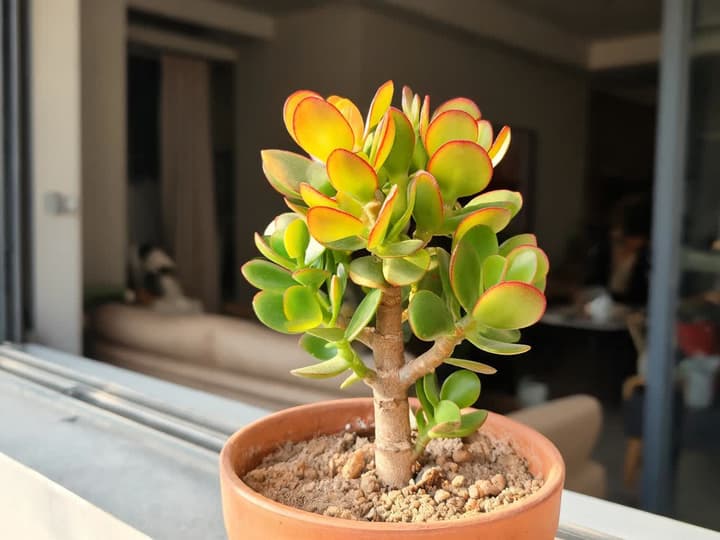
Some succulents are naturally yellow. NC State notes jade plant varieties with yellow-orange foliage, such as 'Hummel's Sunset'. On these plants, yellow is the standard foliage color.
Sunburn looks entirely different: it appears as a dry, beige or brown patch. It hits inner leaves and soft new growth first, since they are unaccustomed to intense sun. Iowa State explains that it develops when a plant kept in low light is moved abruptly into harsh direct sunlight. Scorched tissue does not recover, and damaged leaves eventually drop.
Neither sun coloration nor sunburn causes leaves to turn mushy. Soft, colorful foliage points to a different problem: overwatering or cold damage. To acclimate a succulent to full sun without scorching it, increase light levels gradually. Our guide on how much sun succulents need details the transition steps.
Pale, stretched succulents: lack of light
Long, thin, pale new growth points to insufficient lighting. This growth habit caused by poor light is called etiolation. Iowa State notes that rosette succulents open up their rosettes and flatten their leaves to capture more incoming light.
Indoors, the same source recommends bright, indirect light, ideally for 10 or more hours per day. In Brazil, a north-facing window receives the most light. Move the plant closer to it gradually to prevent sunburn. Without a bright window, use an LED grow light up to 30 cm (12 inches) away from the plant. Keep the light on for 12 to 16 hours per day.
Sections that have already stretched will not shrink back. According to Iowa State, some species recover on their own over time, while others require pruning so new growth emerges compact.
Cold, fertilizer burn, and pests
Cold injury turns foliage translucent, mimicking overwatering. The main clue is the timing: patches show up right after a cold snap and only darken days later. If your plant weathered a cold night, shelter it from low temperatures and stop watering until the soil dries. Winter plant management steps are outlined in winter succulent care.
Excess fertilizer leaves a white crust on the soil surface along with dry, brown leaf tips, and can trigger lower leaf drop. Proper dosing and soil flushing steps are detailed in our guide on fertilizer for succulents.
Sap-sucking pests also make succulent foliage turn yellow. Mealybugs form white, cotton-like clusters along stems and at leaf joints, according to Iowa State. Remediation steps can be found in our mealybug guide.
Frequently asked questions
Should I pull yellow leaves off my succulent?
Remove dried lower leaves and any mushy leaves from an overwatered plant. UF/IFAS advises taking dead leaves off the base of echeverias. Leaves that are yellow and firm from sun exposure should stay on the plant, as they are fully alive. Remove them with a gentle sideways twist, and if they resist, let them dry out further.
Do yellow succulent leaves ever turn green again?
It depends on what caused it. Sun-induced color shifts return to green once light exposure decreases. Leaves wrinkled from thirst plump back up following a deep watering, assuming the root system is alive. Foliage that turned mushy from rot or marked by sunburn cannot recover. Those leaves dry out and drop as the plant produces fresh growth from the center.
Can hydrogen peroxide or fungicide cure a succulent with root rot?
The university extensions reviewed do not recommend hydrogen peroxide or fungicides for succulents suffering from root rot. Instead, they outline cutting away rotting tissue, letting cuts callus over, and following a strict soak-and-dry watering routine. None of these sources have measured the effect of hydrogen peroxide on succulents, making trimming and drying the safest route.
How often should I water to keep succulents from turning yellow?
There is no set number of days. Water when the soil has dried out completely to the bottom of the container, checking with a wooden chopstick before each watering. Soil dries significantly slower in the winter, extending the time needed between waterings. Water until moisture runs out the drainage hole, and empty any water left in the saucer.
Next step
Before watering, shifting locations, or repotting your succulent, squeeze the yellow leaf and the base of the stem. Match your findings against the diagnostic table at the start of this article and follow only the instructions for your specific scenario.
If your plant's yellowing does not match any of these cases, Bloom can identify the succulent from a single photo. The Premium plan also diagnoses symptoms through photos. The app is available for iPhone.
Sources
Iowa State University Extension and Outreach. Common problems and issues of succulents.
NC State Extension. Echeveria, Crassula ovata, and Graptopetalum paraguayense.
UF/IFAS Extension, Gardening Solutions. Succulents.
Flower Research Journal, 2017, 25(4):270-277. Effects of shading on the growth, development, and anthocyanin content of Echeveria agavoides and E. marcus.
Related articles
How to Care for a Goldfish Plant: Light, Watering, and Blooms
How to care for a goldfish plant: bright light without strong sun, water when the soil surface dries, and humid air. Learn how to tell a Nematanthus from a Columnea, why it drops leaves, and how to get it to bloom again.
Lavender Leaves Turning Yellow: Where the Yellowing Starts Shows the Cause
Lower leaves turning yellow with moist soil means overwatered roots, the most common cause. Old leaves drying one by one on woody stems is normal. Take the stem and root test, see if your plant can still be saved, and find out what to do today.
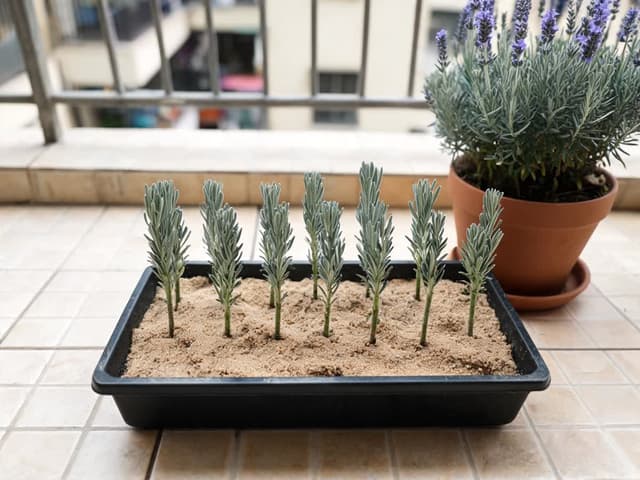
How to Propagate Lavender: Where to Cut and Why Cuttings Rot
A lavender cutting comes from a non-flowering branch tip, about 4 inches long, planted in sandy soil that never stays soggy. Learn where to cut, rooting times, seasonality in Brazil, and what to do if the base turns black.