How to Care for a Goldfish Plant: Light, Watering, and Blooms
How to care for a goldfish plant: bright light without strong sun, water when the soil surface dries, and humid air. Learn how to tell a Nematanthus from a Columnea, why it drops leaves, and how to get it to bloom again.
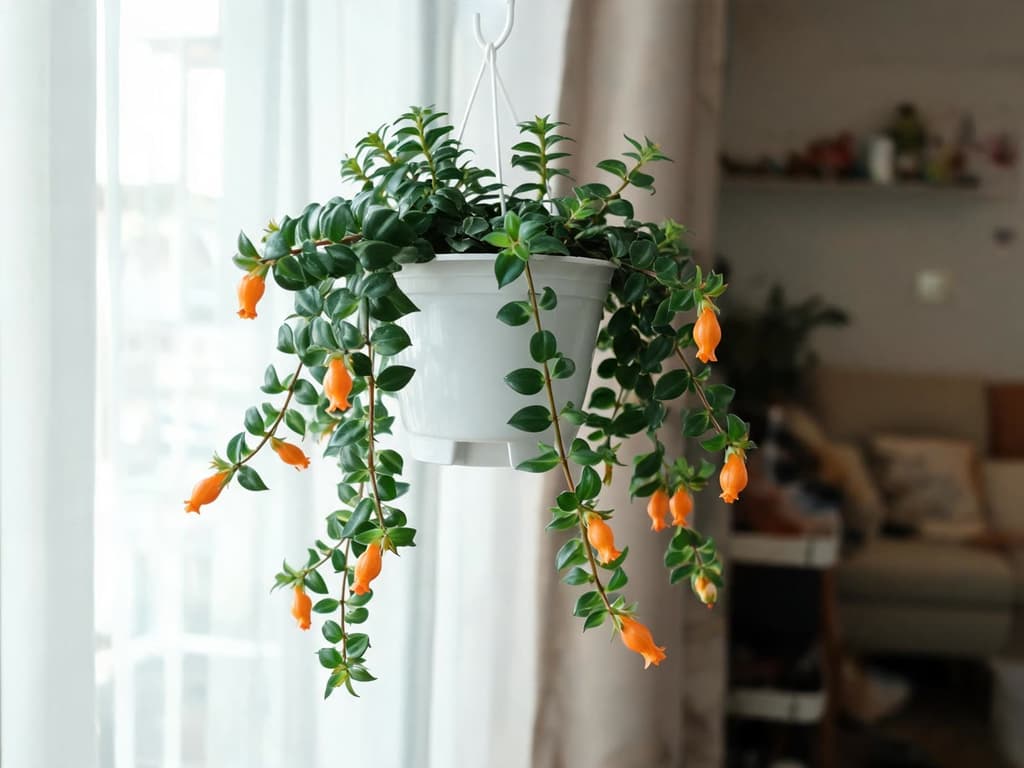
To care for the goldfish plant, place the pot in a very bright spot, without harsh sun hitting the leaves for hours. Water when the surface of the soil is dry to the touch, using room temperature water, and never let the soil dry out completely. It likes humid air and suffers in the cold below 13 °C.
If your goldfish plant is losing leaves, in most cases you can save the plant or, at the very least, take cuttings from it. First, look at the base of the stems and the soil: a firm stem indicates that the root is still working. Even with a rotten base, healthy tips turn into new plants in a few weeks.
Goldfish plant quick care sheet
Care | What to do |
|---|---|
Light | Bright and filtered, without harsh sun for hours at a time |
Watering | When the surface of the soil dries out; never let it dry out completely |
Air humidity | From 50% to 60% |
Temperature | From 18 °C to 27 °C; never below 13 °C |
Soil | Light and loose, the type used for African violets, with perlite (white granules that aerate the soil) |
Fertilizer | Balanced liquid fertilizer, at 1/4 of the label dose, once a month |
Cutting | Tip cutting with 3 nodes, in spring (in Brazil, from September to November) |
Pets | The ASPCA (animal poison control center of the United States) classifies Nematanthus as non-toxic to dogs and cats; Columnea does not have a listing, so keep it away from pets |
Which goldfish plant do you have: Nematanthus or Columnea?
The name goldfish plant is used for two genera (groups of related species) in the African violet family (Gesneriaceae): Nematanthus and Columnea. In Brazil, the names planta-peixinho and columeia cover the same two genera. Basic care for both is similar, but they differ in cold tolerance, pruning, and flowering. That is why it is worth finding out which of the two is in your pot.
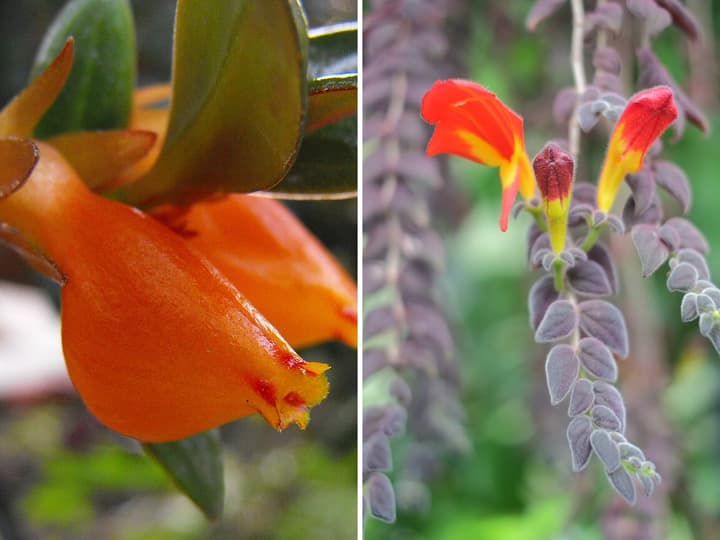
The surest clue is the flower. The Gesneriad Society is the international society of growers of this family. According to its guide, How to Know and Grow Gesneriads, the Nematanthus flower is swollen at the bottom, shaped like a little pouch. It is the one that resembles a goldfish. The flower of most Columnea is open, with a "hood" on top and a petal hanging below, like a tongue.
What to look for | Nematanthus | Columnea |
|---|---|---|
Flower | Closed and swollen at the bottom, shaped like a little pouch | Open, with a hood on top and a "tongue" hanging down below |
Leaf | In Nematanthus gregarius, small and thick | Varies; in trailing types, small leaves on stems that hang straight down |
Growth habit | Trailing, arching, or as a small shrub | Small shrub, trailing or erect |
Origin | Atlantic Forest, in Brazil | Central America, South America, and the Antilles |
Cold | It tolerates cool temperatures; Nematanthus gregarius suffers below 10 °C | It likes warmth; trailing small-leaved varieties bloom better in cooler temperatures |
Pruning | It does not need it, but tolerates frequent pruning | It does not need pruning |
Nematanthus is a Brazilian plant. The Flora e Funga do Brasil, from the Rio de Janeiro Botanical Garden, records 32 species in the genus. All of them are native only to Brazil and come from the Atlantic Forest. In nature, it grows on tree trunks without parasitizing the tree, like orchids do. Living on trunks matches what the plant requires at home. It wants filtered light, like the light that passes through tree leaves, and soil that lets air reach the roots.
Each genus has a species with a care guide: the columnea (Columnea microcalyx) and the goldfish plant (Nematanthus wettsteinii). If the plant is not in bloom and you do not know which of the two you have, a photo in the Bloom app (iPhone) identifies the species. The free plan includes 2 identifications per month. Watch out for "peixinho-da-horta" (Stachys byzantina): it is a different plant, with leaves covered in soft fuzz, unrelated to the goldfish plant.
Light: how much sun the goldfish plant can handle
The goldfish plant needs a lot of light, but not strong direct sun for hours. The RHS (Royal Horticultural Society, from the United Kingdom) recommends bright, filtered light for Nematanthus gregarius and, for Columnea, protection from strong sun. The North Carolina State University Extension (NC State) advises placing the plant near the sunniest window in the house. The same source warns: no full sun for long periods.
In Brazil, the window that gets the most sun faces north. Keep the pot near it, protected by a sheer curtain, or in an east-facing window, which gets only the morning sun. Burned or faded leaves: move the pot away from direct sun or add a sheer curtain. Long stems with widely spaced leaves and no flowers: move the pot closer to the window.
Low light prevents the goldfish plant from blooming. According to the Gesneriad Society, a lack of flowers and pale or yellowish leaves can indicate low light. In a dark apartment, a grow light left on for 12 to 14 hours a day replaces a window.
How to water the goldfish plant
Water the goldfish plant when the surface of the soil is dry to the touch. Water slowly until water drains through the hole in the pot and empty the saucer within 30 minutes. The Gesneriad Society says that overwatering usually does more harm than underwatering. The same source advises never letting the soil dry out completely.
Use room temperature water. According to Iowa State University Extension (Iowa State), cold water can damage the fine roots, especially those of the African violet, a relative of the goldfish plant. The RHS recommends low-lime water for both plants, such as rainwater. If tap water contains chlorine, the Gesneriad Society suggests letting it sit overnight in an open pitcher.
There is no fixed number of days between waterings: the interval changes with the pot size, heat, and wind. Check with your finger every 2 or 3 days and water only when the surface is dry. In the winter in Brazil (June to August), the soil takes longer to dry and the plant needs less water. The RHS recommends watering sparingly during this period and avoiding getting the leaves of the Columnea wet.
The right air humidity and temperature for the goldfish plant
The goldfish plant needs humid air. A hygrometer, an inexpensive device that measures air humidity, shows whether the environment has reached 50%. The Gesneriad Society cites an average humidity of 50% as sufficient, and about 60% as the ideal level for these plants. In heated homes during winter, the air is usually close to 40%, according to the Gesneriad Society. In dry air, the leaves turn yellow and drop, the tips dry out, and the buds drop before opening.
To increase air humidity, set the pot on pebbles inside a tray with water, without the bottom of the pot touching the water. This tray is different from the pot saucer, which should stay empty. Grouping several plants together also helps, and a humidifier solves the problem in an air-conditioned room. Sources disagree on misting the leaves. The RHS recommends misting Columnea with warm water to maintain humidity, but advises against wetting the leaves when watering in winter. The Gesneriad Society advises avoiding water on the leaves. Stick with the pebble tray: it raises humidity without wetting the foliage. If you mist, do it in the morning, so the leaves dry before night.
The ideal temperature for most plants in this family is between 18 °C and 27 °C, according to the Gesneriad Society. NC State notes that Nematanthus gregarius cannot tolerate temperatures below 10 °C. Iowa State warns that below 13 °C, the leaves of some species in the family can suffer damage. Without data for Columnea, use 13 °C as a minimum. Keep the pot away from open doors, drafty windows, and air conditioning vents. The plant can stay on the balcony or in the yard, in a bright shade spot, in regions of Brazil where nights never drop below 13 °C.
Soil, pot, and fertilizer for the goldfish plant
The goldfish plant needs a light, loose soil that holds moisture and lets water drain. The Gesneriad Society recommends ready-to-use African violet potting mix with a little perlite mixed in. Perlite is that light white granular material, sold at garden centers, that opens up space for air in the soil. Always use a pot with a drainage hole at the bottom.
In nature, the goldfish plant grows hanging from tree trunks. In a hanging pot, it develops better, according to the Gesneriad Society and NC State. It fits well on the list of hanging plants for a window or balcony. Repot in spring (in Brazil, from September to November), when the roots are tight and coming out through the drainage hole. The new pot should be only slightly larger than the old one.
Sources agree on a weak dose, but diverge on frequency. The Gesneriad Society recommends a balanced liquid fertilizer, such as 20-20-20, at 1/4 the label dose with every watering. The three numbers on the label are nitrogen, phosphorus, and potassium, in that order. Iowa State, a university extension, says that a low dose once a month is enough for most of these plants. Follow Iowa State: fertilize 1 time per month at 1/4 the label dose, and use only water for the other waterings. The RHS recommends a potassium-rich fertilizer for Columnea, but a balanced one prevents phosphorus deficiency. To choose a product, see the guide on how to fertilize plants.
Why the goldfish plant does not bloom
The first cause to check when the goldfish plant does not bloom is light. Before changing watering or fertilizer, move the pot closer to the brightest window, without harsh direct sun. The Gesneriad Society points to pale leaves along with a lack of flowers as a sign of low light.
Three other causes also prevent flowering:
Dry air: the buds dry up and fall off before opening, according to the Gesneriad Society.
Lack of phosphorus in the fertilizer: the same source links the lack of phosphorus to weak roots and a lack of flowers. Use a balanced fertilizer, not one with only nitrogen.
Too much heat for some Columnea species: those with small leaves and trailing stems flower better in cooler temperatures, according to the Gesneriad Society. This is the case for Columnea gloriosa and Columnea microphylla. For them, a cooler room in winter helps. No one has published the exact temperature.
Why the goldfish plant is losing leaves
The goldfish plant loses leaves due to overwatering, dry air, cold, or pests. What separates the causes is the condition of the fallen leaf and the soil. Check the table before changing any care routine.
What you see | Likely cause | What to do |
|---|---|---|
Yellow and soft leaves, dark or soft stem base, constantly wet soil | Overwatering and root rot | Stop watering, remove the plant from the pot, and trim off dark, mushy roots; repot in fresh soil, water once, and only water again when the surface is dry to the touch |
Dry, crispy leaves, brown tips, buds dropping before opening | Dry air or soil that dried out completely | Increase humidity with a pebble tray and water when the surface is dry to the touch, without waiting for the soil to dry out completely. |
Many green leaves dropping all at once, after a cold night or a change of location | Cold, wind, or sudden temperature change | Move the pot to a draft-free spot, above 13 °C, and leave the plant there while it recovers |
Distorted, sticky, or spotted new leaves, tiny bugs on the shoot | Pests | Check the new growth and the underside of the leaves and follow the guides in the Goldfish plant pests section, below |
Overwatering is the most dangerous cause, because it kills the root. The RHS warns that overwatering promotes root and stem rot in Columnea. A healthy root is light and firm; a rotten root is dark, soft, and its outer layer comes off when you pull it. Yellow leaves also have other causes, explained in the yellow leaves guide.
If the base of the stems is already soft, the plant you have is unlikely to recover. Cut the tips that are still firm and make cuttings with them, as explained further below.
How to prune the goldfish plant to make it bushy
Pinch the tips of the stems while the plant is young, that is, remove the tip with your fingernail. The RHS recommends removing the tips of young Nematanthus gregarius so it produces new stems. Remove the tip of each stem, with the last pair of leaves, using your fingers or clean scissors. Each removed tip makes the stem put out new shoots from the sides, and the pot gets fuller.
Neither of the two needs pruning, according to the RHS, but they react differently to it. Small-leaved Nematanthus, such as Nematanthus gregarius and Nematanthus wettsteinii, tolerate frequent pruning well in pots, according to the Gesneriad Society. For Columnea, the RHS says pruning is not necessary: cut only dry or very long stems.
None of the sources say what the best time to prune is. The safest option is to cut right after the flowers drop, when the stems have no buds. The flower grows at the point where the leaf emerges from the stem, and cutting a stem full of buds removes those flowers.
How to propagate goldfish plant
The goldfish plant roots easily from tip cuttings, according to the Gesneriad Society. Take cuttings in spring (in Brazil, from September to November), the time recommended by the RHS:
Cut a stem tip with at least 3 nodes (a node is the point where the leaf emerges from the stem).
Remove the leaves from the bottom of the cutting.
Bury this leafless part in light, moist soil. You do not need rooting hormone, the powder or gel sold to help the cutting develop roots.
Cover the pot with a clear plastic bag to keep the air humid, and leave it in a bright spot, without direct sun.
Some cuttings root in a few days, while others take a few weeks. The Gesneriad Society recommends planting several cuttings in the same pot of Nematanthus to form a full plant faster.
Goldfish plant pests
Aphids are the most frequently cited pest for both plants. The RHS points out aphids on the new shoots of Nematanthus gregarius, and NC State also cites aphids on it. On Columnea, the RHS also mentions mealybugs and cyclamen mites (a tiny mite), which leave the new central leaves distorted.
The Gesneriad Society guide also lists whiteflies, thrips, and two-spotted spider mites. Thrips, a tiny and slender insect, moves when you touch the flower; the two-spotted spider mite is reddish and leaves fine webs. Check the new growth and the undersides of the leaves every time you water. For aphids, mealybugs, and two-spotted spider mites, the treatment is in the guides below:
aphids on plants: tiny green or black bugs clustered on the new growth;
mealybugs: small white cotton balls where the leaf meets the stem;
spider mites: light-colored specks on the leaves and fine webbing.
Is the goldfish plant toxic to cats and dogs?
The ASPCA (animal poison control center of the United States) classifies Nematanthus as non-toxic to dogs and cats. The entry uses the old genus name, Hypocyrta. Columnea does not have a listing with the ASPCA, so no one has confirmed that it is safe. As a precaution, keep Columnea out of reach of cats and dogs.
If your pet chews on the plant and vomits or becomes lethargic, take them to the vet along with a photo of the plant. The list of toxic plants for pets gathers common household species that the ASPCA classifies as toxic.
Frequently asked questions
Is the goldfish plant a succulent?
No. The goldfish plant is in the African violet family, Gesneriaceae. The thick leaves store a little water, but it cannot tolerate dry soil for many days like a cactus. The Gesneriad Society recommends never letting the soil dry out completely.
Where to place the goldfish plant indoors?
Place the goldfish plant near a very bright window, protected from strong midday sun. In Brazil, an east-facing window or a north-facing window with a sheer curtain works well. Avoid doors with cold drafts and air-conditioning vents. A hanging basket shows off the trailing stems.
Does the goldfish plant die after flowering?
No. The goldfish plant is perennial, according to the RHS: it lives for several years and blooms again. Iowa State classifies Columnea as a continuous-blooming plant. When the plant ages and gets bare stems, take cuttings from the tips and refresh the pot.
Can I spray water on the goldfish plant?
You can, in the morning, with room temperature water, so that the leaf dries before nightfall. The safest way to increase humidity is a tray with pebbles and water under the pot, because it does not wet the leaf. The RHS asks not to wet the leaves of Columnea in winter.
Related articles
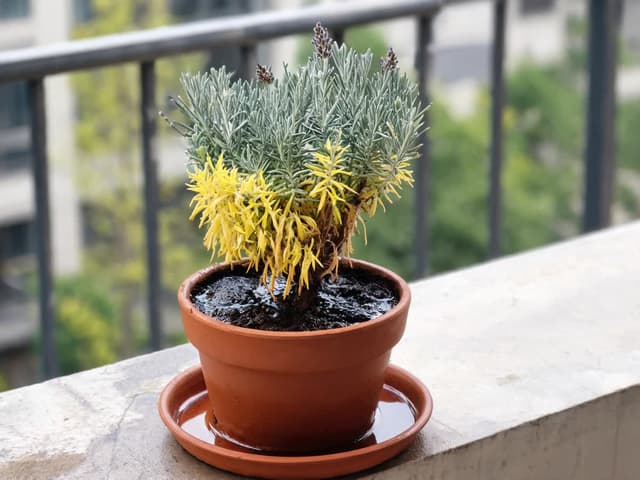
Lavender Leaves Turning Yellow: Where the Yellowing Starts Shows the Cause
Lower leaves turning yellow with moist soil means overwatered roots, the most common cause. Old leaves drying one by one on woody stems is normal. Take the stem and root test, see if your plant can still be saved, and find out what to do today.
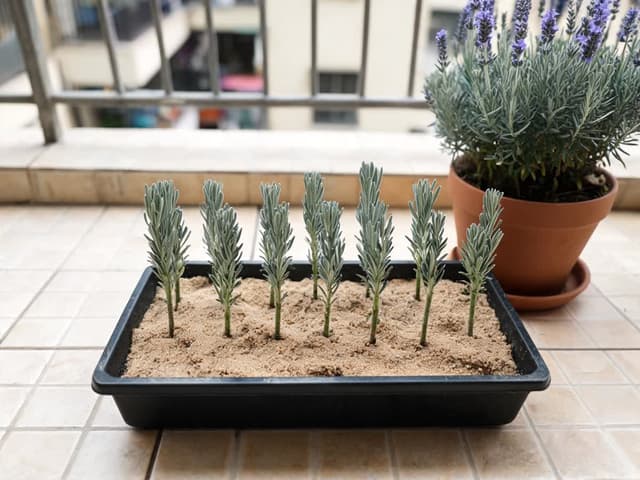
How to Propagate Lavender: Where to Cut and Why Cuttings Rot
A lavender cutting comes from a non-flowering branch tip, about 4 inches long, planted in sandy soil that never stays soggy. Learn where to cut, rooting times, seasonality in Brazil, and what to do if the base turns black.
How to Repot a Succulent: When to Change Pots and When to Water After
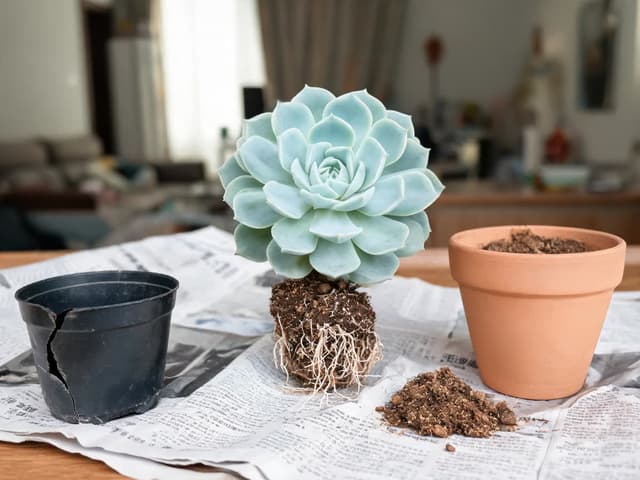
Repot your succulent in dry soil, using a pot with drainage that is only slightly larger than the roots, and time the watering correctly: the same day if no roots broke, or after 7 days if any were cut. In the southern hemisphere, spring is September to November.