Red Aglaonema Leaves Turning Yellow: What the Leaf Position Tells You
On red Chinese evergreens, the pink, cream, and yellow patterns on the foliage are natural coloration. Old bottom leaves yellowing one at a time are normal. Yellow, soft leaves with wet potting mix, or dark patches after a cold night, require action. Here is how to test each cause.
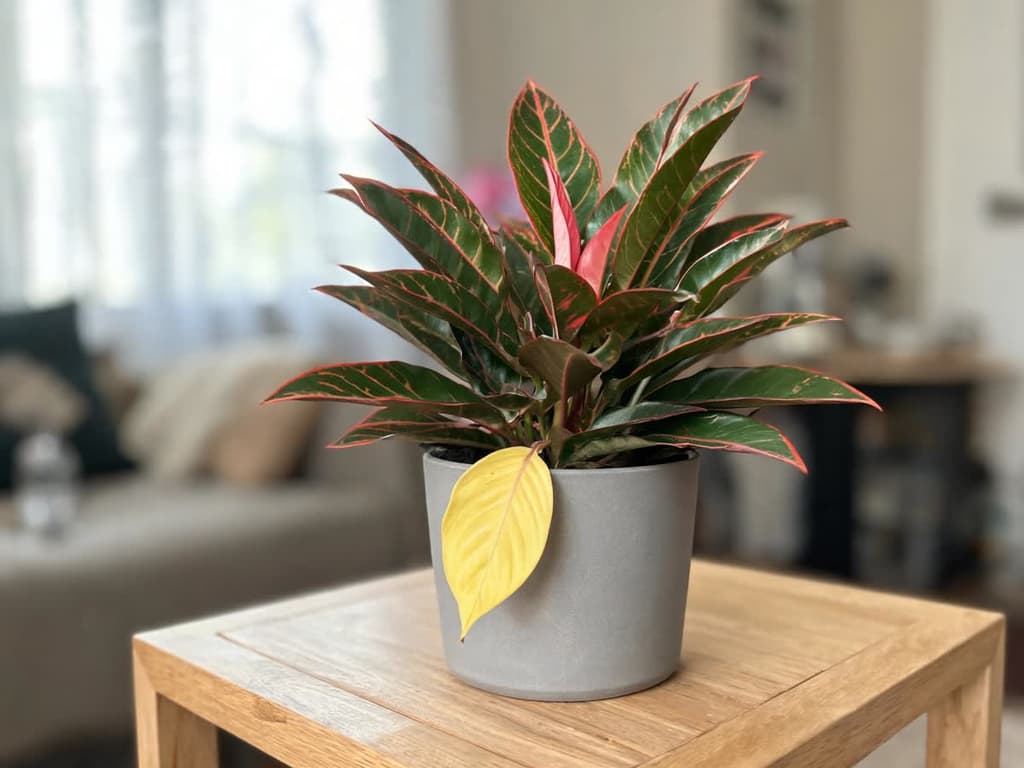
Red aglaonema leaves turning yellow, like those of any Chinese evergreen, do not always mean the plant is sick. The first step is to check where the yellow leaf is located. One old leaf, down at the bottom, yellowing at a time while the center of the plant puts out new growth, is standard leaf renewal for a Chinese evergreen. Several yellow leaves at once, soft and accompanied by wet potting mix, point to overwatering.
On red Chinese evergreens, the pink, red, cream, or yellow patterning on the leaf is the plant's natural color, not a symptom. In more sensitive cultivars, cold below 13 °C causes dark patches on middle leaves 2 to 7 days later, and they turn yellow. Three tests separate the most common causes: which leaf turned yellow, what the soil feels like, and, if both answers indicate trouble, the condition of the roots.
Quick summary:
A yellow leaf will not turn green again. Cut it off once it turns completely yellow.
Water the Chinese evergreen when the top 2.5 to 5 cm of soil is dry, rather than on a set schedule (Clemson HGIC).
Root rot comes from poorly draining soil or overwatering, according to Clemson.
In cold temperatures, mature and old leaves suffer far more than new leaves (UF/IFAS EP103).
When red Chinese evergreen loses its color, the red turns green rather than yellow (Scientific Reports, 2026).
Diagnostic table for a Chinese evergreen with yellow leaves
Check which leaf turned yellow first, then check the soil, and only then adjust watering, lighting, or fertilizer.
What you see | Where it appears | One-minute test | Probable cause | What to do |
|---|---|---|---|---|
One yellow leaf at a time, entirely yellow | Oldest leaf, flush with the soil | Is the center of the plant producing a firm new leaf? | Natural leaf shedding (normal) | Trim it off once it is completely yellow |
Multiple yellow, soft leaves | Lower leaves first | Is the soil moist 5 cm below the surface? Is there standing water in the saucer? | Overwatering | Hold off on watering until the top 2.5 to 5 cm dry out; check the roots if leaves keep yellowing |
Yellow, dry, and crispy leaves | Lower leaves and margins | Is the soil dry and pulling away from the pot wall? | Underwatering | Water thoroughly until runoff drains through the drainage hole |
Dark, greasy-looking patches that later turn yellow | Middle and lower leaves; new leaves rarely suffer | Was there a cold night, an open door, air conditioning, or transport in the past 2 to 7 days? | Cold damage | Move away from drafts; only remove leaves with more than half their surface damaged |
Faded leaf, with a very pale tip | Leaves facing the window | Does direct sunlight hit the plant at any point during the day? | Direct sun or excessive heat | Move out of direct sunlight |
Brown, brittle tip with burned edges | Multiple leaves | Do you fertilize every month, or is there a white crust on the soil? | Fertilizer salts (or dry air and drafts) | Flush the soil thoroughly with plenty of water and cut back on fertilizer |
Pale specks, fine webbing, or white cottony fluff | Underside of the leaf and leaf axils | Can you spot pests with a magnifying glass? | Pests | Dab with an alcohol-dipped cotton swab or rinse with a stream of water, then isolate from other pots |
Bottom leaves yellowing one by one: the Chinese evergreen is shedding old foliage
One old leaf yellowing at a time at the base of the plant is usually normal shedding. Over time, the stem grows upward, the lower leaves drop, and the base of the stem becomes bare. Clemson describes this scenario: once the lower leaves have fallen and the stem is bare, you can cut the tip and root it (Clemson HGIC).
The indicator that separates normal shedding from a problem is new growth. If the center of the plant is pushing out a firm new leaf that matches the size of the previous one, the plant is doing well. If multiple leaves yellow in the same week, or if new growth also emerges pale, look for a different cause.
For houseplants in general, Clemson links yellowing lower leaves to a lack of nitrogen or iron, especially in a rootbound pot (Clemson HGIC). In Chinese evergreens, no one has measured this. Multiple lower leaves yellowing together on a plant unfertilized for months call for fertilizer once a month. Repot when the roots fill the entire space.
UF/IFAS recommends removing dead or yellowing leaves (UF/IFAS EP160). This guide waits until the leaf turns completely yellow, because the green portion still produces food for the plant. Cut close to the stem using clean shears.
When a bare base leaves the plant tall and sparse, the leafy top can be turned into a new cutting.
Red Chinese evergreen: distinguishing normal color from yellowing leaves
In the red Chinese evergreen, the shades of pink, red, cream, and even yellow in the leaf pattern are cultivar colors. A cultivar is a variety created by growers to have a specific trait, such as leaf color. NC State describes 'Golden Fluorite' with dark green to light yellow leaves and a pink center. 'Harlequin' has yellow spots and pink veins (NC State Extension). 'Siam Aurora' has strong red on the veins and margin, according to Clemson.
Coloration in many cultivars shifts as leaves mature. On 'Lucky Red', new foliage emerges light pink, deepens to rich pink, and later turns red, according to NC State. On 'Cherry', leaves emerge green and turn pink as they mature, according to Clemson. Because of this, young and old leaves on the same plant can show distinct colors without signaling any problem.
Varietal yellow has distinct characteristics. It is visible the moment the leaf unfurls, follows consistent patterns across leaves of the same age, and maintains crisp borders. The leaf stays firm and glossy. Symptomatic yellowing spreads across both green and red areas, turning the entire leaf pale within a few days. It is usually paired with soft or dry texture.
When red Chinese evergreen loses color, the red disappears and the leaf becomes greener. A 2026 study of three red cultivars of Aglaonema modestum describes a common problem in production. The red fades to green or fails to form altogether (Scientific Reports, 2026). The authors cite light, temperature, and nutrients as possible causes of the fading red. In the study, they only measured the relationship between color and leaf nutrients, without identifying a cause.
In the consulted sources, none show a different cause of yellow leaves between green and red Chinese evergreens. The causes in the following sections apply to both. In a greenhouse trial with three red cultivars, the two lower light levels produced 1.14 to 3.72 times the pigment of the highest light level (Genes, 2025). The three light levels tested were much stronger than typical room light, so that figure does not define indoor home lighting. More light does not guarantee more red, and direct sun bleaches the leaf.
Two houseplants resemble the Chinese evergreen. Croton (Codiaeum variegatum) also has red, yellow, and green leaves, but it is a shrub with a woody stem (hard as wood). Its leaf is thick and leathery (hard as leather) and releases sap when broken (NC State Extension). Yellowing on croton has its own guide: croton with yellow leaves.
NC State lists dumb cane (Dieffenbachia seguine) among plants that look similar to Chinese evergreens. To tell them apart, count the primary lateral leaf veins: a Chinese evergreen has 5 to 8. Yellow leaves on dumb cane are covered in the dumb cane with yellow leaves guide.
Chinese evergreen with too much or too little water: the soil test
Stick your finger or a wooden skewer 2 inches into the soil before watering. According to Clemson, dry soil in the top 1 to 2 inches calls for watering, while cold, damp soil does not (Clemson HGIC). The skewer comes out with soil clinging to it when the soil is still moist.
Pair the soil test with leaf texture. A yellow, soft leaf with wet soil indicates overwatering. A yellow, dry, crispy leaf with dry soil points to underwatering. American retailer Greenery Unlimited reaches the exact same conclusion: yellow and brown margins with moist soil signal overwatering, while crispy leaves with dry soil signal underwatering.
With too much water, stop watering until the top 1 to 2 inches of soil dry out and empty the saucer after every watering. The pot needs a drainage hole at the bottom. If the leaves continue yellowing a week later, remove the plant from the pot and inspect the roots.
For underwatering, water slowly until water drains from the drainage hole. Very dry soil sometimes pulls away from the pot wall, and the water runs down the sides without wetting the center. In that case, water slowly a second time, right after the first. Clemson recommends room-temperature water, neither hot nor cold.
Chinese evergreens drink less in winter, and NC State recommends reducing watering during that season (NC State Extension). In Brazil, winter runs from June to August: the same pot takes more days to dry out, and the soil test prevents overwatering. Two plant shop guides suggest misting leaves to counter yellowing. No university source shows this effect, and Clemson notes that Chinese evergreens tolerate dry air. Therefore, do not mist to treat yellow leaves. NC State links very dry air to brown leaves, not yellow leaves.
Soft yellow leaves getting worse: examine the Chinese evergreen's roots
Yellow, soft leaves that keep appearing a week after correcting watering indicate root rot. Clemson links Chinese evergreen root rot to soil that does not drain quickly and to overwatering. Remove the plant from the pot and inspect the roots that day.
Healthy roots are firm and light-colored. Clemson describes diseased roots as brown to black, sometimes soft (Clemson HGIC). When almost the entire root system is dark and mushy, the same page recommends discarding the plant.
Gently work the old, soggy soil off the root system using your hands.
Trim away dark, mushy sections with clean shears until you reach firm root tissue.
Repot in fresh, fast-draining potting soil in a pot with a drainage hole at the bottom. Do not use garden soil.
Water again only when the top 2.5 to 5 cm of the soil is dry, and empty the saucer.
Before tossing a Chinese evergreen whose roots have almost fully rotted or whose stem is soft at the base, salvage the top of the plant. Cut the leafy stem tip above the softened section and root that cutting. Clemson recommends tip cuttings for Chinese evergreens with bare lower stems. When dealing with a rotted base, this technique is your only remaining option, though none of the reviewed literature has measured rescue success rates.
Cold and drafts: dark patches turning yellow
Cold causes spots on Chinese evergreen leaves before turning them yellow. The University of Florida kept 12 cultivars for 24 hours at 13 °C, 7 °C, or 2 °C. Two days later, dark, greasy-looking spots appeared between the midrib and the leaf margin (UF/IFAS EP103). Leaves with more than half of their surface spotted could turn yellow and drop. Leaves with less than half spotted could stay alive for months.
Young leaves rarely suffer from the cold. In the same test at 2 °C, only 0 to 6% of damaged leaves were new growth. Mature leaves accounted for 45 to 100%, depending on the cultivar. This distinct distribution separates cold damage from other issues: spotting on middle and lower leaves, while the center of the plant remains intact.
Cold tolerance varies widely across cultivars. 'Silver Queen' suffered damage on 30% of its leaves at 13 °C. By contrast, 'Emerald Star', 'Stars', and 'Jewel of India' tolerated 24 hours at 2 °C without injury. No red cultivars were included in the trial, leaving their exact tolerance unmeasured. Clemson recommends 20 to 27 °C and notes that Chinese evergreens are sensitive below 10 °C.
Another publication from the same university states that spotting appears 3 to 7 days after exposure to cold below 10 to 13 °C. It begins on the oldest leaves (UF/IFAS EP160). In the EP103 trial, spotted leaves continued to appear for up to 10 days: wait that long before deciding which ones to cut. It points out that damage often occurs during transport. A Chinese evergreen purchased in winter can arrive home already bearing the chill of the trip.
Move the plant away from exterior doors, windows opened at night, and air-conditioning vents. Keep the room between 20 and 27 °C, the range Clemson recommends. Only prune leaves that have more than half their surface damaged. Avoid watering to compensate: Clemson cautions never to add water to cold, moist soil.
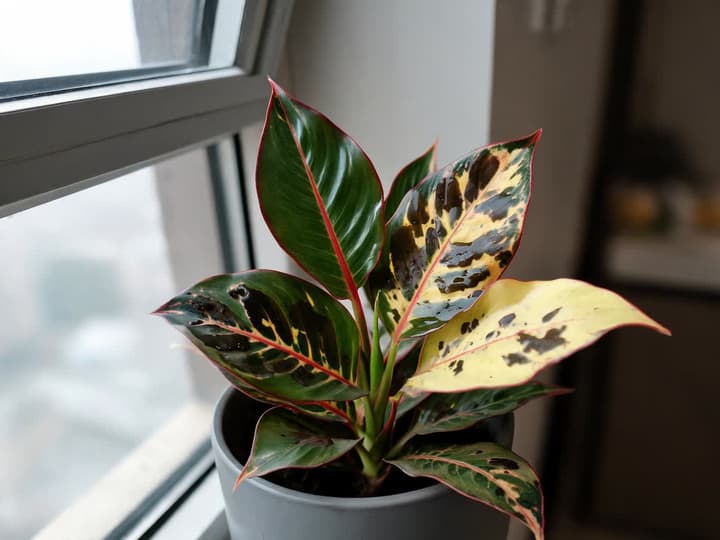
Direct sun fades Chinese evergreen leaves
Direct sun fades Chinese evergreen leaves. With excessive light or heat, leaves stand more upright and the color washes out. In severe cases, the leaf tip turns very pale, according to UF/IFAS (UF/IFAS EP160). Leaves return to their normal position once you correct the light, but heavily faded leaves may not regain their color.
Clemson recommends low to moderate light for colorful Chinese evergreens and no direct sun on the foliage. Moderate light means bright illumination near a window, without direct sun hitting the plant. In Brazil, north-facing windows receive the most sun: keep the plant away from them or behind a sheer curtain. The same light without direct sun, paired with watering based on soil moisture to the touch, forms the foundation of the guide on how to care for Chinese evergreens.
Fertilizer and salts: brown tips and pale new leaves
Brown, brittle leaf tips usually indicate salt buildup in the soil, which comes from fertilizer. Very dry air and drafts also turn leaves brown, according to NC State. UF/IFAS recommends leaching the soil, meaning watering thoroughly until plenty drains through the hole, and reducing fertilizer (UF/IFAS EP160). Clemson adds that too much fertilizer burns leaf margins.
For indoor Chinese evergreens, UF/IFAS considers a well-diluted 20-20-20 soluble fertilizer once a month sufficient. A 20-20-20 formula contains equal parts nitrogen, phosphorus, and potassium. Fertilizing more to "cure" yellow leaves increases soil salts and worsens burn.
Nutrient deficiencies can also turn Chinese evergreen foliage yellow, showing distinct visual patterns. When copper is deficient, UF/IFAS notes that older leaves lose some coloration. Foliage at the tips emerges yellowish, stunted, and distorted, with serrated margins. Roots take up less copper in cold potting mix. None of the reviewed authorities recommend Epsom salts (magnesium sulfate) for Chinese evergreens.
Pests that cause yellowing on Chinese evergreens
Pests mark the leaf with pale speckles before turning it completely yellow. Spider mites, pests nearly invisible to the naked eye, cause pale speckles on the upper surface of the leaf and sometimes fine webbing. Left unchecked, the leaf turns bronze or yellow (Clemson HGIC). Mealybugs look like white cotton where the leaf meets the stem.
Inspect the undersides of the leaves with a magnifying glass before altering your watering habits. Keep the pot isolated from other houseplants until the pest is eliminated. For mealybugs, Clemson advises dabbing every visible insect with an alcohol-moistened cotton swab. For spider mites, repeated water sprays over the whole plant help control populations, while insecticidal soap works during early infestations. The pest and disease directory for Chinese evergreen with yellow leaves on Bloom provides specific management steps for each issue, from mealybugs to mites.
The Bloom app matches leaf photos against known pest and disease symptoms. It helps when you cannot tell whether small specks are spider mites or fungal spots.
Frequently asked questions
Should I cut off yellow Chinese evergreen leaves?
Yes, once the leaf turns entirely yellow. A yellow leaf will never turn green again, and removing it with clean shears flush with the stem does not harm the plant. On foliage merely marked by cold exposure, wait: if less than half the surface is damaged, it can remain alive for months. Keep removed trimmings away from dogs and cats.
Will a yellow Chinese evergreen leaf turn green again?
No. Adjusting watering, light, or cold temperatures protects incoming growth, but leaves that have already yellowed stay yellow. New growth reveals whether your fix worked: it should emerge firm, display true cultivar coloration, and match the size of older leaves. On red Chinese evergreens, new leaves may start lighter and darken as they mature.
Is a red Chinese evergreen harder to care for?
None of the reviewed references indicate that red Chinese evergreens turn yellow from different causes than green varieties. Clemson recommends low to moderate light for colorful types, whereas green forms tolerate lower light. Cold tolerance in red cultivars remains unmeasured; green types show wide variation across cultivars.
Is the Chinese evergreen toxic to dogs and cats?
Yes. The ASPCA classifies the Chinese evergreen (Aglaonema modestum) as toxic to dogs, cats, and horses due to calcium oxalate crystals (ASPCA). Chewing the leaf causes oral irritation, drooling, and vomiting. Dispose of trimmed leaves away from pets.
First steps with your Chinese evergreen
Start by noting the position of the yellow leaf. A single lower leaf at a time with new growth at the center: prune it once completely yellow and leave the plant alone. Several soft leaves with wet soil: stop watering and inspect the roots. Dark patches on middle leaves: look for the cold draft source. The exact same diagnostic method applies across houseplants in the yellow leaves guide. In the monstera with yellow leaves guide, belonging to the same plant family as the Chinese evergreen, a single lower leaf yellowing is also normal shedding. When symptoms go beyond yellowing, the guide on what is wrong with my plant organizes symptoms for any potted plant.
Related articles
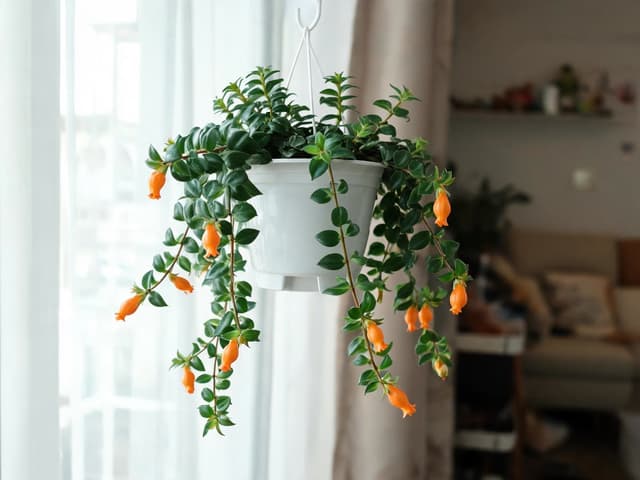
How to Care for a Goldfish Plant: Light, Watering, and Blooms
How to care for a goldfish plant: bright light without strong sun, water when the soil surface dries, and humid air. Learn how to tell a Nematanthus from a Columnea, why it drops leaves, and how to get it to bloom again.
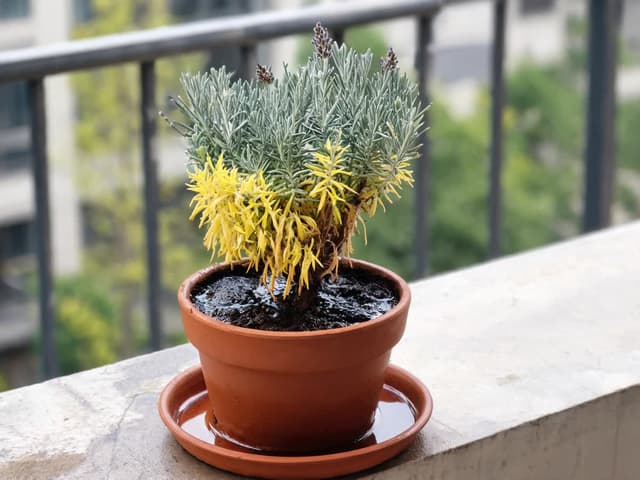
Lavender Leaves Turning Yellow: Where the Yellowing Starts Shows the Cause
Lower leaves turning yellow with moist soil means overwatered roots, the most common cause. Old leaves drying one by one on woody stems is normal. Take the stem and root test, see if your plant can still be saved, and find out what to do today.
How to Propagate Lavender: Where to Cut and Why Cuttings Rot
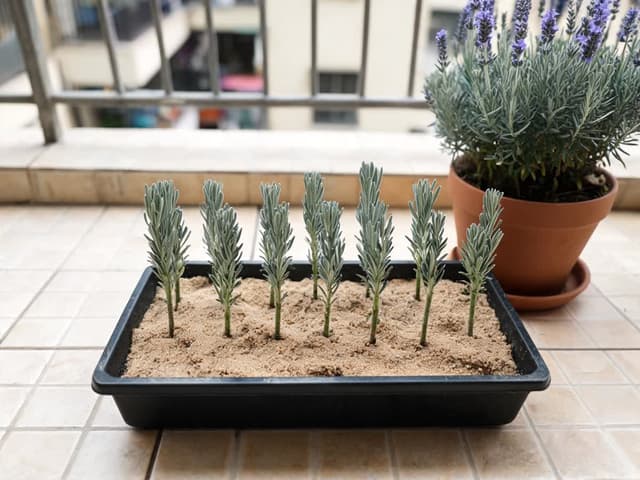
A lavender cutting comes from a non-flowering branch tip, about 4 inches long, planted in sandy soil that never stays soggy. Learn where to cut, rooting times, seasonality in Brazil, and what to do if the base turns black.