How to Propagate Azaleas: Cuttings, Layering, and Rooting Time
Take a 4 to 5-inch firm tip cutting, plant it in moist coconut coir, and cover it with a plastic bag. Learn branch selection, season in Brazil, water rooting, and rooting time.
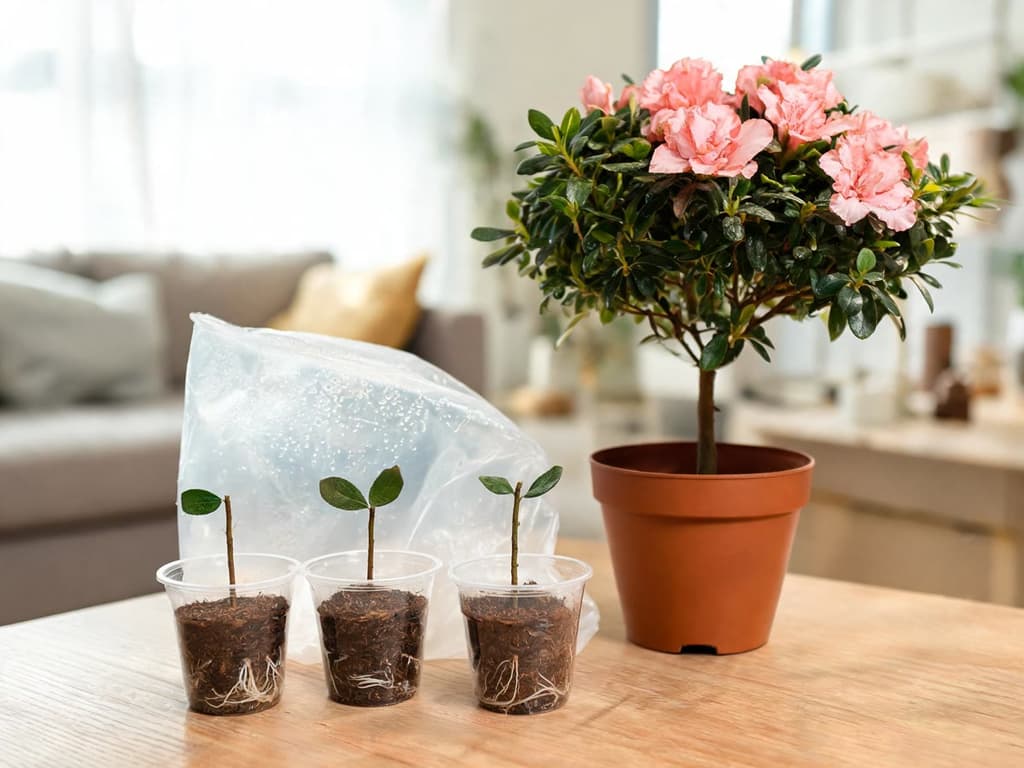
To propagate azaleas, cut a 4 to 5-inch tip from a young, firm shoot. Make the cut right below a node, which is the point on the branch where leaves emerge. Strip off the lower leaves, leaving only 2 at the top. Insert the base into moist coconut coir and cover the container with a clear plastic bag, placing it in a bright spot away from direct sunlight.
Two studies from universities in Paraná tested the common potted azalea. Between 70% and 99% of the cuttings formed roots in 9 to 11 weeks, without hormones. Both used a greenhouse with automatic misting. At home, the plastic bag mimics misting, but no study has measured the rooting rate with it. In Brazil, you can take cuttings in spring, summer, and fall.
Quick summary:
The cutting (the stem piece that develops into a new plant) comes from the tip of a young, firm shoot: when bent, it snaps with a crisp click.
Use coconut coir, coarse sand, or peat moss (decomposed moss) mixed with perlite (lightweight white granules) for rooting. Fertilized potting soil is not suitable during this stage.
Rooting hormone, available as a powder or gel that stimulates root development, is optional for common potted azaleas. In two Brazilian studies, cuttings rooted well without hormone.
Azalea cuttings rarely root in water: only 6% formed roots after 7 weeks in a tap water trial.
Expect rooting to take between 4 and 11 weeks. New shoot growth does not prove that a cutting has rooted.
To propagate without taking cuttings from the parent plant, use layering: bury a low branch while it remains attached to the plant. This method takes 15 months to 2 years.
Potted azaleas sold in Brazil are Rhododendron simsii and its hybrids. Rhododendron is the azalea genus, and these plants bloom in the fall and winter.
Which stem to cut for azalea propagation
Cut the tip of a young shoot that is no longer soft like new growth. NC State Extension, from North Carolina State University, recommends semi-ripe cuttings for azaleas. This is current-season growth that snaps when you bend it.
UEL rooted softer cuttings, but under automated greenhouse mist. At home without mist, soft shoots lose moisture faster. Therefore, choose stems that snap when bent, as recommended by NC State.
The thick, brown wood near the base of the plant is too woody for cuttings. None of the consulted sources recommend this type of growth for azalea cuttings. Save it for layering, detailed later in this guide. For rose cuttings, stem readiness is checked differently. The University of Georgia uses a fingernail test: if your nail dents the bark easily, the stem is still too soft.
Take only 3 or 4 tip cuttings per plant. Cut early in the morning when moisture levels are highest, as advised by NC State. Store the cuttings in a plastic bag with a damp paper towel until planting time.
If you have a yard shrub with azalea-like flowers but are unsure of its identity, verify the species before taking cuttings. The Bloom app identifies plants from photos of leaves and flowers.
Step-by-step azalea cutting guide
Stem propagation produces new plants from shoot cuttings. Gather clean pruners or a sharp pocket knife, coconut coir, and a clear plastic bag. You will also need a clear plastic cup or small pot with drainage holes at the bottom.
Take a 4 to 5-inch cutting from the tip of a firm branch. Cut on a slant, right below a node.
Remove all foliage except 2 leaves at the top. Cut each remaining leaf in half horizontally, following the UFPR study protocol.
Optionally, scrape away a thin 1 to 1.5-inch strip of bark at the base of the cutting with your knife. NC State notes this wounding promotes rooting in azaleas.
Moisten the coconut coir, squeeze out any excess water by hand, and fill your container.
Poke a hole using a pencil and insert the cutting one-third to halfway deep. Press the coir firmly around the base.
Cover the container with the clear plastic bag, ensuring the plastic does not touch the leaves. A cut plastic bottle works as well.
Place it in a bright spot away from direct sun. Direct sunlight on the plastic heats up the air inside and scorches the cutting.
Check moisture levels every 2 to 3 days. The coir should feel damp to the touch without dripping when squeezed.
In a clear cup, roots show against the sides, so you will not need to pull the cutting up to check.
Which substrate to use for rooting the azalea cutting
Use coconut coir. Londrina State University (UEL) tested 3 materials in a study published in the journal Ciência Rural in 2010. Coconut coir produced the greatest root mass. Vermiculite produced the shortest roots.
NC State lists other options: coarse sand, 1 part peat moss to 1 or 2 parts perlite, or equal parts peat moss and sand. The medium must be clean, low in nutrients, and well-draining. The same source advises against pure vermiculite because it compacts and retains too much water. A UFPR study did root cuttings in vermiculite, but under greenhouse mist systems that cannot be replicated at home.
Do not use garden soil or fertilized potting mix for rooting: neither is clean or low in nutrients, the two criteria NC State requires. Acidic soil, which azaleas need, comes into play later once the cutting has established roots.
Rooting hormone: do azalea cuttings need it?
Common potted azaleas do not require it. Two Brazilian studies on Rhododendron simsii found no significant advantage from hormones. At UFPR in 2002, 70% of untreated cuttings rooted compared to 87.5% of treated ones, a difference without statistical significance. At UEL in 2010, IBA hormone (indole-3-butyric acid, the most common rooting hormone according to the authors) also produced no difference in results.
Other references suggest otherwise. NC State reports that wounding the stem base and applying rooting hormone improves success in azalea cuttings. In a 2021 Turkish study testing a different azalea species, 26.7% of untreated cuttings rooted versus 67.7% under the best hormone treatment. This guide follows the Brazilian studies because they evaluated the same species sold locally. If you already have rooting powder on hand, use it: it causes no harm. UFPR researchers credited successful hormone-free rooting to keeping leaves on the cutting.
Cinnamon, honey, and potatoes are often mentioned as DIY rooting aids. We found no studies evaluating any of these on azalea cuttings. Avoid relying on them: stick to moist coir, keep 2 leaves on the stem, and use commercial rooting powder if available.
Can you propagate azaleas in water?
It is possible, but the chance of the cutting taking root is low. In an American experiment published in the journal HortScience in 1990, only 6% of azalea cuttings rooted in tap water. The evaluation occurred after 7 weeks. These cuttings had received rooting hormone and were kept under mist. Under the same conditions, half of the cuttings rooted in a laboratory calcium solution that cannot be prepared at home.
Insert cuttings directly into moist coconut coir instead of trying water propagation. Azaleas differ from plants that root easily in a glass of water. A hoya cutting, for example, roots in water within 2 to 3 weeks.
How long do azalea cuttings take to root?
Azalea cuttings take between 4 and 11 weeks to form roots. NC State expects semi-ripe cuttings to root in 4 to 6 weeks. In Brazilian studies, researchers evaluated roots at 63 days (9 weeks) at UFPR and at 76 days (11 weeks) at UEL. At UEL, between 96% and 99% of cuttings had formed roots by that inspection.
New shoot growth does not indicate successful rooting. At UFPR, 99.2% of cuttings pushed new growth, yet 18.3% remained rootless at day 63. The authors noted those cuttings simply needed more time, so do not discard a living green cutting prematurely.
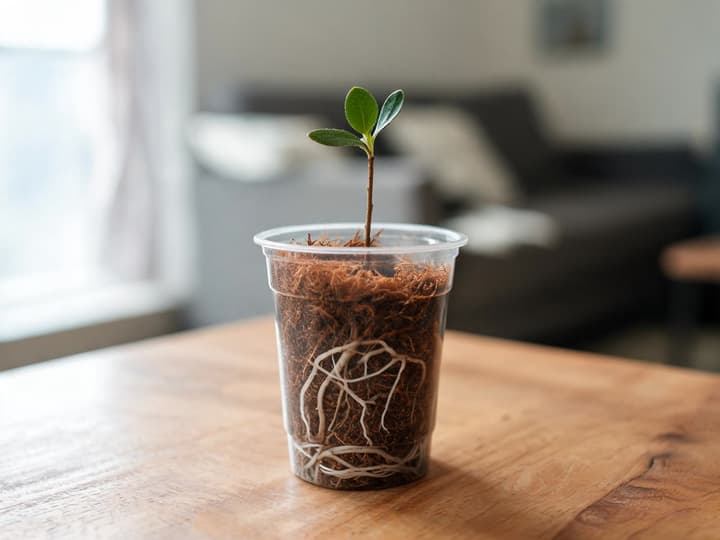
To check for roots, look through the sides of a clear cup or check the container's bottom drainage holes. Once white roots become visible, acclimate the cutting by opening the bag gradually over 2 to 3 weeks. Only then should you transplant it into a pot.
What is the best time to propagate azaleas from cuttings in Brazil
Azalea propagation can be done from the end of flowering through fall. NC State and the RHS (Royal Horticultural Society of the United Kingdom) recommend taking cuttings in mid to late summer. NC State specifies late June through August on the Northern Hemisphere calendar. In Brazil, this window falls between December and February.
Brazilian studies rooted cuttings at other times of year. At UFPR, in Curitiba, cuttings were taken in September while the plant was in full bloom, and 70% rooted even without hormone. At UEL, in Londrina, the trial ran from April to June, and nearly all rooted. Since both Brazilian windows also produced roots, either one works. In spring (starting in September in Brazil), azaleas put out new shoots. Cut the tips that have already firmed up and wait for the soft ones to harden for a second batch between December and February.
Simple layering and air layering: azalea propagation without cutting the branch
Layering poses no risk to the parent plant, making it ideal for older shrubs or specimens with sentimental value. You separate the branch only after it has developed its own root system. NC State identifies layering as one of the most dependable propagation methods for azaleas.
Select a low, flexible branch that reaches the ground easily.
Scrape away a thin strip of bark on the underside of the stem where it will be buried.
Dig a shallow trench, pin that section into the soil, and cover it.
Weigh it down with a brick so the stem stays buried. Leave 6 to 12 inches of the tip exposed, staked upright with a small cane.
Keep the soil moist, and do not sever the branch from the parent plant until roots have formed.
Layering requires patience. According to the RHS, layering rhododendrons (the genus that includes azaleas) takes between 15 months and 2 years to root. For potted specimens, fill a second pot with soil, set it alongside, and layer the branch directly into it.
Air layering applies the same principle higher up on the branch without bringing it to ground level. NC State outlines air layering for woody shrubs. Girdle a 1-inch ring of bark, wrap the area in moist sphagnum moss (dried moss sold for gardening), and seal it with plastic. We found no published trial data evaluating air layering on azaleas. In croton propagation, air layering serves as the primary option for thick stems that will not root from cuttings.
When azalea cuttings root: potting, acidic soil, and hardening off
Remove the plastic bag gradually over 2 to 3 weeks. Start by opening a small vent, widen it every few days, and then remove it entirely. In the HortScience study, cuttings moved directly out of high humidity developed leaf margin burn. The RHS similarly advises hardening off rooted cuttings for 2 to 3 weeks before repotting.
Pot the cutting into a small pot, slightly larger than the root ball (the roots with the clinging fiber), using acidic azalea soil. UF/IFAS, the University of Florida extension, recommends a pH between 5.0 and 5.5 (the lower the number, the more acidic the soil). The same source states that a pH above 6.5 is a common cause of iron deficiency. Iron deficiency turns new leaves yellow with green veins.
After hardening off, care for the young plant just like a mature specimen, as detailed in our guide on how to care for azaleas: morning sun, moist but never waterlogged soil, and low-lime water.
Why azalea cuttings fail to root
Each symptom points to a specific issue:
The base turned dark and mushy. This indicates rot caused by overwatering or poorly draining media. Start fresh with a new cutting in coconut coir or coarse sand. As a preventive measure, UFPR sanitized cuttings by soaking them for 5 minutes in a 0.5% sodium hypochlorite solution (the active ingredient in household bleach) followed by a tap water rinse. This dilution equals 1 part household bleach to 4 parts water.
Leaves dried up and curled within days. Humidity levels dropped too low around the cutting. Ensure the plastic bag stays sealed and sits out of direct sunlight.
The cutting wilted immediately after taking it. The wood was too soft. Choose firm stems that snap cleanly when bent.
The cutting remains green but has no roots. It needs more time. At UFPR, 18.3% of living cuttings had not rooted by day 63. Wait up to 11 weeks before giving up.
Pet safety: dogs and cats during azalea propagation
Azaleas are toxic to dogs, cats, and horses, according to the ASPCA, an American animal protection organization. The toxic compound is grayanotoxin, and ingesting just a few leaves causes serious problems. Throw stripped leaves into a closed trash can and keep rooting cups out of reach of pets.
Frequently asked questions
Can you propagate azaleas from branch cuttings?
Yes, azaleas propagate readily from cuttings. In two Brazilian studies using potted azaleas, between 70% and 99% of cuttings rooted within 9 to 11 weeks. These results held true with or without rooting hormone, under automated greenhouse mist. Cuttings measured 4 to 5 inches long. Use young, firm growth, plant in moist coconut coir, and keep covered with plastic away from direct sunlight.
Can you grow azaleas from seed?
Yes, though seedlings often fail to match the parent plant. The RHS explains that only pure species rhododendrons breed true from seed. Potted azaleas are hybrid varieties, as highlighted in the UFPR study. To keep the exact bloom characteristics, propagate through stem cuttings, layering, or grafting (joining a scion onto an established rootstock).
Can you take cuttings from a blooming potted azalea?
Yes. In the UFPR study, cuttings were gathered in September while plants were in full bloom, achieving a 70% rooting rate without rooting hormone. Pick firm branch tips and leave 2 leaves at the top. The researchers originally expected blooming to hinder root formation, but it did not prevent rooting.
How do you get azalea cuttings to root faster?
None of the reviewed studies evaluated propagation speed directly. Preventing rooting stalls requires steady, high humidity: keep the plastic bag sealed, the coir damp, and place the container in bright indirect light. NC State notes that wounding the base of the cutting encourages faster root development.
Where to start today
Inspect your azalea and find 3 or 4 branch tips that snap when bent. Cut them in the morning, prepare each cutting leaving 2 leaves on top, and insert them into coconut coir inside a clear cup covered by a plastic bag. For an older shrub or one with sentimental value, try tip layering a low branch as well.
Sources
Carvalho, D. B.; Silva, L. M.; Zuffellato-Ribas, K. C. Root induction in semi-hardwood azalea cuttings through the application of naphthaleneacetic acid in solution. Scientia Agraria, v. 3, p. 97-101, 2002 (UFPR).
Lone, A. B. et al. Rooting of azalea cuttings (Rhododendron simsii Planch.) in the fall in IBA and different substrates. Ciência Rural, v. 40, n. 8, p. 1720-1725, 2010 (UEL).
NC State Extension, Extension Gardener Handbook: Chapter 13, Propagation. Accessed October 1, 2026.
Royal Horticultural Society: Rhododendron growing guide and Semi-ripe cuttings. Accessed on October 1, 2026.
UF/IFAS Extension: Azalea Pest and Disease Management (EP567). Accessed October 1, 2026.
Green, J. L. et al. Optimal conditions for rooting shoot cuttings of azalea in solution culture. HortScience, vol. 25, no. 9, p. 1089, 1990.
Güney, D. et al. Effects of different phytohormones on the rooting of azalea cuttings. Ormancılık Araştırma Dergisi, 2021.
ASPCA: Rhododendron. Accessed October 1, 2026.
Related articles
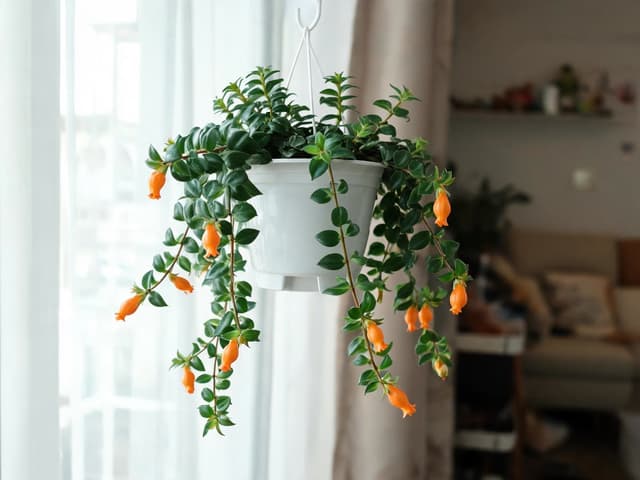
How to Care for a Goldfish Plant: Light, Watering, and Blooms
How to care for a goldfish plant: bright light without strong sun, water when the soil surface dries, and humid air. Learn how to tell a Nematanthus from a Columnea, why it drops leaves, and how to get it to bloom again.
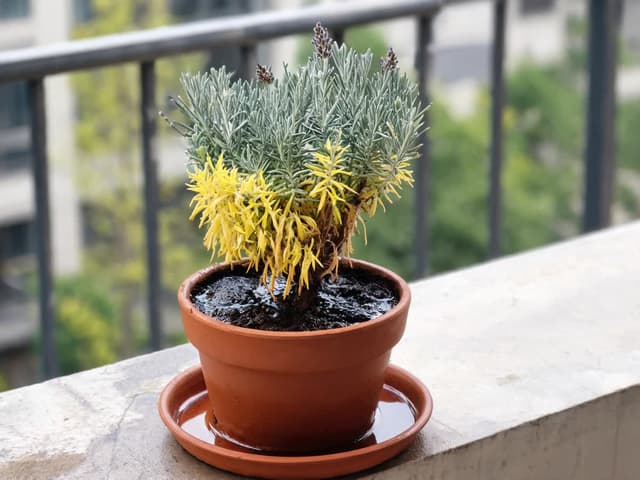
Lavender Leaves Turning Yellow: Where the Yellowing Starts Shows the Cause
Lower leaves turning yellow with moist soil means overwatered roots, the most common cause. Old leaves drying one by one on woody stems is normal. Take the stem and root test, see if your plant can still be saved, and find out what to do today.
How to Propagate Lavender: Where to Cut and Why Cuttings Rot
A lavender cutting comes from a non-flowering branch tip, about 4 inches long, planted in sandy soil that never stays soggy. Learn where to cut, rooting times, seasonality in Brazil, and what to do if the base turns black.