How to Care for Begonias: Identify Your Type and What Each One Needs
How to care for cane, rex, wax, tuberous, or elatior begonias: identify the type and master light, bottom-watering, humidity, fertilizer, and pruning. Includes what to do when stems turn soft.
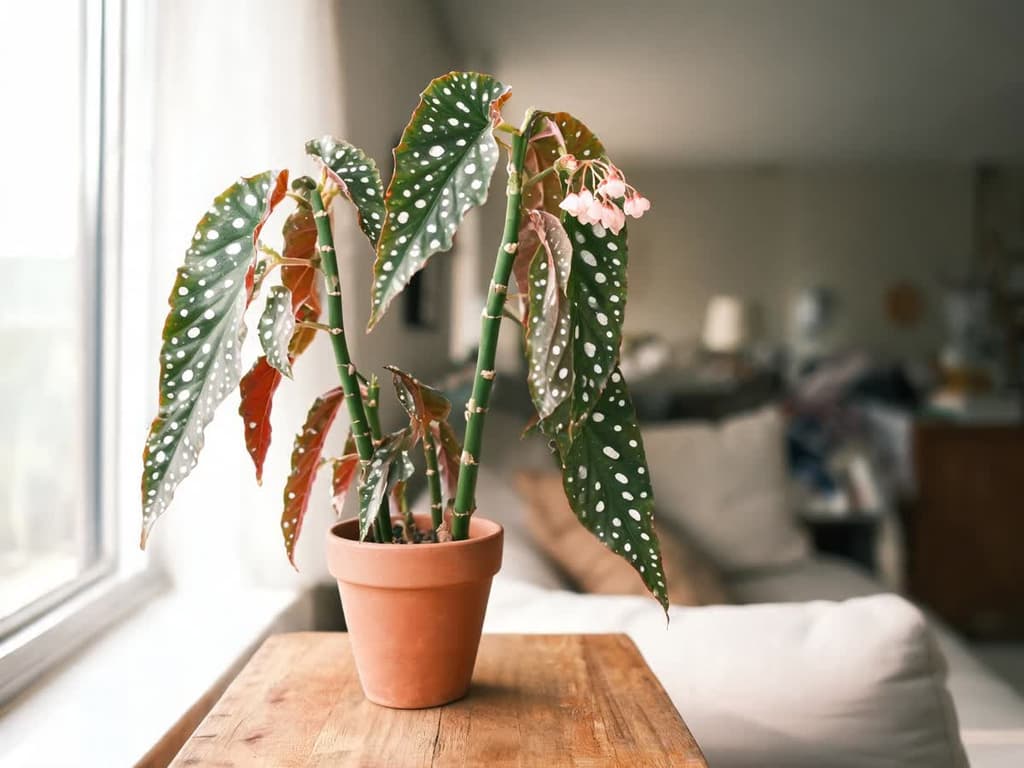
To care for a begonia, keep the pot in a bright spot away from harsh midday sun. Water when the soil surface feels nearly dry, always at the base of the plant without wetting the foliage. Elatior and tuberous begonias are the exception: they need soil that stays consistently moist, without waterlogging. Keep the air humid with a wet pebble tray rather than misting the leaves. Use a small pot and loose, fast-draining potting soil.
Care differs depending on the type of begonia. Cane, rex, wax, and tuberous varieties have different light, watering, and resting needs, and tuberous begonias spend part of the year dormant. That is why identifying which begonia you have comes first. The ASPCA lists begonias as toxic to dogs, cats, and horses.
Care factor | What to do |
|---|---|
Light | Bright, without midday sun; an east-facing window works best |
Watering | When the soil surface is nearly dry (elatior and tuberous: constantly moist soil); apply at the base, never wetting the leaves |
Humidity | Rex: above 50%, ideally above 75%; use a pebble tray, do not mist |
Temperature | Minimum of 13 °C for most; tuberous begonias suffer in constant heat above 30 °C |
Soil | Loose and well-draining, never garden soil; small pot |
Fertilizer | One-quarter to one-half the label dose, only during active growth |
Pets | Toxic to dogs, cats, and horses; underground parts (roots, rhizomes, tubers) are the most toxic |
Identify your begonia: cane, rhizomatous, wax, tuberous, or elatior
The begonia (genus Begonia) brings together more than 2,100 species, according to NC State, and thousands of varieties. The American Begonia Society, a growers' association in the United States, separates these plants into groups by their growth habit. For daily care, you only need to recognize five of them. In general, the leaf is asymmetrical, at least at the base, according to the NC State Extension. An uneven leaf, with one side larger than the other, is a clue that it is a begonia, but does not prove it on its own.
Look at the stems and foliage. If you are still unsure, lift the plant from its pot and check the roots:
Group | How to identify | Common example |
|---|---|---|
Cane | Smooth, upright stems with swollen, bamboo-like joints; leaves and flowers emerge from the nodes | Polka dot begonia, with silver-spotted leaves |
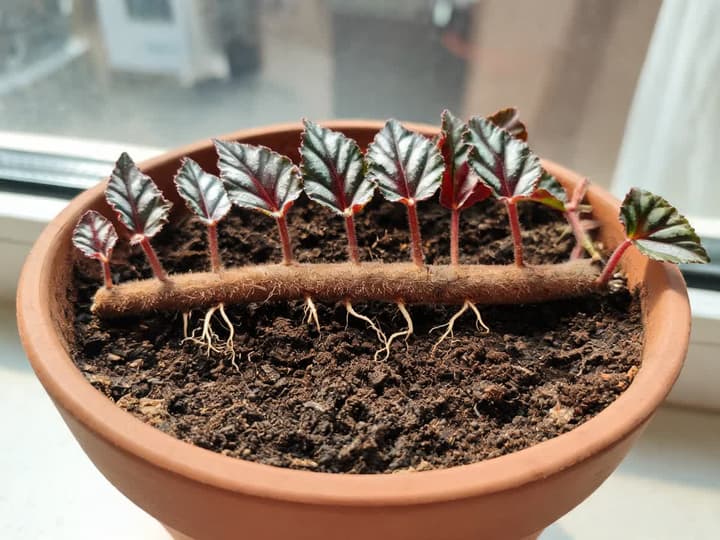
Rhizomatous and Rex | Thick stem that grows horizontally along the soil surface (the rhizome); leaves grow from it on long stalks | Rex begonia, with colorful foliage and a silvery sheen |
Wax (also called wax begonia) | Low-growing and compact plant with fine roots; smooth and shiny leaves, green or bronze-colored | |
Tuberous | Grows from a tuber (a flattened "potato" underground); leaves turn yellow and disappear in the fall | |
Elatior | Potted begonia already in bloom, with double flowers, sold in flower shops and supermarkets | Begonia elatior (Begonia × hiemalis) |
Cane begonias can exceed 6 feet (1.8 m) in height, according to NC State. The RHS is the Royal Horticultural Society of the United Kingdom. According to the society, many cane begonias grown today come from species native to Brazil, such as Begonia maculata. In cane begonias, NC State describes wing-shaped green leaves with silver spots and red undersides.
Rex begonias are a subgroup of rhizomatous begonias. In rex begonias, the rhizome is a thick, sometimes hairy stem that creeps across the soil surface. Wax begonias descend from the species Begonia cucullata, according to the American Begonia Society, and are widely used in garden beds.
Elatior begonias are a cross between tuberous begonias and the species Begonia socotrana (RHS). The RHS notes that they are not bred to last for years, and many people discard them after blooming. If your plant matches none of these descriptions, Bloom identifies the species from a photo of a leaf. Plant identification is available on the free plan, with two uses per month.
Light requirements: bright, indirect sun without midday heat
Indoor begonias need bright, indirect light. According to the Iowa State Extension, they cannot tolerate intense direct sun. Indoor begonias grow best near an east-facing window with a little morning sun. In Brazil, a north-facing window receives strong sun for much of the day. For that window, place a sheer curtain between the begonia and the glass.
Each group tolerates a different amount of direct sun:
Cane: needs good light to develop firm stems and flower, but direct sun burns the leaves (RHS). In a dark spot, the stems grow weak and the plant produces few flowers.
Rex: bright, indirect light, kept well away from hot sun (American Begonia Society).
Wax: tolerates full sun in garden beds, according to Iowa State, but the American Begonia Society notes that in hot, dry climates it needs filtered shade. Varieties with bronze foliage tolerate more direct sun than green-leaved types (NC State).
Tuberous: handles direct sun early in the morning or late in the afternoon as long as temperatures remain below 30 °C, but scorches in midday sun (American Begonia Society).
Leaves with bleached, dry patches facing the window indicate sunburn. Stems that grow long and spindly with widely spaced leaves point to inadequate light.
How to water a begonia without rotting the roots
Water begonias when the surface of the potting mix feels nearly dry to the touch. The American Begonia Society recommends a finger test for rhizomatous types: insert a finger 0.5 to 0.75 inches (1.3 to 2 cm) into the soil. If the soil feels cool at that depth, moisture is still present and it is not time to water. NC State cautions that begonias are highly susceptible to root rot, making overwatering their most hazardous mistake.
Watering needs vary by group:
Cane: when the surface is nearly dry. Leaves that turn yellow and drop are a sign of watering too frequently (American Begonia Society).
Rex and rhizomatous: wait until the surface is nearly dry between waterings. In winter, reduce watering and let the surface dry out before watering again (RHS).
Wax: only when the soil feels dry to the touch. Once established in garden beds, they handle dry spells well (American Begonia Society).
Elatior: keep the soil evenly moist without letting it dry out completely (RHS).
Tuberous: moist, never wet, because the tuber rots easily (Iowa State).
Water the soil at the base of the plant, without wetting the leaves, as NC State recommends. Discard any water that drains into the saucer: the begonia pot should never sit in standing water (Clemson Extension). An American plant shop advises letting rhizomatous soil dry out completely before watering. The RHS advises the opposite: do not let the soil dry out completely or become waterlogged. Follow the RHS: it is a horticultural society, and the other recommendation comes from a store.
Humidity: high moisture in the air, dry foliage
NC State Extension recommends humidity levels above 75% for rex begonias. The American Begonia Society advises keeping it above 50%. Follow NC State's advice and set up a pebble tray. Other rhizomatous begonias tolerate 50%, according to NC State. Wax begonias are less demanding: ordinary household humidity where you feel comfortable is fine.
To raise humidity, the RHS suggests using a tray filled with pebbles, expanded clay pellets, or gravel. Add water to the tray just below the surface of the stones, then rest the pot on top.
Never mist begonia leaves. The RHS, NC State, and Clemson advise against it because wet foliage encourages fungal issues. Powdery mildew, a fungus that leaves a white powdery coating on foliage, thrives in cool temperatures with high humidity. The American Begonia Society notes that good airflow is essential to prevent it. Wet leaves also spread bacterial leaf spot, the most common and damaging bacterial disease in begonias, according to the same society.
Crispy, brown leaf edges indicate that the air is too dry or temperatures are too high. The RHS links this symptom to low humidity or excessive heat, and the American Begonia Society notes the same issue in cane begonias. Move the pot away from air conditioners and heaters, and place it on a pebble tray.
Temperature limits: cold and heat tolerance
Most indoor begonias need at least 13 °C in winter. The RHS gives this minimum for wax begonias and rex begonias, and 10 °C for other rhizomatous types. Cane begonias grow best between 15 and 22 °C. In Brazil, the cold risk occurs during winter in the South and in mountainous areas, from June to August, near windows at night.
Tuberous begonias face the opposite challenge. According to the American Begonia Society, they struggle under sustained temperatures above 30 °C. In hot regions, grow tuberous begonias in the coolest part of your home, exposed only to early morning sun and shaded in the afternoon.
Soil and potting containers
Use an open, airy potting mix that drains water quickly. For indoor begonias, the American Begonia Society recommends equal parts of:
coco coir-based potting soil;
fine orchid bark, 1/8 to 1/4 inch (3 to 6 mm) in size;
coarse perlite (lightweight white mineral granules that loosen the soil).
Do not mix outdoor garden soil into the blend, according to the society. Cane begonias tolerate slightly heavier mixes, which help anchor their tall stems.
Select a small pot with bottom drainage holes. Begonias thrive when their roots are snug: an oversized pot holds excess moisture for too long and rots the root system (American Begonia Society). Rex varieties do well in shallow pots. Refresh the potting mix once a year, even if you keep the plant in its existing pot.
Fertilizing begonias
Fertilize only while the begonia is actively growing, in spring and summer (in Brazil, from September to March). Use one-quarter to half the dose recommended on the label, as advised by the American Begonia Society. According to the society, begonias do not grow or use fertilizer below 15 °C.
Match your fertilizer to whether your begonia is grown for flowers or foliage:
Flowering begonias (cane, wax, tuberous): use a bloom fertilizer with lower nitrogen (the first number in the N-P-K label ratio), according to the American Begonia Society. The RHS recommends a higher-potassium fertilizer (the last number) for fibrous-rooted types like wax begonias and for cane begonias.
Rex begonias, grown for foliage: use a fertilizer higher in nitrogen, according to the RHS.
If you are unsure how to read the three numbers on a fertilizer label (nitrogen, phosphorus, and potassium), our guide on fertilizing houseplants explains what each nutrient does and how to dilute formulas properly.
Leggy begonias with bare lower stems: when and how to prune
A cane begonia that turns leggy with foliage clustered only at the tips needs pruning and brighter light. The RHS explains that these begonias require ample light to produce sturdy stems. Pruning alone will not solve the issue if the pot remains in a dark corner.
Follow the steps from the American Begonia Society for cane begonias:
Remove the oldest, hard, woody canes.
Cut back green canes, leaving 4 to 5 nodes (the swollen rings along the stem).
Make each cut 0.25 to 0.5 inches (0.6 to 1.3 cm) above a node's growth bud.
Prune before the main blooming period, in late winter or early spring.
Pinching means nipping out just the tip of a stem using your fingers. Pinching encourages branching and keeps plants full, according to the society. On wax begonias, regular pinching results in a bushier shape with more blooms. The trimmed tips from cane begonias make great stem cuttings for propagation.
Caring for tuberous and elatior begonias after blooming
Tuberous begonias go dormant every year. In the fall, when the leaves start to turn yellow, reduce watering until you stop completely, according to NC State. In frost-free regions of the United States, the American Begonia Society notes that tuberous begonias stop growing in October or November. In Brazil, this happens in April or May.
Once the top growth dies back completely, follow these steps:
Lift the tuber from the soil and allow it to dry thoroughly.
Cover it with dry peat moss (dark, lightweight decomposed moss), wood shavings, or perlite.
Store in a dry, dark, cool place, between 7 and 15 °C (UF/IFAS).
Replant in late winter, in August in Brazil, using soil that is moist, never wet.
The RHS notes that elatior begonias are usually discarded after flowering and that growers take cuttings to start new plants every year. To keep the same plant, the RHS recommends letting the elatior rest at 7 °C for about 6 weeks. During this period, water sparingly without letting the soil dry out. Afterward, cut the plant back to 15 cm from the base. Indoors in Brazil, few places get that cold, so taking cuttings is the easiest route.
Soft stems, leaf drop, and yellowing foliage: diagnosing common symptoms
A soft, dark stem at the base is the most serious symptom. Penn State Extension describes Pythium rot (a waterlogged soil fungus) as shiny black patches on the stem, right at the soil line. The plant topples over and dies. The American Begonia Society notes that, with this disease, both roots and stems turn black and soft.
Unpot the plant and inspect its root system. If firm, white roots remain, trim away all blackened, soft tissue, replace all potting soil, and water only when the surface feels nearly dry. If the entire root system is black and rotted, save cane begonias by taking cuttings from healthy tips. Cut firm, green stem tips 3 to 4 inches (7 to 10 cm) long and root them in moist, sandy soil (RHS).
Other symptoms noted by the RHS include:
Dropping or rotting leaves: excessive water, stagnant air without circulation, or insufficient light.
Yellowing foliage: low light, overwatering, or underwatering.
Dry, brown leaf edges: dry air or high temperatures.
Bud drop before opening: dry air or underwatering.
Among failed begonias submitted to the RHS advisory service, most succumbed to overwatering or excessively dry air.
Pests and diseases
NC State lists seven frequent begonia pests: mealybugs, whiteflies, thrips (tiny, slender insects), scale insects, slugs, snails, and mites. Mealybugs form white, cotton-like clusters in leaf axils. Spider mites are microscopic pests that cause leaf stippling and fine webbing. The RHS also notes aphids. Check the undersides of leaves weekly.
When broad mites, another mite species, attack, new leaves become curled, brittle, and discolored, according to the American Begonia Society.
The three most common diseases are:
Powdery mildew: white powdery patches on leaves during cool, humid weather.
Botrytis (gray mold): fuzzy gray mold patches on leaves, stems, and buds, starting on dead plant debris. Clear dropped leaves and dried flowers from the soil surface.
Bacterial leaf spot: water-soaked lesions that look damp from the inside out, encircled by yellow halos. Keep leaves dry, as water spreads the bacteria.
Propagating begonias
Each begonia group calls for a specific propagation method. According to the RHS, cane and wax begonias root readily from 3- to 4-inch (7 to 10 cm) stem cuttings. Rex begonias propagate through leaf cuttings scored along major veins. Rhizomatous types can be divided in spring, as long as every rhizome segment carries at least one active growth bud.
Are begonias toxic to cats and dogs?
Yes. The ASPCA, an animal poison control center in the United States, lists begonias as toxic to dogs, cats, and horses. The toxic substance is soluble calcium oxalate. Signs in dogs and cats are vomiting and salivation. The most toxic part is underground: roots, rhizomes, and tubers.
NC State classifies begonia toxicity as low severity, noting that sap can cause skin irritation. Store resting tubers well out of reach of pets. If your pet consumes any part of a begonia, contact your veterinarian. Our guide on toxic plants for pets covers other common indoor plants that pose hazards to dogs and cats.
Frequently asked questions
How long do potted begonias live?
Lifespan depends on the group. Elatior begonias are sold for a single blooming display and, according to the RHS, are routinely discarded afterward. Cane and rex begonias thrive for years indoors. With cane begonias, individual stems older than 2 or 3 years lose vigor, according to the American Begonia Society. Fresh canes emerge with greater strength.
Do begonias prefer small or large pots?
Begonias prefer small pots. The American Begonia Society notes they favor a tight root system with sharp drainage. Oversized containers hold too much moisture in the soil, which sours and rots roots. Step up only to a slightly larger pot when roots have filled the entire container.
Do begonias need daily watering?
No. Watering every day leaves soil saturated, and begonias are prone to root rot, according to NC State. Water when the top surface feels almost dry; elatior and tuberous varieties prefer continuously moist soil. Test by pressing a finger 0.5 to 0.75 inches (1.3 to 2 cm) into the soil: if it feels cool and damp, wait another day.
Do begonias prefer sun or shade?
Begonias need bright, indirect light shielded from direct midday sun. Cane and rex begonias scorch under intense sun, and elatior types do best in partial shade (RHS). Wax begonias are the exception: they take full sun in outdoor beds, especially bronze-leaved varieties. Tuberous begonias tolerate direct sun only in early morning or late afternoon.
If your begonia shows spotted leaves or a darkening stem and you cannot pinpoint the cause, the Bloom app for iPhone can help. It identifies plants by photo and, with a Premium subscription, diagnoses diseases directly from a picture of the foliage.
Related articles
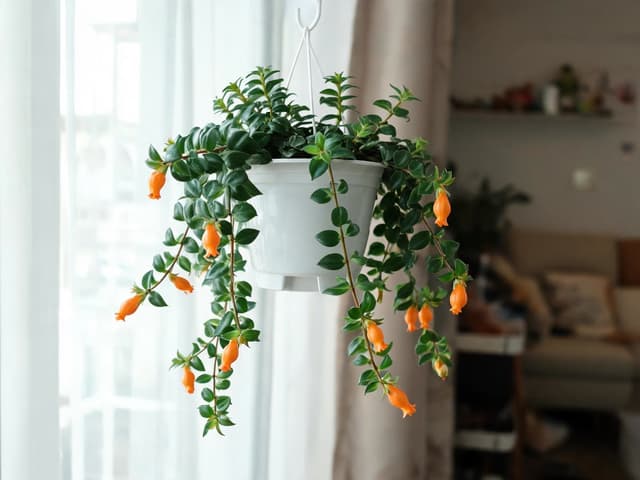
How to Care for a Goldfish Plant: Light, Watering, and Blooms
How to care for a goldfish plant: bright light without strong sun, water when the soil surface dries, and humid air. Learn how to tell a Nematanthus from a Columnea, why it drops leaves, and how to get it to bloom again.
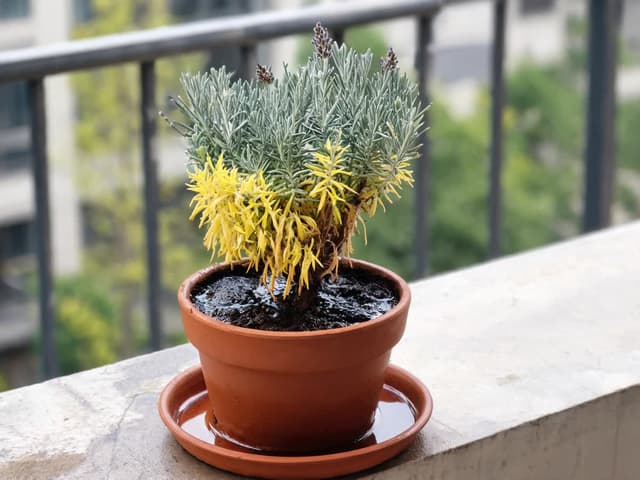
Lavender Leaves Turning Yellow: Where the Yellowing Starts Shows the Cause
Lower leaves turning yellow with moist soil means overwatered roots, the most common cause. Old leaves drying one by one on woody stems is normal. Take the stem and root test, see if your plant can still be saved, and find out what to do today.
How to Propagate Lavender: Where to Cut and Why Cuttings Rot
A lavender cutting comes from a non-flowering branch tip, about 4 inches long, planted in sandy soil that never stays soggy. Learn where to cut, rooting times, seasonality in Brazil, and what to do if the base turns black.