How to Care for Azaleas: Light, Watering, and Pruning to Rebloom
How to care for azaleas in pots and in the garden: morning sun, moist acidic soil, soft water, and pruning right after flowering. Learn how to save an azalea losing flowers and leaves after purchase and why it will not bloom.
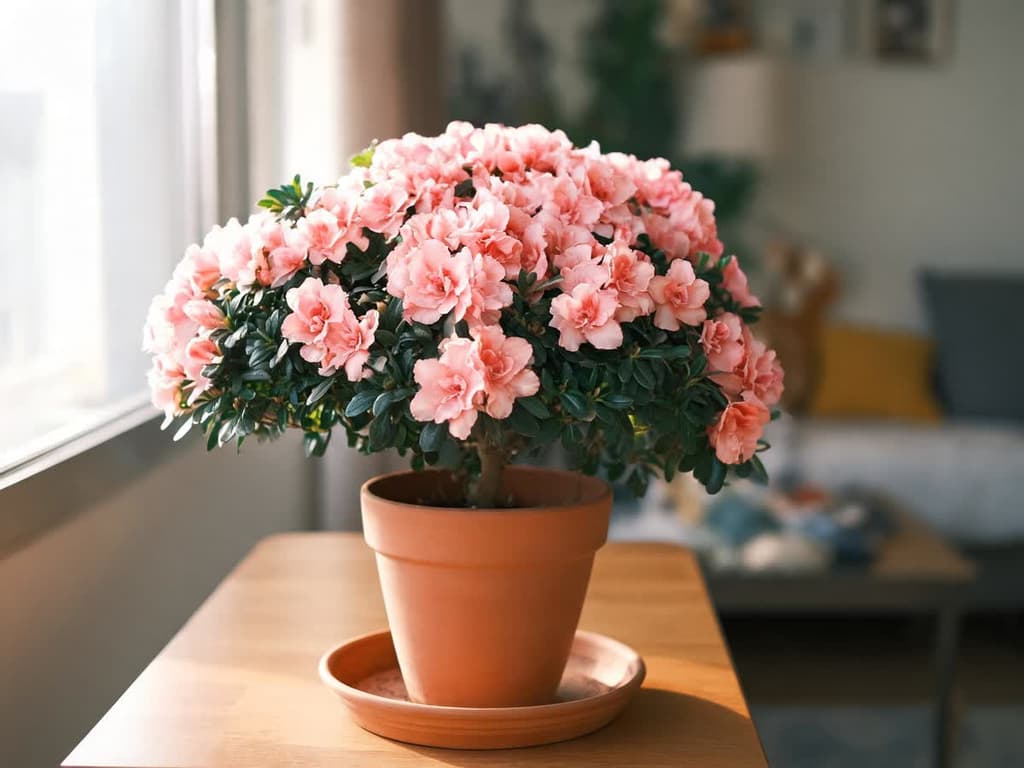
To care for an azalea, place the pot where it gets morning sun and afternoon shade. Keep the soil moist without waterlogging: water when the surface feels dry to the touch and empty the saucer. Use rainwater or water low in lime (the mineral that leaves a white crust inside kettles). Prune as soon as the flowers fade, because the plant sets its buds for the following year during summer.
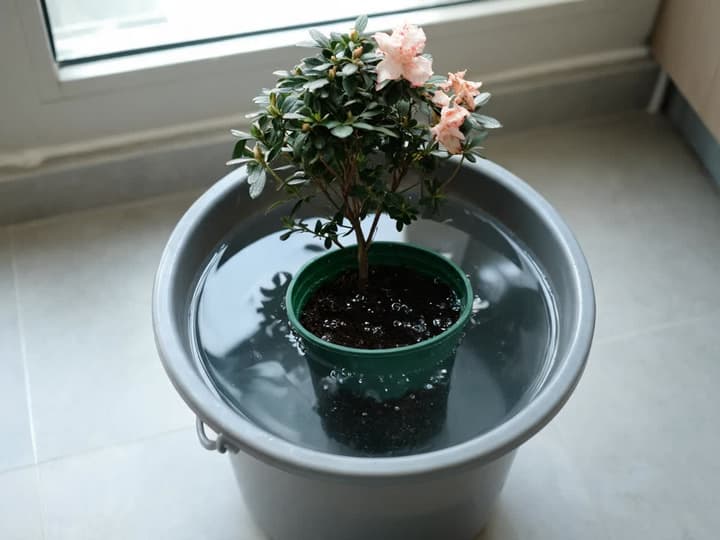
When an azalea you received in bloom drops its flowers and leaves during the first few weeks, check the potting soil first. Soil that has dried out completely is one cause of this drop, and the fix is simple: submerge the pot in a bucket, as shown in the section below. Azaleas are also toxic to dogs, cats, and horses.
Care | What to do |
|---|---|
Light | Morning sun and afternoon shade; 2 to 6 hours of direct sun |
Watering | The soil never dries out completely; water when the surface loses moisture |
Water | Rainwater; avoid very hard tap water |
Soil | Acidic (pH between 5.0 and 5.5; the lower the number, the more acidic), loose, and well-draining |
Fertilizer | For acid-loving plants, in a light dose, from spring until the end of December (in Brazil) |
Pruning | Right after flowering and until the end of December (in Brazil) |
Pets | Toxic to dogs, cats, and horses |
The azalea care profile details the size, origin, and diseases of the species, Rhododendron simsii.
Azalea losing flowers and leaves after buying: can it be saved?
You can save the azalea when the roots are still firm. Potted azaleas are forced to flower out of season in a warm, humid greenhouse to be sold. This is according to the Royal Horticultural Society (RHS), the British horticultural society. At home, the air is usually drier than in the greenhouse. Three causes explain this problem in the first few weeks, and each has its own sign.
The soil dried out completely. When the potting soil dries out entirely, watering just runs down the sides and exits through the drainage hole without wetting the root ball (the block of soil holding the roots). The RHS states that the plant must not dry out completely and that, after drought, older leaves drop first. To rehydrate the root ball:
Fill a bucket with room-temperature water.
Place the pot inside, with the water level reaching the rim of the pot.
Wait until air bubbles stop rising from the soil. That is the signal the RHS gives that the root ball has soaked through.
Remove the pot and let it drain thoroughly. The RHS warns that soaking the pot for too long drowns the roots, but does not state for how many minutes. Since nobody has measured this, the safest choice is to pull the pot out as soon as the bubbles stop rising.
The air is hot and dry. The RHS advises keeping a blooming azalea in a cool, humid, and bright spot. According to the same source, the plant weakens if it spends too much time in dry heat. Move the pot away from heaters, ovens, and air-conditioning vents. To provide humidity, mist the plant with water once a day, as the RHS recommends in a greenhouse, and stop when the buds show color.
Branches dry out and darken, and the plant loses leaves even with moist soil. This is the pattern of root rot caused by Phytophthora, a soil microorganism that attacks waterlogged roots. NC State Extension, from North Carolina State University (USA), lists leaf drop, branch dieback, and wilting as signs. Extension is the public outreach service maintained by American universities. Take the plant out of the pot and pull gently on a fine root. On a rotted root, the outer layer slips off to the touch, leaving only a central thread. This is described by UF/IFAS, the University of Florida extension.
Neem oil does not solve this third problem, because neem targets leaf-feeding insects while the issue is in the roots. If part of the roots remains firm and light-colored, repot into fresh, well-draining azalea soil and water only when the surface loses its moisture. If they are all mushy, the plant rarely recovers: UF/IFAS notes that the disease causes branch dieback and ultimately kills the entire plant.
A small amount of leaf drop is also normal. The RHS notes that azaleas naturally shed some of their older leaves each year during spring and summer.
Where to place an azalea: light and temperature
The azalea likes morning sun and afternoon shade. NC State classifies the garden azalea (Rhododendron indicum) as partial shade, with direct sun for only part of the day, from 2 to 6 hours. The RHS calls for bright shade for the potted azalea and avoids strong midday sun. Stick with the morning sun: NC State provides the hours, and the RHS just steers clear of strong sun. The NC State page on the genus adds, for the Rhododendron group (which includes azaleas), that afternoon sun can scorch the leaves. An east-facing window, which gets the morning sun, usually works well.
Too much shade is also a problem. The RHS warns that in dense shade, azaleas may fail to form flower buds. UF/IFAS states that dense shade reduces growth and flowering. In a dark corner of the room, the plant can stay alive and produce no flowers the following year.
For temperature, the RHS gives a range of 13 to 16 °C for potted azaleas in a greenhouse during active growth. This range is for greenhouses and is difficult to maintain in an apartment in Brazil. Choose the coolest bright room in the house, away from windows that heat up in the afternoon. Outside the flowering period, the RHS suggests keeping potted azaleas outdoors in cool, partial shade from May to September in England, which corresponds to November to March in Brazil. Nobody has tested this for Brazilian heat: where summers are hot, choose the coolest spot on the balcony, with afternoon shade.
Potted azaleas cannot withstand frost: the RHS classifies them as frost-tender. In regions with frost, bring the pot indoors on nights when frost is a risk during winter, which in Brazil runs from June to August.
How to water an azalea
Water your azalea whenever the soil surface loses moisture to the touch, without letting the pot dry out completely. Poke your finger into the soil down to the first knuckle: if it comes out dry, it is time to water. Pour water slowly until it drains from the hole in the bottom. If the water runs quickly down the sides without penetrating the soil, the root ball has dried out and needs the bucket soak from the previous section.
Do not leave standing water in the saucer. One Italian guide on azaleas recommends leaving a finger of water in the saucer during summer. Another guide, from a fertilizer manufacturer, says to avoid standing water altogether. Stick with the second piece of advice: UF/IFAS and NC State directly link root rot to excess moisture and poorly draining soil. Empty the saucer as soon as water stops draining from the hole.
When the plant sets its buds, watering requires more attention. The RHS explains that the buds of rhododendrons, the group to which the azalea belongs, begin to form in late summer, which in Brazil is February and March. A short drought during this phase causes the buds to fail or drop while still closed the following spring. In Brazil, this requires consistent watering from January to March.
Does hard tap water harm azaleas?
Water that contains too much lime definitely causes harm. Hard water is simply water with high levels of dissolved lime. According to the RHS, tap water in hard-water regions contains sodium bicarbonate, which is alkaline and harmful to the plant. The same source notes that this water deposits excess calcium and lowers the acidity of the soil around the roots. According to UF/IFAS, when the pH rises, iron becomes less available, the roots fail to absorb it, and the foliage turns yellow.
To tell if your water is hard, check your kettle or shower head: a persistent white mineral crust indicates lime. The RHS recommends rainwater as the best option. Keep a clean bucket outdoors to collect it. Two different RHS pages do not fully agree: the indoor azalea profile says to avoid tap water in hard-water areas, while the general rhododendron guide allows tap water for a month or two in summer. Stick with the safer route: use rainwater, and only use tap water if yours leaves no white crust in the kettle.
Soil for azaleas: acidic and loose
Azaleas need acidic, organic-rich soil that drains well. UF/IFAS indicates a pH between 5.0 and 5.5 as best for azaleas. pH measures acidity: the lower the number, the more acidic the soil. The RHS accepts a slightly wider range, from 5.0 to 6.0. The UF/IFAS range fits inside it, so this guide uses the narrower one.
In containers, use commercial potting mix formulated for acid-loving plants. On the bag, it is usually labeled for azaleas, camellias, and gardenias. The RHS suggests an equal-parts mix of leaf mold, composted bark, and lime-free coarse sand. The crucial factor, according to the same source, is avoiding any alkaline material. Keep lime, agricultural limestone, and wood ash away from your azalea pot.
Fertilizing azaleas
Use a fertilizer formulated specifically for acid-loving plants, always at a light dosage. The RHS states that azaleas do not require heavy feeding. The RHS recommendation is liquid fertilizer diluted to half the label rate, applied two or three times once new growth starts showing. UF/IFAS recommends feeding once every season, but that advice applies to garden azaleas planted in sandy Florida soil. For potted plants, follow the RHS, which provides the only calendar for indoor container azaleas. NC State lists overfertilizing among the conditions the plant cannot handle.
Stop fertilizing at the end of December. The RHS says to stop at the end of June in England, which corresponds to the end of December in Brazil. Also, do not fertilize the plant during the first growing season after repotting, according to the RHS.
Yellow new leaves with green veins are a sign of chlorosis (yellowing caused by nutrient deficiency). In azaleas, this pattern indicates an iron deficiency, as described by UF/IFAS. Iron is present in the soil, but the roots cannot absorb it when the pH rises above 6.5. Before adding more fertilizer, use soil formulated for acid-loving plants and water with rainwater:
Pruning azaleas: right after flowering
Prune your azalea as soon as the last flowers fade. The plant sets the following year's buds during summer, according to UF/IFAS. If you prune late, you cut off the very buds that would produce flowers.
University of Georgia (UGA) Extension notes that many azaleas begin forming buds in July in the state. For this reason, UGA advises against pruning after the first week of July. In Brazil, the seasons are reversed: Georgia's first week of July corresponds to the first week of January. To be safe, finish pruning by the end of December.
When pruning, follow these steps:
Deadhead spent flowers, as recommended by the RHS.
Slightly trim back any long stems that stick out of the plant's natural shape, always cutting into leafy wood.
Do not cut down into old wood (the thick, bare part of the stem). The RHS cautions that stems cut back to old wood may not leaf out again.
Remove dead or broken branches whenever you see them. UGA notes that thinning cuts (removing an entire branch cleanly at its base) can be done year-round without hurting flower production.
Why azaleas fail to bloom
The first cause to check is pruning done after bud formation. UF/IFAS states that pruning after this point reduces the number of flowers. Four other causes appear in the sources:
Summer drought. The RHS states that a brief dry spell while buds are forming will cause buds to abort or drop unopened. Water consistently without letting the soil dry out from January to March.
Dense shade. Both the RHS and UF/IFAS link heavy shade to fewer flowers. Move the pot to an area that gets morning sun.
Too warm a winter. UF/IFAS explains that buds break dormancy (the resting period) after 4 to 8 weeks below 50 °F (10 °C), followed by warmer temperatures. In Florida, certain varieties bred for colder climates (hybrids) bloom poorly due to a lack of this winter chill. That finding applies to outdoor garden azaleas; no extension service has measured this requirement for indoor potted azaleas (a single gardening blog mentions 39 to 55 °F, or 4 to 13 °C, without citing research).
Dry air around closed buds. The RHS notes that in hot, dry air, flower buds struggle to open. Mist the buds with water, but stop as soon as they begin to show color.
An azalea bought in bloom may also take one to two years before it flowers well again. The RHS explains that commercial plants spent 6 to 8 weeks in a greenhouse kept between 64 and 70 °F (18 to 21 °C).
Azaleas in pots vs. in the garden
Azalea roots sit near the surface, according to the RHS, so the pot can be wider rather than deeper.
In pots. Repot your azalea right after flowering if the roots have filled the container: pull the plant out and check whether the root ball comes out in one solid mass wrapped in roots. The RHS recommends increasing pot diameter by no more than 1 to 2 inches (2.5 to 5 cm). For container-grown rhododendrons, the same source suggests changing the soil every two years and, in alternate years, refreshing the top 2 inches (5 cm) of mix.
In the garden. Where frost does not occur, plant your azalea at the same level it was growing in the nursery container, or slightly higher, as guided by UF/IFAS. Planting too deeply suffocates the roots. Spread a 2 to 3-inch (5 to 8 cm) layer of pine bark or pine straw mulch over the surrounding ground to hold moisture, keeping mulch clear of the main stems. If your garden soil is alkaline, the RHS suggests keeping the azalea in a container, since lowering ground pH is difficult.
Pests, yellow leaves, and propagation
UF/IFAS lists the lace bug, whitefly, spider mite, and scale among the most common pests of azaleas. The lace bug is a small insect that feeds on the underside of leaves. According to UF/IFAS, an attacked leaf turns stippled, silvery, or bleached on top, with dark, shiny specks underneath. Damage is heavier on azaleas in full sun all day. Check the undersides of the leaves once a week and, if you find the insect, wash them with a strong stream of water, as directed by UF/IFAS. Spider mites (tiny pests that feed on leaves) cause leaves to turn bronze, and scale (sap-sucking insects) appears as hard shells or white cottony tufts on the branches. The azalea lace bug page shows how to identify and prevent the pest.
Yellow leaves on azaleas have two main causes, according to the RHS. One is soil that remains waterlogged for prolonged periods after watering. The other is iron deficiency, triggered by alkaline soil, excessively hard water, or overfertilizing.
Azaleas are propagated by stem cuttings, which are pieces of stem that root directly in soil. The azalea care profile provides a step-by-step propagation guide.
Are azaleas toxic to dogs and cats?
Yes. The ASPCA, an animal poison control center in the United States, lists the azalea as toxic to dogs, cats, and horses. The toxic substance is grayanotoxin, which is present in the leaves, flowers, and other parts of the plant. The described signs are vomiting, diarrhea, weakness, and heart problems (cardiac failure).
NC State classifies toxicity severity as low, noting that consuming moderate amounts presents little risk. The ASPCA, however, includes cardiac failure among the clinical signs. Stick with the guidance from the ASPCA, which specializes in animal poisoning: if your pet ate azalea leaves or blooms, call your veterinarian immediately. The guide to toxic plants for pets highlights other common household plants that carry this danger.
Frequently asked questions
How long do potted azaleas last?
No authoritative source gives a lifespan in years for container azaleas. The RHS states they are not disposable: you can keep them in pots and bring them to bloom again in future years. According to the same source, the plant weakens when its soil completely dries out or when it endures extended hot, dry conditions. Kept in moist, well-drained acidic soil and pruned right after flowering, it can bloom again.
Is an azalea an indoor or outdoor plant?
The azalea can stay indoors while flowering, in a bright, cool spot. Outside the flowering period, the RHS recommends moving potted azaleas outdoors to a cool, partially shaded spot from May to September in England, which corresponds to November to March in Brazil. Where summers are hot, pick the coolest spot on the porch. Indoors year-round, it may survive, but it tends to bloom less if the spot is dim.
How many times a year do azaleas bloom?
Extension sources describe one bloom per year, with exceptions. NC State notes that some garden azaleas bloom in spring and sometimes again in fall. UF/IFAS notes the same for new varieties in Florida. The RHS classifies the blooming of potted azaleas as winter, which in Brazil runs from June to August.
What should I do with an azalea after the flowers drop?
Deadhead spent flowers and prune right after flowering, before the end of December in Brazil. If the roots have already filled the pot, repot into a container 1 to 2 inches (2.5 to 5 cm) wider, using soil for acid-loving plants. Start light fertilizing when new shoots appear, except in the year you repotted: that year, do not fertilize. Keep the soil moist in summer.
If your azalea has spotted leaves or stems turning dark and you are unsure of the cause, the Bloom app for iPhone can help. It identifies plants from a photo and, on the Premium plan, detects plant diseases straight from a leaf image.
Related articles
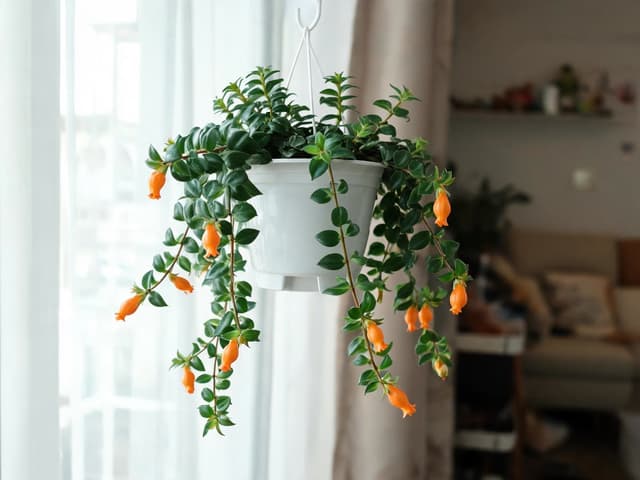
How to Care for a Goldfish Plant: Light, Watering, and Blooms
How to care for a goldfish plant: bright light without strong sun, water when the soil surface dries, and humid air. Learn how to tell a Nematanthus from a Columnea, why it drops leaves, and how to get it to bloom again.
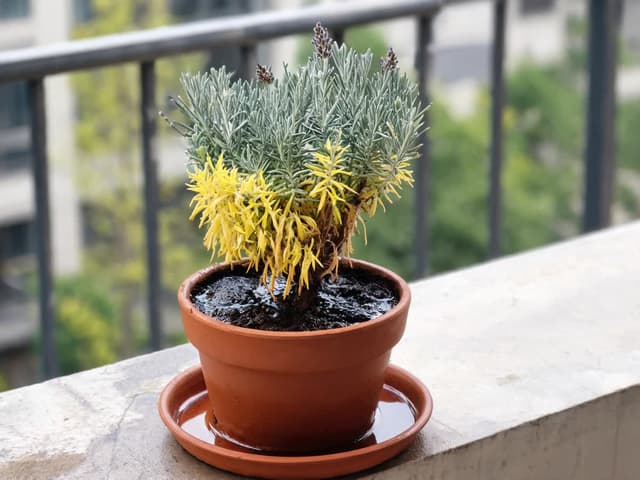
Lavender Leaves Turning Yellow: Where the Yellowing Starts Shows the Cause
Lower leaves turning yellow with moist soil means overwatered roots, the most common cause. Old leaves drying one by one on woody stems is normal. Take the stem and root test, see if your plant can still be saved, and find out what to do today.
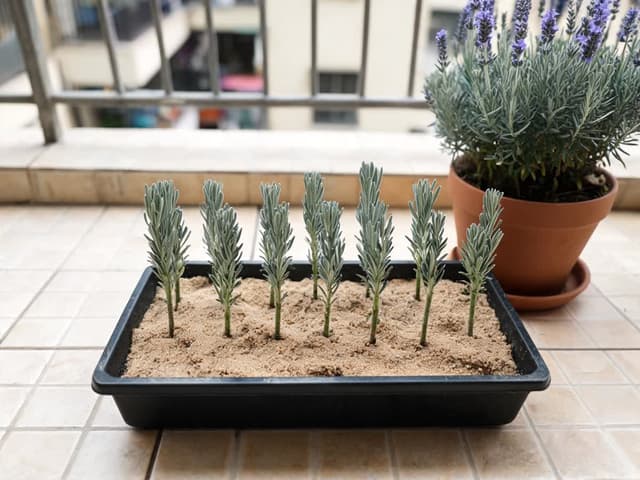
How to Propagate Lavender: Where to Cut and Why Cuttings Rot
A lavender cutting comes from a non-flowering branch tip, about 4 inches long, planted in sandy soil that never stays soggy. Learn where to cut, rooting times, seasonality in Brazil, and what to do if the base turns black.