How Often to Water Potted Tulips, Stage by Stage
How often to water tulips: there is no fixed day. For a blooming potted tulip, water when the soil surface feels dry to the touch, until water drains through the hole. Do not let the pot sit in water for long. Learn what changes at every stage.
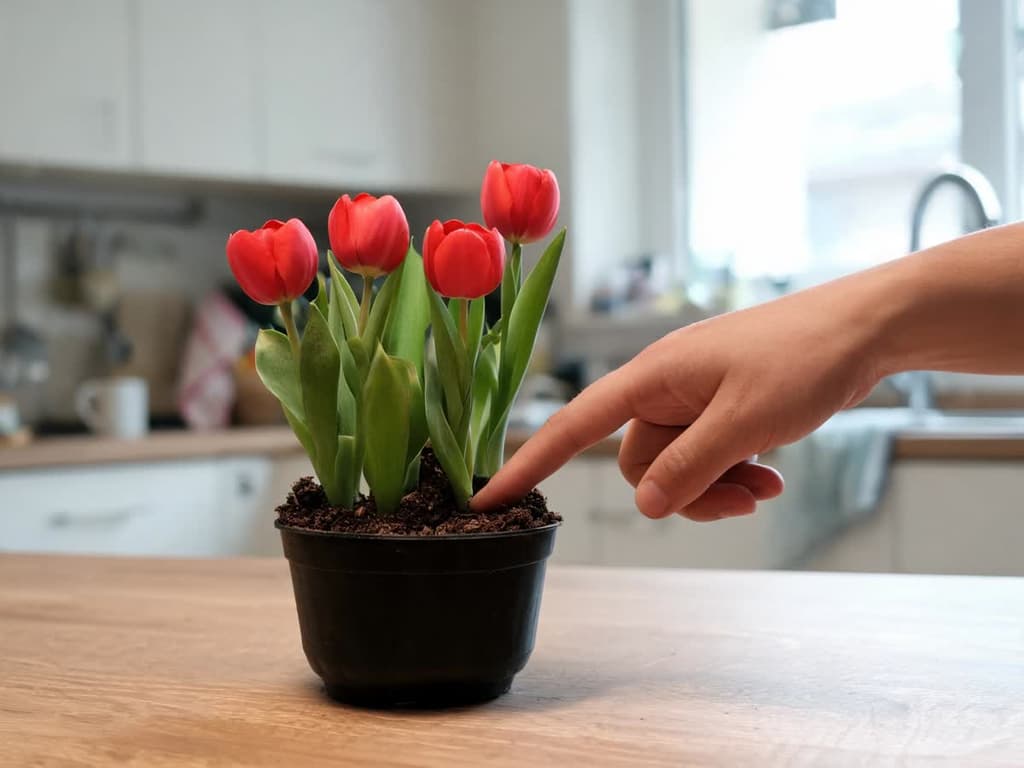
To know how often to water potted tulips, touch the soil surface. If it feels dry to the touch, water until moisture drains from the bottom hole. If it is still moist, do not water. This is the guideline from Iowa State University Extension (the gardening outreach service of the American university) for tulips purchased already in bloom.
The figures floating around ("every 2 to 3 days", "2 to 3 times a week", "every 10 days") do not come from technical sources. The interval changes with pot size, home temperatures, and the plant's stage. After flowering, watering continues until the foliage turns yellow, then decreases until stopping completely. Stored bulbs receive no water at all.
How often to water tulips
A potted tulip does not have a fixed watering day. It asks for water when the soil surface feels dry to the touch, and you water until water runs out through the drainage hole. The pot must not sit in water for very long. In a small pot, with open flowers and a warm room, the soil dries out faster than in a large pot kept in a cool spot.
A Spanish floristry website instructs to never let the soil dry out. This article follows Iowa State, which directs you to wait until the surface dries. The daily intervals given by floristry websites cite neither studies nor extension services. One claims that "some people insist" on watering every 10 days, and every 3 days during flowering. None of the university extension services consulted for this article provide a fixed number of days for potted tulips. Iowa State provides the dry-soil criterion and the volume of water.
If you need a routine to get started, touch the soil once a day during the first week. Take note of how many days the soil takes to dry out after a watering session. This interval applies only to your specific pot in your home. It is our own suggestion, not a measured figure.
Watering timing differs from plant to plant. With aloe vera, watering waits until the soil dries completely to the bottom of the pot, which takes weeks indoors. With pothos, watering comes when the potting soil is dry. For a tulip in bloom, Iowa State advises watering as soon as the surface dries.
Watering tulips at each stage of the cycle
The amount of water changes depending on the tulip's stage:
Tulip stage | When to water | How much | Source |
|---|---|---|---|
In bloom, in a pot | Soil surface feels dry to the touch | Until it drains from the hole; empty saucer | Iowa State |
Newly planted bulb | Right after planting; again when the soil dries | Until the soil is wet from top to bottom | Iowa State, Texas A&M |
Leaves yellowing after flowering | Regular watering until leaves yellow; then less and less | Gradually reduce until stopping completely | Iowa State, RHS (Royal Horticultural Society) |
Bulb stored out of soil | Never | Zero water; dry bulb | Iowa State, RHS |
Newly planted bulb
After planting the bulb in the pot, soak the entire soil thoroughly until it is wet from top to bottom. Iowa State recommends watering from above or soaking the pot in a basin until the surface gets moist. Texas A&M AgriLife advises not watering again until the clay pot dries out and turns light pink, which signals that the soil has dried.
The planted bulb needs a cold period of 12 to 15 weeks at 4 to 7 °C (40 to 45 °F) to bloom. During this period, Iowa State recommends watering "regularly," without stating an exact interval, and keeping the pots in the dark. Use the same dry-soil test to decide when to water. Without the cold period, the flower does not develop properly.
After flowering
When the flower fades, continue watering the tulip whenever the soil surface feels dry to the touch. During this stage, Iowa State advises placing the pot in a sunny window and maintaining watering until the foliage starts turning yellow. From then on, gradually decrease water until the foliage dries out completely. The RHS notes an interval of about 6 weeks between the end of blooming and yellow leaves.
Stored bulbs
Bulbs kept out of soil receive no water. Iowa State suggests letting the bulb dry for 1 to 2 weeks and storing it in a cool, dry place. The RHS, discussing garden tulips, calls for a location kept at 18 to 20 °C that is dark and well ventilated. Both sources agree on what matters for watering: the bulb stays dry, away from moisture.
To bloom again, the bulb needs cold before planting. Store the bulb in the refrigerator in a paper bag at 4 to 7 °C for 12 to 15 weeks. Iowa State warns against storing it alongside fruit: ripening apples release ethylene (a gas that disrupts flower development). Check occasionally to ensure the bulb is not desiccating or turning damp. A Mexican retail chain mentions 6 to 8 weeks in the refrigerator without citing a source. This article follows the extension service's 12 to 15 weeks.
Store the bulb, whether in the refrigerator or in a drawer, out of reach of dogs and cats. The ASPCA lists the tulip as toxic to dogs, cats, and horses, and the bulb contains the highest concentration of toxins:
Blooming potted tulip: the most common case
Most potted tulips arrive home already in bloom, bought from a supermarket, a florist, or received as a gift. Iowa State formulated its watering instructions specifically for this plant:
Water when the soil surface feels dry to the touch.
Water until moisture starts escaping from the drainage hole at the bottom of the pot.
Never let the pot sit in water for very long.
A tulip's plastic pot usually sits inside a cachepot (a decorative outer pot without drainage holes) or wrapped in decorative foil. When watering, take the inner pot out of the cachepot, water it in the sink, and wait for water to stop dripping from the hole. Then return the pot to the cachepot. Standing water at the bottom of a cachepot leaves the root system sitting in water.
Blooming tulips need a cool spot
Home temperatures affect flower longevity and how quickly the soil dries out. Iowa State recommends bright light without direct sun and temperatures between 16 and 18 °C (60 to 65 °F). NC State Extension states that tulip flowers weaken once soil temperatures reach 21 °C (70 °F).
NC State refers to soil temperature, not air temperature. Even so, a home above 18 °C sits outside the range given by Iowa State. Heat accelerates soil drying. Do not compensate for heat with more water: water only when the soil surface dries. Place the pot in the coolest, brightest spot in the house.
Iowa State also suggests buying tulips with buds already formed but still closed, as these plants last longer at home. None of the consulted sources measure the effect of repotting a tulip while it is in bloom. The safest choice is to keep the plant in its original container.
How to water tulips: the volume of water
Water potted tulips until water drains out through the bottom hole, just as Iowa State advises. "A little bit of water" is not enough. If the soil surface is dry, water until it drains. If it is still moist, do not water.
Pour water onto the soil near the base of the plant without wetting the blossom and leaves. NC State Extension lists gray mold (Botrytis, a fungus) among tulip diseases. The sources do not measure whether wetting the leaves triggers this mold. As a precaution, avoid watering cans with rose heads and hose nozzles that soak the whole plant.
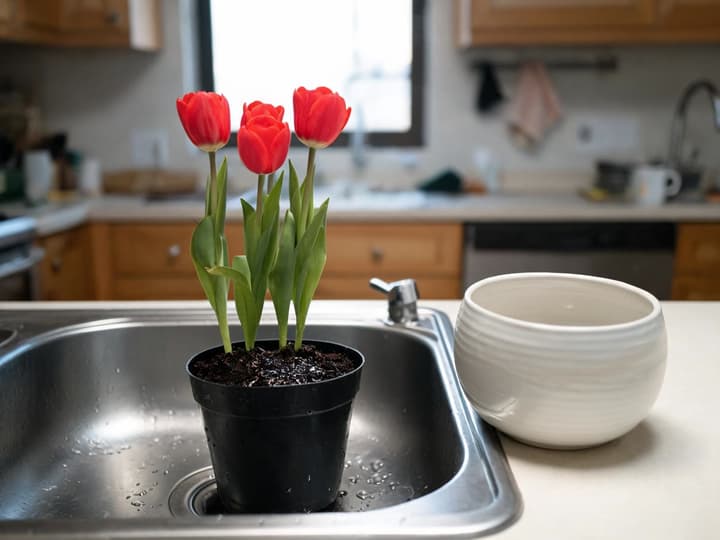
Ice and cold water on tulips
Some advice recommends placing ice cubes on the tulip soil or watering with cold water. None of the consulted extension services or horticultural societies recommend this for potted tulips. Iowa State recommends a cool environment of 16 to 18 °C for blooming tulips. None of the consulted sources measure the effect of ice or cold water on the flower. When in doubt, water with room-temperature water.
Yellow and drooping leaves: underwatering, overwatering, or end of cycle?
The first question is whether the flower has already dropped. Leaves yellowing after blooming is the tulip's normal cycle. Iowa State advises watering until the foliage turns yellow and then cutting back on water. Drooping or yellow leaves while the flower is still open can indicate a watering problem. The soil inside the pot shows which one.
Moist soil, drooping foliage, and a soft or darkened plant base: overwatering. Stop watering, empty the cachepot and saucer, and do not water again until the soil surface feels dry to the touch.
Dry, hardened soil, wilted foliage: underwatering. Water until liquid flows through the drainage hole.
Foliage yellowing from the bottom up after petals have dropped: end of cycle. Follow the watering guidelines for the "after flowering" stage.
NC State Extension warns that tulip bulbs and roots can rot in waterlogged, poorly drained soil. A Purdue University guide on greenhouse crops covers Pythium, a soil-borne microorganism that rots roots. According to the guide, overwatering and letting pots sit in water promote Pythium. Infected roots take on a water-soaked appearance, and the outer layer strips off easily, leaving only an inner core strand.
The overview below lists signs of overwatering in tulips:
Soft roots in soggy soil can indicate Pythium root rot. Warning signs and treatments appear on this page about tulip root rot. For other causes behind yellow coloration, see the causes of yellow leaves in tulips.
Will potted tulips bloom again?
Most of the time, no. According to Iowa State, forced tulips (those made to bloom in pots outside their natural season) are usually discarded after flowering. Most will not bloom again when planted out in the garden, and attempting to force the same bulb a second time usually fails. Proper watering serves to make the current bloom last longer.
Watering tulips in the garden
In garden beds, tulips rarely need watering when rainfall is sufficient to keep the soil moist. The RHS recommends watering only after more than 2 to 3 weeks without rain, keeping the soil moist rather than soaked. For tulips in outdoor containers, the RHS calls for thoroughly watered soil during dry spells, because drought shortens blooming periods.
Cup-shaped red flower: is it a tulip?
A plant displaying a cup-shaped red bloom might be a guzmania (Guzmania, a bromeliad) rather than a tulip. Guzmania features foliage emerging from the center to create a cup. For tulips, water always goes directly onto the soil and never into the center of the plant. If you are unsure which plant you have, the Bloom app identifies the species from a photo.
Frequently asked questions
How often should you water potted tulips?
There is no set number of days. Water potted tulips when the soil surface feels dry to the touch, pouring until water exits through the bottom drainage hole. In a small pot, with open flowers in a warm home, the soil dries out faster. In a cooler spot, the soil takes longer to dry.
Can I water tulips every day?
Only if the soil feels dry to the touch every day, which can happen in a small pot inside a hot home. Watering while the soil remains moist can leave roots waterlogged. NC State Extension and Purdue University connect overwatering to root rot. Check the soil daily, but water only when it feels dry.
How long do potted tulips last?
None of the consulted sources specify a precise number of days. NC State Extension reports that tulip blossoms weaken when soil temperatures reach 21 °C. Iowa State recommends 16 to 18 °C. To gain extra days, purchase plants with closed buds and place the container in the coolest, brightest room available.
Are cut tulips in a vase of water watered the same way?
No. Cut tulips sit in a vase filled with water and have neither roots nor a bulb, so the dry-soil rule does not apply. This article addresses potted tulips planted in soil, which are the ones that arrive with a bulb and root system.
Summary
Potted tulips are watered whenever the soil surface feels dry to the touch, until water drains through the hole. Cachepots and saucers must stay empty. After blooming, continue watering until the foliage turns yellow, then reduce until stopping completely. Stored bulbs stay dry, without any water. Drooping leaves combined with wet soil and a soft base indicate overwatering.
Bloom lets you know when to water each plant, and the watering schedule is included in the free plan. The Bloom app is available for iPhone and iPad.
Sources
Related articles
How to Care for a Goldfish Plant: Light, Watering, and Blooms
How to care for a goldfish plant: bright light without strong sun, water when the soil surface dries, and humid air. Learn how to tell a Nematanthus from a Columnea, why it drops leaves, and how to get it to bloom again.
Lavender Leaves Turning Yellow: Where the Yellowing Starts Shows the Cause
Lower leaves turning yellow with moist soil means overwatered roots, the most common cause. Old leaves drying one by one on woody stems is normal. Take the stem and root test, see if your plant can still be saved, and find out what to do today.
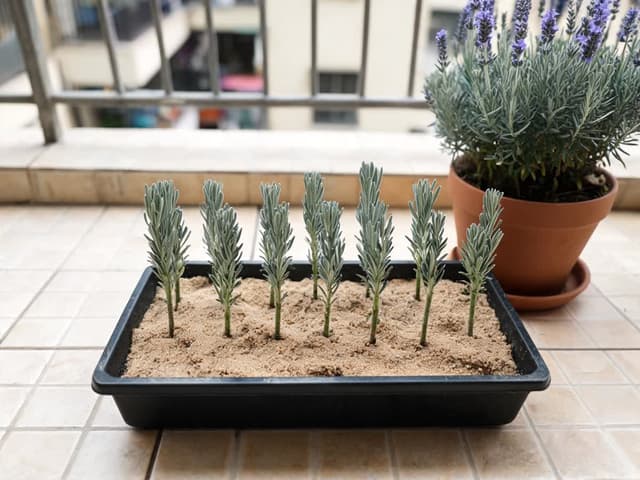
How to Propagate Lavender: Where to Cut and Why Cuttings Rot
A lavender cutting comes from a non-flowering branch tip, about 4 inches long, planted in sandy soil that never stays soggy. Learn where to cut, rooting times, seasonality in Brazil, and what to do if the base turns black.