Brown Spots on Pothos and Brown Tips: Causes and What to Do
Dry brown tips and brown spots in the center of the leaf are different symptoms on pothos, with different causes. See where the brown appears, the test to separate each cause, and when to cut leaves or repot.
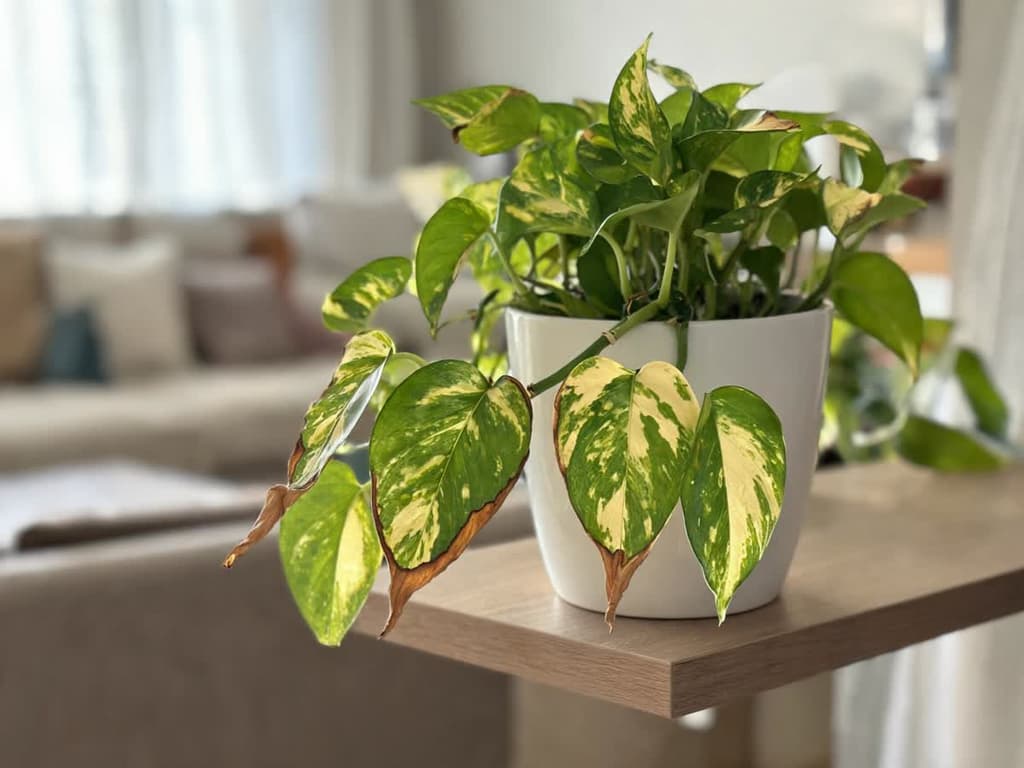
Pothos with brown tips and pothos with brown spots in the middle of the leaf are two different problems. A tip or margin that dries out and becomes crispy almost always comes from dry air, irregular watering, or fertilizer salts in the soil. A spot in the middle of the leaf has other causes: root rot, leaf disease, direct sun, or a cold night.
Because of this, before watering more, watering less, or changing the pot, look at where the brown is and touch the spot. Repotting solves three cases: root rot, root-bound plants, and a salt crust covering the entire soil surface. In other cases, the plant recovers in the same pot once the cause is fixed.
Quick summary:
Brown, dry, crispy tips and margins point to dry air, irregular watering, or fertilizer salts. The cause lies in dry soil or dry air, and the roots are usually healthy.
A dark, soft spot in the middle of the leaf, while the soil is moist, indicates overwatering. Check the roots before taking any other action.
The brown part of a pothos leaf will not turn green again. Pruning improves appearance, but the browning returns if the underlying cause continues.
Brown tips or brown spots on pothos: two different symptoms
A brown tip is tissue that dies starting from the edge or tip of the leaf, dry and brittle to the touch. A brown spot is a dead patch surrounded by green tissue in the middle of the leaf. In pothos (Epipremnum aureum), a dry tip comes from water failing to reach the edge of the leaf. A spot in the middle comes from something that directly hit that spot: fungus, bacteria, sun, or cold.
Golden pothos naturally has yellow and cream streaks from the moment the leaf unfurls. The Marble Queen and "Pearls and Jade" cultivars have white or silvery variegation. These streaks are part of the plant and follow the veins or spread as pale splashes. A problem spot has an irregular outline, expands over time, and turns brown or dry and scorched.
Pothos diagnostic chart: where the brown appears and what to test
Where it appears | How it feels to the touch | Likely cause | Test |
|---|---|---|---|
Tips and margins of multiple leaves | Dry, crispy, light brown | Dry air or irregular watering | Did the soil stay dry for several days before watering? |
Tips and margins, with a white crust on the soil | Dry, dark brown | Fertilizer salt | White crust on the soil surface or the pot rim |
Middle or edges, multiple leaves at once | Dark, soft, brown to black | Overwatering and root rot | Soil is moist 2 inches below the surface and roots are brown and soft |
Round or irregular spreading spots | Water-soaked at first, with a yellow ring around them (halo) | Bacteria or fungus | Spot appears first on the underside and on leaves that stayed wet |
On leaves facing the window | Dry and scorched, only on yellow or cream sections | Direct sun or heat | The spot is only on leaves facing the light |
Scattered spots in the center of the leaf | Brown, dry | Cold | Cold night or cold draft in recent days |
Tiny dots on the leaf underside | Stippled, speckled look | Pest | Magnifying glass: bugs, fine webbing, or cottony residue on the underside |
Three tests to run before touching your pothos
Stick your finger about 2 inches into the soil. Moist soil with soft, dark spots points to overwatering. Dry, hard soil down 2 inches, along with crispy tips, points to underwatering. To decide when to water, use the 1-inch rule from the dry tips section.
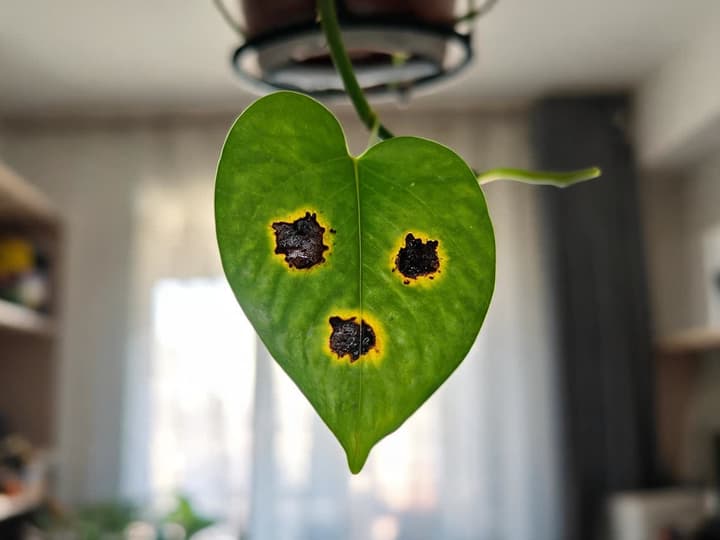
Turn over the spotted leaves. A spot with a yellow ring around it (a halo) or a water-soaked look on the underside indicates bacteria (NC State). A spot with concentric rings and a dark, dead center indicates fungus (Iowa State). A dry spot without a halo that is found only on the side facing the window indicates sun.
Think back over the last 7 days. Moving the plant, a cold night, new fertilizer, or days without water during a trip explain many sudden spots. If any of these happened, address that factor first.
If the first test showed waterlogged soil, remove the plant from the pot and look at the roots before anything else. Rotten roots are brown or already gone, according to the University of Wisconsin Extension. Iowa State describes diseased roots as dark and mushy. Healthy roots are those without these signs.
Dry brown tips on pothos: dry air, irregular watering, and salts
The dry tip is the part of the leaf farthest from the roots and the first to dry out when the plant lacks water. South Dakota State University (SDSU) states that dry, brown edges indicate that the pothos stayed dry for too long. The same source notes that pothos wilts when it needs water: water before the leaves begin to wrinkle.
Irregular watering causes the same symptom. Iowa State University cites soil that stays too dry for days between waterings as a cause of brown tips and margins. Water when the soil is dry down to the first knuckle of your finger (about 1 inch) and the pot feels light. Water until it drains through the hole. The interval in days for your home is in the guide on how often to water pothos.
Dry air is the most common cause of brown tips on indoor plants, according to Iowa State, especially in winter. Clemson University links dry tips on pothos to dry air or intense light. To reach 50–70% relative humidity, the range Clemson recommends for pothos, use a humidifier near the plant or place a wide pebble tray with water beneath the pot.
Two out of three English-language gardening blogs on pothos recommend misting the leaves to combat dry air. Iowa State points out the opposite: wet foliage, whether from misting or overhead watering, promotes fungal and bacterial leaf spots. The risk is even higher in low air circulation. This guide follows university extension research over blogs: raise humidity without wetting the leaves.
White crust on the soil: fertilizer salts
Residual salts from fertilizer accumulate in the soil and damage roots, and leaves react with brown edges. The University of Wisconsin cites overfertilization as one of the causes of darkened tips and edges on pothos. In severe cases, salts appear as a white crust on the soil surface, on the saucer, or on the exterior of terracotta pots (Iowa State).
To flush out salts, slowly pour clean water through the pot until it drains freely from the drainage hole: water running through the potting mix carries the salts away (Iowa State). Hold off on fertilizer until new leaves emerge with clean, green tips. If a crust covers the entire soil surface, repot into fresh mix. When you resume feeding, use half or a quarter of the label dose. Iowa State recommends fertilizing only during periods when the plant is actively producing new growth.
Tap water also gets blamed. Iowa State lists spider plants, dracaenas, ti plants, prayer plants, and calatheas as sensitive to chlorine and fluoride in tap water, but does not include pothos. None of the university extensions consulted for this guide link tap water to brown tips on pothos. Without measured data on pothos, rule out dry air, erratic watering, and salt buildup before switching your water source.
Dark, soft brown spots on pothos with moist soil
A dark, soft, or black spot with the soil still damp is a sign of overwatering. SDSU notes that black leaf spots indicate soil kept too wet. NC State Extension records root rot and leaf margin browning on overwatered pothos.
The disease that most commonly attacks pothos is Phytophthora root rot, a fungus-like organism that lives in soil water. According to the University of Florida (UF/IFAS), it starts in the roots and then turns leaves dark brown to black. On leaves affected by this rot, the veins and stem do not darken.
Root rot requires same-day action. Take the plant out of its pot, prune away soft, mushy roots using clean shears, and repot into fresh potting mix in a pot with drainage holes. A complete walkthrough is available in pothos with yellow leaves, which covers rescuing plants from root rot. If the roots are firm and light-colored, do not repot: let the soil dry to the first knuckle before watering again.
Brown spots with a yellow halo that spread: bacteria or fungus
Bacterial spots start as a water-soaked area with an oily look, and then turn brown to black with a yellow ring around them. NC State Extension describes this spot on ornamental plants and adds that it usually appears first on the underside of the leaf. The bacteria spread from leaf to leaf through splashing water and through hands touching the wet plant.
Fungal spots grow in concentric rings with a dark, dead center, eventually taking over the whole leaf (Iowa State). On pothos, the fungus Rhizoctonia causes dark, irregular patches (UF/IFAS). Stricken leaves stick together, sometimes showing visible fungal strands.
What to do today for spots with a yellow halo:
Cut off spotted leaves using clean shears and discard them in the trash, away from the pot.
Wipe the shears with rubbing alcohol before trimming any other plant.
Move your pothos away from other pots until no new spots appear.
Water directly onto the soil without splashing the leaves, and stop misting.
If spots have overtaken most of the plant, recovery is unlikely. Iowa State notes that most indoor plant diseases have no cure, only prevention. Before discarding it, take pothos cuttings from completely clean, spot-free vines using clean shears. Cuttings can carry disease: UF/IFAS notes that Phytophthora enters nurseries through infected cuttings. For this reason, keep your propagation setup away from other houseplants for the first few weeks.
Dry spot on only the yellow or cream part of the leaf: direct sun
A dry, scorched spot only on leaves facing the window is sunburn. UF/IFAS describes scorched spots on pothos restricted to the yellow or cream areas of the leaf (the variegated areas), caused by strong light or heat.
The burned area does not recover, according to the same source. Move the pothos out of direct sun and place it near a window with bright light and no sun hitting the leaves. In Brazil, a north-facing window receives direct sun for much of the day. A west-facing window gets strong afternoon sun. A sheer curtain between the window and the plant filters the sun in both cases.
Brown spots in the center of the leaf after a cold night
Brown spots scattered across the center of a leaf that appear a few days after a cold night are cold damage. UF/IFAS documents this symptom on pothos after a few hours at temperatures between 33 °F and 40 °F (1 °C to 4 °C). A sudden drop in temperature causes the same injury. The University of Wisconsin adds that actively growing plants suffer more.
In Brazil, the risk is higher between June and August, with the plant resting against window glass or near an open door. The cold on the ride home from the store also counts: Iowa State cites an unprotected plant during cold-weather transport as a cause of leaves turning yellow and dropping. Affected leaves do not turn green again. Move the plant away from window glass, open doors, and cold drafts, and wait for new leaves: if they emerge without spots, the problem was just that one night.
Tiny brown specks on the underside of leaves: pests
Leaves with a stippled, speckled look and fine webbing on the underside indicate spider mites (Iowa State). To confirm, tap the leaf over a sheet of white paper and look for moving dots. White cottony fuzz in leaf axils and on undersides is mealybugs. NC State recommends watching pothos for mealybugs and scale. Check the undersides of the leaves with a magnifying glass. Treatments for each pest are in the guides on spider mites and mealybugs.
Is your plant actually a pothos?
Three trailing plants are sold under similar names. Satin pothos (Scindapsus pictus) belongs to a different genus and naturally unfurls with silver spots on dark green leaves, according to NC State. Heartleaf philodendron (Philodendron hederaceum) also has heart-shaped leaves and is confused with pothos. NC State distinguishes the two by details of the stem and the base of new leaves, which are hard to see with the naked eye. If your plant came unlabeled, the Bloom app identifies the species from a photo of a leaf.
Should I cut off brown leaves or repot my pothos?
The brown part of a leaf will not turn green again. Trimming it off with clean shears improves the plant's look, but Iowa State warns that the browning will return if the root cause continues. On a dry tip, trim only the dead brown tissue while following the natural outline of the leaf. Leaves with bacterial halo spots should be removed entirely, and leaves that are more brown than green can also be removed completely.
Repot your pothos in only three situations: root rot, severe root-bound conditions, or a salt crust covering the entire potting surface. When root-bound, soil dries out unusually fast after watering. Roots circle the bottom of the pot or push through the drainage holes. Repotting a pothos with healthy roots over sun damage, cold shock, or foliage spots only adds stress. For a newly purchased pothos, UF/IFAS recommends waiting around 4 weeks before repotting or fertilizing. Root rot is the sole exception: do not wait in that case.
Do not leave cut leaves on the floor within reach of dogs and cats. Pothos contains calcium oxalate crystals and is toxic to both, according to the ASPCA.
Frequently Asked Questions
Will brown pothos leaves turn green again?
No. Brown tissue on pothos is dead and will never regain its color, whether caused by a dry tip, disease spot, sunburn, or cold damage. The sign that your issue is resolved is clean new growth. If leaves that unfurl after you adjust care come out without brown patches, the underlying cause has been resolved. Snip away the brown portions if they bother you.
Do brown spots on pothos spread to other plants?
It depends on the cause. Bacterial and fungal leaf spots spread through water splashes, contaminated hands, and pruning shears. Quarantine your pothos from other houseplants and sanitize your pruners with rubbing alcohol. Dry tips, sunburn, cold damage, and fertilizer salt buildup cannot spread to nearby plants because they are not caused by living organisms.
Does tap water cause brown tips on pothos?
It is unlikely, though no studies have measured this specifically on pothos. Iowa State notes spider plants, dracaenas, cordylines, prayer plants, and calatheas as sensitive to chlorine and fluoride, but does not list pothos. Brown tips on pothos stem far more frequently from low humidity, soil drying out for days, or fertilizer salt residue. Rule out those three causes before switching your water supply.
Can a pothos with brown spots be saved?
In most cases, yes. Dry tips, sun, cold, and salt damage can all be resolved by correcting your care, and pothos readily produces replacement foliage. The situation is severe only when root rot has spread throughout the root ball or when disease spots cover nearly every leaf. Even then, a single clean vine can be rooted to start a healthy new plant.
Your first step with your pothos
Today, look at where the brown marks are and stick your finger about 2 inches into the potting mix. Dry tips with dry soil: water when the soil dries to the first knuckle (around 1 inch) and boost room humidity. Mushy spots with wet soil: pull the plant from its pot to inspect the roots. Spots with a yellow halo: prune off damaged foliage and quarantine the pot from other houseplants. For overall plant care instructions, read our guide on how to care for pothos.
The test of where and how also applies to other broadleaf houseplants, such as monstera with brown tips and dieffenbachia with brown tips.
Related articles
How to Care for a Goldfish Plant: Light, Watering, and Blooms
How to care for a goldfish plant: bright light without strong sun, water when the soil surface dries, and humid air. Learn how to tell a Nematanthus from a Columnea, why it drops leaves, and how to get it to bloom again.
Lavender Leaves Turning Yellow: Where the Yellowing Starts Shows the Cause
Lower leaves turning yellow with moist soil means overwatered roots, the most common cause. Old leaves drying one by one on woody stems is normal. Take the stem and root test, see if your plant can still be saved, and find out what to do today.
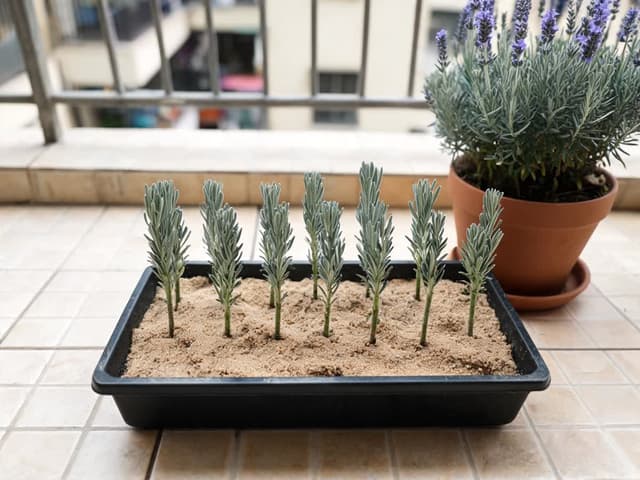
How to Propagate Lavender: Where to Cut and Why Cuttings Rot
A lavender cutting comes from a non-flowering branch tip, about 4 inches long, planted in sandy soil that never stays soggy. Learn where to cut, rooting times, seasonality in Brazil, and what to do if the base turns black.