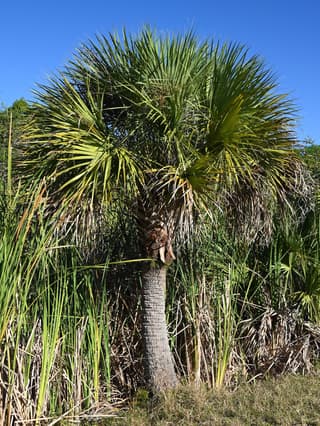
Cabbage palm Prone to Phytoplasma: How to Protect
Sabal palmetto
Phytoplasma on Cabbage palm: What to Know?
Phytoplasma on Cabbage palm (Sabal palmetto) is a bacterial condition with moderate severity. Cabbage palm has high susceptibility to this disease.
Cabbage palm is a easy-care plant.
Cabbage palm is highly susceptible to Phytoplasma, unlike most plants in the same family.
🌱 How to Care for Cabbage palm to Prevent Phytoplasma?
💧 How to Water
Keep the root zone evenly moist for the first months after planting or transplanting, when the palm lives mostly on water stored in its trunk. Once established it is drought tolerant, but it grows best with deep watering every week or two during hot, dry spells.
☀️ Lighting
Plant in full sun with at least 6 hours of direct light a day. Young palms tolerate some shade, but they will not form a trunk until they get open sky above them.
🪴 Ideal Soil
Grows in sandy, loamy or clay soils across a wide pH range, as long as the roots are not in salty water. A fertile, well-drained soil with some organic matter gives the fullest canopy.