Complete Plant Guide
Explore plants by difficulty, season and more. Find the perfect plant for you.
Difficulty
Categories
Plants by City
🗺️ Plants by City3622 plants found
Showing 3349-3384 of 3622
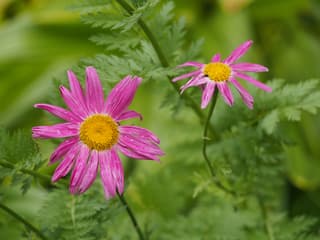
Painted Daisy
Tanacetum coccineum
Tanacetum coccineum, commonly known as the Painted Daisy or Pyrethrum, is a hardy herbaceous perennial in the Asteraceae family, native to Eastern Europe, the Caucasus, and Central Asia. It produces stunning daisy-like flowers in vivid shades of red, pink, purple, and white, each with a golden-yellow center disc. Beyond its striking ornamental value, the plant is celebrated for producing pyrethrins — natural insecticidal compounds extracted from its flowers and widely used in organic pest control. It is deer-resistant, attracts butterflies, and thrives in cottage gardens, borders, and cutting gardens.
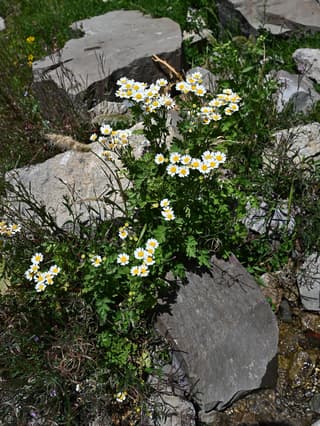
Feverfew
Tanacetum parthenium
Feverfew (Tanacetum parthenium) is an aromatic perennial herb in the Asteraceae family, native to Asia Minor and naturalized across Europe. It produces white daisy-like flowers with a yellow center throughout summer and is widely grown for medicinal and ornamental purposes.
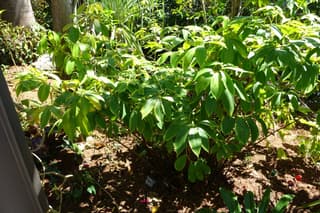
Indonesian Wax Ginger
Tapeinochilos ananassae
Tapeinochilos ananassae, commonly known as Indonesian Wax Ginger, is a striking tropical herbaceous perennial native to Indonesia, Papua New Guinea, and northern Australia. It produces dramatic, pineapple-shaped inflorescences of deep red waxy bracts from which small yellow flowers emerge. Growing up to 8 feet tall, this rhizomatous plant forms lush, spirally arranged dark green foliage and blooms virtually year-round in tropical conditions. It is prized as an ornamental specimen in tropical gardens and as a greenhouse or indoor statement plant in cooler climates.
velvet-footed pax
Tapinella atrotomentosa
Tapinella atrotomentosa, commonly known as the velvet-footed pax, is a striking gilled mushroom that grows primarily on decaying stumps and roots of conifers. It is characterized by its robust, velvety brown-to-black stem and asymmetrical cap. Although not as lethally toxic as its relative, the brown roll-rim, it contains toxins that can cause severe digestive distress and, in sensitive individuals, autoimmune reactions.
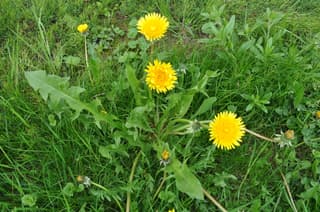
Dandelion
Taraxacum
Taraxacum is a genus of flowering perennials in the daisy family (Asteraceae), comprising over 2,000 recognized species and microspecies worldwide, most reproducing by apomixis. This profile covers the genus at a general level, using the emblematic and most widespread species, Taraxacum officinale (common dandelion), as the reference for care data. Recognizable by its rosette of toothed leaves, solitary yellow flower heads, and globe-shaped seed puffballs, Taraxacum is both a common lawn weed and a valued edible and medicinal plant.
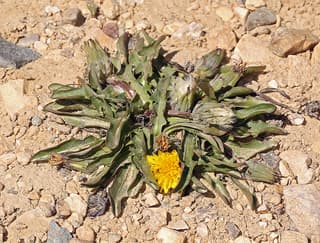
Horned Dandelion
Taraxacum ceratophorum
Taraxacum ceratophorum, commonly known as the horned dandelion, is a herbaceous perennial native to alpine and subalpine zones across the Northern Hemisphere. It is distinguished by its distinctive swollen red-tinged phyllary tips resembling horns, which give the plant its common name. It grows in alpine meadows, fellfields, and rocky slopes up to 3,000 meters elevation, and is considered the most widespread native dandelion in North America.
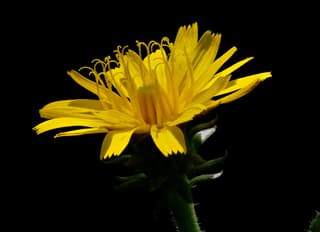
Dandelion
Taraxacum sect. Taraxacum
The dandelion is an extremely resilient perennial herbaceous plant, known for its basal rosette of jagged leaves and bright yellow flowers. It is famous for its ability to colonize various habitats and for its 'pappus', the sphere of feathery seeds that disperse with the wind. Although often considered a weed, it is a highly nutritious and medicinal plant.
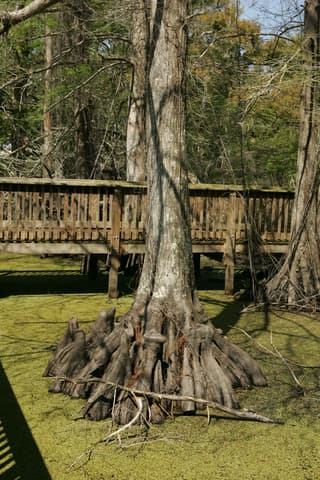
Bald Cypress
Taxodium distichum
Taxodium distichum, commonly known as the bald cypress, is a large deciduous conifer in the Cupressaceae family. Native to the southeastern United States, it grows naturally in swamps, riverbanks, and floodplains. It is one of the few deciduous conifers, and its bright green foliage turns reddish-bronze in autumn before falling. It produces aerial root structures called pneumatophores or "cypress knees" when growing in flooded soils. With an exceptional lifespan that can exceed 1,000 years, it is an iconic tree of North American wetlands, widely used in parks, urban gardens, and riparian restoration projects.
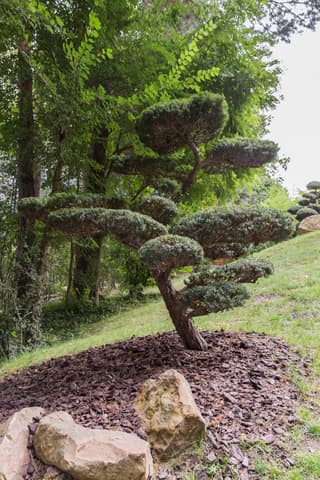
English Yew
Taxus baccata
Taxus baccata, known as the English yew or European yew, is a slow-growing conifer native to Europe, North Africa, and Western Asia. It is one of the longest-living trees in the world, with specimens exceeding 4,000 years. It produces dark green needle-like leaves arranged in two rows on the branches and seeds surrounded by a fleshy red aril. Almost all parts of the plant—leaves, bark, and seeds—contain highly toxic taxine alkaloids, fatal to humans, cats, dogs, and horses. Only the fleshy aril is edible, though the seed inside remains lethal. The yew is extremely valuable as a hedge and topiary shrub due to its tolerance for severe pruning and ability to grow in varied light conditions.
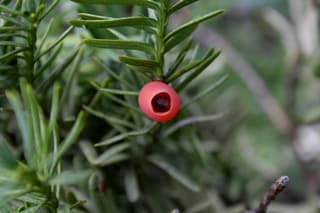
Japanese Yew
Taxus cuspidata
Taxus cuspidata, the Japanese yew, is a slow-to-moderate growing evergreen conifer native to Japan, Korea, northeastern China, and the Russian Far East. It typically appears as a dense shrub or small tree with flattened, dark green needles and reddish-brown, peeling bark. Female plants produce small, bright red, fleshy arils in fall - the only part of the entire plant that is not toxic. Every other tissue (bark, needles, and especially the seed inside the aril) contains taxine alkaloids that are severely toxic to humans, cats, dogs, and horses. Because of its extreme cold hardiness (USDA zones 4-7), dense evergreen habit, and excellent tolerance of pruning and shade, Japanese yew is one of the most widely planted hedge and foundation shrubs in temperate landscapes.
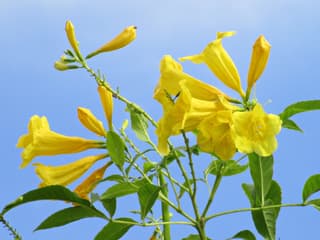
Trumpetbush (genus)
Tecoma
Tecoma is a genus of shrubs and small trees in the family Bignoniaceae, prized for their showy trumpet-shaped yellow or orange flowers. Hardy and drought-tolerant, they thrive in hot, sunny landscapes across tropical and subtropical regions.
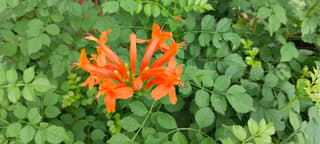
Cape Honeysuckle
Tecoma capensis
Cape Honeysuckle (Tecoma capensis) is an evergreen, scrambling shrub native to southern Africa, prized for its clusters of orange, tubular flowers. Fast-growing and adaptable, it can be trained as a hedge, espalier, or climbing vine, blooming mainly from fall through spring and attracting hummingbirds and butterflies.
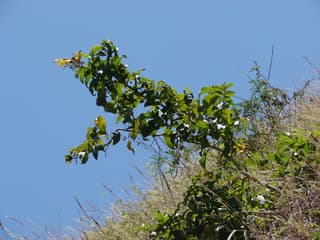
Yellow Bells
Tecoma stans
Tecoma stans, commonly known as Yellow Bells or Yellow Trumpetbush, is a fast-growing shrub or small tree native to the Americas, from Mexico to Argentina. It is celebrated for its stunning clusters of bright yellow, trumpet-shaped flowers that bloom from spring through fall, attracting hummingbirds, butterflies, and bees. Highly drought-tolerant and low-maintenance, it thrives in warm, sunny gardens and is considered a symbol of vitality and abundance across Latin America.
Verschaffelt Tephrocactus
Tephrocactus verschaffeltii
Tephrocactus verschaffeltii is a captivating segmented cactus native to the arid regions of Argentina and Bolivia. Its oval segments display colors ranging from mint green to plum purple, adorned with distinctive white fluffy areoles. In spring and summer, it produces vibrant fire-red to orange blooms that make it a striking collector's piece. A slow-growing species, it is well-suited for rock gardens, desert landscapes, and container growing.
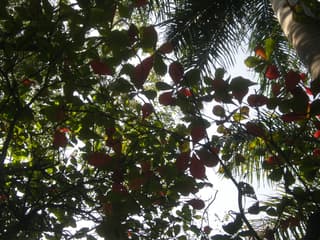
Tropical Almond
Terminalia
Terminalia is a genus of approximately 100 species of large tropical and subtropical trees in the family Combretaceae, found across coastal and inland tropical regions worldwide. Notable species include T. catappa (Tropical Almond), T. mantaly (Madagascar Umbrella Tree), and T. arjuna (Arjuna Tree), revered in Ayurvedic medicine. These fast-growing trees are valued for their generous shade, attractive layered branching, durable timber, and the wide-ranging medicinal properties of their leaves and fruit.
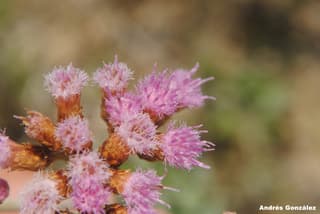
Pájaro bobo
Tessaria absinthioides
The Pájaro bobo (Tessaria absinthioides) is a perennial shrub in the Asteraceae family, native to riverbanks and brackish soils from southern Peru and Bolivia to northern and central Chile, Argentina, Paraguay, and Uruguay. Featuring grayish-green foliage with a pubescent appearance, it reaches up to 2-3 meters in height, with elongated leaves and serrated edges. Its flower heads, grouped in terminal corymbs, display marginal flowers ranging from pale to deep pink between December and March. It is a pioneer species with extremely high adaptive capacity: it colonizes sandy, arid, waterlogged, or saline soils alike, and in the Atacama Desert, it survives by obtaining moisture almost exclusively from coastal fog (camanchaca).
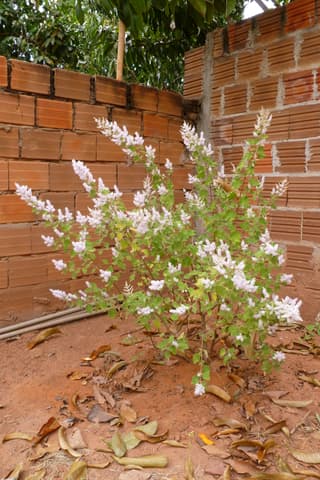
Ginger Bush
Tetradenia riparia
Tetradenia riparia, commonly known as the Ginger Bush or Nutmeg Bush, is a vigorous shrub native to Southern Africa. It is famous for its spectacular winter flowering, when it is covered in delicate, feathery inflorescences. Its leaves are heart-shaped, velvety, and extremely aromatic, releasing a resinous scent reminiscent of a blend of ginger and spices when touched.
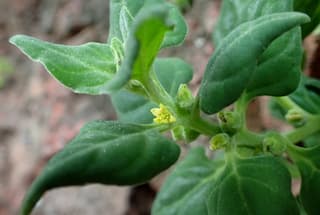
New Zealand Spinach
Tetragonia tetragonoides
Tetragonia tetragonoides, commonly known as New Zealand Spinach or Warrigal Greens, is a fast-growing, heat-tolerant leafy vegetable native to New Zealand, Australia, and East Asia. Unlike common spinach, it thrives in hot summers and is highly drought-tolerant once established, making it an ideal warm-season green. Its succulent, arrow-shaped leaves are used as a spinach substitute and are valued for their nutritional content.
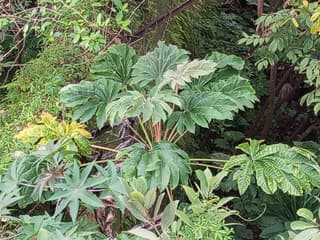
Rice Paper Plant
Tetrapanax papyrifer
Tetrapanax papyrifer is a bold, architectural shrub native to Taiwan and southern China, celebrated for its enormous, deeply lobed, grey-green leaves that can reach over 60 cm across. It grows vigorously via underground suckers, creating dramatic tropical-looking colonies in gardens. The plant has been cultivated for centuries, with its pith traditionally used to make Chinese rice paper.
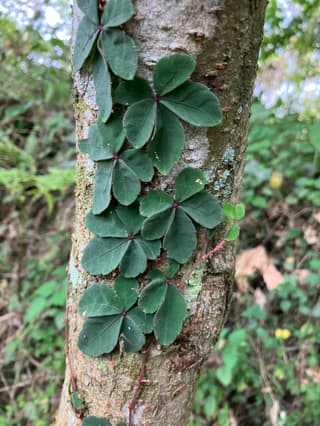
Lizard Vine
Tetrastigma obtectum
Tetrastigma obtectum, known as the lizard vine or Chinese tetrastigma, is a lush evergreen climbing vine from the Vitaceae family. It is native to southern China and parts of Southeast Asia, where it grows on forest edges, along riverbanks, and on cool, moist mountain slopes at altitudes up to 2,000 meters. The plant features characteristic palmate leaves with five lanceolate leaflets and produces small greenish-white flowers in the summer, followed by spherical, grape-like black berries. It is particularly popular as a terrarium plant and indoor ornamental due to its ability to thrive in low light and high humidity.
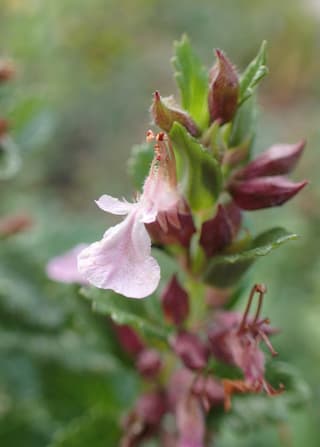
Germander
Teucrium
Teucrium is a genus of aromatic sub-shrubs in the mint family (Lamiaceae), native to the Mediterranean region. Its most widely cultivated species, wall germander (Teucrium chamaedrys) and tree germander (Teucrium fruticans), are prized for evergreen foliage, delicate flowers, and excellent drought tolerance, making them popular for low hedges, edging, and xeriscape gardens.
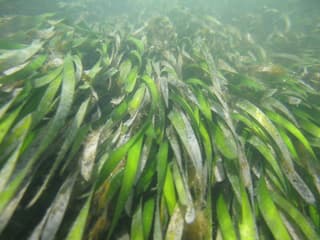
Turtle grass
Thalassia testudinum
Turtle grass is a flowering marine plant (angiosperm) of the Hydrocharitaceae family, forming extensive submerged 'meadows' on shallow sandy and calcareous bottoms of the Caribbean and the Gulf of Mexico. Its long, dark-green, ribbon-like leaves grow from a long, jointed rhizome buried 5 to 25 cm deep in the substrate. It is the dominant seagrass species in much of the region, supporting an entire ecosystem: green sea turtles, parrotfish, surgeonfish, and sea urchins feed directly on it, while its leaves host a film of epiphytes (algae, diatoms, and bacteria) that feeds countless invertebrates. It is not a conventional aquarium or home garden plant — it depends on saltwater, high light, and constant submersion.
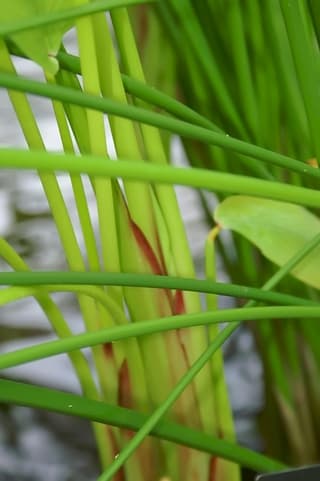
Bent Alligator-flag
Thalia geniculata
Thalia geniculata, commonly known as Bent Alligator-flag, is a majestic perennial aquatic plant. Its large, light green oval leaves resemble those of the Maranta but grow on long, erect stems that can reach impressive heights. Its most striking feature is the zigzag inflorescence, which supports delicate small purple flowers, attracting pollinators such as butterflies and hummingbirds.

Columbine meadow-rue
Thalictrum aquilegiifolium
Thalictrum aquilegiifolium (Columbine meadow-rue) is a tall, hardy perennial in the buttercup family, featuring delicate, aquilegia-like blue-green foliage and fluffy plumes of purple to pink—sometimes white—staminate flowers in early summer. It provides an airy and elegant element to semi-shaded borders and works beautifully positioned behind lower-growing plants.
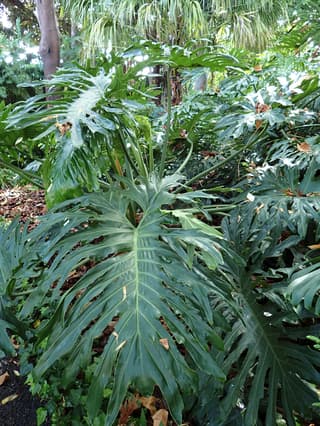
Tree Philodendron
Thaumatophyllum
Thaumatophyllum is a genus of about 20 tropical plants in the family Araceae, native to tropical South America. Formerly classified as Philodendron subgenus Meconostigma, these plants are known for their large, deeply lobed, dramatic foliage. Notable species include T. bipinnatifidum (split-leaf philodendron / selloum), T. xanadu, and T. spruceanum. They can reach up to 2.5 m tall indoors and make bold architectural statements in spacious interiors or tropical gardens.
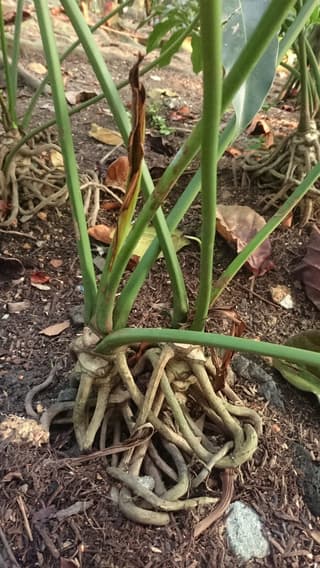
Philodendron Goeldii
Thaumatophyllum spruceanum
Philodendron Goeldii (Thaumatophyllum spruceanum, formerly Philodendron spruceanum) is an aroid native to the Amazon rainforest, found in Brazil, Colombia, Ecuador, French Guiana, Peru, Suriname and Venezuela. It grows either as a terrestrial shrub in sandy soil along riverbanks or as a hemiepiphyte climbing larger forest trees. Its foliage is highly distinctive: each leaf is pedately divided into 10-20 leaflets arranged in a hoop-like shape, with the central leaflet reaching up to 50 cm. The plant is toxic, containing calcium oxalate crystals in nearly all its tissues (except the ripe fruit), which can irritate the mouth and throat of humans and pets if chewed or ingested.
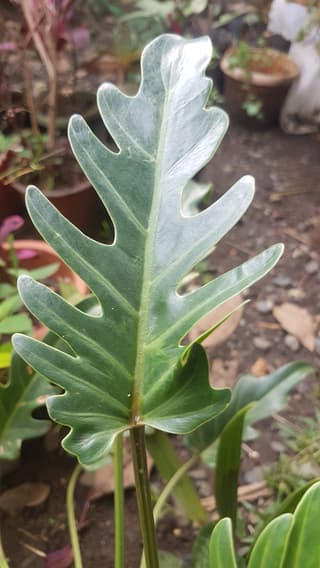
Xanadu Philodendron
Thaumatophyllum xanadu
Thaumatophyllum xanadu, commonly known as Xanadu Philodendron or Winterbourn, is a tropical plant native to Brazil. It forms compact, bushy clumps with deeply lobed, glossy leaves that give it a lush, jungle-like appearance. The synonym Philodendron xanadu is still widely used in horticulture. One of the most popular plants for both indoor and outdoor tropical gardens.
stinking earthfan
Thelephora palmata
Thelephora palmata, known as the stinking earthfan, is a coral-like fungus that grows on the ground in coniferous forests. It is characterized by its dark brown color, fan-shaped branches with white tips, and a very penetrating, unpleasant odor reminiscent of rotting cabbage or garlic. It forms mycorrhizae with trees and plays an important role in the forest ecosystem.
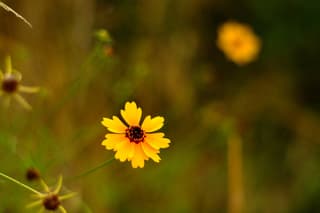
Stiff Greenthread
Thelesperma filifolium
Thelesperma filifolium, commonly known as stiff greenthread, is a drought-tolerant wildflower native to the Great Plains and prairies of North America, from Texas to the Dakotas. It forms slender, branching stems with thread-like foliage topped by cheerful golden-yellow daisy-like flowers with reddish-brown centers. A winter annual or short-lived perennial, it thrives in dry, sandy, or gravelly soils and full sun, making it a favorite for native wildflower meadows and pollinator gardens.
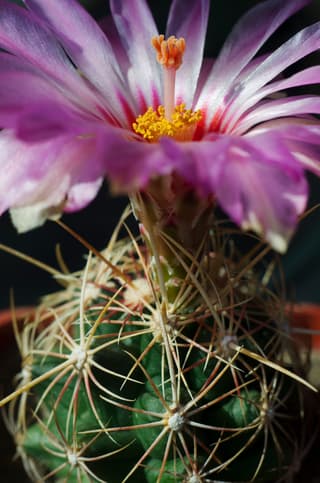
Thelocactus
Thelocactus
Thelocactus is a genus of about 13 species of globose to short cylindrical cacti that grow wild in the arid regions of central and northern Mexico as well as in the Big Bend region of Texas. The plants are characterized by prominent, often spiraling ribs set with distinct tubercles and star-shaped spine clusters in colors ranging from white and golden to reddish-brown. In spring and summer, large, funnel-shaped flowers bloom from the plant's apex in shades of white, yellow, pink, and purple – often nearly as wide as the plant itself.
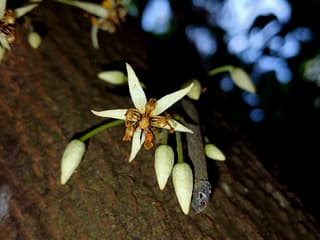
Cacao tree
Theobroma cacao
The cacao tree is a tropical evergreen tree native to the deep regions of the Amazon basin. It is world-renowned for producing the fruits whose seeds are processed to create chocolate. The plant exhibits a rare botanical phenomenon called cauliflory, where flowers and fruits grow directly from the trunk and main branches. Its leaves are large, leathery, and bright green, providing a lush appearance.

Portia Tree
Thespesia populnea
The Portia tree (Thespesia populnea) is an evergreen tree in the Malvaceae family, common in tropical coastlines worldwide. It features heart-shaped leaves and yellowish flowers with a maroon center that transition to shades of purple throughout the day. Highly resistant to wind, salt, and drought, it is widely planted along shorelines and as a shade tree. Its wood is valued for woodworking, and the species has various uses in traditional medicine.
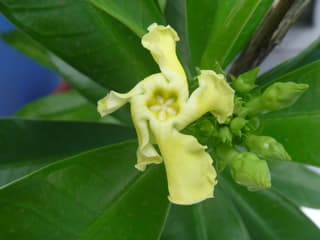
Ahouai
Thevetia ahouai
Thevetia ahouai, also known as Cascabela ahouai, is a perennial tropical shrub in the Apocynaceae family. It features leathery, dark green, glossy leaves with a lanceolate shape. Its flowers are yellow, tubular, and lightly scented, followed by fleshy fruits that turn from green to red and finally black when ripe. The entire plant contains a milky white latex and cardiac glycosides, making it extremely toxic if ingested.
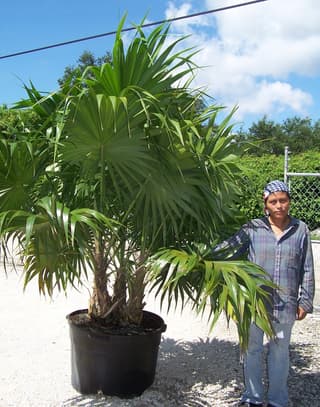
Florida thatch palm
Thrinax radiata
The Florida thatch palm (Thrinax radiata) is a species in the Arecaceae family, native to the Florida Keys, the Yucatán Peninsula, the Caribbean, and Central America. It is a solitary, slender-trunked palm, without a crownshaft, that can reach between 6 and 9 meters in height, although it grows very slowly. Its leaves are palmate (fan-shaped), bright green on the upper side and silvery on the underside. It produces white inflorescences that can bloom year-round, followed by small white fruits. It inhabits coastal scrublands and calcareous soils, which makes it very tolerant to salinity and drought. In Florida, it is listed as an endangered species in the wild.
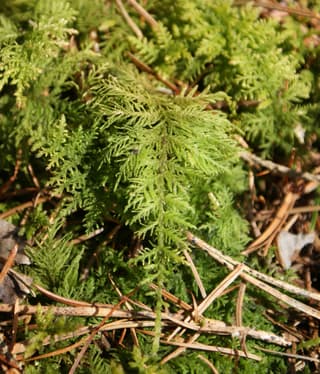
Common Tamarisk Moss
Thuidium tamariscinum
Thuidium tamariscinum, commonly known as Common Tamarisk Moss, is a feathery, evergreen bryophyte that forms lush, bright-green mats on forest floors, rocks, and fallen logs. Native to Europe and now widespread across temperate regions worldwide, it does not flower and reproduces via spores. It thrives in shaded, humid environments and is ideal for terrariums, shade gardens, and natural ground cover.
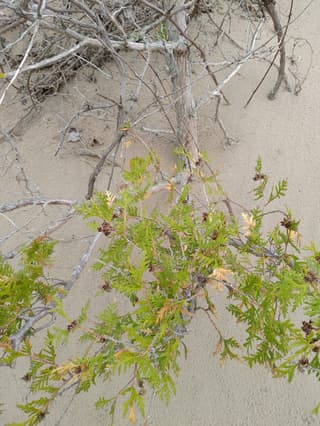
Eastern Arborvitae
Thuja occidentalis
Thuja occidentalis, commonly known as Eastern Arborvitae or Northern White Cedar, is an evergreen conifer native to eastern North America. It grows in a dense pyramidal form, reaching up to 18 meters in the wild. Scale-like foliage releases a characteristic aromatic scent when crushed. WARNING: foliage and essential oil contain thujone, a toxic compound if ingested by humans, cats, or dogs.
Find the Perfect Plant
Our plant guide helps you find ideal species for your experience level and time of year.
Browse by Difficulty, Season & More
Use the filters below to narrow this catalog by care difficulty, season, environment, or search directly by name. Each filter leads to a focused list tailored to your specific growing conditions.