Complete Plant Guide
Explore plants by difficulty, season and more. Find the perfect plant for you.
Difficulty
Categories
Plants by City
🗺️ Plants by City3657 plants found
Showing 3313-3348 of 3657
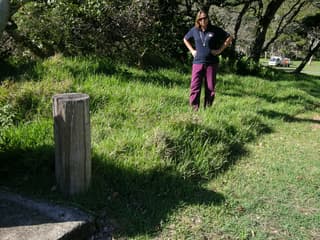
St. Augustine Grass
Stenotaphrum secundatum
St. Augustine Grass (Stenotaphrum secundatum) is a fast-growing warm-season turfgrass native to the Gulf of Mexico region, widely used for residential and commercial lawns in tropical and subtropical climates. It forms a dense, vigorous carpet with good tolerance to partial shade and coastal salt exposure.
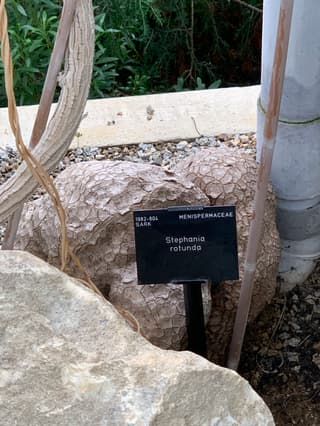
Elephant Foot Plant
Stephania
Stephania is a genus of caudiciform vines in the Menispermaceae family, native to the tropical forests of Southeast and East Asia. It is prized by collectors for its swollen, potato-like caudex, a woody, water-storing tuber that can grow to nearly a foot across over many decades. Each growing season, slender, twining vines emerge from the caudex, unfurling round, peltate leaves before dying back into dormancy when temperatures drop. Left largely untouched during its winter rest, the plant channels its energy into slowly thickening the caudex, making it as much a sculptural centerpiece as a houseplant.
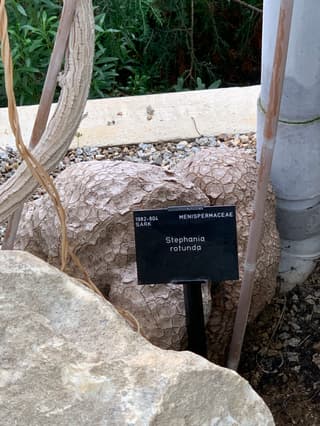
Stephania Erecta
Stephania erecta
Stephania erecta is a fascinating tropical plant native to Thailand and Southeast Asia, prized for its unique potato-shaped woody caudex (bulb) from which elegant, slender stems and peltate (shield-shaped) leaves emerge. The plant goes through a natural dormancy cycle, dropping its leaves in winter and re-sprouting vigorously in spring, making it a captivating conversation piece for any plant collector.
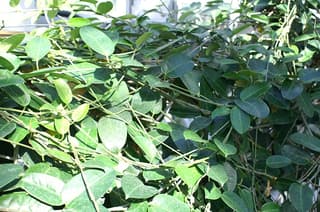
Madagascar Jasmine
Stephanotis floribunda
Stephanotis floribunda (Madagascar jasmine) is an evergreen climbing plant in the Apocynaceae family, native to the tropical rainforests of Madagascar. It is characterized by star-shaped, snow-white, waxy flowers with an intense, sweet fragrance that appear in spring and summer. The plant's strong vines can climb 4–6 meters with the help of a support structure. It gained worldwide fame as a bridal flower—Grace Kelly even decorated her wedding bouquet with it. Indoor cultivation is challenging: it is sensitive to temperature fluctuations, direct sunlight, and watering errors.
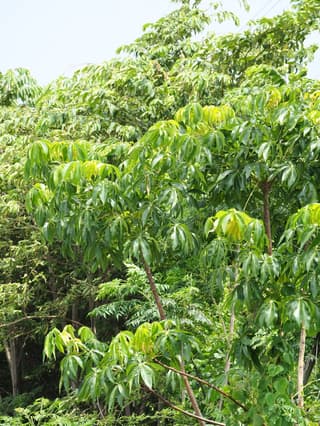
Tropical Chestnut
Sterculia
Sterculia is a genus of tropical and subtropical trees in the family Malvaceae, comprising over 150 species found across Africa, Asia, and Australia. Notable species include Sterculia foetida (Java Olive) and S. quadrifida, prized for their timber, medicinal properties, and ornamental value. Some species bear edible seeds and have been used in traditional medicine for centuries.
Crust fungi
Stereum
Stereum, commonly known as crust fungi, is a genus of wood-decay fungi that form flat or shelf-like fruiting bodies on deadwood. They are characterized by their smooth underside, lacking pores or gills. These fungi play a crucial role in forest ecosystems by breaking down lignin and returning nutrients to the soil. Visually, they often feature striking concentric zones in shades of brown, orange, or gray.

Winter Daffodil
Sternbergia lutea
Sternbergia lutea is a small Mediterranean bulbous plant in the Amaryllidaceae family, cultivated for its bright yellow cup-shaped flowers that bloom in autumn, surrounded by dark green strap-like leaves. Hardy and low-maintenance, it naturalizes over time in rock gardens and sunny, well-drained borders.
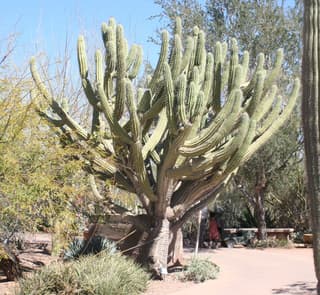
Argentine Toothpick Cactus
Stetsonia coryne
Stetsonia coryne is a large, tree-like columnar cactus native to the high-altitude arid regions of northwestern Argentina, Bolivia, Paraguay, and Brazil. In habitat it develops a thick trunk topped by many blue-green, eight- to nine-ribbed branches armed with stiff black or yellowish-brown spines that fade to white with age -- the source of its common name. Large, funnel-shaped white flowers open at night on mature plants, followed by fleshy, edible fruit.

Stevia
Stevia rebaudiana
Stevia (Stevia rebaudiana) is a perennial subtropical herb from the Asteraceae family, native to Paraguay and Brazil. It grows to a height of approximately 60 cm, has small ovate to elliptical leaves with a finely serrated edge, and in summer produces small white tubular flowers in racemose inflorescences. The leaves contain steviol glycosides – a natural sweetener up to 300 times sweeter than sugar, which is why the plant is cultivated worldwide as a sugar alternative.

European feather grass
Stipa pennata
European feather grass (Stipa pennata) is a characteristic clump-forming perennial grass of the Eurasian steppes, native from Mongolia to the Hungarian Great Plain and the sandy, loess steppes of the Carpathian Basin. Growing 60-90 cm tall, it produces narrow, slender leaves and, between May and August, releases the long, silvery-silky, feathery awns that made the species famous, waving characteristically in the wind. It is an increasingly rare species in Hungary, tied to protected habitats, and has been a symbol of the Hungarian puszta since the national romantic era of poets Sándor Petőfi and Mihály Tompa.

Mexican feather grass
Stipa tenuissima
Stipa tenuissima, commonly known as Mexican feather grass, is a perennial ornamental grass forming dense, rounded tufts of fine, bright green thread-like leaves. In summer, it produces long, feathery panicles that transition from silvery-green to cream and then to golden blond, swaying with the slightest breeze. Hardy in USDA zones 7 to 10, this grass reaches 12 to 24 inches in height and width, and is particularly valued for xeriscaping, rock gardens, and naturalist-style borders.
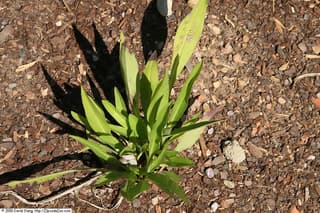
Stokes' Aster
Stokesia laevis
Stokesia laevis, commonly known as Stokes' Aster, is a herbaceous perennial native to the wetlands, bottomlands, and pine savannas of the southeastern United States. It produces showy, cornflower-like blooms in shades of lavender-blue, purple, white, and pink, making it a beloved addition to native and cottage gardens. Despite its origins in moist habitats, it adapts remarkably well to average garden conditions and is notably drought-tolerant once established.
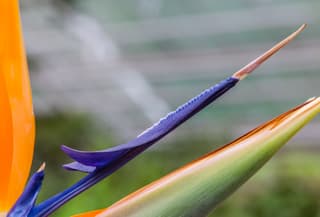
Bird of Paradise
Strelitzia
Strelitzia is a genus of striking tropical plants native to South Africa, celebrated for their dramatic paddle-shaped leaves and exotic flowers. The genus includes the popular Strelitzia reginae (orange Bird of Paradise) and Strelitzia nicolai (white Bird of Paradise), both widely grown as bold indoor statement plants.
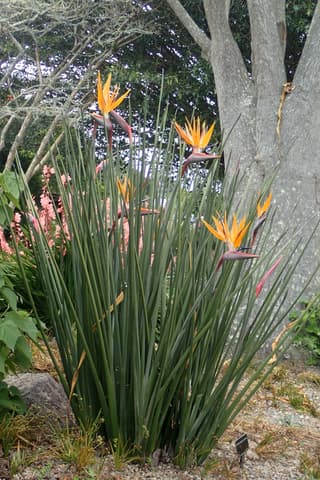
Narrow-Leaved Bird of Paradise
Strelitzia juncea
Strelitzia juncea is a striking South African native prized for its dramatic, rush-like cylindrical stems that replace traditional broad leaves. Unlike its famous relative Strelitzia reginae, this species produces upright, reed-like foliage giving it an architectural, minimalist appearance. It produces the iconic orange and yellow bird-of-paradise flowers, attracting sunbirds in its natural habitat in the Eastern Cape.
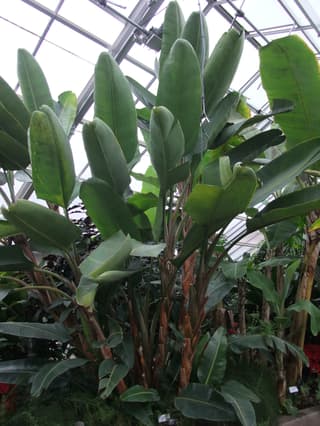
Giant White Bird of Paradise
Strelitzia nicolai
Strelitzia nicolai is a striking evergreen plant native to South Africa, known for its large banana-like leaves and dramatic white and blue flowers. It can grow up to 9 meters tall outdoors but remains more manageable indoors, making it a popular choice for creating tropical ambiance in homes and offices.
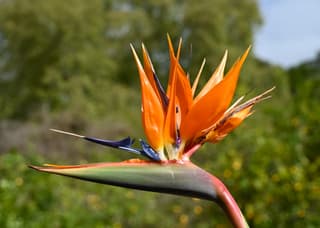
Bird of Paradise
Strelitzia reginae
Strelitzia reginae, commonly known as Bird of Paradise or Crane Flower, is a striking tropical plant native to South Africa. Famous for its spectacular orange and blue flowers that resemble an exotic bird in flight, it has become the official flower of the City of Los Angeles. This evergreen perennial forms clumps of banana-like grey-green leaves and produces long-lasting cut flowers that can survive up to 2 weeks in a vase.

Cape Primrose
Streptocarpus
Streptocarpus, also known as Cape Primrose, is a genus of ornamental plants native to South Africa, belonging to the Gesneriaceae family. Highly valued as an indoor plant, it produces vibrant tubular flowers in shades of purple, lilac, white, pink, red, and blue for much of the year. Its long, velvety, and slightly wrinkled leaves form an elegant rosette. It is an easy-to-grow and very rewarding plant for those seeking prolonged flowering in indoor environments.
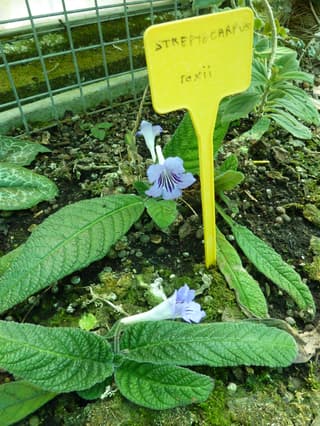
Cape Primrose
Streptocarpus rexii
Streptocarpus rexii, commonly known as Cape Primrose, is a stunning stemless herb native to the rocky coastal forests and stream banks of South Africa. It produces rosettes of long, strap-shaped leaves and bears delicate trumpet-shaped flowers in shades of white, blue, lilac, and violet from spring through autumn. It thrives as a houseplant in bright indirect light.
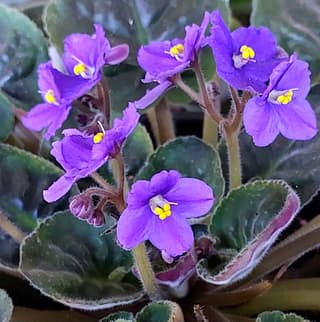
African violet
Streptocarpus sect. Saintpaulia
African violet (Streptocarpus sect. Saintpaulia, formerly genus Saintpaulia) is a compact, rosette-forming perennial from the Gesneriaceae family, native to the Eastern Arc Mountains and coastal forests of Tanzania and Kenya. Prized for its fuzzy, deep-green leaves and near-continuous clusters of purple, pink, blue, or white flowers, it is one of the most popular flowering houseplants worldwide.
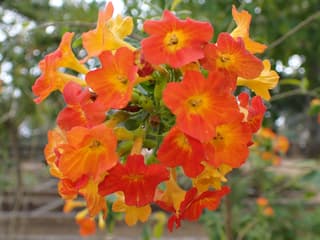
Marmalade bush
Streptosolen jamesonii
The marmalade bush (Streptosolen jamesonii) is an ornamental perennial, semi-woody, and scrambling shrub native to the Andean regions of Colombia, Ecuador, Peru, and Bolivia in South America. Belonging to the Solanaceae family, it can reach 1.5 to 2 meters in height, featuring long, flexible, and arching branches. Its leaves are ovate to elliptical, dark green, glossy, and deeply veined. The trumpet-shaped flowers bloom in clusters and change color as they mature—starting yellow and evolving into shades of orange and red—an effect reminiscent of orange marmalade, which gives the plant its popular name. It flowers intensely during spring and summer, attracting hummingbirds, bees, and butterflies to the garden.
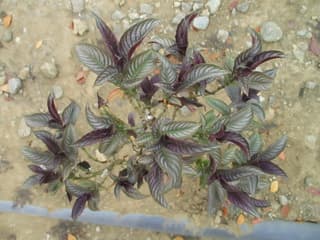
Persian shield
Strobilanthes dyeriana
Strobilanthes dyeriana, commonly known as Persian Shield, is a stunning tropical evergreen subshrub native to Myanmar. It is highly prized for its lance-shaped leaves that feature a brilliant iridescent purple sheen with silver highlights and dark green veins. The underside of the foliage is a deep maroon. While it can produce small violet flowers in winter, it is primarily grown for its spectacular foliage which adds a dramatic touch to any plant collection.
Old-man-of-the-woods
Strobilomyces strobilaceus
Strobilomyces strobilaceus, commonly known as Old-man-of-the-woods, is a distinctive mycorrhizal fungus found in deciduous forests. It is easily recognized by its cap, which is covered in large, dark, woolly scales resembling a pine cone. The flesh stains pinkish then black when cut, and the underside features a greyish pore surface rather than gills.
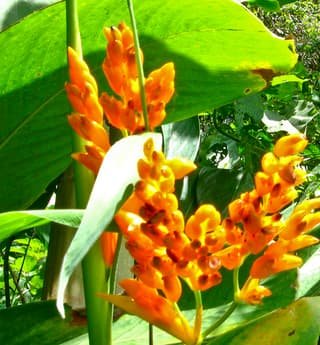
Stromanthe
Stromanthe
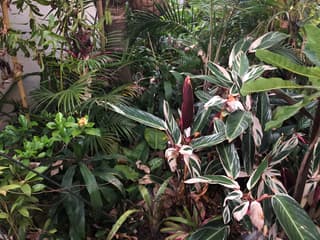
Stromanthe is a genus of approximately 13 tropical plant species in the family Marantaceae, native to the rainforests of South America, particularly Brazil. Celebrated for their stunning variegated foliage in shades of green, white, pink, and red, they are among the most visually spectacular houseplants available. The most famous species is Stromanthe sanguinea 'Triostar', whose tricolored leaves make it a standout specimen. Like other prayer plants, Stromanthe leaves move throughout the day in response to light.
Tricolor Stromanthe
Stromanthe sanguinea
Stromanthe sanguinea, commonly known as the Tricolor Stromanthe or Triostar, is a stunning tropical plant native to the rainforests of Brazil. Its long, lance-shaped leaves display a breathtaking palette of dark green, pink, cream, and deep burgundy on the undersides, making it one of the most visually striking houseplants available. A member of the Marantaceae family and relative of Calathea and Maranta, this species exhibits nyctinastic leaf movements — folding its leaves upward at dusk in response to changing light conditions.
Tricolor Stromanthe
Stromanthe thalia
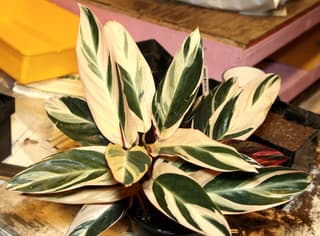
Tricolor Stromanthe (Stromanthe thalia) is a stunning Brazilian tropical plant from the Marantaceae family, celebrated for its spectacular tricolor foliage in shades of green, pink, and cream with deep magenta-purple undersides. As a prayer plant, its leaves fold upward at dusk and reopen at dawn. It thrives indoors with bright indirect light and high humidity.
Cape Sprays
Struthiola
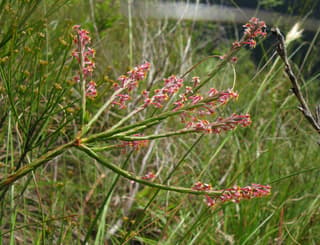
Struthiola is a genus of approximately 31 species of ericoid shrubs in the family Thymelaeaceae, native to the fynbos biome of South Africa's Cape Floral Region. These evergreen shrublets are renowned for their sweetly scented tubular flowers at dusk and their remarkable drought tolerance in sandy, well-drained soils.
Japanese Pagoda Tree
Styphnolobium japonicum
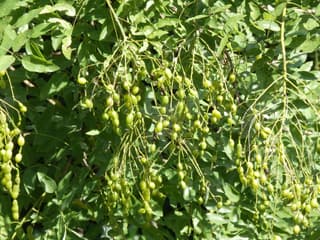
The Japanese Pagoda Tree (Styphnolobium japonicum), formerly known as Sophora japonica, is a large deciduous tree native to China and widely cultivated across East Asia. Belonging to the Fabaceae family, it can reach up to 25 meters in height and is highly valued for its generous shade and fragrant creamy-white flowers produced in summer. It is a hardy tree, adaptable to poor soils and urban pollution, frequently used in parks, avenues, and historic gardens.
Larch bolete
Suillus grevillei
The larch bolete is an edible and highly flavorful mushroom from the Suillaceae family. It is characterized by its bright yellow to orange cap, which becomes very slimy when wet. It grows exclusively in symbiosis (mycorrhiza) with larch trees, making it a species that cannot be commonly cultivated at home without the presence of a host tree. It features a yellow stem with a ring and pores that are covered by a veil when young.
Velvet bolete
Suillus variegatus
Suillus variegatus, known as the velvet bolete or variegated bolete, is an edible mushroom from the Suillaceae family. It is characterized by a sandy-yellow or olive cap with a granular, felt-like surface that, unlike other Suillus species, is not slimy. It forms a mycorrhizal relationship primarily with pine trees, preferring sandy and acidic soils.
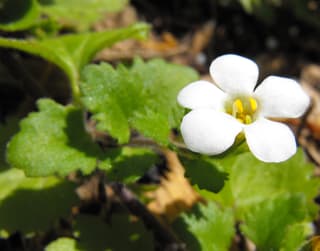
Bacopa
Sutera cordata
Sutera cordata (syn. Chaenostoma cordatum) is a fast-growing ornamental plant from the Scrophulariaceae family, native to South African wetlands. It is characterized by small, dark green, opposite leaves with slightly serrated edges and tiny white star-shaped flowers with yellow-orange centers. It is ideal for hanging baskets, containers, and as a groundcover due to its trailing growth habit. It is known for its rapid growth and profuse blooming throughout summer and fall.
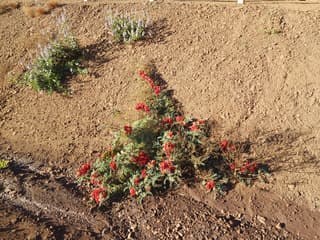
Sturt's Desert Pea
Swainsona formosa
Sturt's Desert Pea is one of Australia's most striking wildflowers, a low, sprawling groundcover native to the arid interior of every mainland state except Victoria. Its trailing stems of soft grey-green, pinnate leaves are studded with large, waxy blood-red blooms, each marked with a glossy black boss at the base of the standard petal. Adopted as the official floral emblem of South Australia in 1961, it thrives in harsh, sun-baked, well-drained conditions and is famously difficult to keep alive in humid or overly generous garden settings.

Queen Palm
Syagrus romanzoffiana
The Queen Palm (Syagrus romanzoffiana) is a stately feather palm native to Brazil and South America, belonging to the family Arecaceae. Prized for its graceful arching fronds and slender trunk, it is one of the most popular landscape palms in subtropical and tropical regions worldwide. It can reach heights of 10-15 meters and produces clusters of bright orange fruits that attract wildlife.
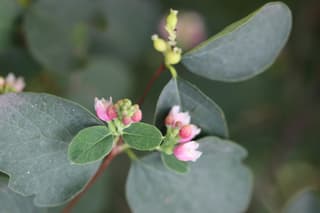
Common Snowberry
Symphoricarpos albus
Common snowberry (Symphoricarpos albus) is a deciduous shrub in the honeysuckle family (Caprifoliaceae), native to North America. It is known for its characteristic snow-white berries that cling to the branches long into the winter season after the leaves have fallen. The shrub grows up to 6 feet (180 cm) tall and wide, forming dense thickets through root suckers, and is extremely hardy down to -40 °F (-40 °C). The flowers are small, bell-shaped, and whitish-pink, blooming in the summer. Snowberry is an excellent garden and wildlife plant that attracts birds, bumblebees, and butterflies.
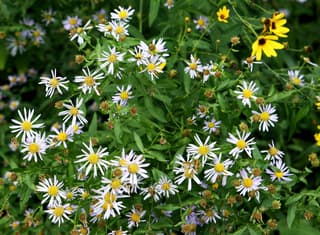
White Panicle Aster
Symphyotrichum lanceolatum
Symphyotrichum lanceolatum, commonly known as White Panicle Aster, is a native North American perennial wildflower in the Asteraceae family. Formerly classified as Aster lanceolatus, it produces masses of small daisy-like white flowers with yellow disc centers from mid-summer through fall, reaching up to 1.5 meters tall. A vital late-season pollinator plant, it thrives in moist, sunny conditions and spreads via rhizomes.

New York Aster
Symphyotrichum novi-belgii
Symphyotrichum novi-belgii, commonly called the New York aster or Michaelmas daisy, is a hardy herbaceous perennial native to eastern Canada and the northeastern United States, often found in wet meadows and abandoned fields near the coast. Valued for its abundant daisy-like flower heads in shades of purple, pink, and white surrounding bright yellow centers, it blooms from late summer through fall, often peaking around Michaelmas (September 29). Growing 3-5 feet (90-150cm) tall, it thrives in sunny garden borders and wildlife gardens, attracting bees, butterflies -- including Pearl Crescents, for which it is a host plant -- and seed-eating songbirds.
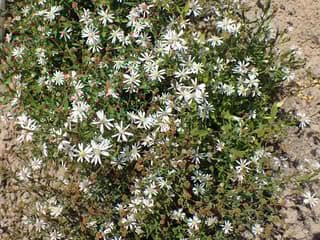
Shore Aster
Symphyotrichum tradescantii
Symphyotrichum tradescantii, commonly known as Shore Aster or Tradescant's Aster, is a native perennial wildflower of northeastern North America. This deciduous herbaceous plant produces an abundance of small, daisy-like flowers with white ray florets and pale yellow to purple disk florets in late summer and fall. It grows naturally along rocky shores, riverbanks, and freshwater estuaries, thriving in full sun to partial shade and moist soils. An excellent choice for naturalistic gardens, rain gardens, and native plant landscapes.
Find the Perfect Plant
Our plant guide helps you find ideal species for your experience level and time of year.
Browse by Difficulty, Season & More
Use the filters below to narrow this catalog by care difficulty, season, environment, or search directly by name. Each filter leads to a focused list tailored to your specific growing conditions.