Complete Plant Guide
Explore plants by difficulty, season and more. Find the perfect plant for you.
Difficulty
Categories
Plants by City
🗺️ Plants by City3721 plants found
Showing 289-324 of 3721
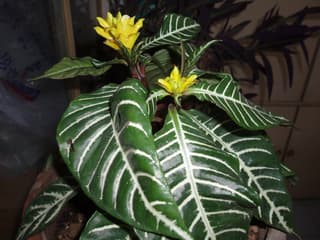
Zebra Plant
Aphelandra squarrosa
The Zebra Plant (Aphelandra squarrosa) is a tropical evergreen native to the Atlantic Forest of Brazil, belonging to the Acanthaceae family. It is prized for its dark green leaves with striking white veins resembling zebra stripes. It produces golden-yellow flower bracts shaped like spikes that last about six weeks, typically blooming in late summer to early fall.
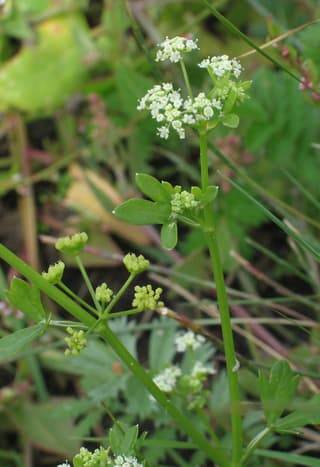
Celery
Apium graveolens
Celery (Apium graveolens) is a biennial plant in the Apiaceae family, cultivated for over 3,000 years as both a food crop and medicinal herb. Native to temperate regions of Europe, Asia, and North Africa, it is widely grown in vegetable gardens for its crisp stalks, aromatic leaves, and flavorful seeds.

Apoballis
Apoballis acuminatissima
Apoballis acuminatissima is a striking tropical perennial native to the rainforests of Sumatra. It is highly prized for its ornamental foliage, which features elongated, lance-shaped leaves decorated with intricate silver-green mottling and patterns. As an understory plant, it has adapted to lower light conditions but requires high humidity to maintain its lush appearance. It was formerly classified under the genus Schismatoglottis.
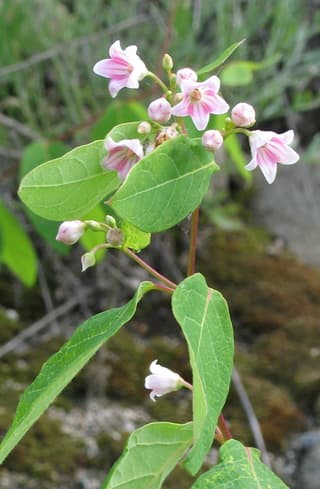
Spreading Dogbane
Apocynum androsaemifolium
Spreading dogbane (Apocynum androsaemifolium) is a bushy, rhizomatous perennial native to a huge swath of North America, from Canada across most of the United States into northeastern Mexico. Widely branching stems bear opposite, oval leaves and exude a bitter, milky sap when broken. From June to August it produces small, fragrant, nodding, bell-shaped pink flowers striped with deeper pink inside, clustered near the branch tips, followed by narrow paired seed pods filled with silky-haired seeds. All parts of the plant are toxic, containing cardiac glycosides that deter browsing animals and most insect pests.
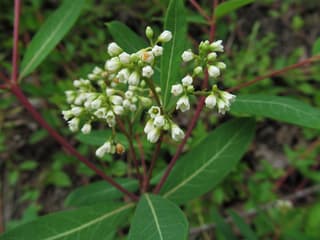
Indian Hemp
Apocynum cannabinum
Apocynum cannabinum, commonly known as Indian Hemp or Hemp Dogbane, is a native North American perennial herb in the Apocynaceae family. Despite its common name, it is not related to Cannabis — the name derives from the historical use of its strong bast fibers as cordage by Native Americans. The plant produces clusters of small white bell-shaped flowers in summer and spreads aggressively via rhizomes. CRITICAL WARNING: All parts of this plant contain potent cardiac glycosides that can cause fatal cardiac arrhythmias. It is highly toxic to humans, dogs, cats, horses, and livestock.
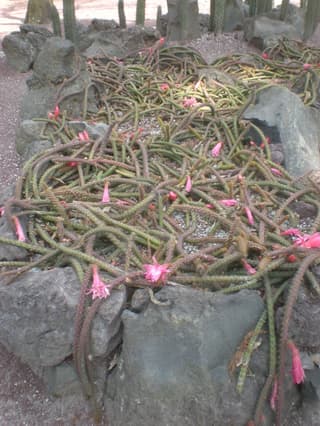
Rat Tail Cactus
Aporocactus flagelliformis
Aporocactus flagelliformis, commonly known as the rat tail cactus, is an epiphytic succulent native to Mexico (Hidalgo, Puebla, and Veracruz states). Its long, cylindrical, trailing stems, covered in fine brown spines, can reach up to 150 cm in length, making it ideal for hanging baskets. In spring, it produces vibrant tubular flowers in shades of pink, red, and crimson, which last only a few days but are exceptionally beautiful.
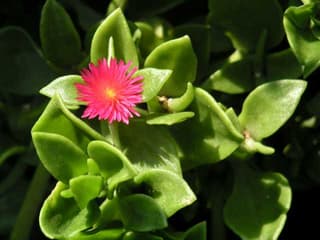
Baby Sun Rose
Aptenia cordifolia
Aptenia cordifolia, commonly known as Baby Sun Rose or Heartleaf Ice Plant, is a fast-growing succulent ground cover native to the Eastern Cape and KwaZulu-Natal regions of South Africa. It belongs to the Aizoaceae family and forms dense, low-lying mats of glossy, heart-shaped leaves that can spread up to 60 cm wide. Despite its succulent nature, it produces an abundance of vivid pink to magenta daisy-like flowers from spring through fall, making it a beloved ornamental plant worldwide. It is also edible, with leaves that have a flavor reminiscent of spinach.
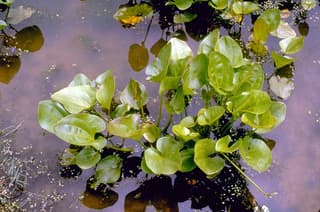
Radican Sword
Aquarius cordifolius
The Radican Sword (Aquarius cordifolius, formerly classified as Echinodorus cordifolius) is a perennial aquatic/marsh plant from the Alismataceae family, native to swamps, marshes, and muddy banks of the southeastern United States, Mexico, Central America, and northern South America. Its heart-shaped (cordate) leaves, bright green and marked by clearly visible translucent veins, can be kept fully submerged in an aquarium or grown out of the water in a paludarium/emerged setup, where the plant becomes considerably larger and more robust, potentially exceeding 3 feet (1 meter) in height. It is a highly versatile amphibious species: under strong light and long photoperiods, it produces arched flower stalks with white flowers and forms adventitious plantlets along these stalks, which root and give rise to new specimens.
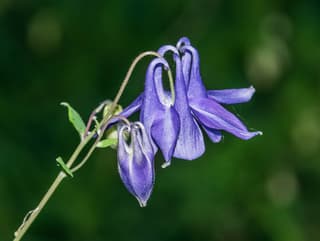
Columbine
Aquilegia
Columbine (Aquilegia) is a genus of roughly 60-70 species of hardy herbaceous perennials in the buttercup family, prized for their distinctive spurred, bell-shaped flowers held above delicate, lobed blue-green foliage. Native across the Northern Hemisphere, columbines self-seed readily and bring pollinators like hummingbirds and bees to spring and early-summer borders.
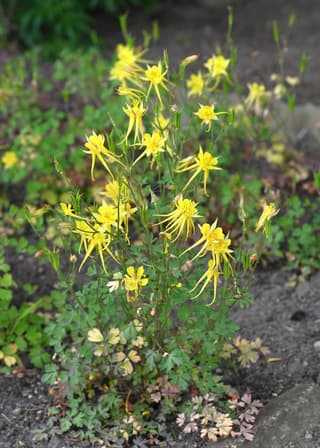
golden columbine
Aquilegia chrysantha
Aquilegia chrysantha, commonly known as the golden columbine, is a herbaceous perennial native to the Southwestern United States and Northern Mexico. It is celebrated for its large, canary-yellow flowers that feature exceptionally long, outward-curving spurs. The plant produces delicate, fern-like, blue-green foliage that remains attractive throughout the growing season. It is a favorite for pollinators, particularly hummingbirds and hawkmoths, which are attracted to its nectar-rich blooms.
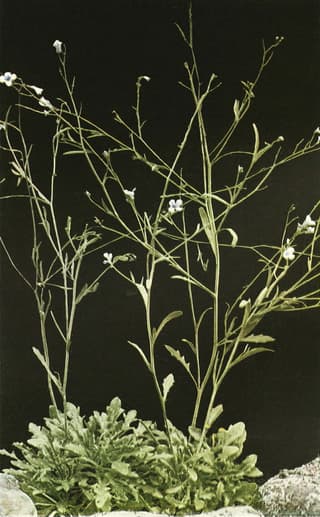
Lyreleaf Rockcress
Arabidopsis lyrata
Arabidopsis lyrata, commonly known as Lyreleaf Rockcress, is a hardy perennial herb native to the Northern Hemisphere. It is characterized by a basal rosette of lyre-shaped leaves and produces delicate, four-petaled white flowers on slender stems. It is frequently found in rocky outcrops and sandy environments, making it a popular choice for rock gardens and as a model organism in botanical research.
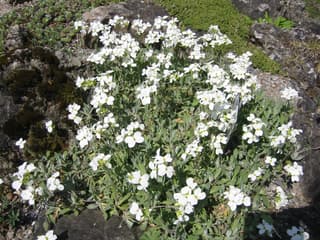
Garden Arabis
Arabis caucasica
Arabis caucasica (Garden Arabis) is an evergreen mat-forming perennial native to southeastern Europe, the Caucasus, and Iran. Its silver-grey, softly hairy leaves form low spreading mats, smothered each spring in fragrant white or pale pink flowers. Ideal for rock gardens, dry stone walls, slopes, and border edges.
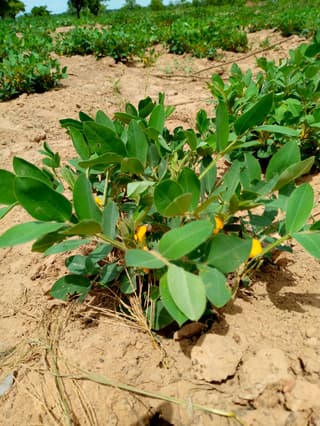
Peanut
Arachis hypogaea
Peanut (Arachis hypogaea) is an annual legume native to South America, cultivated worldwide for its protein- and fat-rich edible seeds. One of its most remarkable traits is geocarpy: after pollination, the flower stalks bend downward and burrow into the soil, where the pods develop underground. The plant also fixes atmospheric nitrogen through symbiotic root bacteria, making it a natural soil enricher.
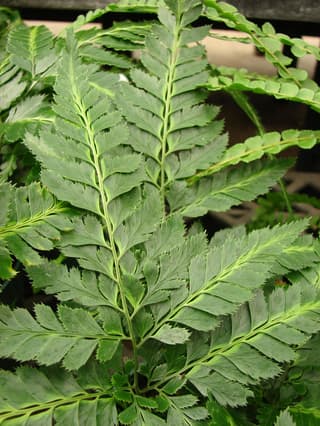
East Indian holly fern
Arachniodes simplicior
Arachniodes simplicior, commonly known as the East Indian holly fern or variegated shield fern, is a perennial fern native to China, Japan, Korea, and Vietnam. Its leathery, glossy fronds of deep dark green feature a striking yellowish-green or lime central stripe, giving it an almost waxy appearance that adds an exotic touch to shaded indoor and outdoor spaces. It forms compact, slow-growing clumps that rarely exceed 24 inches in height.
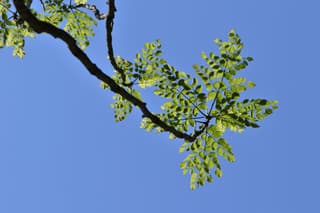
Japanese Angelica Tree
Aralia elata
Aralia elata is a large deciduous shrub or small tree, native to East Asia (Japan, Korea, China, and the Russian Far East). Its stems are spiny, usually sparsely branched, crowned by an umbrella-shaped canopy of huge bipinnately compound leaves, which can reach 1 meter in length. In late summer, it produces large terminal panicles of small white to cream flowers, highly sought after by bees, followed by clusters of black globose fruits appreciated by birds. In autumn, the foliage turns shades of yellow to reddish-purple. It is cultivated both as a prominent ornamental plant in gardens and for harvesting its young spring shoots, a traditional food in Japan and Korea.
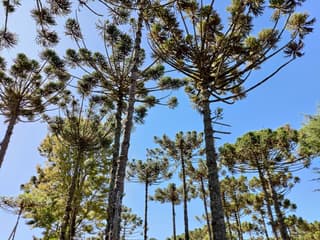
Parana Pine
Araucaria angustifolia
The Parana Pine (Araucaria angustifolia) is a majestic conifer native to the Atlantic Forest of southern Brazil, recognized for its distinctive candelabra-shaped crown and whorled branches. Listed as Critically Endangered by the IUCN due to extensive logging and deforestation, it can live for hundreds of years and grow up to 50 meters tall in the wild. Its seeds, known as pinhão, are a vital food source for wildlife and indigenous communities in southern Brazil.

Monkey Puzzle Tree
Araucaria araucana
Araucaria araucana, widely known as the monkey puzzle tree, is a large, slow-growing conifer native to the Andean forests of Chile and Argentina. It is a sacred tree for the Mapuche-Pehuenche people, whose traditional diet includes its edible seeds (piñones). With its striking spiral of sharp, triangular leaves, this ancient conifer can live for centuries and reach great heights in the wild.
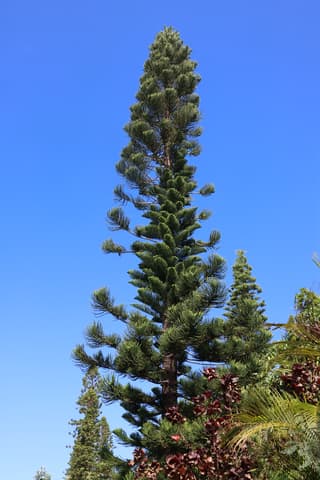
Cook Pine
Araucaria columnaris
The Cook Pine (Araucaria columnaris) is a majestic conifer native to New Caledonia, renowned for its distinctive columnar silhouette and a fascinating biological quirk: its trunk tilts toward the equator, regardless of which hemisphere it grows in. A slow-growing tree that can reach 60 meters in the wild, it typically stays 15-20 meters in cultivation. Widely used as an ornamental tree in coastal and subtropical gardens.
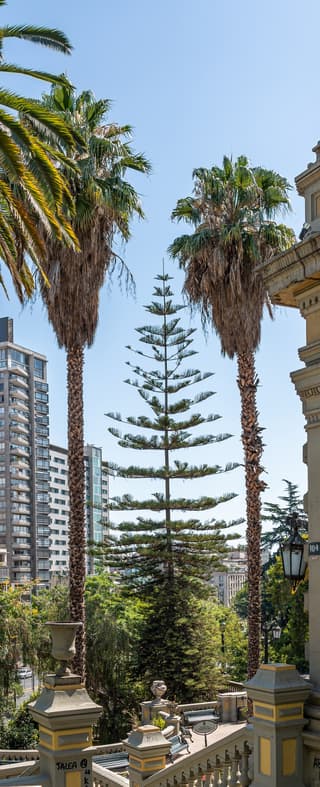
Norfolk Island Pine
Araucaria heterophylla
The Norfolk Island Pine (Araucaria heterophylla) is a slow-growing evergreen conifer endemic to Norfolk Island in the South Pacific. Renowned for its symmetrical, tiered horizontal branches and star-like silhouette, it is widely cultivated as an ornamental houseplant and outdoor landscape tree. In its native habitat it can reach over 60 meters tall, but indoors typically stays under 2 meters.
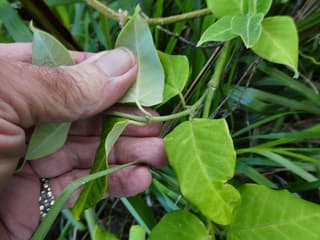
Cruel Vine
Araujia sericifera
Araujia sericifera, commonly known as Cruel Vine or Moth Plant, is an invasive climbing vine native to South America (Brazil, Argentina, Paraguay). It produces fragrant white to pale pink waxy flowers in summer and fall that trap moths overnight — hence its common name. The milky latex sap is a skin and eye irritant. It is classified as invasive in Australia, New Zealand, California, and Portugal.
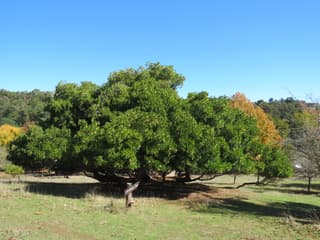
Strawberry Tree
Arbutus unedo
The strawberry tree (Arbutus unedo) is an evergreen shrub or small tree in the Ericaceae family, native to the Mediterranean region and western Europe. It is known for its white urn-shaped flowers and red strawberry-like fruit, which ripen in autumn and winter alongside the new flowering.

Bangalow Palm
Archontophoenix cunninghamiana
The Bangalow Palm (Archontophoenix cunninghamiana) is a majestic palm native to the subtropical rainforests of eastern Australia. It features a slender, elegant trunk that can reach up to 20 meters in height, topped by a crown of graceful arching fronds up to 3 meters long. Widely used in tropical and subtropical landscaping, it is prized for its fast growth, ornamental value, and adaptability.
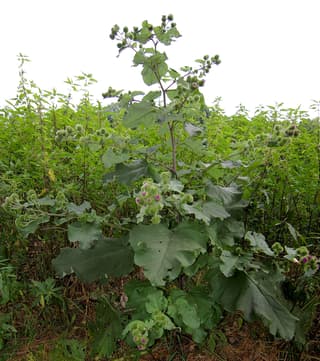
Burdock
Arctium lappa
Arctium lappa, commonly known as Burdock or Gobo, is a robust biennial herbaceous plant native to Europe and Asia. It grows up to 2 meters tall, producing large heart-shaped leaves and distinctive purple flower heads surrounded by hooked bracts that cling to clothing and animal fur — inspiring the invention of Velcro. Both the root and leaves have been valued for centuries in traditional medicine and Asian cuisine.
Wood Burdock
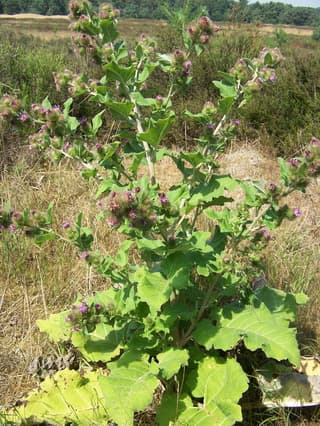
Arctium nemorosum
Arctium nemorosum, known as wood burdock, is a robust biennial herb in the daisy family (Asteraceae), native to woodlands and shaded, disturbed ground across Europe and into the Caucasus, generally on calcium-rich soils. In its first year it forms a low rosette of large, downy, heart-shaped leaves; in its second year it sends up a tall flowering stem, often over 2 metres high, topped with clusters of thistle-like purple-pink flowerheads from midsummer into autumn. The flowerheads ripen into the familiar hooked burrs that catch on fur and clothing to disperse seed.
Bearberry
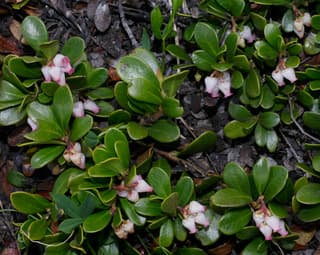
Arctostaphylos uva-ursi
Bearberry (Arctostaphylos uva-ursi) is an evergreen, mat-forming groundcover shrub belonging to the Ericaceae family. Native to circumpolar regions and temperate mountains across the Northern Hemisphere, it forms a dense carpet of creeping woody stems with leathery, glossy leaves that turn bronze in the fall. In spring, it is covered with delicate pale pink to white bell-shaped flowers, followed in autumn by bright red berries that are highly favored by bears and birds. A very hardy plant, it tolerates extreme cold down to -20°C (-4°F) and thrives in poor, dry soils.
Silver Arctotis
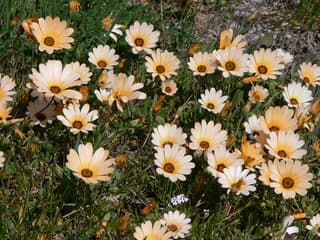
Arctotis stoechadifolia
The Silver Arctotis (Arctotis stoechadifolia) is a sprawling perennial plant native to the coastal dunes and sandy plains of the Western Cape in South Africa, specifically the area between Langebaan and the Cape Peninsula. Its woody-based, spreading stems can cover the ground up to 1.2 meters wide, while the flowering shoots rise only 30-35 cm high. Its narrow, lance-shaped, slightly toothed leaves are covered in white-woolly, silvery hairs that protect the plant from wind and salty sea air. Its large, simple, daisy-like flowers are creamy white with a reddish-maroon tint underneath, and their centers are a striking dark blue-black. The flowers open during the day and close at dusk.
Coralberry
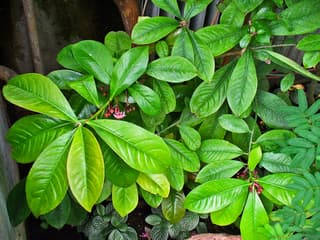
Ardisia
Ardisia is a genus of evergreen shrubs prized for their glossy, leathery foliage and clusters of red or coral berries that persist through winter. Slow-growing and long-lived, these plants make excellent houseplants as well as shade-garden shrubs in warmer climates, offering a striking contrast between delicate white or pink blooms and their showy fruit.
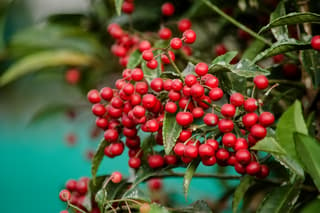
Coral Berry
Ardisia crenata
An evergreen shrub native to East Asia (China, Japan, Taiwan), Ardisia crenata is primarily cultivated for its striking coral-red berries, which remain decorative on the plant for several months, often through the winter. The leaves are glossy, leathery, and have wavy-crenate margins; in summer, small white or pink star-shaped flowers appear in drooping clusters, followed by the characteristic berries. It is widely popular as a Christmas gift in Europe, but caution is advised: all parts of the plant, particularly the berries, are toxic if ingested by humans or pets and can cause gastrointestinal distress.
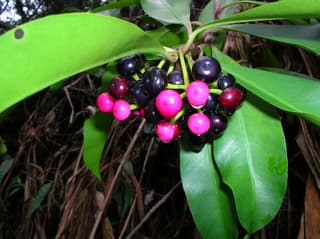
Shoebutton ardisia
Ardisia elliptica
Tropical evergreen shrub native to the western coast of India, Sri Lanka, Indochina, Malaysia, Indonesia, and New Guinea. Grows 1.5–3 meters indoors with glossy, dark-green coriaceous foliage. Produces small pale-pink to white flowers in spring in compact clusters. Flowers are followed by distinctive drupes (5–9mm across) that progress from green to brilliant red when immature, eventually turning deep purple-black at maturity, persisting on the plant for months. Highly invasive in many tropical regions including Florida and Hawaii due to rapid seed multiplication via bird dispersal. Listed as a noxious weed in several jurisdictions.
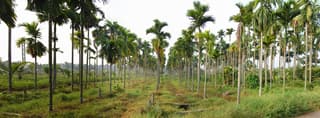
Betel Nut Palm
Areca catechu
The Betel Nut Palm (Areca catechu) is a slender tropical palm native to Southeast Asia, widely cultivated for its fruit, the areca nut. It can reach up to 20 meters tall with a graceful trunk and arching deep-green fronds. It is one of the most widely cultivated palms in the world, holding immense cultural and economic significance across tropical Asia.

Mountain Sandwort
Arenaria montana
Mountain Sandwort is a low-growing, evergreen perennial cushion-forming shrub from the carnation family (Caryophyllaceae), originating from the mountainous regions of southwestern Europe and northwestern Africa – from the Pyrenees across Portugal to northern Morocco. It forms dense clumps with narrow, lance-shaped, grey-green leaves that are completely covered by a profusion of tiny white flowers from spring to summer. In nature, it grows on rocky slopes, heathlands, and forest edges at altitudes of 400–1850 m, which explains its requirement for permeable, poor soil and excellent drainage. Due to its low maintenance and long flowering period, it is popular as a groundcover plant for rock gardens, gravel beds, and cracks between paving stones.
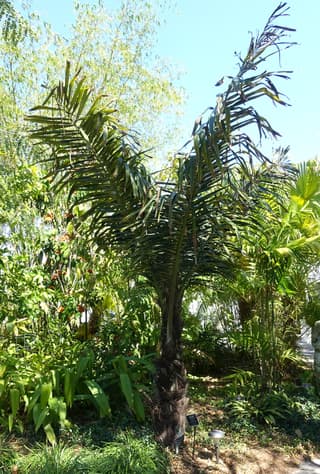
Sugar Palm
Arenga pinnata
The Sugar Palm (Arenga pinnata) is a majestic tropical palm native to Southeast Asia, particularly Malaysia and Indonesia. Its pinnate fronds can reach up to 8.5 meters long, making it one of the most dramatic palms in tropical horticulture. A hapaxanthic species, it flowers once over several years then dies. Beyond its ornamental value, it is one of the most economically important palms in the world, yielding sugar, wine, fiber, starch, and edible fruits.
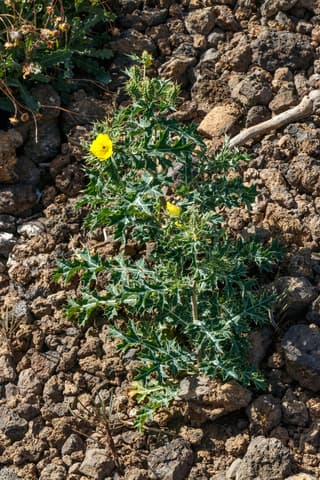
Mexican prickly poppy
Argemone mexicana
Argemone mexicana, commonly known as the Mexican prickly poppy or cardosanto, is an annual (sometimes biennial) herb in the Papaveraceae family. Native to Mexico, it is now widely naturalized in tropical and subtropical regions worldwide. It is an extremely resilient pioneer plant, featuring an erect, branched stem and spiny, grayish-green leaves with whitish veins, resembling a thistle. It produces showy flowers with yellow petals and, when cut, releases a characteristic yellow latex. It grows spontaneously along roadsides, in vacant lots, and on degraded soils, tolerating drought and poor soils exceptionally well.
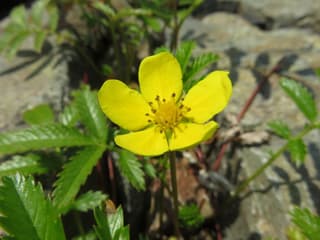
Silverweed
Argentina anserina
Argentina anserina, commonly known as silverweed, is a perennial herbaceous plant belonging to the Rosaceae family. It grows at low altitudes, forming low-growing mats thanks to creeping red stolons that can reach up to 80 cm in length. The pinnate leaves, 10–20 cm long, are covered with a dense, silvery silky down that gives the plant its characteristic shimmering appearance. In summer, it produces bright yellow five-petaled flowers about 2 cm in diameter on erect stems of 5–15 cm. It spreads rapidly in moist, sandy, or clay soils, often colonizing meadows, roadsides, and coastal areas.
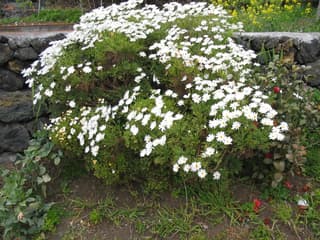
Marguerite Daisy
Argyranthemum frutescens
Marguerite Daisy (Argyranthemum frutescens) is a perennial shrub native to the Canary Islands, Spain. Celebrated for its cheerful daisy-like flowers with white, yellow, or pink petals surrounding bright yellow centers, this ornamental plant brings abundant color to gardens, balconies, and containers throughout spring, summer, and fall.
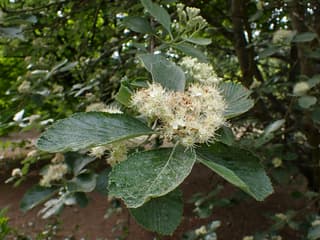
Whitebeam
Aria edulis
The whitebeam (Aria edulis, synonym Sorbus aria) is a deciduous tree in the Rosaceae family, native to Europe, North Africa and western Asia. It forms a compact, domed crown with oval, serrated leaves that are dark green and glossy above, and covered in a felty white-grey down beneath, giving the tree its common name. Cream-white flowers appear in clusters in spring, followed in autumn by scarlet berries that only become palatable once "bletted" (softened by frost or storage).
Find the Perfect Plant
Our plant guide helps you find ideal species for your experience level and time of year.
Browse by Difficulty, Season & More
Use the filters below to narrow this catalog by care difficulty, season, environment, or search directly by name. Each filter leads to a focused list tailored to your specific growing conditions.