Complete Plant Guide
Explore plants by difficulty, season and more. Find the perfect plant for you.
Difficulty
Categories
Plants by City
🗺️ Plants by City3694 plants found
Showing 253-288 of 3694

Poppy Anemone
Anemone coronaria
Anemone coronaria, the poppy anemone or Spanish marigold, is a tuberous perennial in the buttercup family (Ranunculaceae), native to the Mediterranean basin from southern Europe to the Middle East. Each knobby, dormant tuber sends up finely divided, fern-like foliage followed by a single, poppy-shaped bloom on a slender stem -- typically red, white, blue, purple or pink, with a striking dark, almost black center. Widely grown both as a garden bedding plant and as a florist's cut flower, it flowers profusely in spring and, in mild climates, again in autumn, then dies back to its tuber to rest through the hottest or coldest months. It is easy to grow from soaked tubers but does carry mild toxicity, so it is best kept away from pets and curious children.
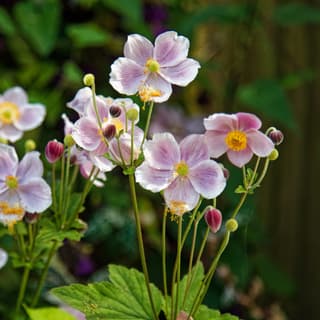
Japanese Anemone
Anemone hupehensis
Japanese Anemone (Anemone hupehensis) is a perennial ornamental plant belonging to the buttercup family (Ranunculaceae), native to the Hubei province of Central China. It forms a dense rosette of dark green leaves, from which 5-7-petaled flowers emerge from August to October, in shades of pink, white, or purple with yellow centers. The plant spreads slowly via its underground rhizomes and is excellent for perennial beds, bringing color to the late summer and autumn landscape. All parts of the plant contain protoanemonin, which is mildly toxic to both humans and pets.
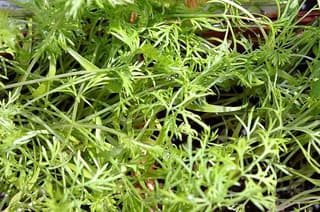
Dill
Anethum graveolens
Dill (Anethum graveolens) is an annual aromatic herb from the Apiaceae family, native to the Mediterranean and Western Asia. Its feathery, blue-green leaves and aromatic seeds are widely used in cooking, particularly in pickles, sauces, and fish dishes. The plant can reach up to 150 cm in height and produces yellow flowers in umbels during summer.
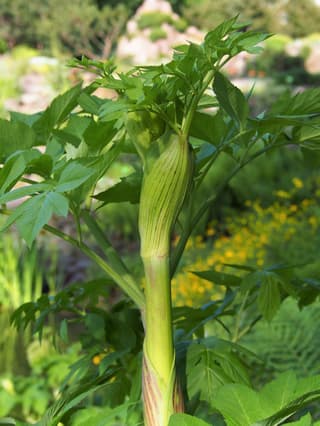
Angelica
Angelica
Angelica is a genus of approximately 90 species of aromatic herbs in the family Apiaceae, native to the temperate regions of the Northern Hemisphere. These biennial or short-lived perennial plants can grow up to 2.4 m (8 ft) tall, producing large umbrella-like flower clusters (umbels) in white, green, yellow, purple, or pink during summer. Prized for centuries for both medicinal and culinary applications, angelica has a distinctive musky, licorice-like aroma and flavour.
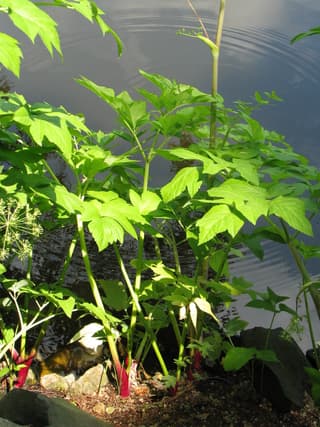
Garden Angelica
Angelica archangelica
Garden angelica is a tall, aromatic biennial herb native to Northern and Eastern Europe, prized for centuries in folk medicine, herbal liqueurs, and confectionery. Its hollow, ridged stems can reach up to 2.5 m in its second year, topped with large umbels of greenish-yellow flowers in summer.
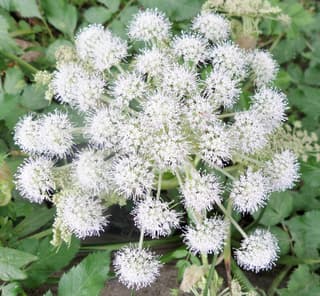
Wild Angelica
Angelica sylvestris
Wild Angelica (Angelica sylvestris) is a biennial or short-lived perennial herb in the family Apiaceae, native to Europe and temperate Asia. It thrives in moist, shaded environments such as riverbanks, woodland margins, and damp meadows, growing up to 2 metres tall. Its white to pale pink flowers, arranged in large compound umbels, are a magnet for bees, hoverflies, and butterflies. The plant has a long history of medicinal use across Europe, valued for its digestive, diuretic, and expectorant properties.
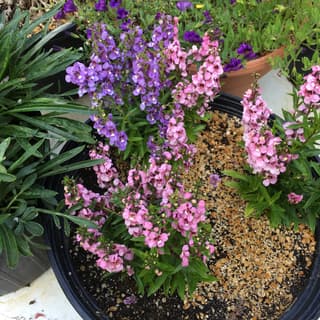
Summer Snapdragon
Angelonia angustifolia
Angelonia angustifolia, commonly called summer snapdragon, is a heat-loving herbaceous perennial in the Plantaginaceae family, native to Mexico, the West Indies and parts of Central and South America. Grown as a warm-season bedding plant across much of the world, it produces upright spikes of small, two-lipped flowers in white, pink, purple, blue and bicolor shades from early summer through fall, above narrow, slightly aromatic lance-shaped leaves.
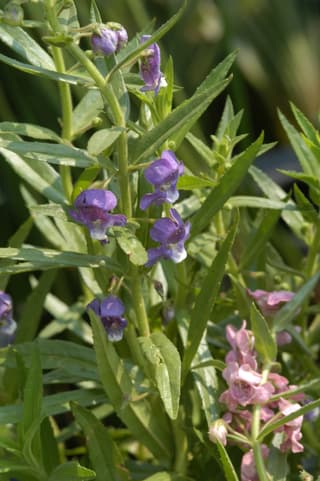
Two-flowered Angelonia
Angelonia biflora
Angelonia biflora is a small annual flower native to Brazil, prized for its abundant blooms in shades of purple, violet, pink, and white throughout summer. Belonging to the Plantaginaceae family, this compact plant grows up to 60 cm tall and is widely used in borders, flower beds, and ornamental containers.
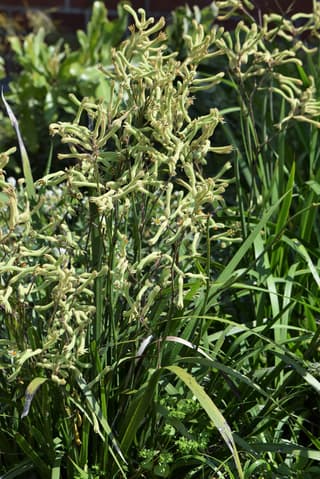
Tall Kangaroo Paw
Anigozanthos flavidus
The Tall Kangaroo Paw (Anigozanthos flavidus) is a member of the Haemodoraceae family and a perennial plant native to Southwest Australia. Its fibrous, sword-like leaves form a basal rosette, from which 1-2 meter tall flower stalks covered in velvety hairs emerge. Its distinctive tubular flowers, resembling a kangaroo's paw, range in color from yellowish-green to red and bloom almost continuously from spring to fall. It has been the official floral emblem of Western Australia since 1960.
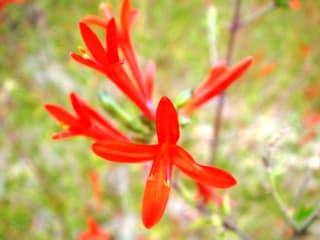
Flame Acanthus
Anisacanthus quadrifidus
Flame acanthus is a fast-growing, deciduous shrub native to the rocky slopes, floodplains, and grasslands of west and south-central Texas and adjacent northern Mexico. It forms a loose, spreading mound of narrow lance-shaped leaves and exfoliating bark, topped from early summer through fall with slender, tubular red-orange flowers that intensify after rain. Prized in xeriscape and wildlife gardens, its nectar-rich blooms are a magnet for hummingbirds and butterflies, and the foliage serves as a larval host for the Janais patch and Texan crescentspot butterflies.
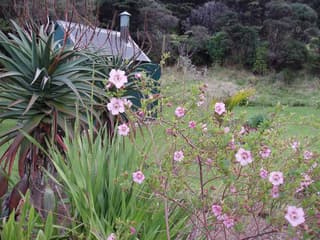
Cape Mallow
Anisodontea capensis
Anisodontea capensis, known as Cape mallow or false mallow, is an evergreen shrub native to South Africa and a member of the Malvaceae family. The plant is characterized by its gray-green, deeply lobed leaves and delicate, hibiscus-like flowers that bloom from spring to fall in shades ranging from pink to dark reddish-purple. Growing 24-40 inches (60-100 cm) tall, it is an elegant ornamental plant for balconies and gardens.
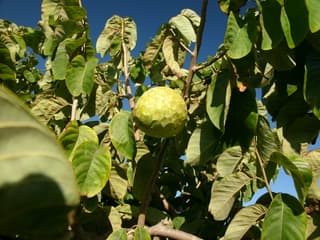
Cherimoya
Annona cherimola
The cherimoya (Annona cherimola) is a subtropical fruit tree native to the Andean valleys of Peru, Bolivia, and Ecuador, where it has been cultivated for over 2,000 years. It reaches between 7 and 9 meters in height with a spreading canopy and deciduous foliage of large, velvety leaves. Its flowers, greenish-yellow with purple spots, are fragrant and hermaphroditic. The fruit is the tree's true treasure: heart-shaped, with green skin and creamy white pulp with a sweet and exotic flavor, described as a blend of pineapple, mango, and strawberry. Mark Twain called it 'the most delicious fruit known to men'.
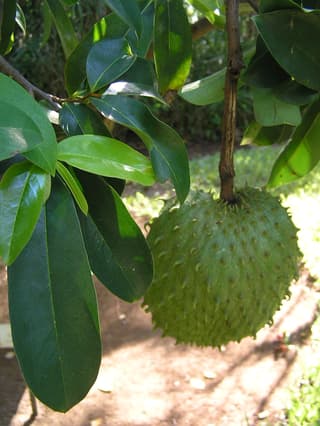
Soursop
Annona muricata
Annona muricata, popularly known as soursop, is a small to medium-sized evergreen tree native to the tropical regions of the Americas and the Caribbean. It produces large, green fruits with soft spines, whose white pulp is widely appreciated for its sweet-and-sour flavor and creamy texture. In addition to its fruits, the plant is valued for its traditional medicinal properties, although its seeds contain neurotoxic compounds that require caution.
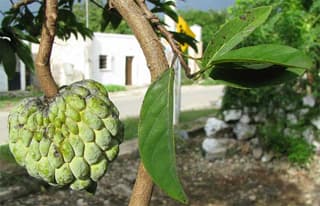
Sugar-apple
Annona squamosa
Annona squamosa, commonly known as sugar-apple or sweetsop, is a small tropical fruit tree. Its fruits are famous for their sweet, creamy white pulp, protected by a green skin composed of protruding scales. It is a plant that thrives in heat and humidity, losing its leaves during periods of drought or intense cold.
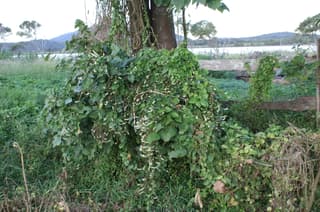
Madeira Vine
Anredera cordifolia
Madeira vine (Anredera cordifolia) is a fast-growing climbing vine native to South America, valued for its edible, spinach-like leaves and small fragrant white flowers. It produces aerial tubers used for propagation.
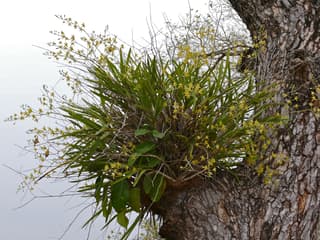
Leopard Orchid
Ansellia africana
Ansellia africana, the leopard orchid, is a large epiphytic orchid native to tropical and southern Africa, where it grows in the forks of tall trees along rivers and coastlines. It forms dense clumps of cane-like pseudobulbs topped with leathery, lance-shaped leaves, and produces branching sprays of yellow flowers boldly marked with brown spots reminiscent of a leopard's coat.
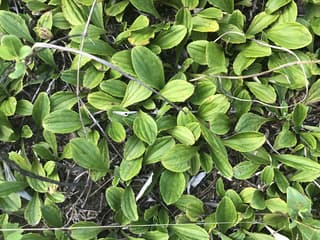
Plantain-leaved Pussytoes
Antennaria plantaginifolia
Antennaria plantaginifolia, commonly known as Plantain-leaved Pussytoes or Woman's Tobacco, is a low-growing native perennial groundcover from Eastern North America. It forms spreading mats of fuzzy, silvery-green basal leaves that resemble plantain leaves, topped in spring with clusters of small white flower heads that look remarkably like cat's paws. It thrives in lean, dry, rocky soils and full to partial sun, making it an excellent choice for difficult dry spots, rock gardens, and native plant landscapes.
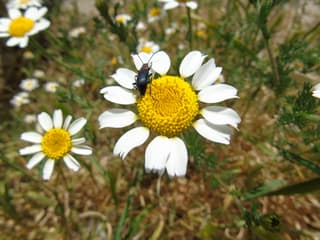
Corn chamomile
Anthemis arvensis
Corn chamomile is an annual plant in the Asteraceae family, native to Europe, commonly found in cereal fields and disturbed ground. It has finely divided, aromatic-looking foliage and produces white daisy-like flower heads with yellow centers, resembling true chamomile though it belongs to a different genus.
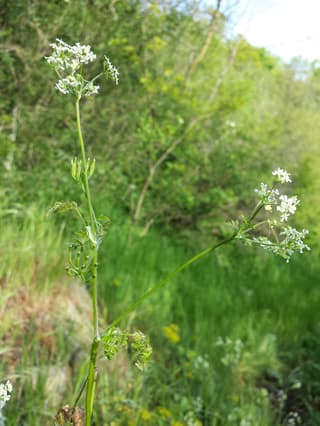
Chervil
Anthriscus cerefolium
Chervil (Anthriscus cerefolium) is a delicate annual herb native to Europe, prized for its lacy, fern-like foliage and subtle anise-parsley flavor. A staple of French cuisine and one of the classic "fines herbes," it grows quickly and prefers cool, partially shaded conditions. It reaches 40–60 cm in height and produces small white flowers in spring and summer.
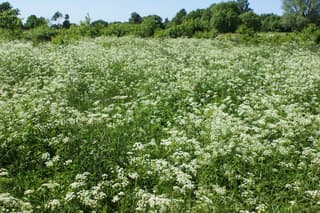
Cow Parsley
Anthriscus sylvestris
Cow parsley is a fast-growing biennial or short-lived perennial umbellifer native to Europe, western Asia, and northwestern Africa. Its hollow, ridged stems rise 60-170 cm tall, topped from late spring into early summer with frothy white umbels of tiny flowers above finely divided, fern-like leaves. A common sight along hedgerows, woodland edges, and roadside verges, it self-seeds readily and naturalizes easily in wildflower gardens.
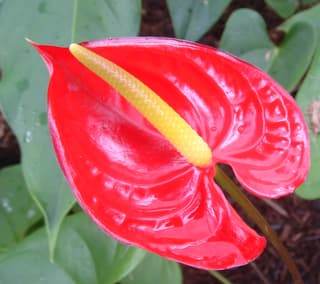
Anthurium / Flamingo Flower (genus)
Anthurium
Anthurium is a large genus of tropical plants in the family Araceae, comprising over 1,000 species native mainly to Central and South America. Renowned for their striking inflorescences with colorful spathes and spadices, anthuriums are popular ornamental houseplants worldwide.
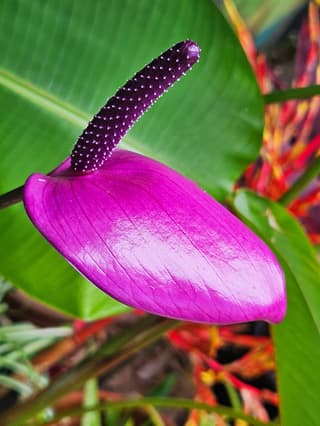
Tulip Anthurium
Anthurium amnicola
Anthurium amnicola, commonly called the tulip anthurium, is a compact epiphytic aroid native to the wet montane forests of Panama and parts of northern South America. It is prized for its tulip-shaped white spathes with contrasting yellow spadices, produced repeatedly through the year on a low, clumping plant that rarely exceeds 30 cm in height.
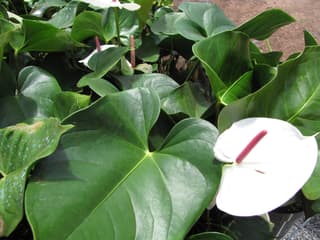
Flamingo Flower
Anthurium andraeanum
Anthurium andraeanum is a tropical plant native to the rainforests of Colombia and Ecuador. It is famous for its glossy heart-shaped spathes that come in vibrant colors like red, pink, white, and orange. Its leaves are large, shiny, and dark green. It is one of the most popular houseplants due to its nearly continuous flowering throughout the year.
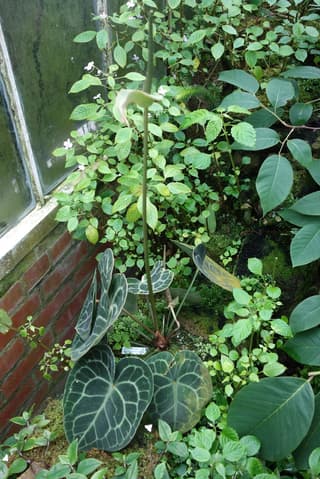
Velvet Cardboard Anthurium
Anthurium clarinervium
Anthurium clarinervium, known as the velvet cardboard anthurium, is a striking aroid native to the karstic rainforests of Chiapas, Mexico. Its thick, heart-shaped leaves have a matte, velvety texture in deep green, crossed by a network of bold silvery-white veins that make it one of the most sought-after ornamental anthuriums among collectors.
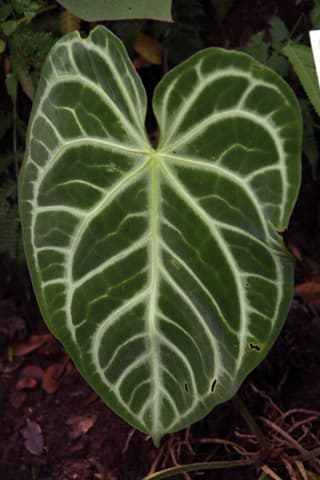
Crystal Anthurium
Anthurium crystallinum
The Crystal Anthurium (Anthurium crystallinum) is a tropical plant from the Araceae family, native to the rainforests of Colombia and Panama. Valued primarily for the exuberant beauty of its foliage, it is considered one of the most elegant indoor plants in the world. Its large, velvety, deep dark green leaves are adorned with extremely pronounced white and silvery veins that resemble crystals—giving rise to its common name. Under ideal conditions, the leaves can exceed 20 inches (50 cm) in length. It is a slow-growing plant that requires consistent care, especially regarding humidity and soil quality, but it generously rewards dedicated growers with a truly majestic presence.
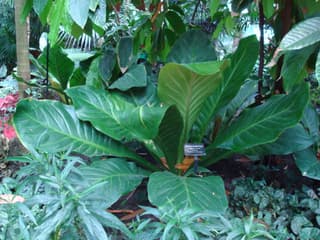
Bird's Nest Anthurium
Anthurium hookeri
Anthurium hookeri, commonly known as the Bird's Nest Anthurium, is a striking tropical plant in the Araceae family, native to the Caribbean islands and northern South America. Its broad, glossy dark-green leaves grow in a rosette arrangement resembling a bird's nest, making it a prized ornamental houseplant and garden specimen.
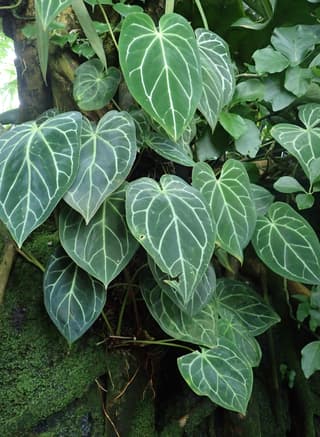
Magnificent Anthurium
Anthurium magnificum
The Magnificent Anthurium (Anthurium magnificum) is a terrestrial aroid native to humid tropical forest at low to intermediate elevations on the western slopes of the Colombian Andes. It is grown chiefly for its foliage: large, heart-shaped, deep green leaves with a velvety texture and striking silvery-white venation. Its quadrangular (four-sided) petioles help distinguish it from closely related species such as Anthurium crystallinum. It is a highly sought-after species among aroid collectors and a popular parent for velvet-leaf hybrids.
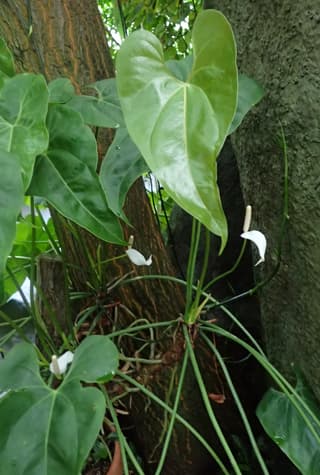
Water-Lily Anthurium
Anthurium nymphaeifolium
Anthurium nymphaeifolium is a rare and striking species native to northern South America, particularly Venezuela and Colombia. It produces large, peltate (shield-shaped) leaves arranged in an impressive rosette, resembling the leaves of water lilies (Nymphaea). This tropical foliage plant is highly prized by collectors for its exotic, architectural appearance.
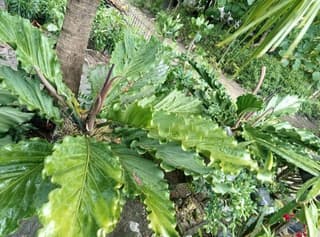
Wave of Love Anthurium
Anthurium plowmanii
The Wave of Love Anthurium (Anthurium plowmanii) is an epiphytic aroid native to the tropical rainforests of South America, including Ecuador, Peru, Bolivia and Brazil. It is prized for its large, leathery, wavy-edged leaves that grow in a rosette resembling a bird's nest. It is grown mainly for its dramatic foliage and rarely flowers indoors.
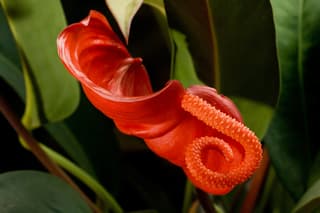
Flamingo Flower
Anthurium scherzerianum
Anthurium scherzerianum, commonly known as the Flamingo Flower or Pigtail Anthurium, is a tropical species native to Costa Rica. It is distinguished by its curling, pig-tail spadix and glossy oval spathe, usually in vivid red. It is one of the most robust and beginner-friendly anthurium species for indoor cultivation.
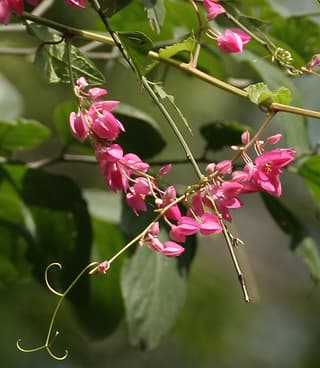
Coral Vine
Antigonon leptopus
Coral vine is a vigorous, tendril-climbing perennial vine in the buckwheat family (Polygonaceae), native to the Pacific and Atlantic coastal plains of Mexico. It scrambles rapidly over fences, trellises, and hot walls using coiling tendrils, producing heart-to-arrowhead-shaped green leaves and long, cascading sprays of small coral-pink to white flowers that bloom nearly year-round in warm climates. Beneath the soil it forms fleshy, water-storing tubers that help it survive drought and resprout after being cut back or frozen to the ground. Prized for its nonstop color and toughness, coral vine is also listed as an invasive species in Florida and other subtropical regions.
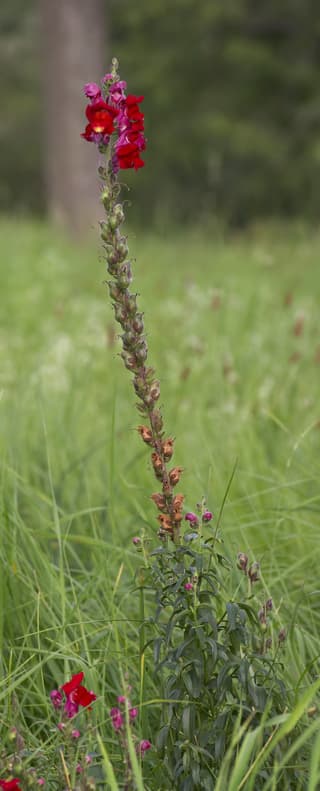
Snapdragon
Antirrhinum majus
The Snapdragon is a classic herbaceous garden plant, famous for its vertical flower spikes that open like a jaw when pressed on the sides. Native to the Mediterranean region, it is prized for its wide range of colors and for attracting pollinators such as bees and bumblebees. Although technically a short-lived perennial, it is frequently grown as an annual in cooler or temperate climates.
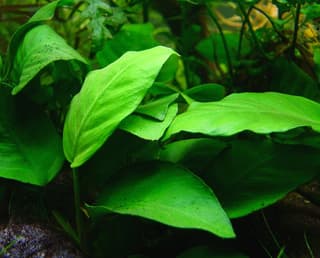
Anubias
Anubias barteri
Anubias barteri is an exceptionally hardy aquatic plant native to West Africa, belonging to the Araceae family. It is characterized by tough, dark green leaves growing from a creeping rhizome and its ability to grow attached to rocks, driftwood, or roots instead of rooting in the substrate. It grows very slowly—producing a new leaf approximately once every 2 to 3 months—and tolerates low lighting, making it one of the most popular and resilient plants in the aquarium hobby.
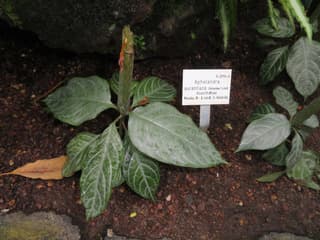
Fiery spike
Aphelandra aurantiaca
A tropical evergreen shrub in the Acanthaceae family, native to a range spanning Mexico to Brazil and Bolivia, growing in partial shade along riverbanks, forest edges and paths between 100 and 1800 m elevation. Reaches 50 cm to 1 m tall, with large opposite leaves (10-30 cm) marked by prominent veining. Produces showy terminal spikes of orange-red bracts with yellow flowers, attractive to hummingbirds.
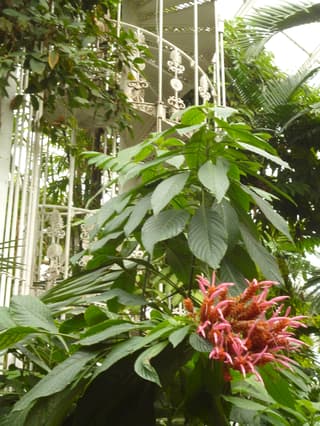
Coral Aphelandra
Aphelandra sinclairiana
Aphelandra sinclairiana, commonly known as Coral Aphelandra or Panama Queen, is a tropical evergreen shrub native to Central America, particularly Panama and Costa Rica. It can grow up to 3 meters tall and is celebrated for its spectacular coral-orange flower spikes with brilliantly colored bracts that remain decorative for weeks. The large, opposite, deep-green leaves with prominent white veins make it a striking ornamental plant for both indoor spaces and tropical gardens.
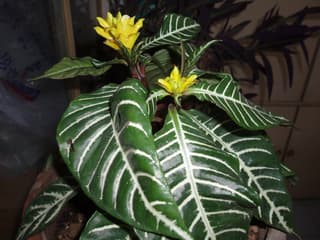
Zebra Plant
Aphelandra squarrosa
The Zebra Plant (Aphelandra squarrosa) is a tropical evergreen native to the Atlantic Forest of Brazil, belonging to the Acanthaceae family. It is prized for its dark green leaves with striking white veins resembling zebra stripes. It produces golden-yellow flower bracts shaped like spikes that last about six weeks, typically blooming in late summer to early fall.
Find the Perfect Plant
Our plant guide helps you find ideal species for your experience level and time of year.
Browse by Difficulty, Season & More
Use the filters below to narrow this catalog by care difficulty, season, environment, or search directly by name. Each filter leads to a focused list tailored to your specific growing conditions.