Complete Plant Guide
Explore plants by difficulty, season and more. Find the perfect plant for you.
Difficulty
Categories
Plants by City
🗺️ Plants by City3766 plants found
Showing 2881-2916 of 3766
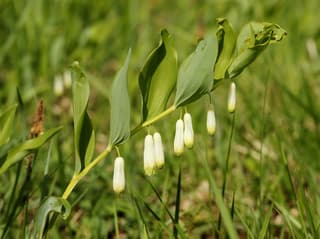
Fragrant Solomon's Seal
Polygonatum odoratum
Polygonatum odoratum, commonly called fragrant or angular Solomon's seal, is a rhizomatous woodland perennial native to temperate Europe and Asia, from the UK through Russia to China, Korea, and Japan. Named for the angular ridges along its arching stems, this shade-loving perennial produces elegant rows of pendant, bell-shaped, creamy-white flowers with green tips beneath alternate elliptical leaves each spring. In autumn the foliage turns golden before dying back to a knobby rhizome marked with round scars -- said to resemble wax seals -- that persists underground through winter. The rhizome is a well-known ingredient in Traditional Chinese Medicine (known as Yu Zhu), while the ripe blue-black berries are toxic and should never be eaten.
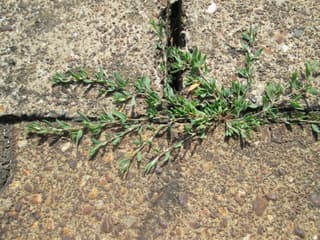
Oval-leaf Knotweed
Polygonum arenastrum
Polygonum arenastrum, commonly known as oval-leaf knotweed or common knotweed, is a low-growing annual weed in the family Polygonaceae. Native to Eurasia and naturalized worldwide, it forms dense, mat-like colonies on compacted soils, roadsides, paths, and disturbed ground. Its small, oval leaves are nearly equal in size along the stem, giving it the name "equal-leaved knotgrass." Tiny pink or white flowers bloom from summer through autumn, attracting beneficial insects.

Prostrate knotweed
Polygonum aviculare
Prostrate knotweed is a low, mat-forming annual weed frequently found in compacted soils, sidewalk cracks, and heavily trafficked paths. It has wiry, branching stems with small blue-green lanceolate leaves and produces tiny green flowers edged in white or pink from summer into fall, followed by small dark seeds. Extremely tough and adaptable, it is one of the most widespread and cosmopolitan weeds in the world, thriving where few other plants can survive.
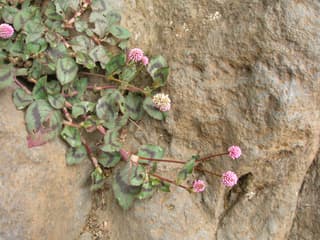
Pink Knotweed
Polygonum capitatum
Polygonum capitatum, commonly known as Pink Knotweed, is a low-growing, semi-evergreen ground cover native to the Himalayas of Nepal and China. It produces charming pink pompom-like flower heads from spring through the first frost, with attractive dark green lance-shaped leaves marked by burgundy chevrons. This vigorous, fast-spreading plant thrives in full sun to partial shade and is widely used in landscapes as a ground cover, in hanging baskets, and along borders.

Polypody
Polypodium
Polypodium is a genus of around 100 species of evergreen ferns native to temperate regions of the Northern Hemisphere, often growing as epiphytes on tree trunks or as lithophytes on rocks and walls. Their creeping, scaly rhizomes produce leathery, once-pinnate fronds and give the genus its common name, polypody ('many feet').
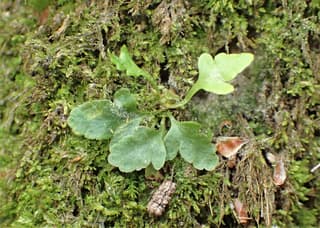
Common Polypody
Polypodium vulgare
Polypodium vulgare, or common polypody, is a small evergreen fern native to the woodlands, rocky outcrops, and old stone walls of Europe and North Africa. Its horizontal, creeping rhizome anchors leathery, deeply lobed fronds that stay green through winter, while golden-orange spore clusters (sori) dot the undersides of mature leaves from midsummer into autumn. Remarkably tolerant of both shade and dry spells, it thrives as a lithophyte on rocks and walls or as an epiphyte on mossy tree trunks, making it one of the easiest ferns to naturalize in a temperate garden.
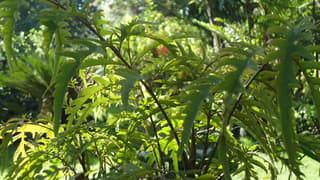
Aralia (genus)
Polyscias
Polyscias is a genus of tropical shrubs and small trees in the family Araliaceae, native primarily to tropical Asia, the Pacific Islands, and Madagascar. Widely grown as houseplants for their elegant ornamental foliage, they are commonly known as aralias or ming aralias.
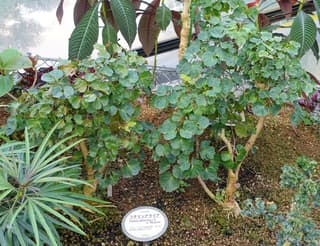
Balfour Aralia
Polyscias balfouriana
Polyscias balfouriana is an elegant tropical evergreen shrub from the Araliaceae family, native to New Caledonia and the Pacific Islands. Known for its glossy, rounded leaves with scalloped edges that resemble dinner plates, it makes a stunning indoor specimen plant. With its slow, upright growth habit and twisting stems speckled in gray, the Balfour Aralia brings a refined tropical aesthetic to any interior space.
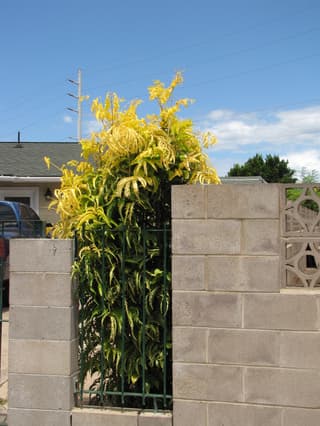
Fernleaf Aralia
Polyscias filicifolia
Polyscias filicifolia, commonly known as Fernleaf Aralia, is a tropical houseplant native to the Pacific Islands and Southeast Asia. Its distinctively delicate, fern-like foliage sets it apart from other Aralia species, making it a prized ornamental plant for indoor tropical gardens. It is a slow-growing evergreen that thrives in warm, humid environments.
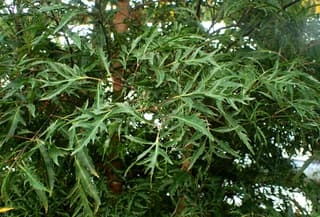
Ming Aralia
Polyscias fruticosa
Ming Aralia (Polyscias fruticosa) is an elegant tropical evergreen shrub from the Araliaceae family, prized for its finely divided, lace-like foliage that gives it an almost bonsai-like appearance. Native to India and Southeast Asia, it can grow up to 2.4 meters indoors and up to 7.5 meters in its natural habitat. Its slow growth rate and graceful vertical form make it a striking specimen houseplant.
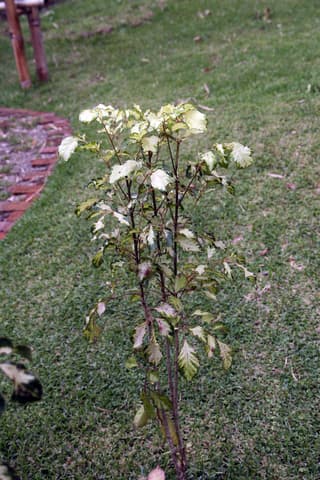
Geranium Aralia
Polyscias guilfoylei
Polyscias guilfoylei, commonly known as Geranium Aralia or Wild Coffee, is an elegant tropical evergreen shrub native to the Pacific Islands. It features compound leaves with 7-9 leaflets that display lush green or variegated white and yellow margins, giving it a lacy, decorative appearance. A classic choice for both indoor and tropical outdoor landscapes, this slow-growing plant rewards patient gardeners with striking year-round foliage.
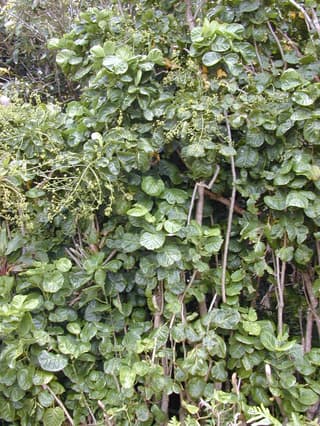
Shield Aralia
Polyscias scutellaria
Shield aralia is a compact tropical shrub from the Southwest Pacific islands, prized for its glossy, rounded, bowl-shaped leaves that grow in clusters at the branch tips. Indoors it stays fairly compact and slow-growing, making it a popular choice as a structured accent or bonsai-style specimen. In its native range it can reach several meters as an understory shrub, but potted specimens are easily kept small with light pruning.

Holly Fern
Polystichum
Polystichum is a large, cosmopolitan genus of evergreen ferns in the family Dryopteridaceae, commonly known as holly ferns or shield ferns for their glossy, spiny-toothed fronds. With around 500 species distributed worldwide, from Christmas fern (P. acrostichoides) to western sword fern (P. munitum), the genus thrives in shaded woodland conditions and is prized as a resilient, low-maintenance foliage plant for both gardens and containers.
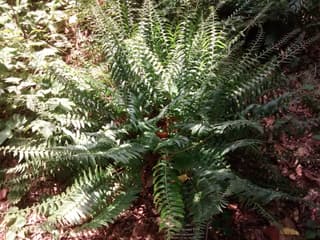
Christmas Fern
Polystichum acrostichoides
Polystichum acrostichoides, commonly known as the Christmas Fern, is a robust, evergreen fern native to eastern North America. Its leathery, lance-shaped fronds remain green throughout winter, making it a standout plant during the holiday season. It thrives in shaded woodland settings and is prized for its low maintenance and year-round visual interest.
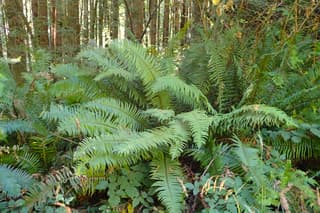
Western Sword Fern
Polystichum munitum
Polystichum munitum, commonly known as the Western Sword Fern, is a large evergreen fern native to the temperate rainforests of the Pacific Northwest of North America. Its glossy, dark green fronds arch outward from a dense central crown and can reach up to 180 cm in length. It is one of the most abundant and resilient ferns in Pacific Northwest forests, highly valued in shaded gardens and naturalistic landscaping.
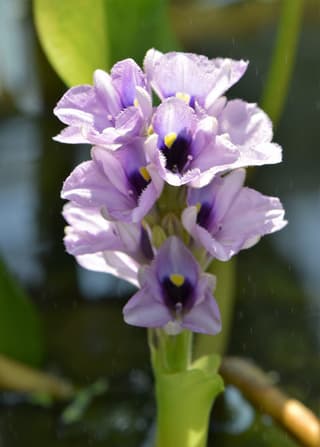
Anchored Water Hyacinth
Pontederia azurea
The anchored water hyacinth (Pontederia azurea, syn. Eichhornia azurea) is a perennial aquatic plant in the Pontederiaceae family, native to Central and South America, including Brazil. Unlike the floating water hyacinth, this species roots in the bottom mud and sends out stems that stretch to the surface. It has round, shiny green leaves about 10 cm wide and showy bluish-purple flowers with yellow markings. It grows vigorously in still or slow-moving waters.
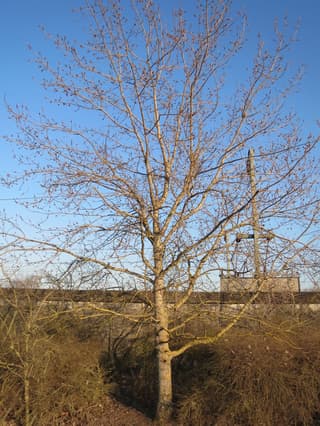
Poplar
Populus
Populus is a large genus of about 25–57 deciduous trees in the family Salicaceae, commonly known as poplars, aspens, and cottonwoods. Native to the Northern Hemisphere across North America, Europe, and Asia, these fast-growing trees can reach heights of 15–50 m and are recognized by their trembling leaves, wind-pollinated catkins in early spring, and cottony seed dispersal. They thrive in full sun and moist, well-drained soils and are valued for timber, phytoremediation, windbreaks, and ornamental planting.

Grey Poplar
Populus × canescens
Populus × canescens, the grey poplar, is a natural, fertile hybrid between the white poplar (Populus alba) and the common aspen (Populus tremula), in the willow family (Salicaceae). It grows wild where its parents meet, from north-western Europe to the plains of the Urals, and does best in the lowlands of western Europe, often by ponds, marshes and river banks. It shows strong hybrid vigour: usually 20-25 m tall, it can pass 30 m and reach 40 m on the best sites, with a trunk over 1.5 m across, larger than either parent. The bark is light grey-green to almost white, marked with horizontal bands. The leaves are triangular to oval, 5-12 cm long, glossy dark green above and covered with a thin grey down beneath, with wavy, coarsely toothed edges that are much less lobed than those of the white poplar. In early spring, before the leaves, male trees carry red catkins; females, much rarer, carry green catkins. Most trees in cultivation are male.
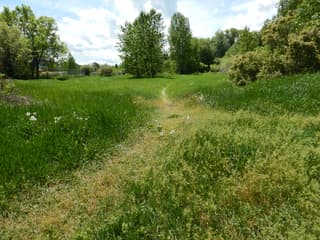
Balsam Poplar
Populus balsamifera
Balsam Poplar (Populus balsamifera) is a fast-growing deciduous tree native to northern North America. It is recognized by its fragrant, resinous buds in early spring and can grow up to 30 meters tall. Widely used in riparian restoration, windbreaks, and as a shade tree, it thrives in cold climates and is one of the northernmost hardwood trees in North America.
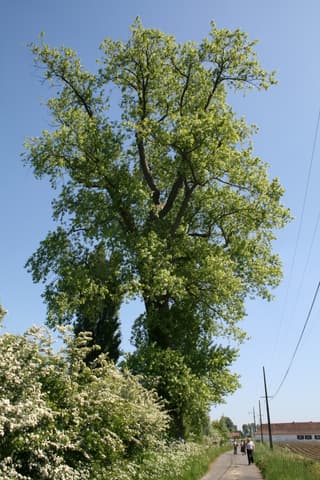
Black Poplar
Populus nigra
Populus nigra, commonly known as Black Poplar, is a large deciduous tree native to Europe and Western Asia. It is one of the most iconic trees of the European landscape, renowned for its fast growth, dark furrowed bark, and graceful triangular leaves that shimmer in the breeze. The Lombardy Poplar (P. nigra 'Italica') is a well-known columnar cultivar widely used as a windbreak and for landscape definition.
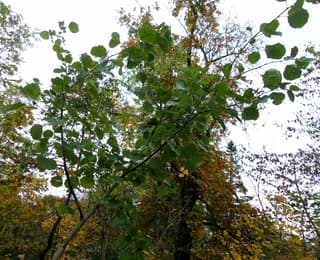
European aspen
Populus tremula
The European aspen (Populus tremula) is a fast-growing deciduous tree native to Europe and parts of Asia, known for its rounded, silvery-green leaves that tremble and whisper in the slightest breeze thanks to their flattened petioles. It can reach up to 25 meters in height, with smooth grey-green bark that darkens and cracks with age. In spring, before the leaves emerge, long greyish catkins appear, and in autumn the foliage turns golden. It spreads easily via root suckers, often forming dense clonal groves, and serves as an important habitat for insects, birds, and lichens.
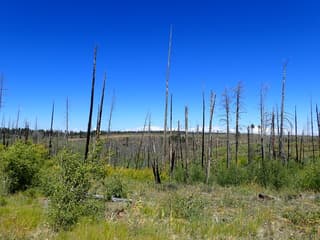
Quaking Aspen
Populus tremuloides
Populus tremuloides, commonly known as quaking aspen, is a fast-growing deciduous tree native to North America, famous for its smooth white-gray bark and heart-shaped leaves that shimmer and "quake" in the slightest breeze thanks to their flattened petioles. It forms expansive clonal colonies connected by a single root system, with some colonies ranking among the oldest and largest living organisms on Earth. In autumn its foliage turns brilliant golden-yellow.
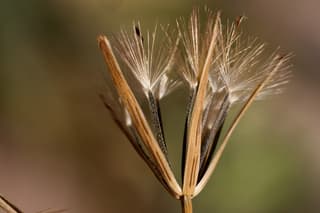
Papalo
Porophyllum ruderale
Papalo (Porophyllum ruderale) is a fast-growing annual herb in the daisy family, native to Mexico and South America, prized for its pungent leaves that taste like a blend of arugula, cilantro and rue. Plants form loose, willowy stands up to 1.5 m tall with rounded, blue-green leaves and small tubular purplish-green flower heads in summer and fall.
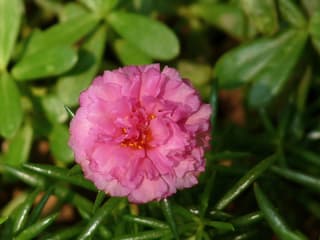
Moss Rose
Portulaca
Portulaca is a genus of succulent flowering plants in the family Portulacaceae, native to South America. Known for their vibrant, jewel-toned blooms and exceptional drought tolerance, they thrive in hot, sunny conditions where many other plants struggle. The genus includes ornamental P. grandiflora (moss rose) and edible P. oleracea (common purslane), both widely grown in tropical and subtropical gardens worldwide.
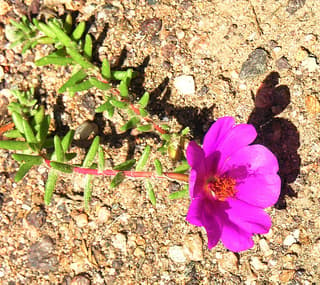
Gillies' Purslane
Portulaca gilliesii
Gillies' Purslane (Portulaca gilliesii) is a succulent native to South America, with smooth, fleshy, often reddish prostrate stems reaching about 30 cm. In summer it bears small reddish-purple flowers. It is exceptionally drought-tolerant and ideal for xeriscaping and low-maintenance gardens. It contains calcium oxalate and is mildly toxic if ingested.
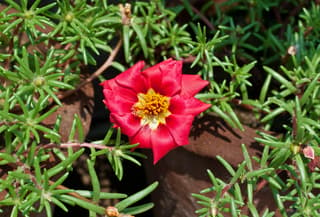
Moss Rose
Portulaca grandiflora
Portulaca grandiflora, commonly known as Moss Rose or Rose Moss, is a popular annual succulent native to South America (Argentina, Brazil, and Uruguay). It produces brilliant, rose-like flowers in shades of red, pink, orange, yellow, white, and purple that open only under direct sunlight. This drought-tolerant, low-maintenance plant thrives in hot, sunny conditions and poor soils.
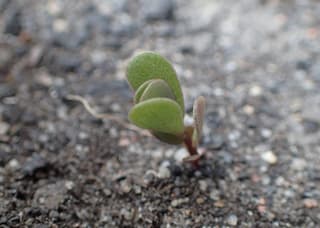
Common Purslane
Portulaca oleracea
Common Purslane (Portulaca oleracea) is an edible succulent groundcover found across the globe. It features reddish, fleshy stems, thick succulent leaves, and tiny yellow flowers that open only on sunny mornings. Extremely hardy and drought-tolerant, it thrives in poor soils and hot climates.
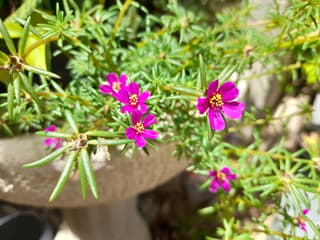
Kiss-me-quick
Portulaca pilosa
Portulaca pilosa, commonly known as kiss-me-quick or hairy purslane, is a low-growing ornamental succulent native to tropical and subtropical Americas. It produces cheerful flowers in shades of pink, purple, white, red, yellow, and orange that open in full sun and close at dusk. Exceptionally heat and drought tolerant, it thrives in poor, sandy soils where most plants struggle.
Wingpod Purslane
Portulaca umbraticola
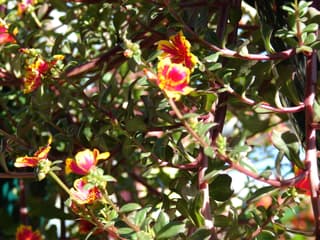
Portulaca umbraticola, commonly known as wingpod purslane or ornamental purslane, is a fast-growing trailing succulent. Its leaves are fleshy and spatulate, and its vibrant flowers have the unique characteristic of opening fully under bright sunlight and closing at night or on cloudy days. It is an extremely resilient plant, ideal for low-maintenance gardens, borders, and hanging baskets.
Spekboom
Portulacaria
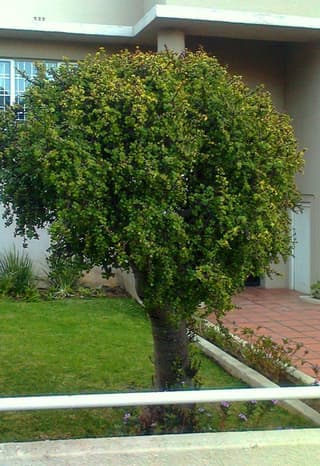
Portulacaria is a small genus of semi-woody succulent shrubs native to South Africa, represented almost entirely by its popular species, commonly called spekboom or elephant bush. Prized for its thick, glossy jade-green leaves and reddish-brown stems, it forms a compact, low-maintenance shrub that thrives in bright light and tolerates long dry spells. Popular as a houseplant, bonsai subject, and drought-tolerant landscaping choice, spekboom is also celebrated in its homeland for its remarkable ability to capture carbon from the atmosphere.
Elephant bush
Portulacaria afra
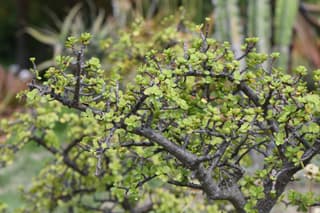
Portulacaria afra, commonly known as Elephant Bush or Spekboom, is a succulent shrub native to South Africa. It features small, fleshy, emerald-green leaves on attractive reddish-brown stems. In its natural habitat, it can grow into a large shrub or small tree, but it is frequently used as a bonsai or indoor plant. It is renowned for its exceptional ability to sequester carbon dioxide from the atmosphere, making it an environmentally significant species.
Rainbow Bush
Portulacaria afra 'Variegata'
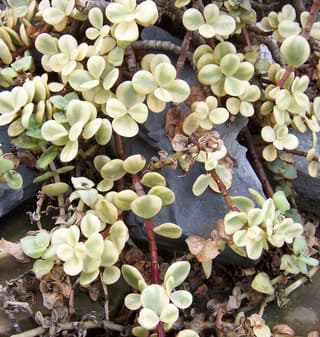
Portulacaria afra 'Variegata' is a striking succulent shrub prized for its cream-and-green marbled leaves, a variegated sport of the South African elephant bush. Compact, easy-going and slow-growing, it forms a dense, jade-like shrub of thick reddish-brown stems studded with small rounded leaves that blush pink in strong light. Popular as a houseplant, bonsai subject or drought-tolerant hedge, it is also a favorite among succulent collectors for its rainbow-toned foliage.
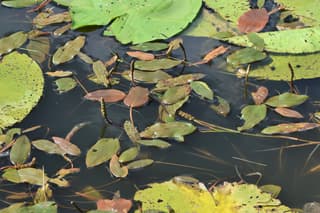
Broad-leaved Pondweed
Potamogeton natans
Potamogeton natans, also known as broad-leaved pondweed, is a perennial aquatic plant that produces oval, leathery, olive-green floating leaves. Its submerged leaves are narrow and translucent, often disappearing as the plant matures. It is a fundamental species for freshwater ecosystems, providing shelter for fish and oxygenating the water.
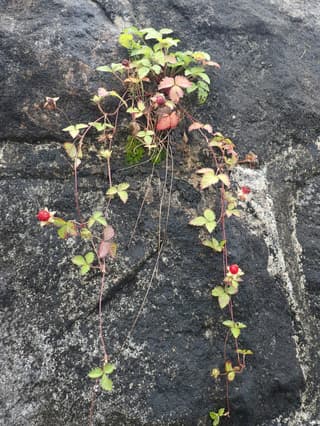
yellow-flowered strawberry
Potentilla indica
Potentilla indica, commonly known as mock strawberry or Indian strawberry, is a perennial herbaceous plant that closely resembles true strawberries. It is distinguished by its five-petaled yellow flowers and red, bumpy fruit that points upward. While the fruit is edible, it is generally considered flavorless or watery. It spreads aggressively through stolons (runners), making it a highly effective, though sometimes invasive, ground cover.
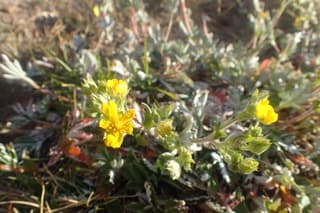
Beautiful Cinquefoil
Potentilla pulcherrima
Potentilla pulcherrima, commonly known as Beautiful Cinquefoil, is a native North American perennial wildflower in the rose family (Rosaceae). It produces cheerful yellow five-petalled flowers from spring through fall and features distinctive silvery-white leaf undersides. Highly cold-hardy and drought-tolerant once established, it thrives in rocky meadows, alpine slopes, and open woodlands across Canada and the western United States.
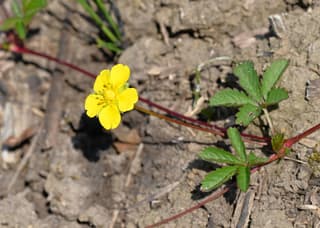
Creeping Cinquefoil
Potentilla reptans
Creeping cinquefoil (Potentilla reptans) is a low-growing perennial in the rose family, native to Europe, western Asia and North Africa. Its trailing stems root at every node, forming dense mats of five-fingered leaflets studded with bright yellow, five-petaled flowers from June to September. Equally at home as a groundcover or a persistent lawn weed, it thrives almost anywhere with a little sun.
Find the Perfect Plant
Our plant guide helps you find ideal species for your experience level and time of year.
Browse by Difficulty, Season & More
Use the filters below to narrow this catalog by care difficulty, season, environment, or search directly by name. Each filter leads to a focused list tailored to your specific growing conditions.