Complete Plant Guide
Explore plants by difficulty, season and more. Find the perfect plant for you.
Difficulty
Categories
Plants by City
🗺️ Plants by City3799 plants found
Showing 2161-2196 of 3799
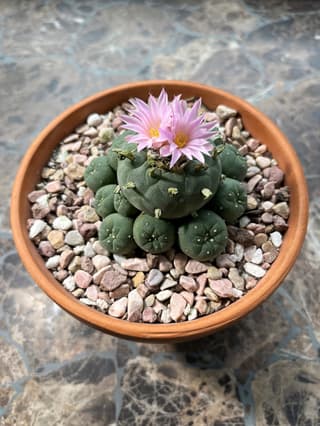
Peyote
Lophophora williamsii
Peyote (Lophophora williamsii) is a small, spineless, globose cactus native to the limestone deserts of northern Mexico and southern Texas within the Chihuahuan Desert region. It reaches only 2–7 cm in height and 4–12 cm in diameter, featuring a surface divided into rounded ribs and tufts of woolly hair (areoles) instead of spines. It grows extremely slowly, taking years to reach maturity and bloom with small pink, white, or yellowish flowers between spring and summer. It is primarily known for containing mescaline and other psychoactive alkaloids in its tissues, which is why its possession and cultivation are subject to legal restrictions in many countries.
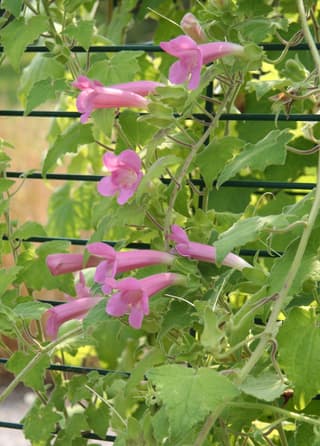
Climbing Snapdragon
Lophospermum erubescens
Lophospermum erubescens, also known as climbing snapdragon or Mexican twist, is a tender perennial climber native to the mountainous regions of Mexico, often grown as an annual in colder climates. Related to snapdragons (Antirrhinum), the plant features heart- to triangular-shaped, hairy leaves and large, pink to white trumpet-shaped flowers that bloom from spring to fall and attract hummingbirds. Its twining leaf stalks make the plant well-suited for trellises, hanging baskets, and training along fences and lattices.
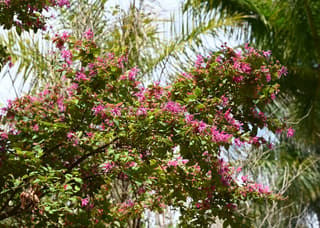
Chinese Fringe Flower
Loropetalum chinense
The Chinese fringe flower (Loropetalum chinense) is an evergreen shrub in the Hamamelidaceae family, native to China, Japan, and northern India. It is highly valued in ornamental gardening for its striking ribbon-like or fringed flowers, which bloom in clusters toward the end of winter and early spring, and for its foliage, which in popular varieties (such as var. rubrum) takes on deep purple or burgundy tones under direct sunlight. With a medium growth rate and compact habit, it is commonly used as a hedge, specimen shrub, or border plant in temperate to warm climate gardens.
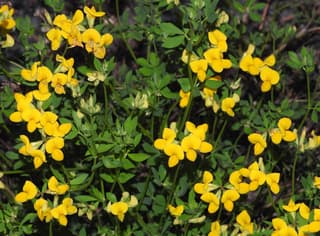
Bird's-Foot Trefoil
Lotus
Bird's-Foot Trefoil (Lotus) is a low-growing perennial wildflower in the pea family (Fabaceae), native to temperate Eurasia and North Africa. It forms spreading mats of bright yellow-orange flowers from late spring through summer, attracting bumblebees and butterflies. Exceptionally drought-tolerant, it thrives in poor soils and can fix atmospheric nitrogen through root symbionts, making it valuable for meadow restoration and erosion control.
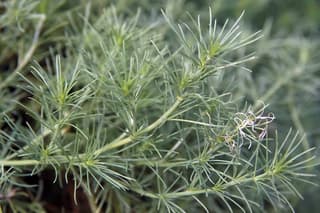
Parrot's Beak
Lotus berthelotii
Lotus berthelotii, commonly known as Parrot's Beak, is a trailing perennial native to the Canary Islands and Cape Verde. It produces striking scarlet, claw-shaped flowers that resemble a parrot's beak, set against fine silvery foliage. A favourite for hanging baskets and garden walls.
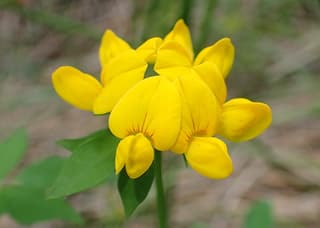
Greater Bird's-foot Trefoil
Lotus pedunculatus
Greater bird's-foot trefoil (Lotus pedunculatus) is a herbaceous perennial legume native to Europe, found in damp meadows, wet ditches, marshes and riverbanks. It differs from related trefoils by its always-hollow stem and reflexed sepals. It bears clusters of golden-yellow flowers and, as a nitrogen-fixing legume, is valued both as a forage crop and as a wildlife-friendly ornamental for wet gardens and pond margins.
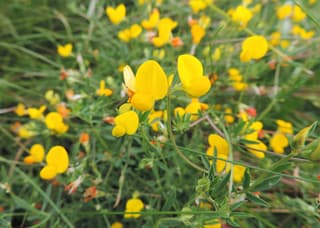
Narrow-leaved bird's-foot trefoil
Lotus tenuis
Lotus tenuis, commonly called narrow-leaved bird's-foot trefoil, is a low-growing perennial legume in the pea family (Fabaceae), closely related to Lotus corniculatus. Native to Europe and southwestern Asia and now naturalized worldwide, it forms compact, bushy clumps 30-45 cm tall with slender, hairless leaflets and clusters of bright yellow flowers that fade to orange-red with age. As a nitrogen-fixing legume it improves soil fertility naturally and is prized for pollinator-friendly meadows, erosion control, and low-input forage plantings.
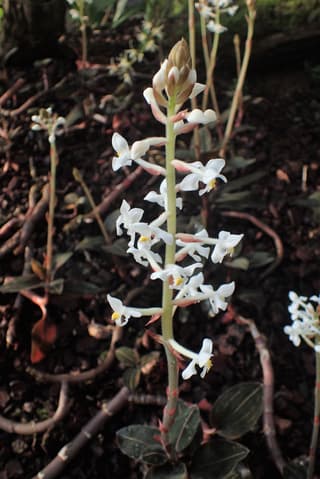
Jewel Orchid
Ludisia discolor
Ludisia discolor, commonly known as the Jewel Orchid, is a terrestrial orchid prized for its stunning velvety foliage rather than its flowers. Native to the tropical forests of Southeast Asia, this orchid features deep green to nearly black leaves adorned with shimmering gold, red, or pink veins and burgundy undersides. Unlike most orchids, it grows in soil rather than on trees, spreading via creeping rhizomes to form dense, elegant clumps.
Mexican Primrose-Willow
Ludwigia octovalvis
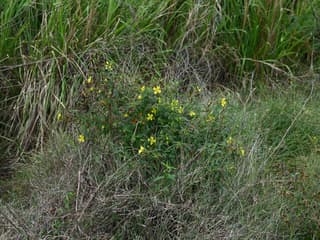
Ludwigia octovalvis, commonly known as the Mexican primrose-willow, is a perennial plant in the Onagraceae family, native to tropical and subtropical regions worldwide. It grows naturally along riverbanks, marshes, rice paddies, ditches, and wetlands, reaching up to 3 meters in height. Its erect, branched stems become woody at the base, while the lanceolate, glossy leaves add elegance to the plant's stature. The four-petaled yellow flowers are numerous and appear along the branches during spring and summer, attracting pollinators such as bees and insects. It is widely used in ethnomedicine by Asian, African, and American communities to treat gastrointestinal conditions, rheumatism, diabetes, and skin problems.
Angled Luffa
Luffa acutangula
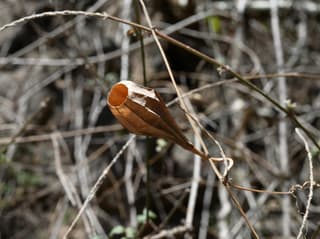
Angled Luffa (Luffa acutangula) is a fast-growing annual climbing vine in the Cucurbitaceae family, native to tropical Asia. Its young fruits are a popular vegetable in Asian cuisine, while mature fruits develop internal fibrous networks used as natural sponges. It thrives in warm, humid climates with full sun exposure.
Sponge Gourd
Luffa aegyptiaca
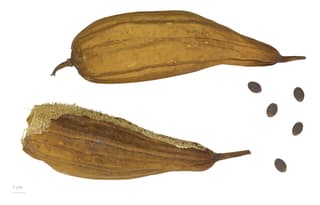
Luffa aegyptiaca, commonly known as Sponge Gourd or Smooth Loofah, is a vigorous annual climbing vine in the Cucurbitaceae family, native to South and Southeast Asia. Widely cultivated throughout the tropics, it is prized for its fibrous mature fruits that dry into natural sponges used for bathing and cleaning. The plant produces showy bright yellow flowers and can reach up to 9 meters in length with proper support.
Honesty
Lunaria
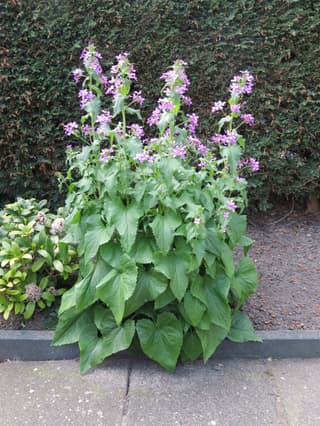
Honesty (Lunaria annua) is a biennial member of the Brassicaceae (cabbage) family, grown in gardens worldwide for its fragrant pink, purple, and white spring flowers and, above all, for its translucent, silvery seed pods that resemble coins or full moons. Native to southeastern Europe and western Asia, the plant spends its first year as a low rosette of leaves and only flowers in its second year, reaching 60-90 cm tall. After flowering, the flat green seed pods mature and shed their outer layers, revealing a papery, shimmering inner septum prized in dried floral arrangements.
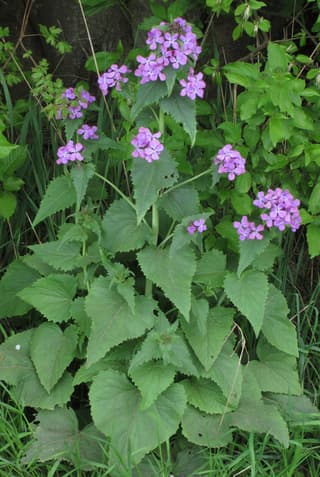
Honesty
Lunaria annua
Honesty (Lunaria annua) is a cottage-garden biennial in the mustard family, grown for its purple-to-white spring flowers and, later, its papery, translucent, coin-shaped seed pods that are prized in dried arrangements.
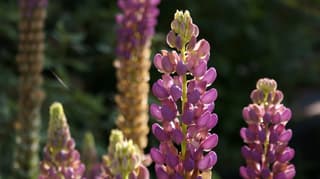
Lupine
Lupinus hybridus
Lupinus hybridus, commonly known as Lupine or Garden Lupine, is a herbaceous plant belonging to the Fabaceae family. It produces striking vertical flower spikes in shades of blue, purple, pink, white, and yellow, making it one of the most spectacular flowering plants in the garden. A product of hybridization between American and Mediterranean species, the hybrid lupine is widely prized in landscaping for its bold beauty and abundant spring and summer blooms.
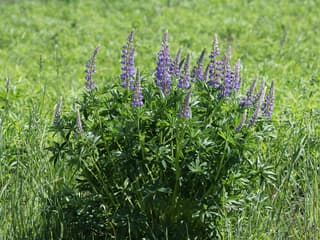
Perennial Lupine
Lupinus polyphyllus
Lupinus polyphyllus, commonly known as perennial lupine or bigleaf lupine, is a perennial herbaceous plant belonging to the Fabaceae family, native to western North America. It is distinguished by its large palmate leaves composed of 9 to 17 velvety leaflets and its majestic upright flower spikes that can reach 120 cm in height. Its butterfly-shaped flowers come in a wide range of colors, from blue to purple, as well as pink, white, red, and yellow. As a nitrogen-fixing plant thanks to its symbiotic root nodules, it naturally enriches poor soils while offering a remarkable floral display from spring to summer.
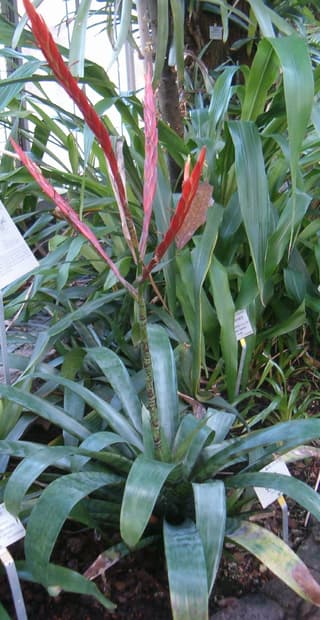
Flaming Sword Bromeliad
Lutheria
Lutheria is a genus of striking epiphytic bromeliads native to the tropical forests of Venezuela and Trinidad. Best known for its dramatic sword-shaped flower bract that blazes red, orange, and yellow, Lutheria splendens is the most popular species grown as an ornamental houseplant. As an epiphyte, it grows anchored to trees rather than soil, absorbing water and nutrients through its central cup and leaf scales.
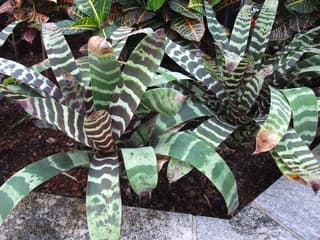
Flaming Sword
Lutheria splendens
The Flaming Sword (Lutheria splendens, formerly Vriesea splendens) is a striking tropical bromeliad native to Venezuela, the Guianas, and Trinidad & Tobago. It is prized for its dramatic sword-shaped red bract and dark-striped strap-like leaves. As an epiphyte, it naturally grows on trees and rocks, absorbing water and nutrients primarily through its central tank and specialized leaf scales called trichomes.
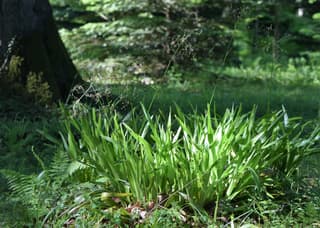
Woodrush
Luzula
Luzula is a genus of grass-like evergreen perennials in the rush family (Juncaceae), commonly called woodrushes. They form dense clumps of glossy green leaves fringed with fine silky hairs, topped in spring by airy panicles of small brown and cream flowers on arching stems. Shade-tolerant and low-maintenance, they are grown chiefly as ground cover in woodland gardens and shaded borders.

Grasshopper orchid
Lycaste locusta
Lycaste locusta, also classified as Ida locusta or Sudamerlycaste locusta, is a large, cool-to-warm growing orchid native to Peru, where it grows as a lithophyte on sunny limestone embankments and rocky slopes between 2,000 and 3,000 meters elevation. Its oblong pseudobulbs support 2-3 broad, pleated, elliptic-lanceolate leaves reaching up to 80 cm long, and in cultivation it blooms in spring (fall in the wild) with pendant, waxy, green flowers up to 11.5 cm across and a fringed lip, carrying a distinct scent of apples.
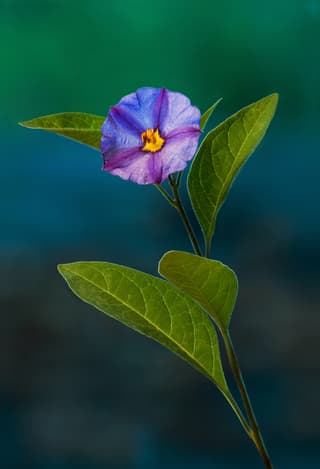
Blue Potato Bush
Lycianthes rantonnetii
Blue Potato Bush (Lycianthes rantonnetii) is an ornamental shrub native to Paraguay, Argentina, and southern Brazil, belonging to the Solanaceae family. It produces striking blue-violet flowers with yellow centers from spring through fall. Warning: all parts of the plant are toxic to humans, cats, and dogs.
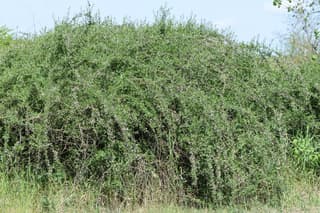
Goji Berry
Lycium barbarum
Lycium barbarum, commonly known as goji berry or wolfberry, is a deciduous woody shrub native to China, prized for its bright orange-red, nutrient-rich berries and long history of use in Traditional Chinese Medicine. It grows as an arching, spreading bush up to 3 m tall and is valued both as an edible fruiting shrub and as an ornamental hedge.

Stiff clubmoss
Lycopodium annotinum
Stiff clubmoss (Lycopodium annotinum) is an evergreen, spore-bearing lycopod in the family Lycopodiaceae. It forms creeping mats on the forest floor in coniferous forests and wetlands across the colder regions of the Northern Hemisphere—from North America and Greenland to most of Europe and northern Asia. Each year's growth is visible as a distinct 'interrupted' constriction on the stem, which has given the species its common names. The species belongs to a very ancient plant lineage and spreads naturally via spores formed in strobili (spore cones) at the tips of the shoots.
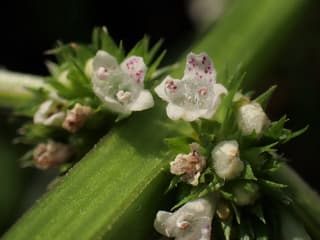
Gypsywort
Lycopus europaeus
Gypsywort (Lycopus europaeus) is a perennial herbaceous plant from the mint family (Lamiaceae), widely distributed throughout Europe, the Caucasus, and West Asia. It prefers to grow on banks, in reeds, and sedge stands on wet to flooded, nutrient-rich soils. The plant, 30 to 120 cm tall, forms opposite, deeply lobed leaves whose shape resembles a wolf's paw – hence the German and Latin names (Greek "lykos" = wolf, "pous" = foot). From July to September, small white, violet-dotted labiate flowers appear in the leaf axils, attracting numerous wild bees, hoverflies, and butterflies. The vigorous plant spreads rapidly via underground runners.
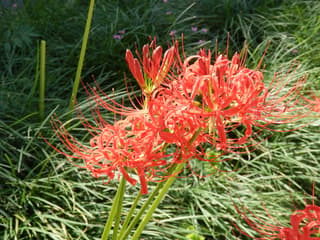
Red Spider Lily
Lycoris radiata
Lycoris radiata is a bulbous perennial from East Asia that sends up leafless stalks topped with fiery red, spidery flowers in early autumn. The strap-like leaves appear only after the blooms fade, persist through winter and spring, then vanish in early summer as the bulb goes dormant. All parts of the plant are highly toxic because of lycorine alkaloids.
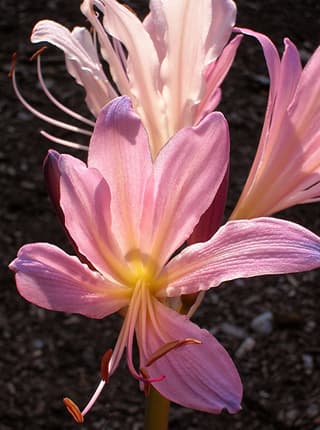
Resurrection lily
Lycoris squamigera
Lycoris squamigera is a hardy bulb in the Amaryllidaceae family, prized for its surprising bloom cycle: strap-shaped, silvery-green leaves emerge in early spring, photosynthesize, and die back completely by early summer, leaving bare ground. Then, seemingly out of nowhere in late summer, leafless flower stalks shoot up and open into clusters of fragrant, rose-pink, trumpet-shaped blooms. All parts of the plant contain lycorine alkaloids and should be kept away from children and pets.
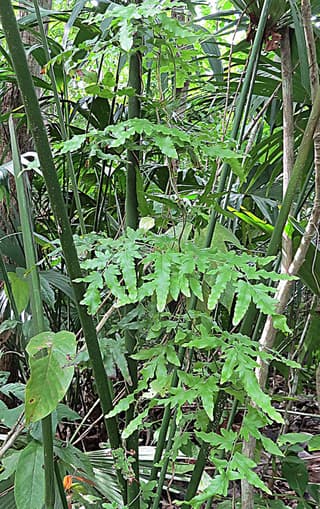
Climbing Fern
Lygodium venustum
Lygodium venustum, known as the climbing fern, is a climbing pteridophyte native to Central and South America, especially abundant in dry forests and disturbed areas from Mexico to Paraguay. Its delicate fronds wind around supports with natural elegance, forming curtains of bright green foliage. It is valued both as an ornamental plant and for its traditional medicinal use—prepared roots were used as an antivenom in indigenous communities in Nicaragua.
Fried Chicken Mushroom
Lyophyllum decastes
Lyophyllum decastes, commonly known as the Fried Chicken Mushroom, is an edible fungus that grows in dense clusters. It features a grayish-brown cap and resilient, cartilaginous flesh. It is frequently found along roadsides, in parks, and within deciduous forests, where it decomposes organic matter in the soil.
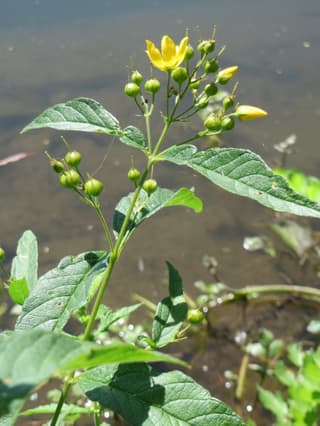
Loosestrife
Lysimachia
Lysimachia is a large and diverse genus of flowering plants in the family Primulaceae, commonly known as loosestrifes. The genus encompasses around 180 species of annuals and perennials native to temperate regions across the Northern Hemisphere, with the greatest diversity found in China. Species range from upright border perennials like Lysimachia punctata (dotted loosestrife) and Lysimachia vulgaris (yellow loosestrife) to ground-hugging creepers like Lysimachia nummularia (creeping Jenny). Flowers are typically five-petaled and appear in yellow, white, pink, or purple. Many species thrive in moist to wet environments, making them excellent choices for pond margins, rain gardens, and boggy areas.
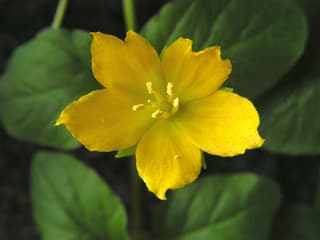
Creeping Jenny
Lysimachia nummularia
Lysimachia nummularia, commonly known as Creeping Jenny, is a vigorous, low-growing perennial ground cover. It features small, rounded, lime-green to golden leaves that resemble coins, and produces bright yellow, cup-shaped flowers in the summer. It is highly valued for its ability to quickly cover ground in damp areas and its beautiful trailing habit in containers. It can also be grown submerged in aquariums.
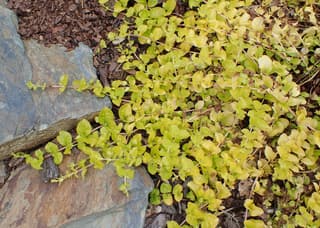
Golden Creeping Jenny
Lysimachia nummularia 'Aurea'
Lysimachia nummularia 'Aurea' is a golden-foliaged cultivar of the European Creeping Jenny, forming dense, low-growing mats of bright yellow-green to golden foliage. It is widely used as a ground cover, in bog gardens, along water features, and in hanging baskets.
Lantern Stinkhorn
Lysurus mokusin
Lysurus mokusin is a fascinating saprophytic fungus belonging to the Phallaceae family. It is distinguished by its erect, reddish or orange receptacle, which terminates in four to five 'arms' or ribs that join at the tip, giving it a lantern-like appearance. It produces a viscous, foul-smelling gleba (similar to decaying meat) at the top to attract flies, which then disperse its spores. Although not a plant, it frequently appears in gardens with organic mulch.
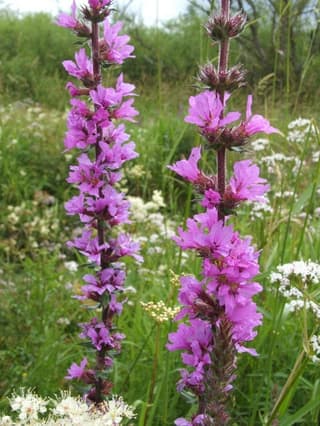
Loosestrife (genus)
Lythrum
Lythrum is a genus of herbaceous perennial plants in the family Lythraceae, found across wetlands, riverbanks, and marshy areas worldwide. The most well-known species, L. salicaria (purple loosestrife), produces dense spikes of rose-purple flowers in summer and is considered invasive in North America.
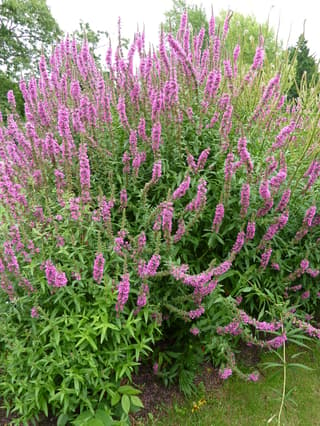
Purple Loosestrife
Lythrum salicaria
Purple loosestrife is a wetland perennial native to Europe and Asia, prized for its tall, showy spikes of magenta-purple flowers that bloom through summer. It grows vigorously in moist meadows, marshes, and pond margins. WARNING: it is a highly invasive species in North American wetlands, where it forms dense monocultures that crowd out native vegetation — planting and sale are banned or restricted in many US states and Canadian provinces.
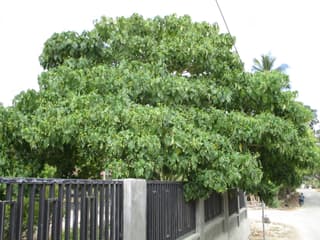
Parasol leaf tree
Macaranga tanarius
Macaranga tanarius is a fast-growing pioneer tree belonging to the Euphorbiaceae family, native to Southeast Asia, southern China, Australia, and the Pacific Islands. It reaches between 4 and 15 meters in height in its natural habitat and is distinguished by its large, peltate, rounded leaves with a velvety texture, where the petiole is inserted near the center of the underside rather than the edge. It is a typical colonizing species of secondary forests, clearings, and disturbed land, hence its common name 'parasol tree'. It produces greenish-yellow flowers clustered in racemes that give way to three-celled prickly capsules containing black seeds.
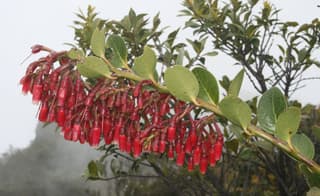
Andean Blueberry
Macleania rupestris
The Andean blueberry is a woody shrub in the Ericaceae family, native to cloud forests and the Andean páramo at altitudes between 2,000 and 4,100 m, ranging from Venezuela and Colombia to Ecuador and northern Peru. It grows as an epiphyte on trees or directly on exposed rocky outcrops, with branches that can reach up to 2.5 m (occasionally 6 m when climbing). Its leaves are small, rigid, and thick, adapted to nutrient-poor soils. It produces tubular magenta flowers pollinated by hummingbirds, followed by rounded edible berries with sweet and juicy pulp.
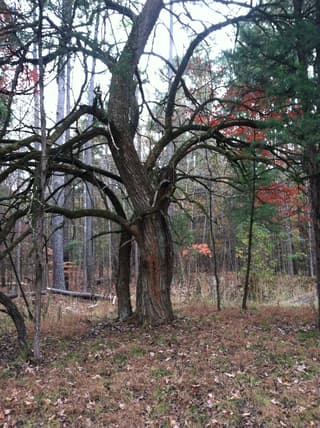
Osage Orange
Maclura pomifera
Osage orange (Maclura pomifera) is a medium to large deciduous tree native to the river valleys of Oklahoma, Texas, and Arkansas. It is best known for its large, wrinkled, yellow-green fruit that resembles an orange but is inedible to humans. Historically planted as a thorny living fence before the invention of barbed wire, its extremely dense, durable wood was prized by Native American tribes for making bows -- earning it the name bois d'arc (wood of the bow).
Find the Perfect Plant
Our plant guide helps you find ideal species for your experience level and time of year.
Browse by Difficulty, Season & More
Use the filters below to narrow this catalog by care difficulty, season, environment, or search directly by name. Each filter leads to a focused list tailored to your specific growing conditions.